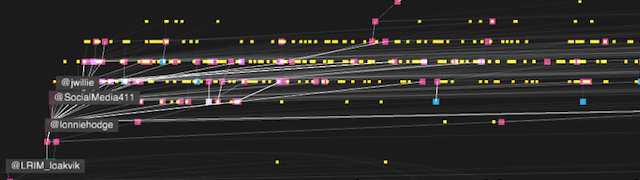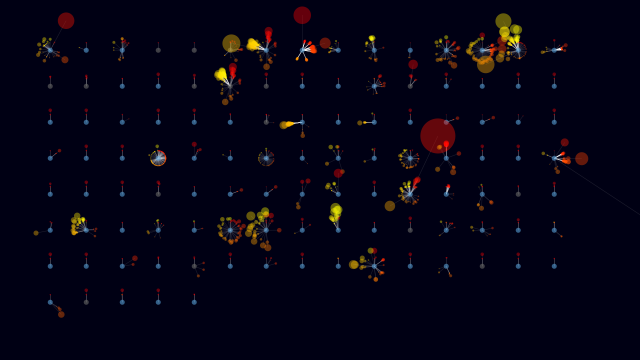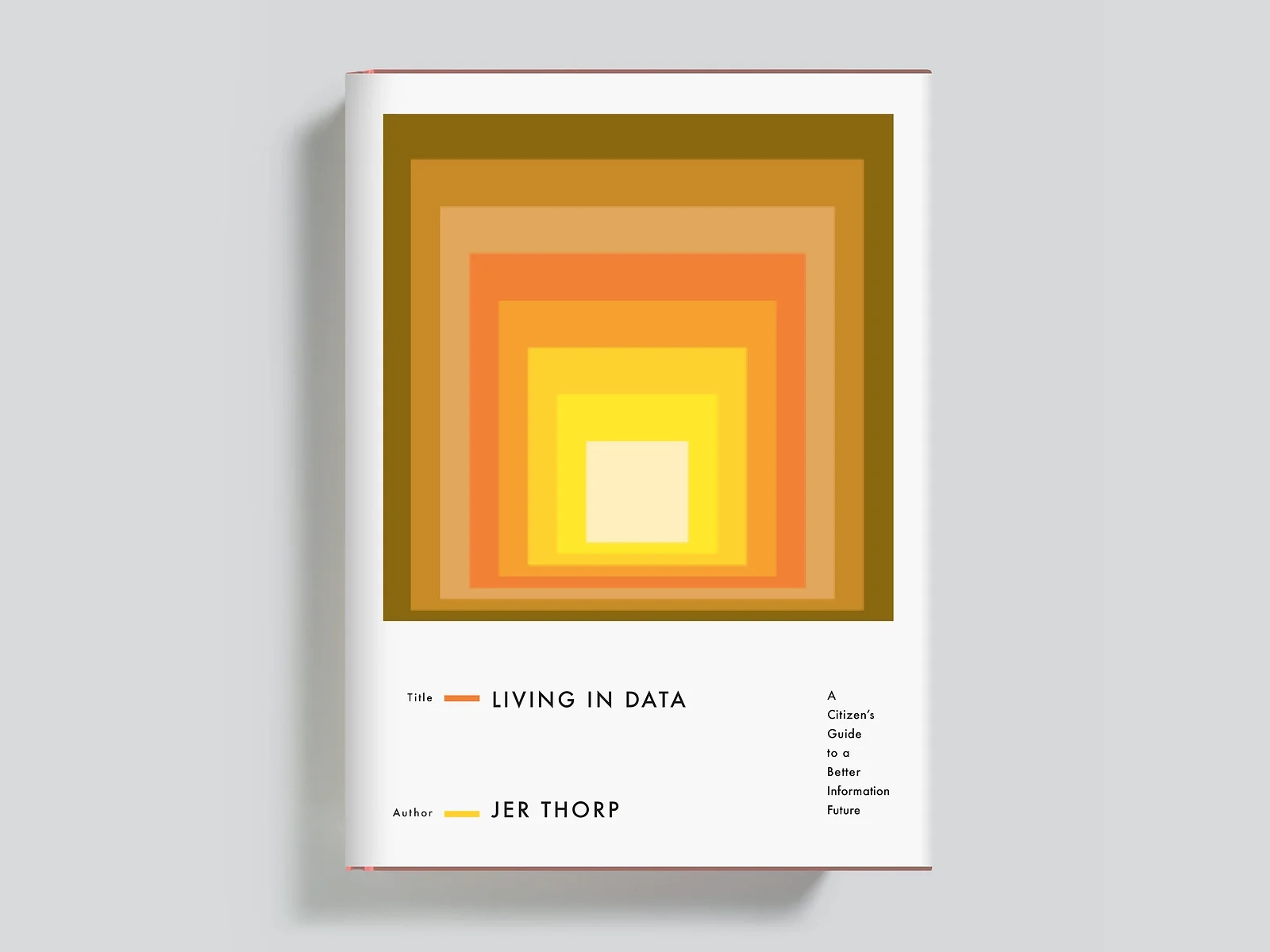
Jer Thorp’s analysis of the word “data” in 10,325 New York Times stories written between 1984 and 2018 shows an interesting trend: among the words associated with “data,” we have begun to find not only its classic companions (“information,” “digital”), but a variety of new neighbors –– from “scandal,” “politicians,” and “misinformation” to “ethics,” “lives,” “friends,” and “play.”
To live in data is to be incessantly extracted from; to be classified and categorized, statisti-fied, sold and surveilled. Data (our data) is mined and processed for profit, power and political gain. Our clicks and likes and footsteps feed new digital methods of control. In Living in Data, Thorp asks a crucial question of our time: how do we stop passively inhabiting data, and become active citizens of it?
In this provocative book, Thorp brings his work as a data artist to bear on an exploration of our current and future relationship with data, transcending facts and figures to find new, more visceral ways to engage with data. Threading a data story through hippo attacks, glaciers, and school gymnasiums; around colossal rice piles and over active mine fields, Living in Data keeps humanity front and center. Thorp reminds us that the future of data is still wide open; that there are stories to be told about how data can be used, and by whom. Accompanied by informative and poetic illustrations, Living in Data not only redefines what data is, but re-imagines how it might be truly public, who gets to speak its language, and how, using its power, new institutions and spaces might be created to serve individuals and communities.