
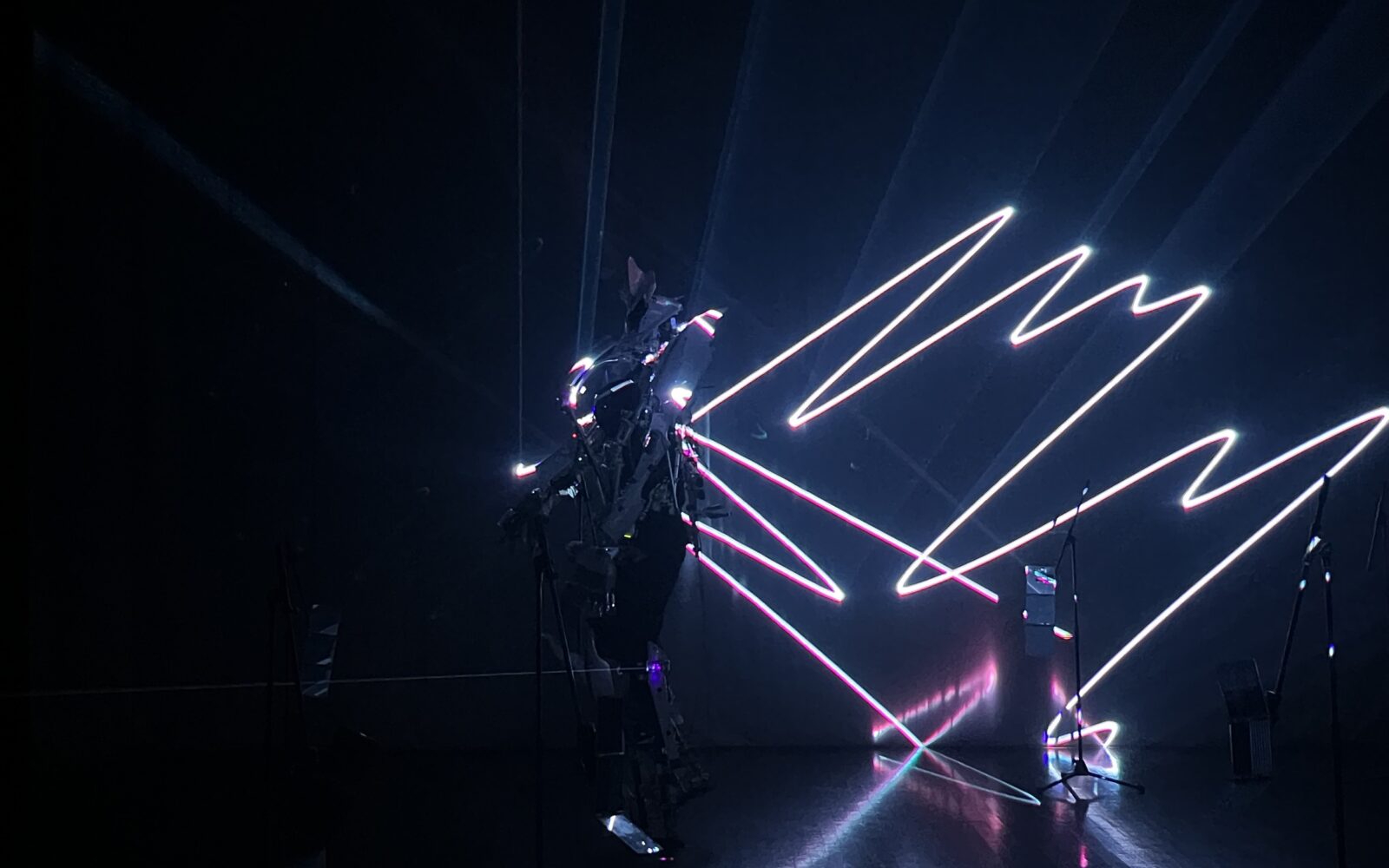
Da Vinci’s Robot – A non-powered exoskeleton whose motion becomes sound
Da Vinci's Robot is a performance work by composer and new media artist Suguru Goto for a non-powered full-body exoskeleton and real-time sound.
That Light Breeze – atomless, 2003
A shockwave piece from 2003, ported to run natively in any browser, That Light Breeze features a looped sample recorded from radio. In it we hear a women's voice and the faint rustle and rumble of an urban garden as she describes her personal expe...
booleanSequence – A modern yin and yang
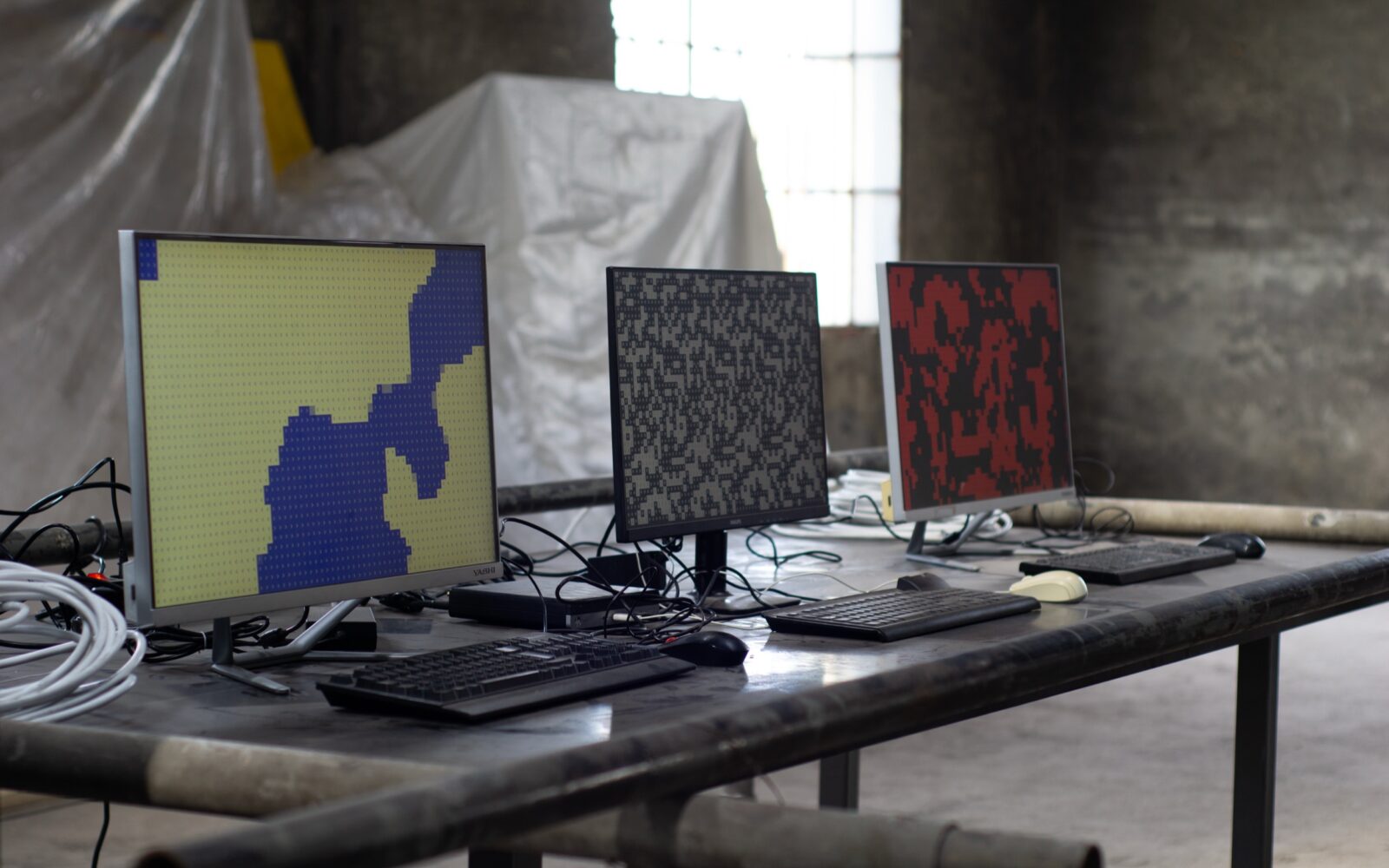
booleanSequence is a real-time generative system built on a single rule that can run with different pairs of characters: plus and minus, zero and one, greater and less than. The system knows two values and nothing else.
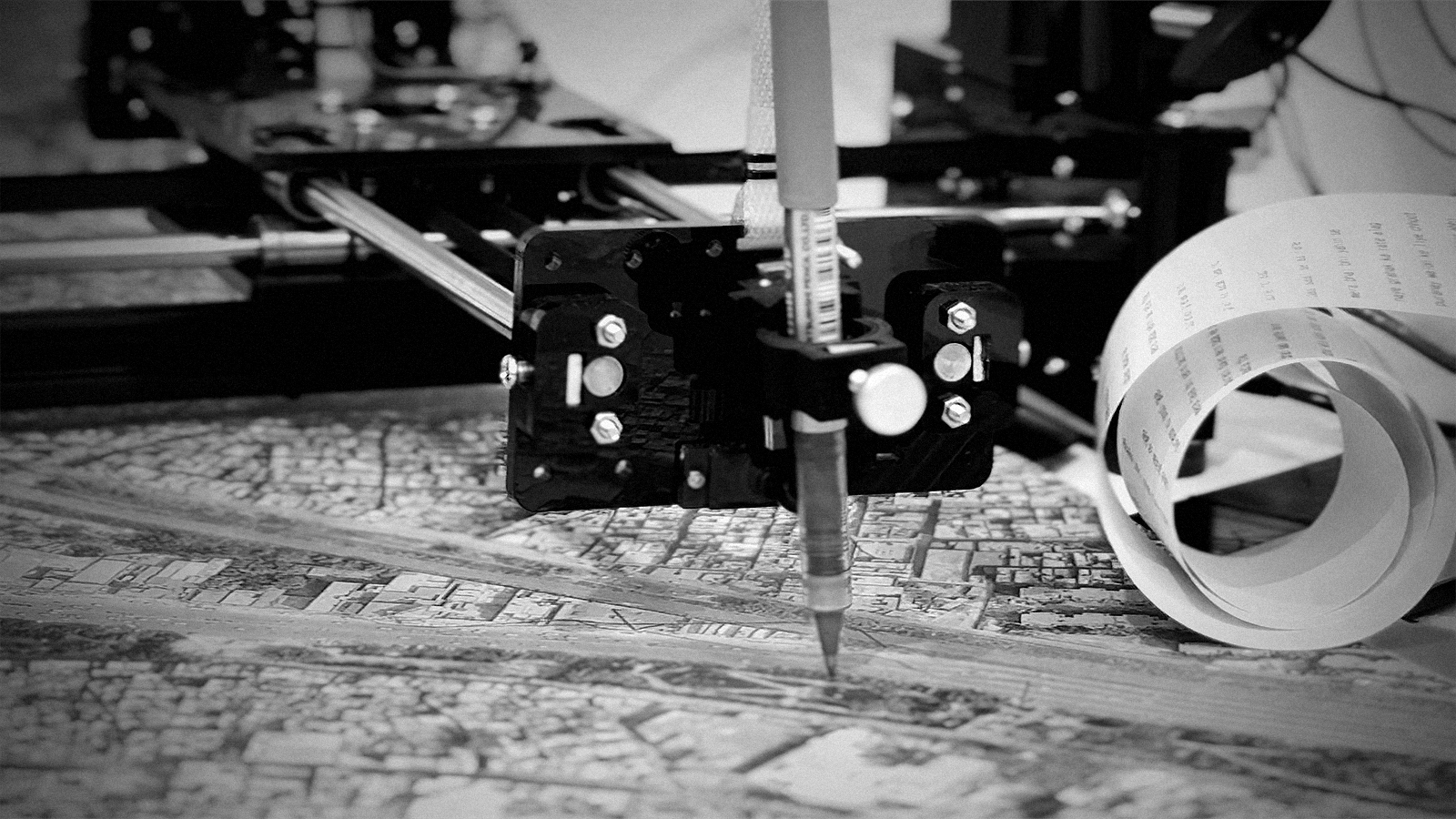
[Re]Calibrating Identity – An autonomous walker explores mental maps of Lahore’s walled city
[Re]Calibrating Identity by Madhi Ur Rehman questions the map as a way of knowing a city. It builds an instrument that learns from people's mental maps and navigates by memory instead of by map.
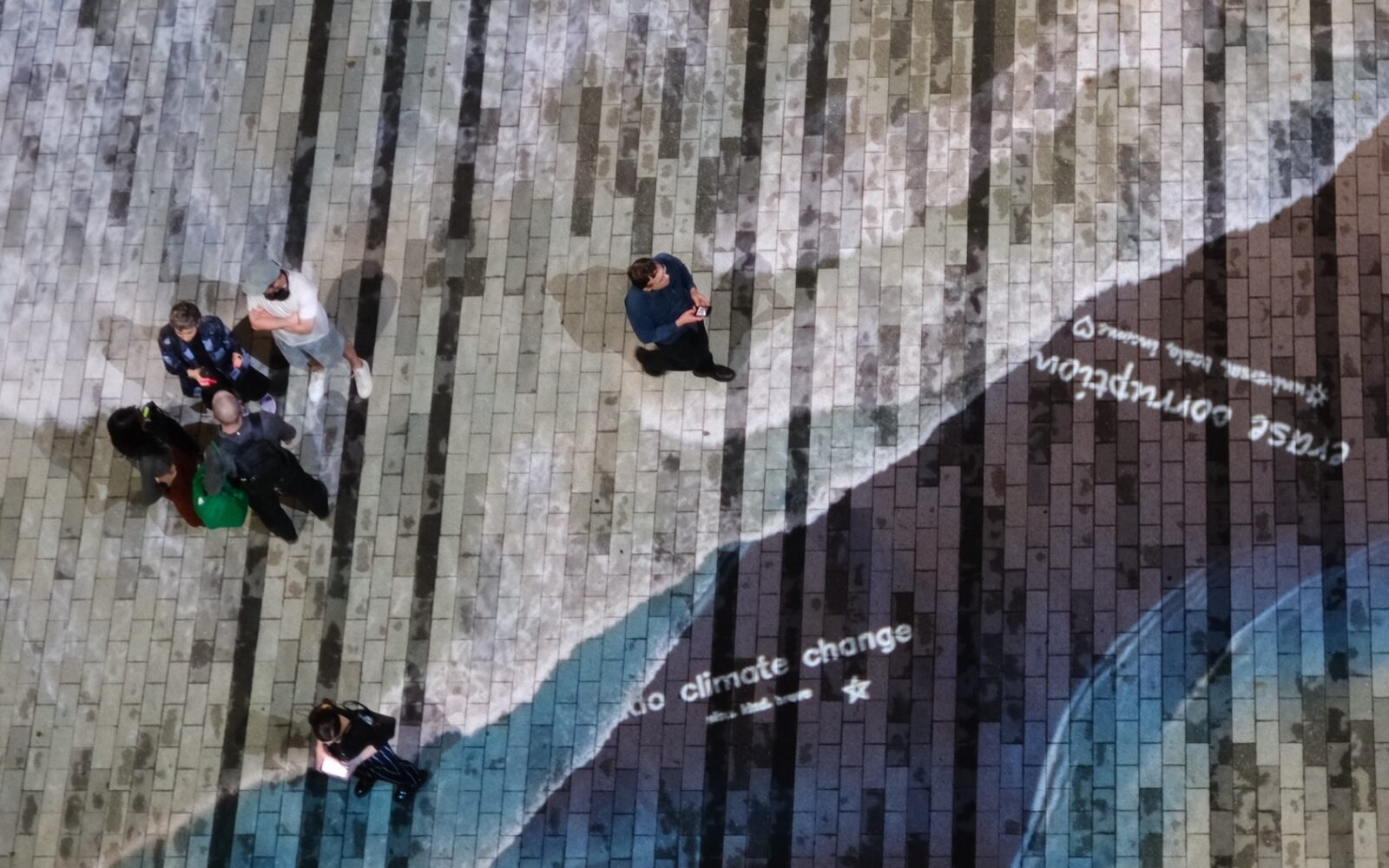
Ocean of Dreams – A landscape of waves, sand, words, and collective imagination
Created for MIT Future Fest 2026, Ocean of Dreams is a public artwork by Behnaz Farahi & MIT Media Lab. It brought 430+ shared hopes to life, projecting handwritten text onto an interactive ocean landscape at MIT Kendall Plaza.
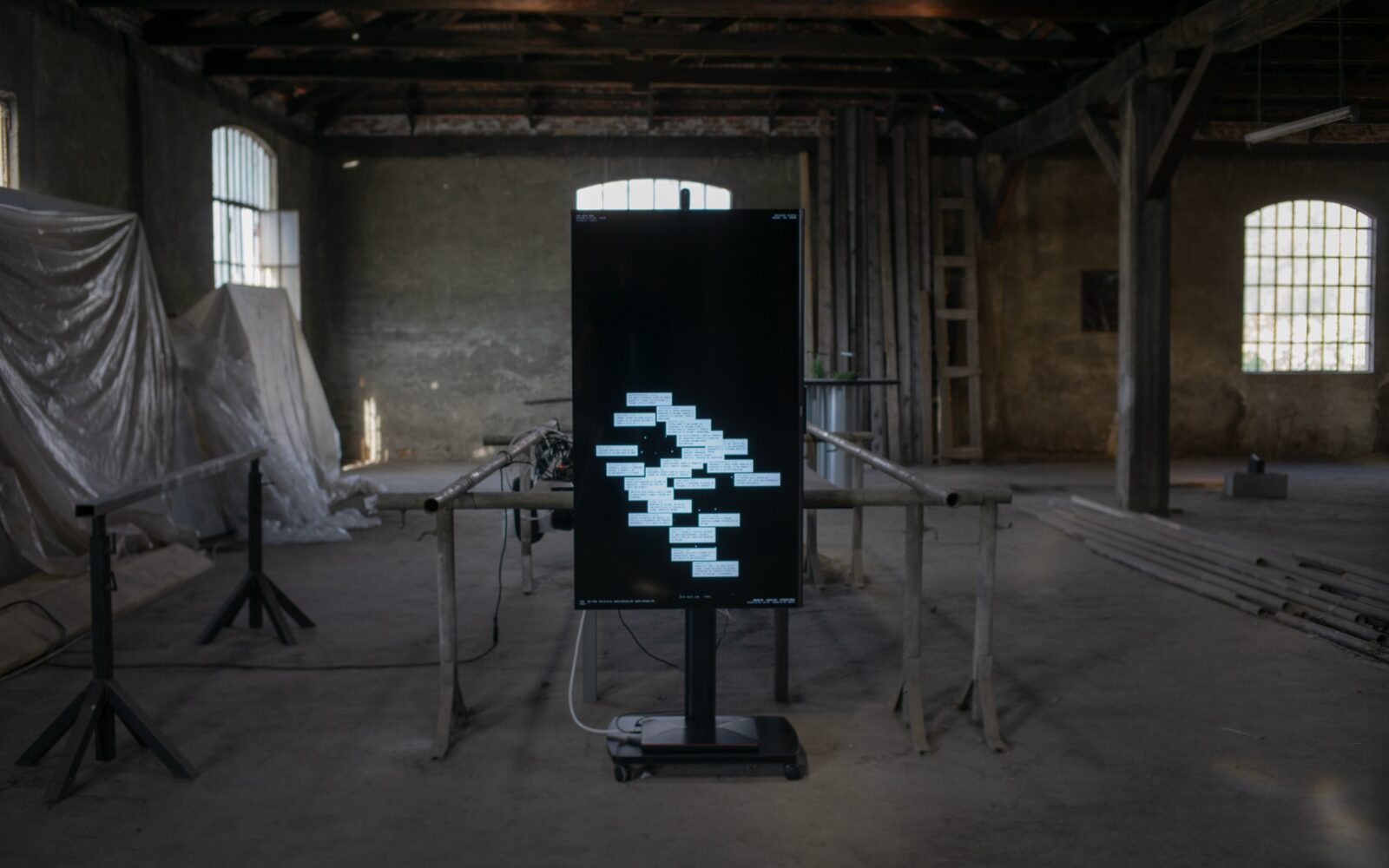
the_local_aura – A neighbourhood’s present, carried by those who cross it
the_local_aura is an interactive installation that turns the act of crossing a place into an encounter with its present by attaching real-time local news to the bodies of the people who walk past it.
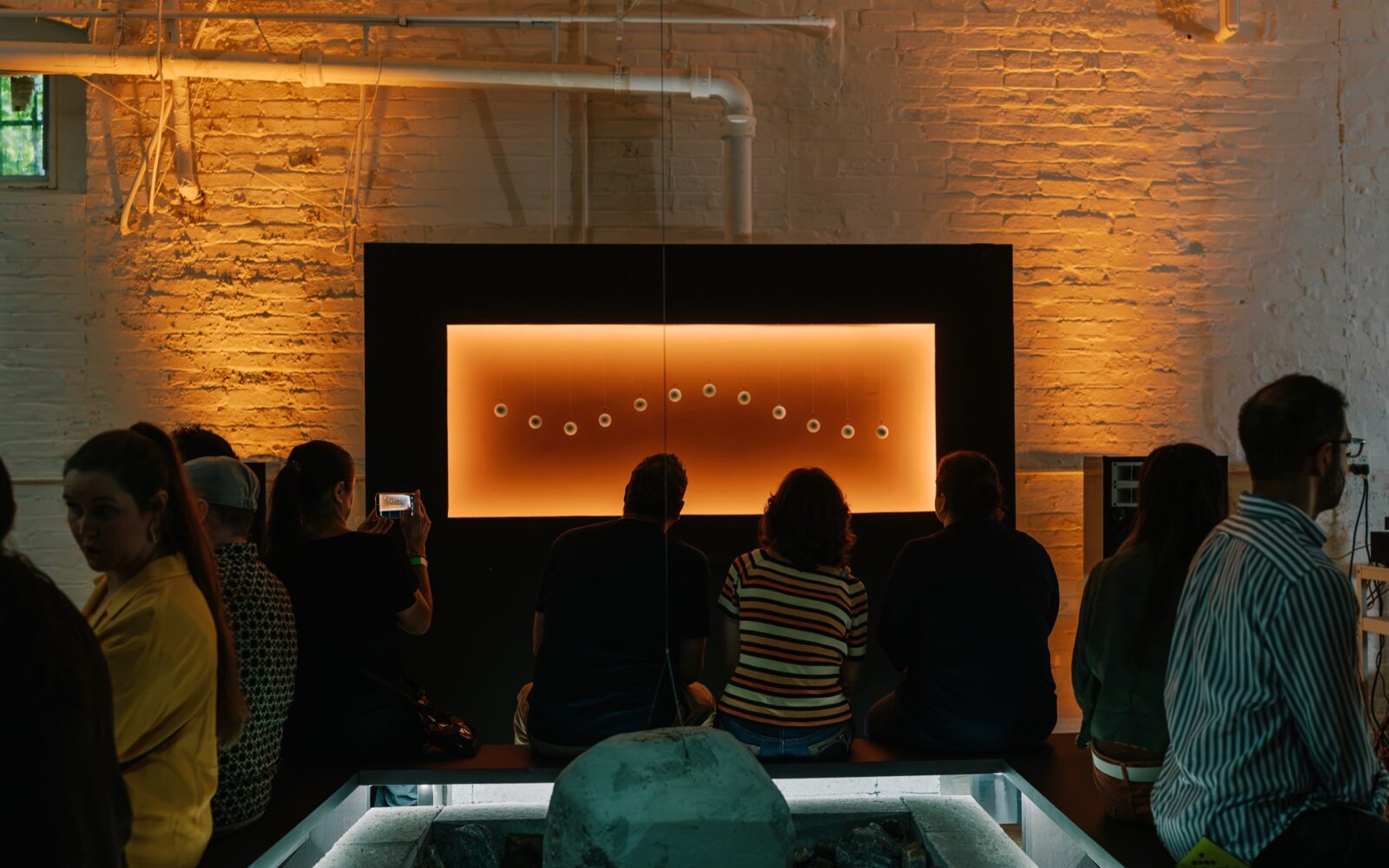
Room as Instrument – Mathematical patterns in motion
Twelve wooden spheres move in changing patterns inside an illuminated freestanding wall, with music and projected visuals in sync.
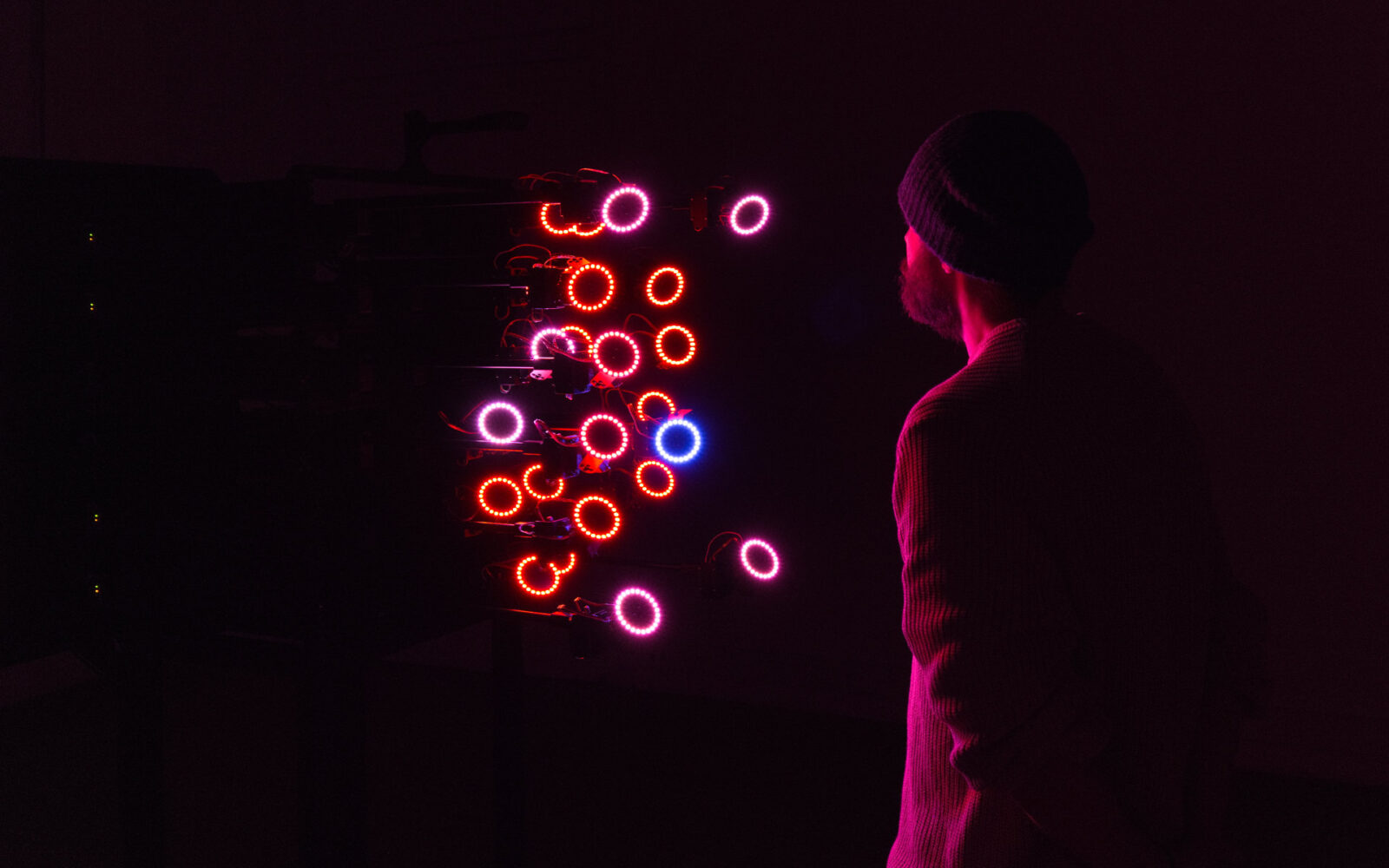
Capture / Resemble – Simulating Self-Aware Machine Behaviour
Inspired by AI agents, processing and adapting to each unique interaction, Capture / Resemble captures the individual characteristics and facial expressions of the visitor and transforms them into abstract movements.
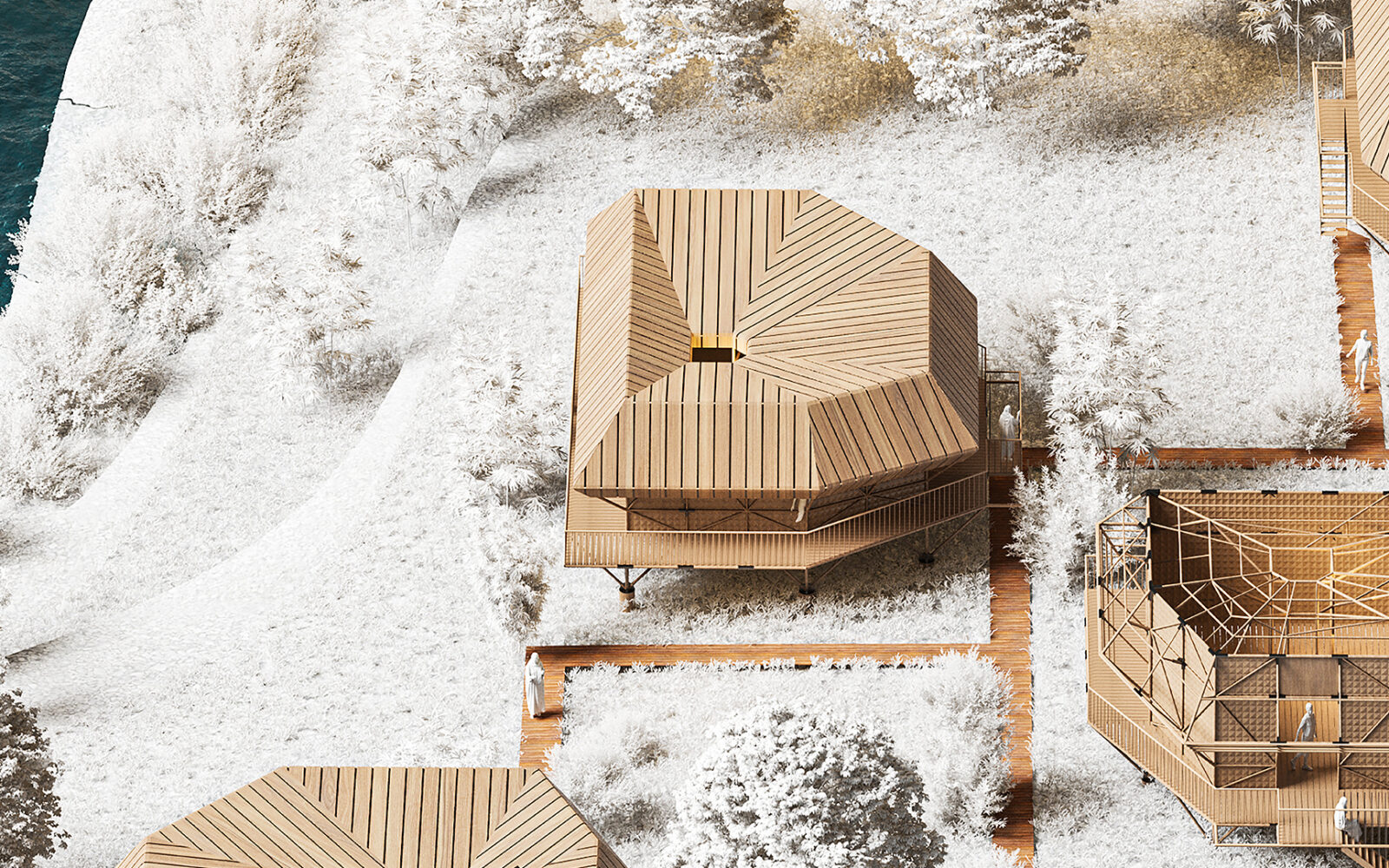
NOTUN – Designing for damage in cyclone-prone Bangladesh
NOTUN combines water-flow simulation, wind-responsive bamboo housing, bio-based embankment blocks and mixed-reality assembly into a repairable settlement strategy for coastal Bangladesh.
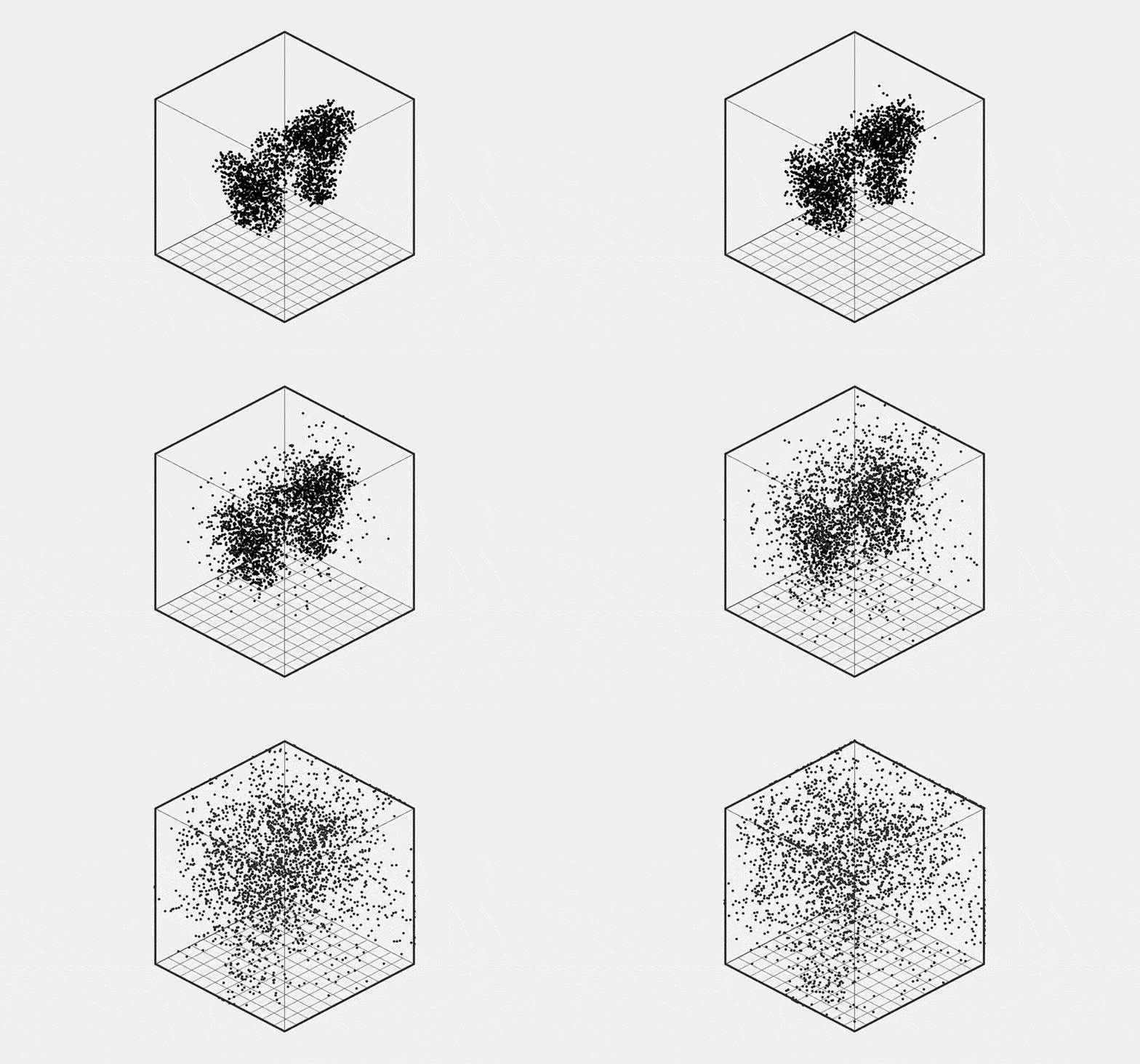
V7 Development Log (09/2026) – HB*18
Today, CAN crossed the threshold into adulthood! 18 years in, we’re stepping into a new era with CAN V7. More than a visual refresh, V7 is both an engine & environment—rethinking how web publishing functions from the ground up.
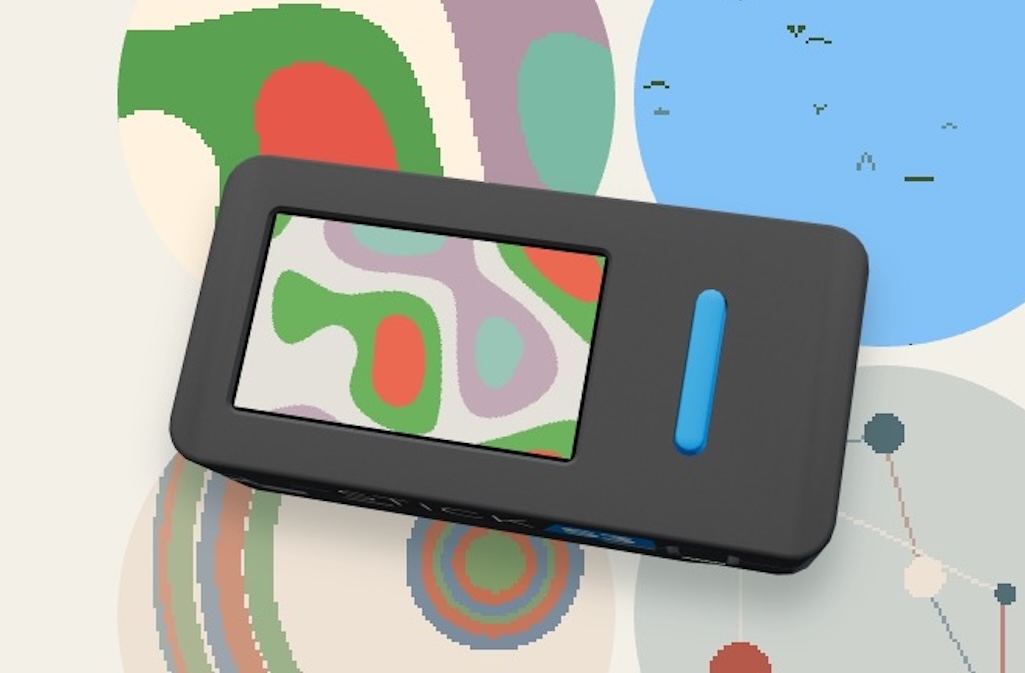
Rill Sound – A family of four small AV instruments for Stick S3
Rill Sound is a family of four small audiovisual instruments that pair evolving music with generative visuals.
V6 Development Log (07/2026)
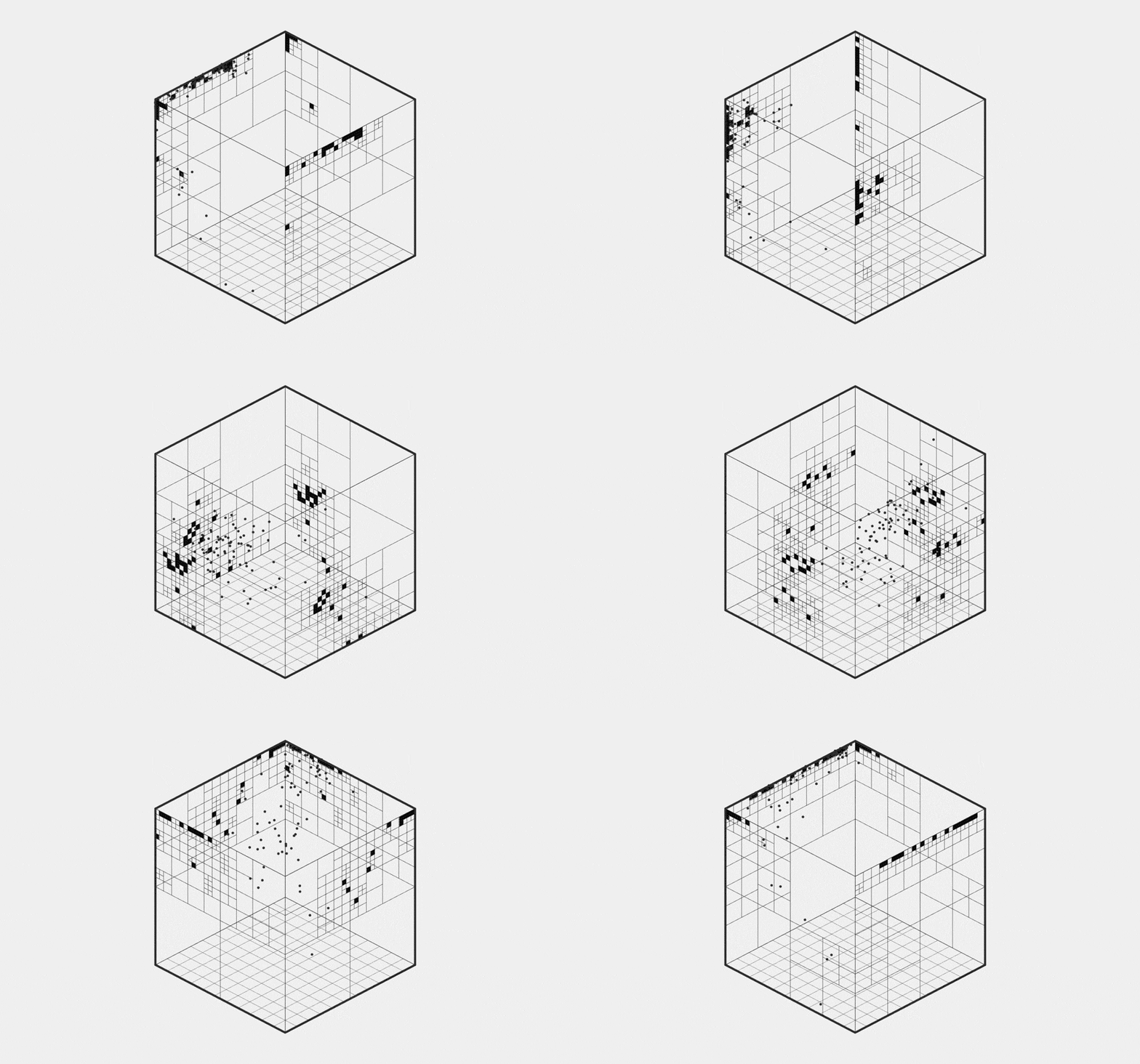
Two months, four big wins: Archives Browser rebuilt with a 3D Semantic Space, API docs reborn as an interactive browser with a new Search API, Activity turns one year old, hits 2.1.0 and gets faster with in-app Search + Liquid Glass.
Patternflow – An Open-Source LED Synthesizer Reinterpreting Participation TV
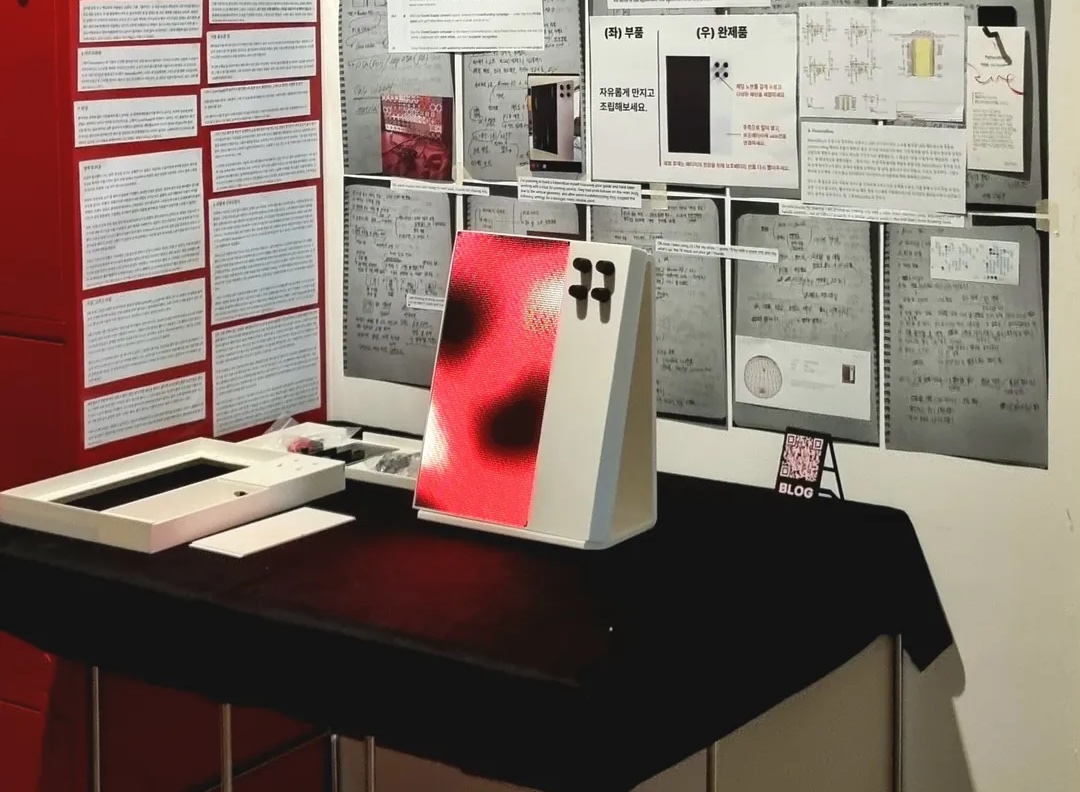
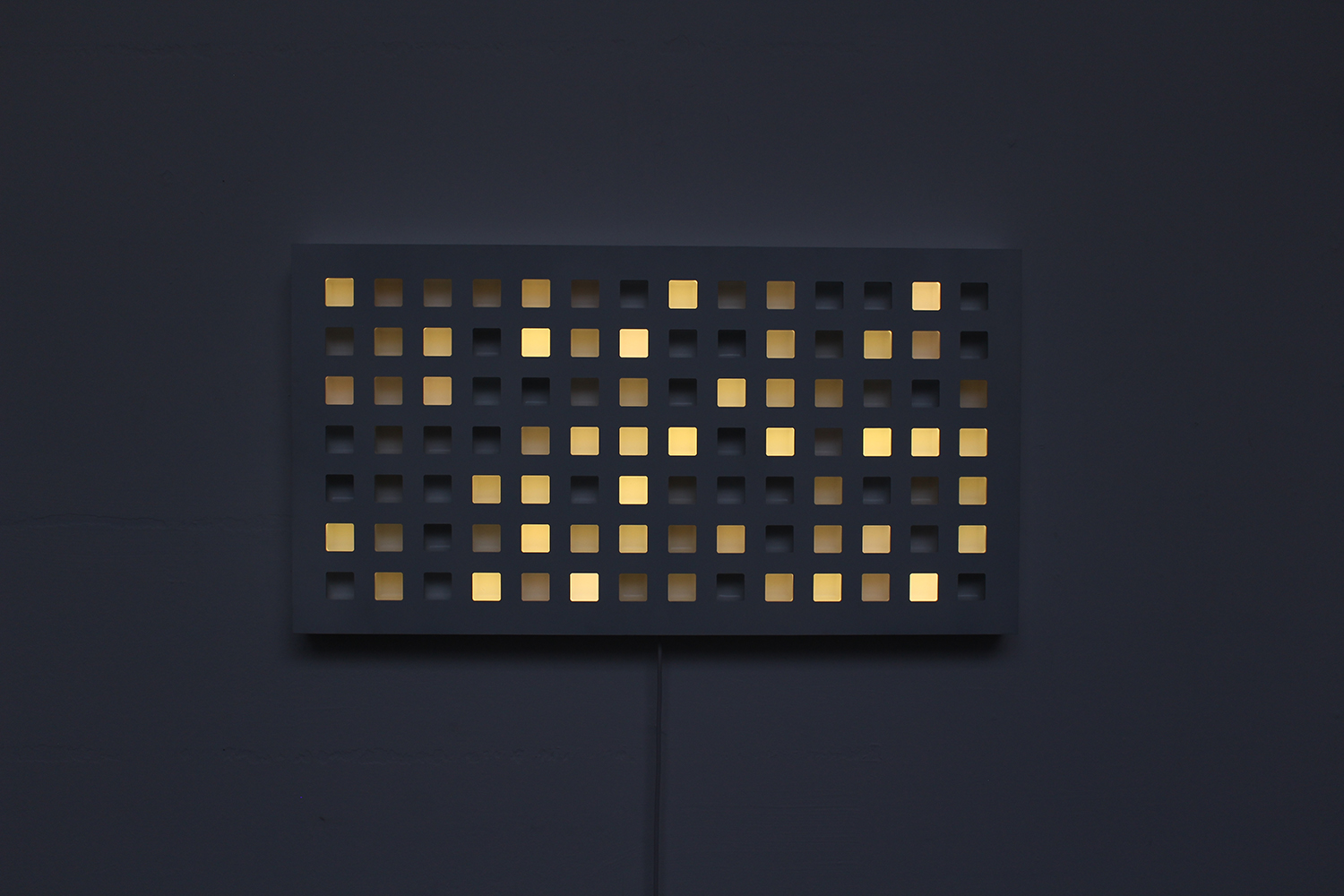
Patternflow, an open-source LED synthesizer by Seunghun Lee, reimagines Nam June Paik's Participation TV (1963) — four knobs reshape light patterns in real time, and others are already building and sharing their own.
Why Creativity Cannot Be Interpolated
AI systems can produce individually novel outputs, but novelty alone is not creativity. They argue that genuine creativity requires respect for constraints and that current AI systems lack this capacity.
Featured


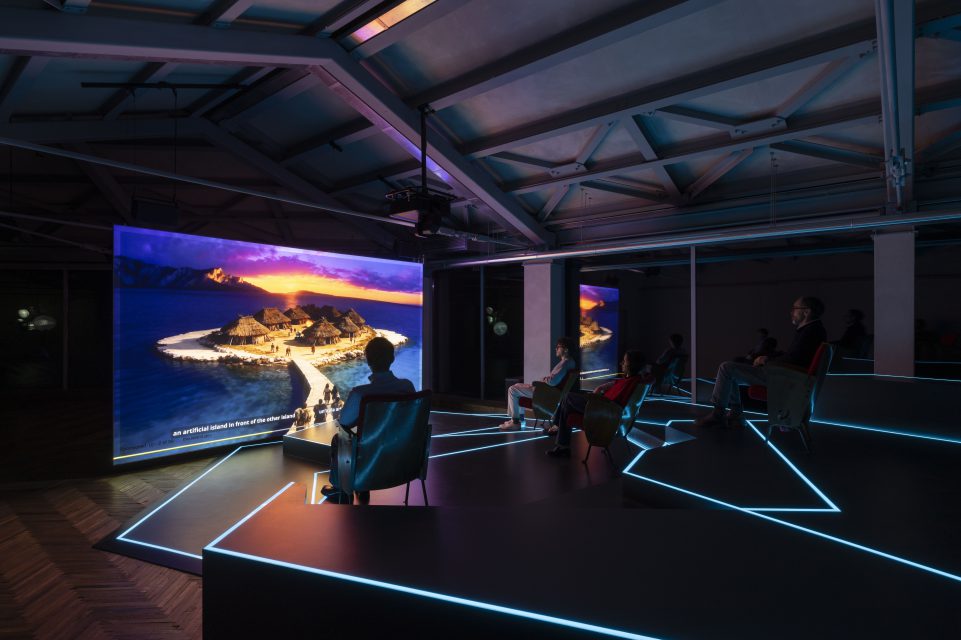
The Island – Hito Steyerl
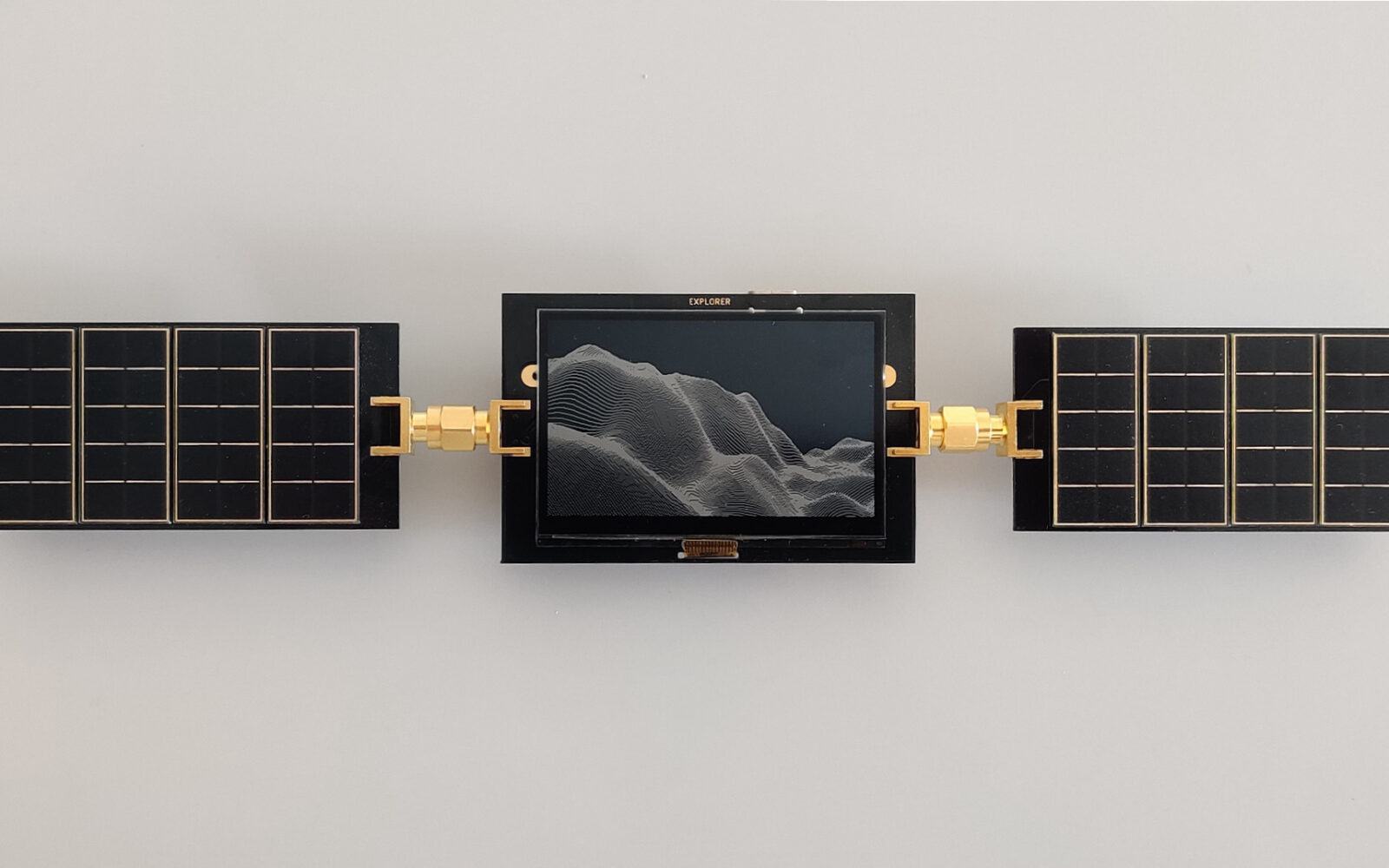
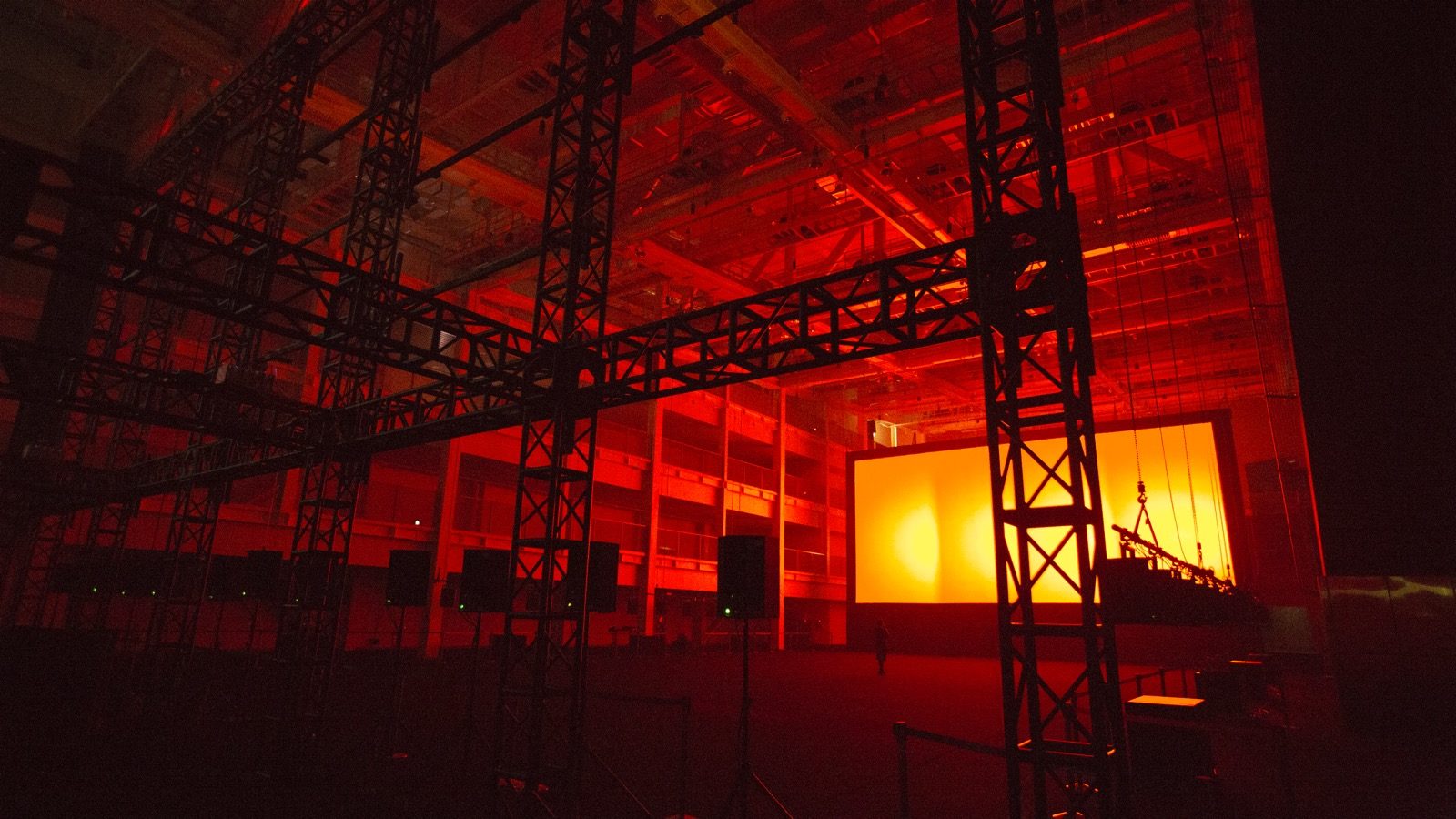
“The Island” is a site-specific project by artist Hito Steyerl presented at Osservatorio in Galleria Vittorio Emanuele II in Milan. With “The Island,” Hito Steyerl delves into multiple narratives united by the recurring element of flooding, evoking urgent topics such as current authoritarian tendencies fostered by the use of AI,...
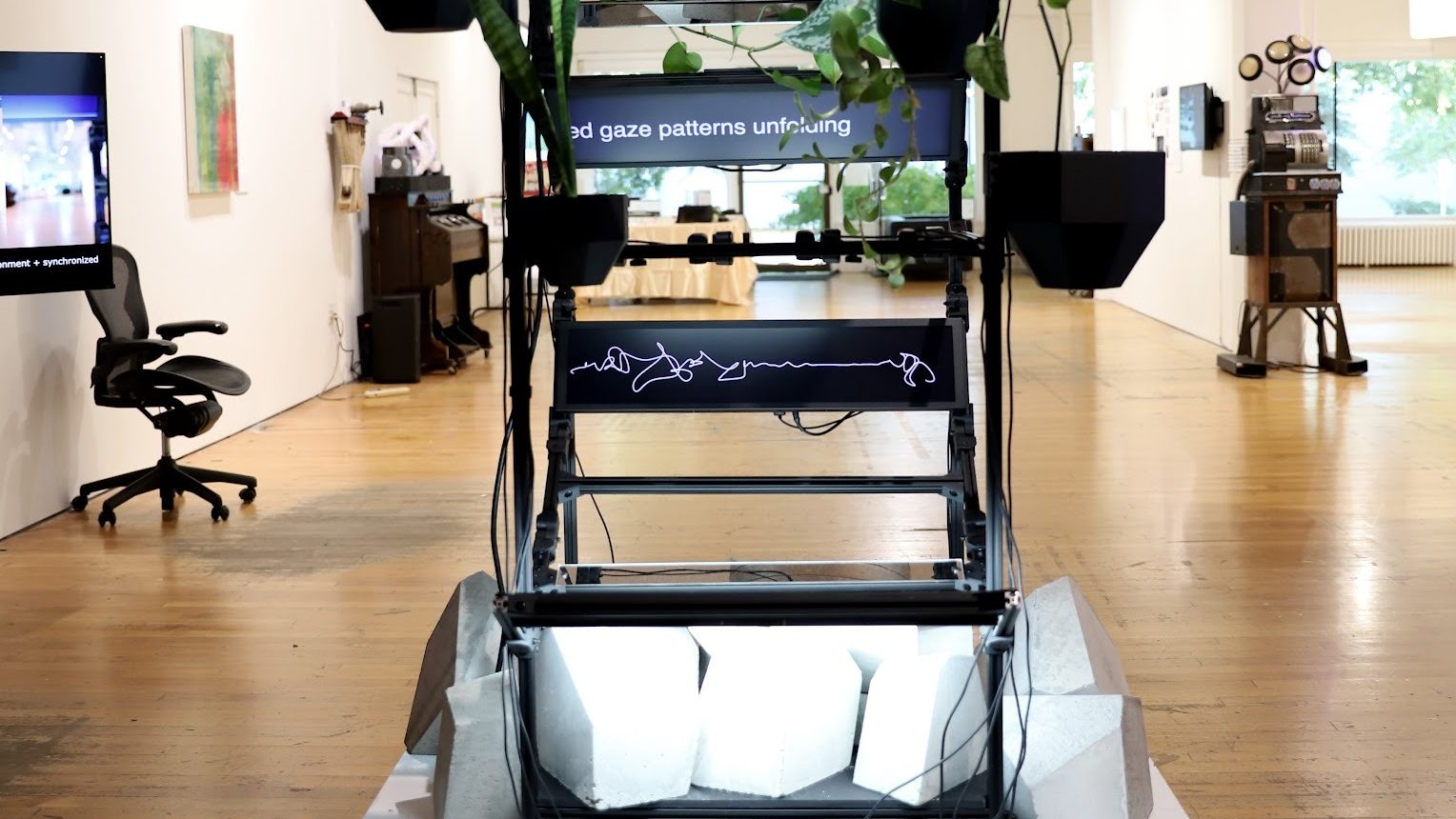
PNW Art & Tech Symposium
Connecting media artists, designers, and creative coders, this 2nd annual PNW symposium bridges physical art, generative code, and collaborative infrastructure. Across Seattle’s Cornish 9th Ave Gallery and xispa (MadArt Studio), the program offers workshops, talks, and a tech exhibition (thru Oct 31). Integrated throughout is 9e26—a community dialogue project honoring...
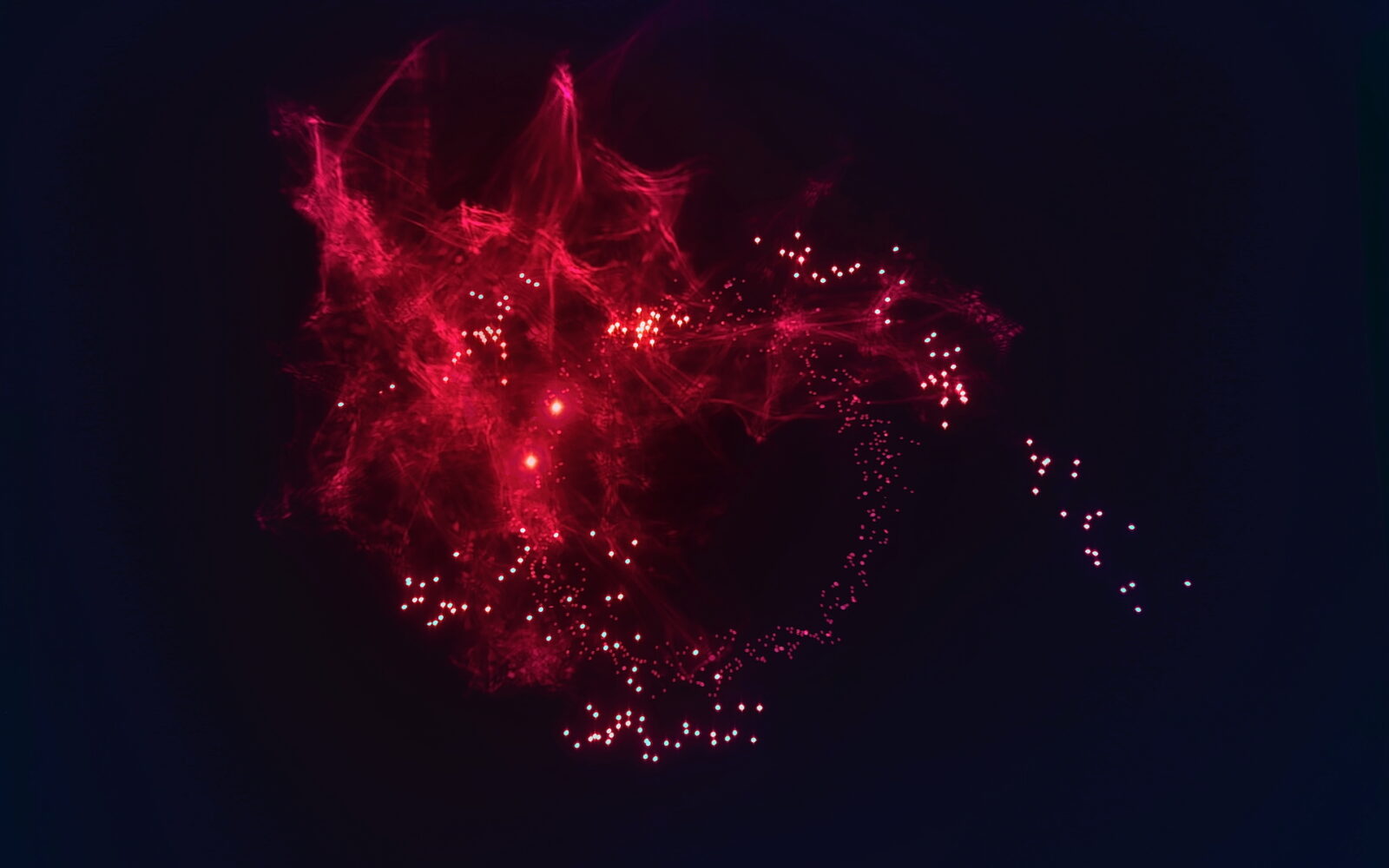
First Light – Robert Henke
FIRST LIGHT is an audiovisual surround sound performance, commissioned by the Barbican Centre, London. Its creator is controlling the machinery from within the audience, part facilitator, part observer. World première at the Barbican Concert Hall on November 7th 2026.
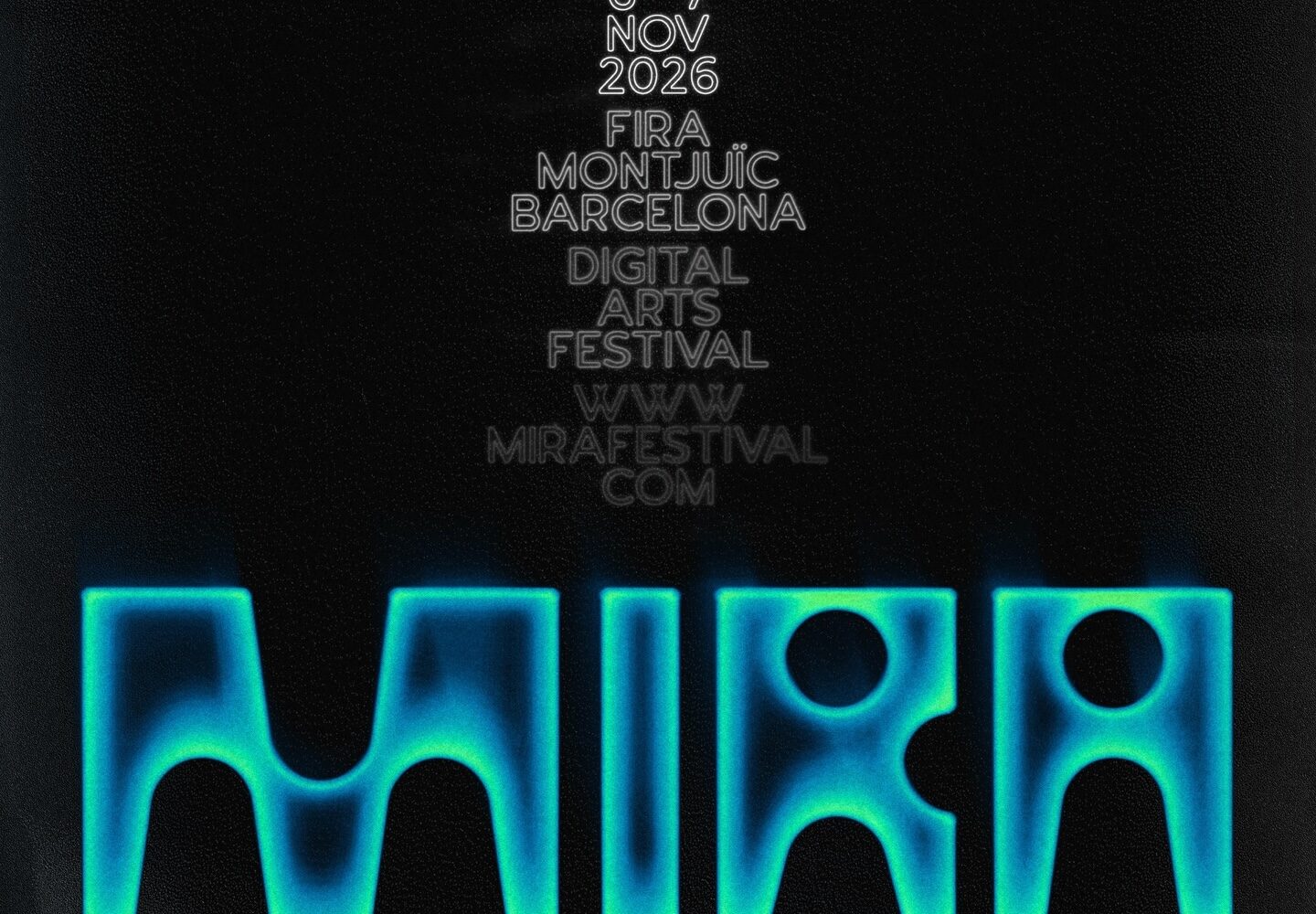
MIRA Digital Arts Festival 2026
MIRA is a digital arts and contemporary music festival held annually in Barcelona (since 2011). Focused on the intersection between arts and digital culture, the festival features a programme comprised of live audiovisual shows, concerts, installations, 360º screenings, performances, DJ Sets, and conferences.
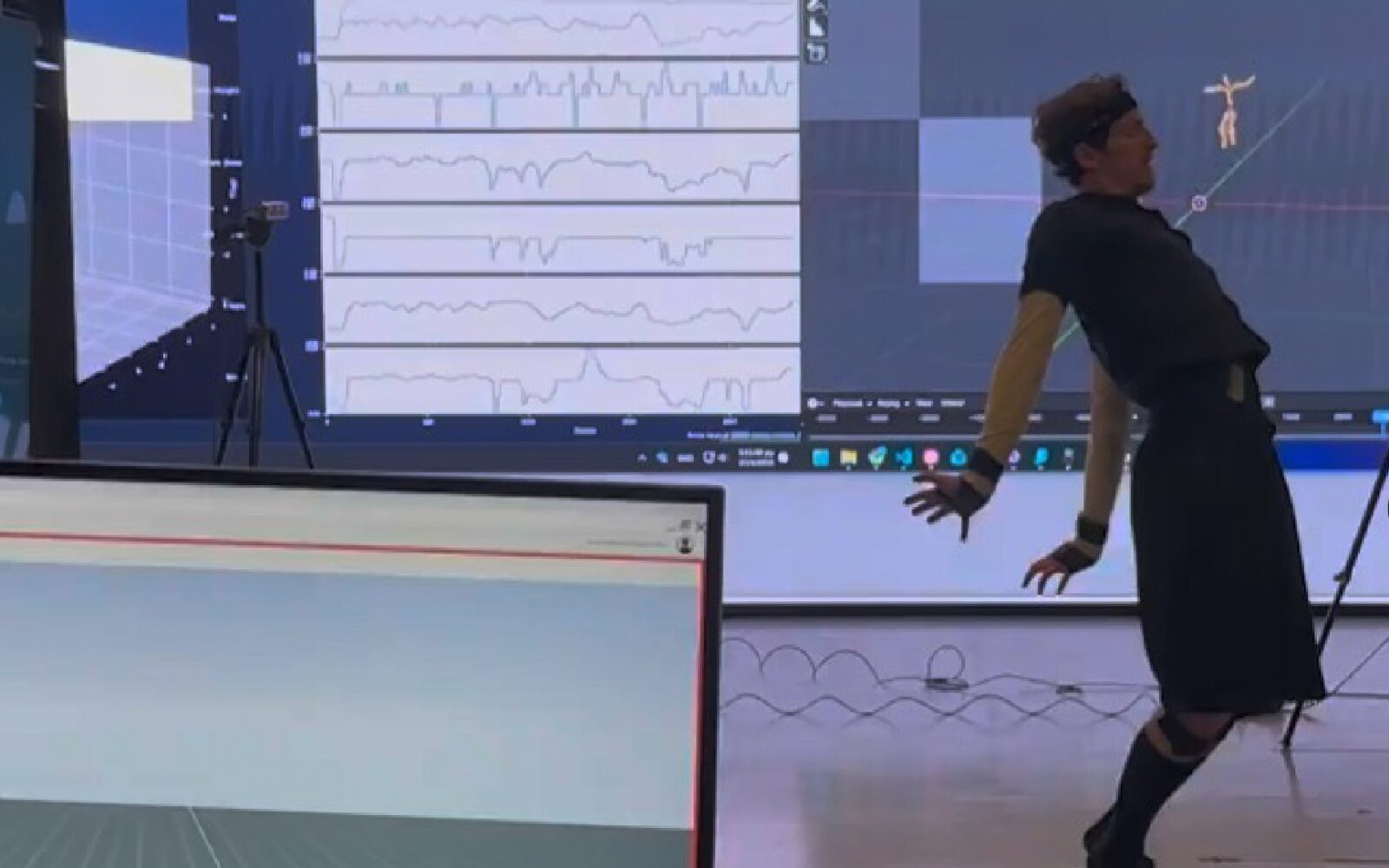
CCL at AHK IDlab Amsterdam – CALL
The Choreographic Coding Lab (CCL) format by Motion Bank offers opportunities for exchange and collaboration for digital media artists, designers and creative coders who have an interest in translating aspects of choreography and dance into digital form. In a five-day interdisciplinary peer-to-peer setting, the participants work on their own projects,...
Topics
algorithmAlgorithm is a finite sequence of rigorous instructions, typically used to solve a class of specific problems or to perform a computation – Wikipedia.
92
artificial-intelligenceArtificial Intelligence describes a field that develops and studies methods and software which enable machines to perceive their environment and uses learning and intelligence to take actions that maximize their chances of achieving defined goals – Wikipedia.
165
cameraA camera is an instrument used to capture and store images and videos, either digitally via an electronic image sensor, or chemically via a light-sensitive material such as photographic film – Wikipedia.
96
data-visualisationData visualisation is an interdisciplinary field that deals with the graphic (or physical) representation of data.
246
environmentEnvironment, or built world, refers to the human-made environment that provides the setting for activity, ranging in scale from installations to buildings.
267
filmA film is a work of visual art that simulates experiences and otherwise communicates ideas, stories, perceptions, feelings, beauty, or atmosphere through the use of moving images.
79
generativeThe term 'Generative' describes a process, in whole or in part, that is created using an autonomous system. An autonomous system in this context is generally non-human and can independently determine features that would otherwise require decisions made by the author/creator.
382
installationInstallation describes large-scale, mixed-media constructions, often designed for a specific place or for a temporary period of time.
680
interfaceAn interface is a shared boundary across which two or more separate components of a system of exchange information. The exchange can be between software, computer hardware, peripheral devices, humans, animal-world, nature and combinations of these.
246
kinectKinect is a discontinued line of motion sensing input devices produced by Microsoft and first released in 2010. The devices generally contain RGB cameras, and infrared projectors and detectors that map depth through either structured light or time of flight calculations, which can in turn be used to perform real-time gesture recognition and body skeletal detection, among other capabilities.
76
networkA network may describe any form of an interconnected group or system, whether in computation or nature.
81
nftA non-fungible token (NFT) is a non-interchangeable unit of data stored on a blockchain, a form of digital ledger, that can be sold and traded. Types of NFT data units may be associated with digital files such as photos, videos, and applications.
258
objectAn object is a thing that has physical existence but is not alive.
428
particlesIn the physical sciences, a particle is a small localized object which can be described by several physical or chemical properties, such as volume, density, or mass. In computation, it is mostly used as a point that may have a position and vector.
106
patternA pattern is a regularity in the world, in human-made design, or in abstract ideas. As such, the elements of a pattern repeat in a predictable manner.
58
projectionA projection is a design technique used to display a three-dimensional object on a two-dimensional surface. Similarly it describes a way of displaying two-dimensional information in a physical space by using light.
193
roboticsRobotics is an interdisciplinary branch of engineering and science that includes mechanical engineering, electronic engineering, information engineering, computer science, and others.
122
screen
1005
sculptureSculpture is the three-dimensional art work which is physically presented in the dimensions of height, width and depth.
79
simulationA simulation is an imitative representation of a process or system that could exist in the real or speculative world.
108
socialOn CAN we refer to things as "social" when they facilitate the creation, sharing and aggregation of content, ideas, interests, and other forms of expression through different forms of communities and networks.
93
theoryA theory is a rational type of abstract thinking about a phenomenon, or the results of such thinking.
57
typographyTypography is the technique of arranging type to make written language legible, readable and appealing when displayed.
80
Mid/Senior Mechanical Engineer at Leva
This is a hands-on mechanical design role for an engineer who enjoys unusual problems, rapid prototyping, close collaboration with fabrication and motion-control specialists, and seeing one-off sys...
Mechatronics Engineer at Leva
Leva are looking for a proactive, hands-on Mechatronics Engineer who enjoys complex physical systems, makes sound decisions across disciplines and stays accountable for how the complete system perf...
Assistant or Associate Professor of Graphic Design (Tenure-Track) at Auburn University
The School of Industrial and Graphic Design at Auburn University invites applications for a tenure-track position in Graphic Design at the rank of Assistant or Associate Professor commencing August...
Professorship in Illustration (W2) at Hochschule München University of Applied Sciences
We seek a Professor of Illustration & Drawing with strong analog/digital skills, storytelling ability, and AI software literacy. You will teach core concepts, guide student projects, and innovate a...
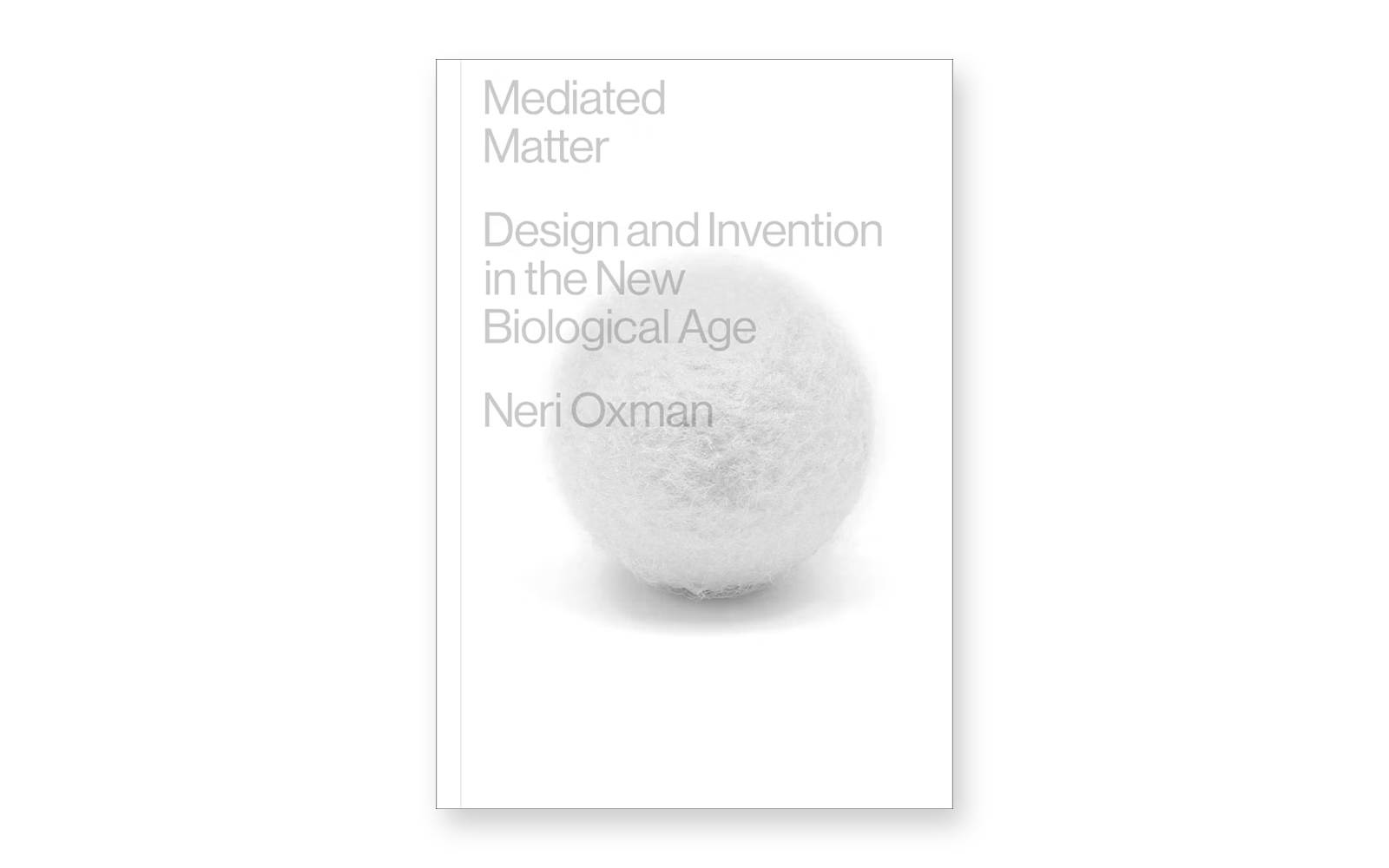
Mediated Matter – Design and Invention in the New Biological Age
A richly illustrated overview of the work of Neri Oxman, whose design approach embodies the union of technology and biology, as well as a future where we build with nature.
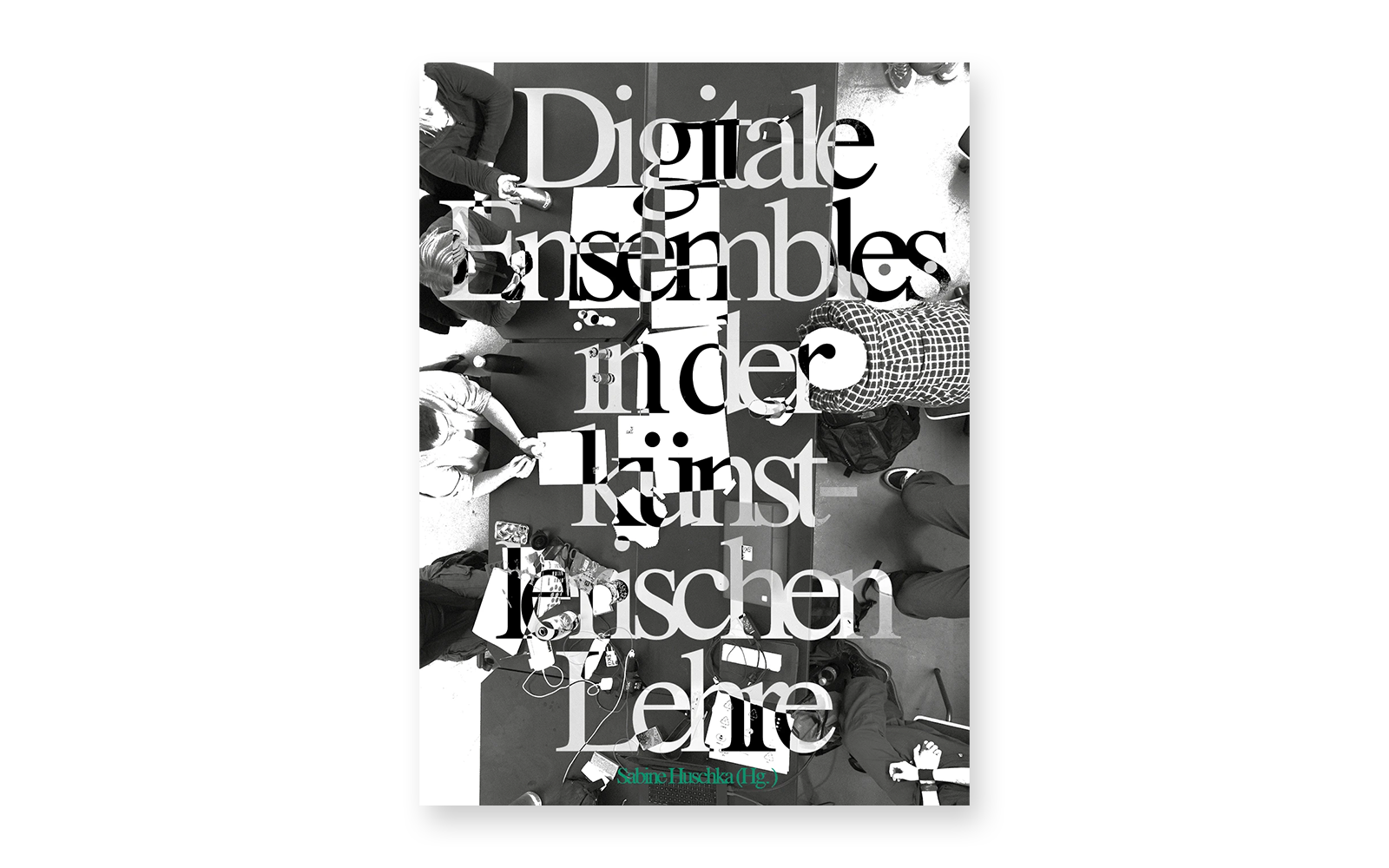
Digital Ensembles in Arts Education
Digital Ensembles in Arts Education provides insights into the five-year project currently underway at Berlin’s University of the Arts, combining cultural-historical and media theory considerations with artistic perspectives on art and the digital...
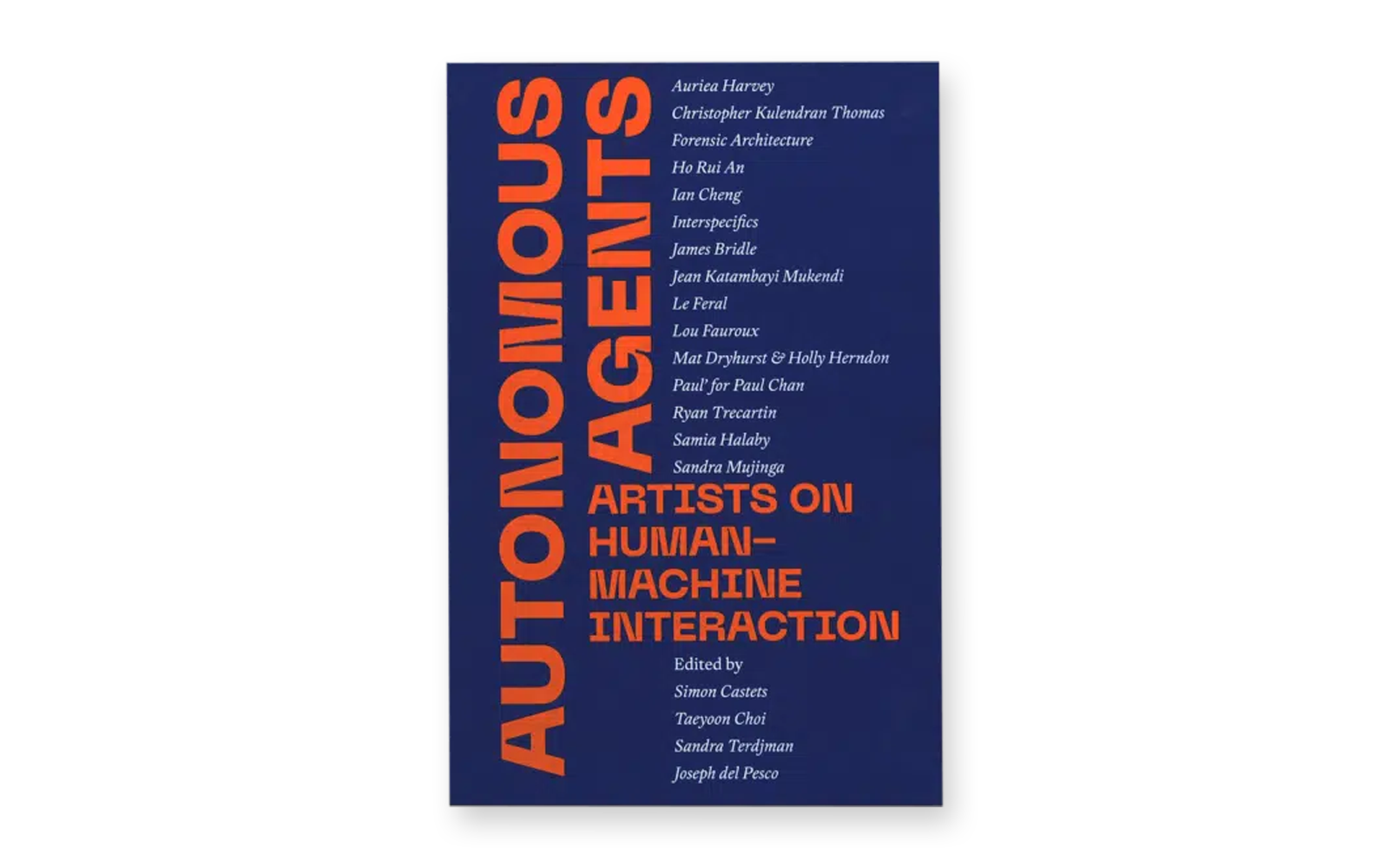
Autonomous Agents – Artists on Human-Machine Interaction
Autonomous Agents: Artists on Human-Machine Interaction captures a pivotal moment in AI’s impact on art and society through interviews with fifteen artists spanning diverse geographies, generations, and philosophies.
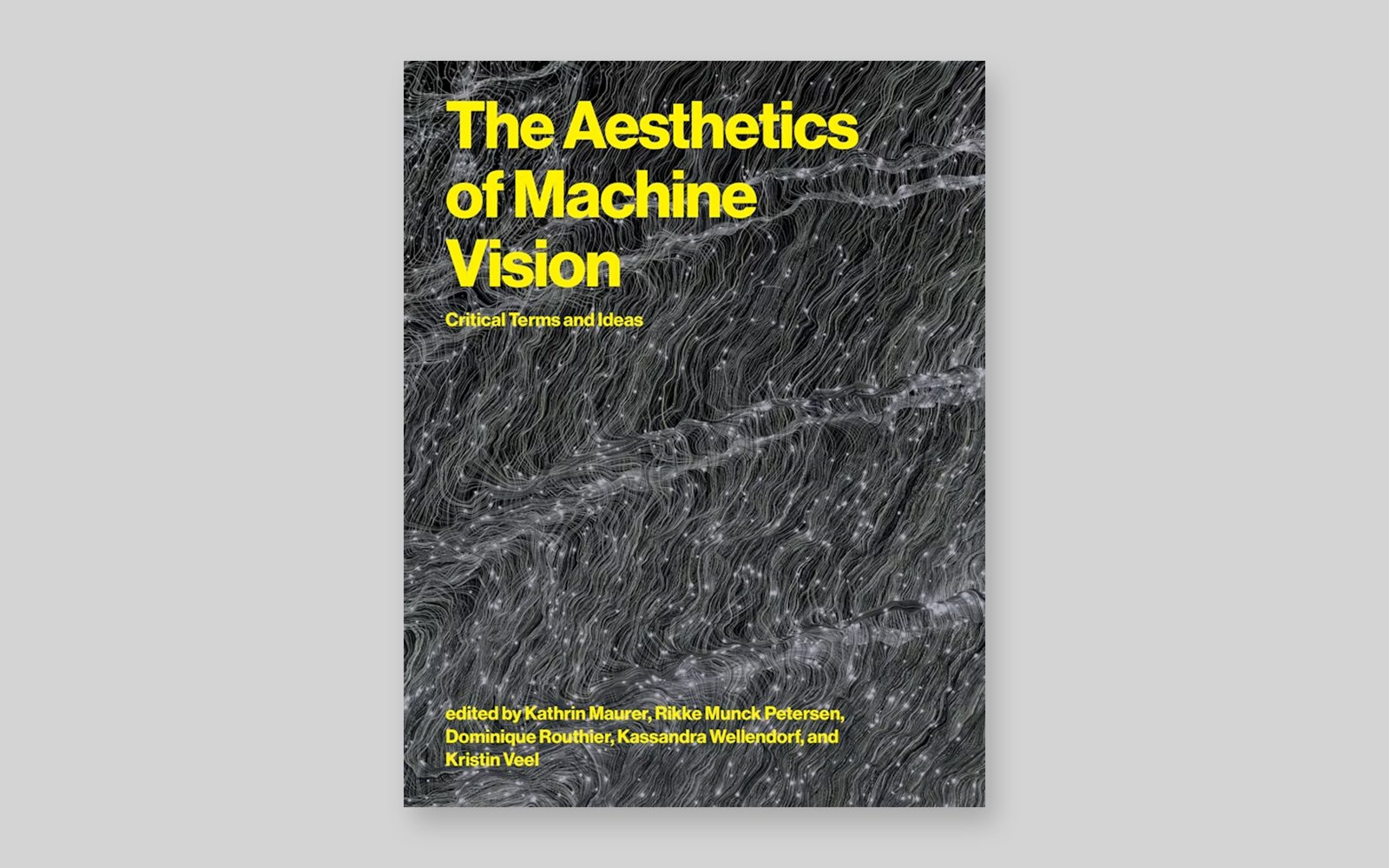
The Aesthetics of Machine Vision – Critical Terms and Ideas
The Aesthetics of Machine Vision brings together scholars, researchers, and artists who explore machine vision from various academic and nonacademic perspectives.
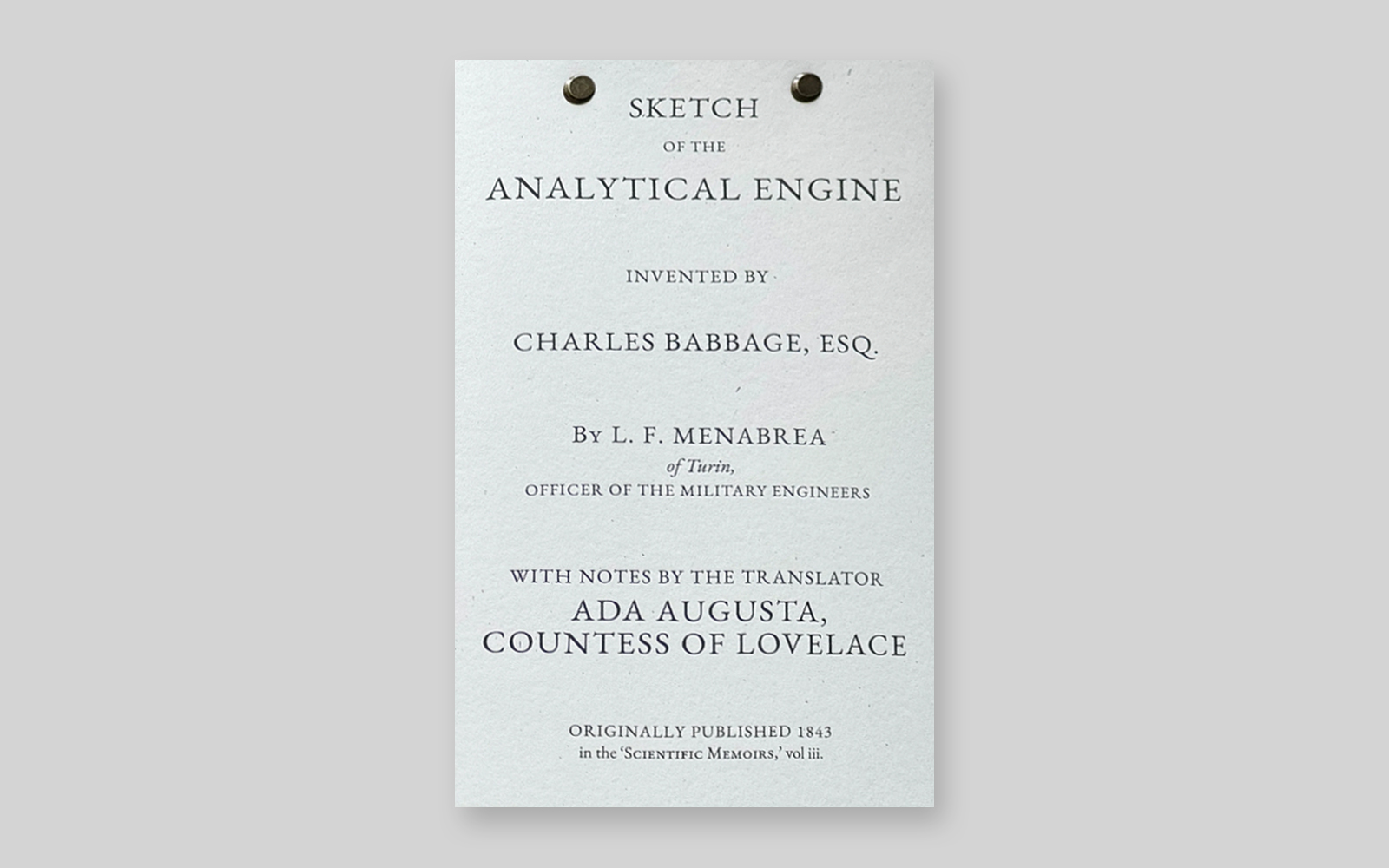
Ada Lovelace’s Notes on Babbage’s Analytical Engine
This book is a new typesetting and construction of Ada Lovelace’s extensive notes on the Analytical Engine Invented by Charles Babbage, from 1843.
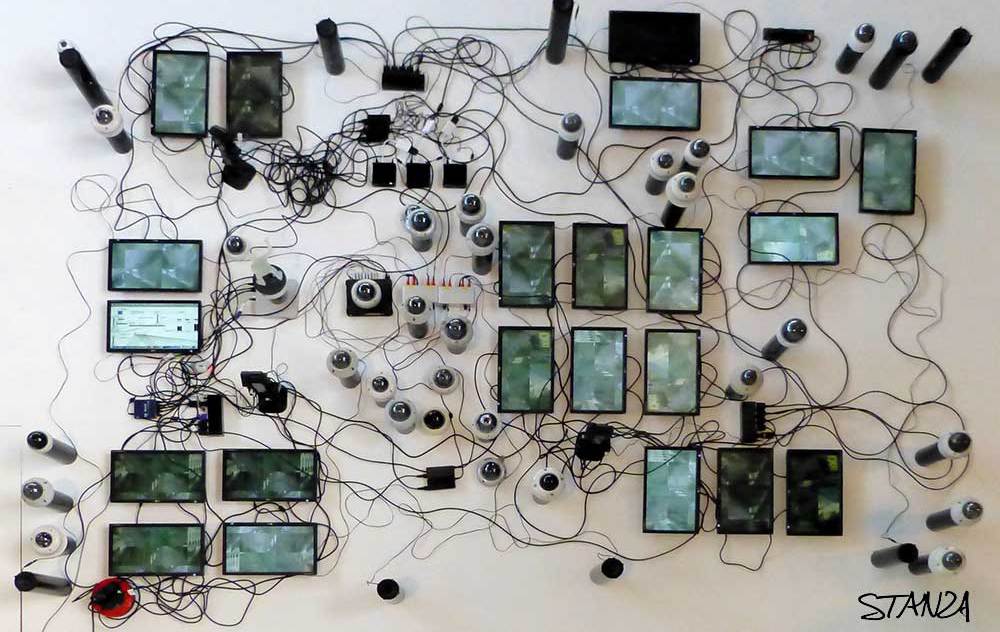
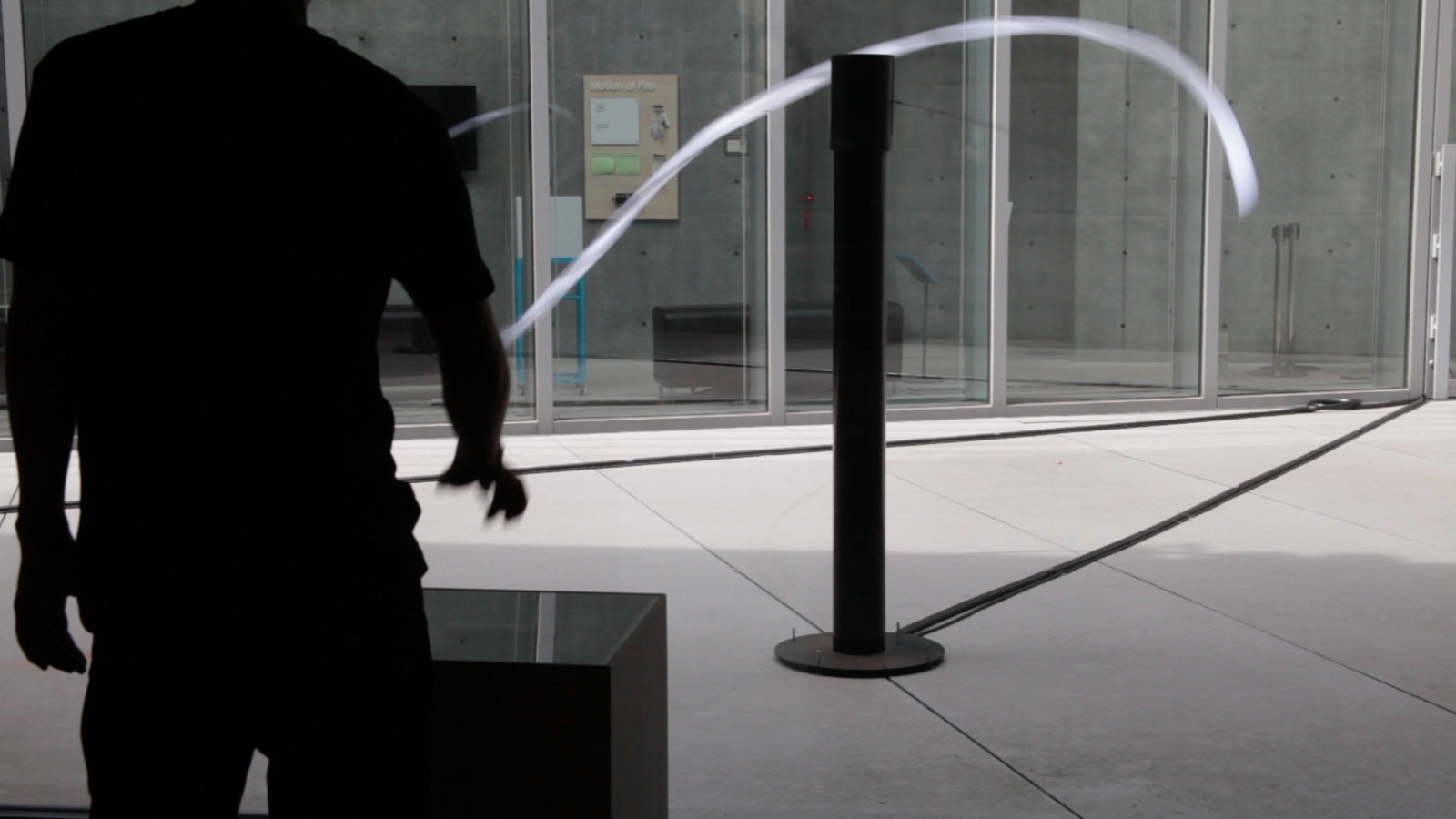
Trace Ribbon – An emergence by movement
Created by Shohei Fujimoto, Trace Ribbon is a device that automatically and continuously records and plays back movement. From reading the movements of the user via Leap Motion, it mirrors an organism that does not actually exist while simultaneou...
Tangibles Worlds – Adding a sense of material and touch to VR
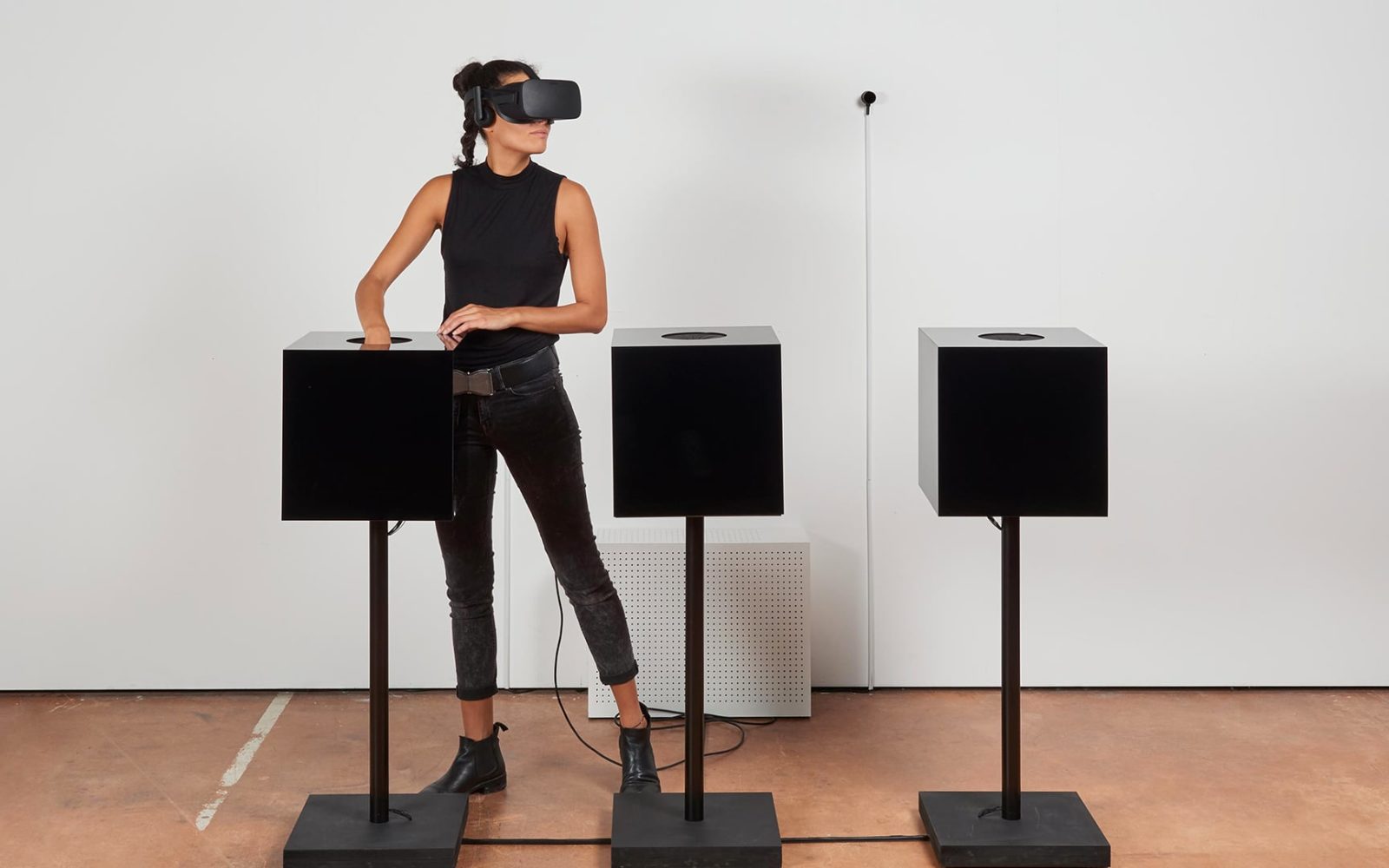
Created by Stella Speziali at ECAL, Tangibles Worlds explores the effects of tactile experience as a catalyst for full immersion in VR. It proposes a "black box" interface, an alt-plysical-universe to the VR experience, extending the immersion bey...
Make Something that Makes (almost) Anything – Cardboard CNC
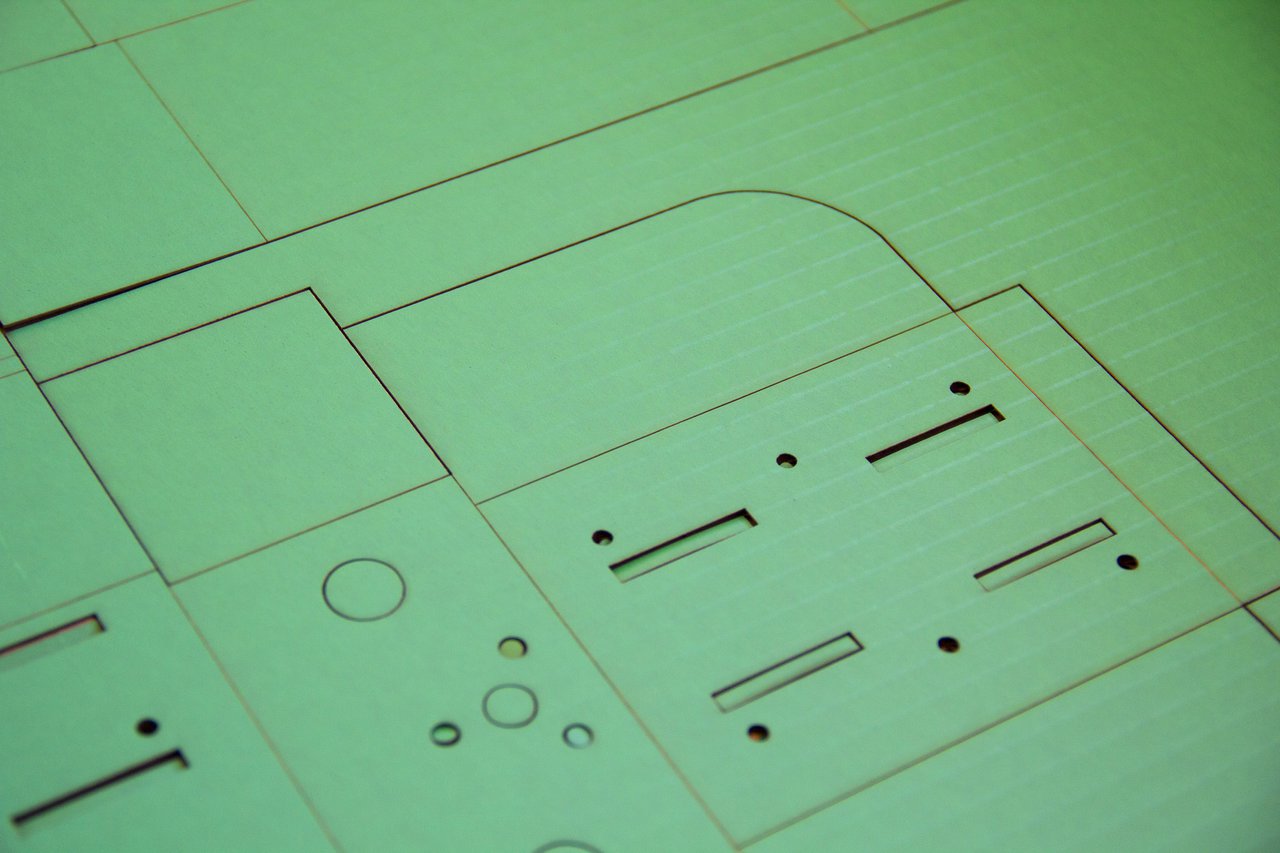
Cardboard construction kit and a framework for rapid machine prototyping developed at the MIT Media Lab, part of 'How to Make Something that Makes (almost) Anything' course.
After Urban Screens – Dave Colangelo on Massive Media
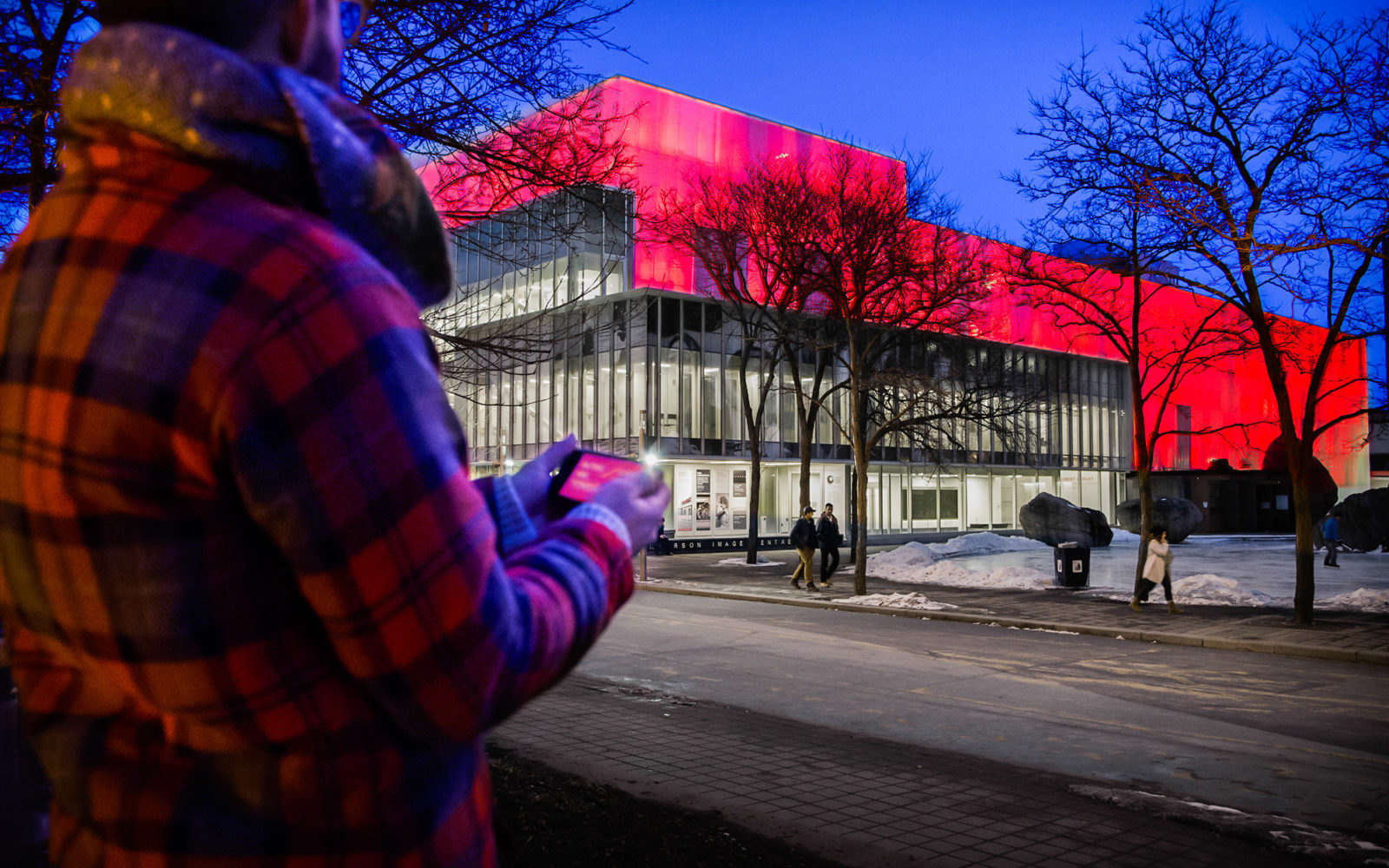
Dave Colangelo, a researcher and artist focused on the role media plays in the city. An Assistant Professor at the Portland State University in the School of Theatre + Film, and a member of the Public Visualization Studio, Colangelo chatted with C...

Holobiont Urbanism – City as a complex, adaptive, biological superstructure
Created by Regina Flores, Holobiont Urbanism is a research project that sets out to study, map, and visualize the microbiome of New York City, inviting participants to reimagine the city they live in as more than a vast metropolis, but rather as a...
CAN 2017 – Highlights and Favourites
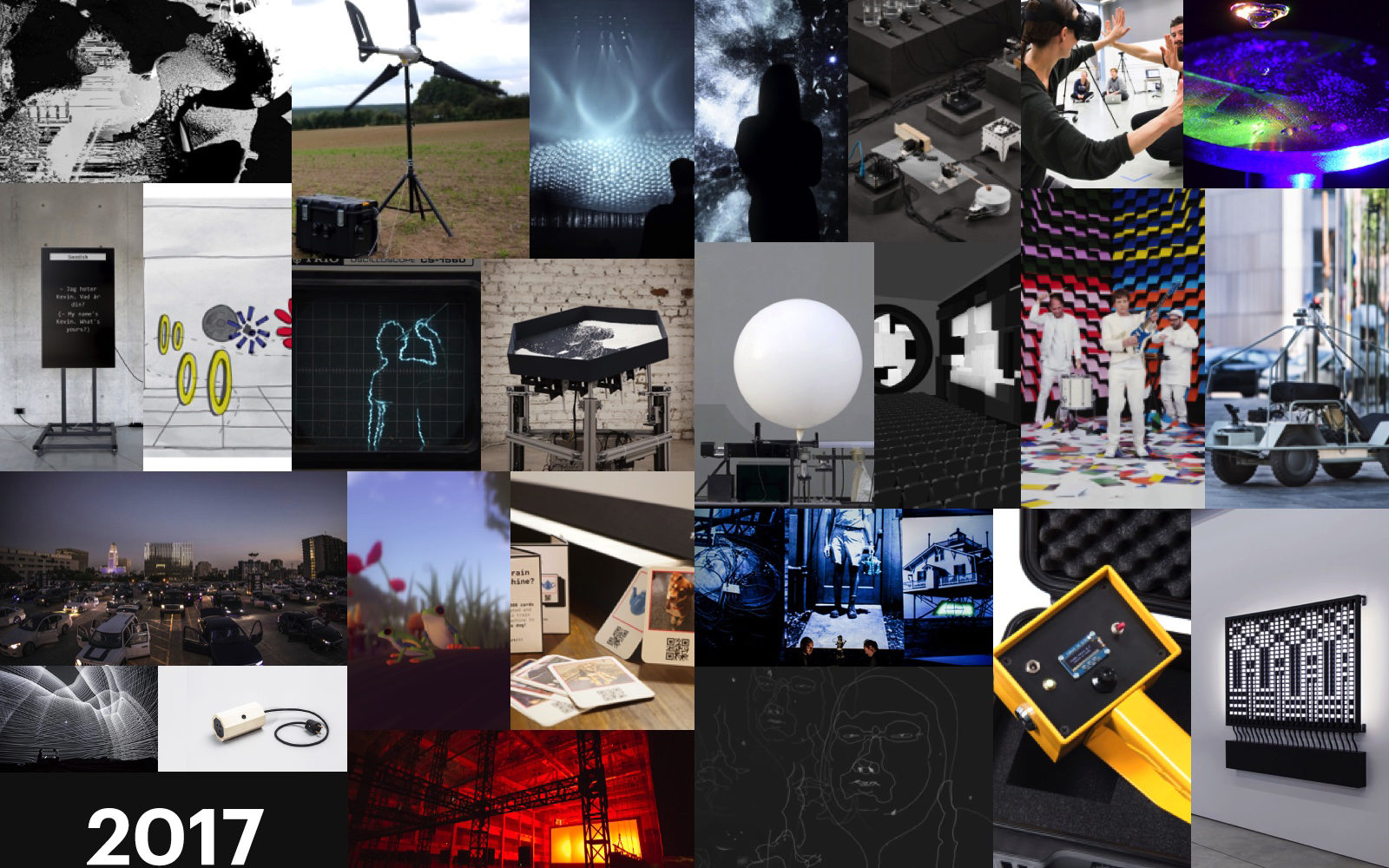
As 2017 comes to a close, we take a moment to look back at the outstanding work done this year. From spectacular peformances, large scale installations, devices and tools to the new virtual spaces for artistic exploration – so many great projects ...
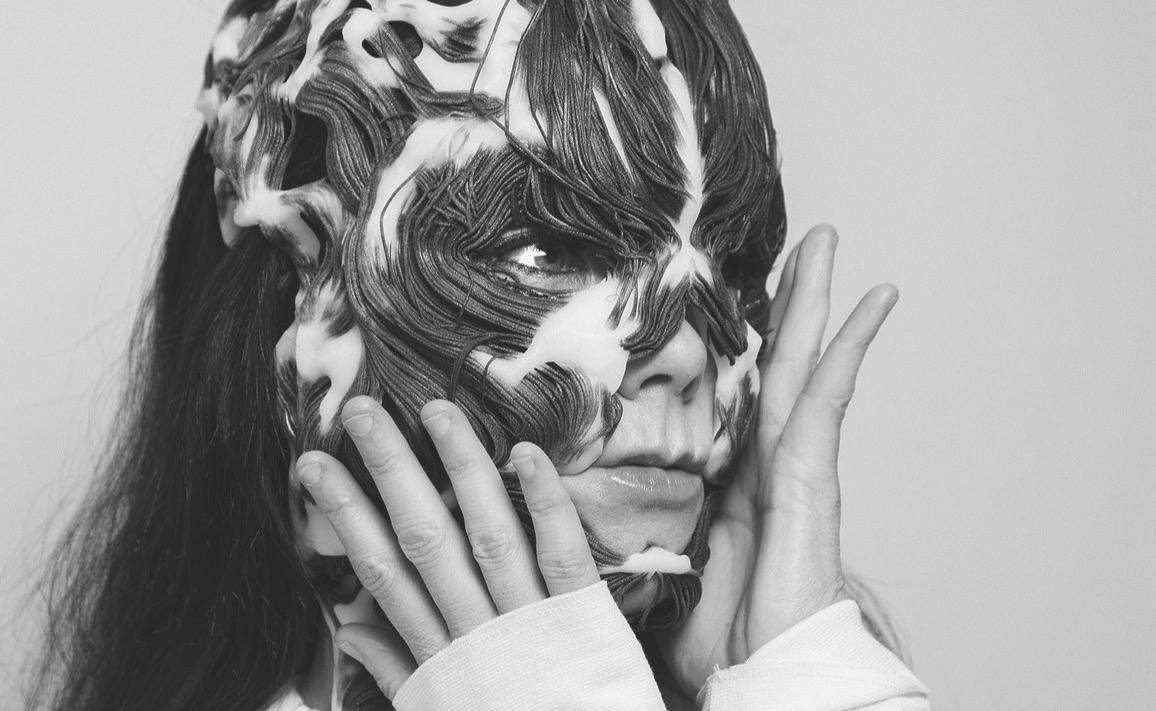
‘Rottlace’ masks for Björk by the Mediated Matter Group / MIT Media Lab
Designed by the Mediated Matter Group in collaboration with Stratasys and inspired by her most recent album—Vulnicura, The Rottlace is a series of masks for Björk, exploring the themes associated with self-healing and expressing ‘the face without ...
May The Force Be With You – Teo Park
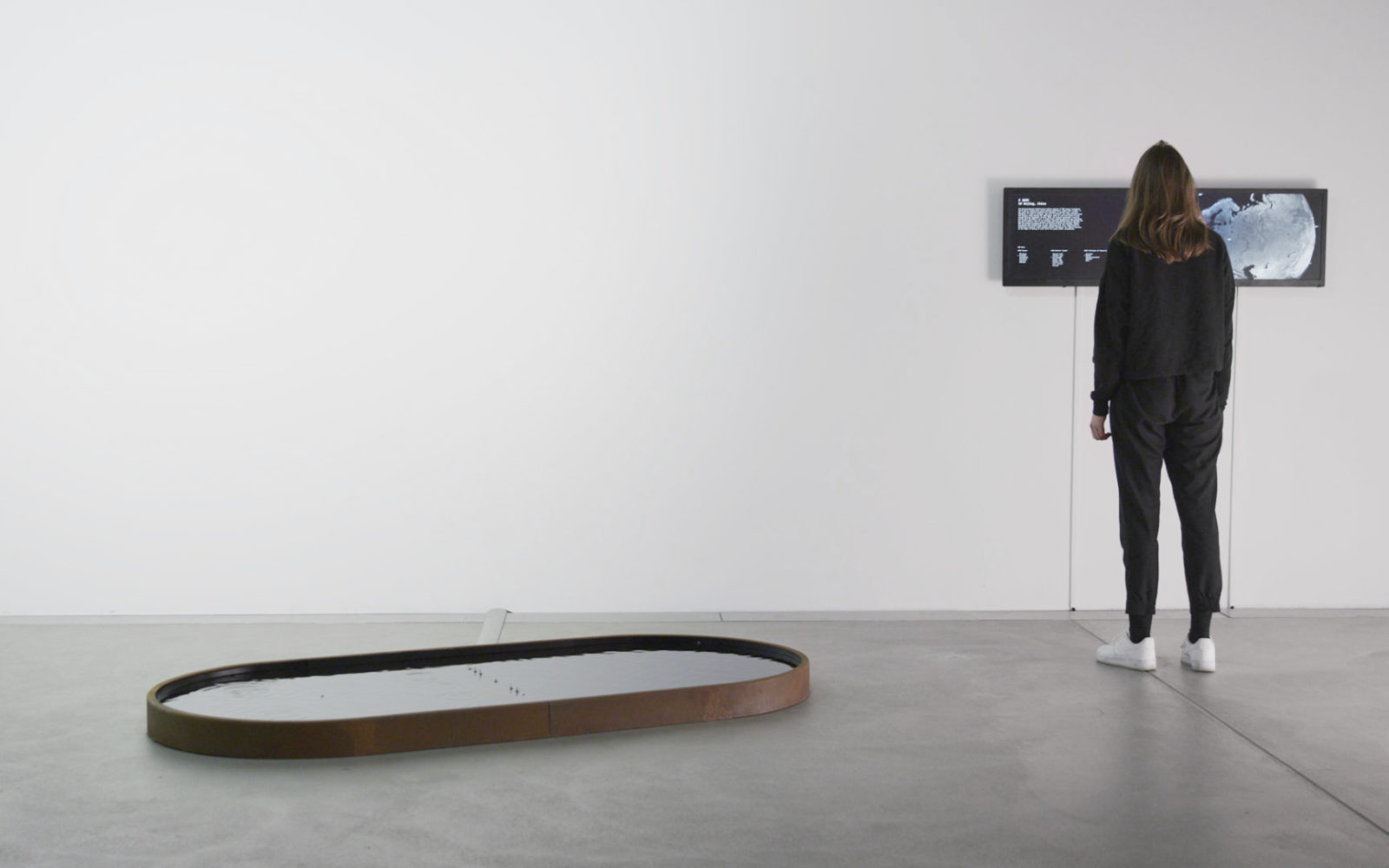
Created by Seoul based artists Teo Park, "May the Force be With You" is a kinetic installation that invites visitors to interact with an interactive water tank. The tank uses gravitational force driven by the position of the viewer's hand movement.
