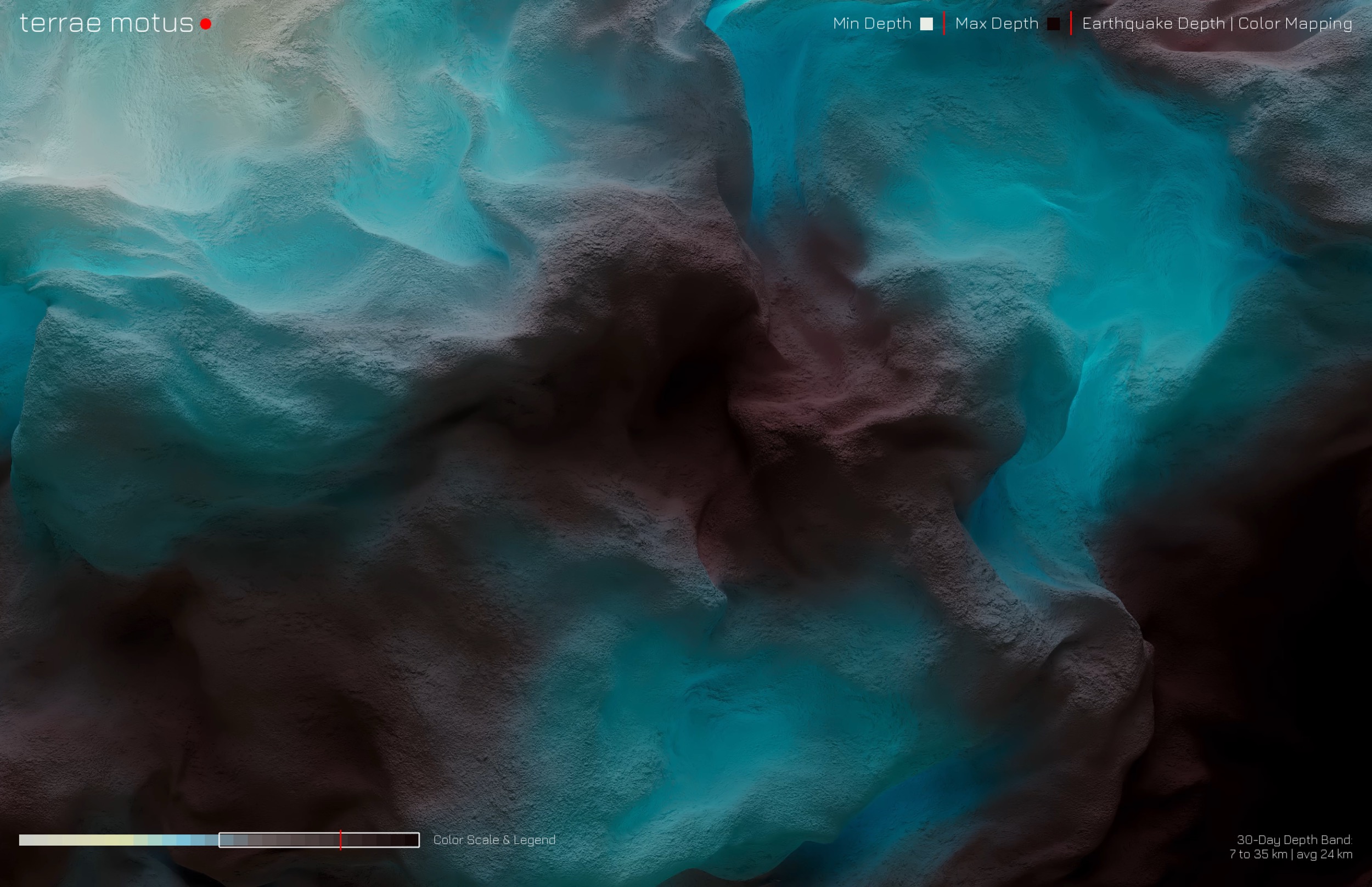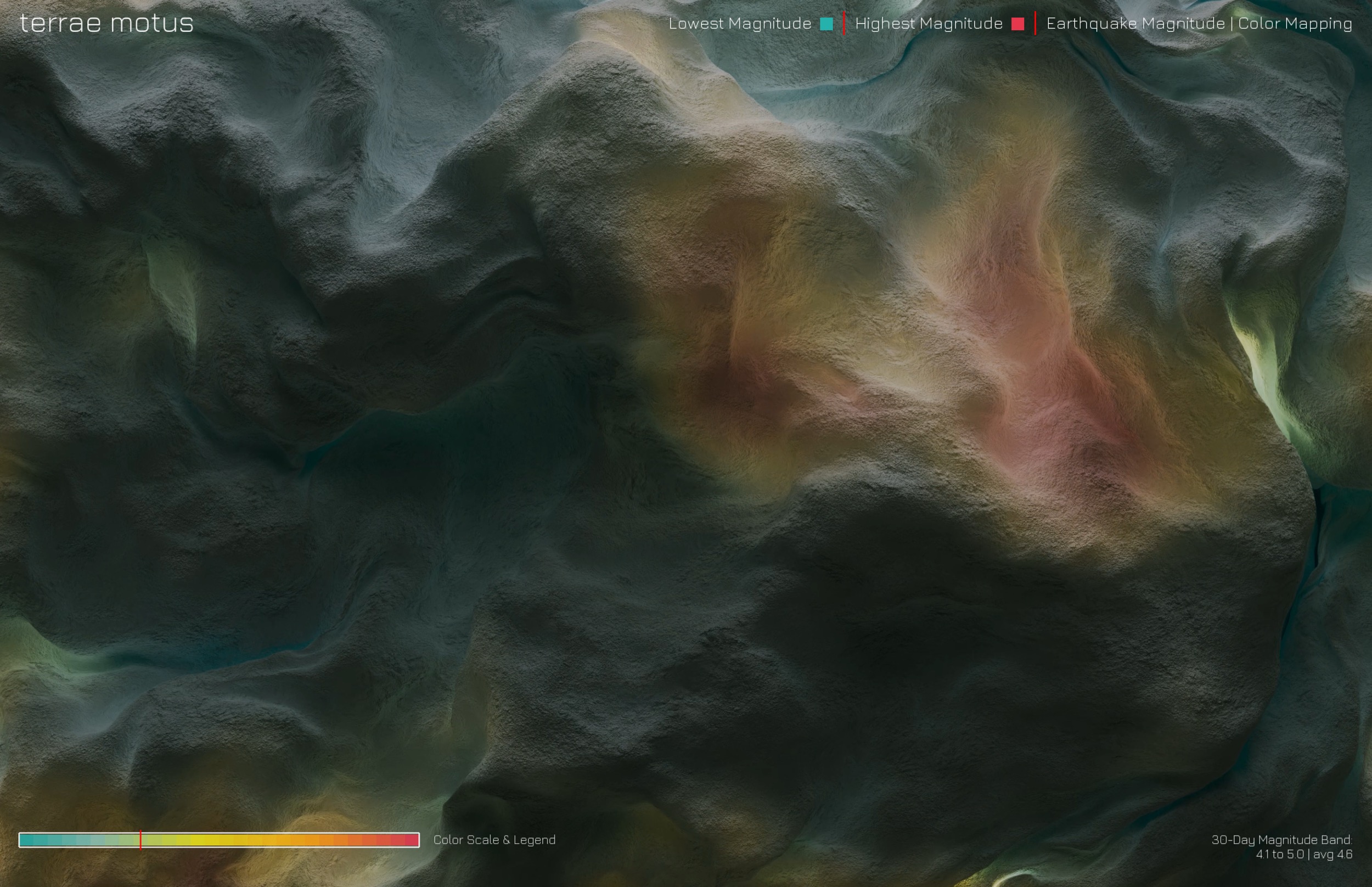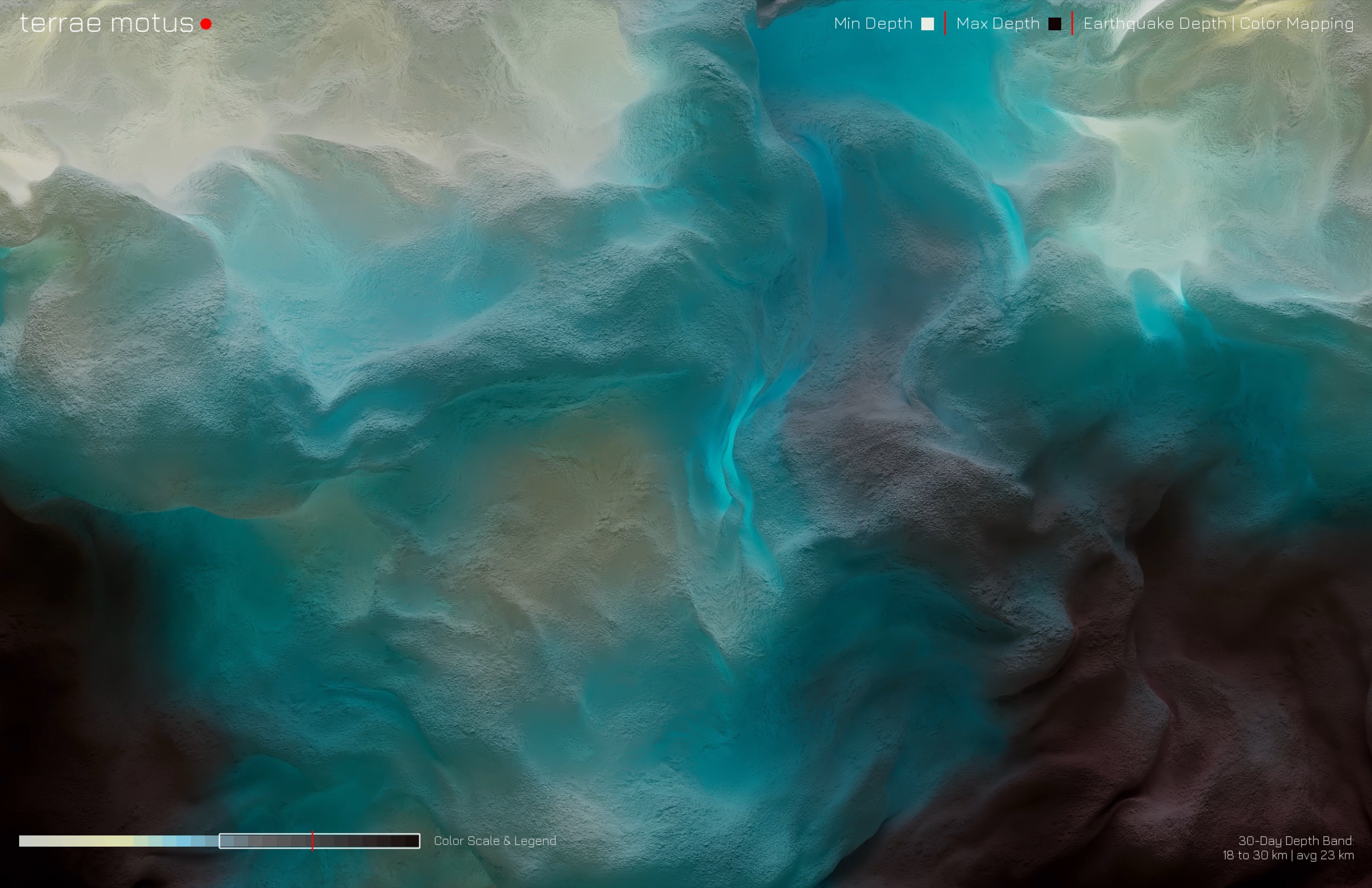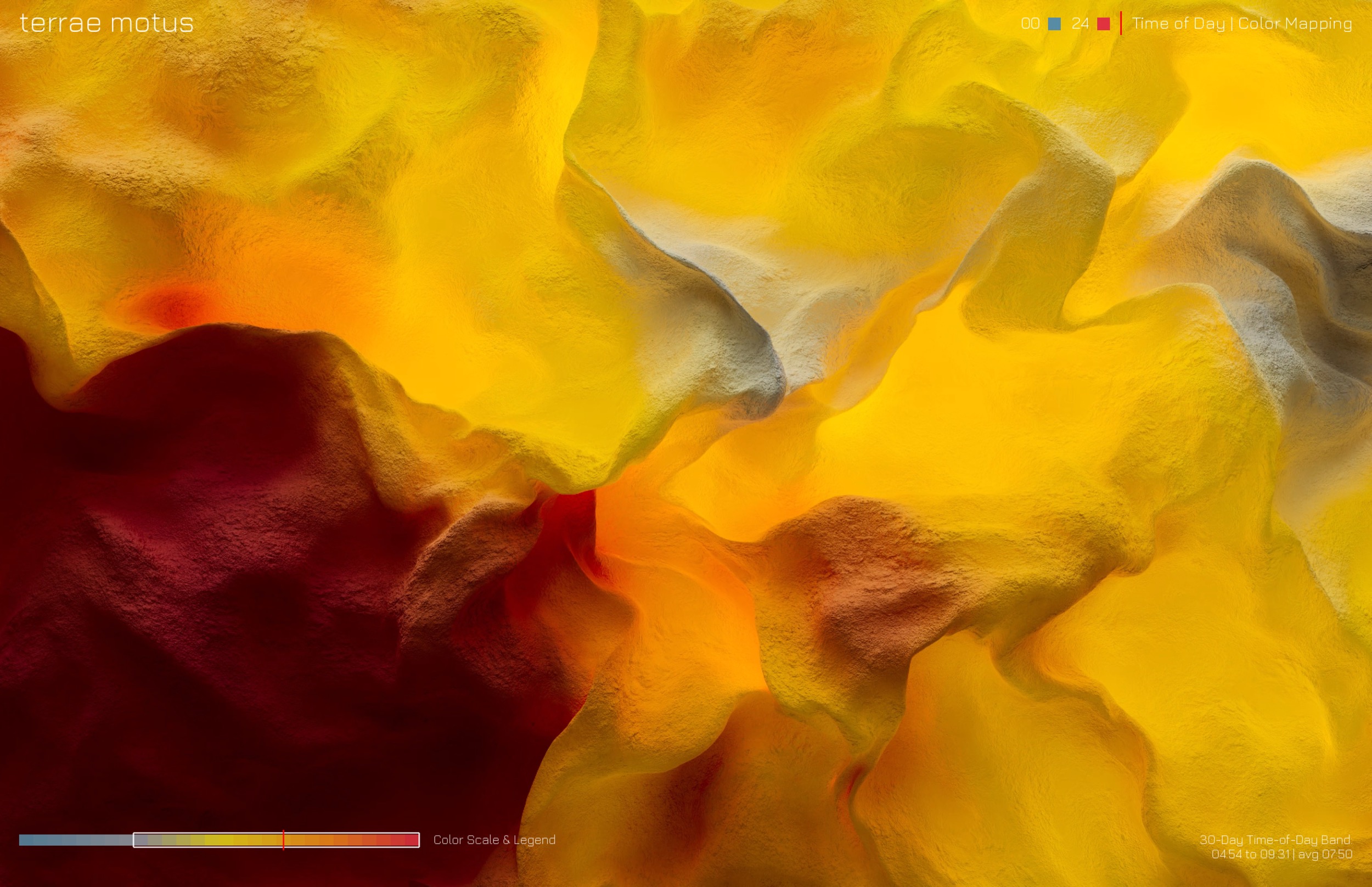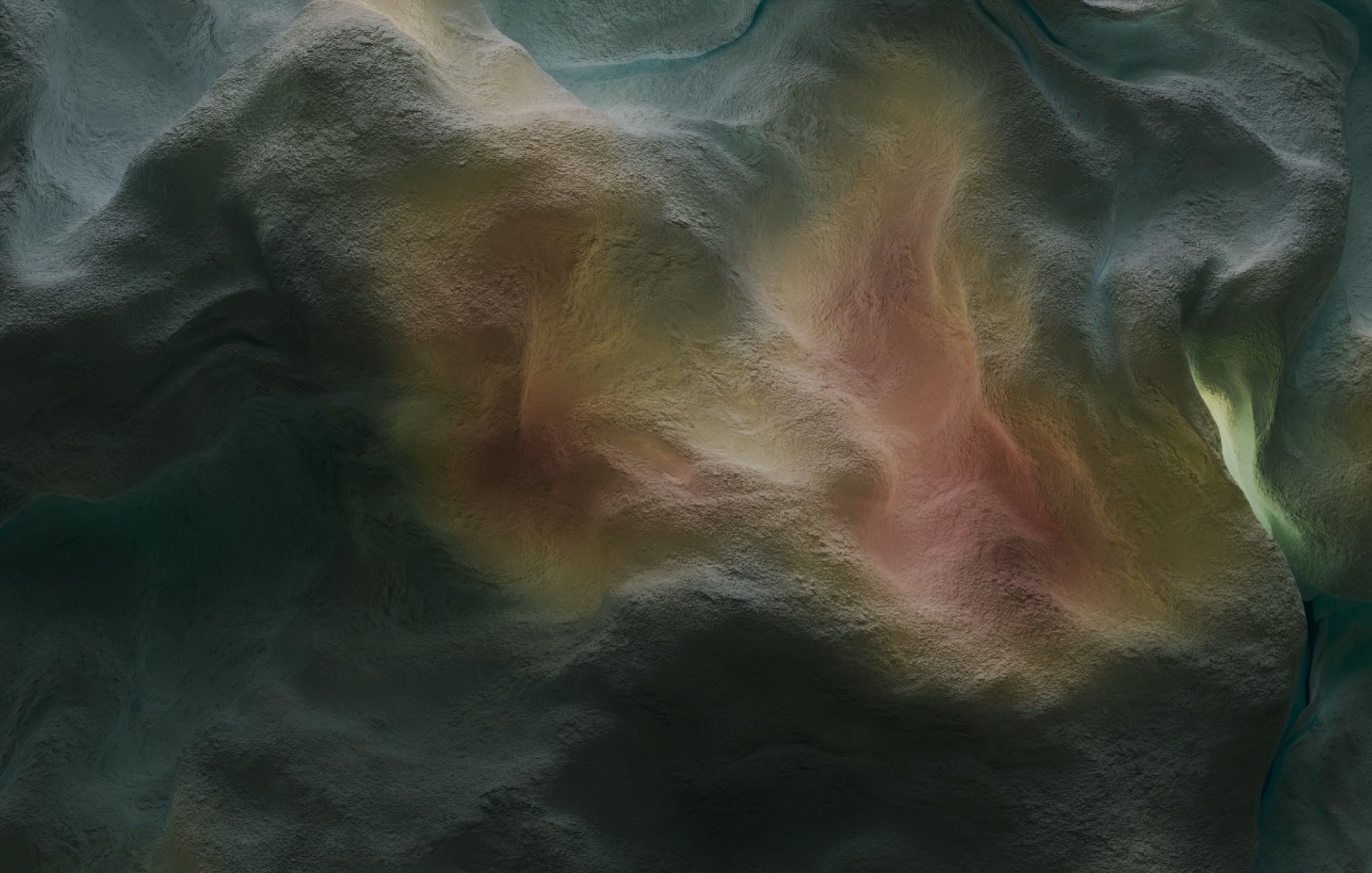
Terrae Motus aims to reinterpret earthquake data beyond purely scientific representation, situating it within a visual and sonic art practice.
The project transforms comprehensive earthquake data recorded in Türkiye from 1900 to the present into an interactive and multi-sensory experience through a real-time, data-driven custom software system. By bringing together data visualisation, interactivity, and sonification, Terrae Motus treats data both as a source of information and as a medium of artistic expression, establishing a space that enables a two-way engagement between scientific accuracy and artistic interpretation, offering audiences the opportunity to directly experience the multi-layered nature of data.
Developed using a custom software system in openFrameworks, the project visualizes more than 430,000 recorded earthquakes and 6.5 million data points from Türkiye and the surrounding region between 1900 and 2025. Instead of conventional graphs and maps, seismic information is reimagined as a living, time-based audiovisual ecosystem in which each earthquake becomes a dynamic visual and sonic event.
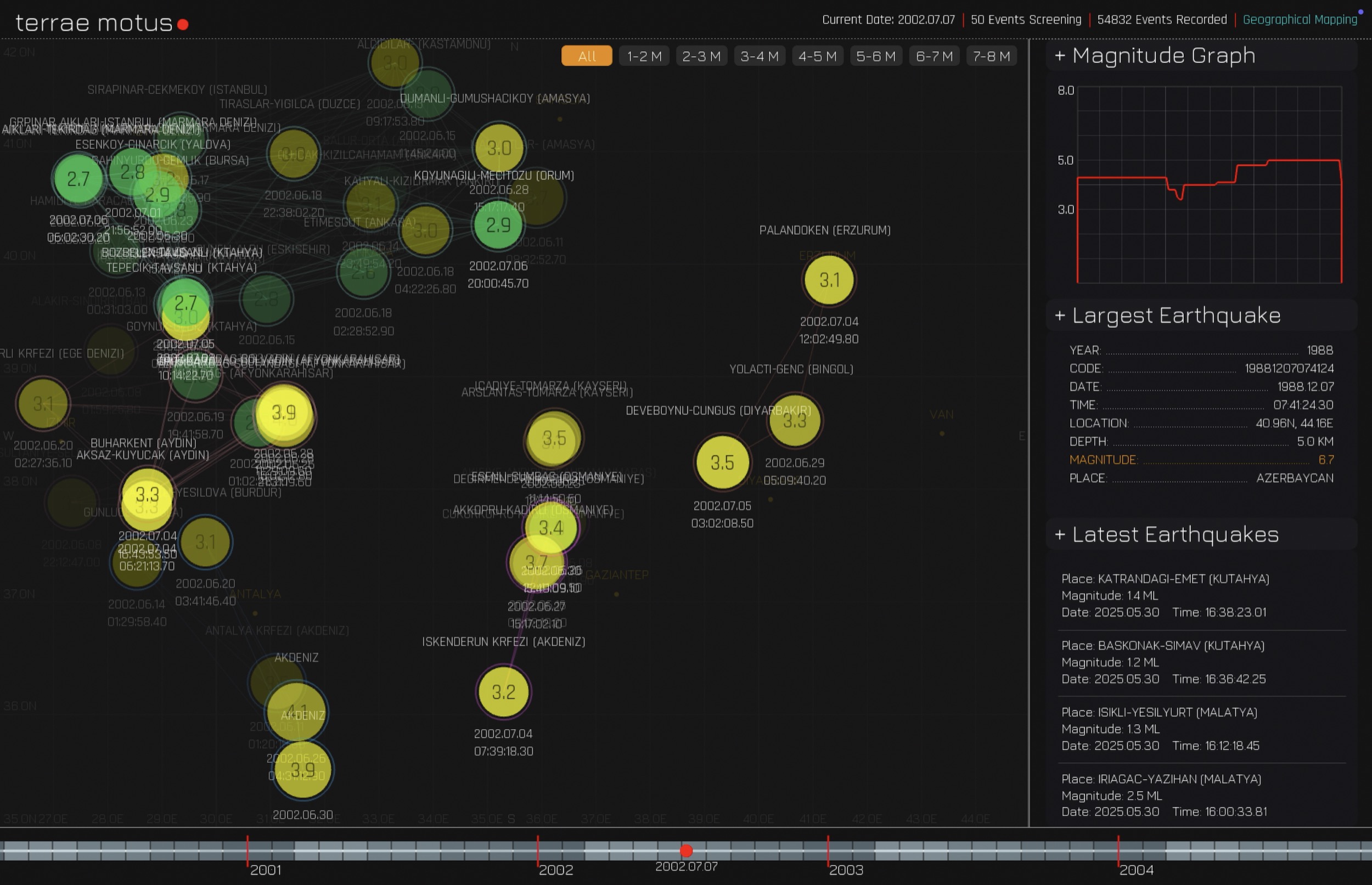
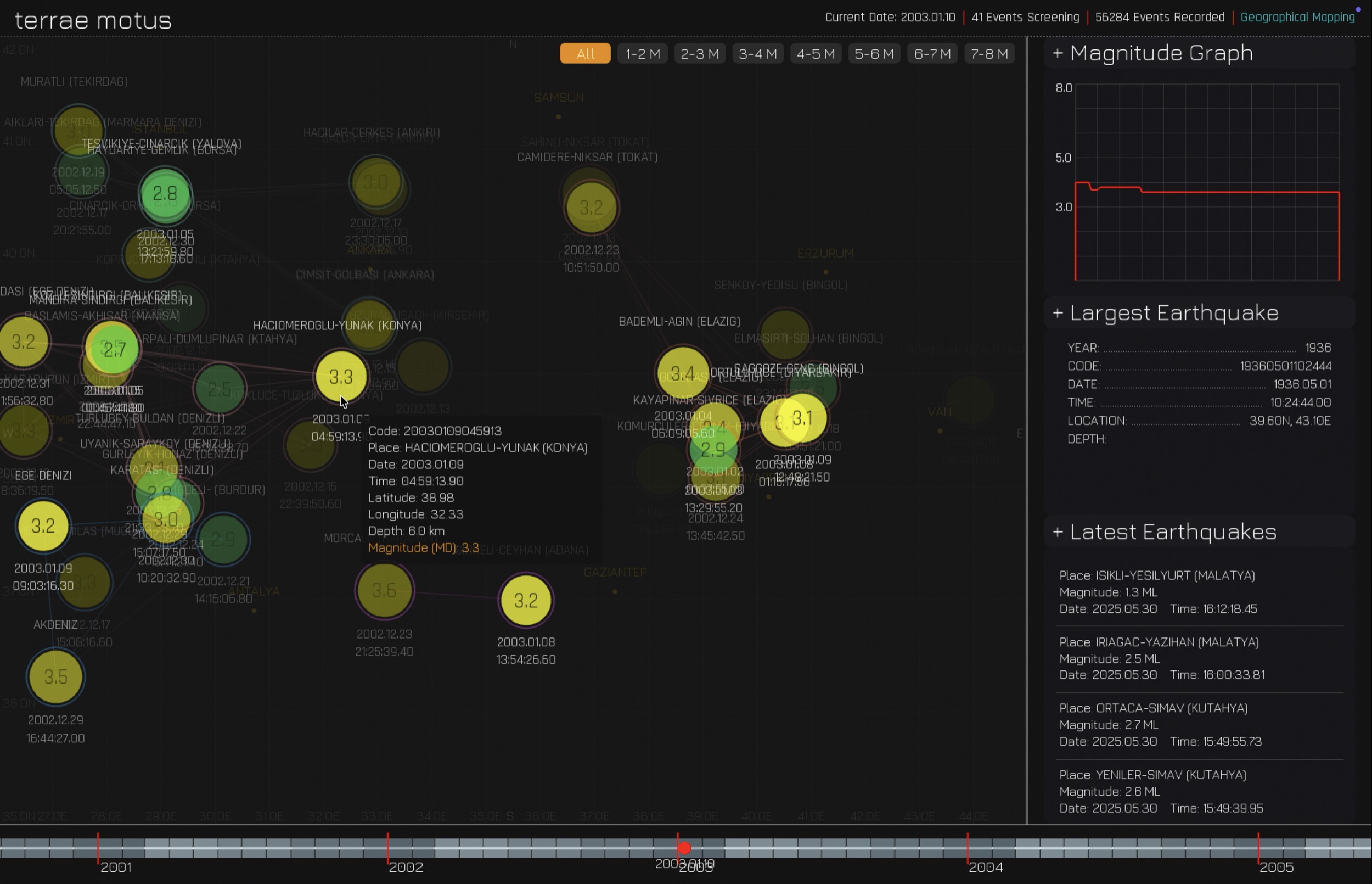
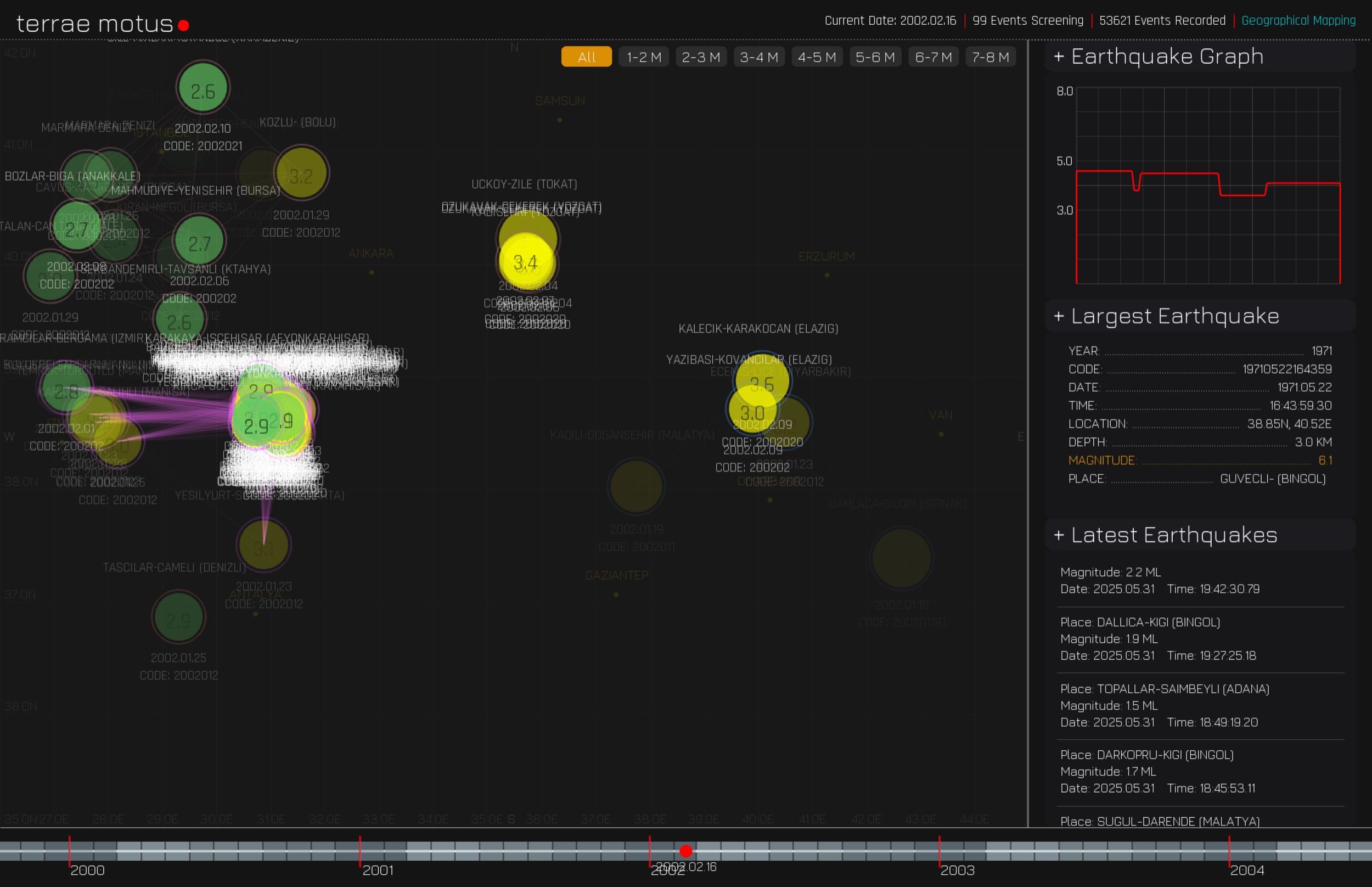
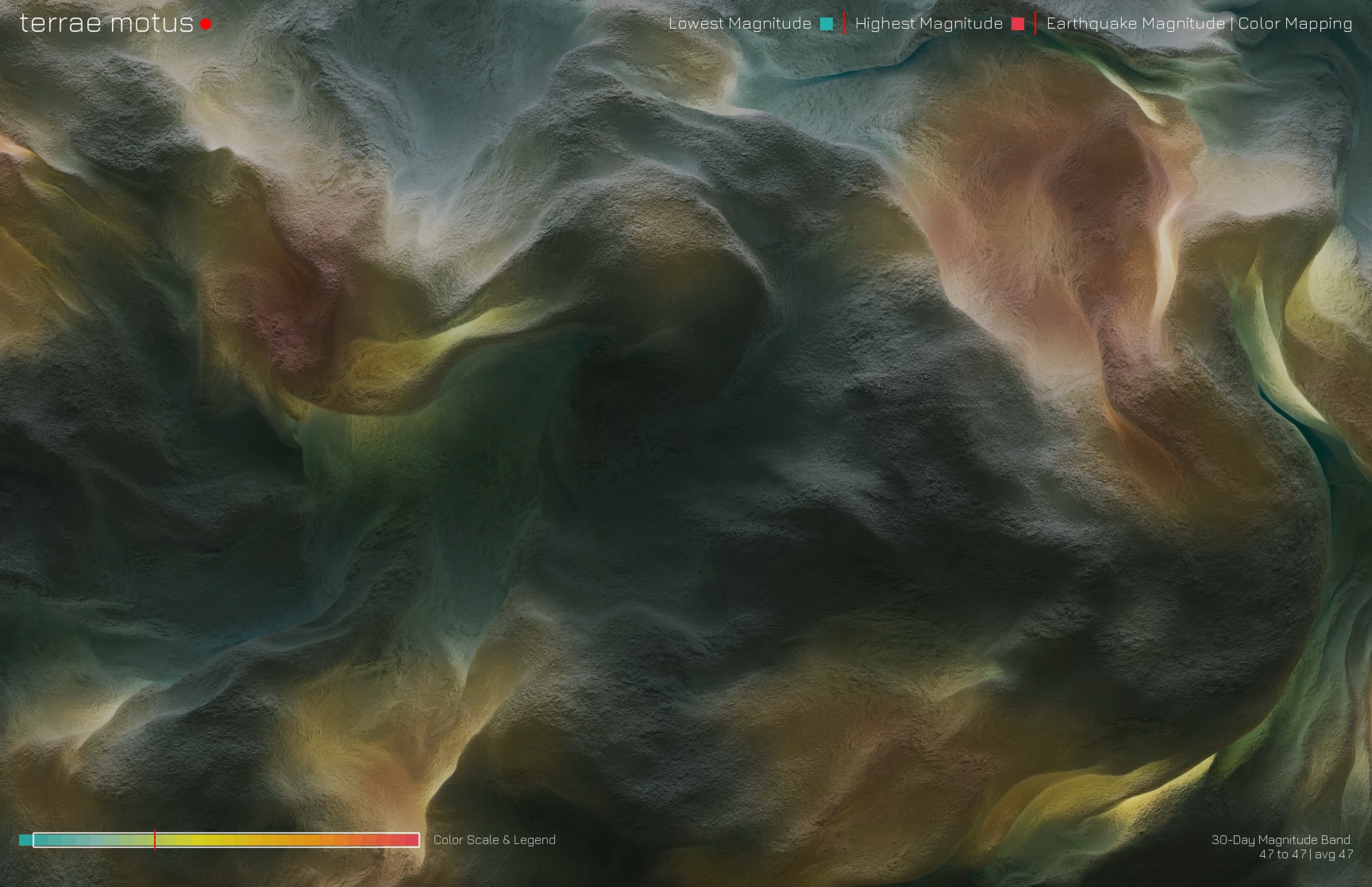
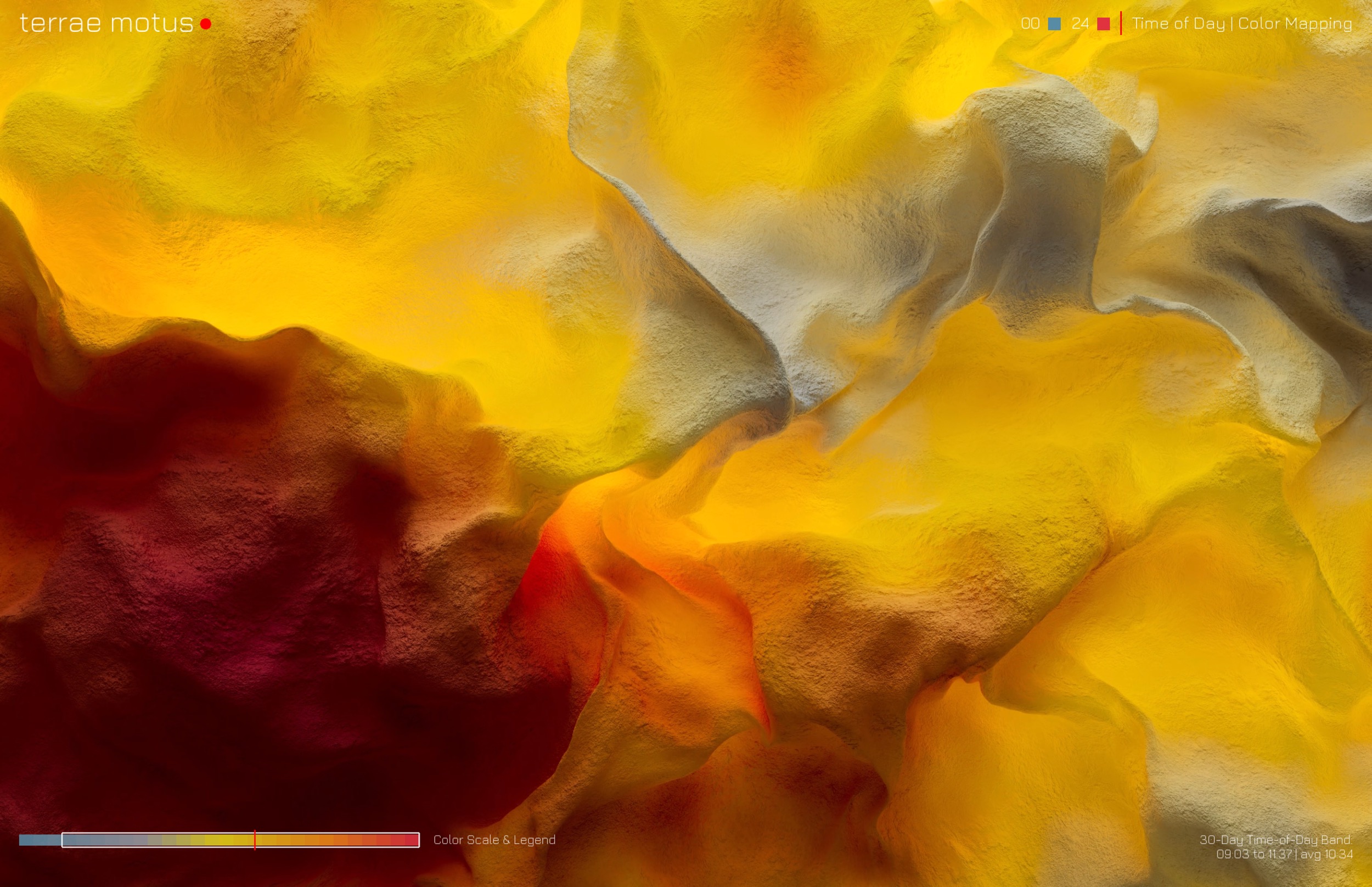
The installation operates through a dual-screen setup. The primary screen presents an evolving timeline where earthquakes appear as abstract visual nodes. Their size, color, and lifespan correspond to parameters such as magnitude, depth, and time, forming a continuously changing landscape of geological movement. The secondary screen reinterprets this flow through video simulations and real-time color analysis, translating statistical patterns into perceptual visual fields.