Online for 6,498 days (17 years, 9 months, 16 days), published 4,177 articles about 2,925 people, featuring 204 tools, supported by 1,733 members, and providing access to 450 students.
STextCopy to Clipboard (Text) Title + (Year) + People + URL/ImageGenerate Image PNG File Download (1080x1920) Copy URL to Clipboard
The Museum of Fine Arts, Boston (MFA) commissioned Nervous System to create a new dress for the exhibition #techstyle which runs from March 6 through July 10, 2016. The exhibition explores the synergy between fashion and technology and how it is not only changing the way designers design, but also the way people interact with their clothing.
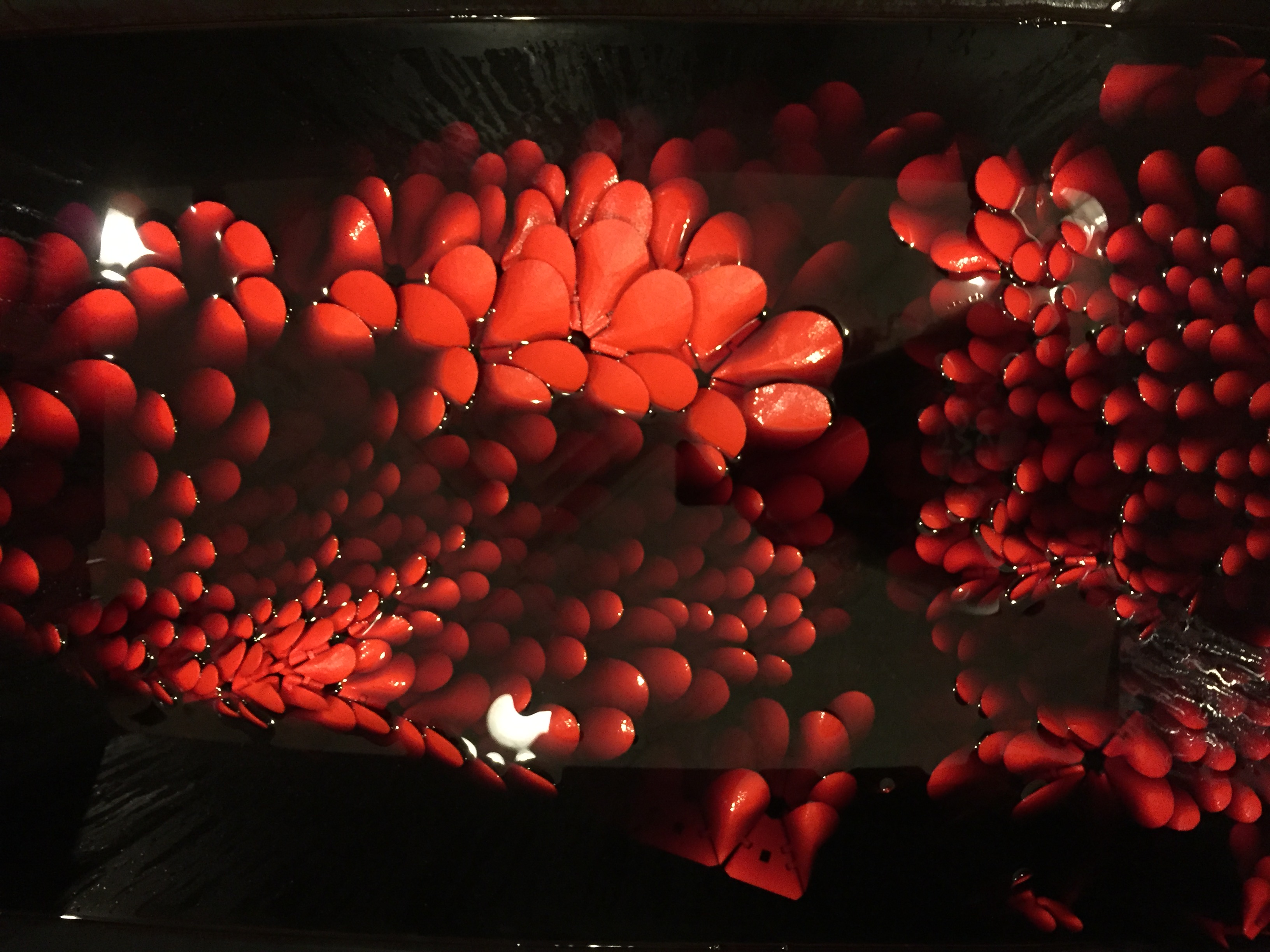
Inspired by petals, feathers and scales, we developed a new textile language for Kinematics where the interconnected elements are articulated as imbricating shells. Like our previous garments, this dress can be customized to the wearer’s body through a 3d scan, and additionally, each element is now individually customizable: varying in direction, length, and shape.
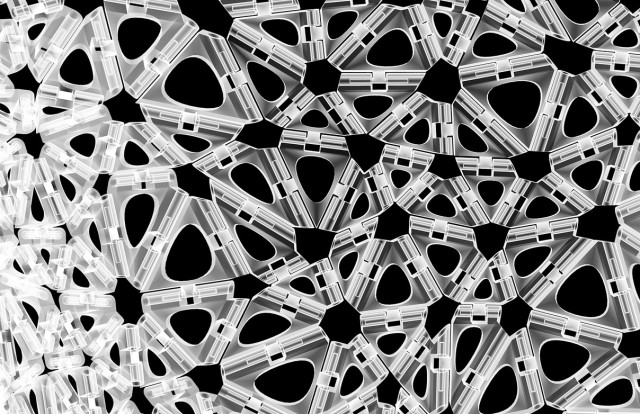
Petals protrude from the underlying framework of tessellated triangular panels, sheathing the body in a directional landscape of overlapping plumes. Each interlocking component of the dress is rigid, but, in aggregate, they behave as a continuous textile. The dress is 3D-printed in durable nylon plastic by Selective Laser Sintering. While the design is composed of more than 1600 unique pieces interconnected by more than 2600 hinges, it emerges from the 3D printer fully assembled and ready to wear. We employ a smart folding strategy to compress Kinematics garments into a smaller form for efficient fabrication. By folding the garments prior to printing them, we can make complex structures larger than a 3D printer, that unfold into their intended shape.
To make this dress possible, we developed new design software and simulation tools. The overlapping petals necessitated a new strategy for compressing the garment for efficient 3D-printing. You can read about the new developments below and also see them documented in the video above. For more background on our Kinematics system, please refer to the project page.
We use cookies to ensure that we give you the best experience on our website. Please be aware that your experience may be disrupted until you accept cookies.