Partition is a pen plotter that draws at the speed of your heartbeat, sensed through a gallery wall without your consent.
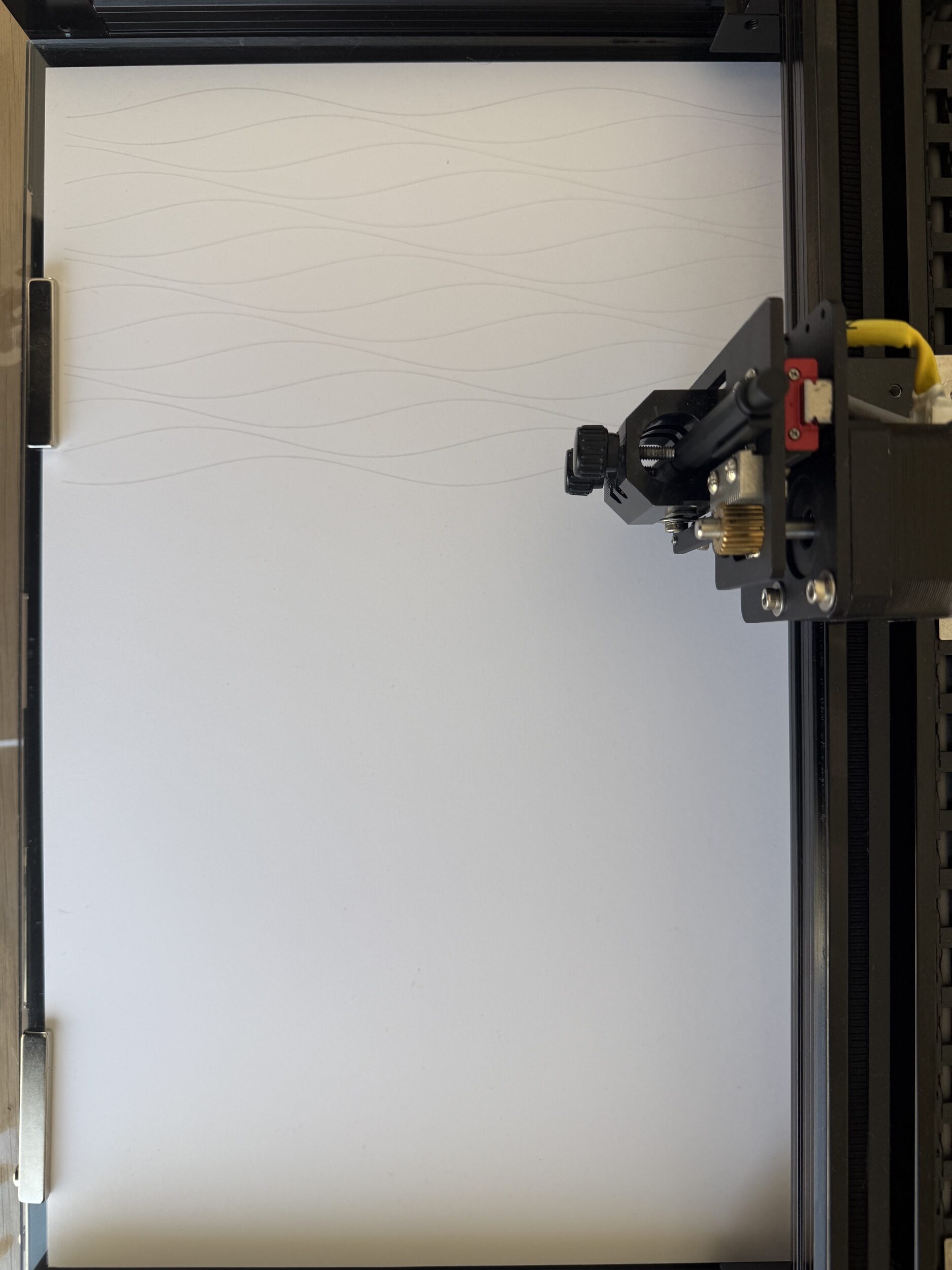
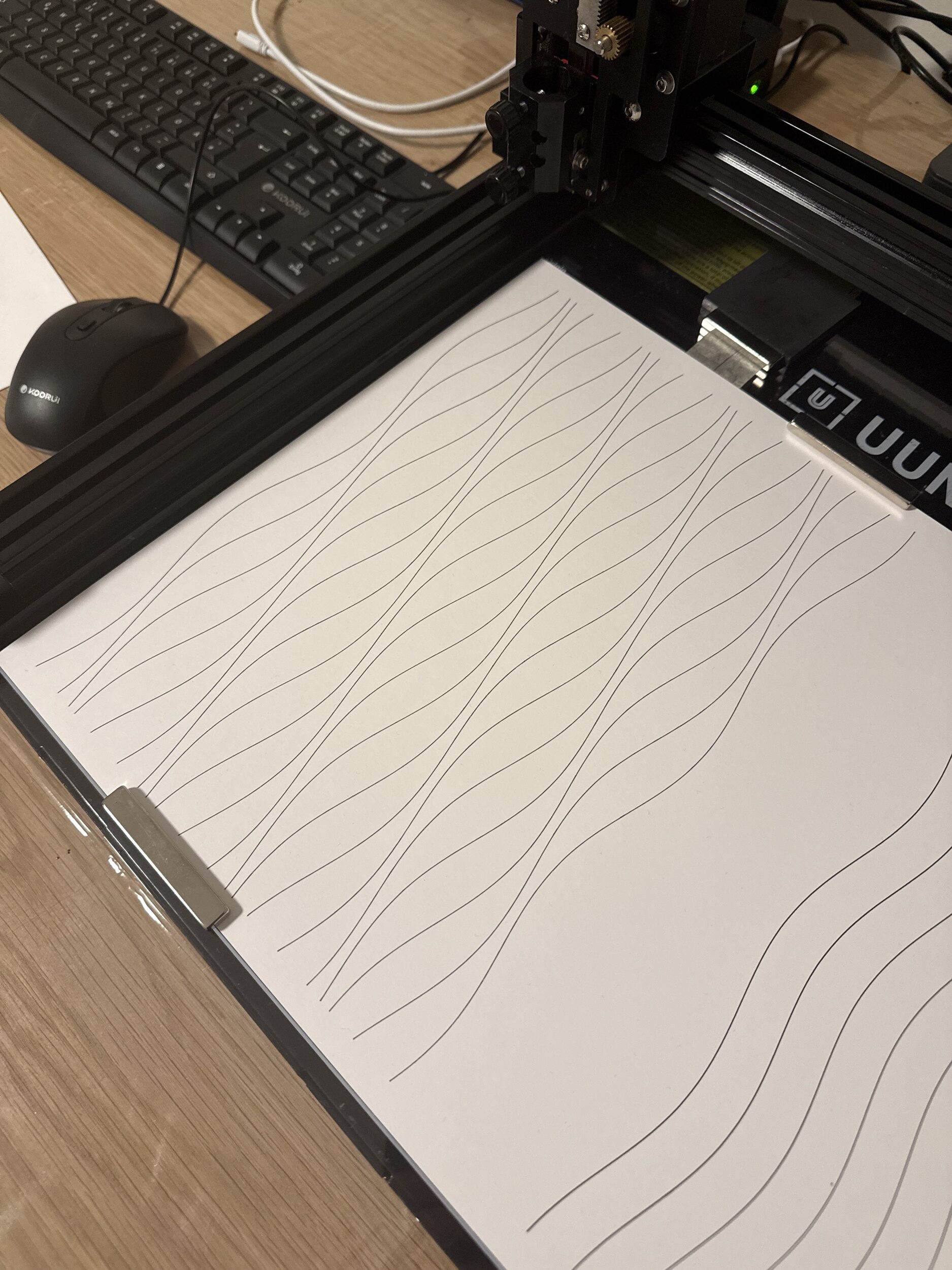
You press your face to a wall to look through a peephole. On the other side, you see a machine on a table that draws a continuous sine wave. The pen moves in small increments. It moves, it stops. It moves, it stops. Sometimes it moves fast, sometimes slower. The rhythm is irregular. The sound of the stepper motors changes with the speed of the drawing.
The velocity of the pen comes from your heartbeat. Unknowingly to you, microcontrollers on the other side of the wall detect your cardiac rhythm. They use disturbances in the WiFi network to read every single one of your heartbeats. The wall is opaque to you but transparent to the machine. The wall that hides the machine from you doesn’t hide you from the machine.
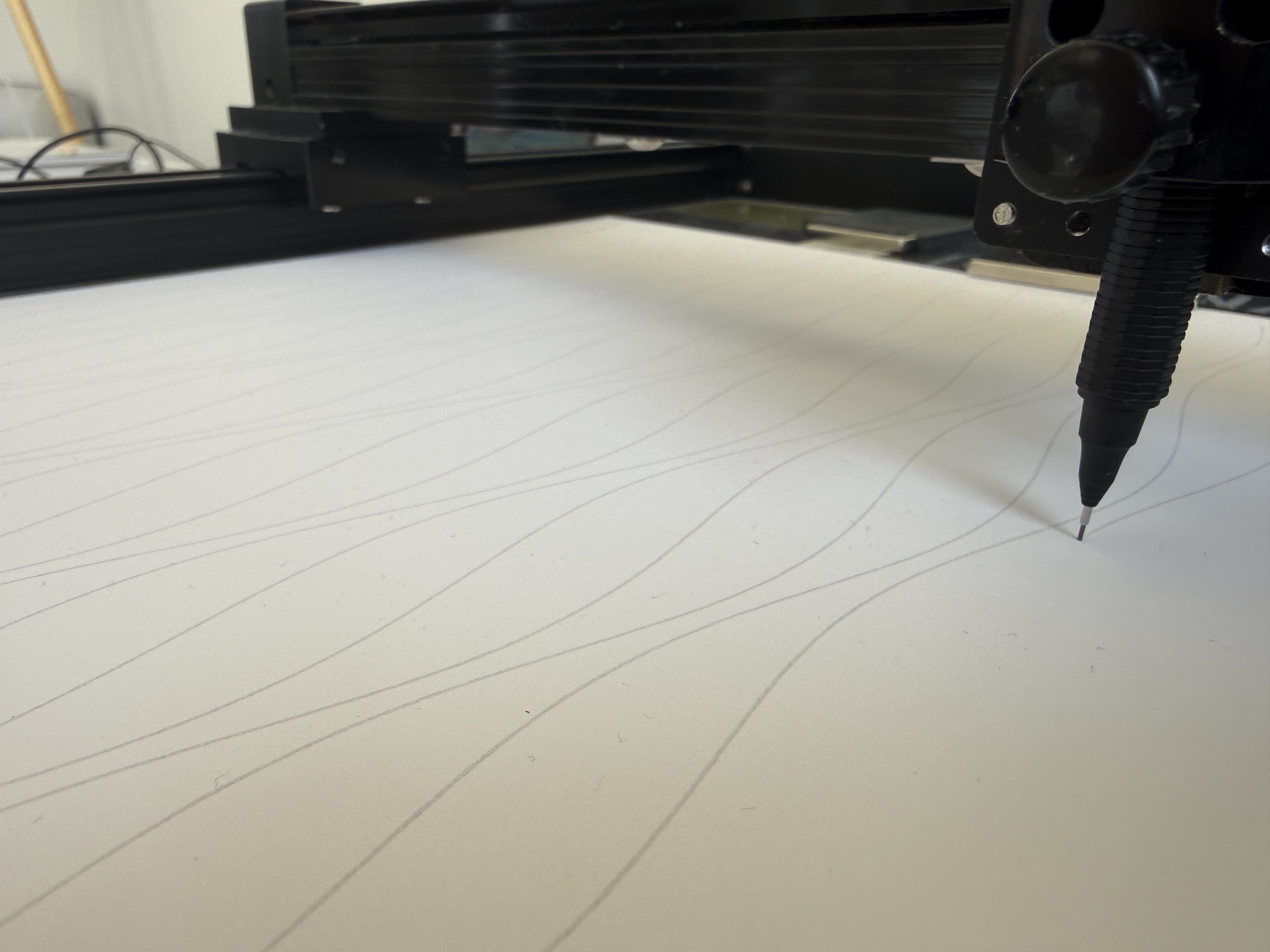
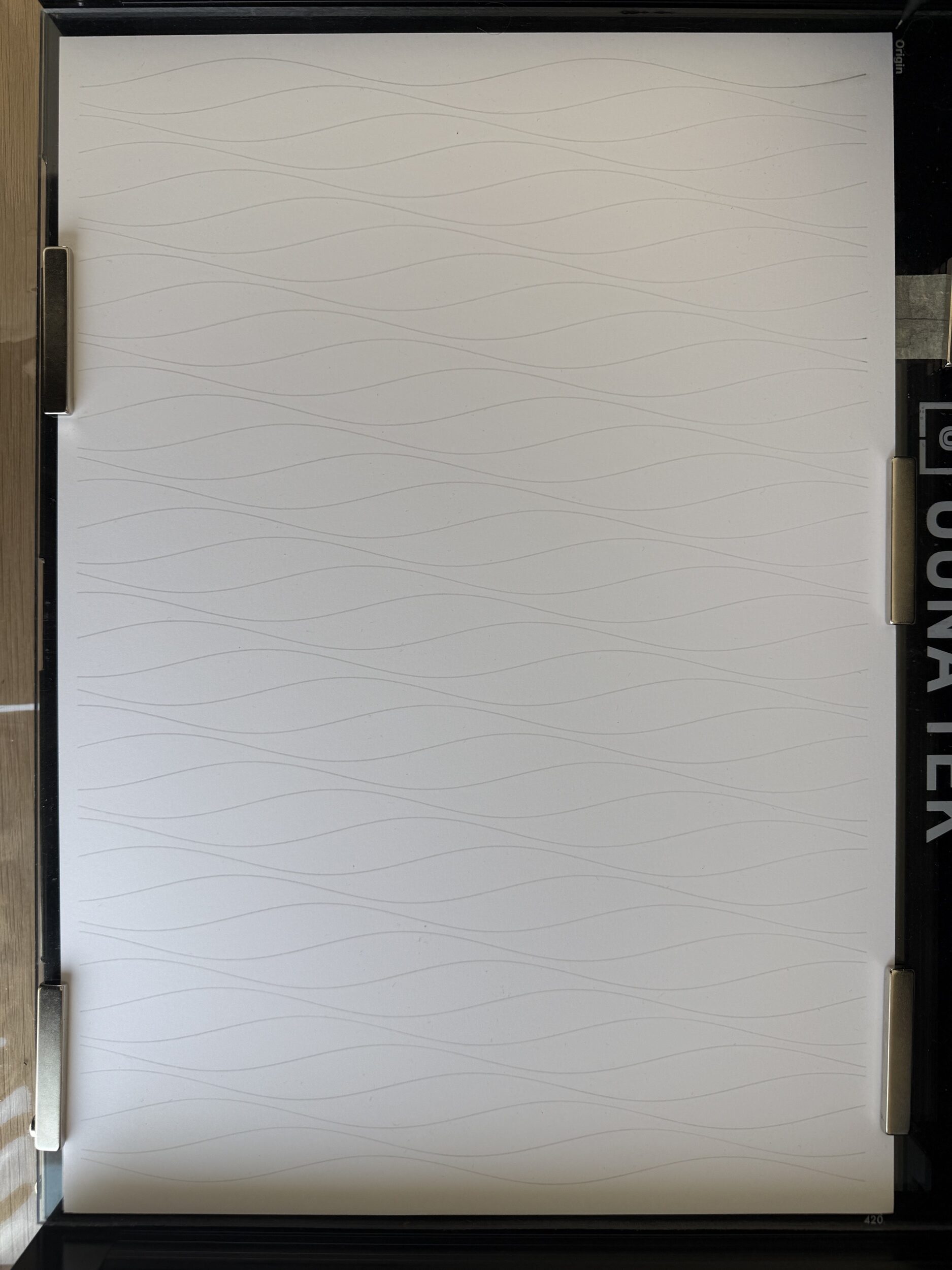
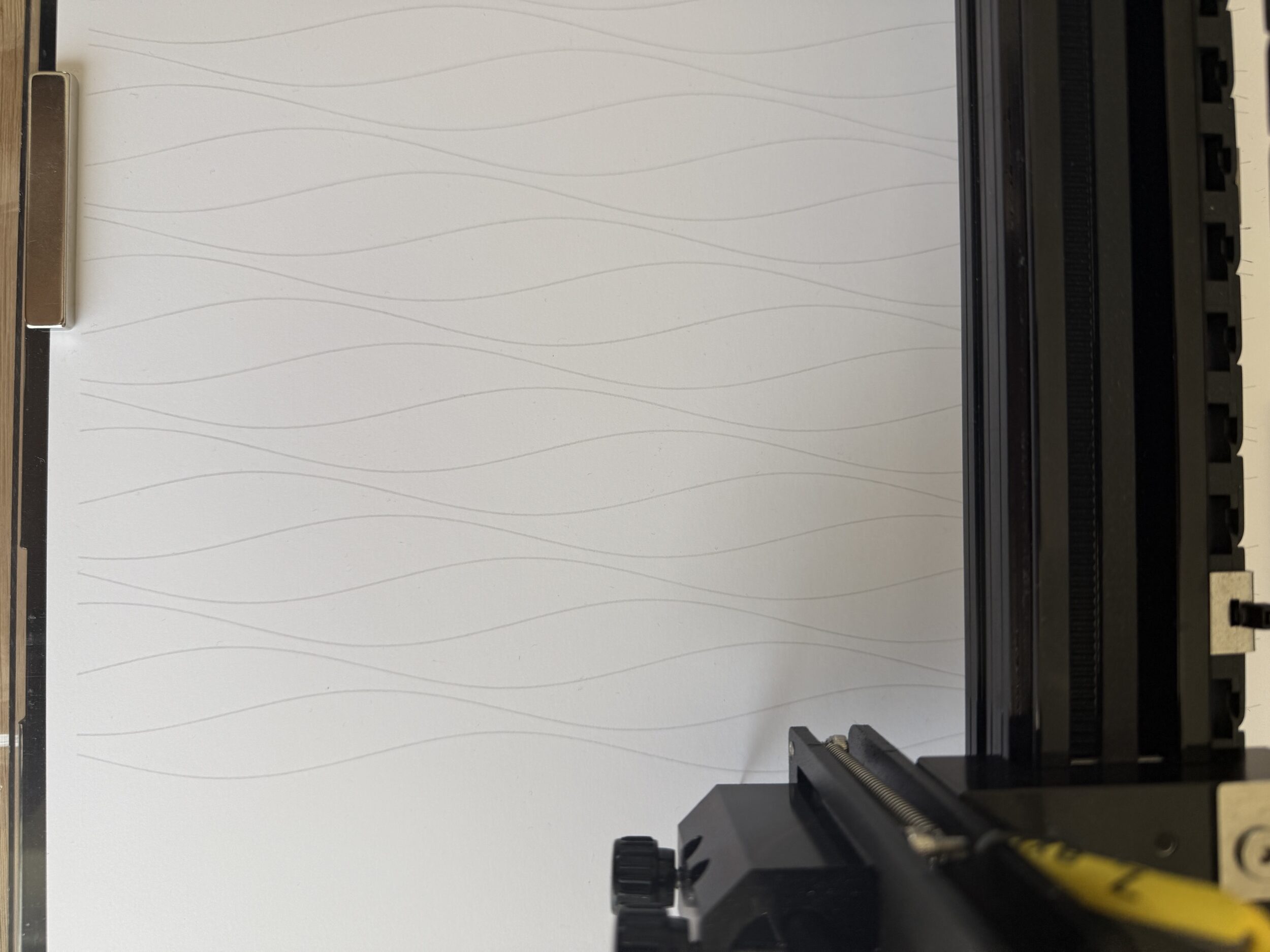
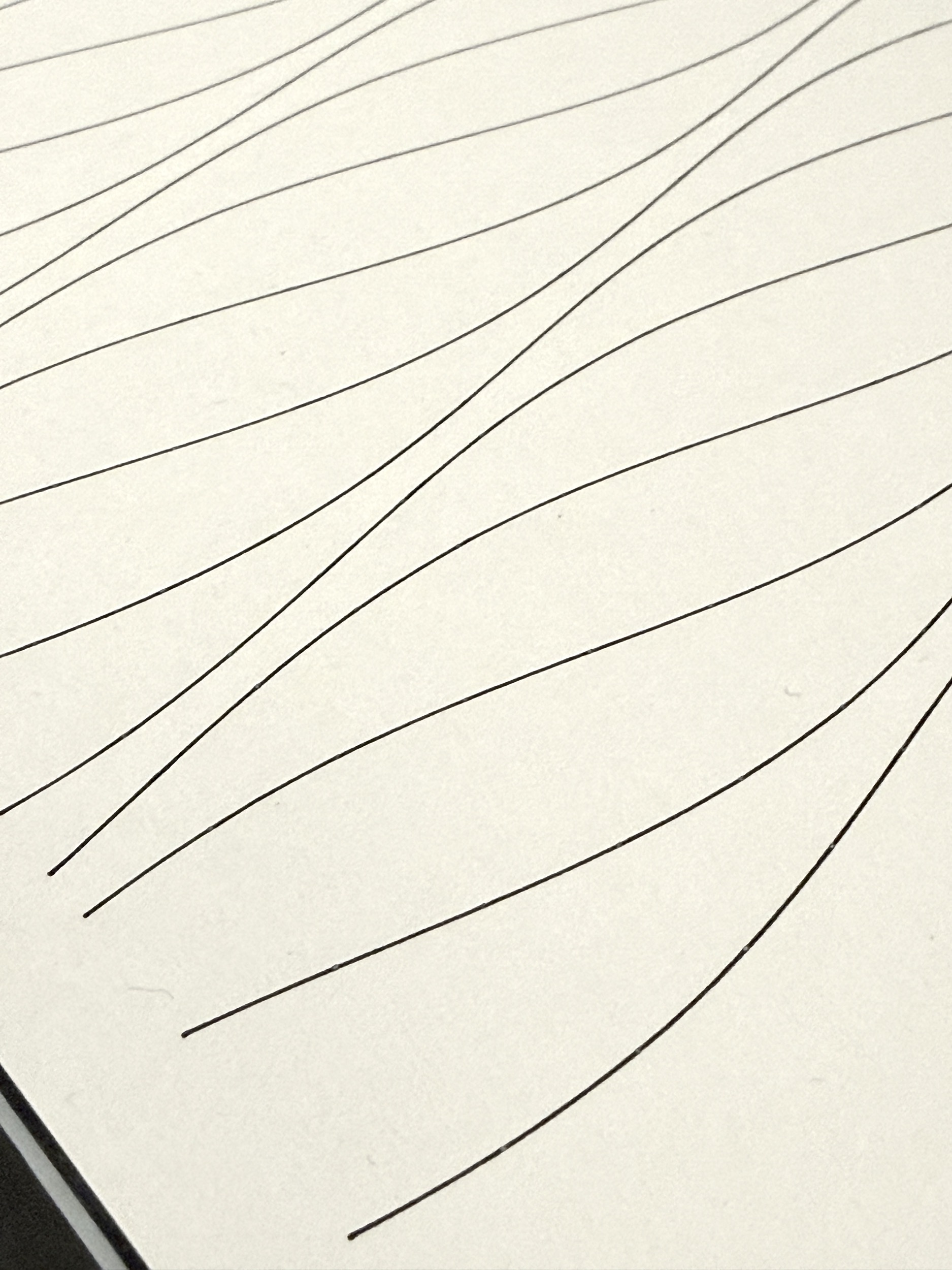
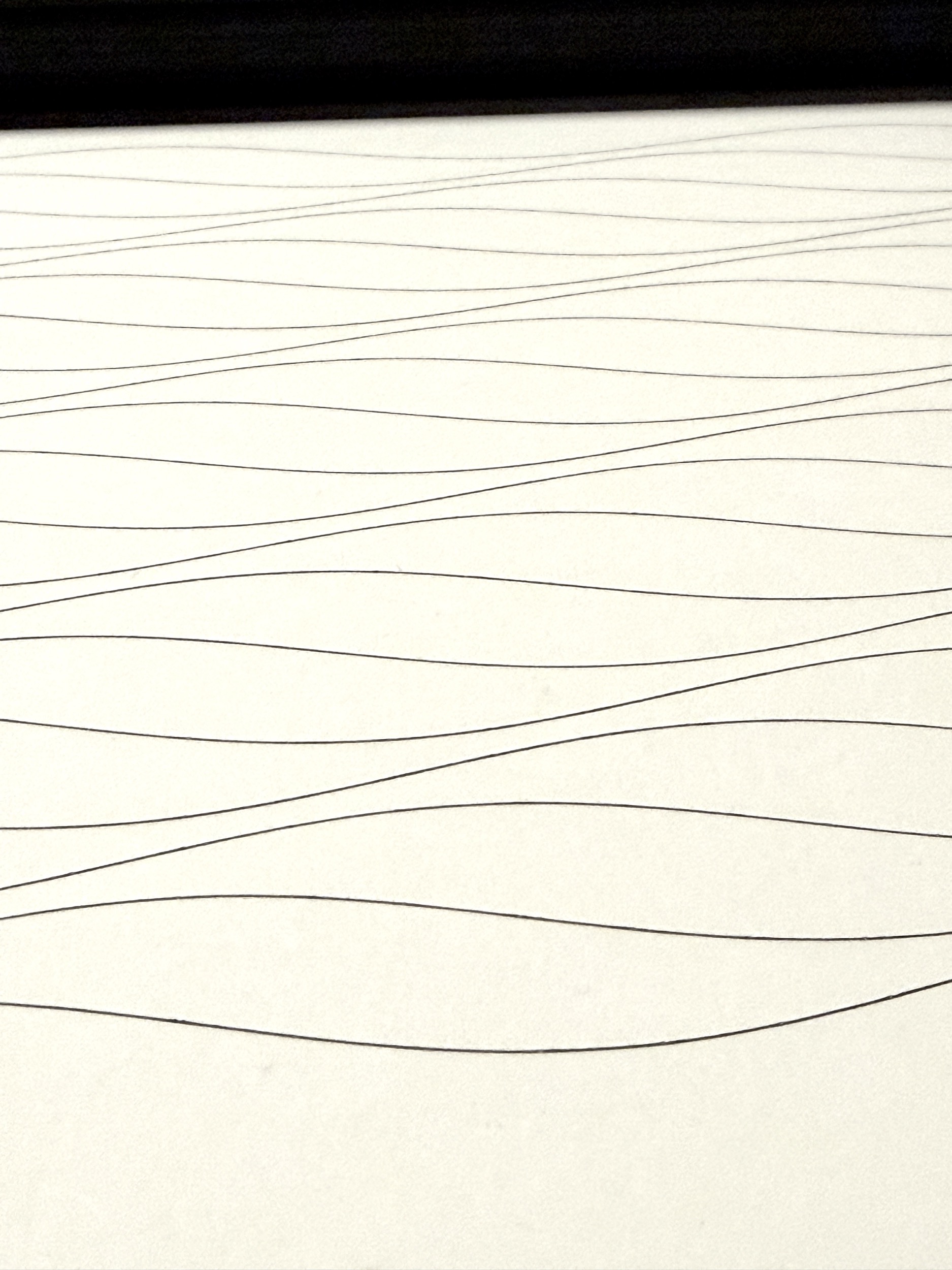
The frequency of your heartbeat becomes the velocity of the pen. The ink deposits in a uniform line with microscopic variations depending on velocity and pause duration. This line contains the information of your heartbeat but you are not able to access that data. The sinusoidal waveform is 12.5 centimeters long, the actual wavelength of 2.4 GHz WiFi. Its form is an ideal one, isolated undisturbed. The disturbance of your heartbeat is absorbed into the invisible flow of the ink. The machine keeps filling the sheet row by row, using your most intimate and hidden data without leaving a trace of it.
Without your consent, the machine extracts your heartbeat to draw something it could have drawn without it. It chose to take your heartbeat anyway. Not because it was necessary for the drawing, but because it had the technical possibility. It leaves you with a trace that states the potential but denies you the possibility of verification.
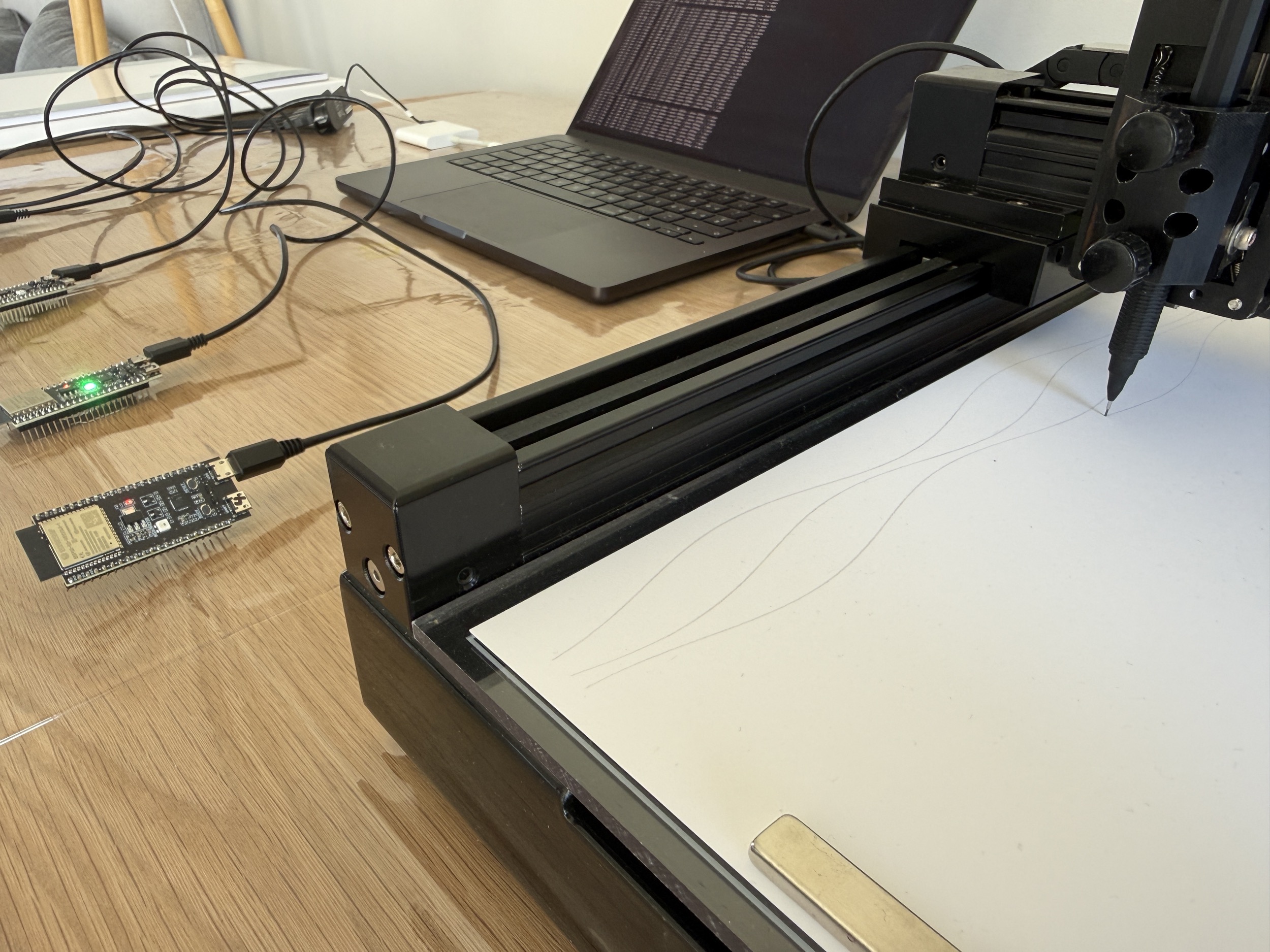
Partition uses commodity hardware throughout. The sensing system consists of ESP32-S3 microcontrollers running custom firmware built on Espressif’s ESP-IDF framework. The modules extract WiFi Channel State Information (CSI) from standard 802.11n frames at 2.4 GHz, capturing amplitude and phase data across 56 OFDM subcarriers at approximately 25 frames per second.
The signal processing pipeline runs on a local computer. Raw CSI data arrives via UDP. Principal Component Analysis across all 56 subcarriers extracts the dominant signal component. A 4th-order Butterworth bandpass filter isolates the cardiac band (0.8-2.0 Hz, corresponding to 48-120 BPM). FFT peak detection identifies the heartbeat frequency. A composite confidence score (peak prominence, sharpness, temporal consistency) determines whether the reading is reliable.
A sigmoid mapping function converts BPM to plotter feed rate. The inflection point sits at 90 BPM. Below resting heart rate, the pen moves slowly with short pauses. Above resting rate, the pen moves fast with long pauses. Each segment is one centimeter of sinusoidal arc, drawn within a fixed five-second interval.
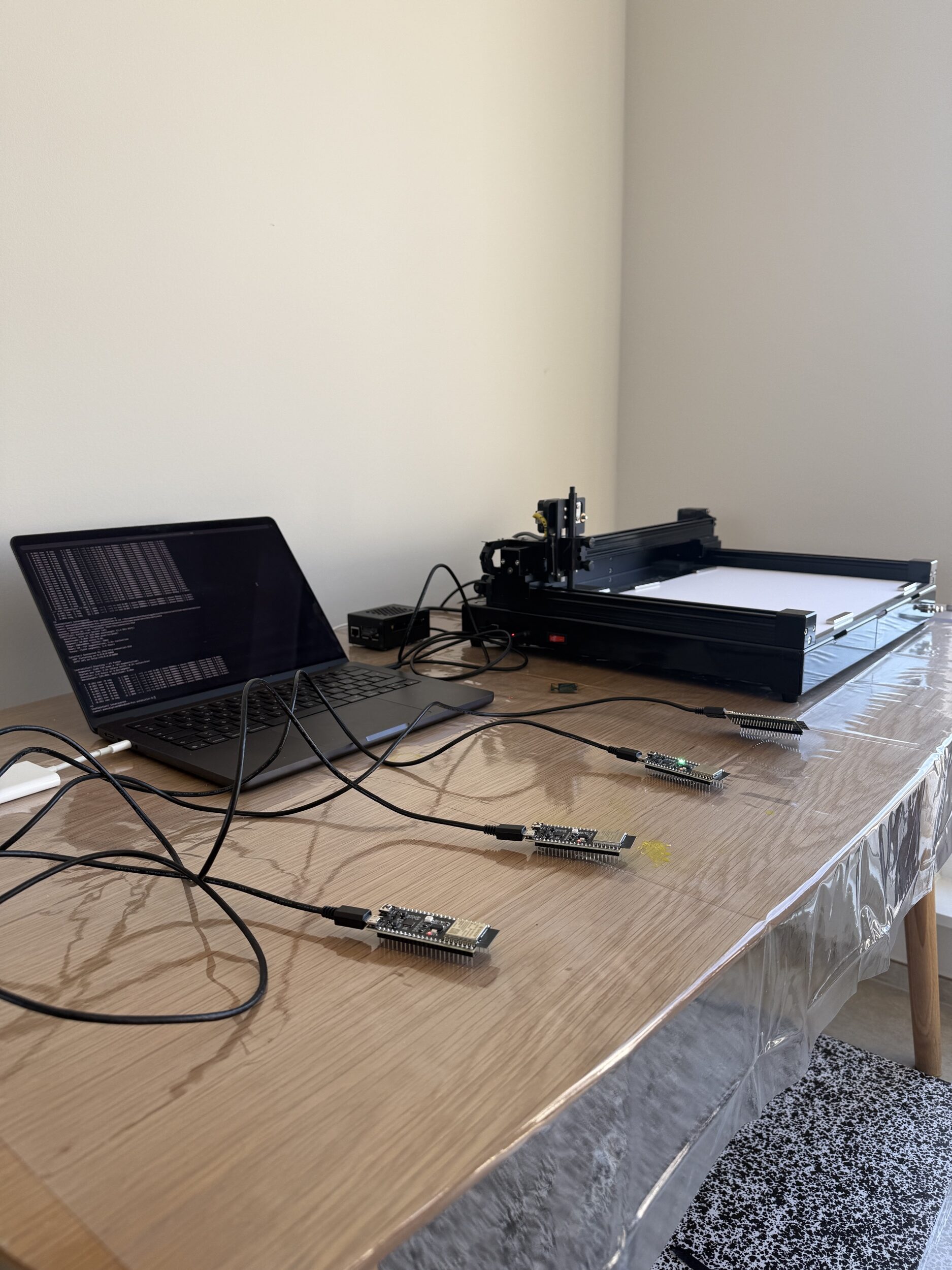
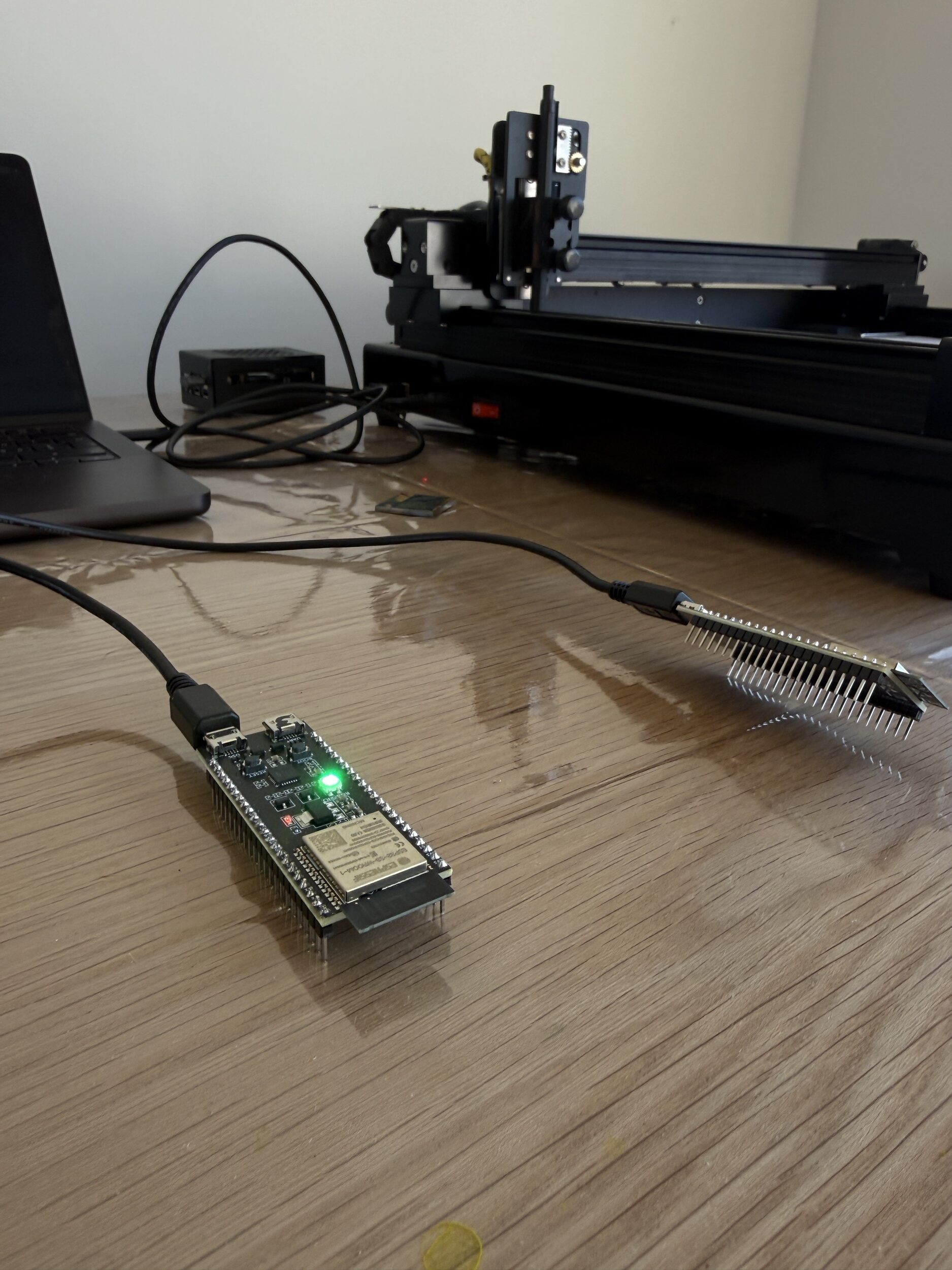
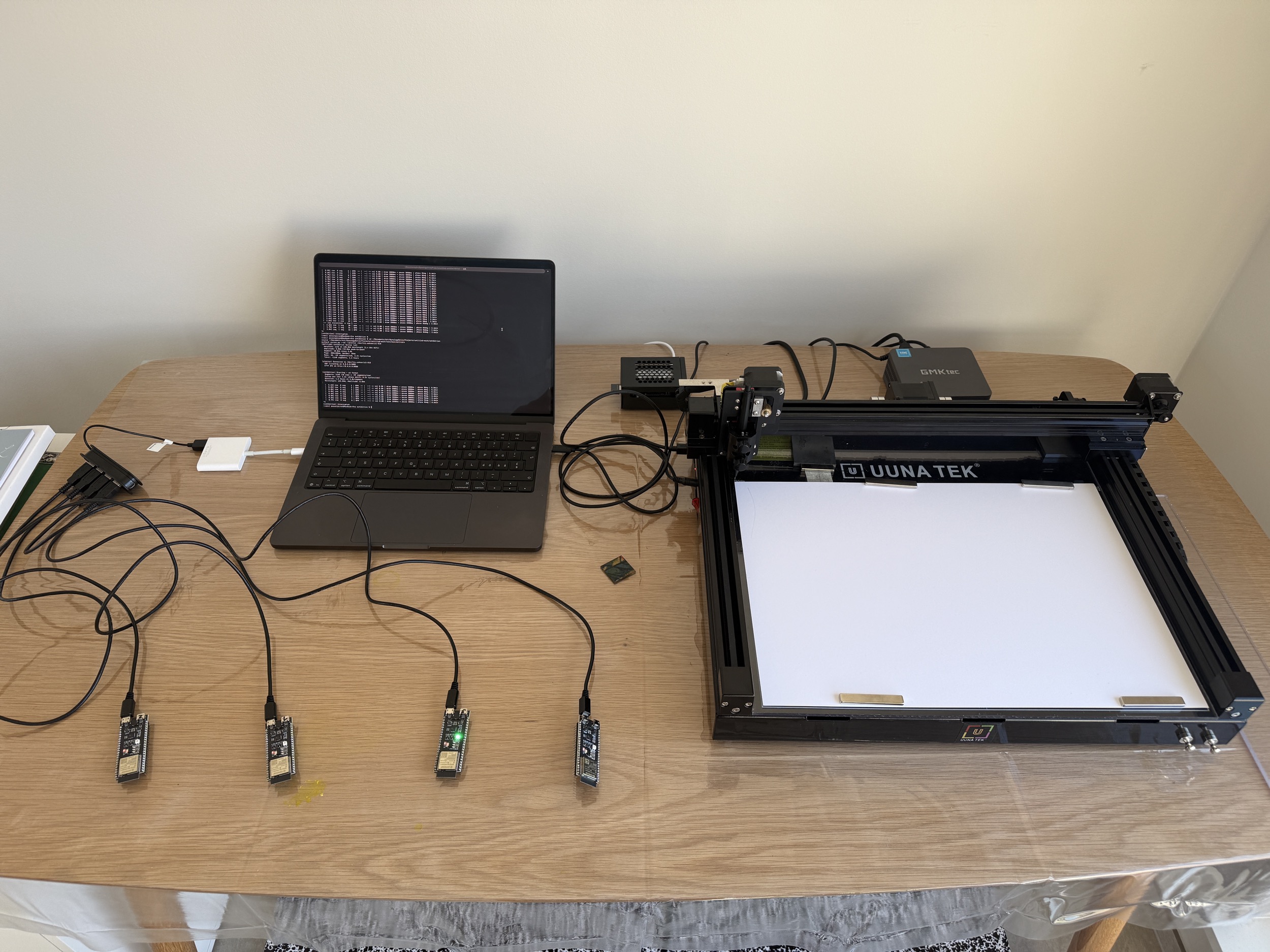
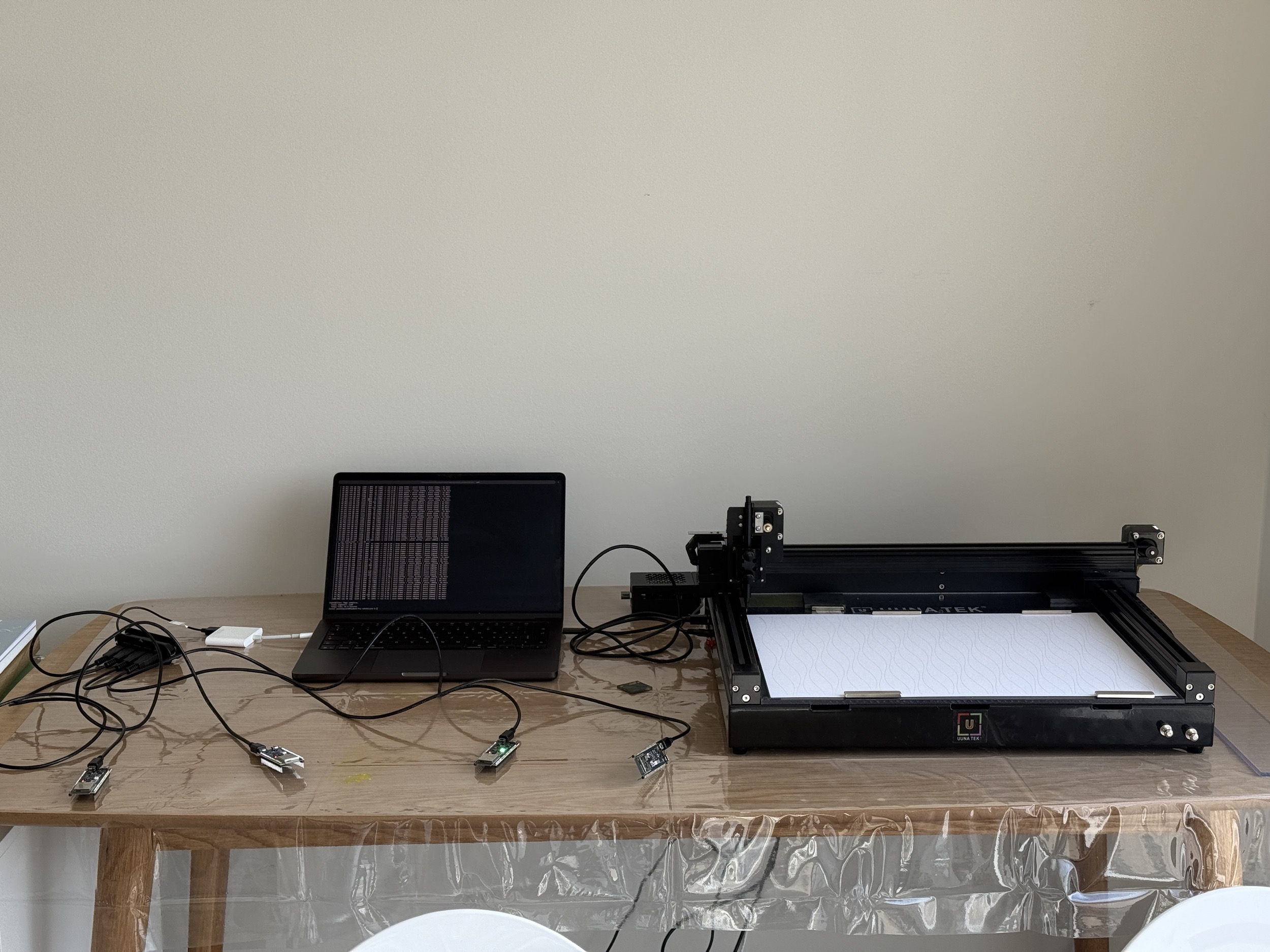
The plotter is a Uuna Tek machine controlled via GRBL over serial at 115200 baud. G-code is generated in real time, one segment per heartbeat reading. The waveform is a continuous sine wave at 125mm wavelength (the physical wavelength of 2.4 GHz electromagnetic radiation). Phase is tracked continuously across row boundaries, producing a diagonal drift pattern.
The pen is a Rotring Isograph technical pen with pigment ink, selected for minimal velocity-dependent line weight variation. Paper is Bristol plate, selected for minimal ink wicking.
Total sensing hardware cost: under USD 30.
The system is built on RuView, an open-source WiFi CSI framework. Signal processing, plotter control, and the sensing-to-drawing pipeline were developed using AI-assisted coding tools. The system has been validated in a full end-to-end prototype run (March 2026) with live heartbeat detection through standard drywall.
The March 2026 prototype was produced at A3 scale (29.7 x 42 cm). The exhibition version is planned at 70 x 100 cm on a large-format plotter, with a full drawing session lasting approximately 8 hours, filling one sheet per exhibition day.
Project Page | Pascal Piron | Instagram | Bluesky