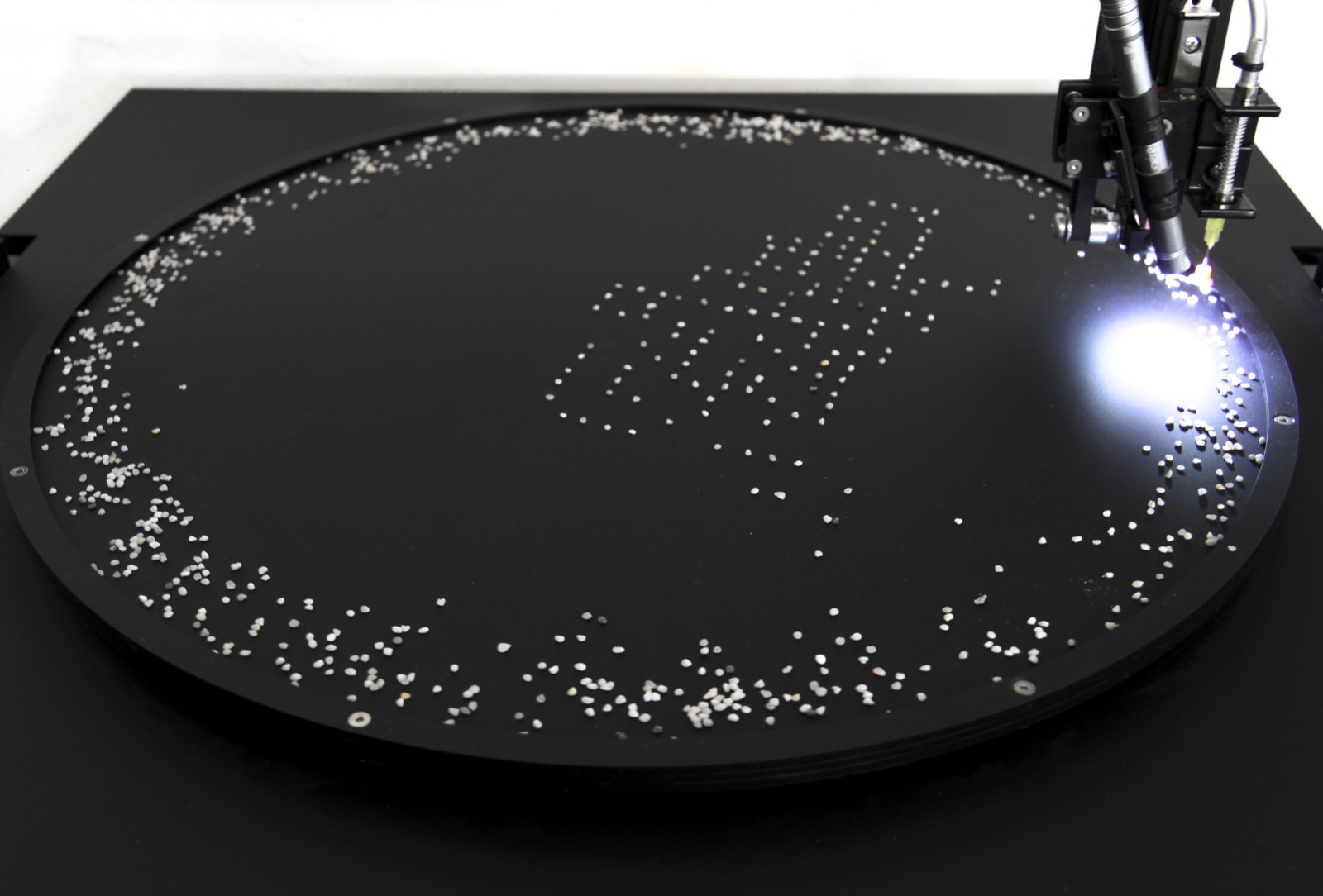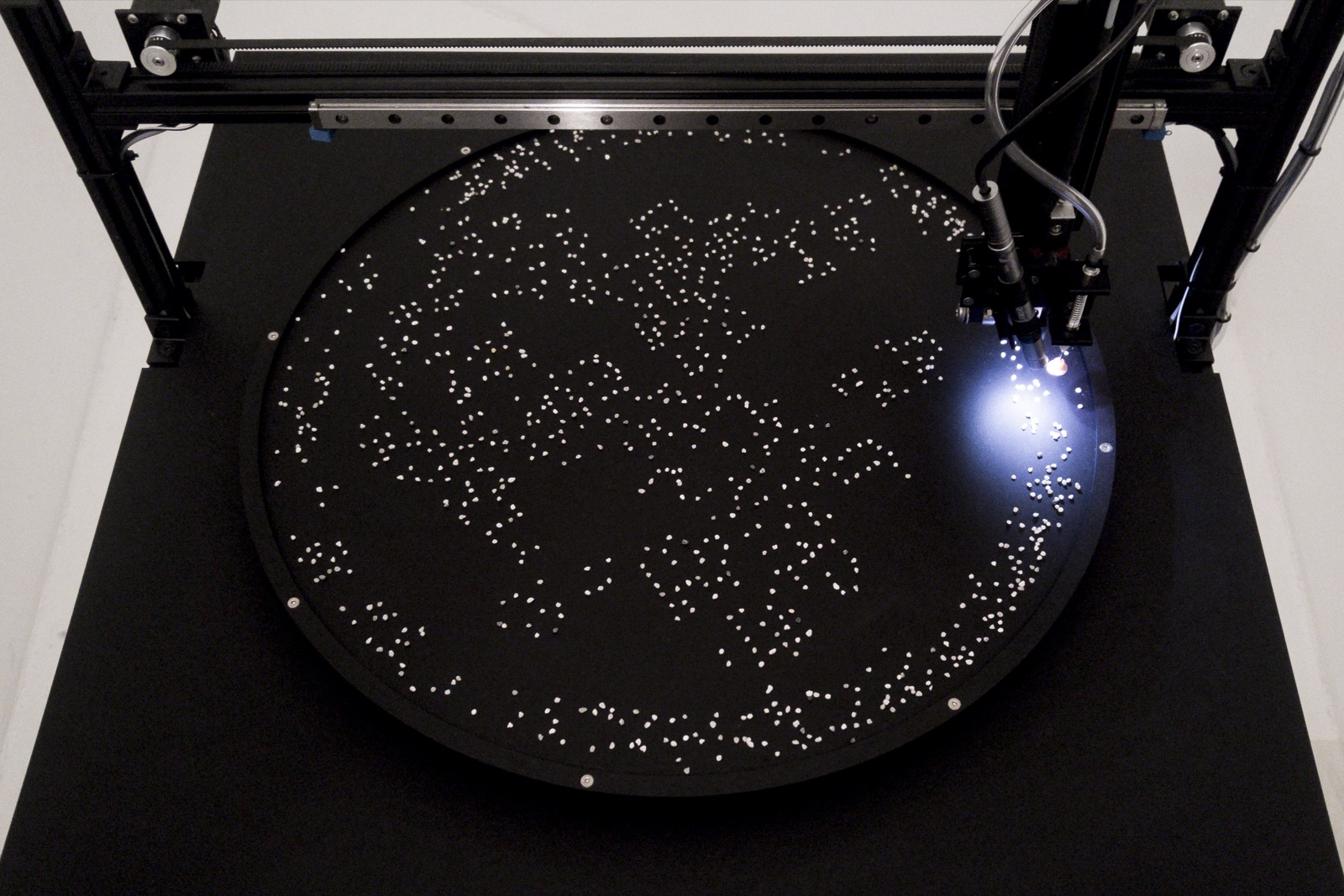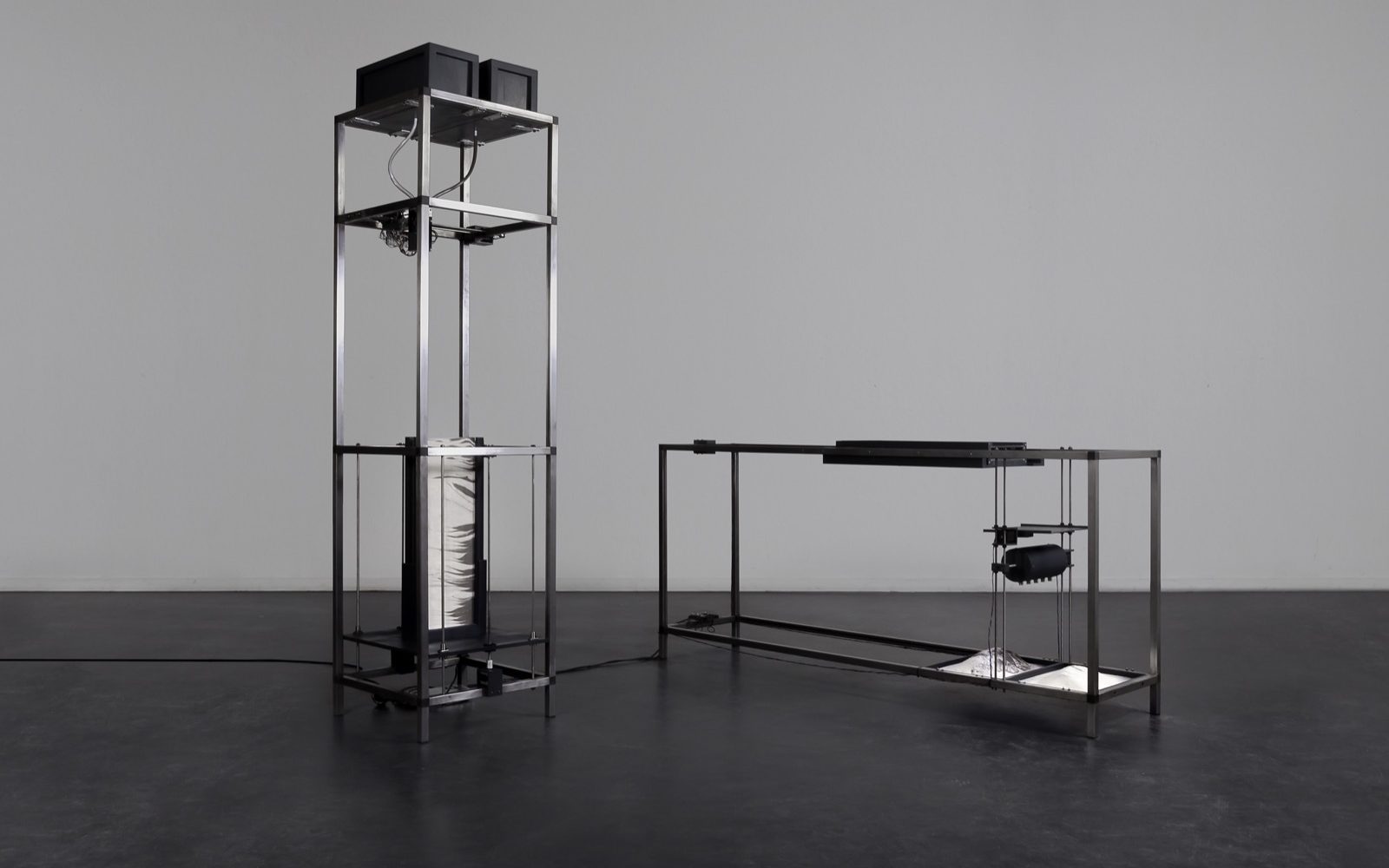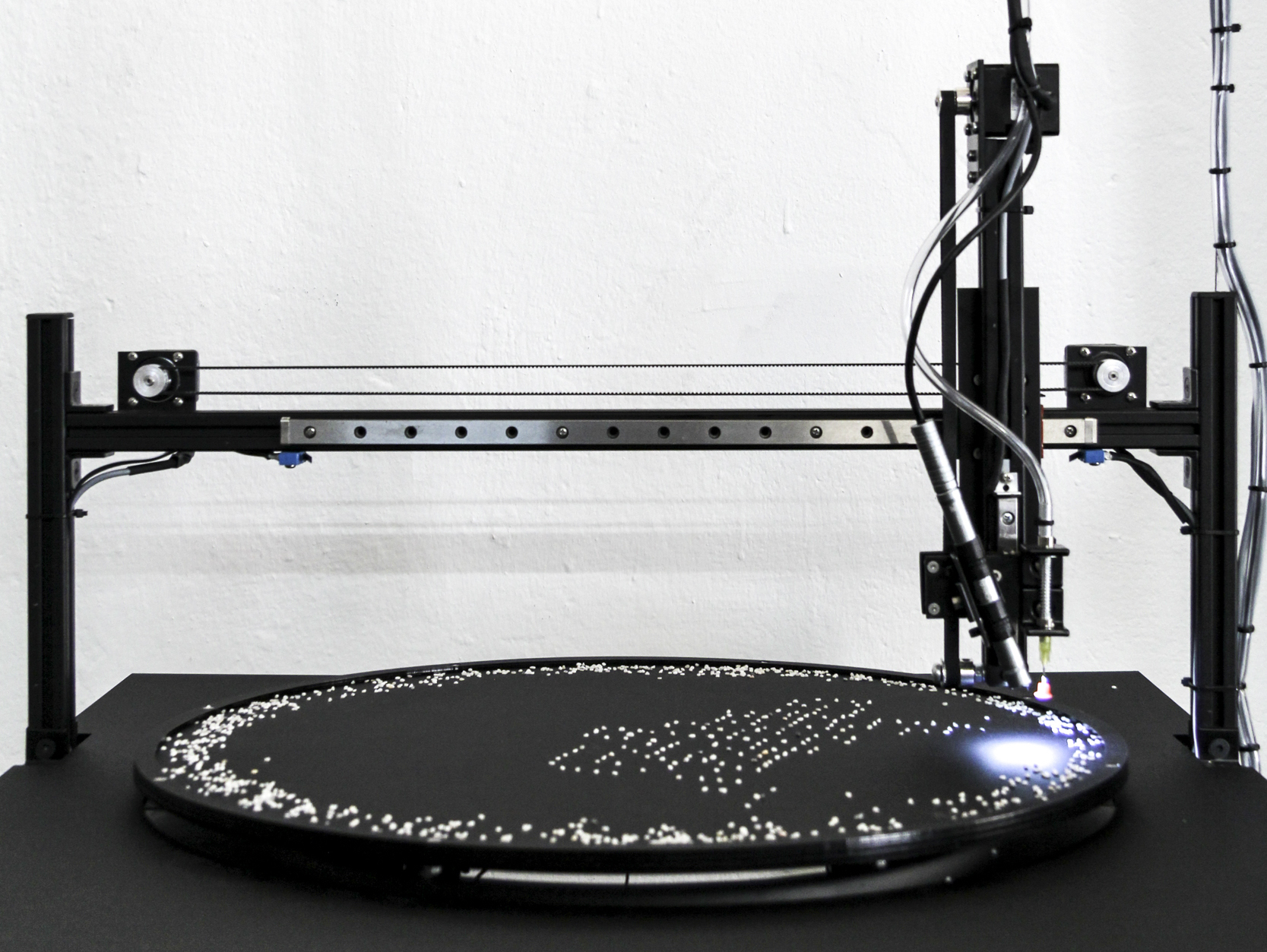
Created by Berlin based Ralf Baecker, Random Access Memory is a fully functional digital memory. Instead of operating on semi-conducting components to represent either the binary states of 0 (zero) or 1 (one), the memory uses grains of sand as storage material. In addition, the machine performs a computational process on this memory.
Random Access Memory reflects on the interaction of idea and matter and their encounter in contemporary information technology. The use of sand as a medium refers to an old divination technique, called geomancy, originated from the arabic ‛ilm al-raml which translates as “science of the sand” and defines a set of rules, to recursively manipulate figures of geological material (eg. stones or sand) to be interpreted by the geomancer.
Ralf Baecker
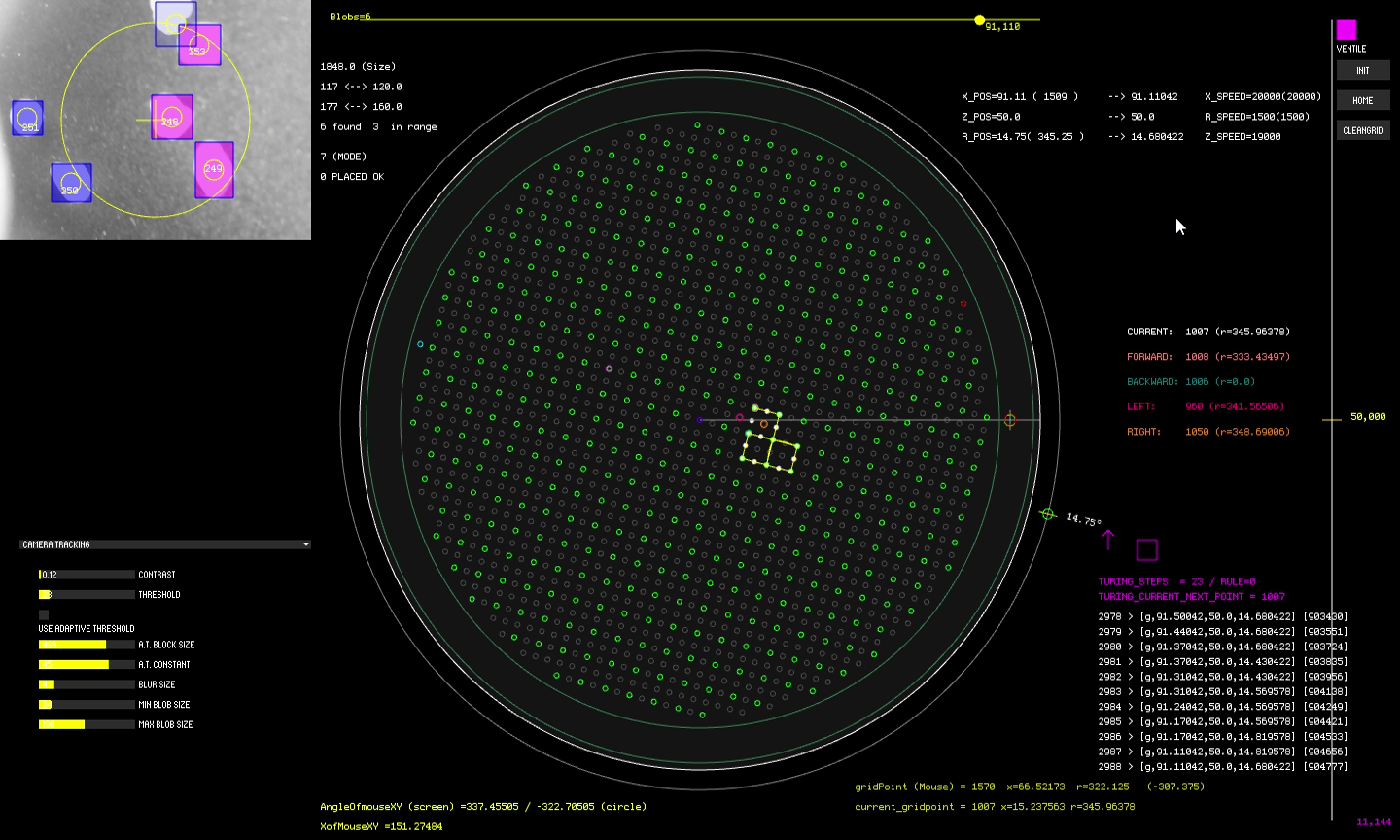
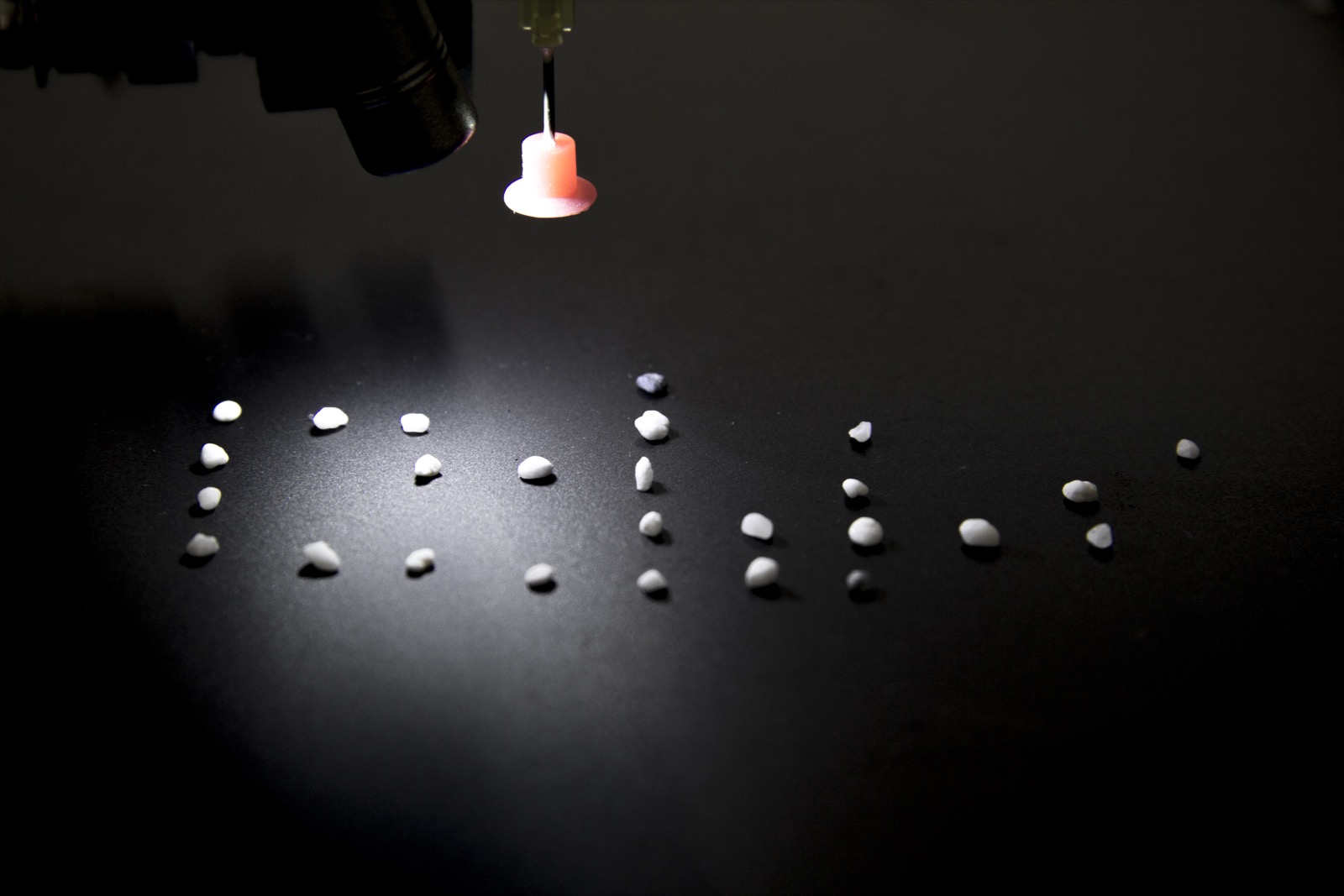
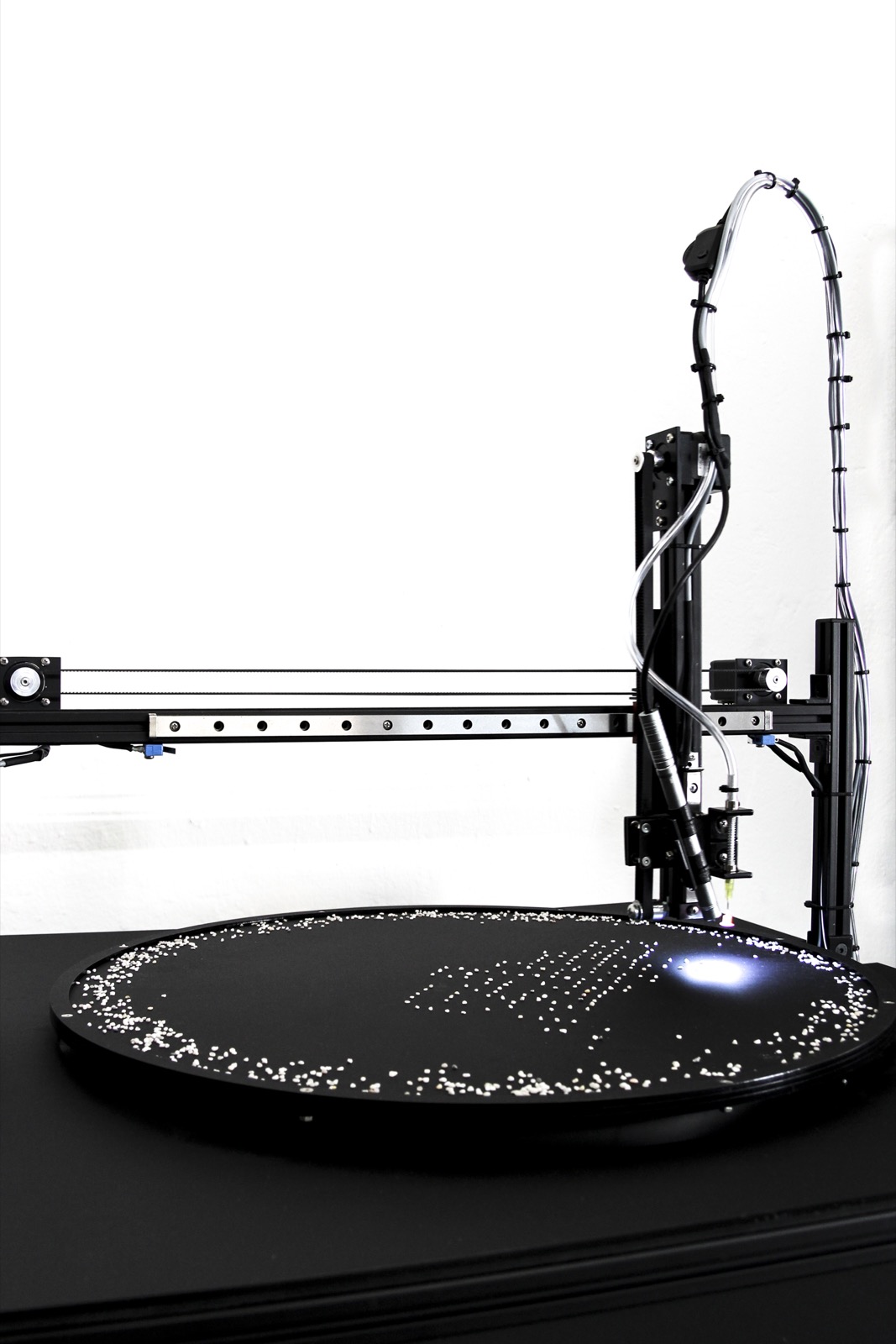
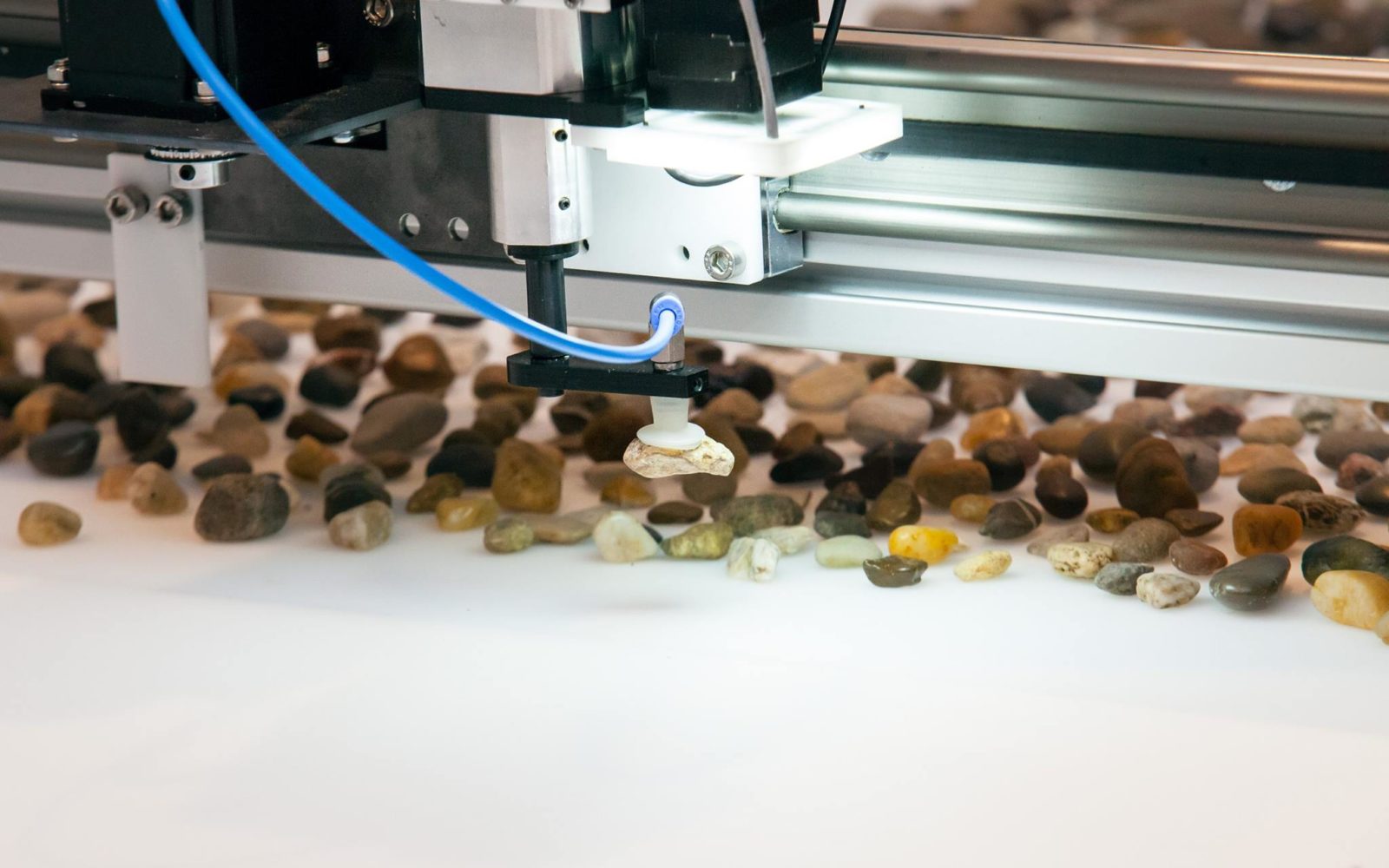
Sand grains can be read, placed or removed on a rotating disc by a three axis pick and place mechanism combined with a microscope camera to track the position of a single sand grain. This memory mechanism is prone to errors thru misreadings, bouncing grains and other imponderabilities. The algorithm, executed on the sand grains, is a so called Turmite, a two dimensional operating Turing Machine. It’s only goal it is to write as many 1’s (stones) as possible in the memory and to avoid a termination, following a strict rule. This process emerges complex and repetitive pattern on the disc. Finally, R A M investigates the contrast of a “pure” mathematical process (algorithm) and it’s “impure” material implementation into the world.
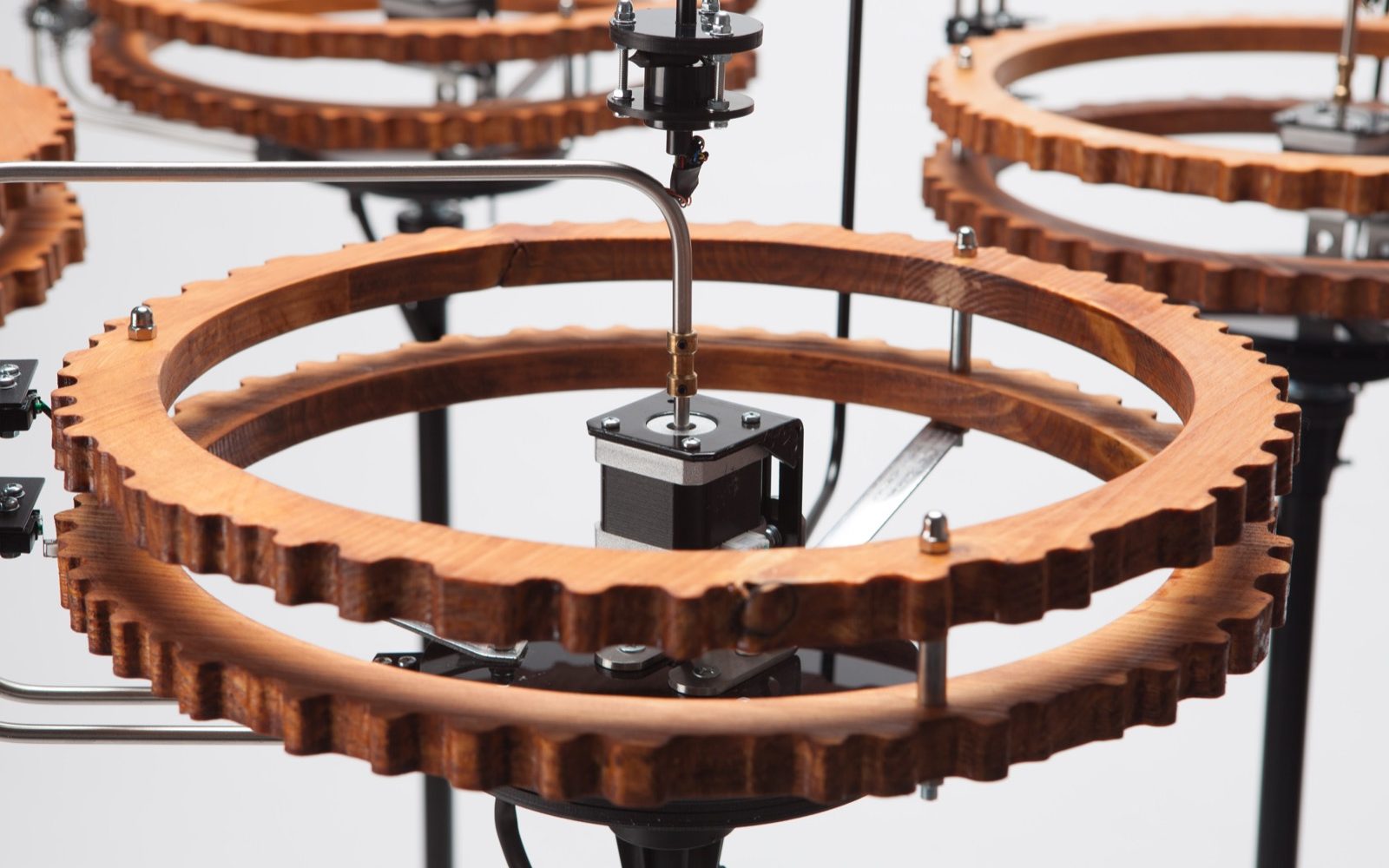
The software is realised in Processing. It is using a microscope camera to track a stone in order to align the pick and place mechanism exactly above the grain. The hardware uses a teensy board to control the ventile and the three stepper motors for each axis. It is a polar coordinate system. There is no X or Y axis but radius and angle. Another Z-axis move the pick and place head up and down.