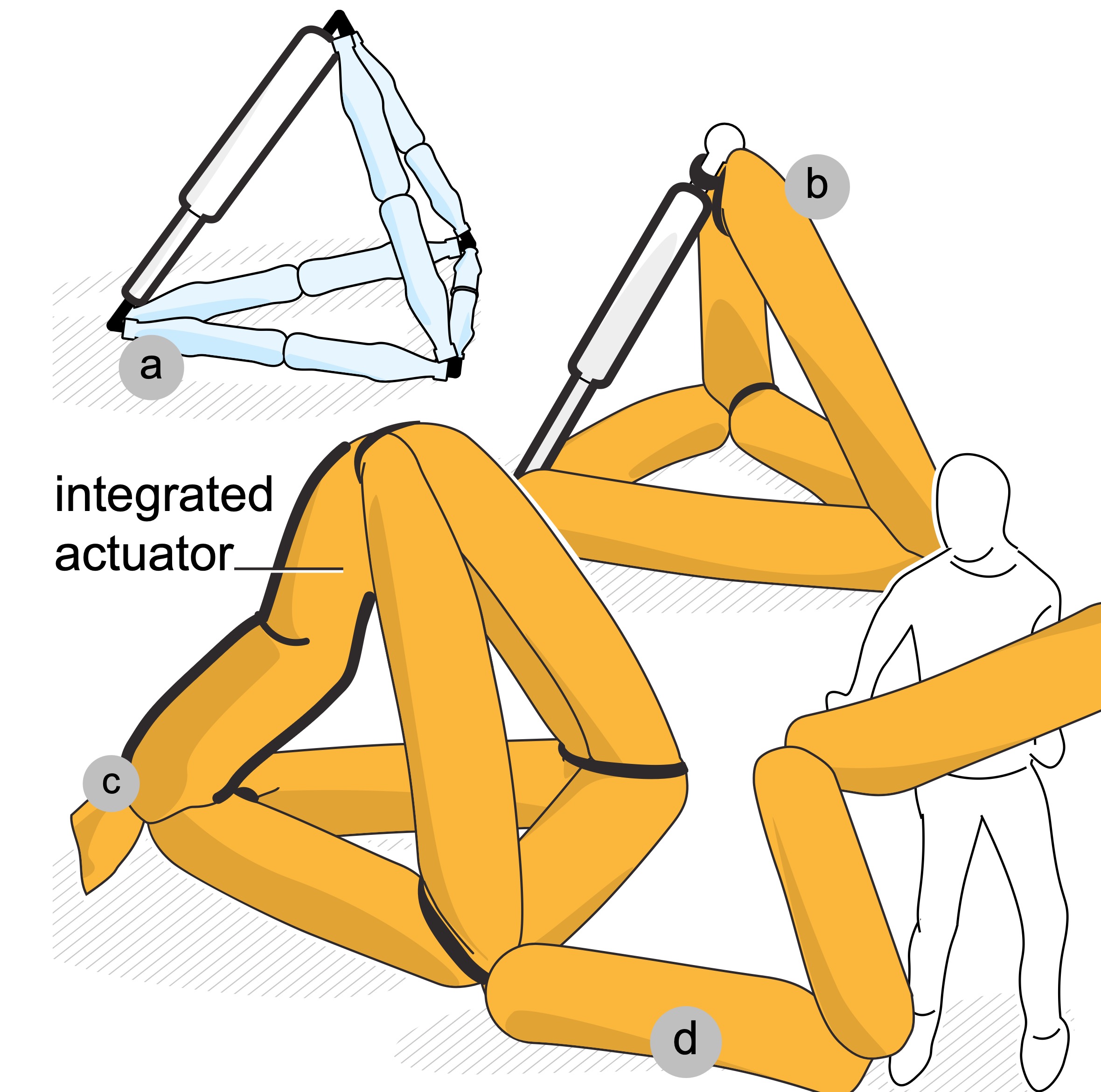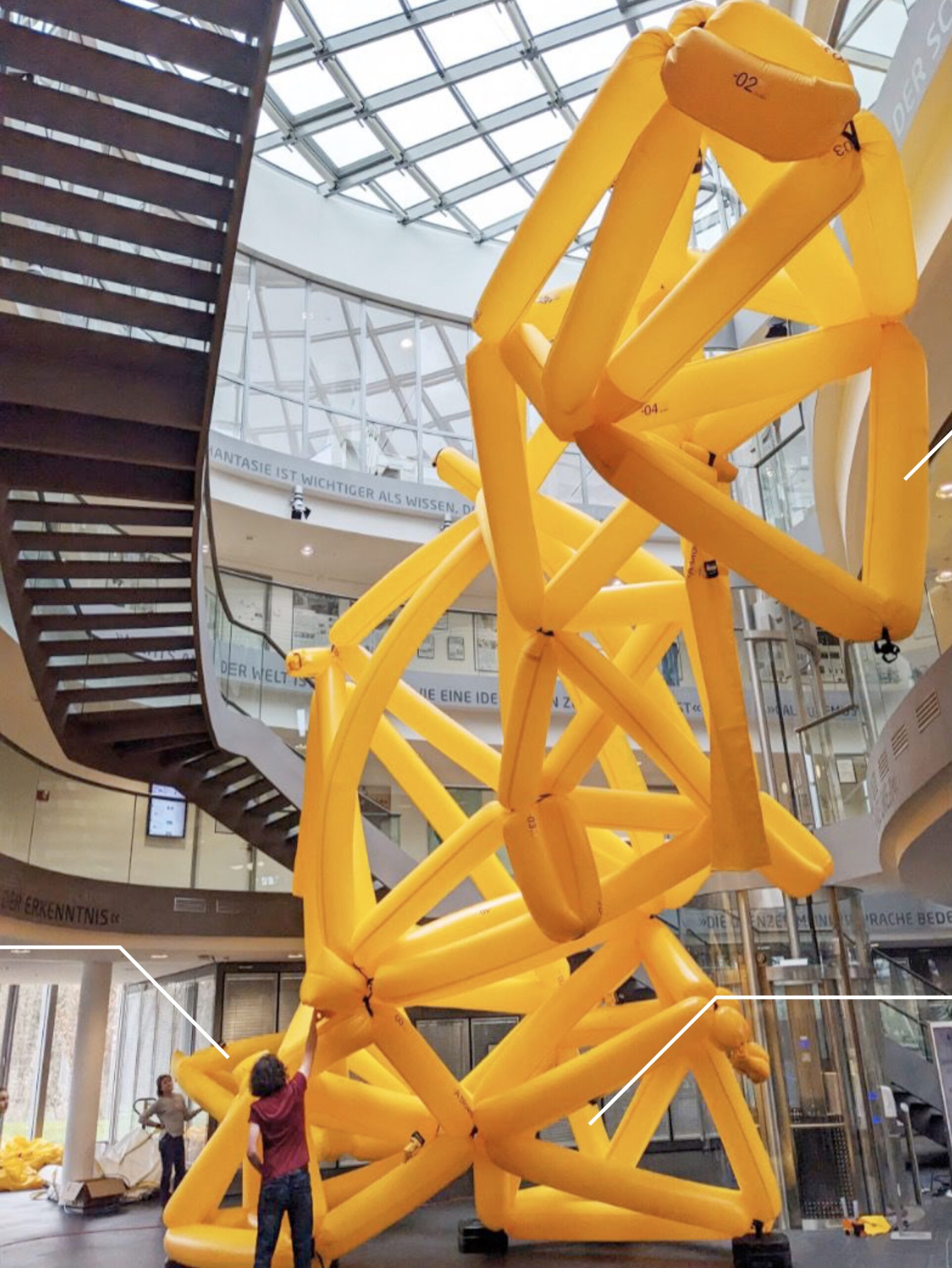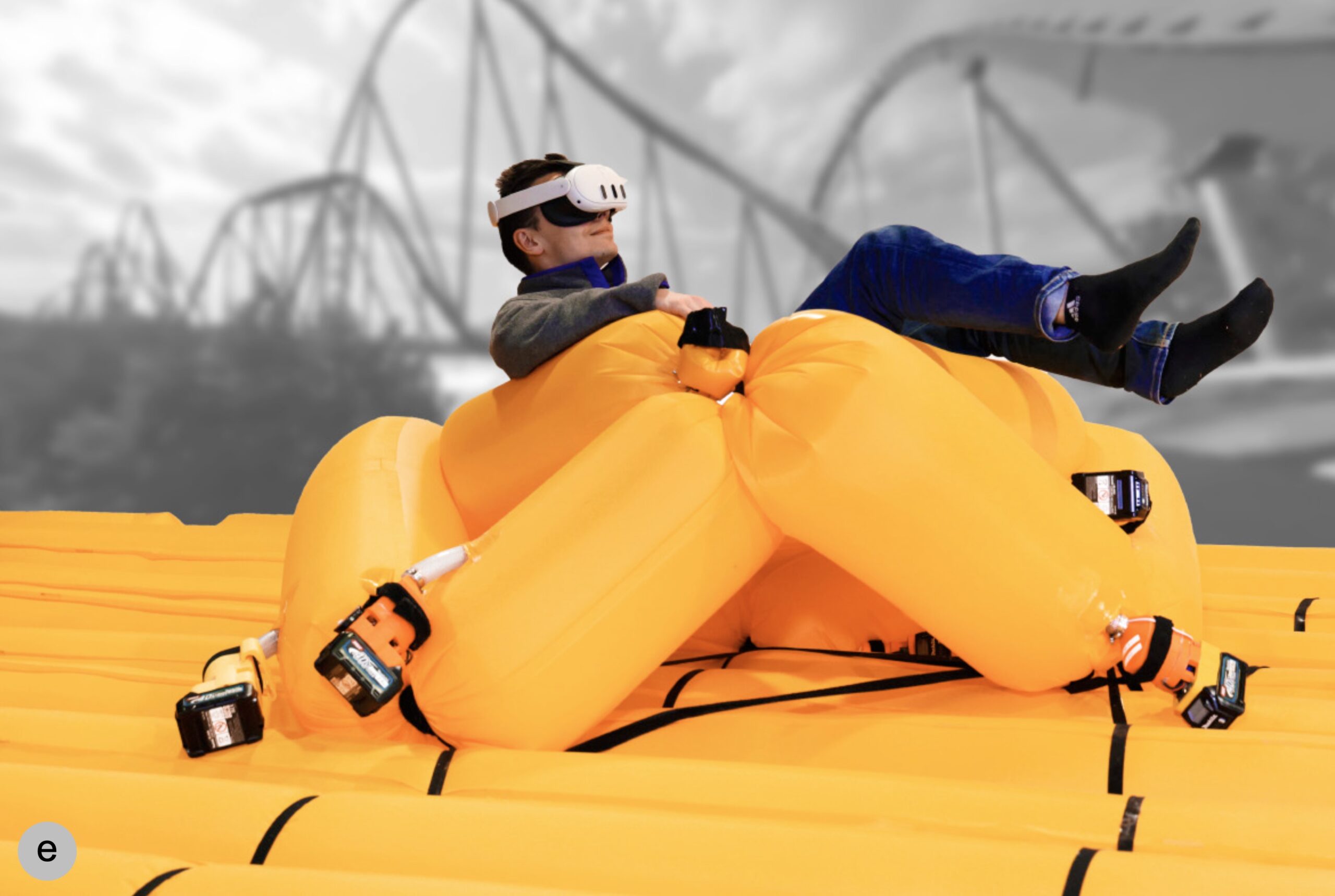
Created by a team of researchers at the Hasso Plattner Institute, AirForce is a fabrication system that allows users to create large-scale, load-bearing animated structures from a single inflatable tube. The system builds on the personal fabrication of animated truss structures, based on which it replaces not only the static elements with tube, but also introduces tube-based actuators that integrate with that same tube.
At the heart of the system is Blender-based software plugin that allows users to create and animate these structures. Traditionally, animatronic structures were built using pneumatic actuators that were separate from the structural elements. The key idea behind AirForce is not just to replace the static structure with tubes, but to replace the actuators as well. This allows AirForce to create entire animated structures by folding up a single long tube.
The structure can be assembled on the ground, allowing unfolding and refolding into a different actuated structure with near 100% material reuse, easy transport and setup in the deflated state, and excellent power-to-weight ratio capable of lifting human weight.
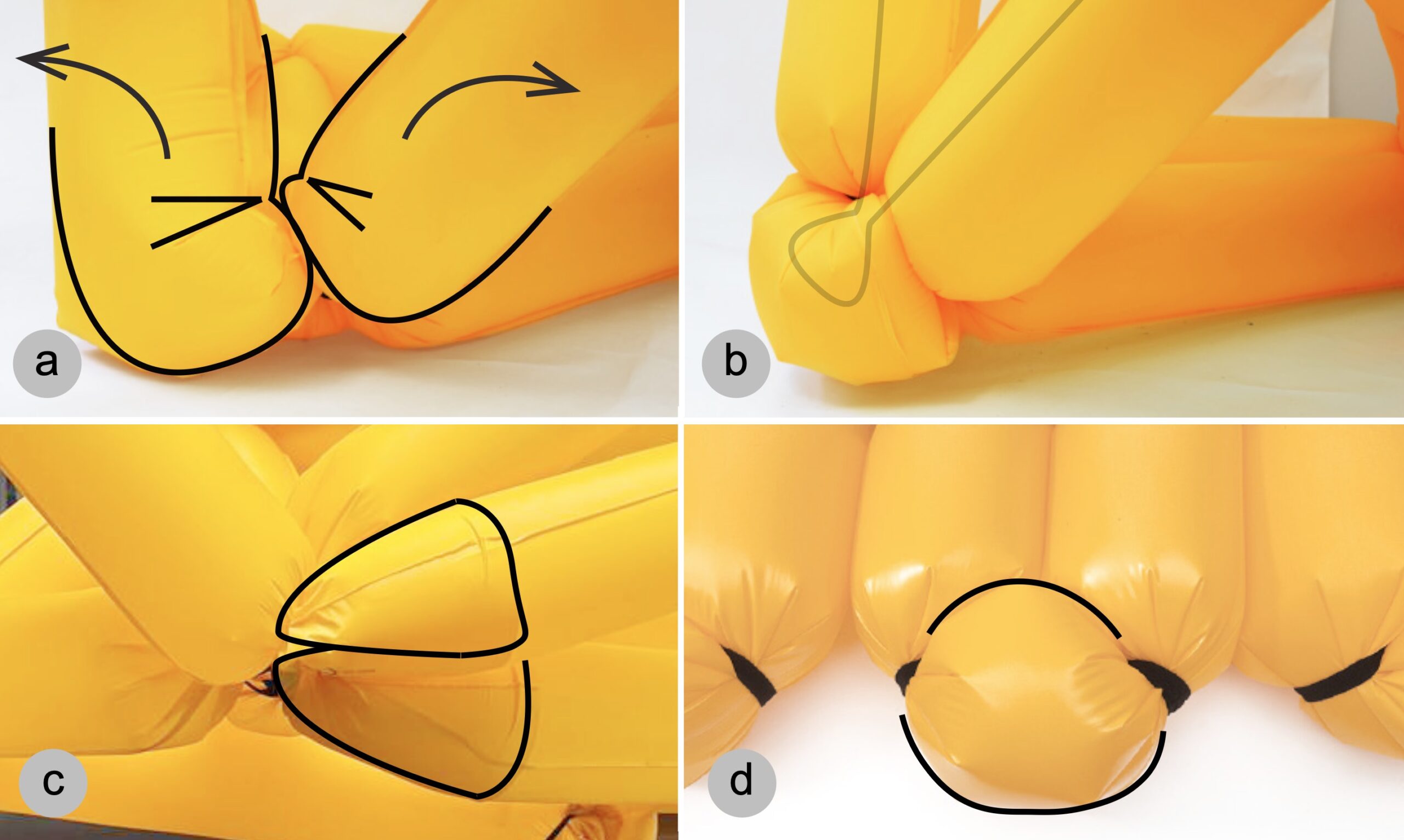
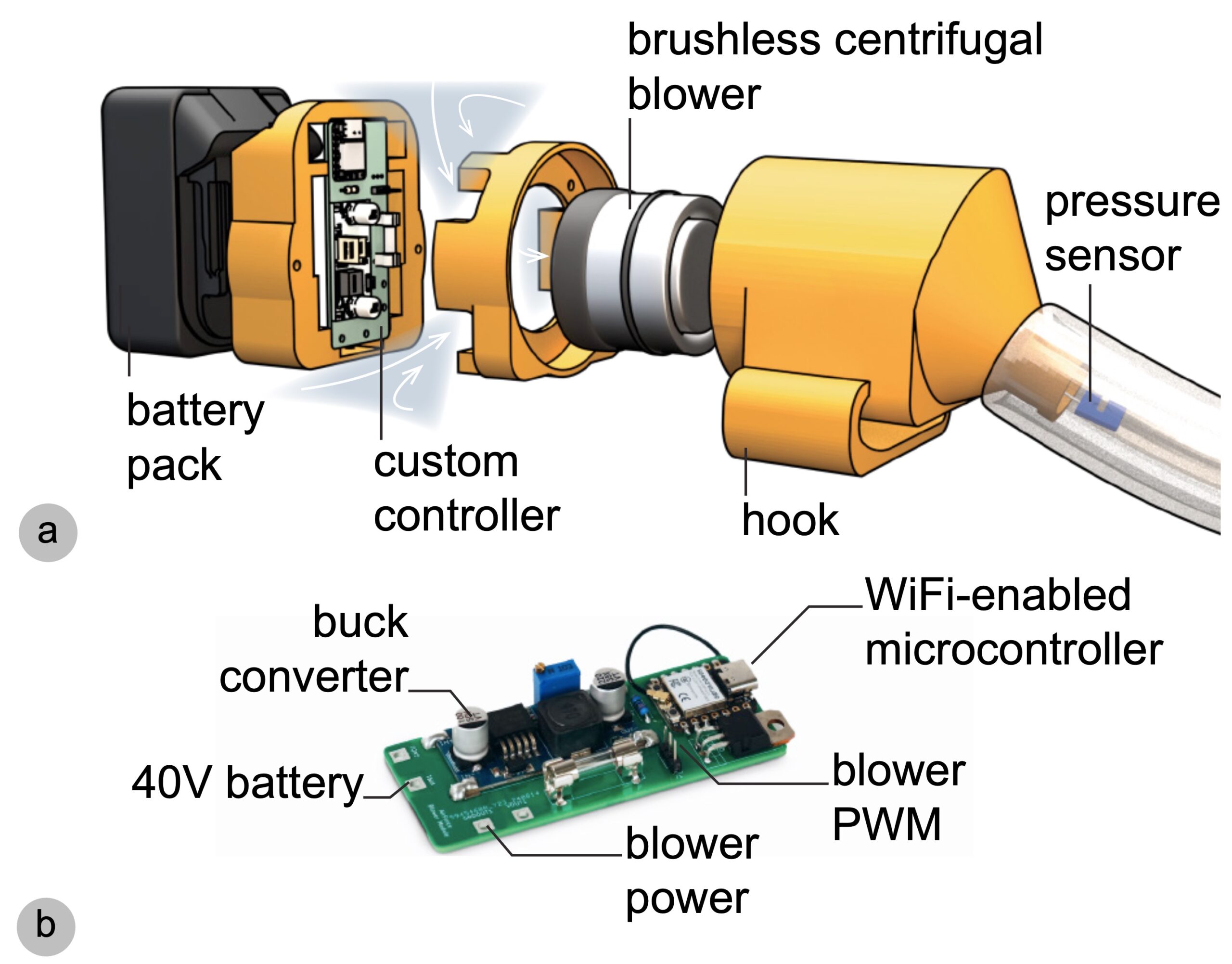
We started our design iteration towards lifting human weight with traditional single-tube materials, but then tripled the tube’s cross-section. Next, we replaced the traditional fin seals with lap seals. This allowed us to increase tube pressure by a factor of four. Finally, we replaced compressors with custom blowers, which allowed us to produce 50 times higher airflow. Combined, these three modifications allowed us to animate structures under load.
Telescoping actuators tend to be slow, but by extending linearly, this novel type of actuator produces sufficient force to lift or tilt the 60 kg structure as a whole. To raise larger, longer sections the team employ an integrated variant of Grier’s muscle-like actuator, where AirForce subdivides the element into several compartments. When inflated, the element gets wider, but contracts in terms of length.
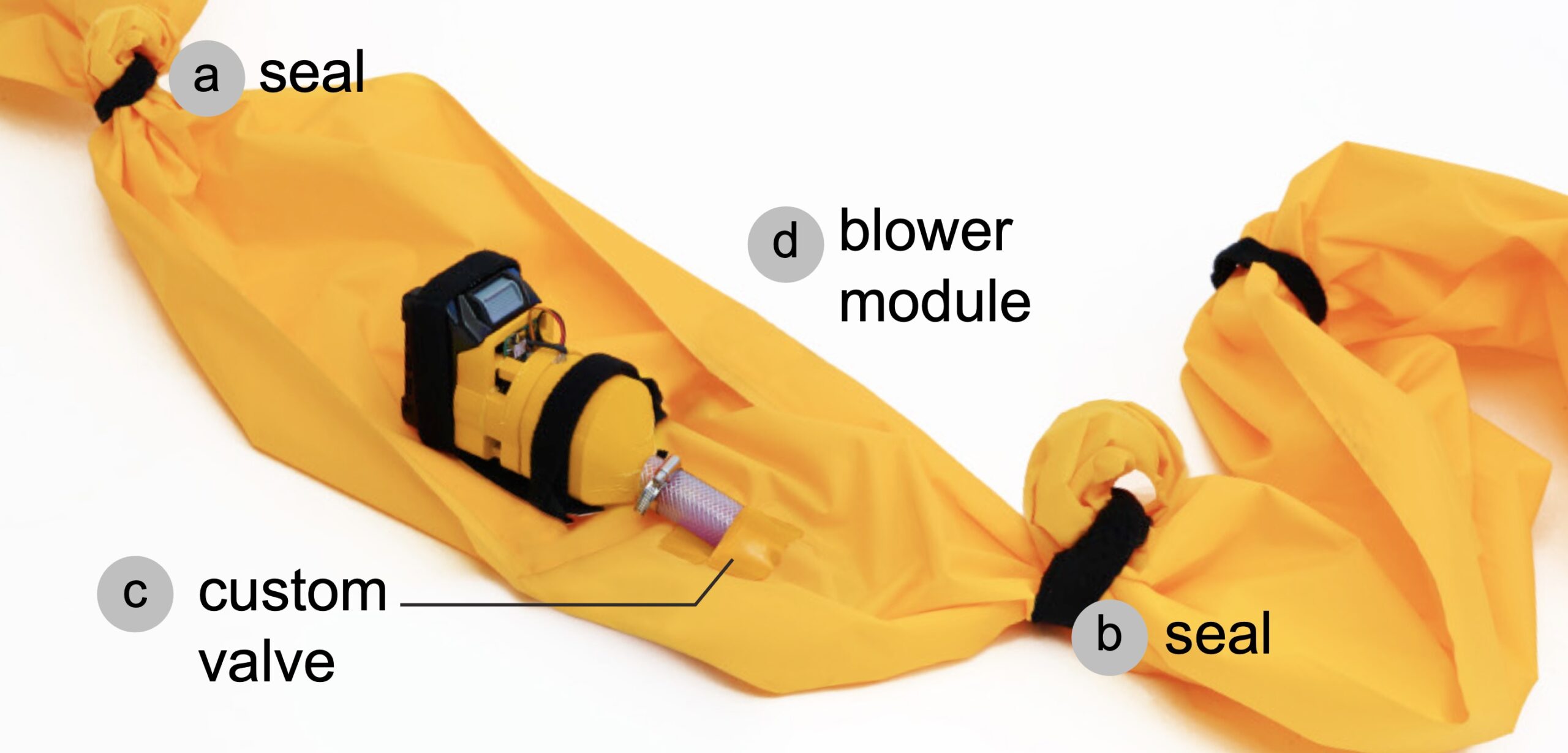
AirForce uses no custom machinery, but instead allows users to create structures manually from pre-made tube, velcro ties, custom blowers, and custom inlets.

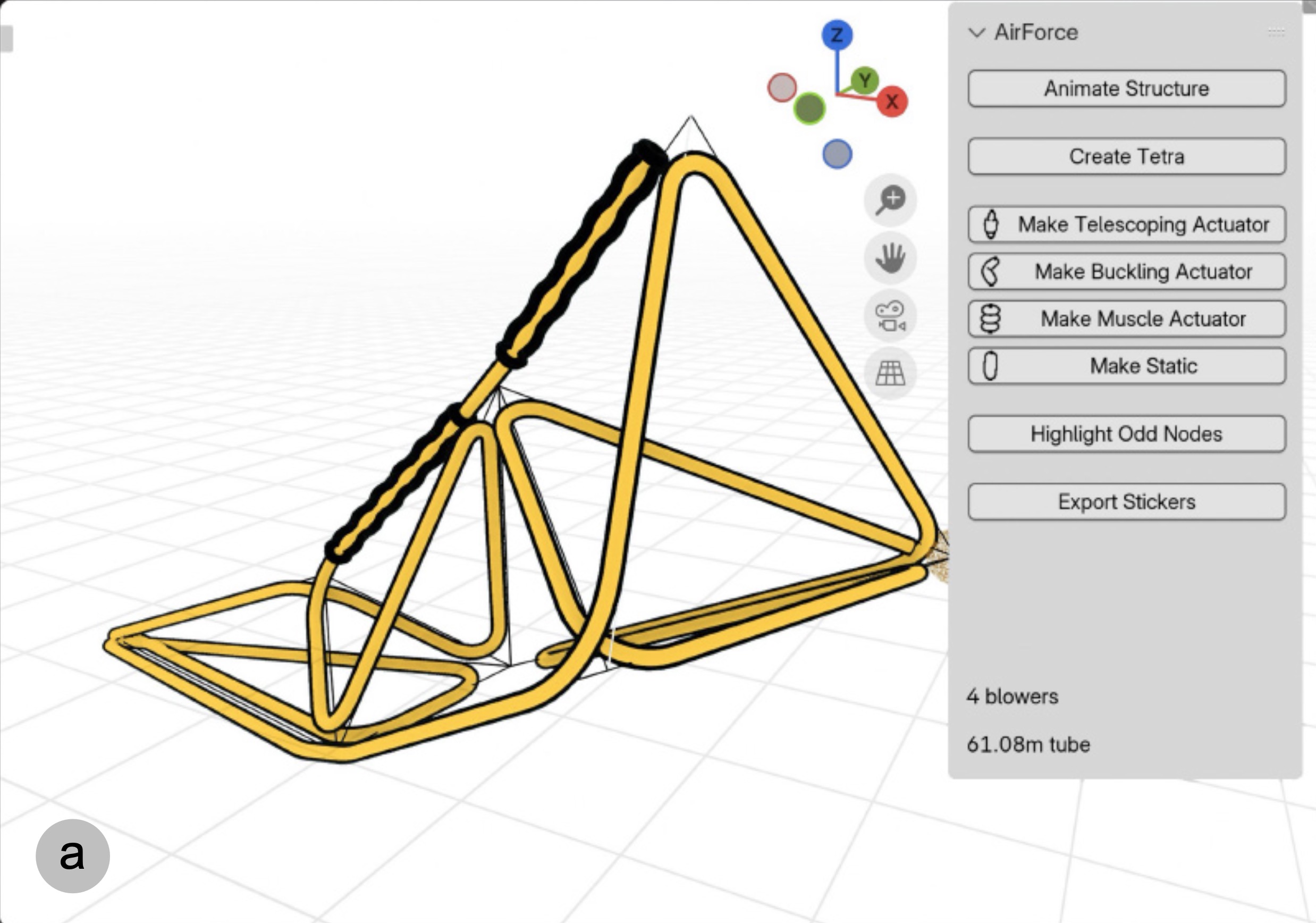
Using the AirForce Blender plugin (GitHub), users typically start by modeling a static version of their model. During modeling, AirForce reroutes the single tube through the model’s truss structure in real time. At any time, users may convert selected segments into their respective types of actuators. When users click export, AirForce subdivides the model to make it fit the user’s tube material. Here, the user uses 50-meter rolls; therefore, AirForce subdivides the model into five 50-meter sub-assemblies. As part of the export, AirForce generates assembly instructions in the form of stickers. The distance information on each sticker tells users how to space out stickers along the tube. Users then partition the tube at the stickers using velcro ties, leaving 4-inch openings to permit airflow. To attach blowers, users cut a slit into the top layer of the tube using a kiss-cut knife, insert a custom inlet, and attach it using the inlet’s adhesive coating. Users insert a blower and secure it. The stickers left and right of blowers are marked with the word “seal.” Here, users create airtight nodes by looping the tube through the velcro tie. Finally, users insert one inlet and blower into a segment without seals. This allows the blower to inflate the entire rest of the structure.
Project Page | Hasso-Plattner Institute | Read Paper PDF
Team: Lukas Rambold, Robert Kovacs, Min Deng, Antonius Naumann, Konrad Gerlach, Horatio Hamkins, Helena Lendowski, Chiao Fang, Shohei Katakura, Conrad Lempert, Muhammad Abdullah, Patrick Baudisch