Technology is no longer merely an external tool, it has become an extension of the human being itself, reshaping our identity and the way we experience the world. Its influence extends beyond domains such as work, education, and healthcare, exerting a direct impact on individual well-being. It touches our most intimate spheres, such as building friendships, dating and fostering relationships. However, one of the often-overlooked spheres of intimacy, that technology has not yet substantially transformed, is spirituality.
The last century has witnessed the gradual shift of several segments of the population away from traditional religions. Spiritual practices have struggled to adjust to the profound societal changes that occurred during our period. Nevertheless, this does not diminish the human need to address existential questions and to engage in introspection as a means of self-care.
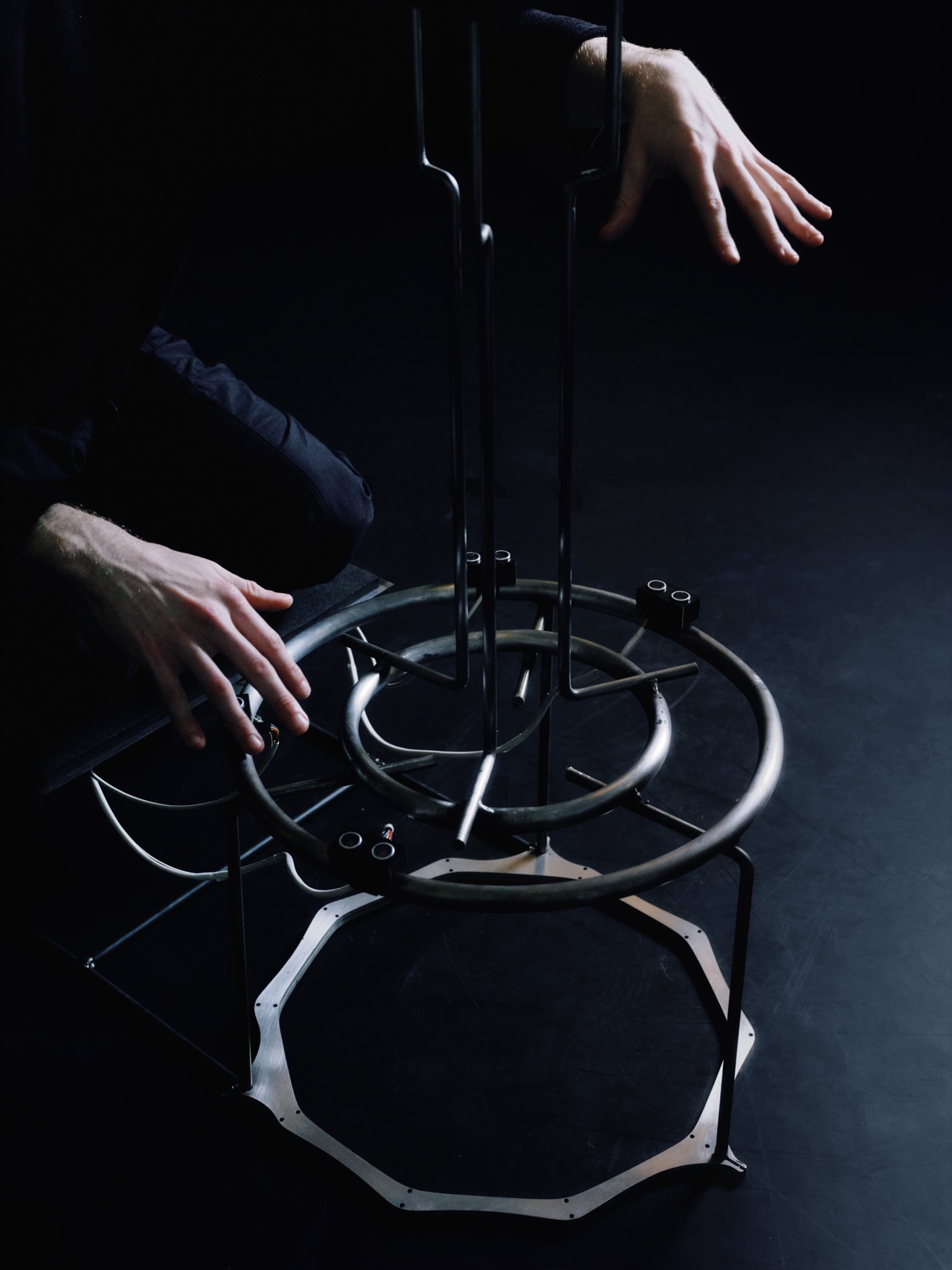
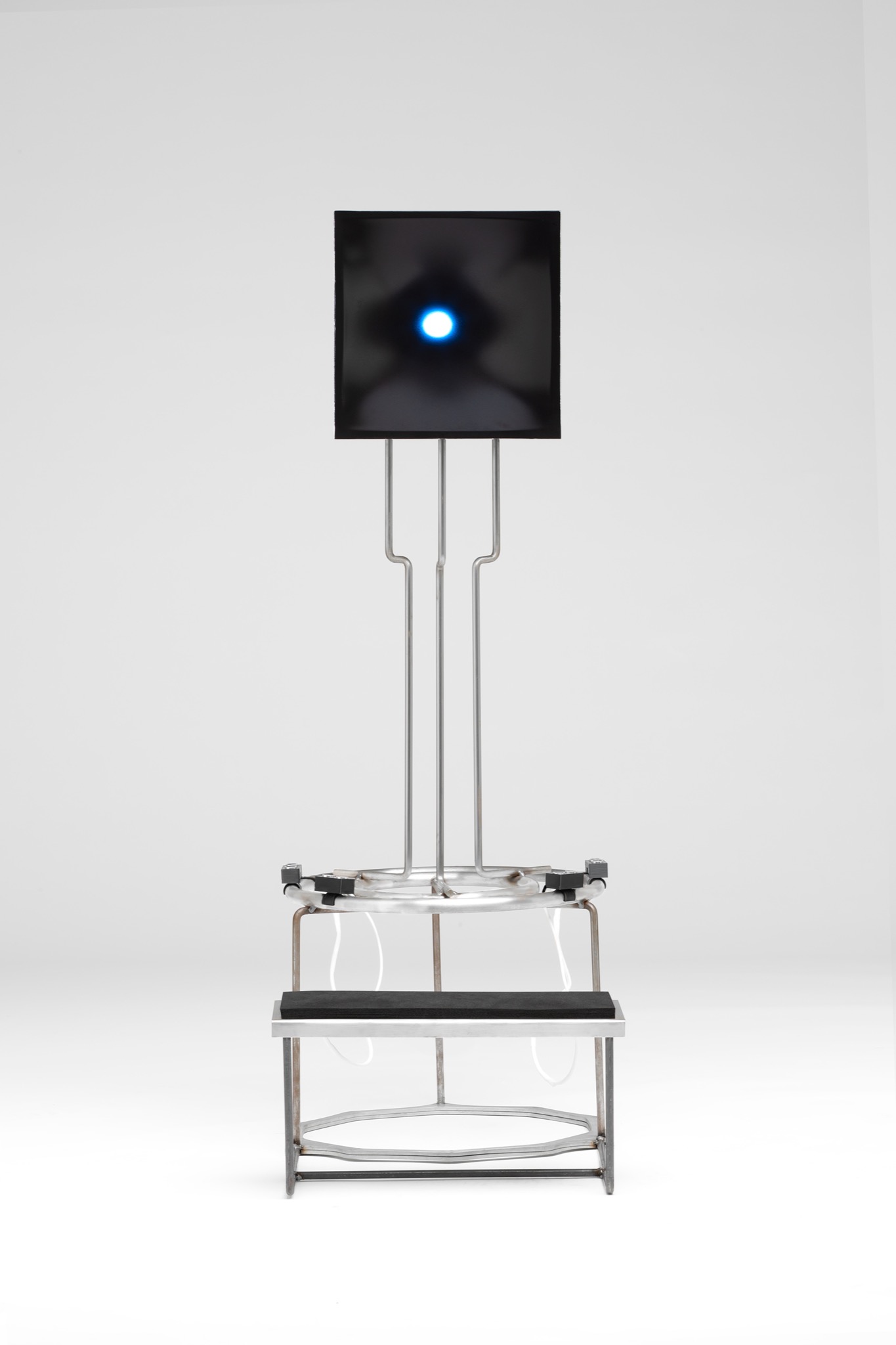
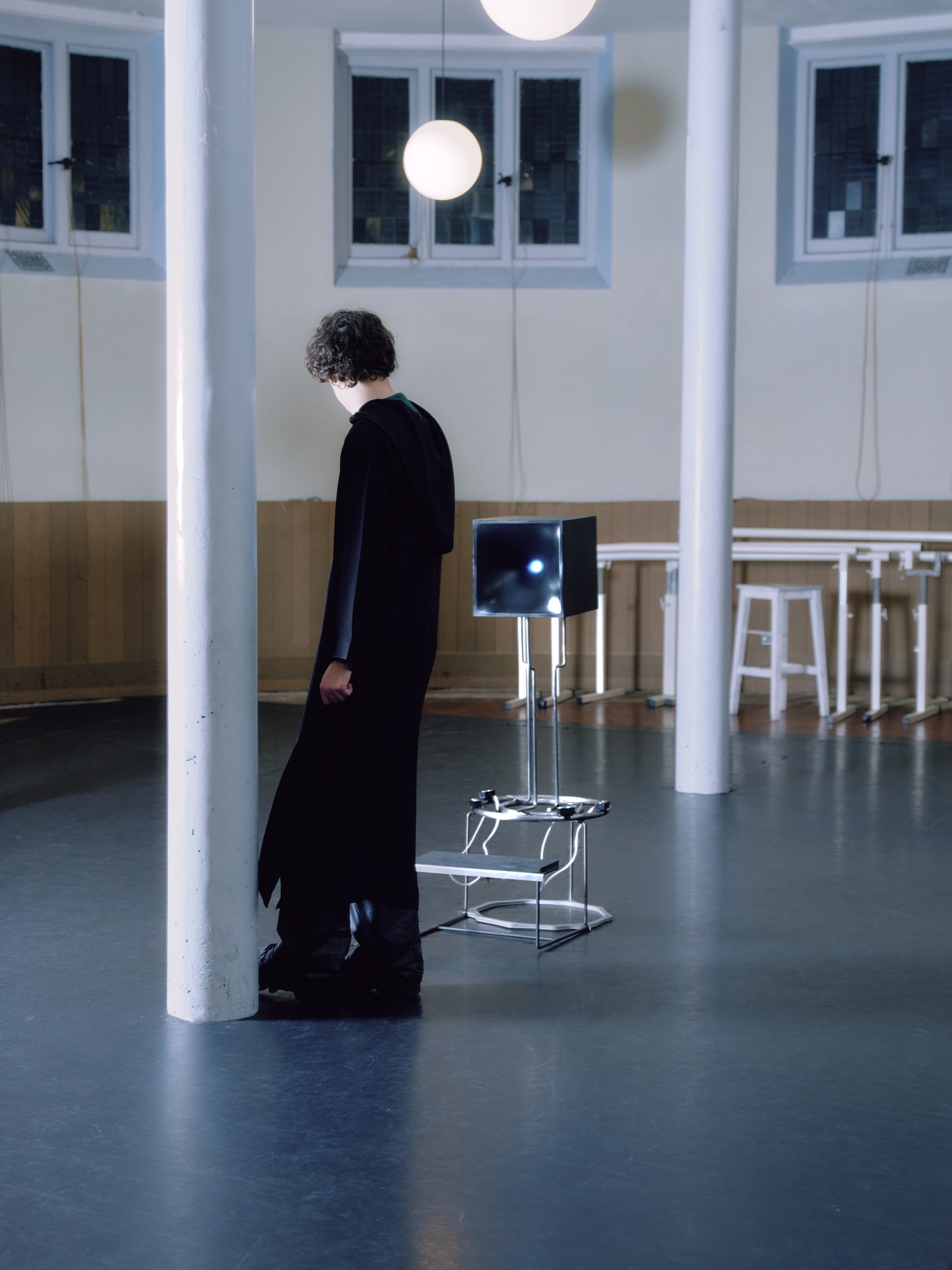
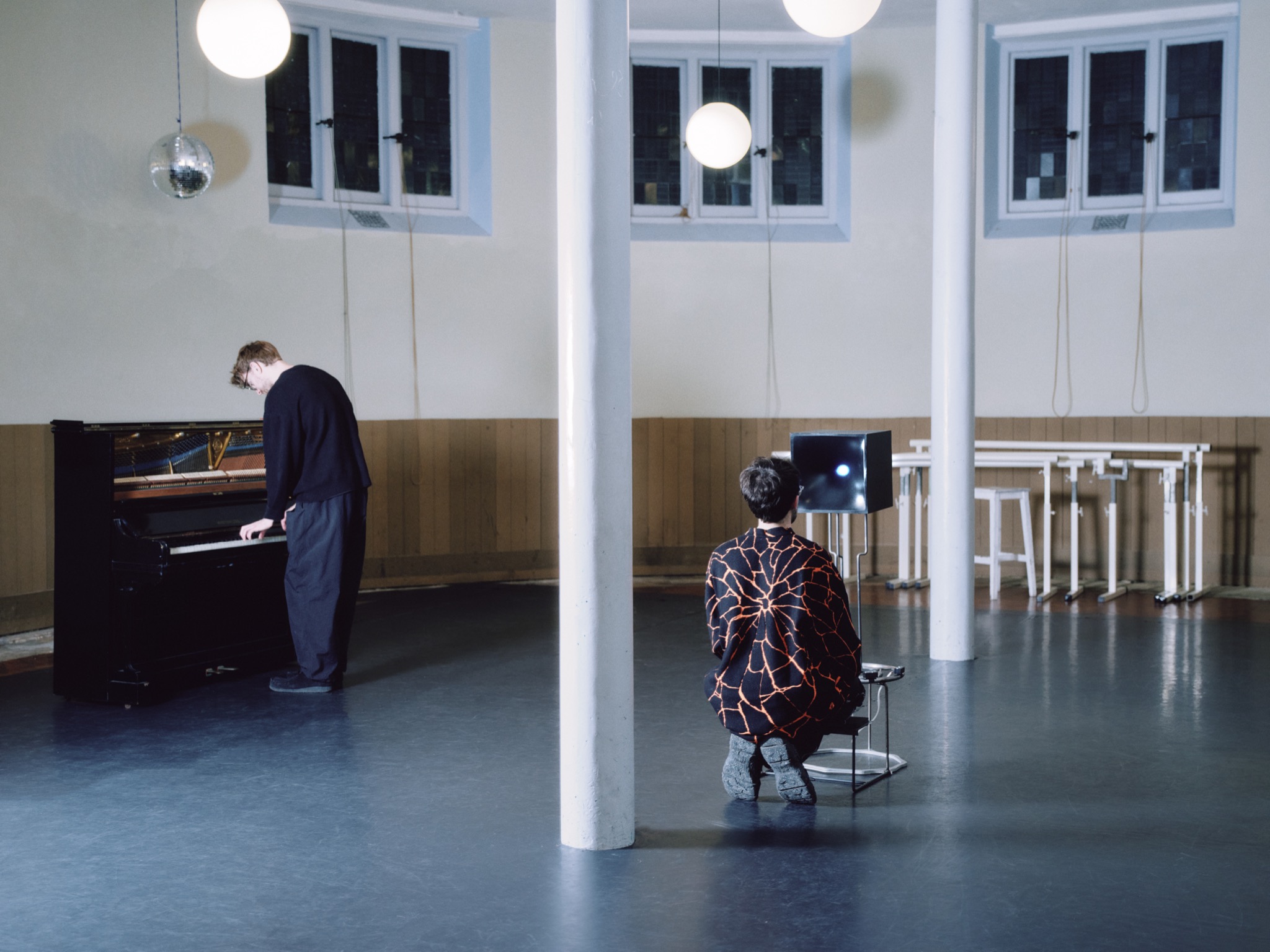
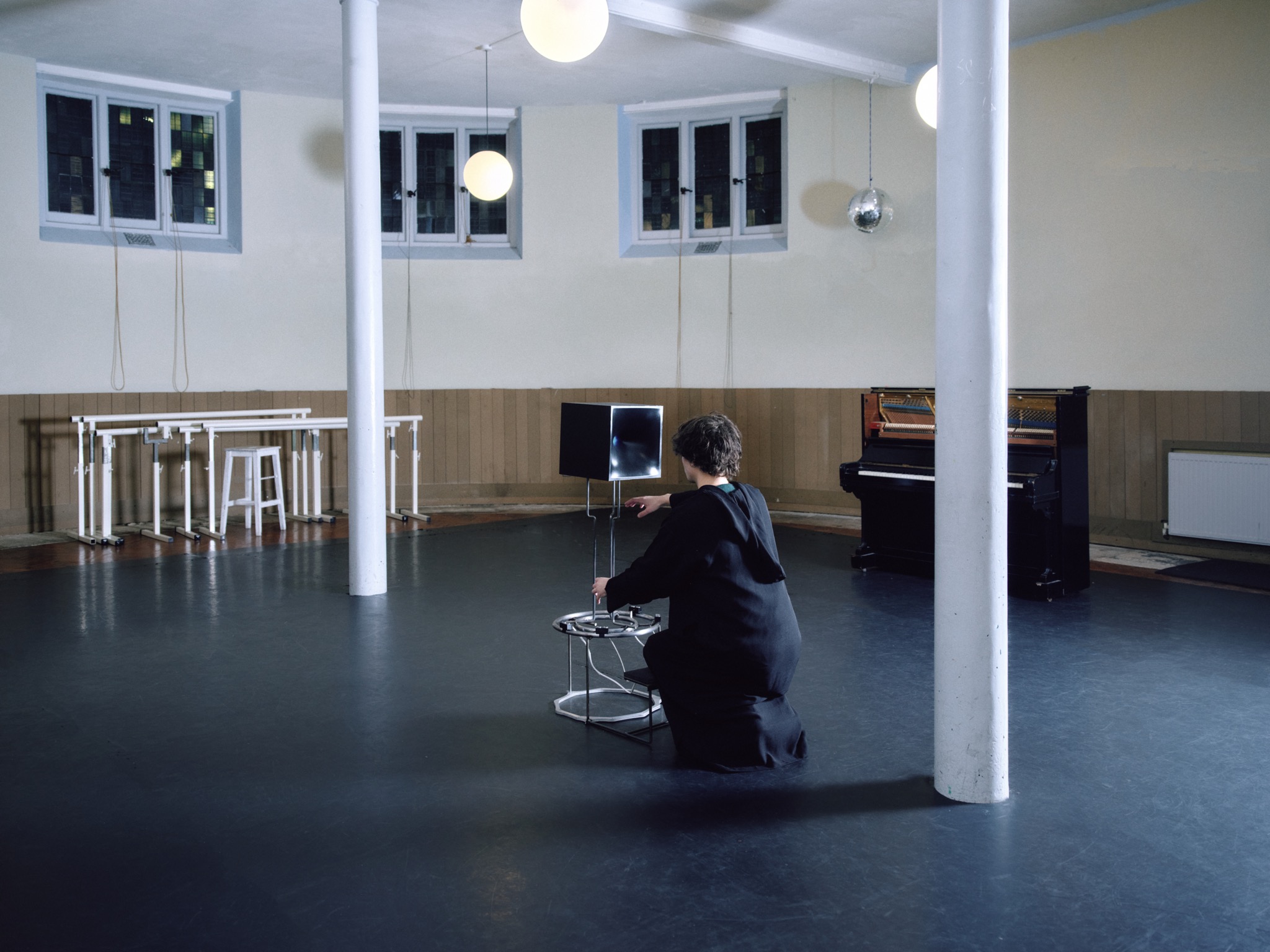
Aurora is a speculative device designed to explore the act of prayer. It allows users to engage through proximity-based hand gestures. These movements generate evolving, dreamlike soundscapes that serve as a sonic medium for communication with the subject of their prayers.
The device thus generates a liminal space in which the ‘profane’— the machine, technology— acquires a sacred dimension, offering contemporary individuals the opportunity to partake in a ritual and transformative experience.
Aurora critically examines the interplay between technology and spirituality, encouraging reflection on the potential benefits and risks of integrating machines into deeply human experiences. It challenges us to consider how future societies might adapt – or be reshaped – by the intersection of faith and innovation.
Key to Aurora’s functional operation is a series of four vertically facing ultrasonic sensors. These sensors are subtly embedded upon the main metallic structure and are connected to an embedded PCB, upon which a Seeed XIAO ESP32S3 microcontroller is situated. Operationally, the vertical distance of the user’s hand relative to the position of these sensors determines the precise note being played by the user. This means that motioning one’s hand vertically above a sensor would sound similar to playing an entire piano scale in real-time. However, in the case of Aurora, each sensor represents a different instrument and creates entirely different sounds. The result of this is the production of a dense soundscape completely unique to the exact patterned motion of the user’s hands but played in a consistent scale. To achieve this, the Seeed XIAO ESP32S3 microcontroller processes said physical inputs from each of the sensors, maps these values to a suitable, applicable range, transforms the values into a readable MIDI format, controls the musical scale that will be played, and sends this data wirelessly to Ableton Live.
Domenico Di Paolo | Kieran Feechan