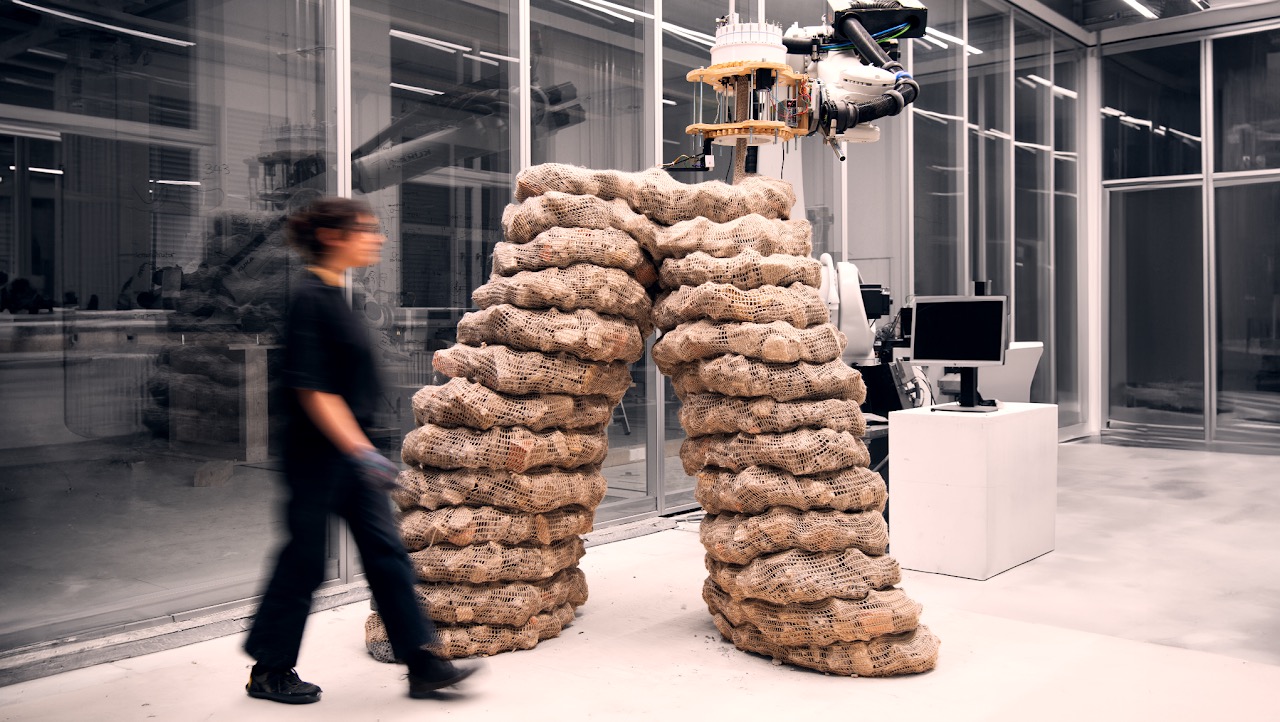
Created by Athina Kotrozou, Kai Jie Kwang and Shaqayeq Tahavvori at the University of Stuttgart (Integrative Technologies and Architectural Design Research – ITECH), Con[knit]uous Rubble proposes a reuse strategy for one of the most common building materials and demolition waste contributors: concrete. It explores the use of unprocessed concrete rubble in a dry, continuous, seamless container-based granular system, avoiding the need for energy-intensive processing, binders, or mortars.
Concrete comprises about half of the construction material market and demolition waste volume. As more buildings undergo partial or full demolition, concrete rubble stock will increase. Current reuse methods either downcycle the material into backfilling and road construction, or require intensive sorting, transporting, and crushing into 8–16 mm aggregates with the addition of portland cement for recycled concrete. Academic research often focuses on uniformly sized rubble, while larger pieces (>400 mm) require complex carving and scanning, or mortarbased assembly.
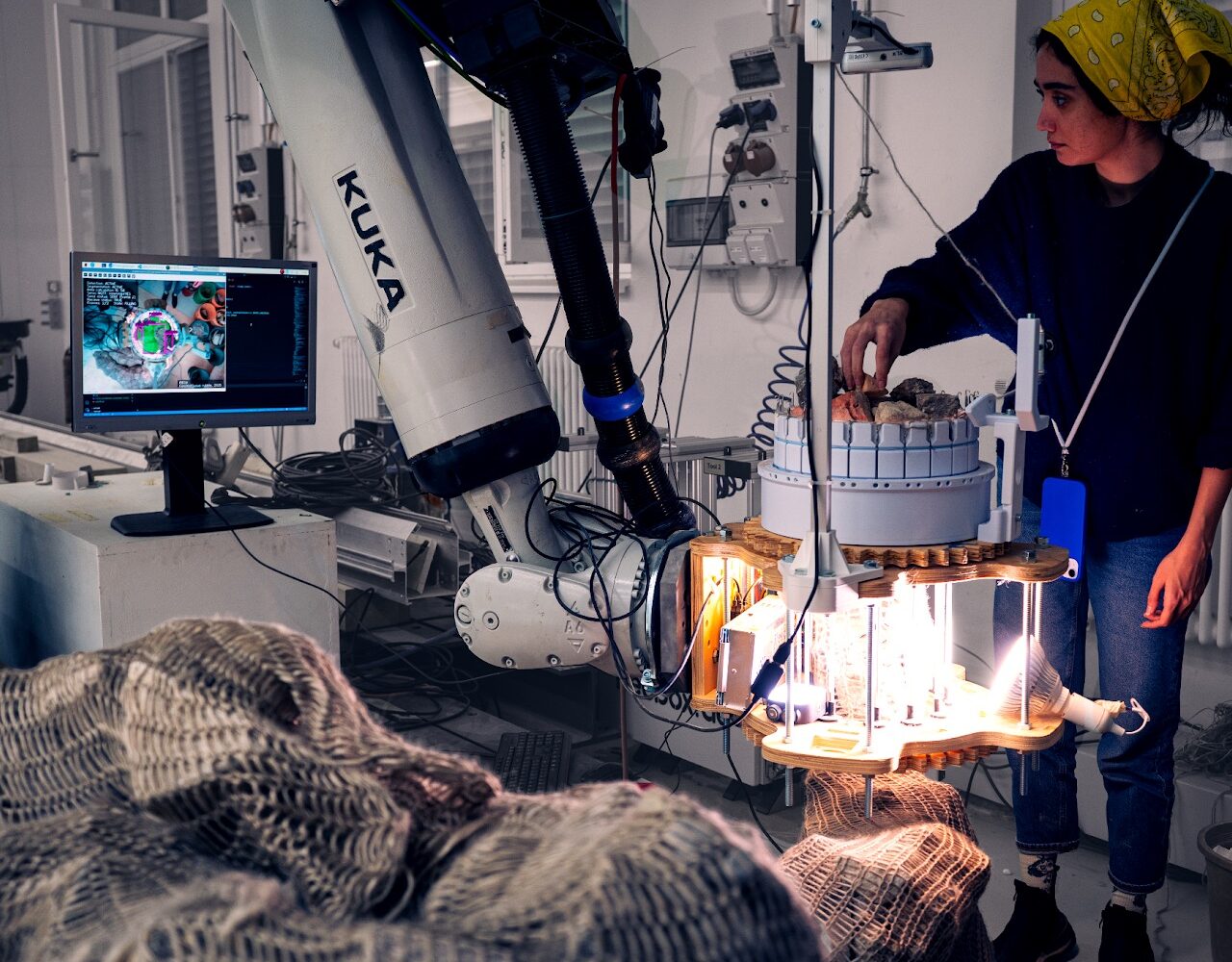
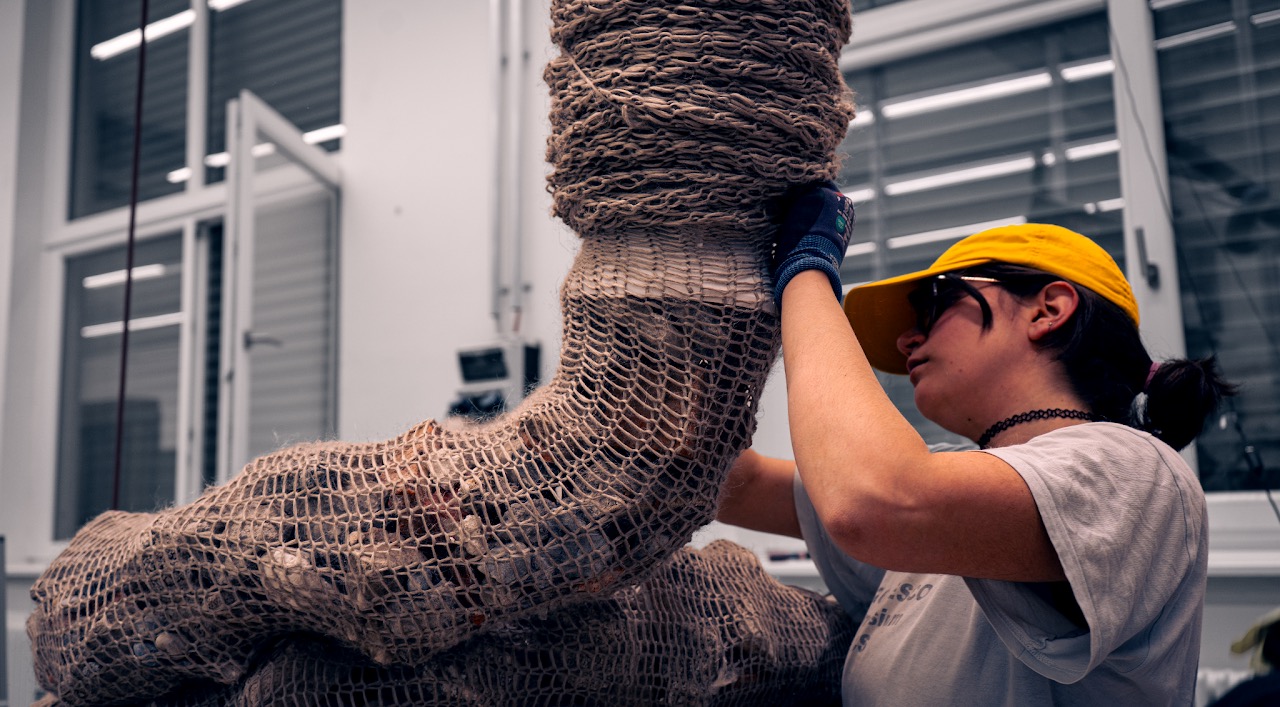
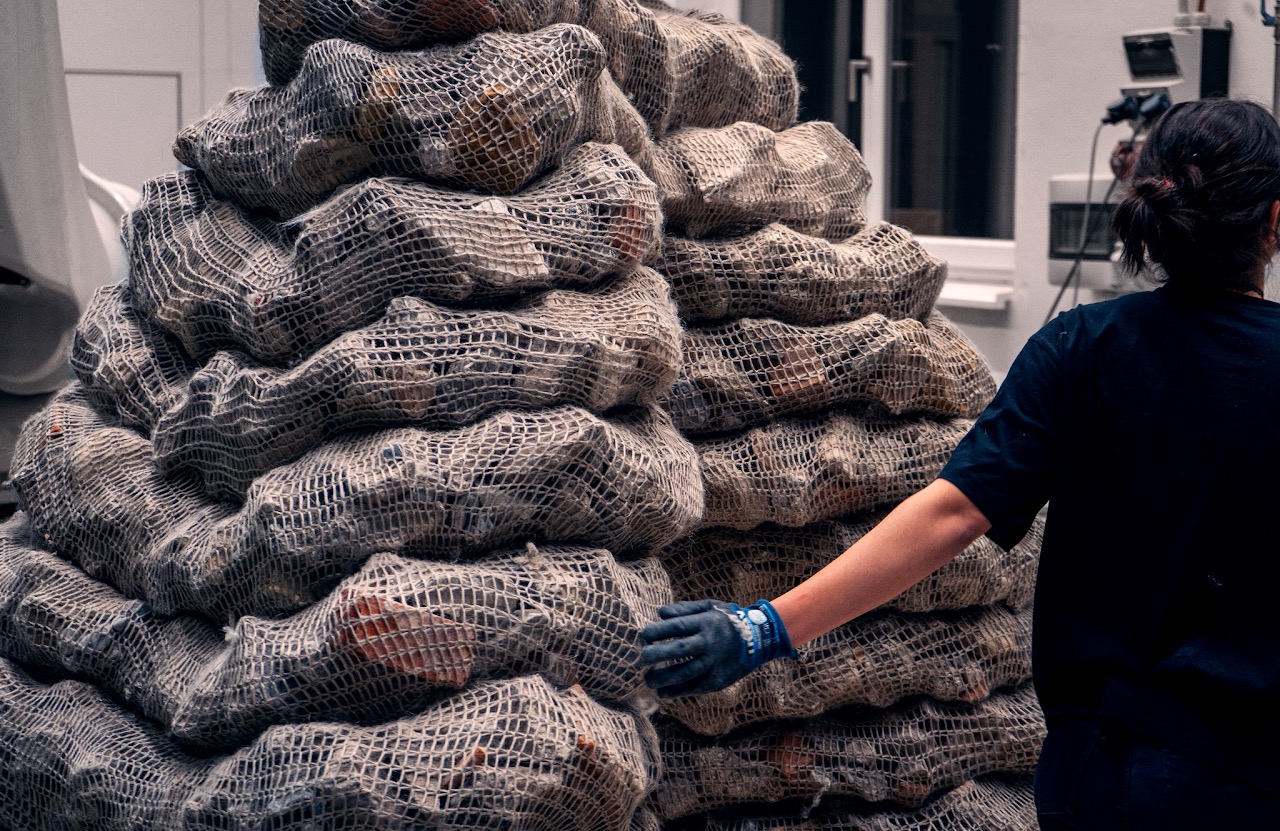
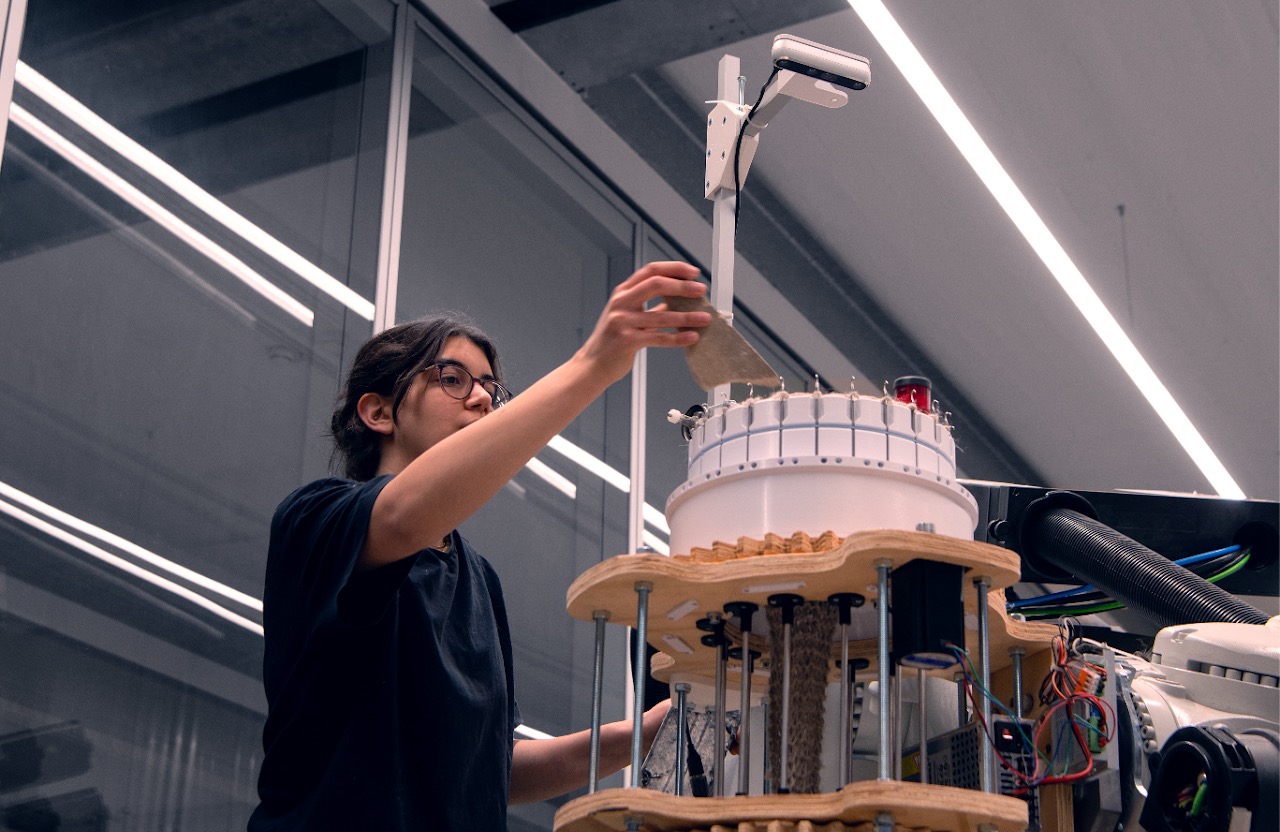
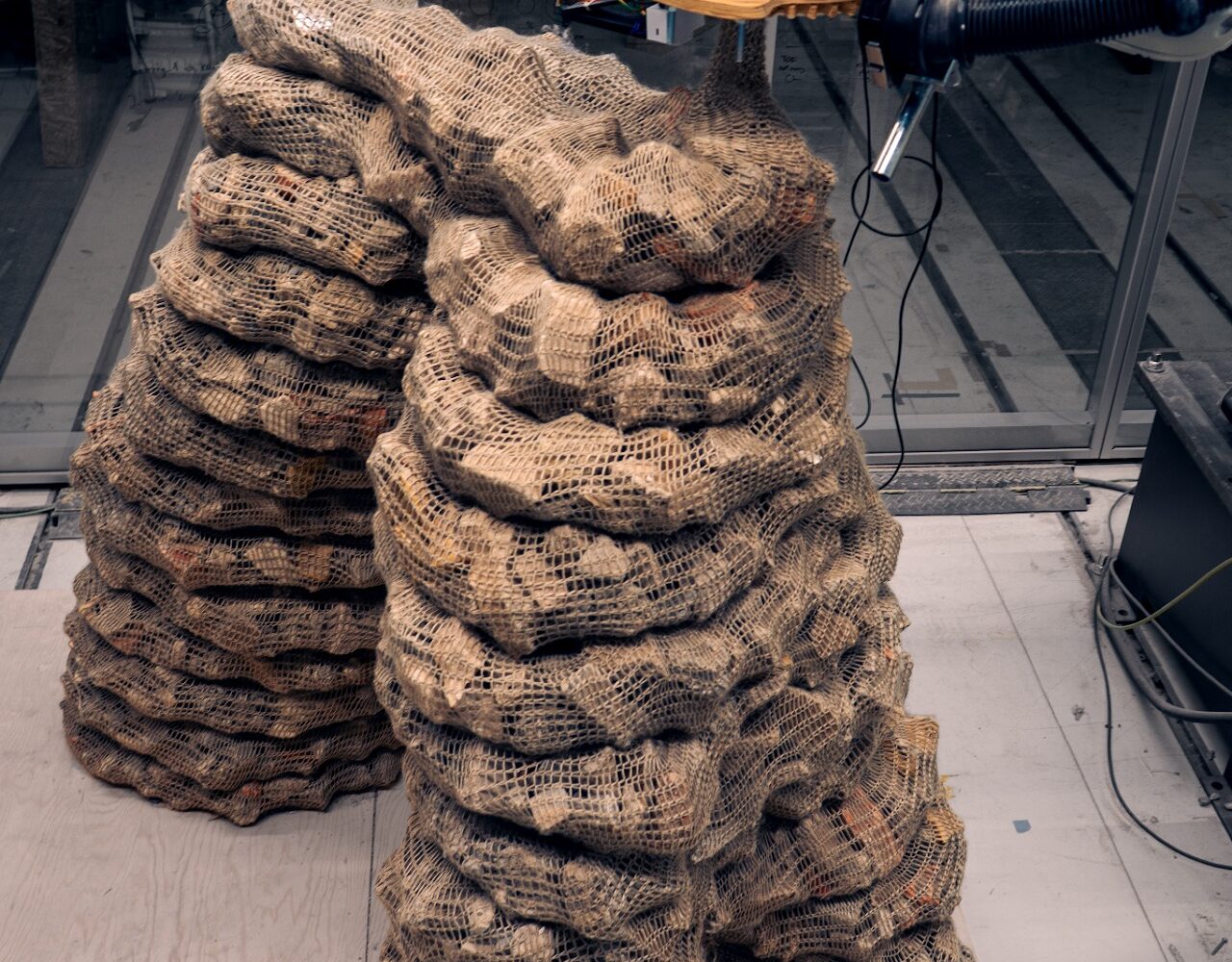
The system is comprised of a horizontal, seamless, continuously knitted container using a circular knitting machine end-effector, incrementally filled with rubble. The container system is deposited along planar, curved toolpaths in a layer-by-layer sequence. For the rubble recipe, density is used as an approximation for concrete quality. A global structural analysis and rough pre-sorting using sifting and machine vision helps them determine the density distribution for larger rubble, as well as the amount of granular rubble required for jamming each segment. The container parameters include the knitting and wrapping speed, affecting the tensile strength of the system, synchronously to rubble jamming.


While using “jammed” material to build complex shapes like leaning columns and arches can result in strong structures, the team faced issues with the material settling too much and layers slipping out of place, making them them unstable. To solve this, they developed a digital feedback system using cameras and sensors, structural analysis and rough pre-sorting using sifting and machine vision to monitor the building process in real-time and correct errors as they happened.
The team is currently looking into alternative fibre materials, bio-based binders and/or infill materials to address the environmental degradation of the fibre, as well as weatherproofing of the system for inhabitable applications.
Thesis Advisers: Axel Körner, Lasath Siriwardena
Thesis Supervisor: Prof. Achim Menges
Second Supervisor: Prof. Jan Knippers