This project started with a simple question: How can we use generative AI more playfully in the physical world, rather than just watching videos on social media? This led me to a project I’ve named Hush. The core inspiration came from the movie Toy Story, and I was always fascinated by the idea that toys move around and have their own lives only when people aren’t watching. I wanted to recreate that magical moment using today’s technology.
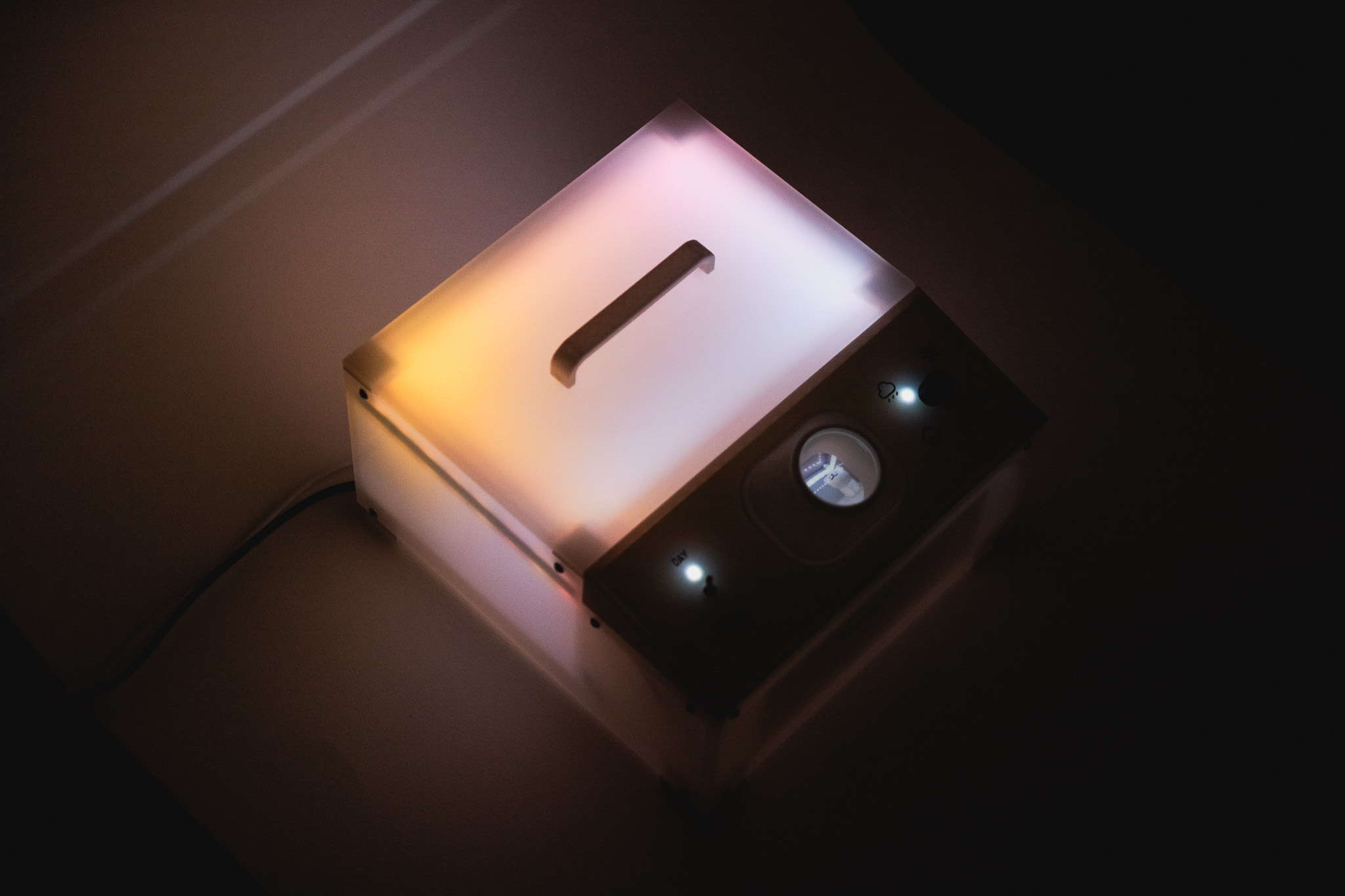
Hush is a toy box that brings inanimate objects to life by connecting physical play with generative AI. The process is designed to be simple:

- Set the Scene: Place any toys inside the box.
- Select Filters: Use the toggle switch and the knob to set the environmental mood(Day/Night, Sunny/Rainy/Snowy/Party)
- Close the lid: Once you close the lid, the box captures the current view of the interior and starts generating video
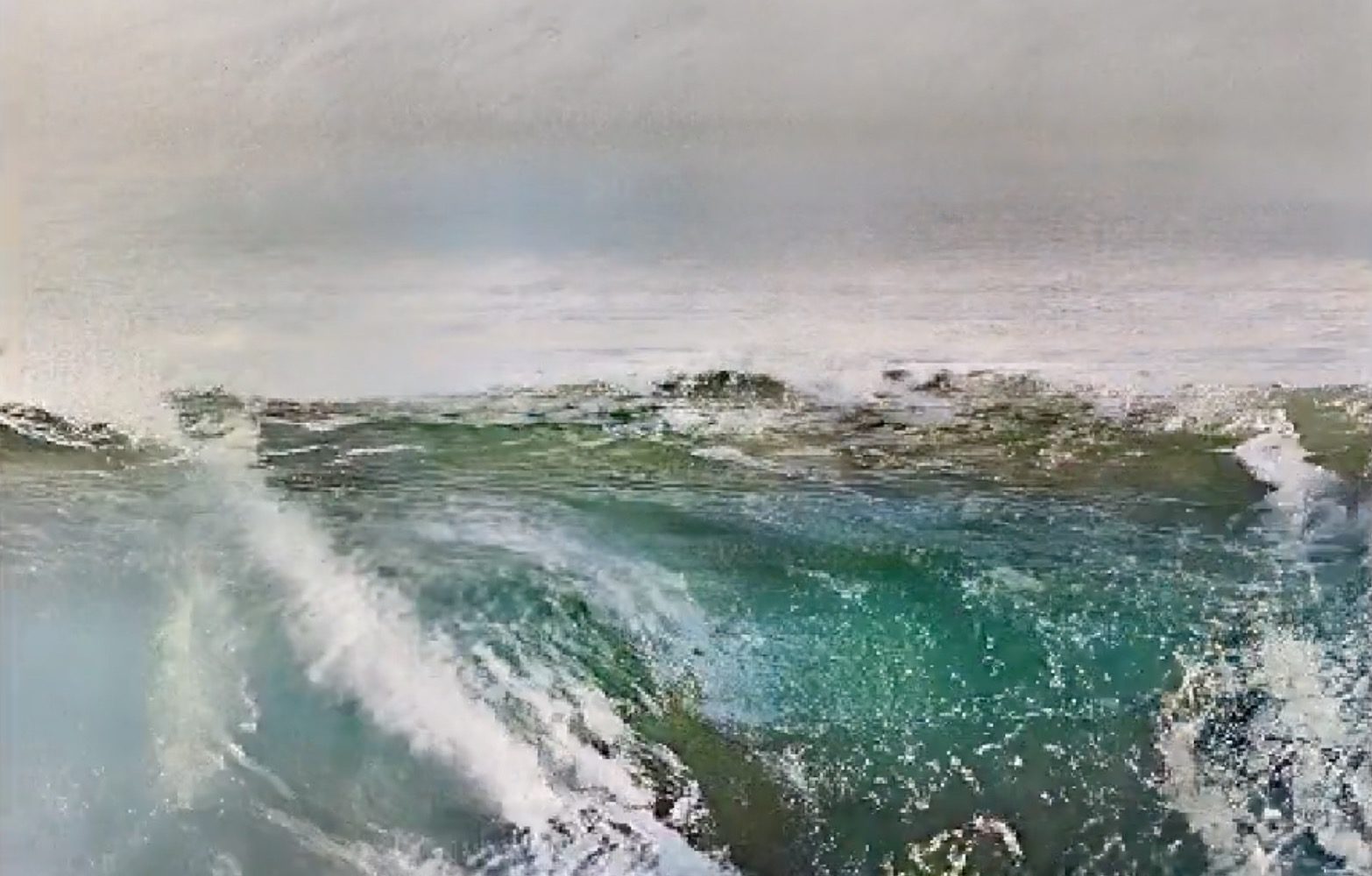
- Video Streaming: Once the video generation is complete, Just as we use a microscope to see worlds invisible to the naked eye, the generated video can be observed through a lens in the center of the box. Through this viewport, you can watch the toys coming to life, streaming directly from the system.
- Remove the lid: When you open the lid, the video streaming stops, allowing you to add new figures or rearrange the scene again
What started as a personal curiosity and a desire to build something with my hands has grown into a vision for a new kind of creative tool. My hope is to develop Hush into a storytelling or video-making platform for children, where the act of playing with physical toys becomes the script for a digital movie.
What started as a personal curiosity and a desire to build something with my hands has grown into a vision for a new kind of creative tool.
The interaction begins with a Hall effect sensor discreetly placed under the lid’s bracket. I used magnets on the lid so that the moment it is closed, a signal is triggered. This physical action is communicated via an Arduino through a serial port to the backend system, ensuring the AI starts generating the video at the exact moment the toys are hidden from human view.
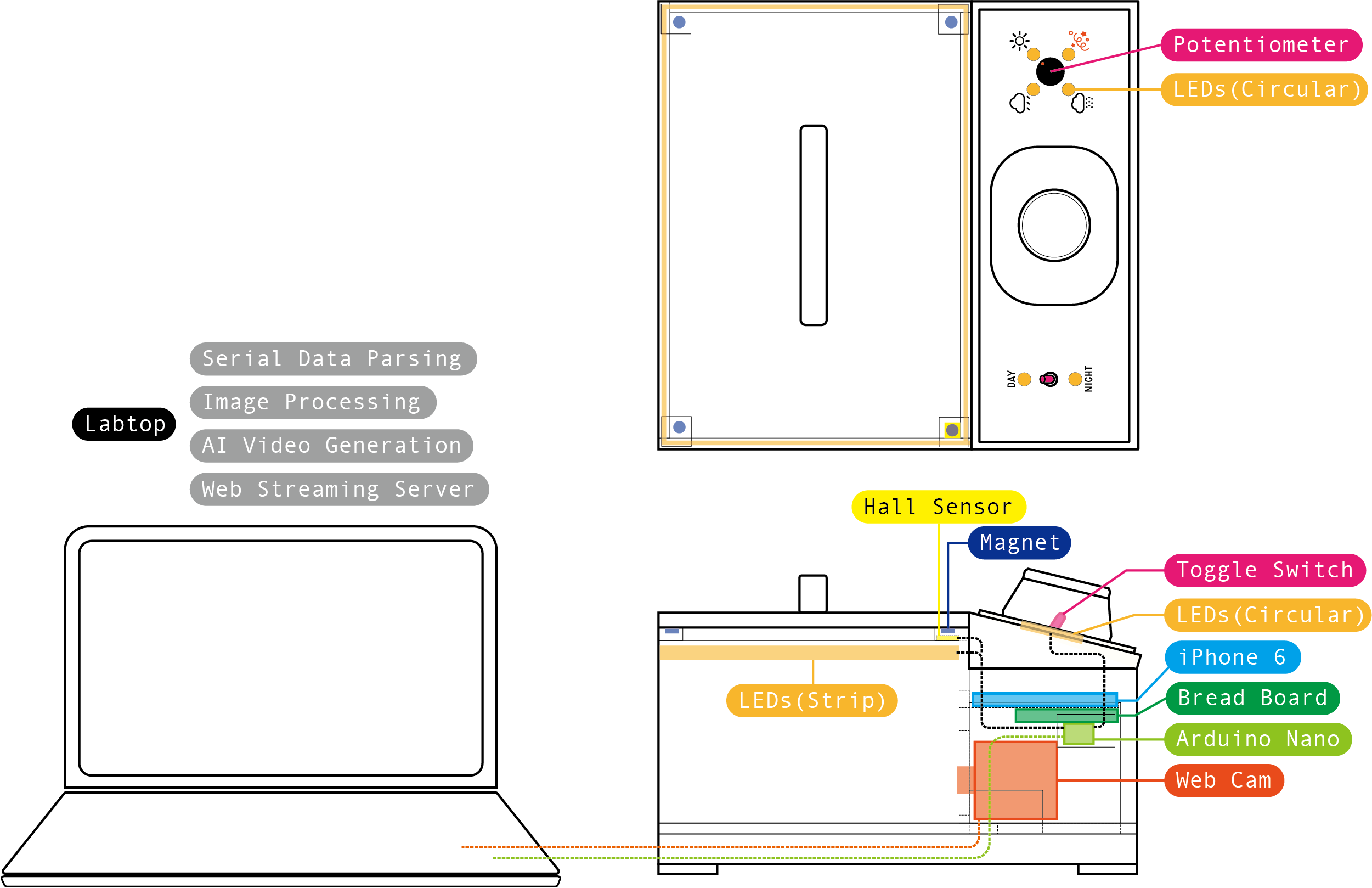
The core of the video generation is powered by the Kling v2.5 Turbo model. When the lid closes, the internal camera captures the current arrangement of the toys. This image, combined with environmental parameters (Day, Night, Snowy, etc.) selected by the user via physical filters, is sent to the Replicate API. The system then transforms the static image into a dynamic, moving scene.
I repurposed my old iPhone 6 as the primary display. It is positioned behind a lens in the center of the box, streaming the generated footage from the backend. The housing was built to integrate these electronic components by using a combination of laser cutting translucent acrylic and 3D printing.
Moving forward, I want to evolve Hush into various formats, such as specialized tools for storytelling, video production, or even an outdoor interactive experience.
Hun Han is a passionate maker and designer from South Korea. His journey began with childhood 3D puzzles and teenage invention clubs, eventually leading to a degree in Industrial Design Engineering at Koreatech. Over the years, he has explored various mediums to bring ideas to life, constantly expanding his creative boundaries. As a recent graduate of the CIID, he now navigates seamlessly between the physical and digital realms, diving deep into electronics, AI, and spatial computing.