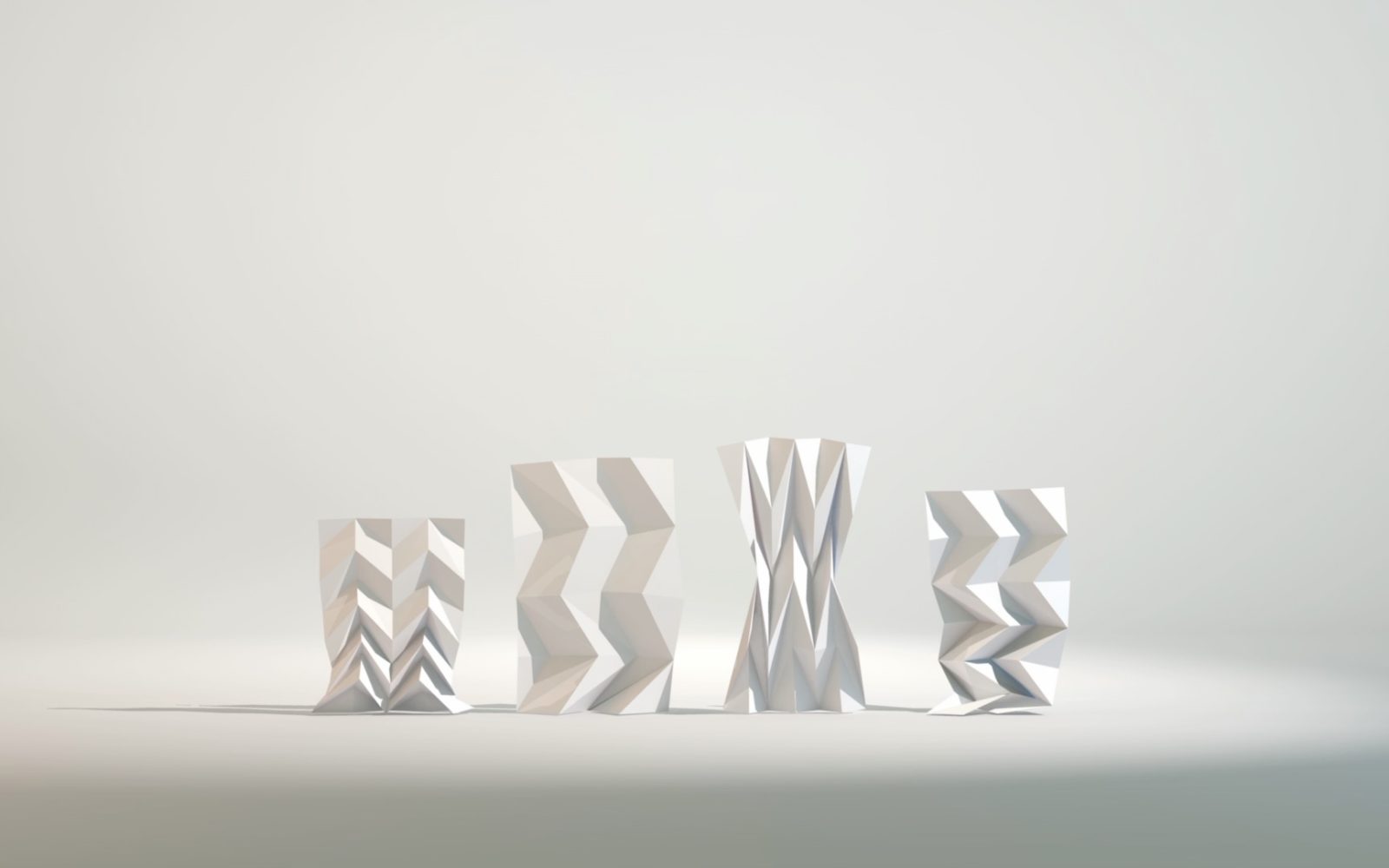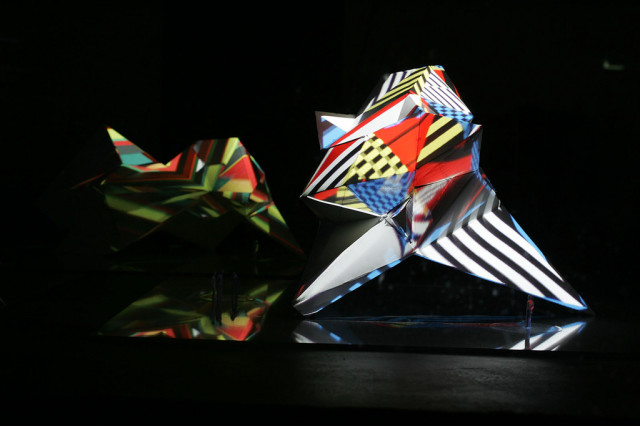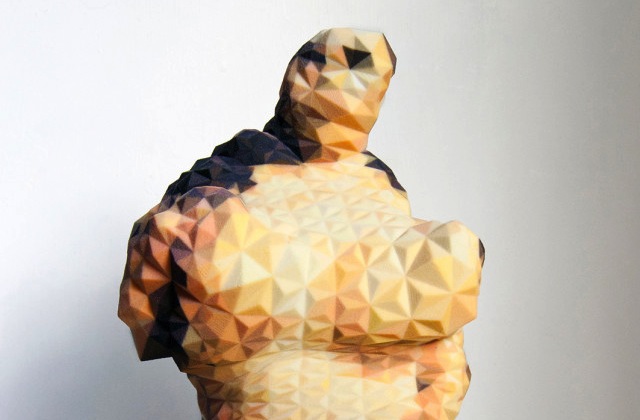
Created by Michael Burk & Ann-Katrin Krenz for the Digitale Klasse (Berlin University of the Arts), Kepler’s Dream is an aesthetics exploration investigating analog projection in combination with computationally created object which is given a physical shape through 3D printing. Mixing these digital aesthetics – parametric and generative shapes – creates an experience of the object that seems to be neither digital nor analog but otherworldly.
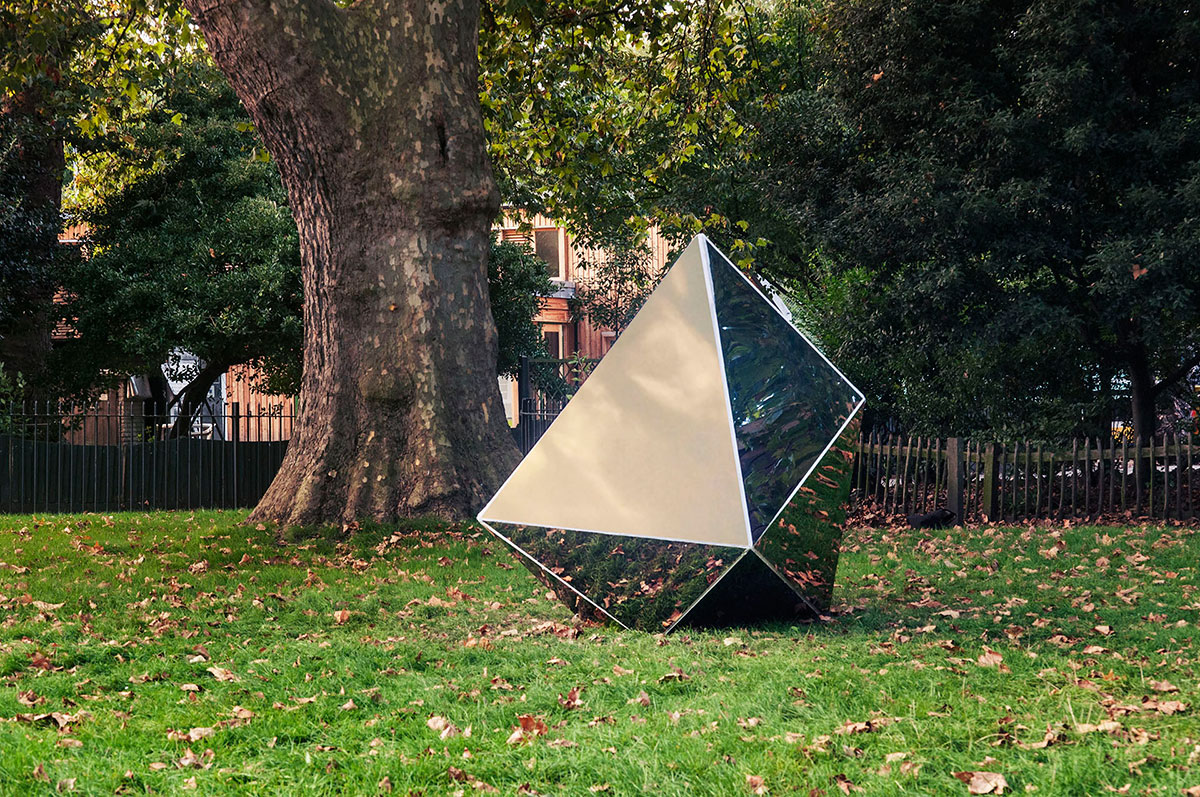
Inspired by obsolete projection technologies like the overhead projector, the installation was designed to generate unique imagery and a fascinating experience. The 3d-printed object draws inspiration from Kepler’s platonic bodies. Here, each element (fire, water, earth, air) is represented by a platonic body that transforms into parametric shapes and landscapes. For example, the tetrahedron breaks apart into jagged structures which resemble fire. The dodecahedron, the ether containing the other platonic bodies, seems to have crashed into the rigid landscape, leaving holes in the mountain sides matching the shapes of the octahedron, icosahedron, tetrahedron, and the cube.
The shallow depth of field of the projection and the spherical object invite exploration in this new abstract world that can be explored in a non-linear way, following the path of the structures back to the initial platonic bodies.
The 3D Model was created using CINEMA 4D, checked with NetFab and printed at Shapeways. The generative shapes were modeled using XPresso and MoGraph.
Michael Burk | Ann-Katrin Krenz