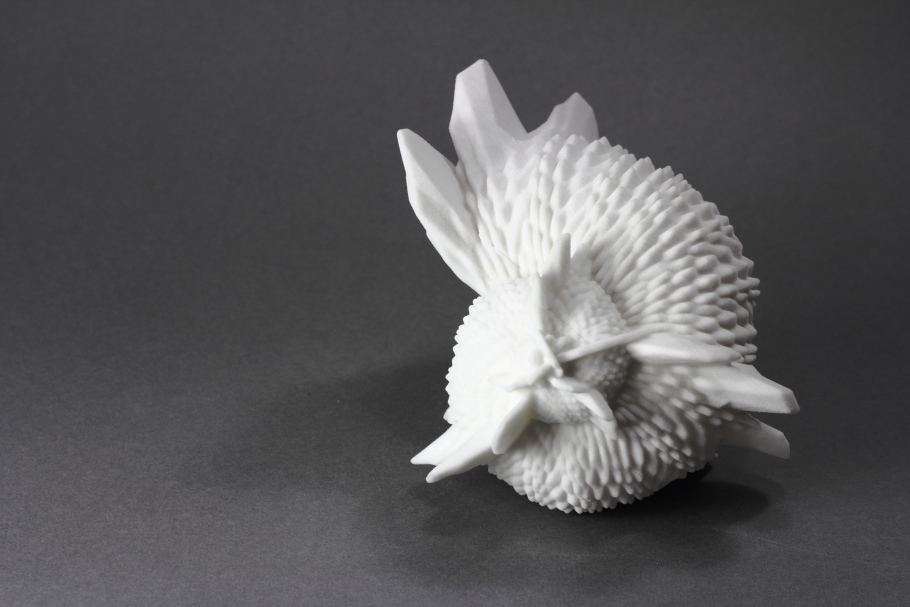
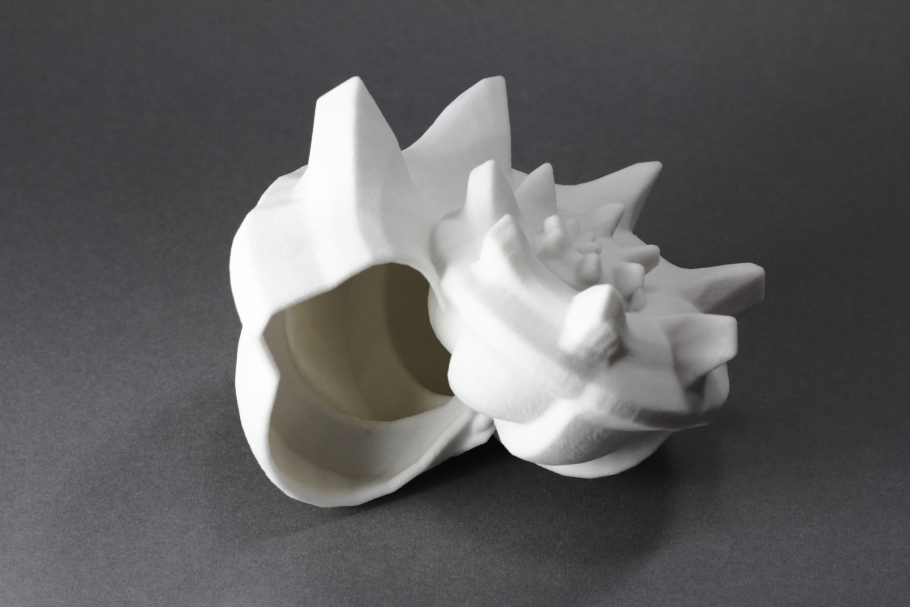
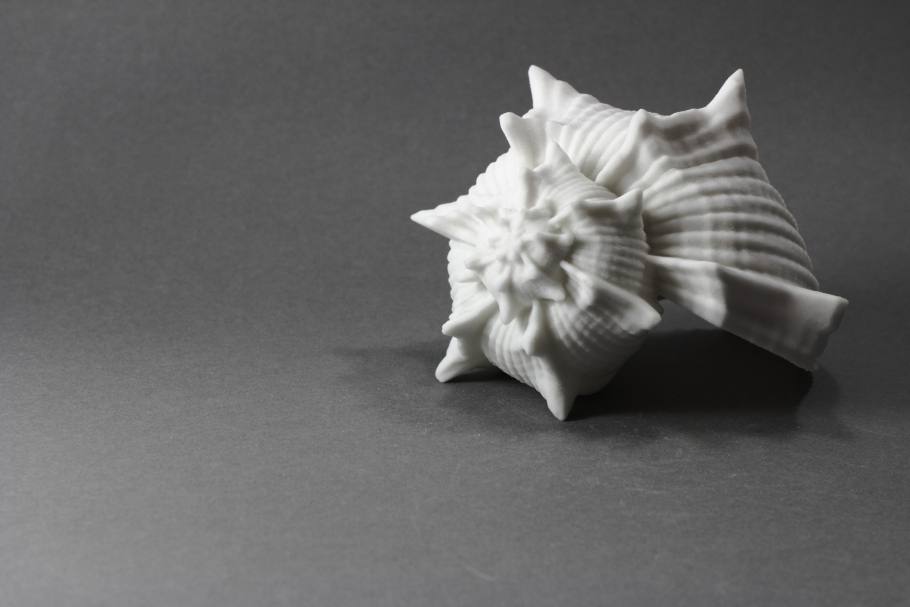
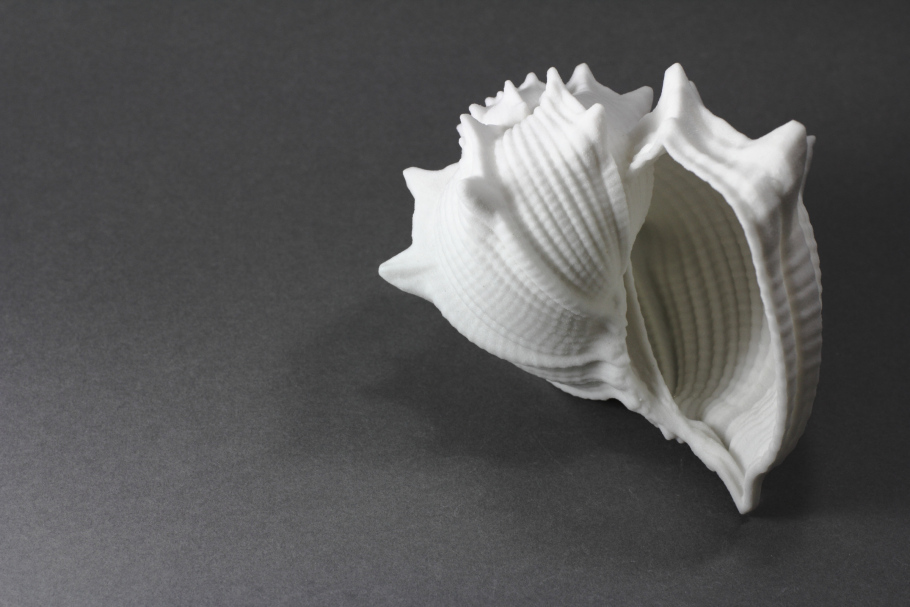
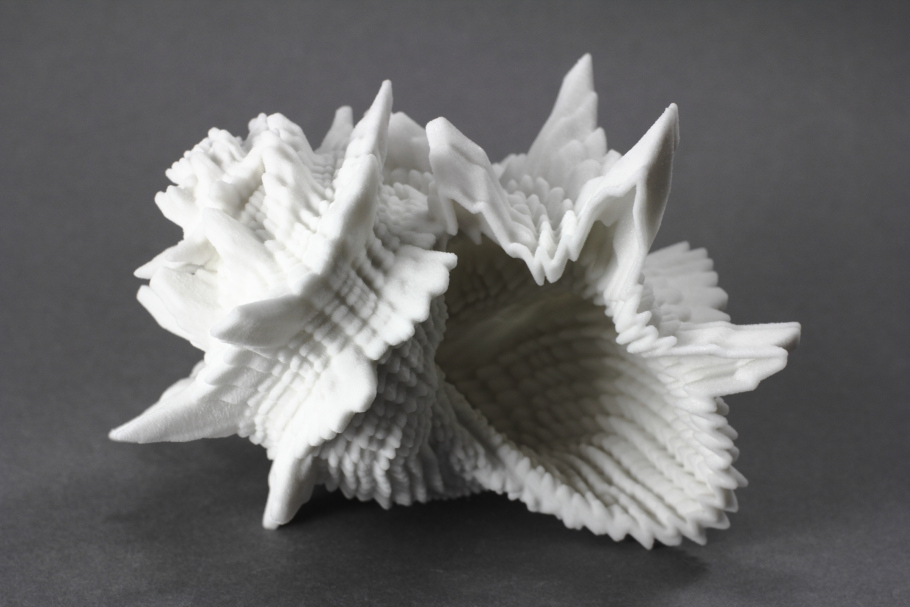
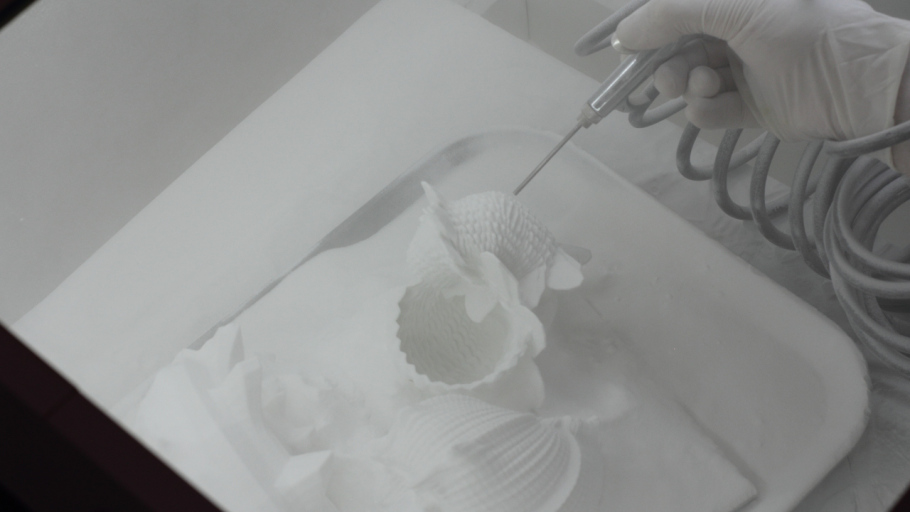
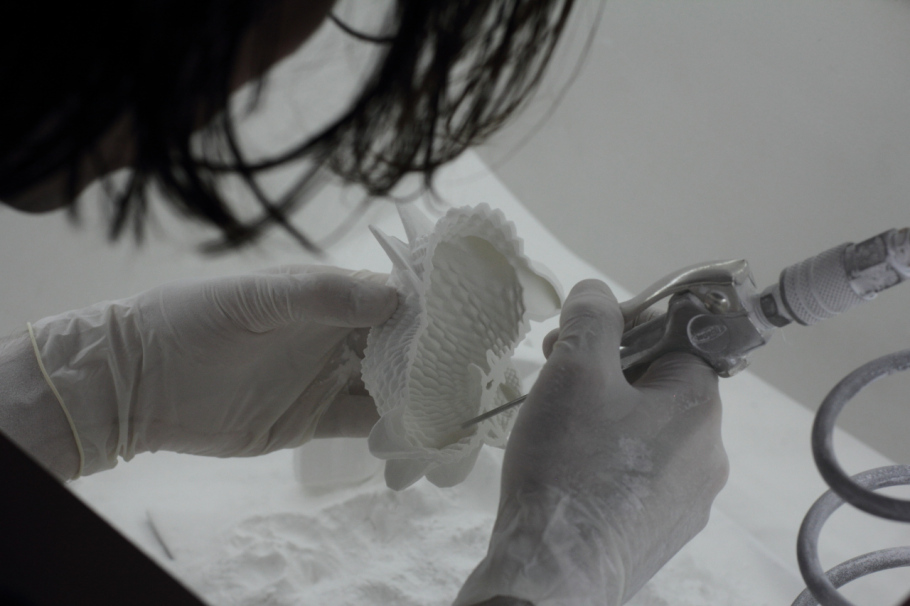
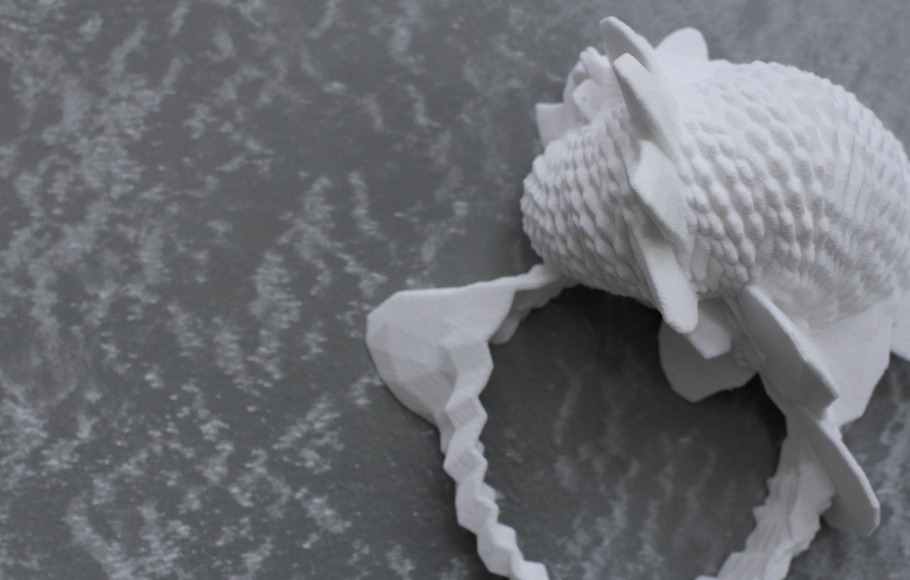
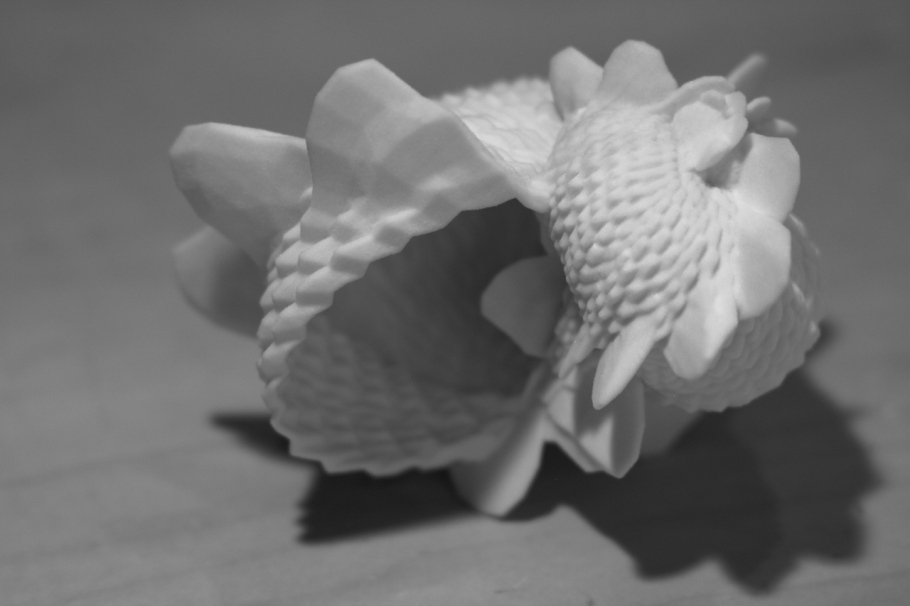
Listening to the Ocean on a Shore of Gypsum Sand is a collaborative project between Gene Kogan, Phillip Stearns, and Dan Tesene which is comprised of algorithmically generating 3d printed forms created for the sole purpose of listening to the “ocean”. In this process, the project attempts to address the role of experience in the mediation of the virtual world to the real world and visa versa.
To those for whom their first experience of listening to the “ocean” through the digitally produced shell, the question becomes one of how the first encounter with a virtualized and simulated reality shapes the experience of lived space. This virtual shell is all I know of the real, until I encounter those found in nature—and when I see this natural shell, what then is my experience of? More broadly, how does mediated reality form our preconceptions of the world? For some, these questions seem obvious—we may even have convinced ourselves that we have this all figured out. We are aware of the possibility that the virtual world and real world are two interacting identities, distinct ideas that maintain their individuality despite their mutual influence on one another. There is, however, a possibility that this distinction is fading with younger generations, as technologically mediated experiences permeate childhood. I wonder about the effect of this as they grown into the world.
The 3D models are generated using custom software created by Gene Kogan using Processing and Hemesh library, and based on modeling techniques described Jorge Picado in his paper, Seashells: Plainness and Beauty of Their Mathematical Description. The design program and usage instructions are downloadable via Github. Additional mathematics were implemented by Phillip Stearns for more creative control over the surface textures, shell shape, and deformations. Shell meshes were then exported to STL format and re-sampled using Meshlab to give thickness.
Project Page | Gene Kogan | Phillip Stearns | Dan Tesene