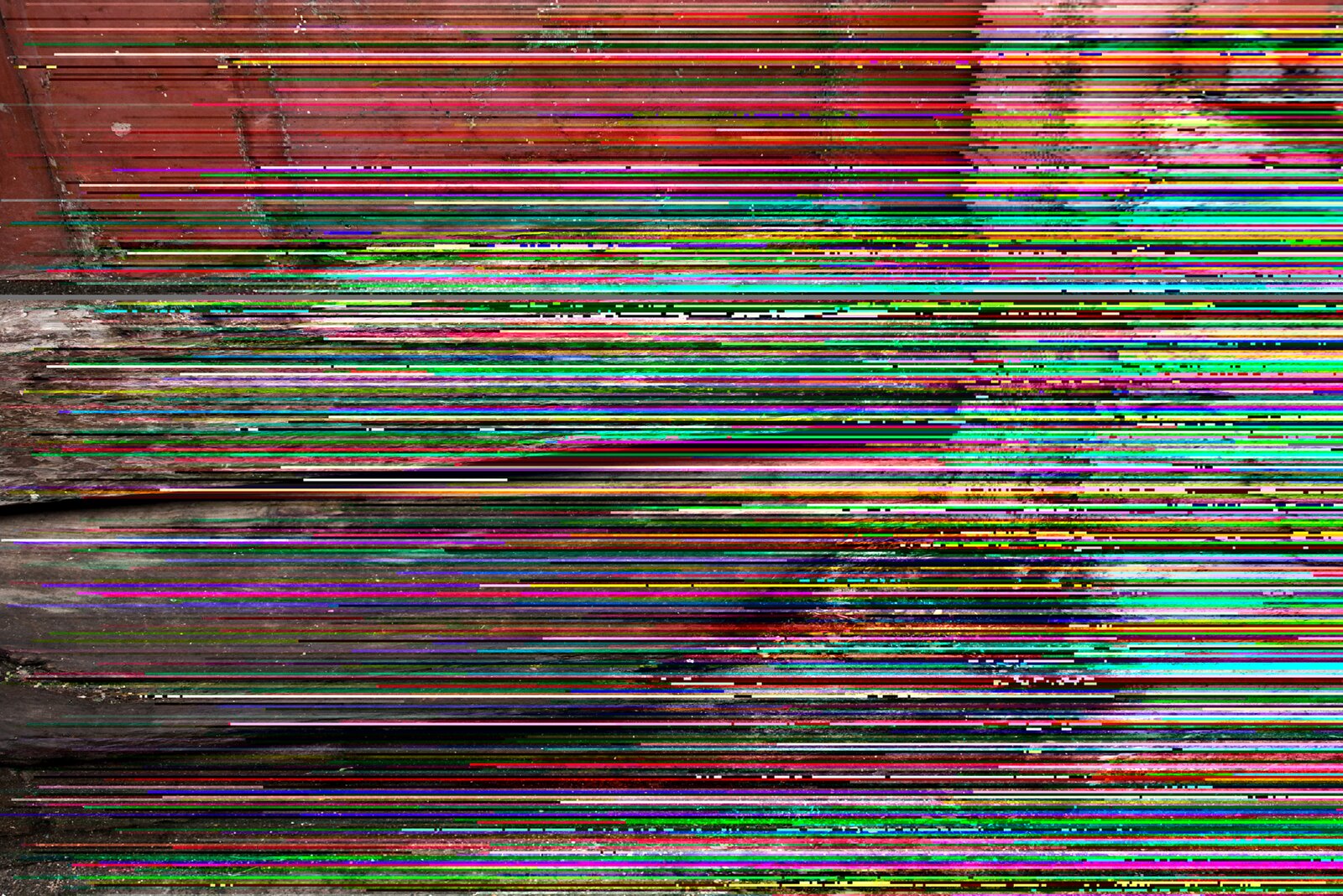
I’d like to think that I’m fairly clued up when it comes to things digital, but until only a few months ago, I had never even considered the concept of Digital Decay to begin research into this area emanated from a discussion during a proposal I made back in November as part of my MA in Architecture + Digital Media. In this short project, exploring potential innovative uses of technology in the home, I proposed an interactive staircase wall surface which digitally mapped and recorded contact and damage. It soon became evident that there was a great deal of interest in the relationship between degradation/decay in the physical sense, and its digital equivalence.
The obvious place to begin was the internet, where I thought I’d find a wealth of information, but Google “Digital Decay” and you’ll find a couple of bands, a font, a photographer and this. It’s a keynote address by Bruce Sterling titled Preserving the Immaterial: A Conference on Variable Media. It took place at New York’s Guggenheim Museum in March 2001. It seems to be one of the first formal documentations of digital decay being considered, and proves to be a somewhat worrying chain of thoughts.
Stirling talks of the epic shift towards the digitisation of our civilization and its associated, but generally ignored concerns. This common perception that our data is safe as long as we have a digital back up of it is dangerous. He suggests it is not the material we must preserve, but the immaterial. Our CDs, hard-drives and shiny new iMacs will eventually fall to pieces, but it is the pure binary data that we strive to maintain, the 1s and 0s. It is easy to back up this data, but the danger is the advancing pace of technology itself. File formats become obsolete [just see how many], components become incompatible, data becomes unreadable. The computer becomes an emulator of an emulator’s emulator.
Stirling goes on to consider the dilemma of preservation as a form of decay. Of course our priceless paintings and sculptures would last many decades longer if they were stored in environmentally controlled boxes, but what would the point in their existence be if the public could not view them?
The final painful paradox lies in harming what we save, as we try to save it. Preservation is itself a source of hazard. We dropped the precious china while we were dusting it. We tripped and split the old painting frame. We tried to fix that old book with tape and rubber cement. Entropy requires no maintenance. Entropy has its own poetry: it’s all about delamination, disintegration, deterioriation, degeneration, decomposition, and doddering decline.
I later came across The Fleetingness of Bits, an online student thesis project by Melanie Wein which predates Sterling’s keynote address by a year. As of yet this is the earliest substantial consideration of digital decay and its problems that I’ve found. Wein talks about the vast amounts of digital data stored every year, and the worries over this blind digitization, quoting Danny Hillis …from previous ages we have good raw data written on clay, on stone, on parchment and paper, but from the 1950s to the present recorded information increasingly disappears into a digital gap. Historians will consider this a dark age.
She also relates her ideas of digital memory to human memory, providing Professor Tom Landauer’s estimation that “human beings have a long term life-span memory capacity of approximately 200 MB.”
But our brain does not consist of memory only. Vital functions of our brain include perception, filtering, reduction and evaluation. And forgetting is vital too, otherwise we would decline in our ability to retain information. These functions, as of yet, cannot by efficiently emulated by computer technologies.
Wein makes the somewhat daring claim that there is a poetic beauty in digital decay, and I find her use of a website to describe her project quite striking. “Within the context of a webpage which naturally is also made up of bits and bytes a poetic documentation of the digital decay in and about our culture is presented.”
The internet, a place we think of as being the very opposite of obsolete, the very first resource we tend to go to for the latest news, information, and even education has its own broken, decaying branches:
The world wide web is like a huge labyrinth, where routes leading once to something know can disappear and sometimes end in the dead end 404 File Not Found. …This message is always an annoyance to the user but functions as a last hint that there had been something existing before. These documents are some of the few trails the online world carries in itself.
I find this association of a defunct website with an abandoned city compelling. I cannot help but think of Chernobyl. Enthrallingly, Wein’s site, now 9 years old, possesses a definite sense of abandonment, and her own portfolio page has not been updated for 4 years. Has she become a victim of her own concerns? Or was this all part of her plan [for a more thorough look at Wein’s Fleetingness of Bits, see the post on my blog]
Back to Sterling, who talks about physical decay in an entropic, poetical sense, something which he feels its digital equivalence certainly is not:
When a piece of software decays, it doesn‘t degrade like a painting, slowly and nostalgically. When software fails it crashes; it means the Blue Screen of Death.
But I disagree with Sterling and would like to see a beauty in all this. What if digital data did decay in a more poetic sense? What if we embraced and allowed this decay to happen, and appreciated its binary charm? We don’t expect a book to look the same when it’s 100 years old as it did on the day it was printed, we don’t even want it to, do we?
People are beginning to ask these questions. An excellent post by Andrew Ohlmann on the brilliantly inspiring Space Collective opened my eyes to the world of “Glitching” you could say that this is a form of forced, and somewhat controlled digital decay. It basically involves taking a piece of digital data [an image, a game, etc], destructively editing its HEX or ASCII code, and seeing what results occur. Ohlmann, amongst others has experimented with old video games, in particular Super Mario Bros.

The resulting images and experiences one gets from hacking Super Mario Brothers in such a fashion are glorious. Colors shift at will, Mario walks through walls, music changes when you stomp on an enemy, the background turns into walls and walls of text. When you insert glitches into the game, you decay it in some fashion.
[Make sure you watch this fantastic video made by artist Cory Arcangel and the Paperrad Collective.]
Circuit Bending is digital decay through physical alteration. Instead of editing the source code of a game, the actual hardware is tampered with, wires moved, connections short-circuited, etc. This results in similar effects to with glitching, however the decay becomes user-controllable in live-time, almost like another joy pad with which to operate the game, glitching at will. The beauty is that almost any electrical device can be circuit bent to an extent. From a Gameboy to a Keyboard to a Furby. Get onto YouTube and have a look.
Being of an architectural background, I can’t help pondering an association back to the real world. This is effectively de-generative design. Mario being able to walk through walls is particularly pertinent. A simple alteration of a code can result in a surface being permeable, loosing all of its physical connotations and becoming a purely visual stimulus. Imagine a wall that is not actually there. The room is a desirable volume, we crave enclosed space, it protects us. But could a surface be purely visual, open to adaptation, transformation and penetration?
It’s not just games that have been experimented with; here is a nice little experiment exploring digital decay through video from Vimeo user universe. An image is projected onto a surface, recorded, the recording projected back onto the surface, recorded, recording projected back onto the surface, etc, etc until the video is virtually unrecognizable from its original state.
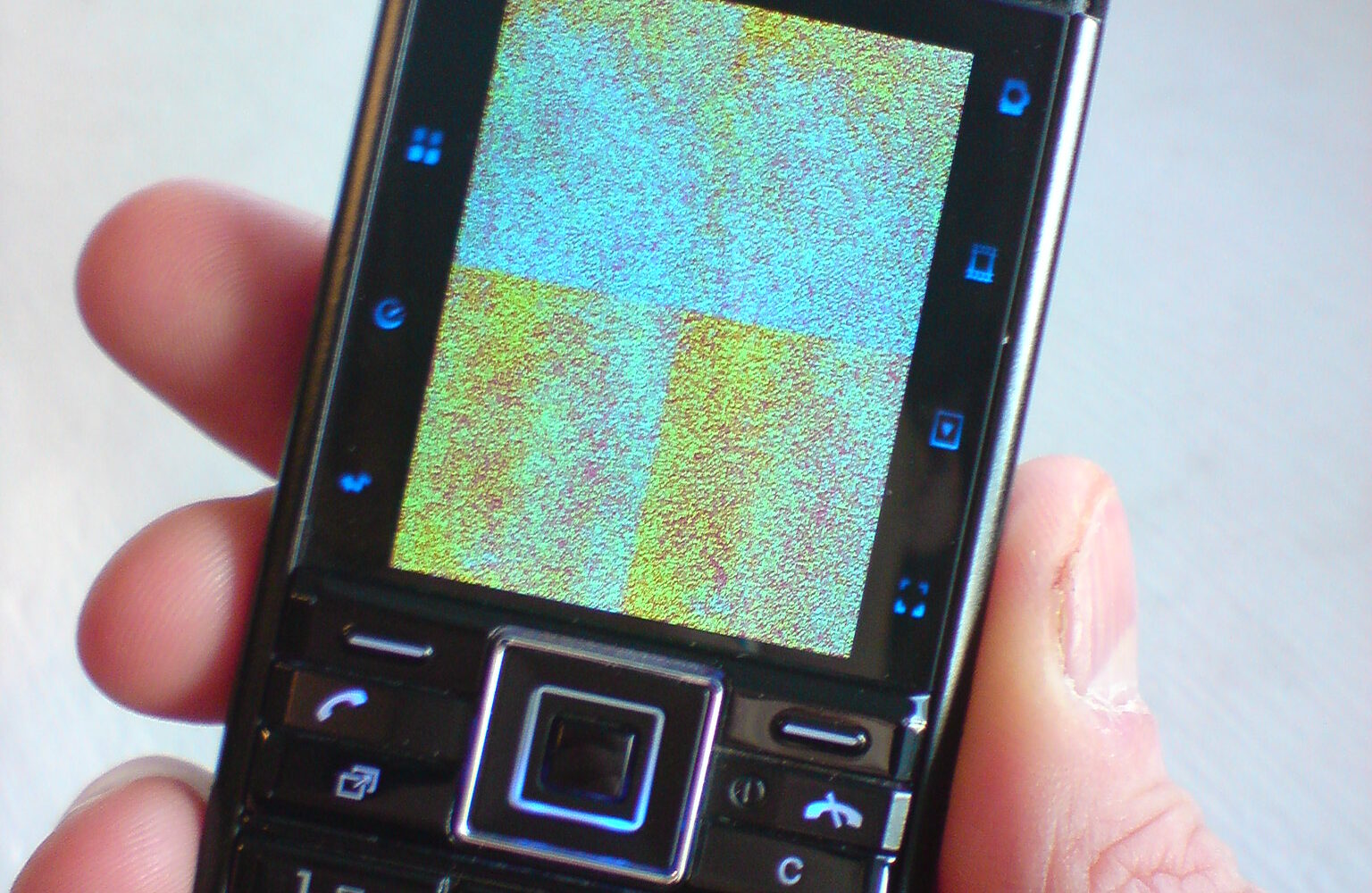
And as part of my own work I have been glitching images in a variety of ways. In its very basic form, image glitching consists of simply opening an image in a TextEdit or Notepad and messing around with the code. Copy, paste, delete, re-save then open the image as normal. Sometimes the effects will be barely noticeable, other times you will break the image altogether, rendering it unreadable, but you can certainly achieve some impressive effects:
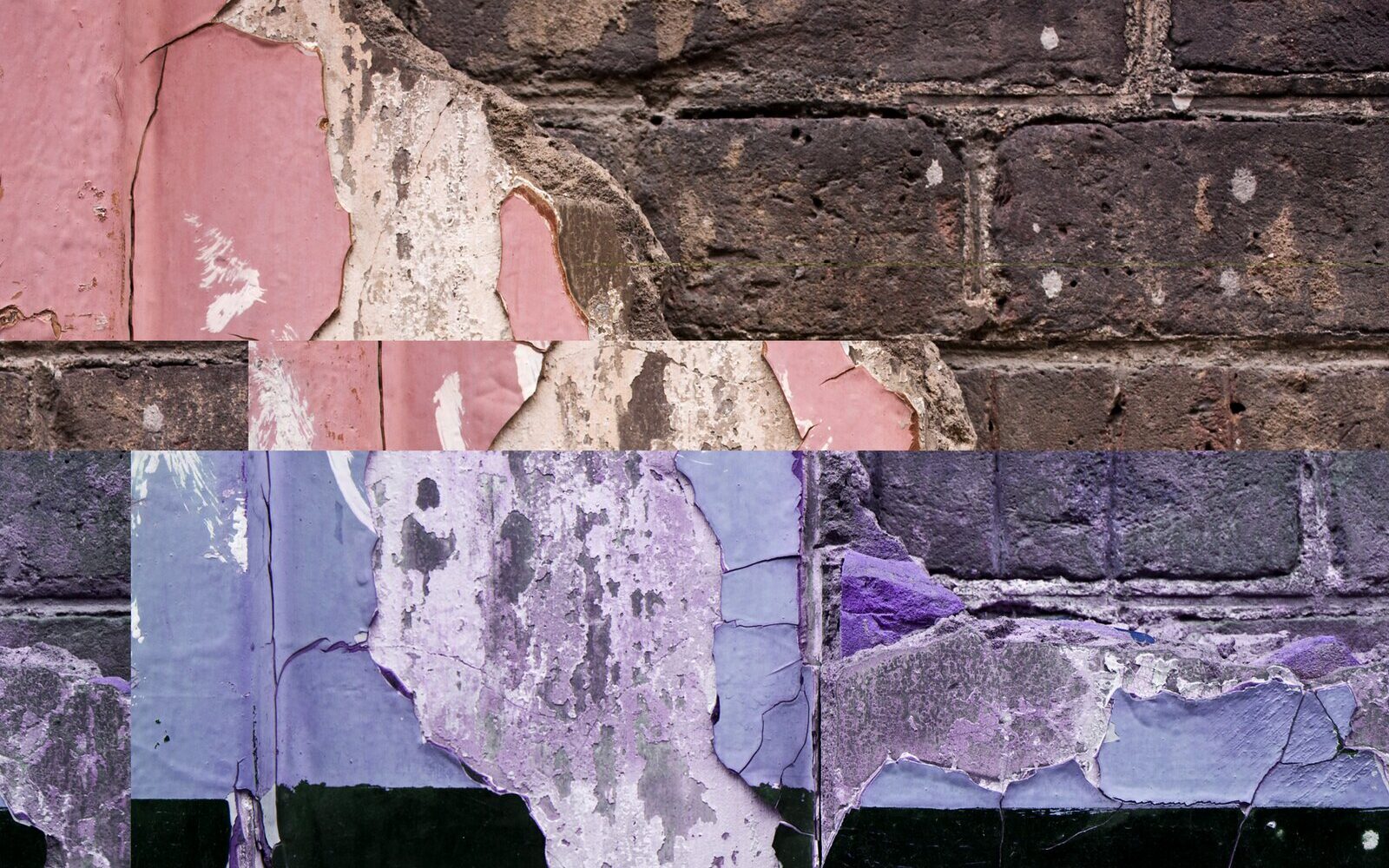
There are programs such as HexEdit however, that are specially designed for reading and manipulating HEX and ASCII code, and experimenting with software like this can be a lot more fruitful. TIFFs seem to lend themselves best to this sort of manipulation, and I found that using the Find and Replace tool was great for achieving those unexpected results.
Some further, web-based methods of image glitching are GlitchMonkey, a plug-in script for Firefox which scrambles the images of a webpage you are viewing, Glitch Browser, a Google-esque webpage into which you paste the URL of the page you’d like to scramble [no, unfortunately you don’t get much luck trying to get it to glitch itself], and CORRUPT, a project using processing to randomly automate the manipulation of your image’s code, saving a series of iterations of it onto its home page.
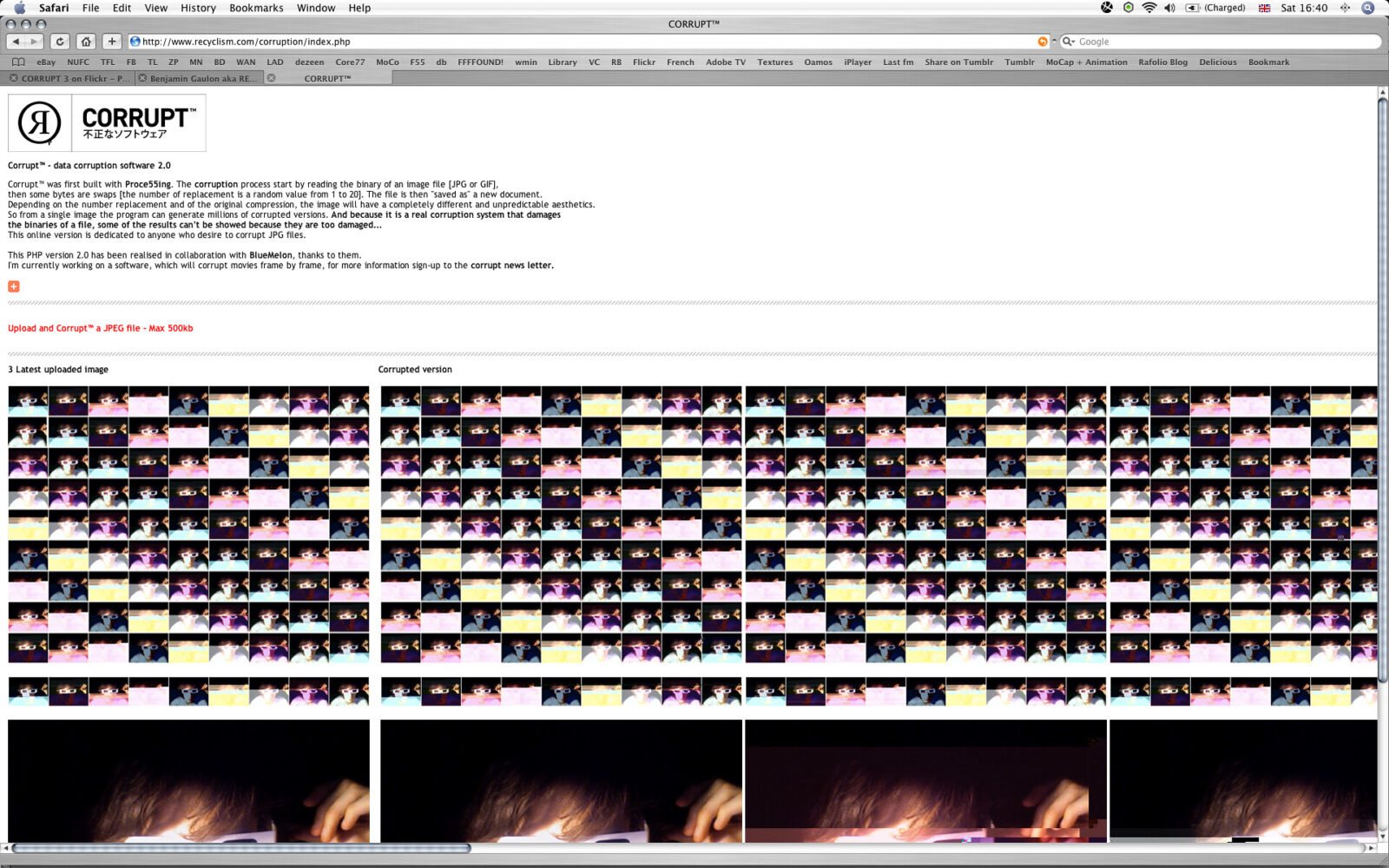
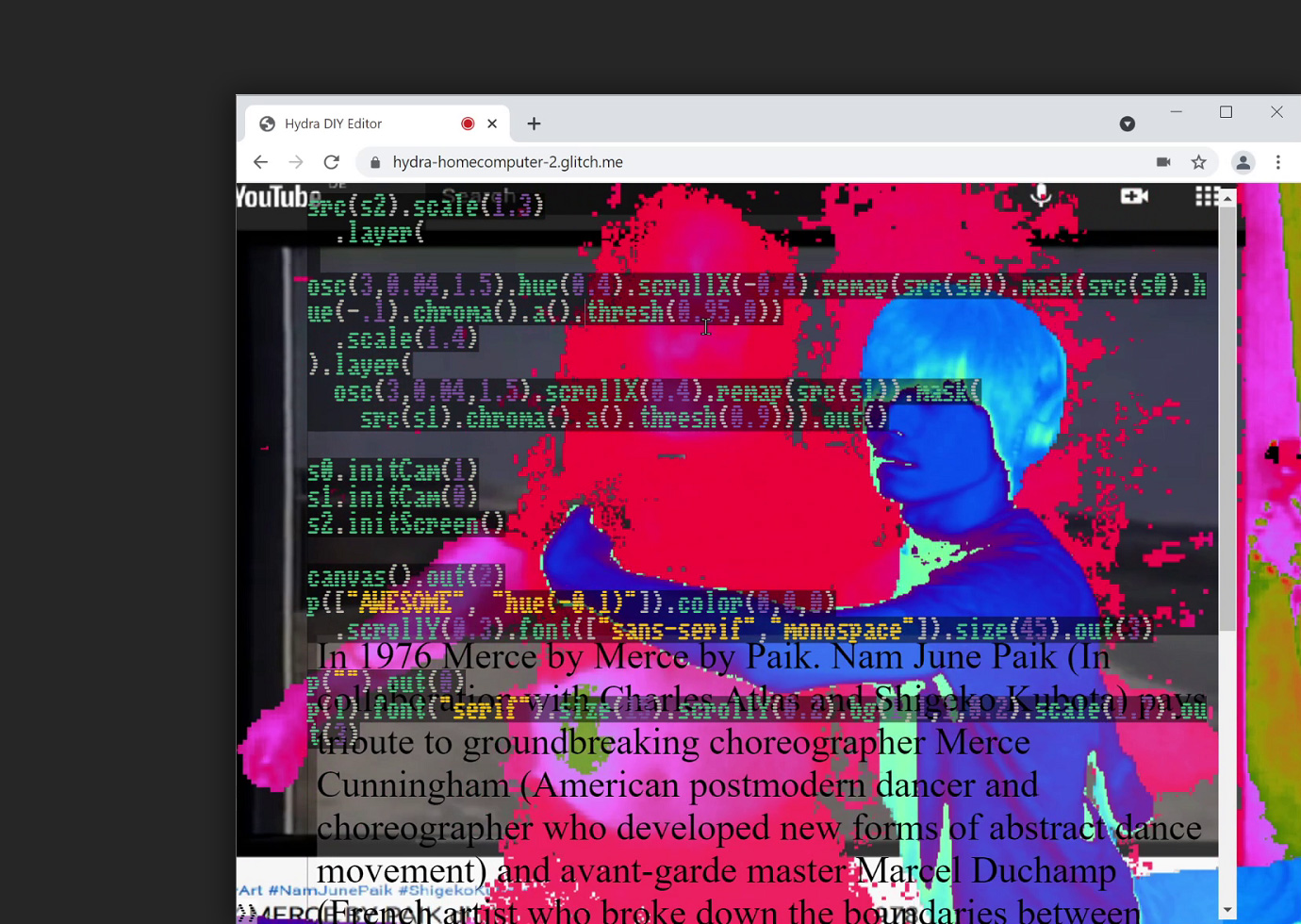
Of course the inquisitive among us will be itching to mash these methods together, to run a web page through Glitch Browser before print-screening it, and sticking it into CORRUPT, all with the GlitchMonkey script running. Sadly, it isn’t quite as fruitful as you’d hope, as you can see from my own experimentation, but there’s no doubt that some of the results are strangely beautiful.
Digital decay is something that’s happening every day of our lives, we are often simply unaware of it until it’s too late. But there is a growing movement of people embracing it, encouraging it and using it to make art, to make money and to explore the possibilities of all this digital equipment that we now run our lives with. In the few short months since I have been looking into digital decay, it seems to have boomed from an underground past-time of a bunch of obsessive boffins to something flourishing in popular media. New study, work and experimentation appear daily. Maybe people have become bored of the apparent pristine pureness of the digital world, maybe they are fed up of these 1s and 0s that run our lives, but it seems a small ball has started rolling. The latest craze goes by the name of Data Moshing glitching bits of video to warp and mash into each other. If the results aren’t poetic and beautiful, then I don’t know what is. Even KanYe is getting in on the act.
[I am currently studying Digital Decay as a thesis project. For further info, see my blog and my Flickr account which are updated regularly.]
| Author: @Rafolio I am Richard Almond, a student of MA in Architecture and Digital Media at University of Westminster, Tech Enthusiast and a Blogger. http://blog.rafolio.co.uk/ |