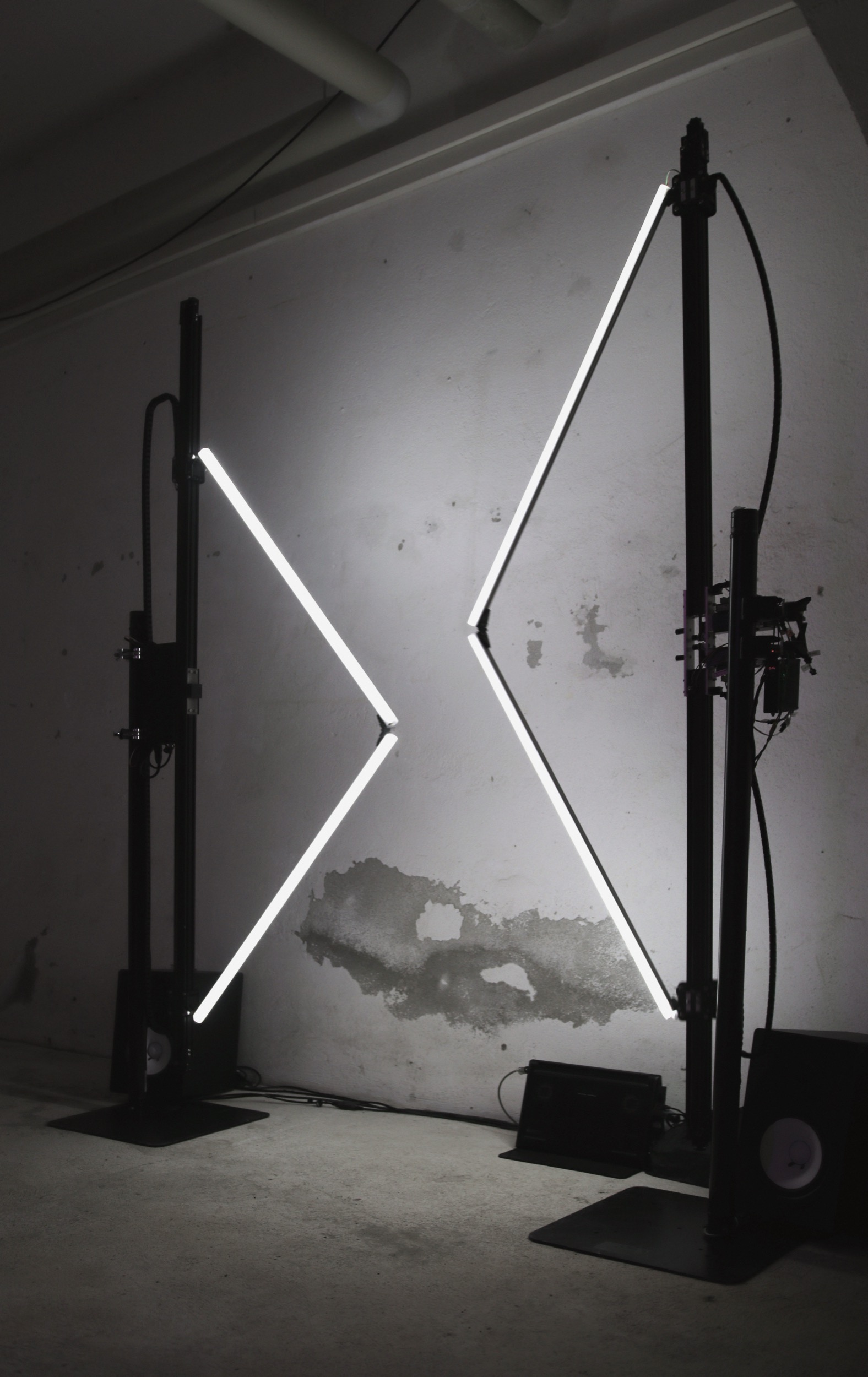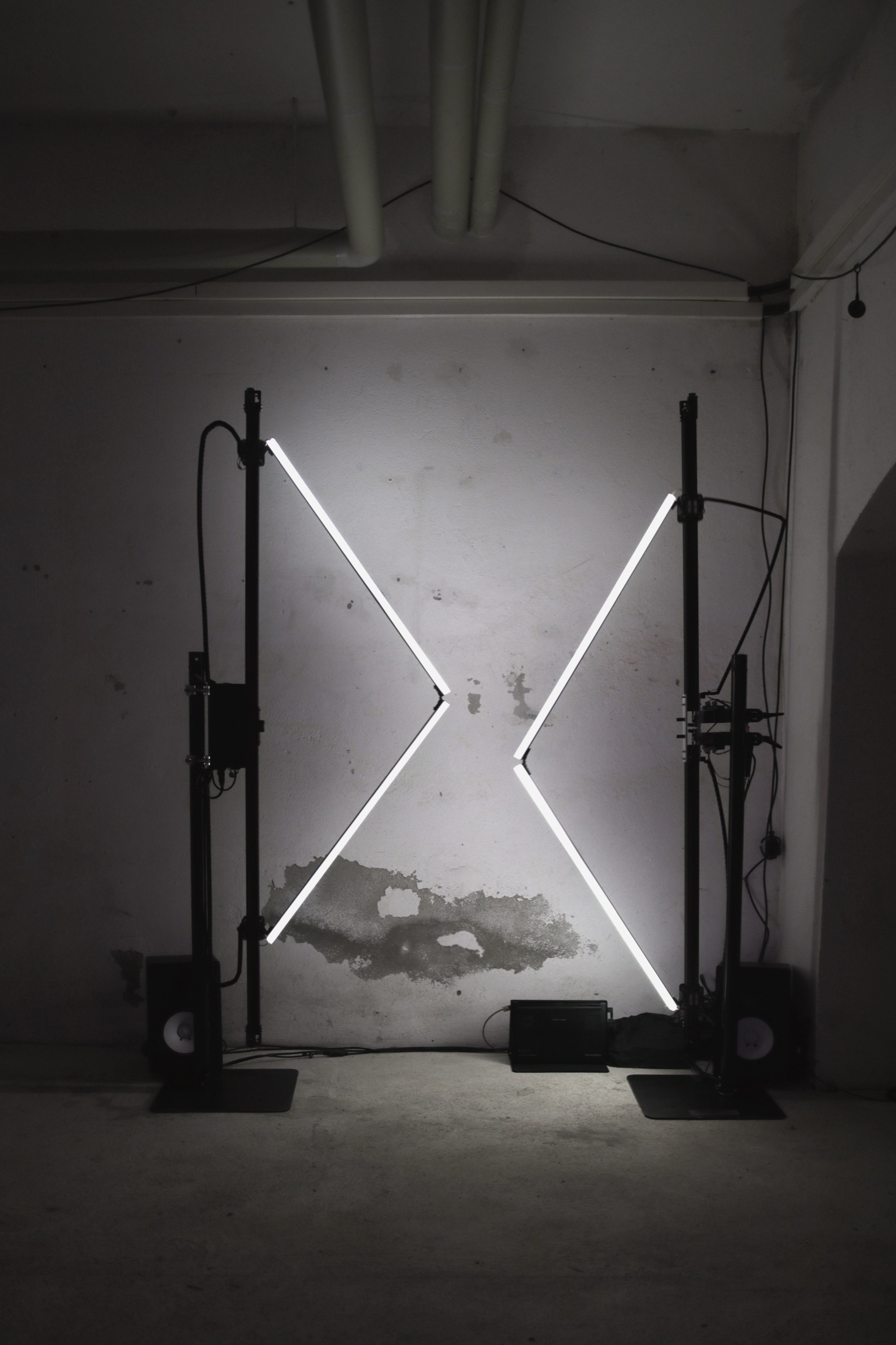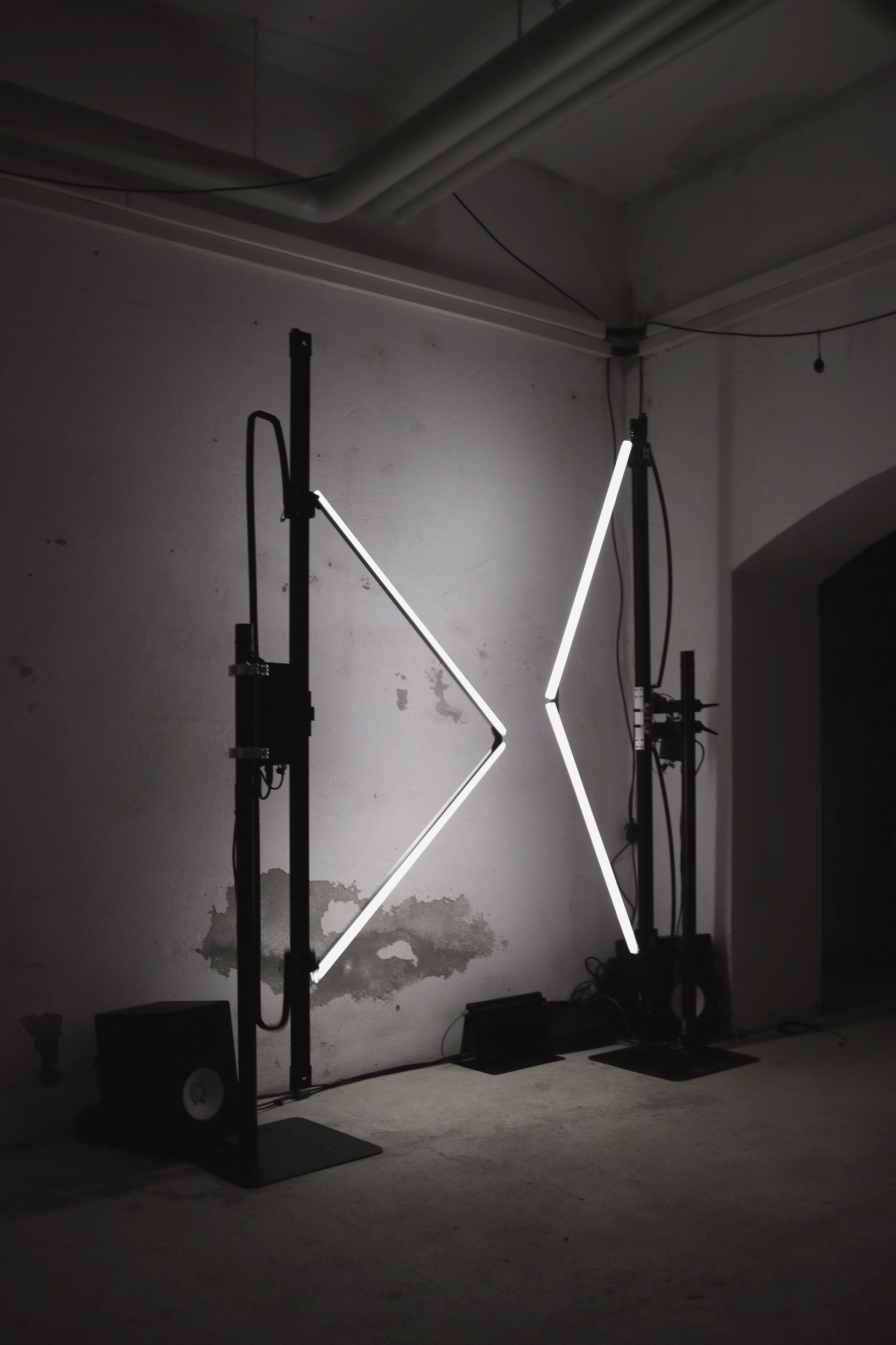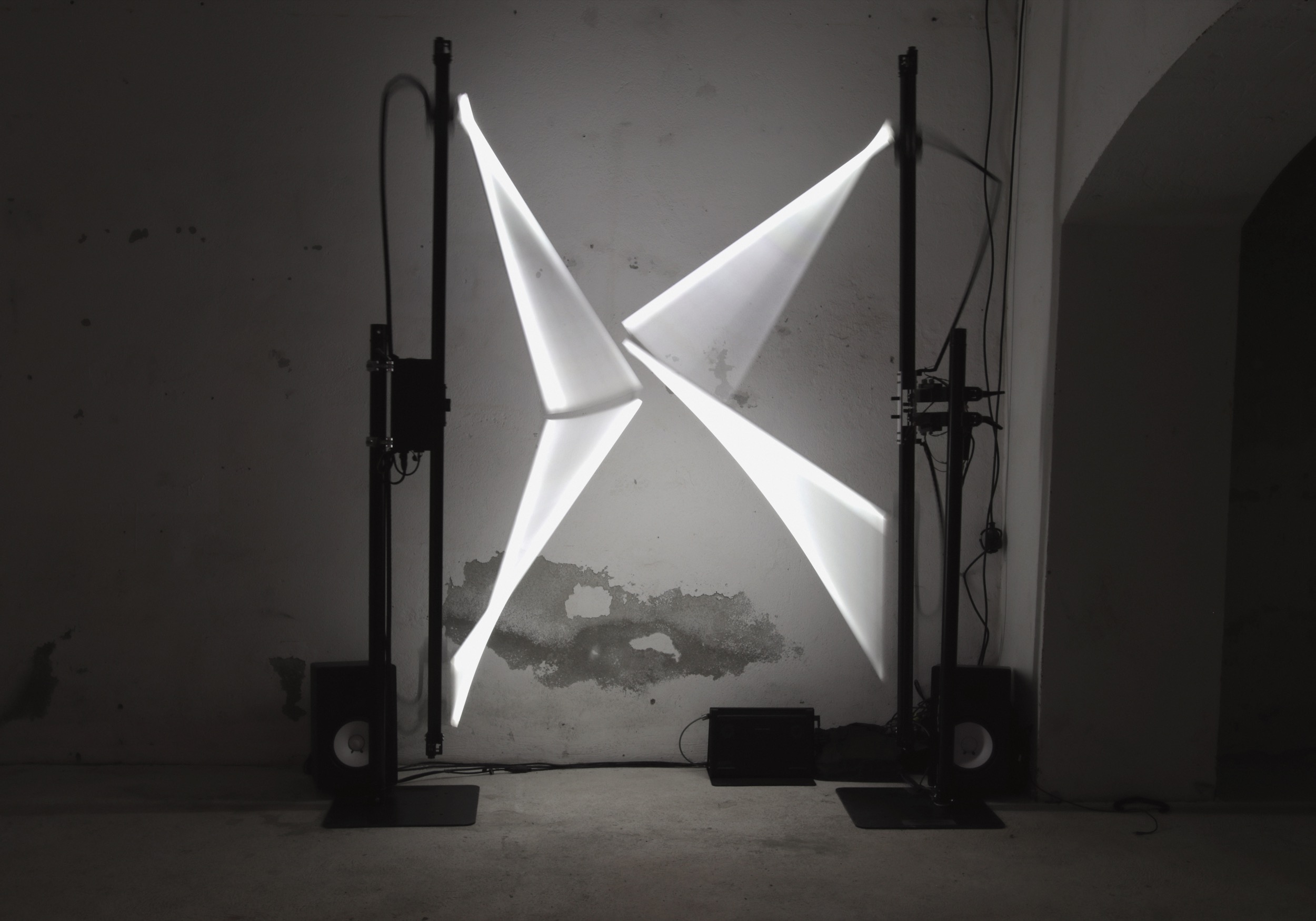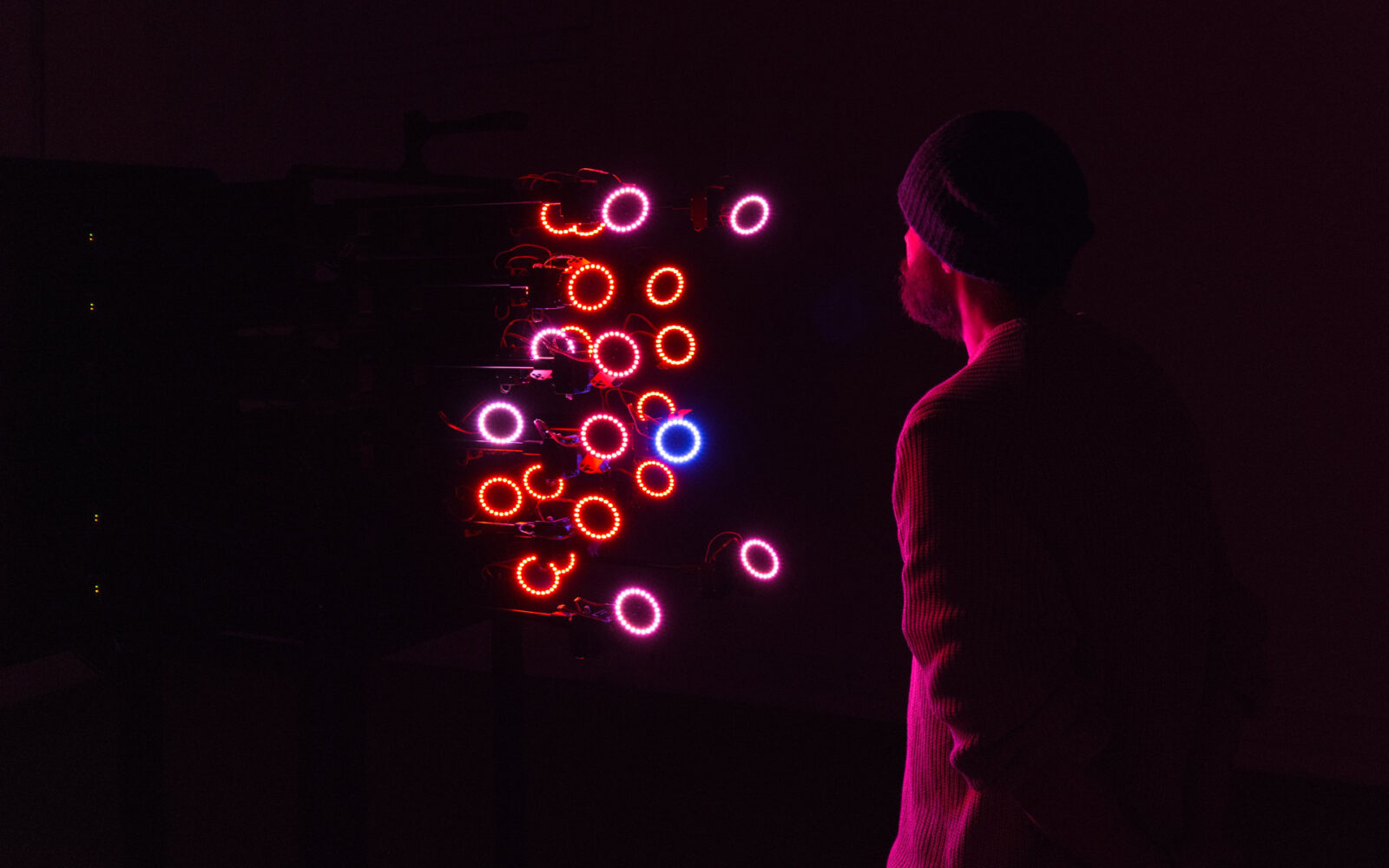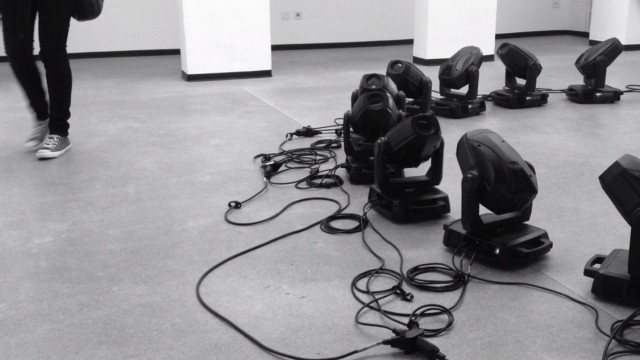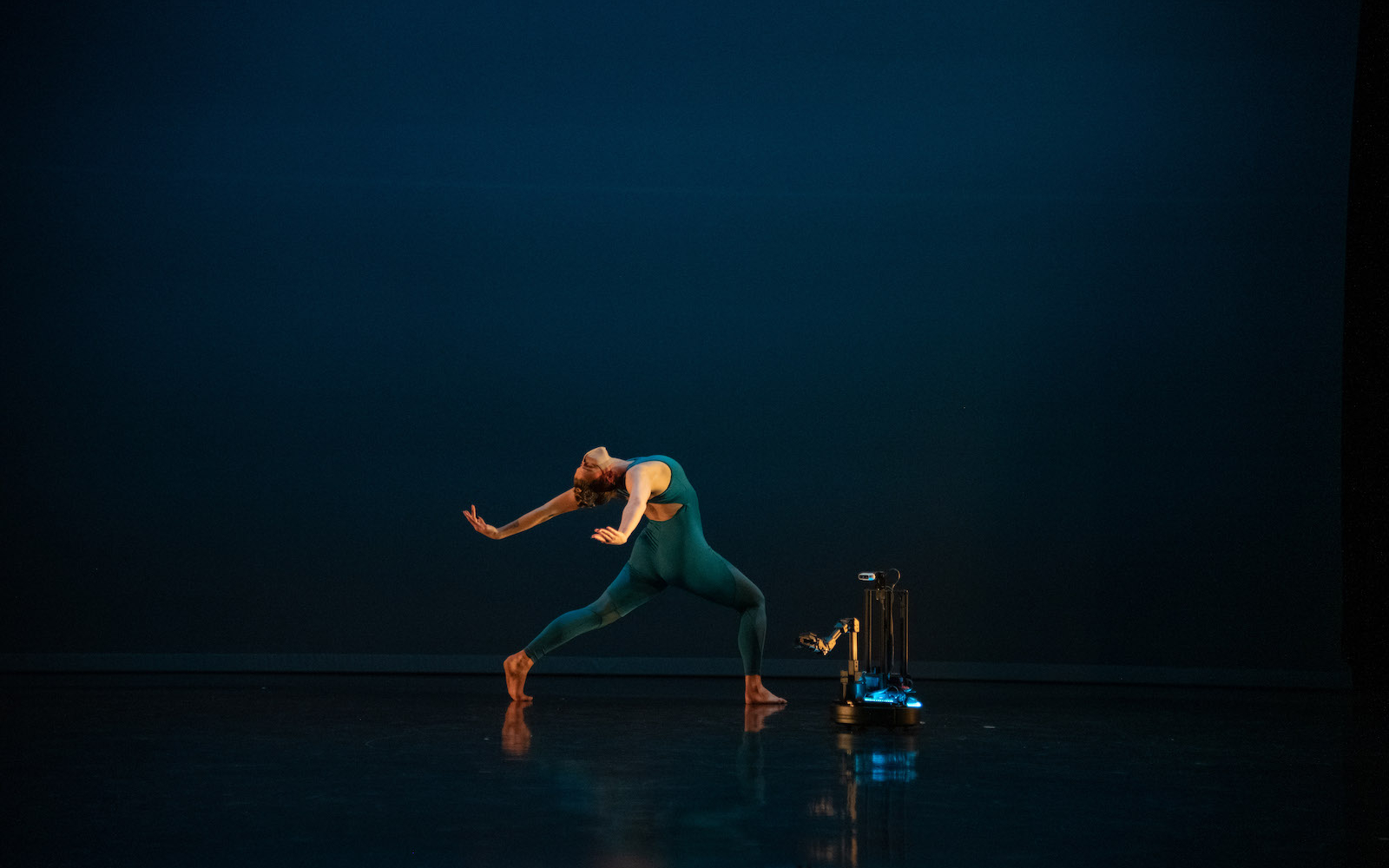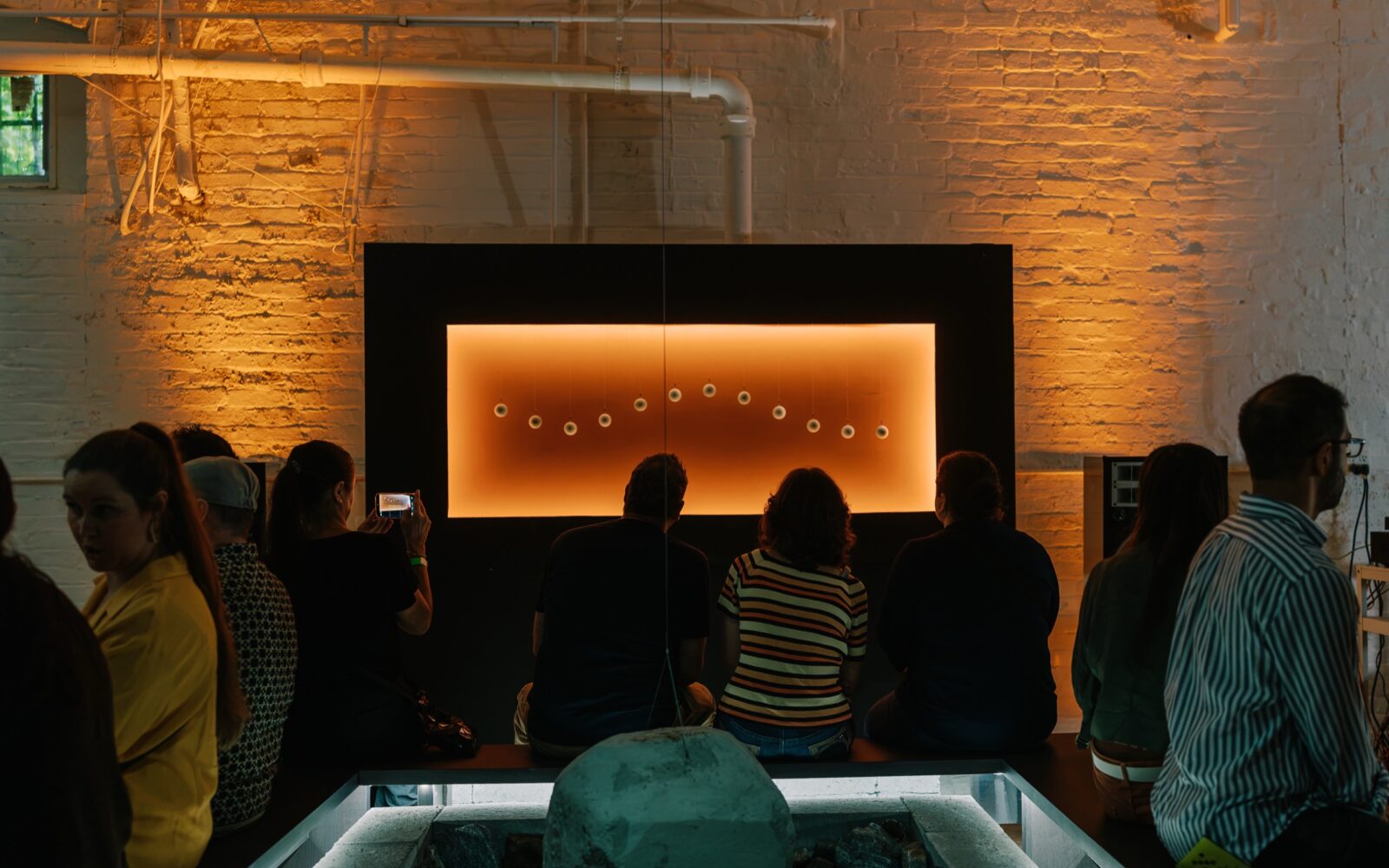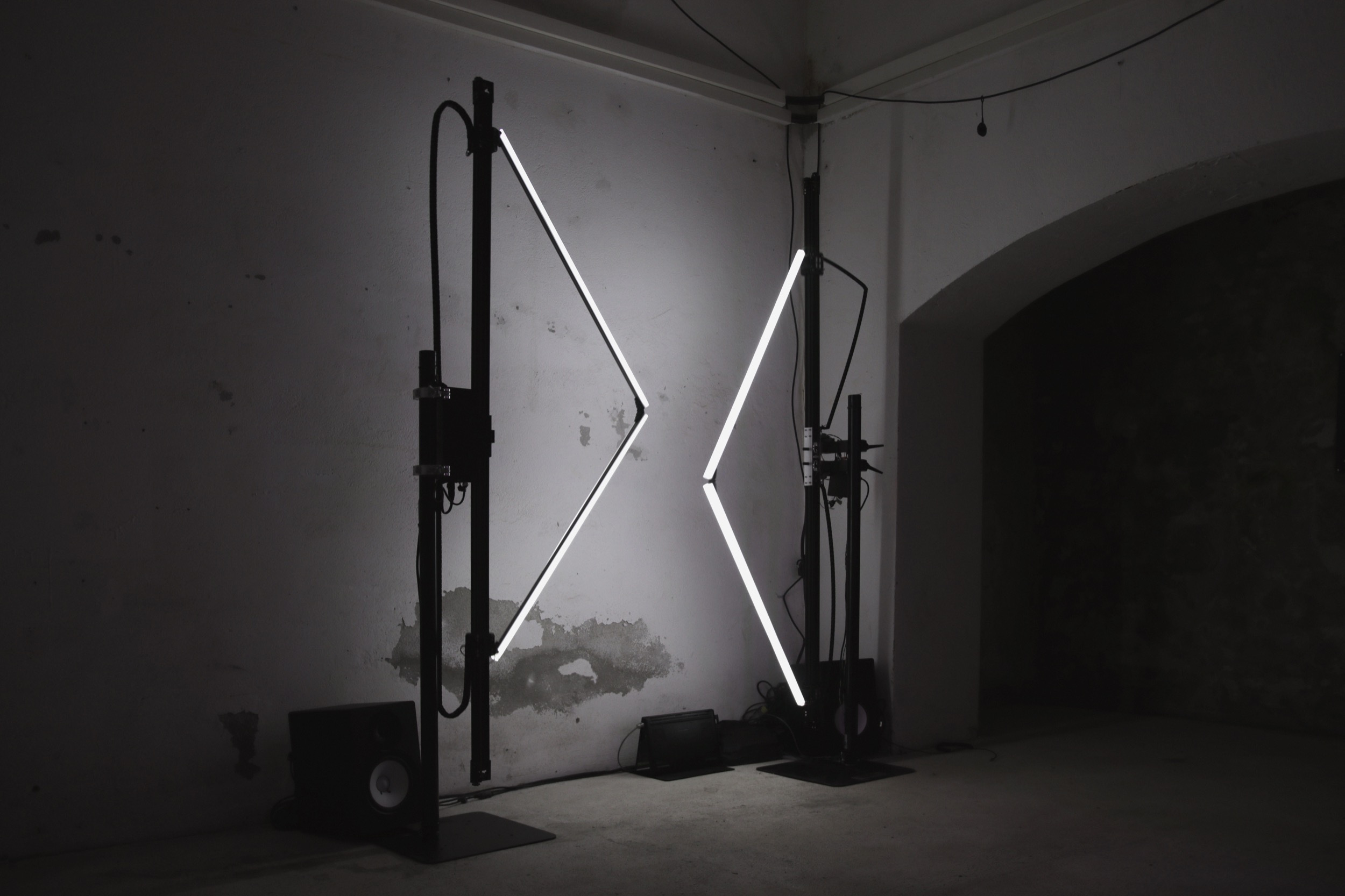
Become and Break is an ongoing project of audiovisual kinetic light sculptures. We explore how personal and social rhythms may be discovered in the algorithmic choreographies of an ensemble of computer-aided performers. The project grows from our observations of how our relationship to reality constantly shifts: between enthusiasm and exhaustion, belonging and isolation; between flowing with the rhythm of work and getting lost in it.
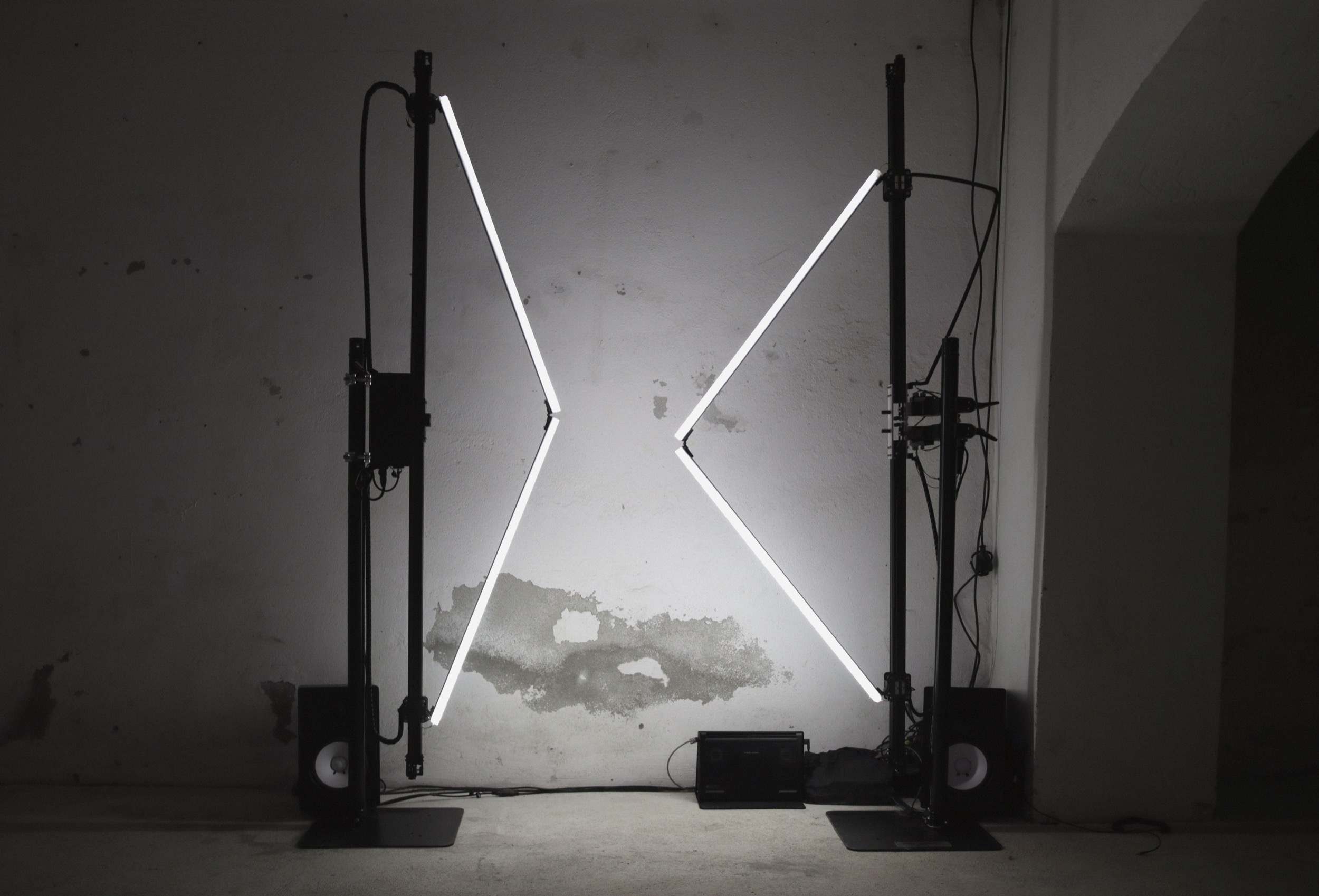
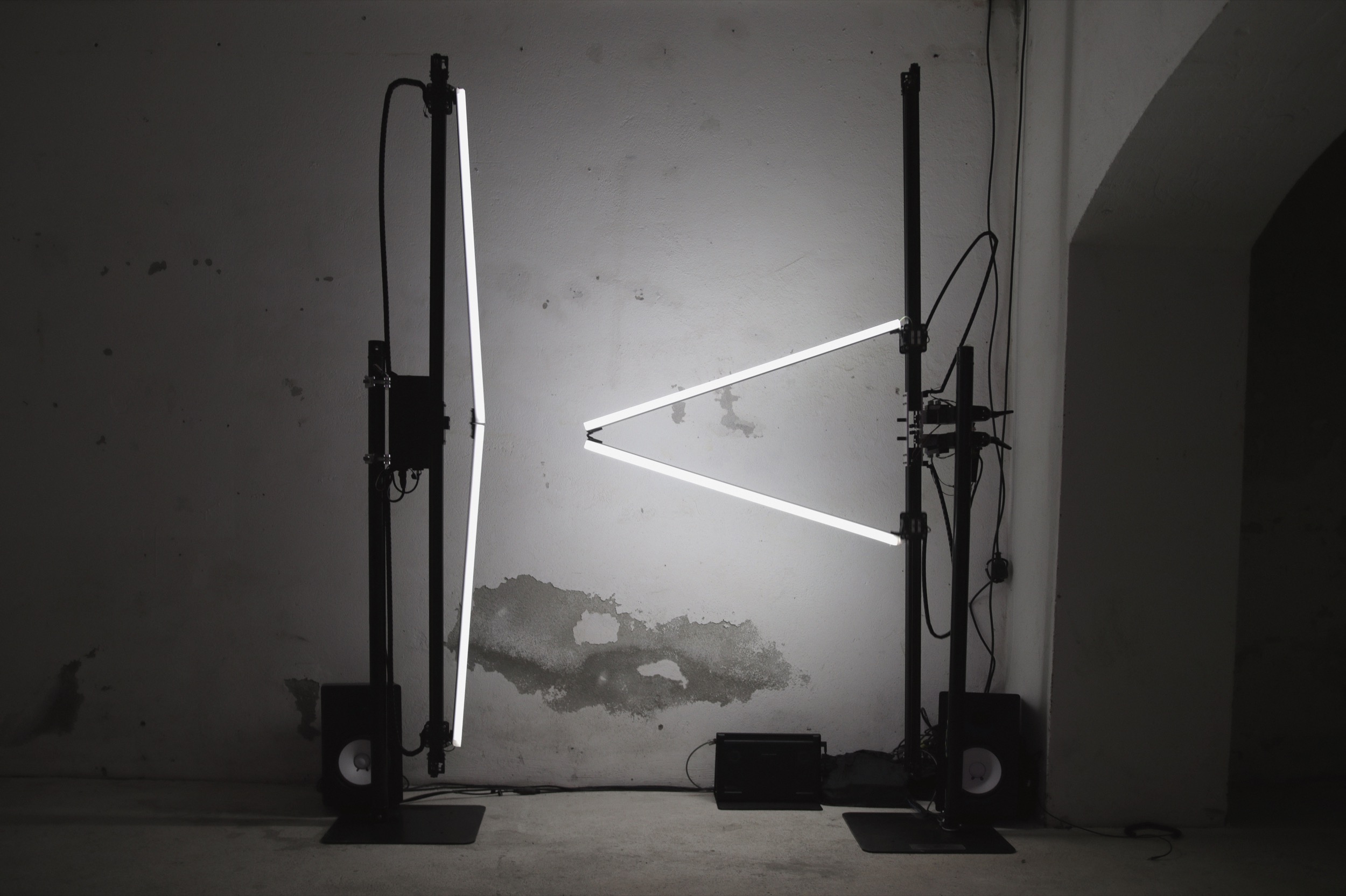
By computer-aided performers, we mean machine actors whose expression emerges from the relation between human intention and machine execution. Each performer consists of two one-meter LED segments connected by joints and driven by servo motors. They follow a generative, non-linear, algorithmic choreography organized through simple, interdependent parameters. Based on these parameters, the system modulates motor speed and position, shaping the space between the performers as well as each one’s brightness and light animations. The sound is derived from recordings of the installation’s mechanical noise and is responsively cut, looped, slowed down, and accelerated. These interdependent shifts shape the work’s rhythm and alter how the relations between the performers may be read.
This is the first work in an ongoing series using different arrangements. Here, the focus is on two performers: a couple. Their behavior is shaped by simple movement rules and spatial constraints, creating a relationship of controlled tension—always about to touch, yet never doing so. This rhythm of intimacy and repulsion becomes an abstract image of how we continuously adjust ourselves in relation to others and to the constraints around us.
The project is developed by Tim Auzinger and Daniel Baer. Daniel’s focus lies in electromechanical engineering, while Tim focuses on programming, electrical prototyping, and artistic direction. Their roles remain deliberately fluid, and the project draws from overlapping interests, shared knowledge, and close collaboration.
Become and Break I is an audiovisual kinetic installation consisting of two custom-built machine performers. Each performer is made from two one-meter addressable RGBW LED segments connected by articulated joints and moved linearly by servo motors. The endpoints of the LED segments are mounted on 3D-printed nylon-carbon sleds that travel along aluminium V-slot profiles via belt drive, allowing the structures to open and close in a hinge-like motion.
Each performer is controlled by an ESP32 microcontroller running custom software developed with the Arduino framework using PlatformIO in Visual Studio Code. The main libraries used are FastAccelStepper by Jochen Kiemes for motor control and NeoPixelBus by Michael C. Miller for LED control. The controllers are connected via Ethernet and receive real-time color and position data using E1.31 (DMX over Ethernet). The ESP32’s two cores are used to separate incoming data handling from LED and motor control.
The control data is generated live by a custom choreographic system built in TouchDesigner. This system uses frequency-based black-and-white image animations as the basis for both movement and light. Parameters such as frequency, phase, and blending are continuously modulated by a rule-based feedback system. Through pixel mapping, the resulting image data is translated into motor positions and LED values. Additional processing establishes a dependency between the two performers in order to prevent physical collision. The final data is sent via E1.31 to the ESP32 controllers and via OSC to Ableton Live 12.
The sound component is based on stereo recordings of the installation’s own mechanical and motor noises. These recordings are processed in a generative sample system built in VCV Rack 2, running as a plugin inside Ableton Live. Short sound fragments are randomly selected, layered, stretched, and delayed in ways that parallel the modulation processes used in the visual system. Distinct sonic events also generate triggers that are sent back to the choreographic system, influencing parameters such as LED brightness.
During development, the project was prototyped iteratively across hardware, software, and sound. A digital simulation in Unreal Engine was also used to test behaviors and interactions between the two performers before applying them to the physical installation.
Project Page | Tim Auzinger | Daniel Baer
Tools, frameworks, and technologies used: ESP32, Arduino framework, PlatformIO, Visual Studio Code, TouchDesigner, Ableton Live 12, VCV Rack 2, Unreal Engine, FastAccelStepper, NeoPixelBus, E1.31, OSC, Ethernet networking, 3D printing, aluminium V-slot profiles, belt drive mechanics, servo motors, addressable RGBW LEDs.