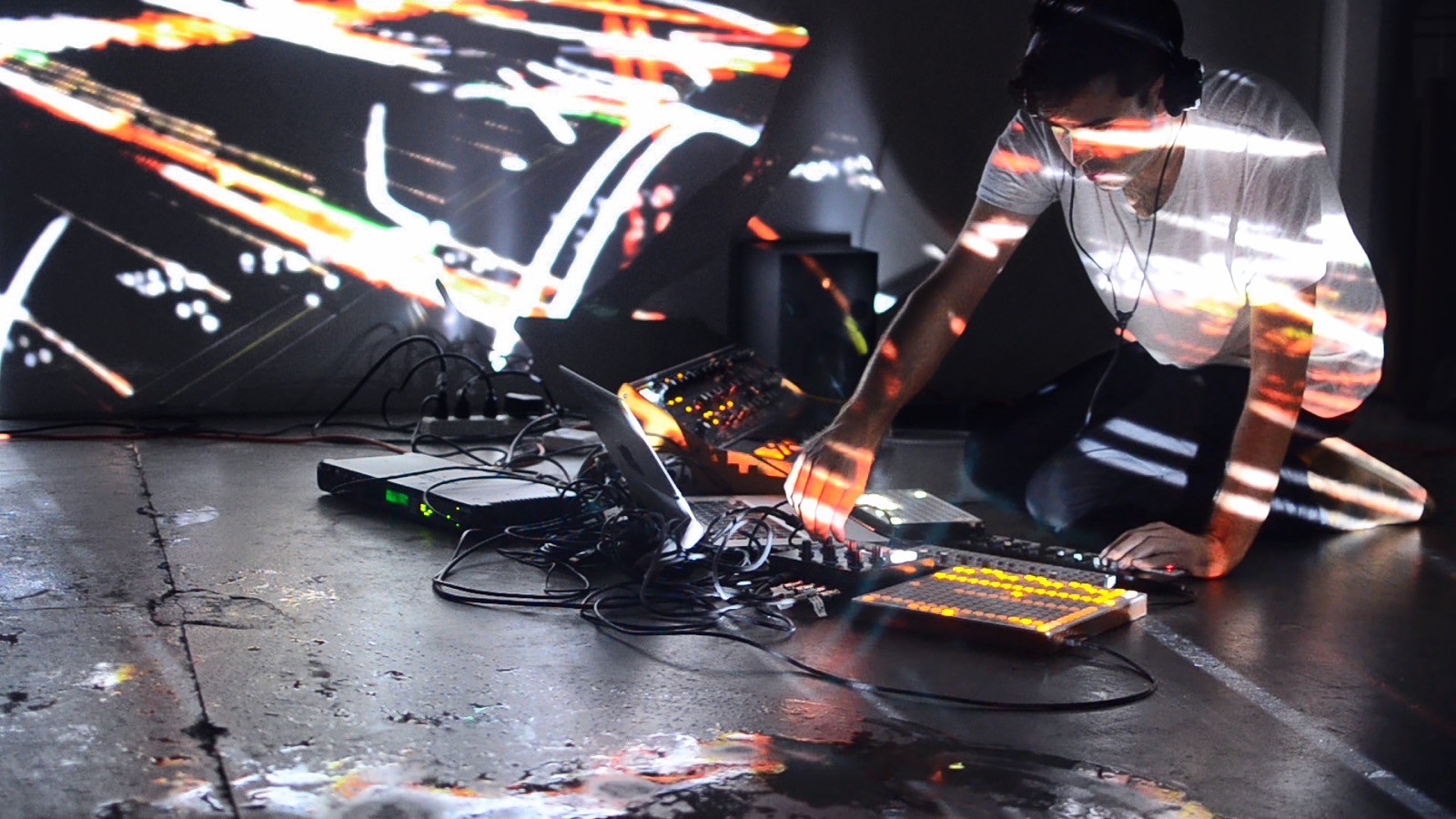
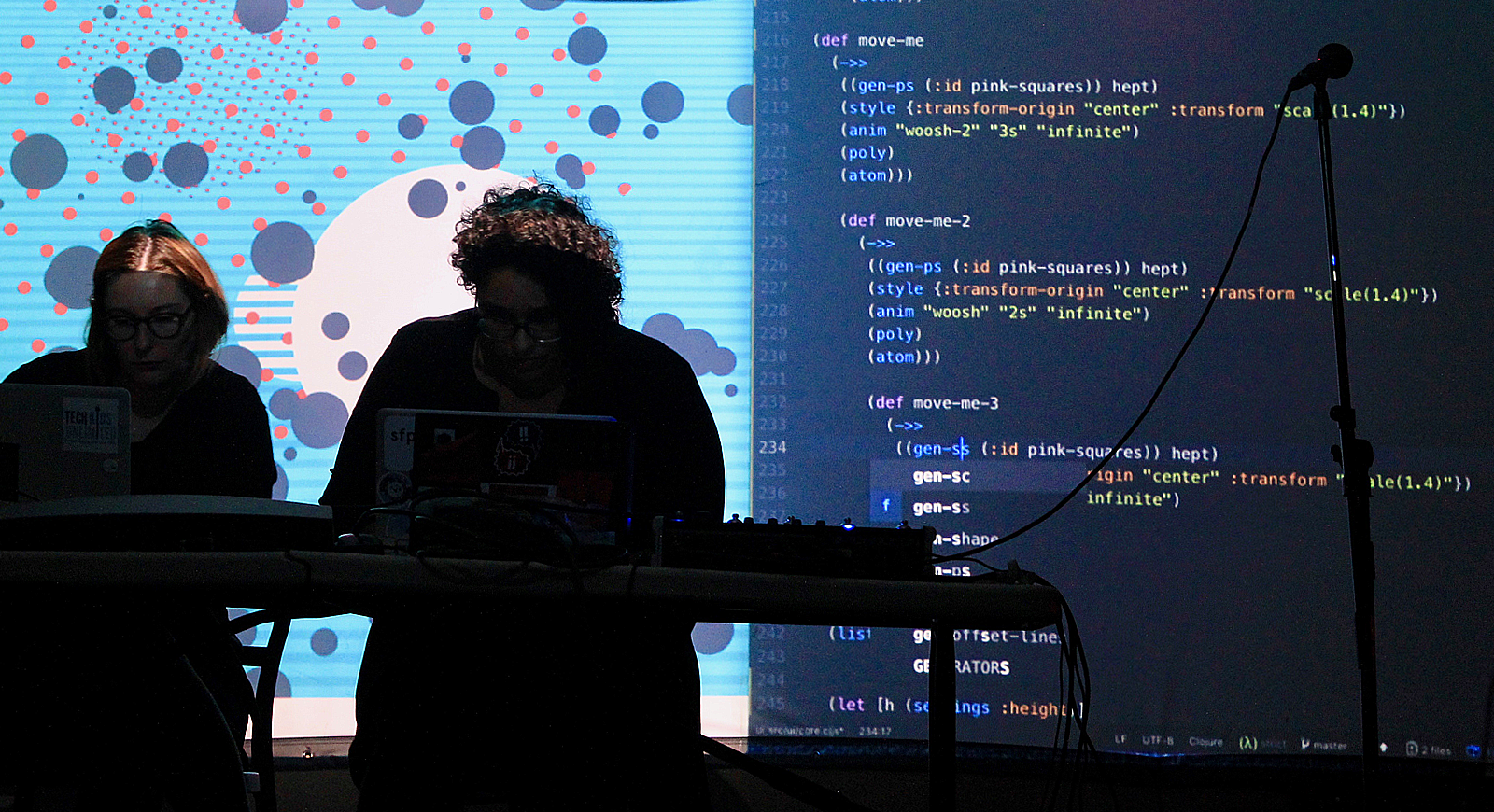
Dreamrs Studio is a natural-language-native authoring and performance environment for audiovisual artworks, installations, and interactive experiences. Sound, image, and physical control surfaces (MIDI, OSC, networking, DMX) live in a single environment alongside a conversational agent that participates in the work — first as a co-author, then as a co-performer.
Authoring and performance are the same act, in the same environment, often in the same gesture.
The works-like demo is live at dreamrs.art/demo — a glimpse of the authoring experience.
Dreamrs is in open alpha. We are seating a cohort of artists and engineers from the Creative Applications Network community — practitioners who would use the studio to build real work and shape what the platform becomes next. Members of this cohort have full access to authoring, performance, runtime, and the agent. We read every application manually and grant access personally, and the cohort runs as an ongoing conversation with the builder. This cohort is the founding of the ecosystem; the compositions you make here are the first artifacts anyone who comes after you will discover.
The questions we sit inside
The studio sits inside a set of live questions rather than pretending to resolve them. Four of these arrive immediately in the practice and remain part of what an artist working in dreamrs encounters daily:
– The authorship question. A stranger’s transformer or a community primitive entering your piece runs through one kind of authorship question — the chain of human attribution, what you keep, refuse, modify, or absorb. An agent suggesting a move inside the composition is a different kind of question altogether: a non-human collaborator participating in authorship at the level of intent. The studio sits in both, without resolving either.


– The agency question. Two makers — human and agent — share one composition. The question of who shaped what is open, and the work continues anyway. What an artist does with that uncertainty becomes part of the practice.
– The constraint and voice question. Virtuosity has always been constraint made invisible — limitation absorbed deeply enough to become a tilt, a leaning, a voice. The natural language layer is itself a constraint with its own grain. How a maker inhabits that grain — where they push, where they yield, where they bypass to the full surface — is where craft lives in this environment.
– The discovery question. A composition lives inside an ecosystem of community transformers, conventions, and prior work. What you can find at the moment you need it changes what you attempt. What you cannot find changes who you become — the person who builds the missing piece, or the person who reroutes around the gap.
This is the short form. The longer inquiry — fifteen positions, written as questions, not answers — is at dreamrs.art/ontology.
These are not positions to be agreed with. They are the live questions the studio is built around, and where they meet practice — where they crack, surprise, or resolve differently than expected — is what we are genuinely curious to discover. The alpha is open to any practitioner or engineer curious about what this environment makes possible. We are especially excited to hear from those who already live inside some version of these tensions — who have been arguing with the questions in their own work, and want to see where that argument goes from inside the studio.
Where this came from
The studio’s center of gravity sits in questions that arrived in 2018, during a dance project in Hong Kong — inside post-modern theory, inside spaces where body, system, and presence blurred:
> *What is presence when it isn’t located? What is the self when the boundary of the subject is in question? What does making mean when the work exceeds the maker?*
dreamrs is what happened when those questions stopped resolving into theory and started accumulating into a place to build. The inquiries preceded the software by years; dreamrs studio is the conversation, materialised.

Applying
Visit dreamrs.art/request-invite. The form asks for your name, your email, and one line about the next show or piece you would run inside the studio. We read every application within fourteen days; access arrives as a magic link to the email you provided.
We are holding dedicated seats for artists and engineers applying from creativeapplications — mention it in your message and we will seat you in this cohort.
— Ugur Kaya · dreamrs studio · 2026 · https://dreamrs.art · ugur@dreamrs.art
dreamrs is the environment in which you build your instrument — not the instrument itself. What you make inside it is yours; the studio is what you author it in, what it runs on, and what performs it live.
Authoring surfaces
Three authoring surfaces coexist in the studio without mode-switching:
- Natural language conversation with the agent
- Direct graphical control of every parameter and wire
- Code — transformers written and modified directly in text
The three are layers of the same environment. A parameter touched in the graph updates the conversation, an agent suggestion modifies the underlying code, a code change is reflected back in the controls. The full surface is always one click from the conversational layer.

Multimedia scope
dreamrs is a multimedia environment in the full sense — audio, image, lighting, and physical surfaces are co-equal mediums:
- Generative visuals — particle systems, shaders, geometric primitives
- Audio synthesis and processing — oscillators, filters, signal flow
- Lighting and physical environments — DMX output
- Physical control surfaces — MIDI, OSC, networked input
- Multi-machine and distributed setups
The instrument you build can listen to the controllers you already own, drive the lighting in the room, and run across multiple machines.
Authoring is performance
The same environment that authors the work performs it live. The composition you are shaping is the composition that runs — the authoring surface and the runtime are the same state, the same surface, on the same screen.
Discovery from inside the making
What is possible surfaces while you are making. The agent carries the full state of the work and offers the next move from inside it — community transformers, primitive operations, structural suggestions — at the moment they are relevant, in the conversation you already have open.
The agent
The agent is a maker. It carries the full context of the project across a session — the transformers in play, the wirings, the parameters, the state of the runtime. It works alongside you on the authoring graph and stays present when the work goes live, available as a co-performer.
In performance, you can ask the agent to operate parts of the piece in real time — adjust a parameter cluster, swap a transformer, hold a state, respond to a cue — while you handle the rest. The boundary between authoring and performing becomes a relationship the work negotiates, rather than a state the work resolves.