


Online for 6,514 days (17 years, 10 months, 1 days), published 4,186 articles about 2,943 people, featuring 205 tools, supported by 1,739 members, and providing access to 450 students.
The works in this series are part of an extensive research project by FIELD, exploring the most relevant machine learning algorithms in code-based illustrations.
The field of Artificial Intelligence has seen a major acceleration in recent years, especially in the specialisation of machine learning algorithms, controlled by large corporations with access to huge amounts of personal user data and computing power.
These algorithms are now the invisible force that increasingly shapes our lives, deciding who we meet on social dating platforms, about our mortgage and insurance prospects, and controlling our environments at home and in public spaces.
Their development happens behind proprietary shields and outside of public scrutiny, making a grassroots understanding or the emergence of independent alternatives nearly impossible. Often, the decision-making of neural networks is obscure even to the humans who developed and trained them, making A.I. a veritable “black box”.
As visual artists, we find it important to understand and discuss these fundamental forces that change our society. We have started a deeper exploration of the less accessible information that is out there, such as scientific papers and open source code publications, to develop an understanding of these algorithms’ inner workings, and translate it into visual metaphors that can contribute to a public debate.
Artist Casey Reas explores what it’s like to make pictures with generative adversarial networks (GANs), specifically deep convolutional generative adversarial networks (DCGANs).
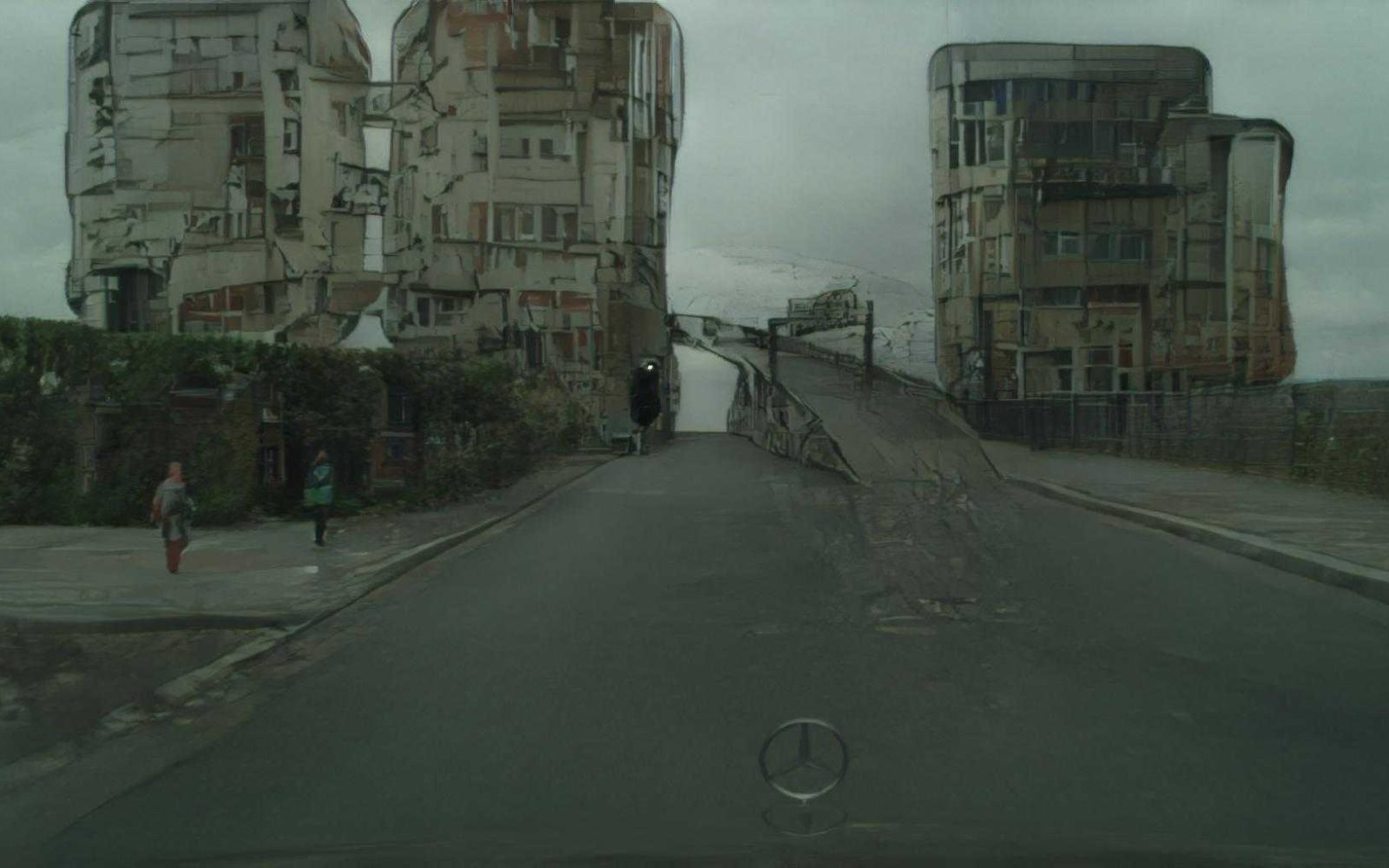
Uncanny Rd. is a drawing tool that allows users to interactively synthesise street images with the help of Generative Adversarial Networks (GANs). The project was created as a collaboration between Anastasis Germanidis and Cristobal Valenzuela to ...

The chAIr Project is a series of four chairs created using a generative neural network (GAN) trained on a dataset of iconic 20th-century chairs with the goal to “generate a classic”. The results are semi-abstract visual prompts for a human designe...
Habsburg AI Portrait Studies is a series of cloth-printed generative portrait images produced using a bespoke diffusion model recursively retrained on its own output. This autophagous training causes the model to collapse on itself, constricting t...
We use cookies to ensure that we give you the best experience on our website. Please be aware that your experience may be disrupted until you accept cookies.