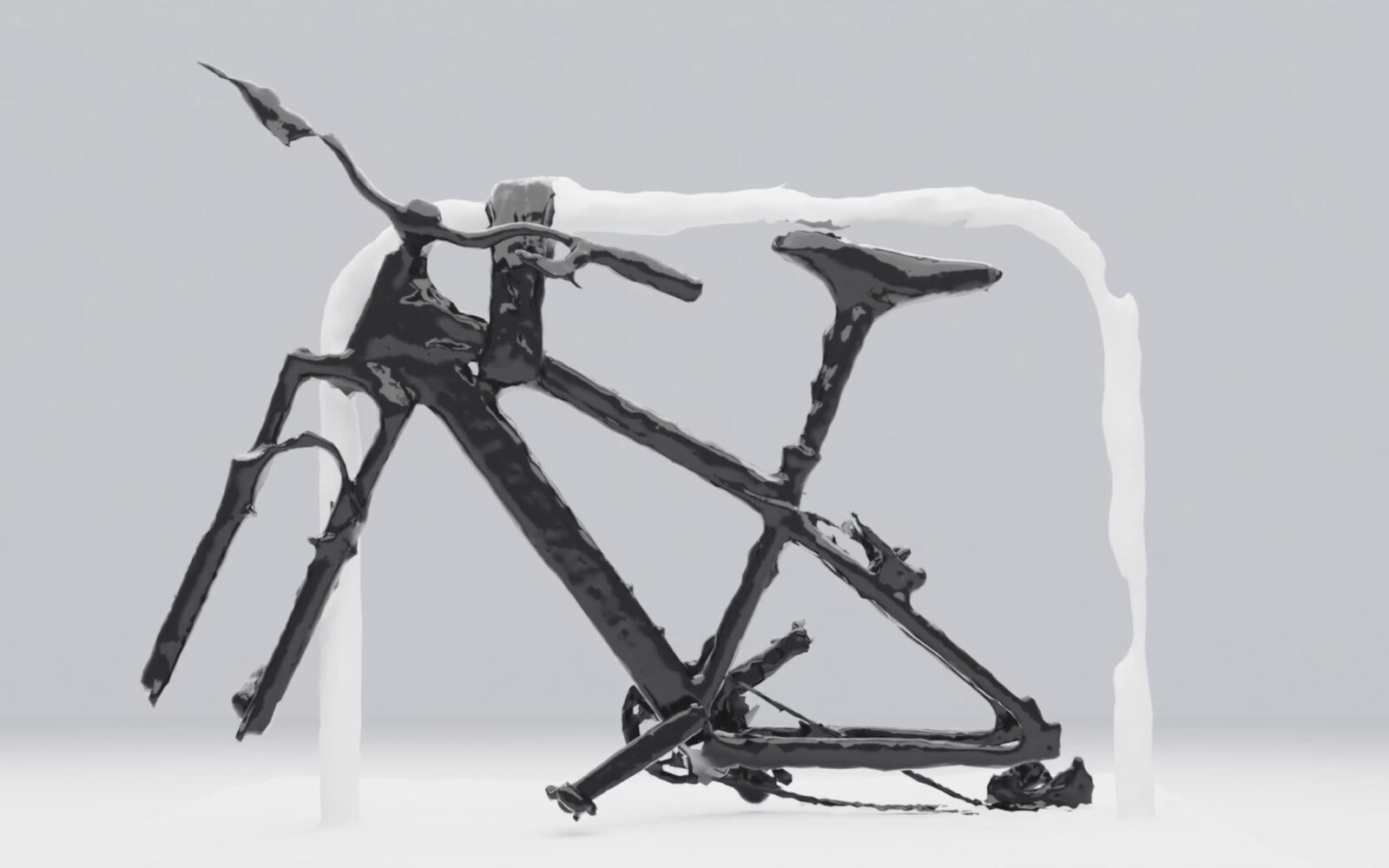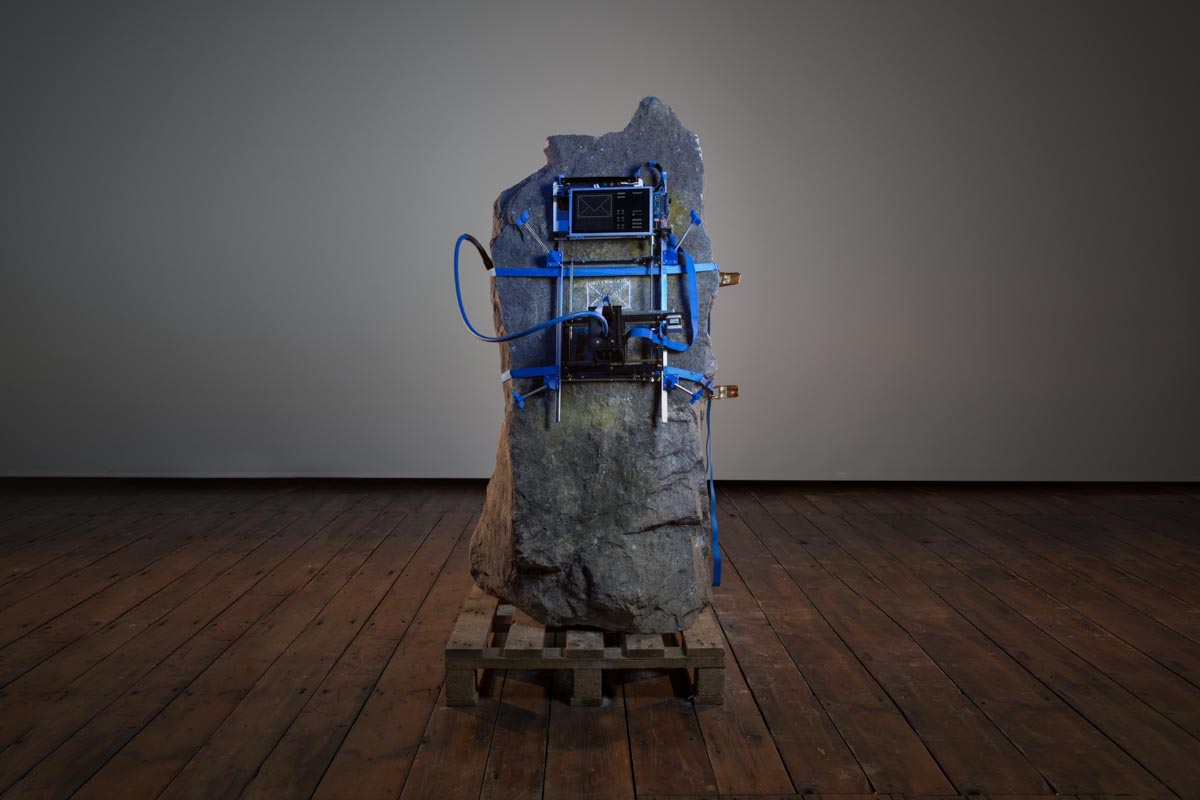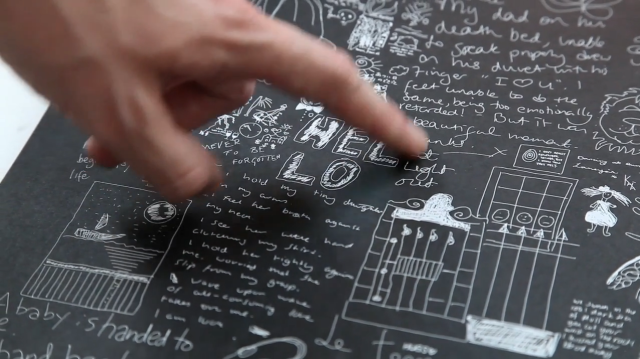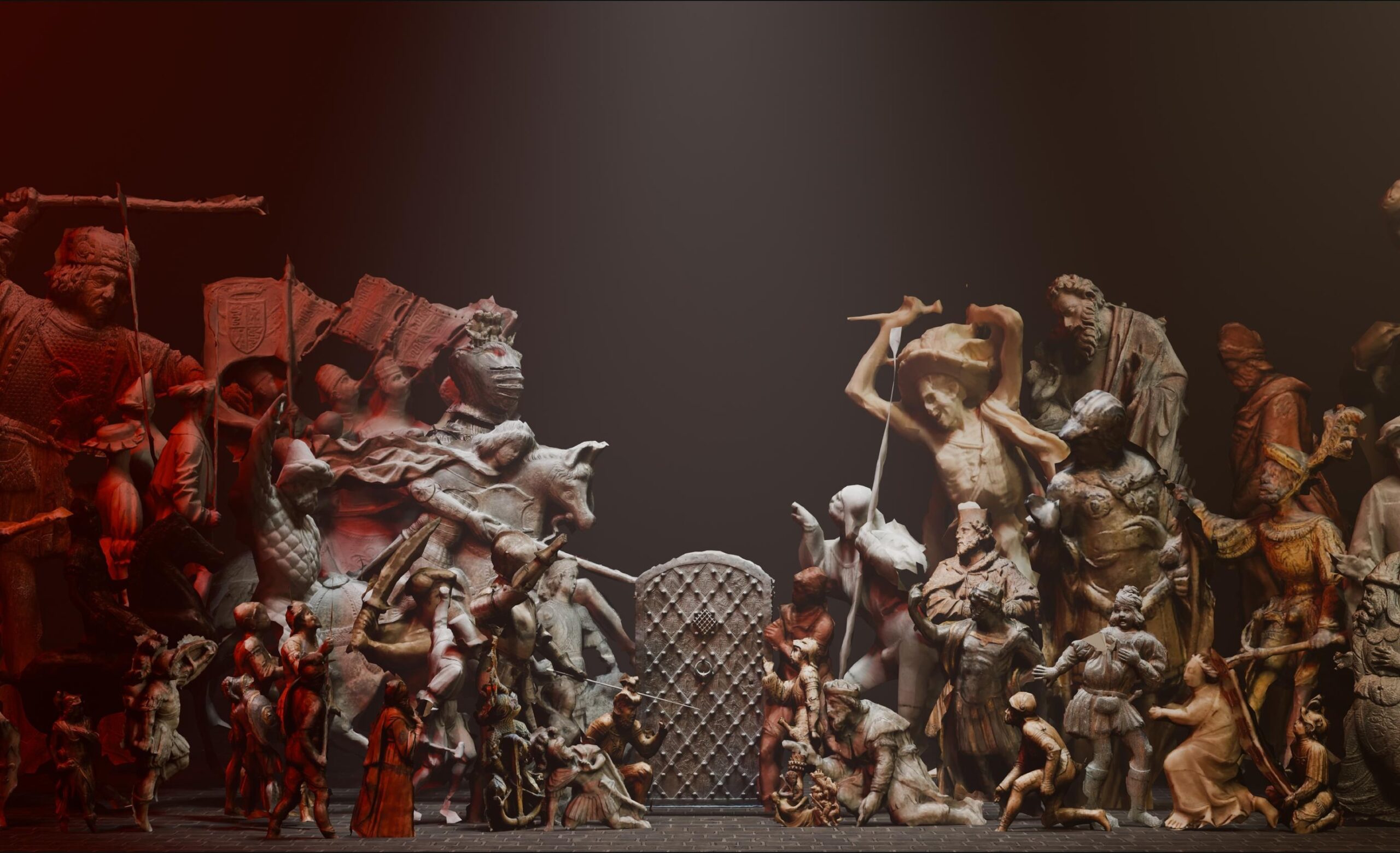
Memory Palace is an interactive digital experience I developed through the V&A “PORTALS” design programme. The project began with a 15th-century domestic door from the V&A collection. What interested me was that this ordinary household object carried two political symbols: the eagle of the Holy Roman Empire and the lion of Bohemia. These two symbols were displayed together on the door as a statement of unity, alliance and confidence. For me, this was the origin of the project: the political system was so certain of itself that it embedded its power into something as intimate and functional as a domestic door.
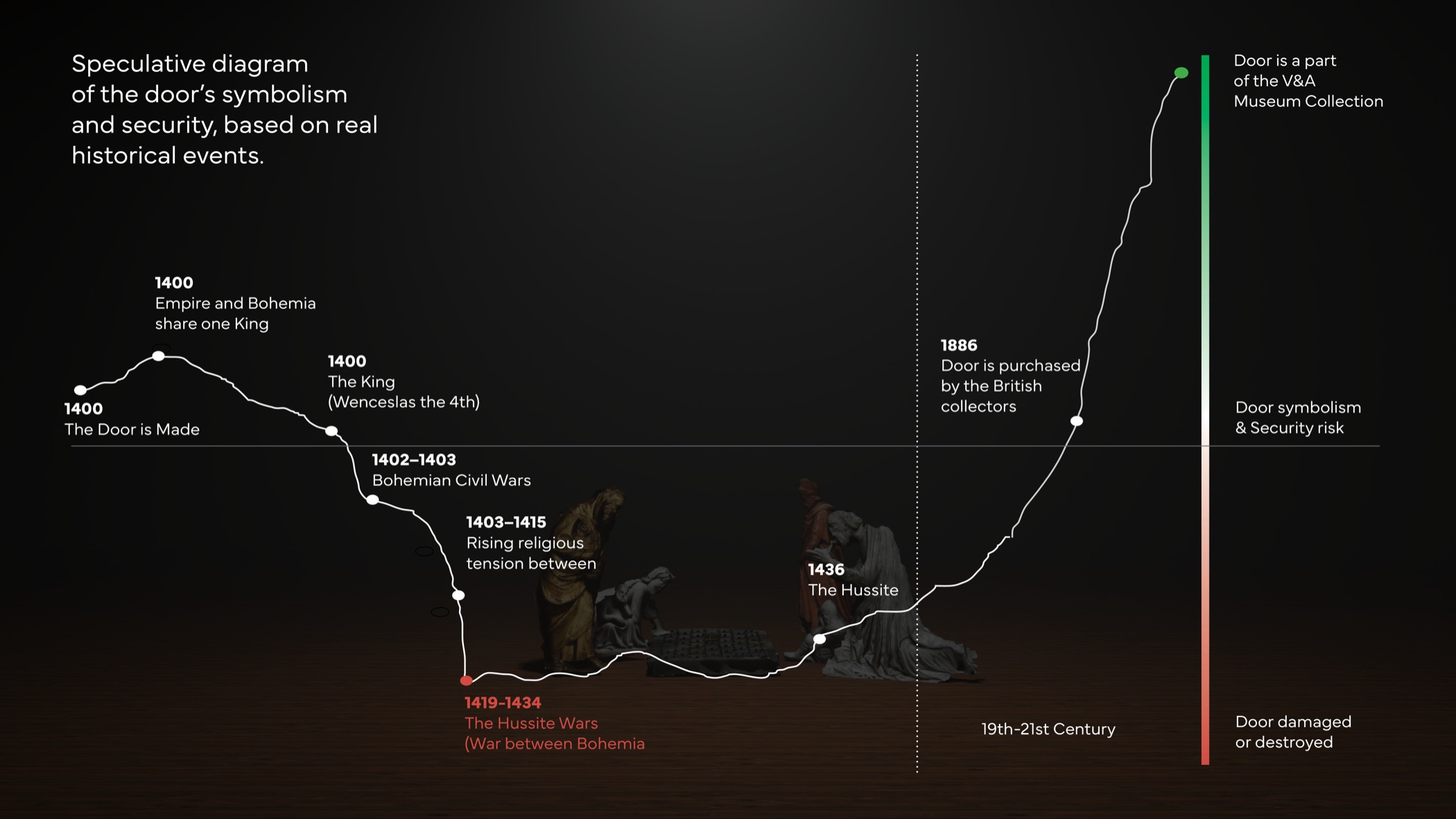
The story I created is speculative, but it is based on real historical tensions in 15th-century Central Europe, especially religious disputes and the Hussite Wars. What makes the object powerful is that the unity represented by the eagle and the lion was not permanent. The symbols suggested political connection, but a few years later the forces they represented would become unstable and increasingly hostile to each other. Because the door visibly carried both symbols, I imagined her as an object at risk: a domestic artefact that could have been damaged, removed or destroyed because she held the signs of a collapsing alliance. I became interested in the door as a carrier of a system that believed in its own permanence, while already standing close to fracture.
The symbols suggested political connection, but a few years later the forces they represented would become unstable and increasingly hostile to each other.
One of the key objectives and challenges of the project was how to communicate complex historical material to a general audience who may have limited knowledge of 15th-century Central Europe, religious disputes or the Hussite Wars. I did not want the experience to feel like an academic history lesson filled with names, dates and political explanations. The answer was to tell the story from the perspective of a ground-level narrator: a simple domestic object that had lived through the atmosphere of the period without fully understanding its wider political structure.
This is why I humanised the door. I approached her almost as a witness, survivor or commoner of that time: not a king, scholar or historian, but an object placed inside daily life. The door does not explain the conflict through official history. She remembers voices, fear, rumours, footsteps, religious tension, violence, symbols, fragments of speech and changes in the atmosphere around her. She does not need to know every name or event to carry the emotional truth of what happened. This allowed the work to make difficult historical material more accessible, while still keeping its complexity and uncertainty. The narration in the experience is voiced using AI, allowing the door to speak back as a speculative historical presence.
This is why I humanised the door. I approached her almost as a witness, survivor or commoner of that time: not a king, scholar or historian, but an object placed inside daily life. The door does not explain the conflict through official history. She remembers voices, fear, rumours, footsteps, religious tension, violence, symbols, fragments of speech and changes in the atmosphere around her.
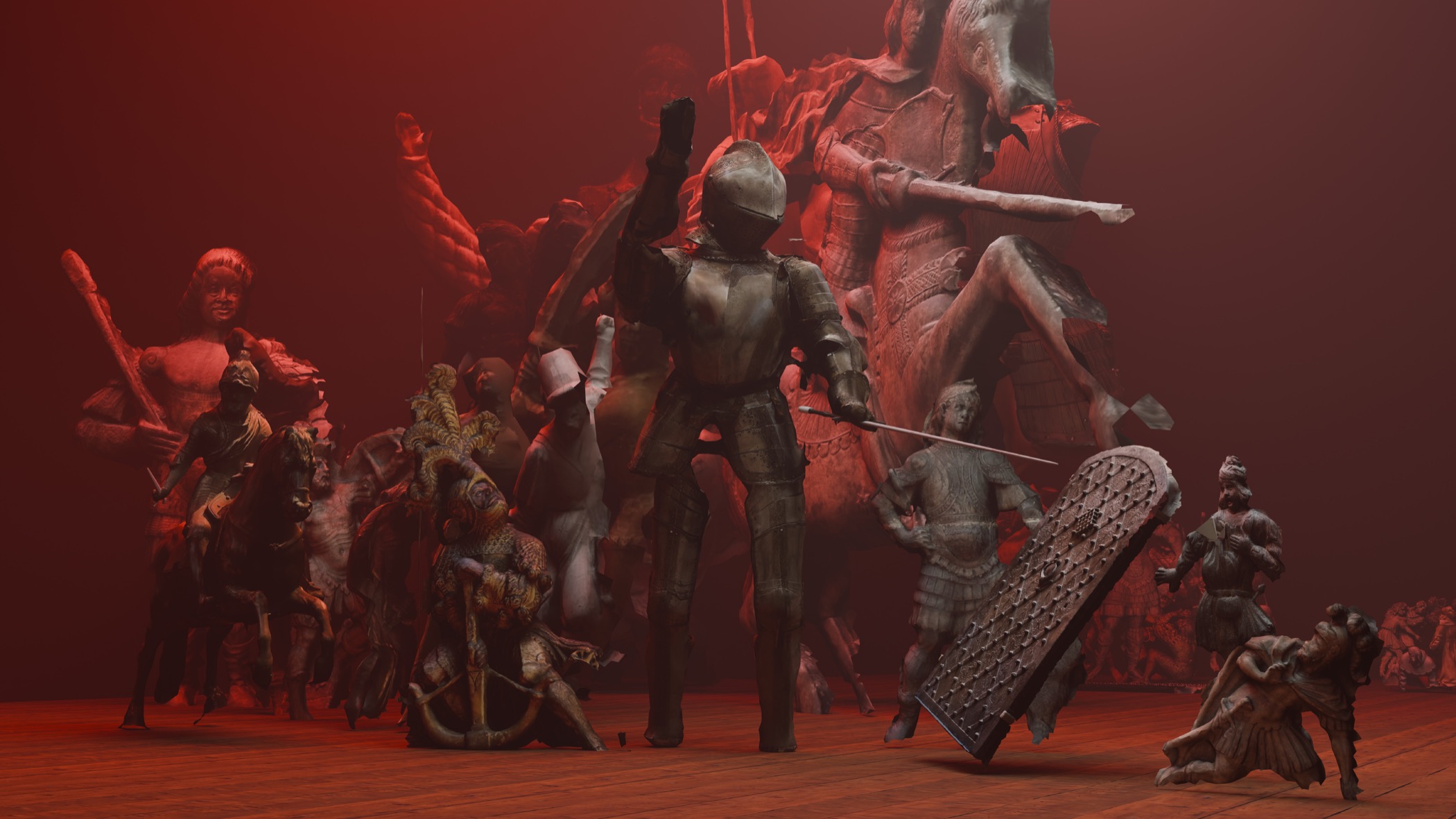
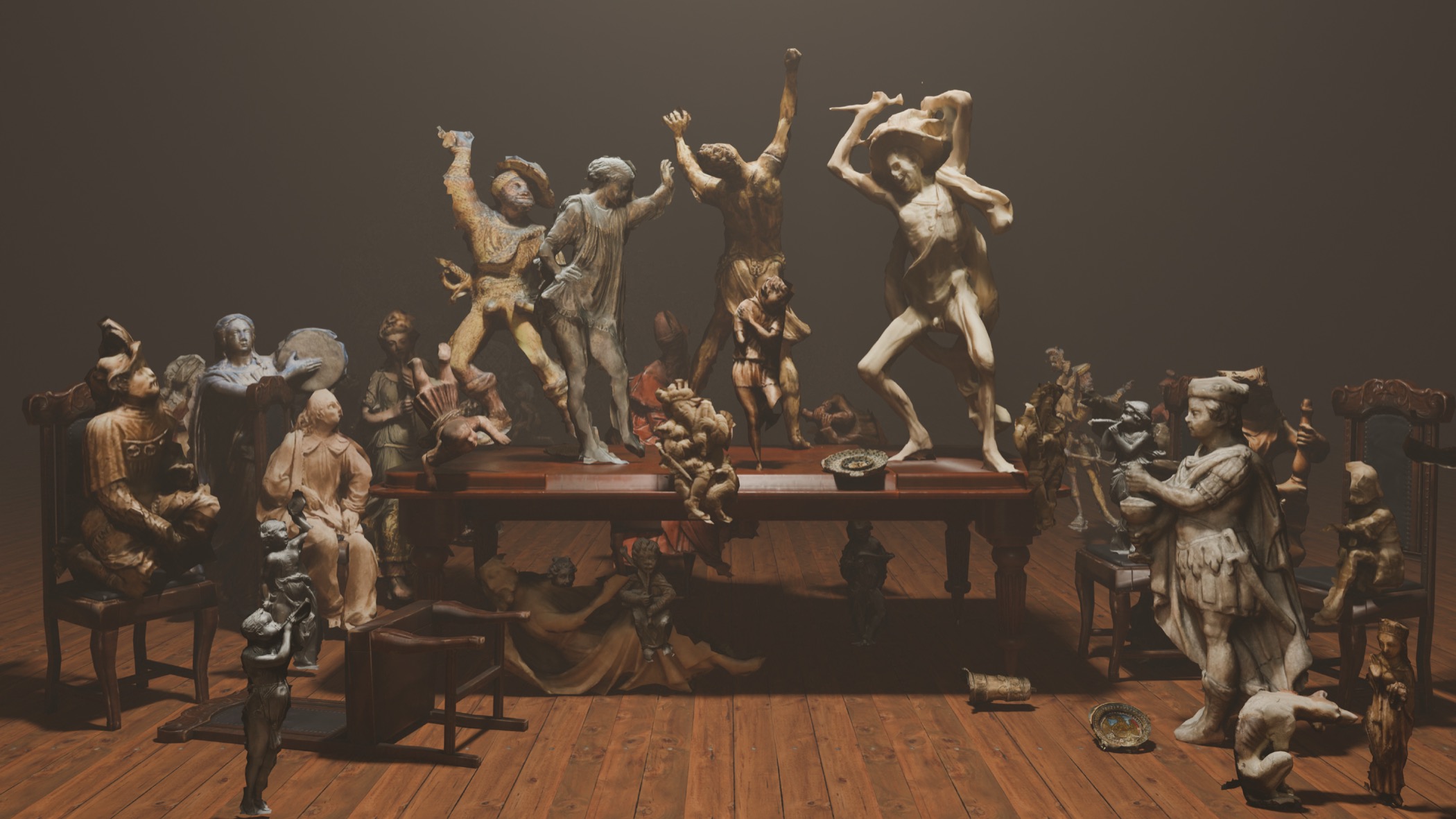
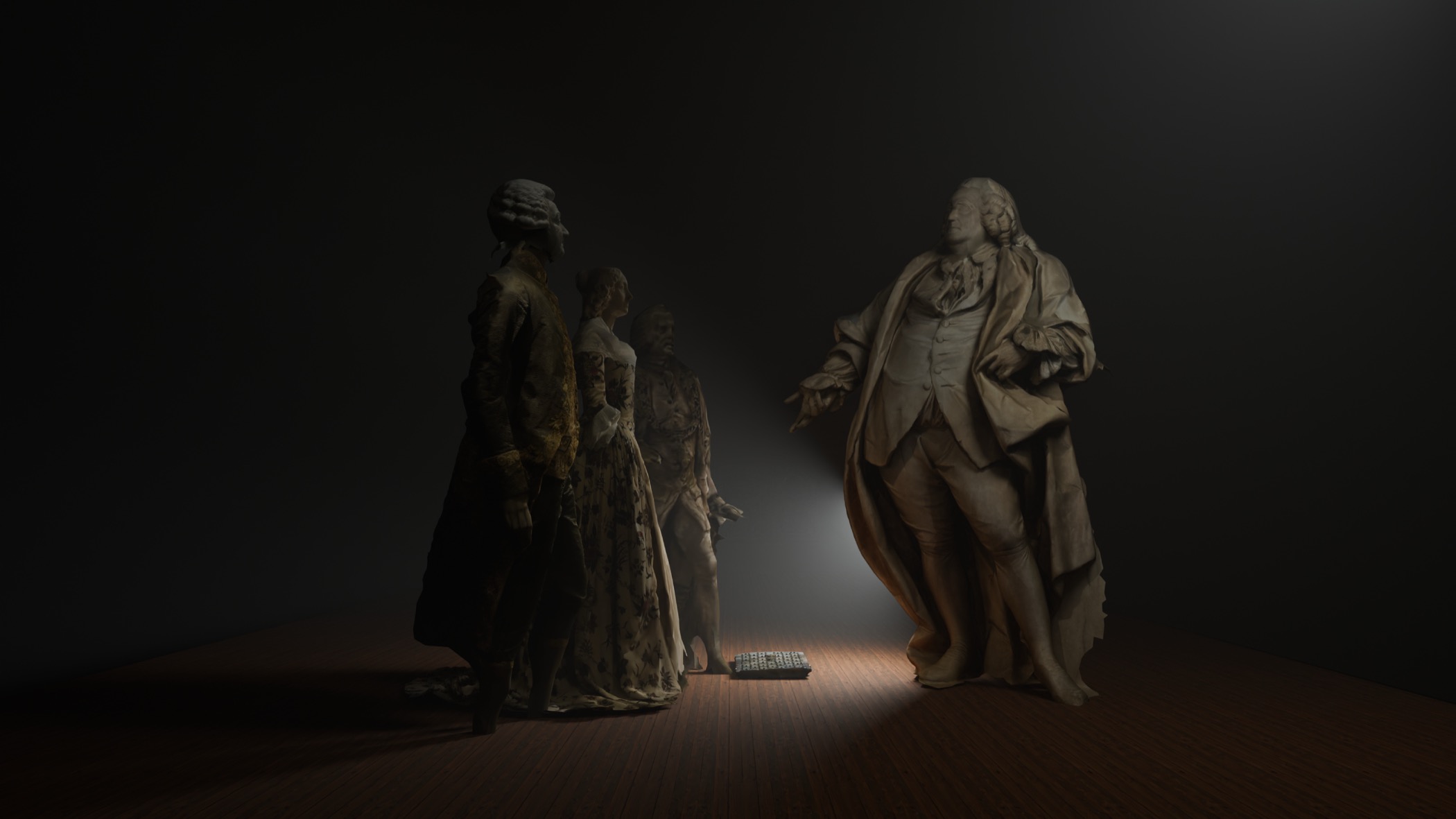
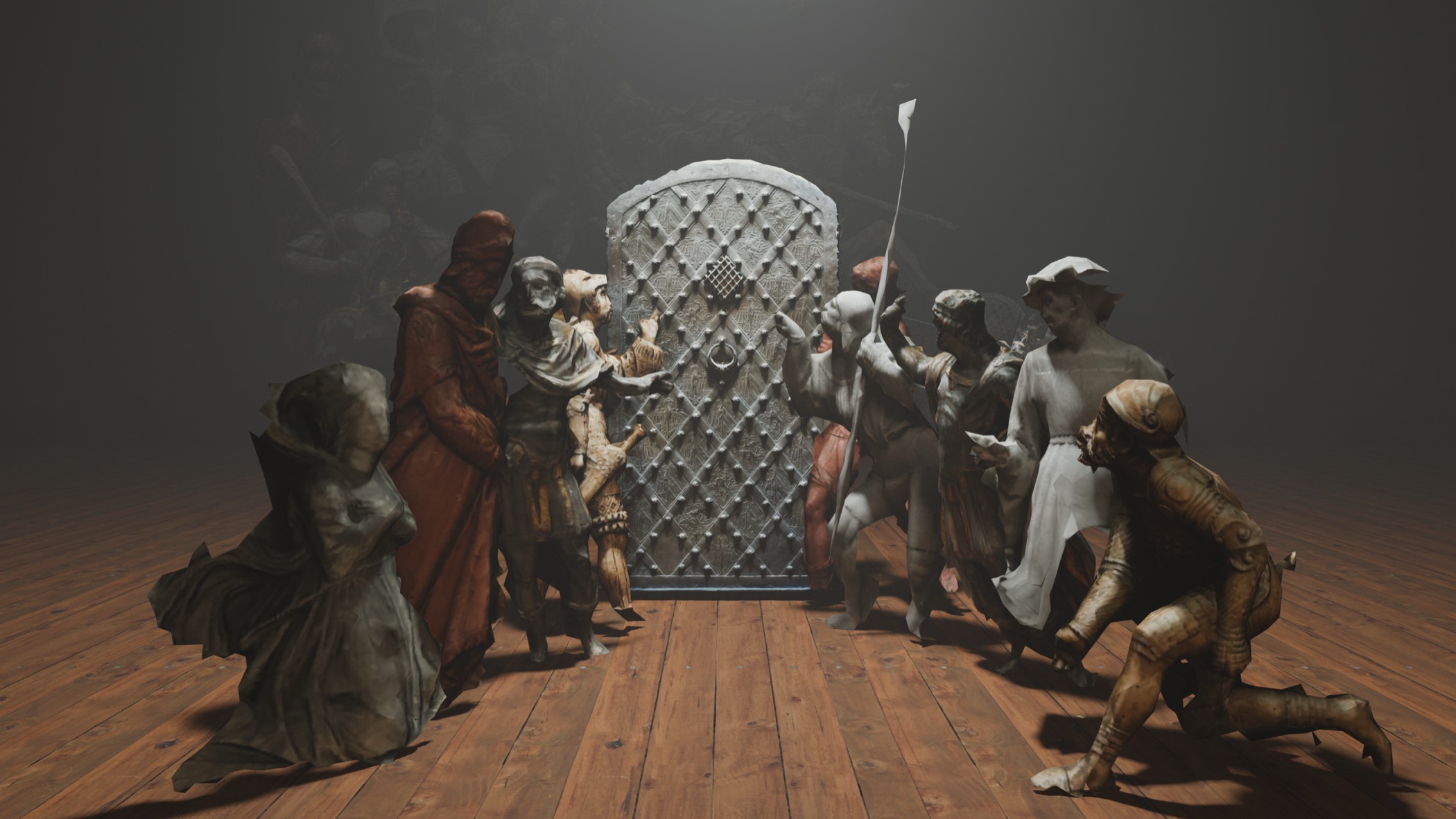
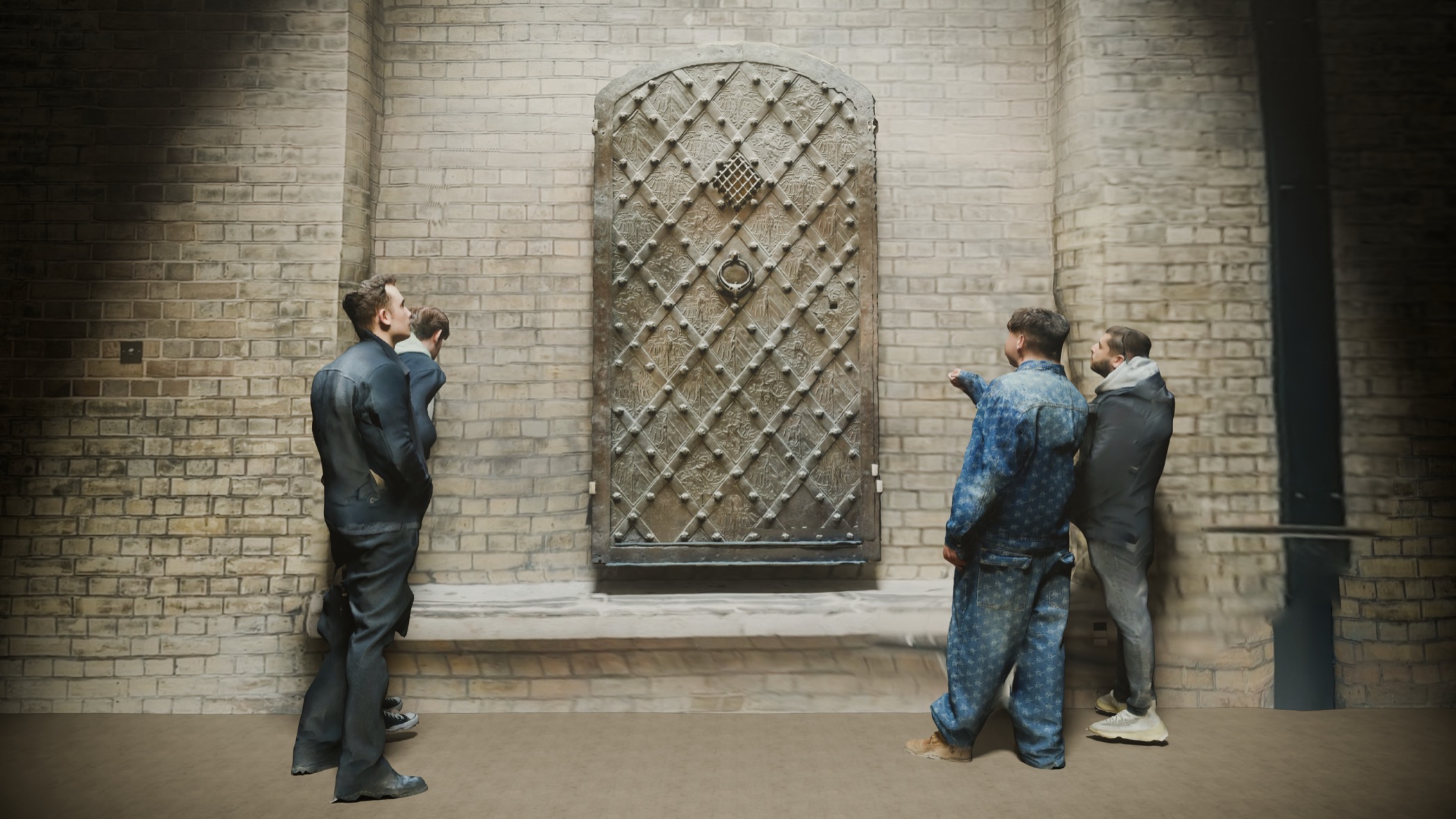
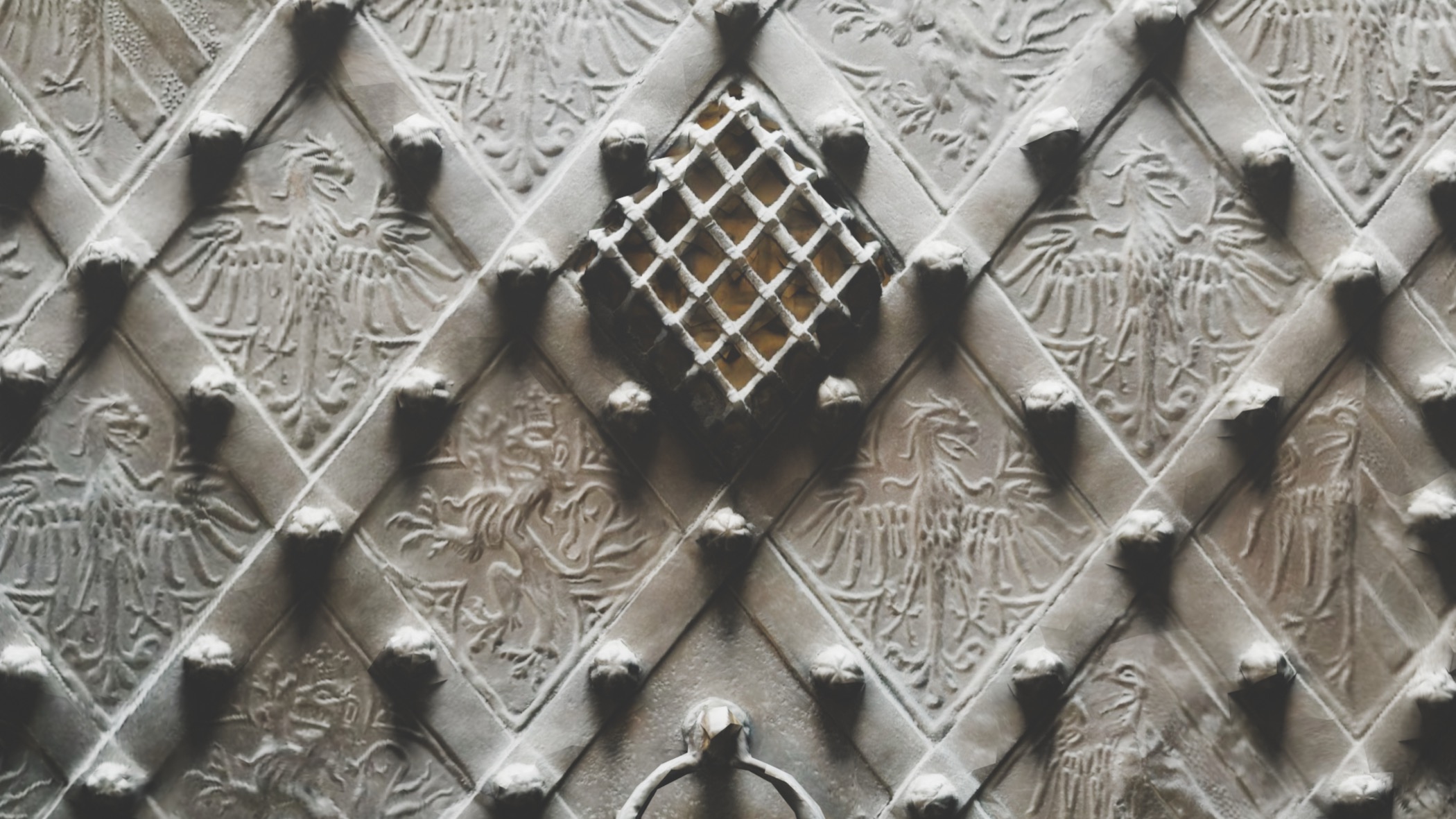
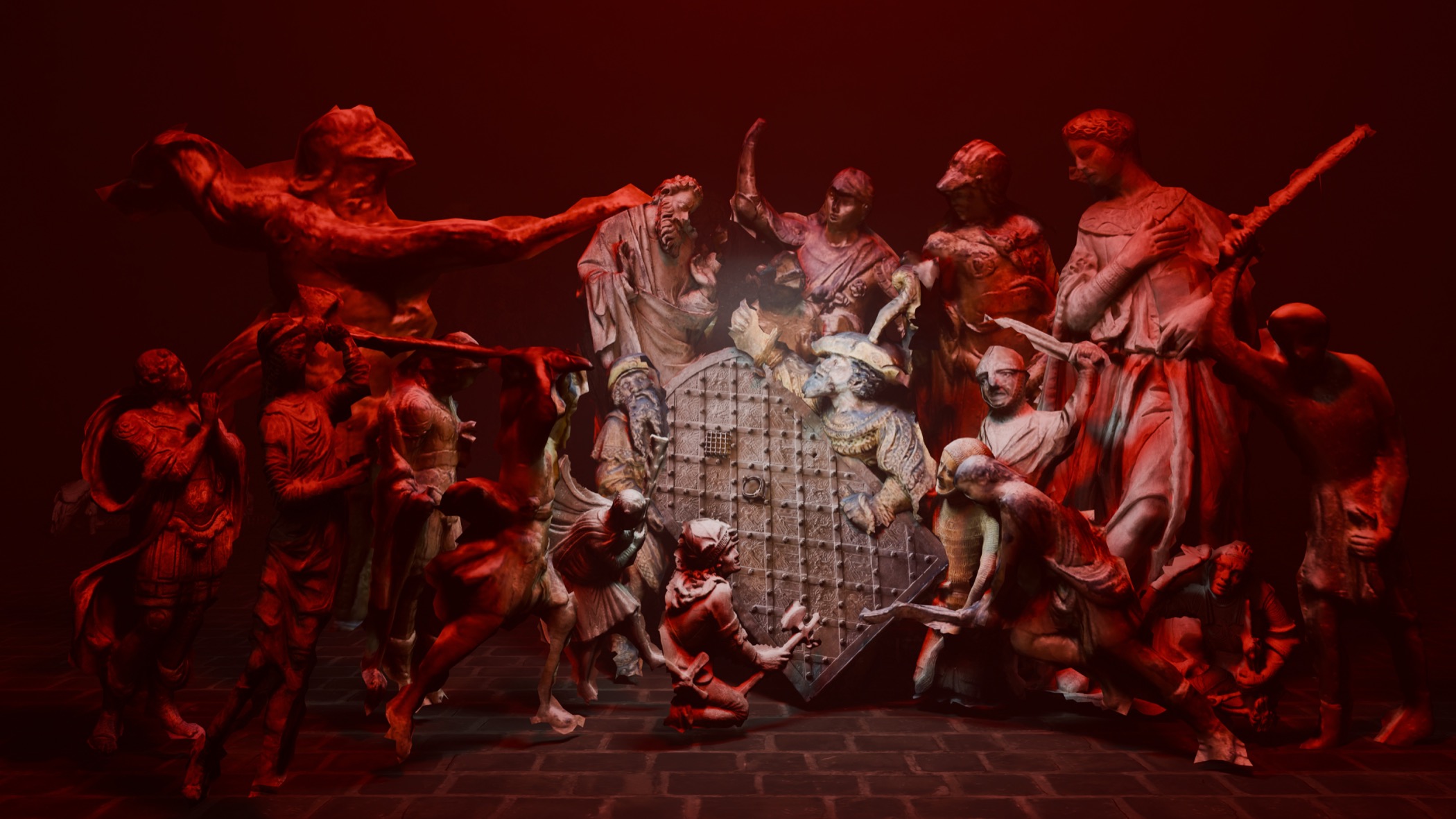
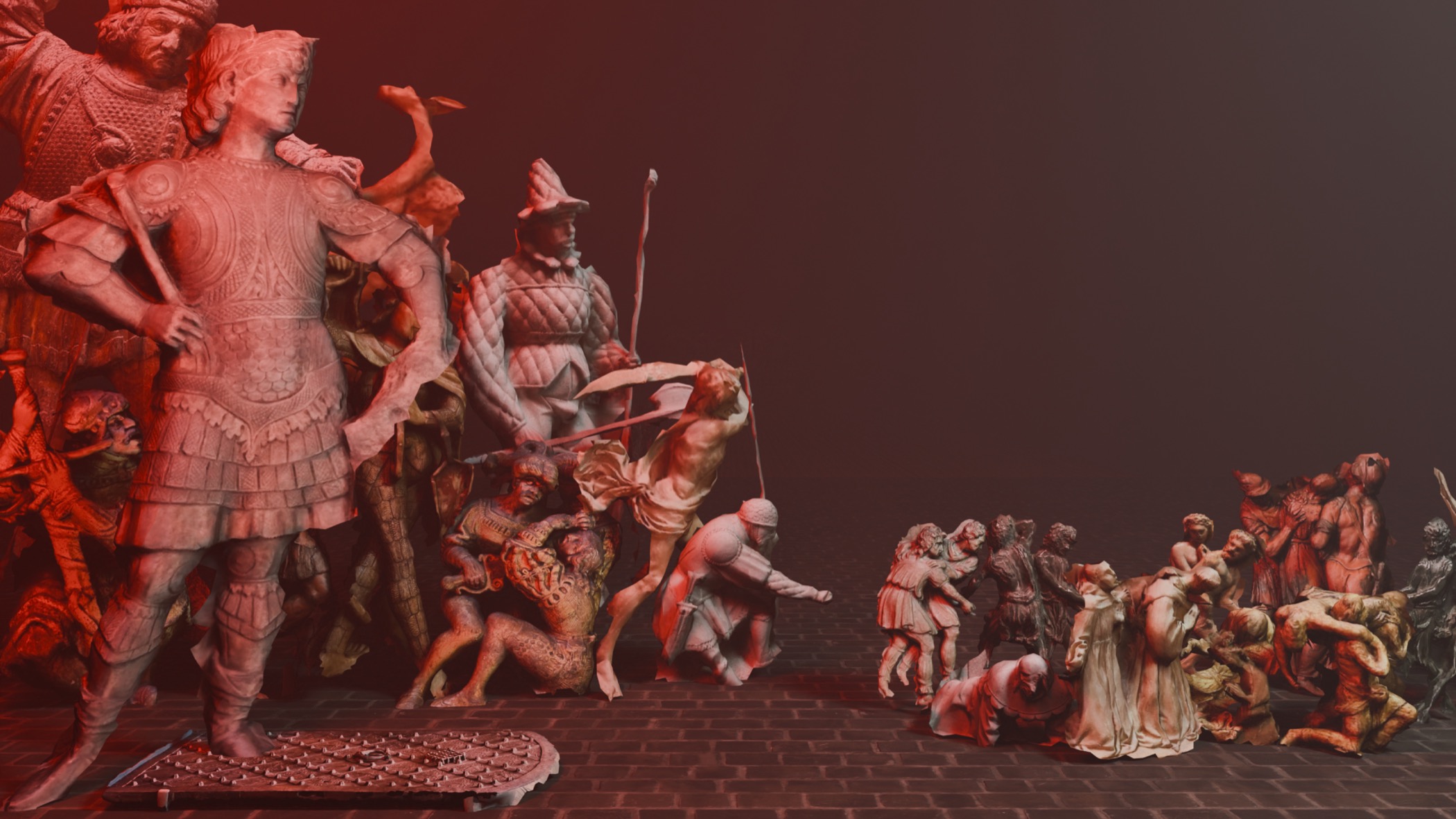
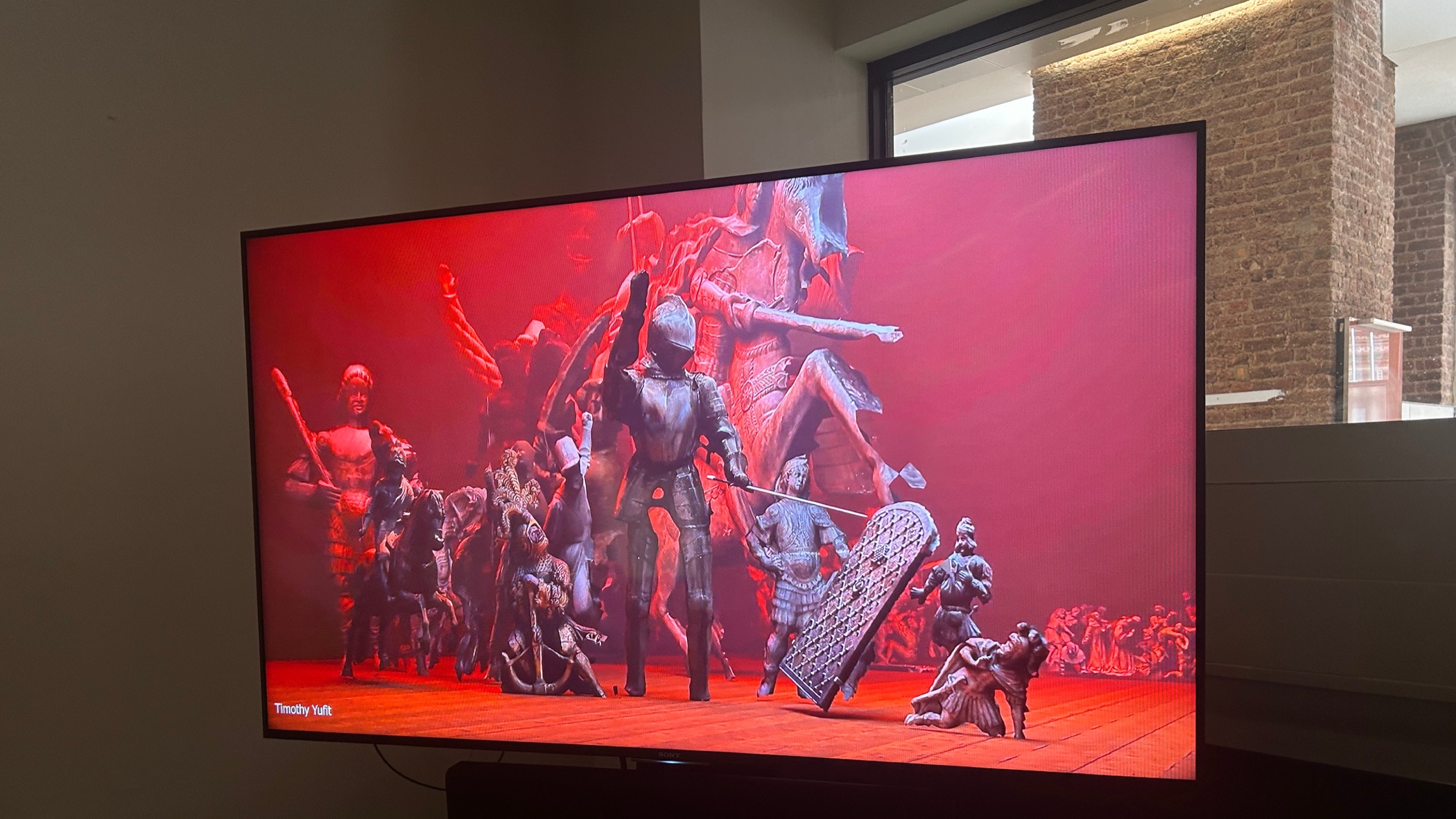
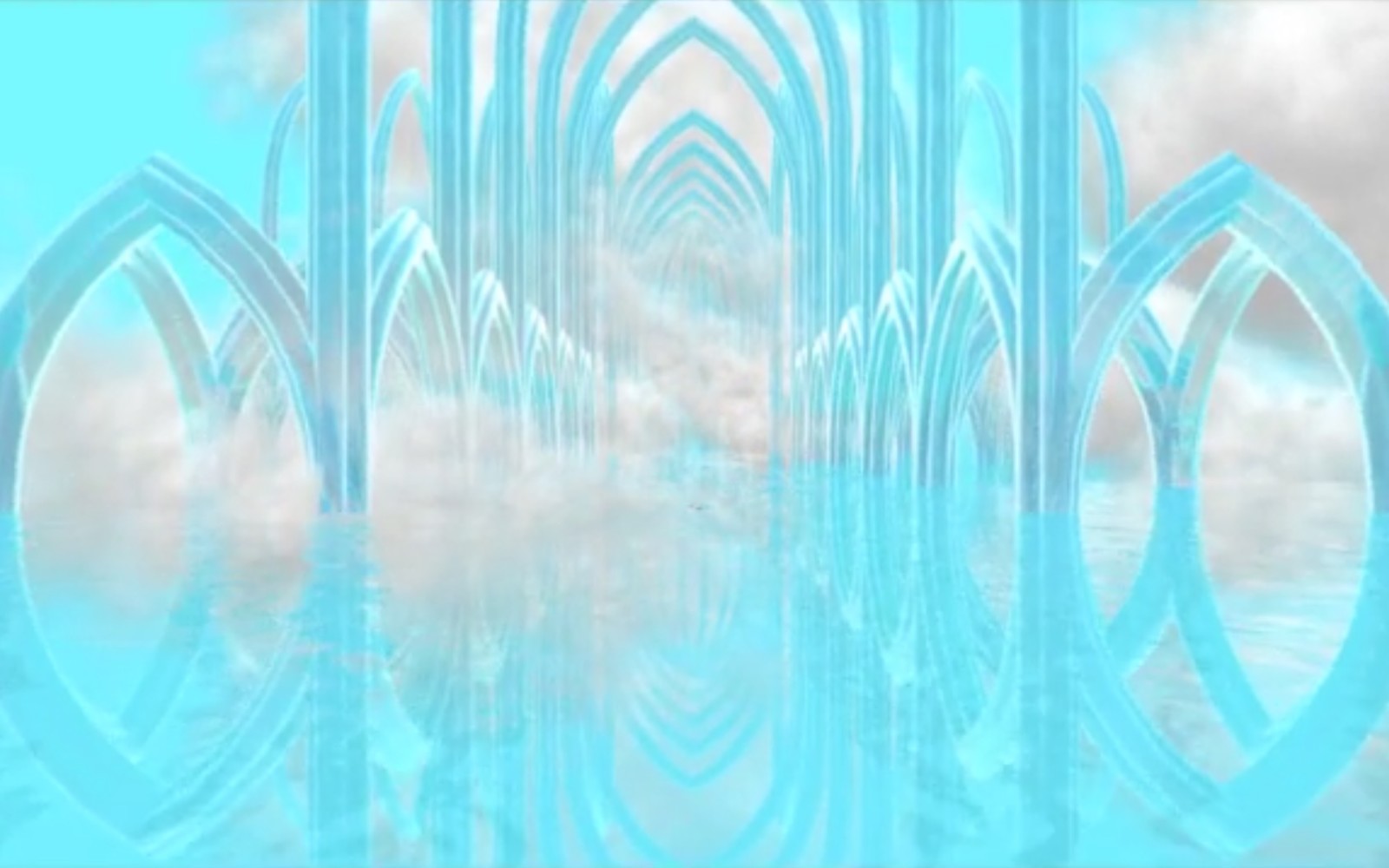
The central creative decision was to use the door as a threshold. Rather than presenting it as a static museum artefact, I turned it into an entrance into its own memory. The audience moves through a digital world where the object becomes a portal into fragmented scenes, atmospheres and historical traces. The historical scenes were inspired by compositions of 14th and 15th-century medieval art: crowded spatial arrangements, symbolic gestures, compressed perspectives, ritualised figures and dramatic religious or political imagery. I wanted the world to feel as if it had been built from the visual logic of medieval images, but reprocessed through contemporary digital technology.
The project was built using Three.js, photogrammetry and interactive web technologies. I worked with around 300 scanned objects from the V&A collection to construct the world inside the door’s memory. This process of combining analogue material from the museum collection with digital tools and programming became one of the most important parts of the project. I was not inventing history from nothing; I was taking existing objects, textures, figures and fragments from the collection and reorganising them into a new interactive system. The result was a digital environment that felt archival, unstable and emotionally charged at the same time.
These objects were not arranged as a conventional historical display, but as fragments within a broken digital environment, creating the feeling of entering an archive that is alive and partially remembered. The user is not forced through one linear story. Instead, they navigate the space, encounter objects, sounds, AI-voiced narration and visual fragments, and build their own relationship with the material.
These objects were not arranged as a conventional historical display, but as fragments within a broken digital environment, creating the feeling of entering an archive that is alive and partially remembered.
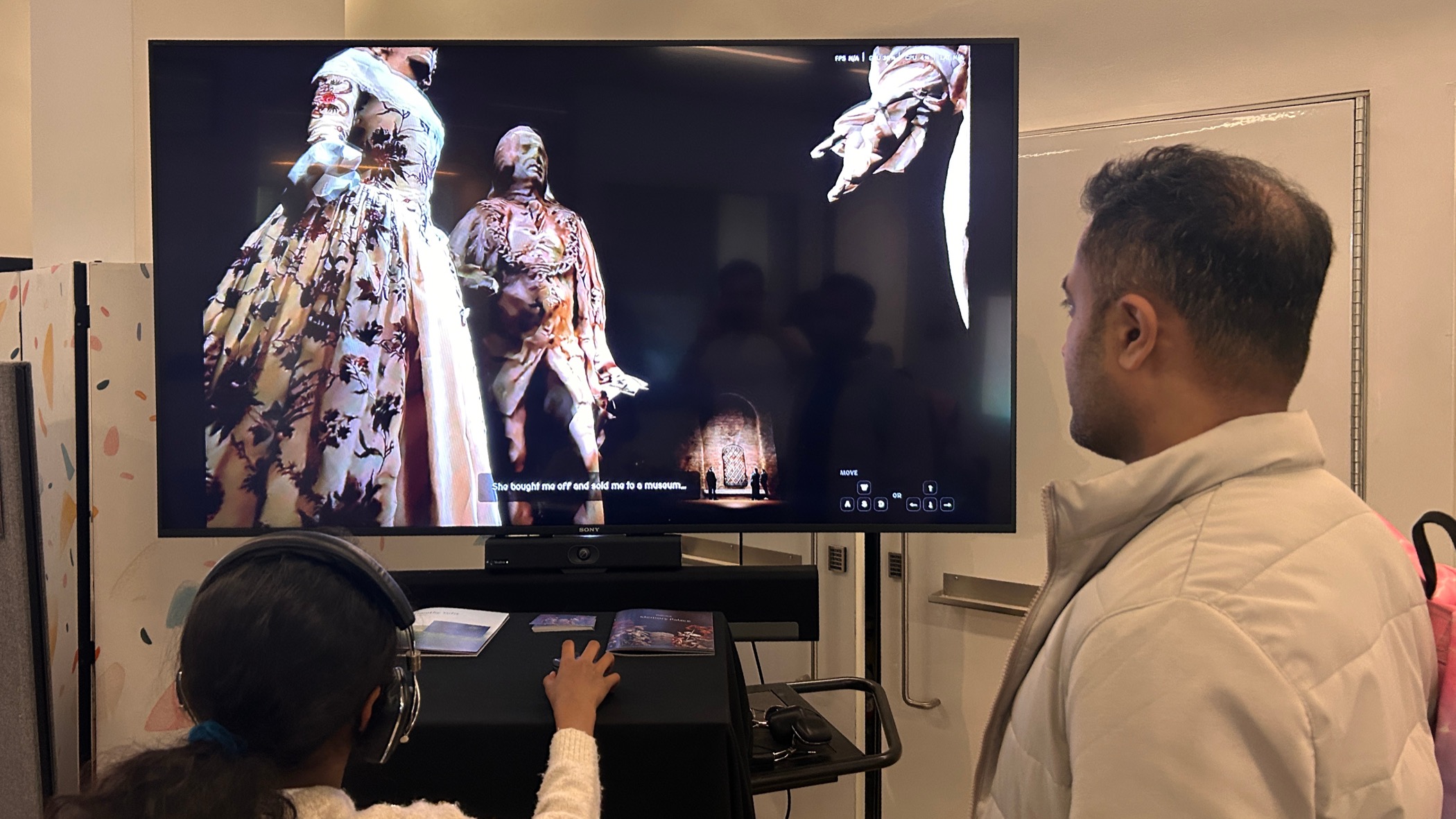
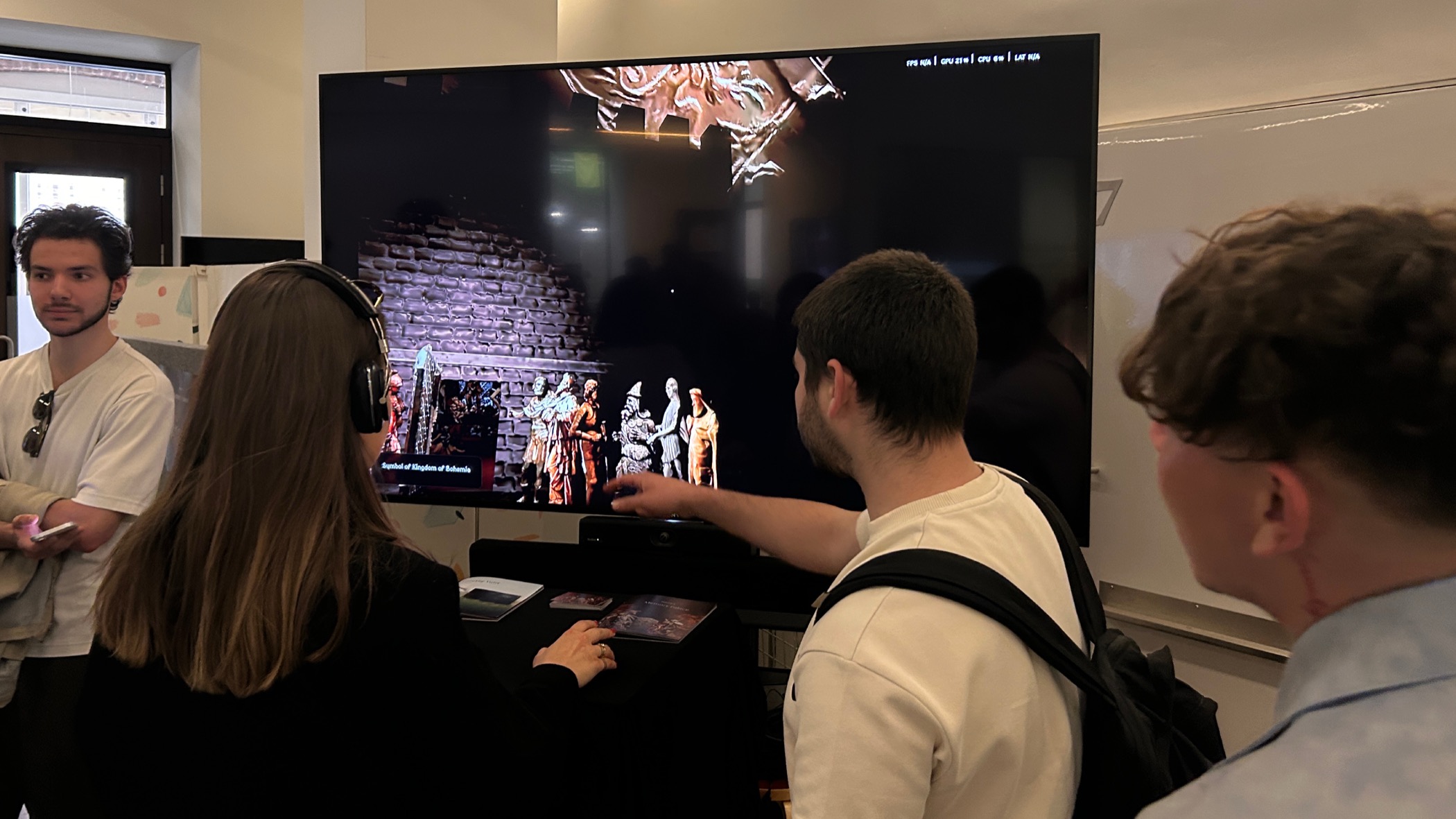
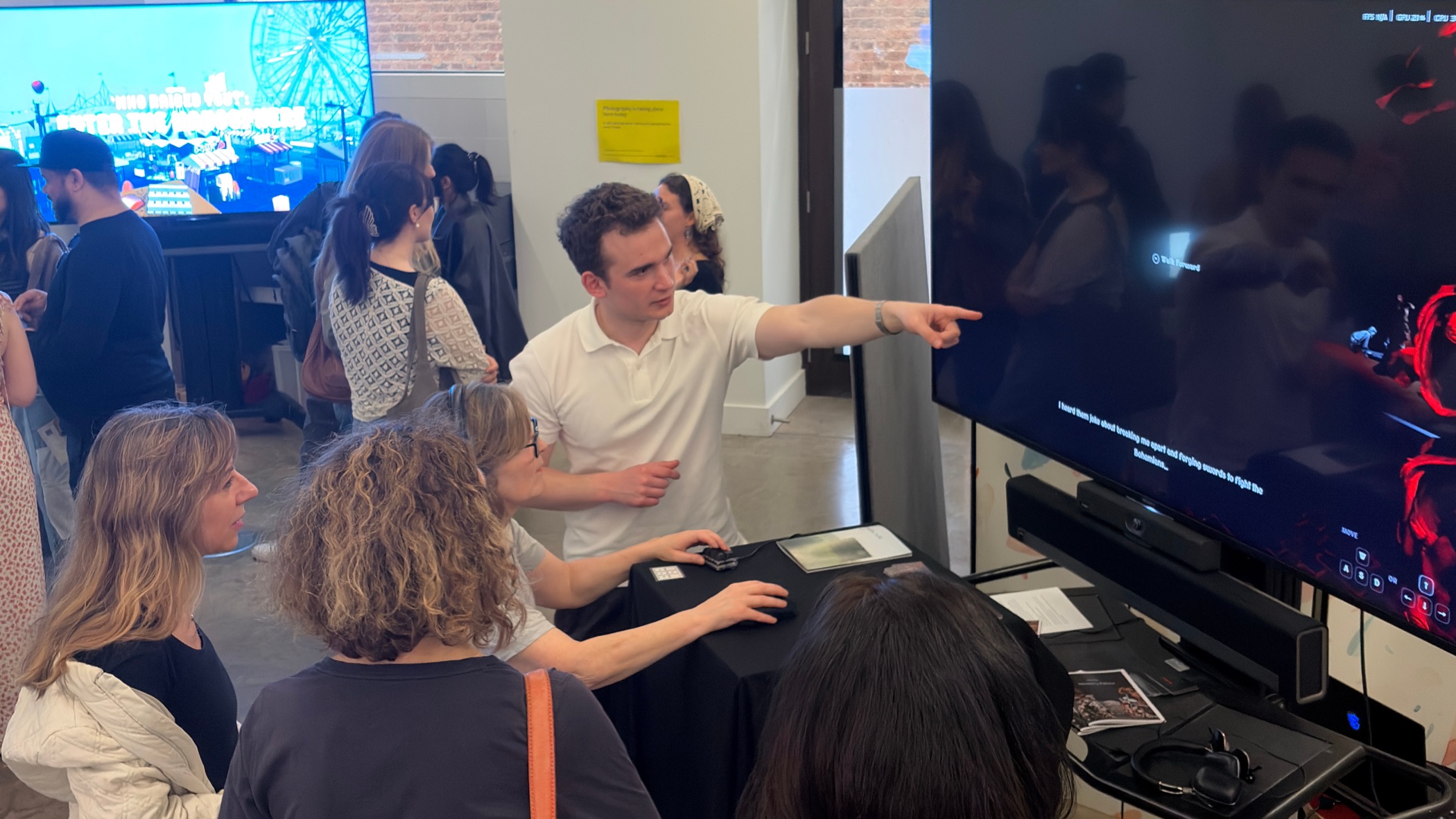
Memory Palace reflects my wider interest in hidden narratives, overlooked objects and digital systems. The work asks how technology can make historical material feel present without simplifying it. It uses interaction, spatial design, photogrammetry, AI narration and atmosphere to transform museum data into an emotional experience. The project was presented publicly as part of the V&A PORTALS exhibition during the V&A Performance Festival, where I also helped install and present the wider cohort exhibition to visitors.
Memory Palace was built as a browser-based interactive 3D environment using Three.js, JavaScript, photogrammetry, scanned museum objects, sound, animation and spatial interaction. The final build was developed through approximately 5,000 lines of code, combining object loading, camera movement, lighting, animation systems, audio triggers, atmospheric effects and user interaction into one navigable digital space.
The project was constructed from around 300 photogrammetry scans of objects from the V&A collection. A major part of the technical and research process was looking through the museum collection not only for full objects, but for very specific visual fragments: small figures hidden inside larger sculptures, decorative details, gestures, architectural elements, symbolic animals, weapons, religious forms, faces, bodies, textures and fragments of ornament. I treated the V&A collection almost like a material database. Instead of using the objects as isolated museum items, I searched for characters, props, surfaces, and compositions that could be extracted and reorganised into a new historical environment.
The historical scenes were built as a kind of digital collage. I used analogue material from the museum collection — objects with their own age, texture, provenance and historical weight — and reassembled them through digital tools and programming. This process was technically and conceptually important: I was not creating a fictional medieval world from nothing, but building it out of existing museum material. The scanned objects became the raw components of a fragmented memory system.
The experience is interactive rather than linear. The user enters the work through the 15th-century door, which functions as a portal into its own memory. From there, they can move through the digital space, choose where to look, decide which object or scene to approach, and build their own route through the material. Lights, sound, music, animations and atmospheric effects respond to the space and help create the feeling of entering a broken archive or collapsed memory system.
AI-assisted tools were used only as part of the wider research and prototyping process, helping test language, structure and atmosphere. The final visual world was built from museum scans, manual selection, coding, composition and interaction design. The project uses digital technology not to replace historical material, but to reactivate it: turning scanned objects, museum data and archival fragments into an immersive public-facing experience.
Project Page | Timothy Yufit | Instagram | LinkedIn
The project was presented publicly at the V&A Performance Festival and Make and Meet Festival in 2026.