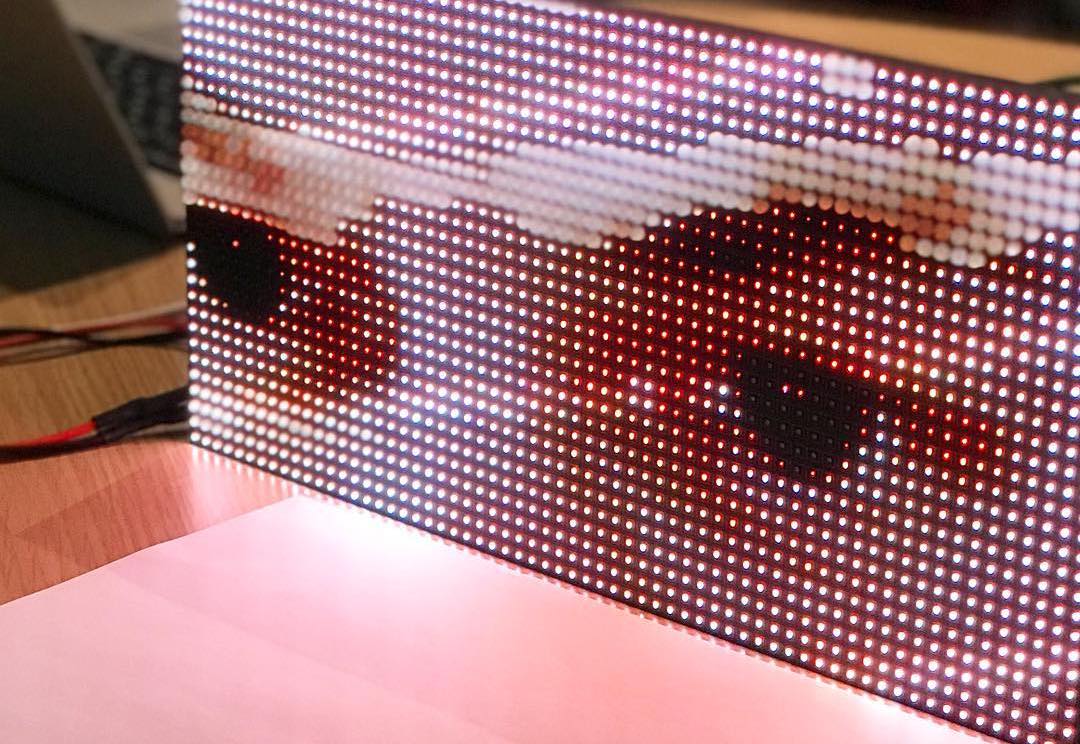
Created by Gysin&Vanetti (Andreas Gysin & Sidi Vanetti), Link is a series of 28 generative stop-motion loops, with each sequence comprising between 32 and 224 individual long-exposure photographs. Each frame of the sequence is obtained through a long-exposure capture (~30 seconds) of a vertical LED array in motion, resulting in precise, three-dimensional light-trail geometries.
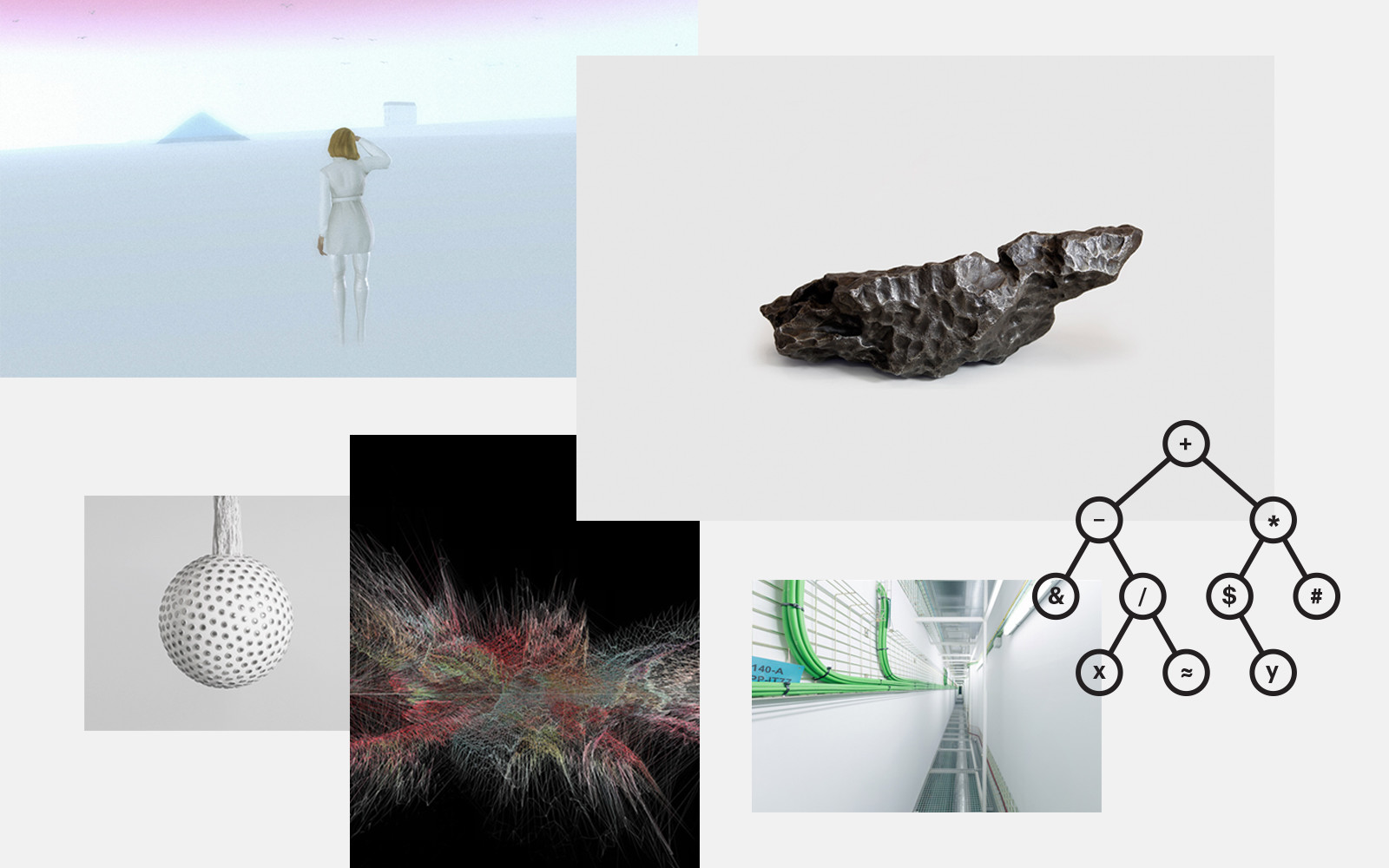
Known to intervene in the public space with an admirable lightness of touch, for instance by converting elements of road signage into a series of perceptive works, the mischievous duo interacts with our sensorial organs and leads us to reexamine our relationship to our surroundings through delicate, playful and inspiring narratives.
MuDA

Link is a continuation of the duo’s effort in building complex visual systems using elementary resolutions. It is often that their work relies on repurposing hardware, as is in the case of Link, by working an an older Axidraw v2. The custom hardware system combines several synchronised elements: individual LEDs that can be programmed for specific colours and brightness levels; an XY plotter that controls the position and movement of the LED array; captured with a DSLR camera (Sony Alpha) in bulb mode. All components operate within a light-controlled black box environment, controlled by custom software that synchronises the camera shutter, plotter movement, and LED behaviour. Each frame takes around 1 minute to be produced, the whole loop takes a couple of hours. The context is physical and light behaves naturally: reflections are obtained “for free” (as opposed on virtual light/renderings).
Link Simulator
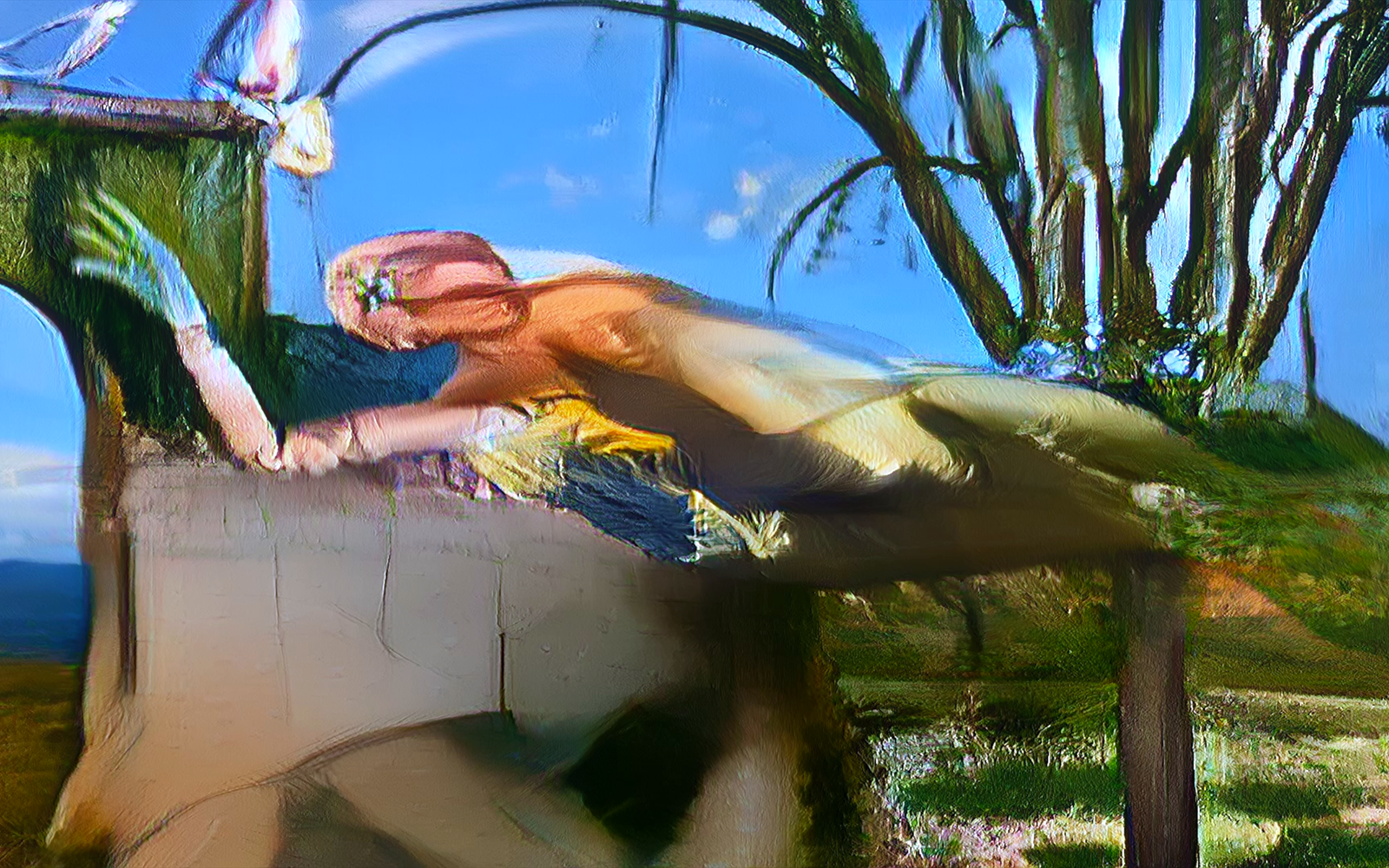
Link final “Physical Render”
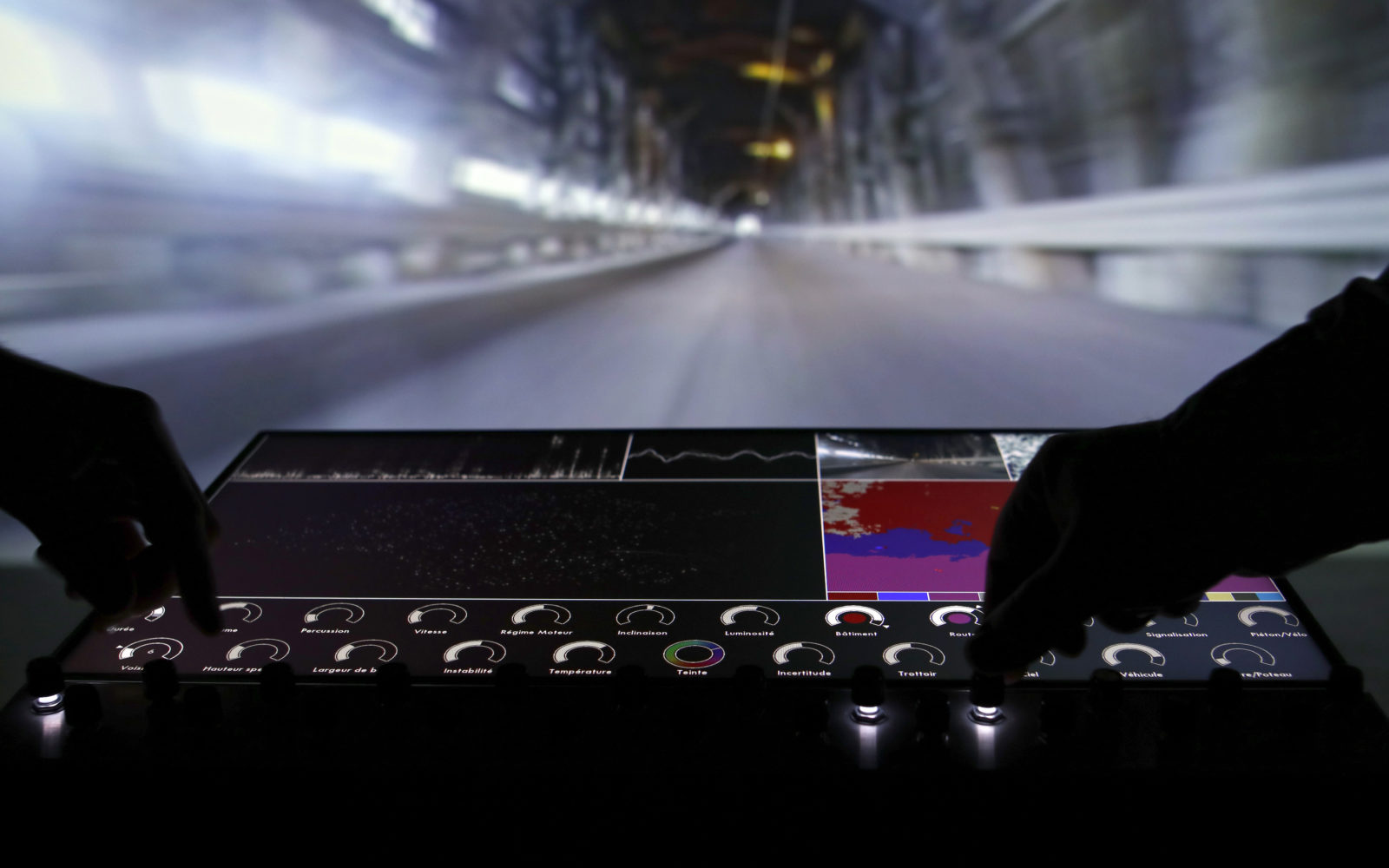
Prior to embarking on sometimes hours-long “physical rendering” process, the duo built a simulator as a way for them to quickly test some patterns and ideas before launching the rendering which would often take several hours (and fail many times). They would launch a “render”, go for lunch, and come back just to realize that they forgot to empty the SD card and the camera ran out of space. A checklist for the launch of each rendering had to be prepared as there were so many things to control. The camera, the plotter settings, the script settings, the LED controller, battery, etc, in total around 15 check points. After they introduced it, the failure rate dropped significantly.
The scale, direction, and speed could be modified interactively. Vertically, the resolution was discrete and equivalent to the number of LEDs mounted on the bar while horizontally the resolution was equivalent to a motor step, being almost continuous. The Python script would open the shutter of the camera in bulb mode, drive the plotter around a parametric path, turn the LEDs on and off at specific positions, and also close the shutter and save the file. All of these steps were done in sync. To maintain the photographic origin of the project, the playback of each edition was handled by a custom Javacript script that sequences the individual images.


Top → Right: (1) A test with a pixel font for text output, wrapped around a cylinder; (2) The main “stage” where the shapes are built: the volume is about 20×20×20cm; (3) Cylinder: one of the first experiments without realtime LED controls yet, just axis movement; (4) Initial attempts to control the LEDs in function of the position of the plotter head; (5) Viewfinder of the DLSR; (6) A studio view with a home-made darkroom for photographing the light trail left by the LEDs.
A small selection of final “physical renderings” can be seen below. For the rest, please see → link.gysin-vanetti.com where you can also mint an edition. For more information about Gysin&Vanetti, see Gysin&Vanetti – O is not a letter, it’s a circle.


This process and its accompanying research were developed for a commission by organisers of an Italian electronic music festival, though the event was ultimately cancelled. The initial concept (from 2012) included a large-scale installation using a custom system with industrial cranes (below). The research continued independently and extensively, resulting in the series Link.
Project was exhibited in 2024 Paris Photo Art Fair, curated by Nguyen Wahed (Lumen Prize Winner for Best Booth)