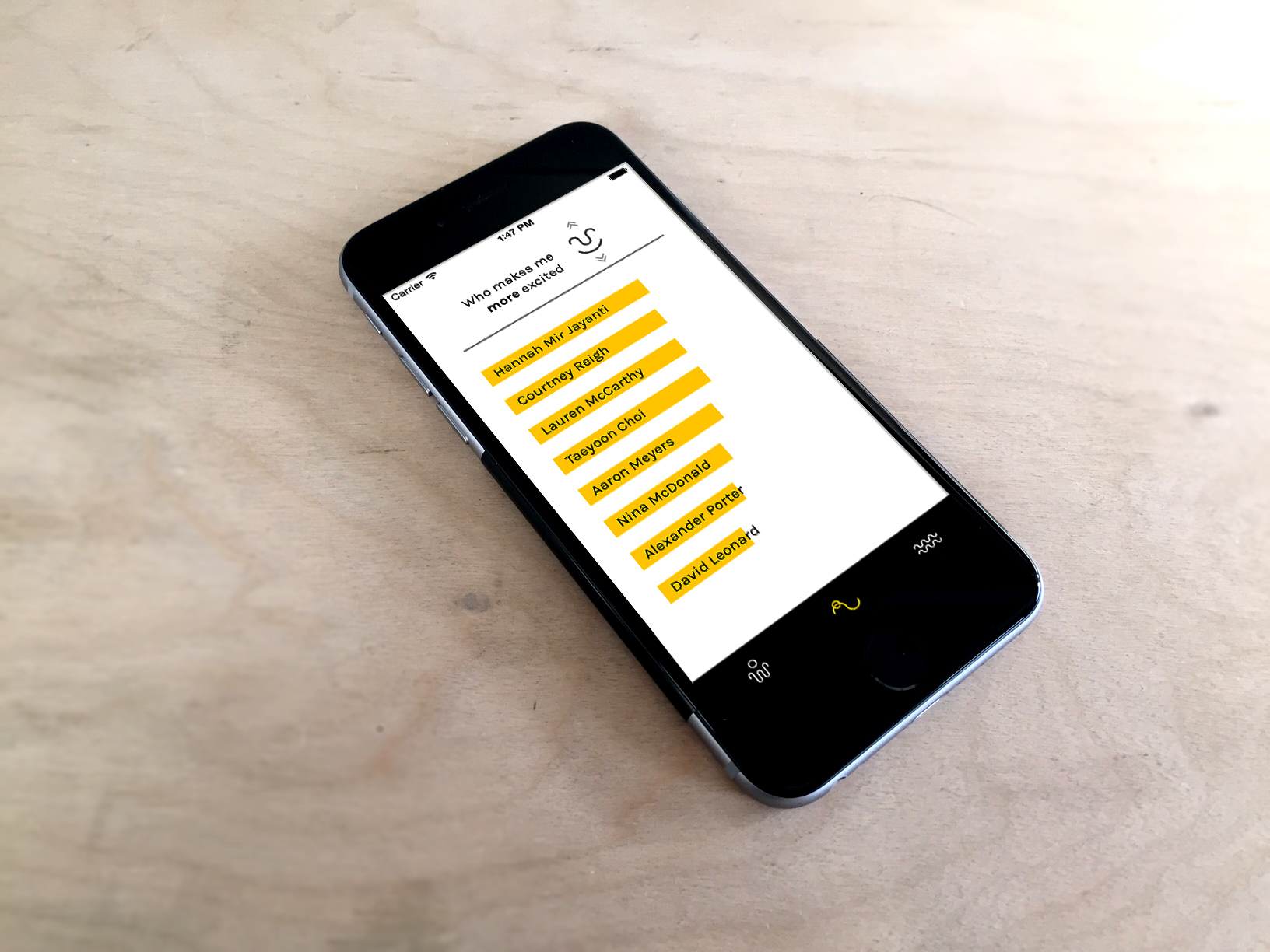
Created by Lauren McCarthy and Kyle McDonald, pplkpr is an app that tracks, analyzes, and auto-manages your relationships. Using a smartwatch, pplkpr monitors your physical and emotional response to the people around you, and optimizes your social life accordingly.
pplkpr was created to explore the implications of quantified living for relationships. Part provocation and in part a speculation, pplkpr is also a fully functional app that poses questions of data ownership between two people, and if algorithms could understand our relationships and make better interpersonal decisions than we can ourselves?
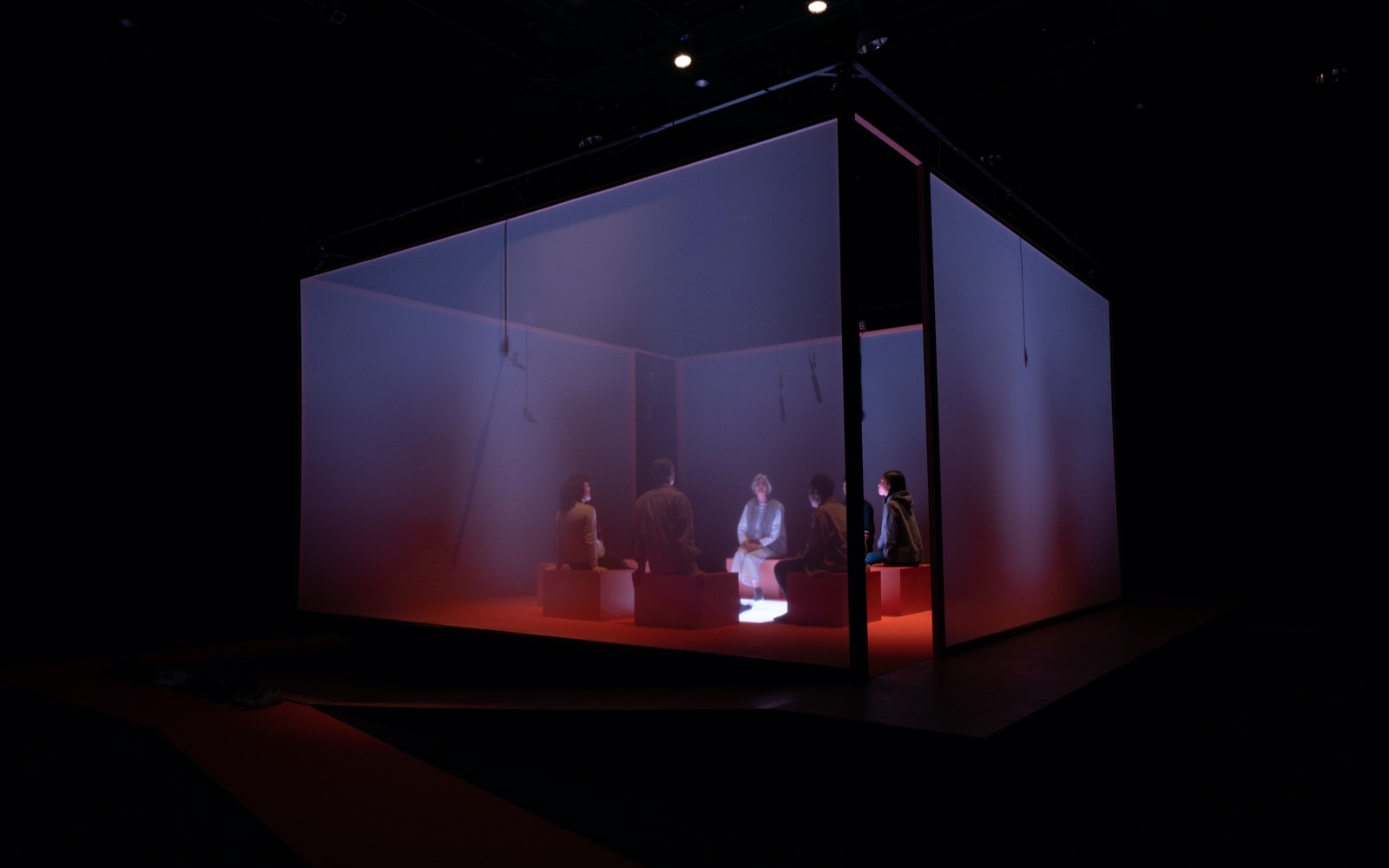
pplkpr can take a few actions on your behalf: it can create and open a text message, delete someone from your contacts, and poke people on Facebook. pplkpr started with over a year of research and experimentation, and eventually took the form of an iOS app ready for short term daily-life performances. The first performance of pplkpr was conducted with a group of students at Carnegie Mellon University where they were using a more complex version that had complete control over their Facebook profile using a service written by David Newbury called fakebook_api[1] that allowed them to take actions that the Facebook API doesn’t allow, like posting on someone’s wall. Whether pplkpr takes the action automatically or simply suggests the action is based on the regularity of the experience. For one week, students’ stress levels were carefully monitored while their social lives were manipulated accordingly.


You may manually enter information into pplkpr at any moment, but it also produces two kinds of automated notifications requesting information: one for when you are coming and going, and one for when you feel something. Coming and going is detected using the iOS “significant location changes” feature. Detecting when you’re feeling something is a little harder, so a lot of research time went into solving this with a technique called heart rate variability (HRV). The heart does not beat evenly like a metronome, and the degree to which it beats unevenly is correlated to overall health and stress levels. Lower variability signals higher stress, or lower health.

Kyle points out that HRV is a relatively new measurement compared to older ones like GSR/EDA (galvanic skin response, electrodermal activity). Everything from the standard deviation of the inter-beat intervals, to peak detection from Lomb-Scargle periodograms. Instead of using a single technique, Kyle and Lauren trained a linear regression model with an L2-regularized L2-loss SVR (primal problem) solver using liblinear to predict the overall stress level from 8 HRV metrics extracted from the raw heart rate data. They trained the model on data from an open database called drivedb[2] which has physiological recordings of 17 people driving around Boston (see attachment for one drive), with markers describing things like whether they were on the highway (low stress), city streets (high stress), or parked (no stress). This research from Healy & Picard was significant in shaping the implementation here, along with research from Plarre, Kusserow, discussions with Marco Altini, and others. In the pplkpr app itself, data from the heart rate sensor is sent to the app in real time, fed through the stress prediction model, smoothed, and when it is at sustained levels for a significant duration a notification is sent after a delay. The delay is important to keep people from getting notifications in the middle of a difficult situation.

While research on tracking stress “in the wild” is still developing, and while pplkpr is not especially technically groundbreaking or accurate, there is no question that a smartwatch with a combination of sensors like accelerometer, gyro, GSR, heart rate, and skin temperature should be able to accurately predict stress levels.
From speaking with people in the industry, Kyle and Lauren believe that the only thing keeping “stress” from big brands is cultural stigma. Products like Spire[3] are set to challenge that. And if wearables aren’t your thing, there is evidence that breathing rate can be just as predictive of stress as heart rate, which means that in-phone sensors like accelerometers, gryos, and microphones could be enough to detect stress.
The project was developed in part through a residency at the Frank-Ratchye STUDIO for Creative Inquiry, with support from The Andy Warhol Foundation for the Visual Arts, and through a residency at Eyebeam Art + Technology Center.
Download from AppStore | Project Page | Lauren McCarthy | Kyle McDonald
[1] https://github.com/workergnome/fakebook_api
[2] http://www.physionet.org/physiobank/database/drivedb/
[3] https://spire.io/