Sál (“soul”) is a live media opera exploring the universal concept of impermanence, emphasizing the ever-changing essence of life.
As the final chapter of a trilogy, Sál builds upon the narrative threads established in the two previous live performances, Ljós (2014) and Dökk (2017). Ljós (“light”) explores the theme of birth, “coming into the light”, while Dökk (“darkness”) delves into the concept of interdependence, revealing how each element is inevitably connected to the others in a dynamic balance. In Sál, the focus shifts to the horizon, to the boundary of human life, embracing the notion that everything is in a state of constant transformation, that everything is impermanent. Sál explores this fleeting threshold between one state and another, examining the intricate emotional dynamics that unfold in these moments of uncertainty and instability. The piece invites a deep contemplation of life’s inherent entropy, encouraging the audience to surrender to the precious fragility of life.
Everything is in constant change; nothing is permanent. Each moment is born and, in dying, clears the way for the next. Every sound arrives and then fades away, everything vanishes before our eyes. Visions, flavors, sounds, physical touch, relationships – all share the same nature: impermanent, fleeting, ephemeral. Nature shows us how everything that exists, from the microscopic to the cosmic scale, is in a state of constant transformation. Observing a cell under a microscope, we can see that even the smallest particles exist in a continuous flow, living and dying moment by moment. The same dynamic can be observed in our universe: impermanence governs galaxies, stars, and black holes. At every moment, something fades away, and something else explodes into existence. Just like us, stars and galaxies are born, live for a time, and then die.
In our human experience, it is precisely when we confront death that we come into undeniable contact with the idea that nothing is permanent. Those who provide end-of-life care, or who have experienced accompanying someone in their final moments, bear witness to this. Accompaniment is an intimate and personal encounter with the unknown; it is an act of presence and support. To accompany someone, one must be willing to confront their own pain in order to truly connect with the pain of others. These principles, described in Frank Ostaseski’s book The Five Invitations, have inspired the narrative structure of Sál, particularly the relationship between the two performers. The dancers move through an unstable space that reflects the tension between past and future, opening themselves to vulnerability and embracing every aspect of the human experience.


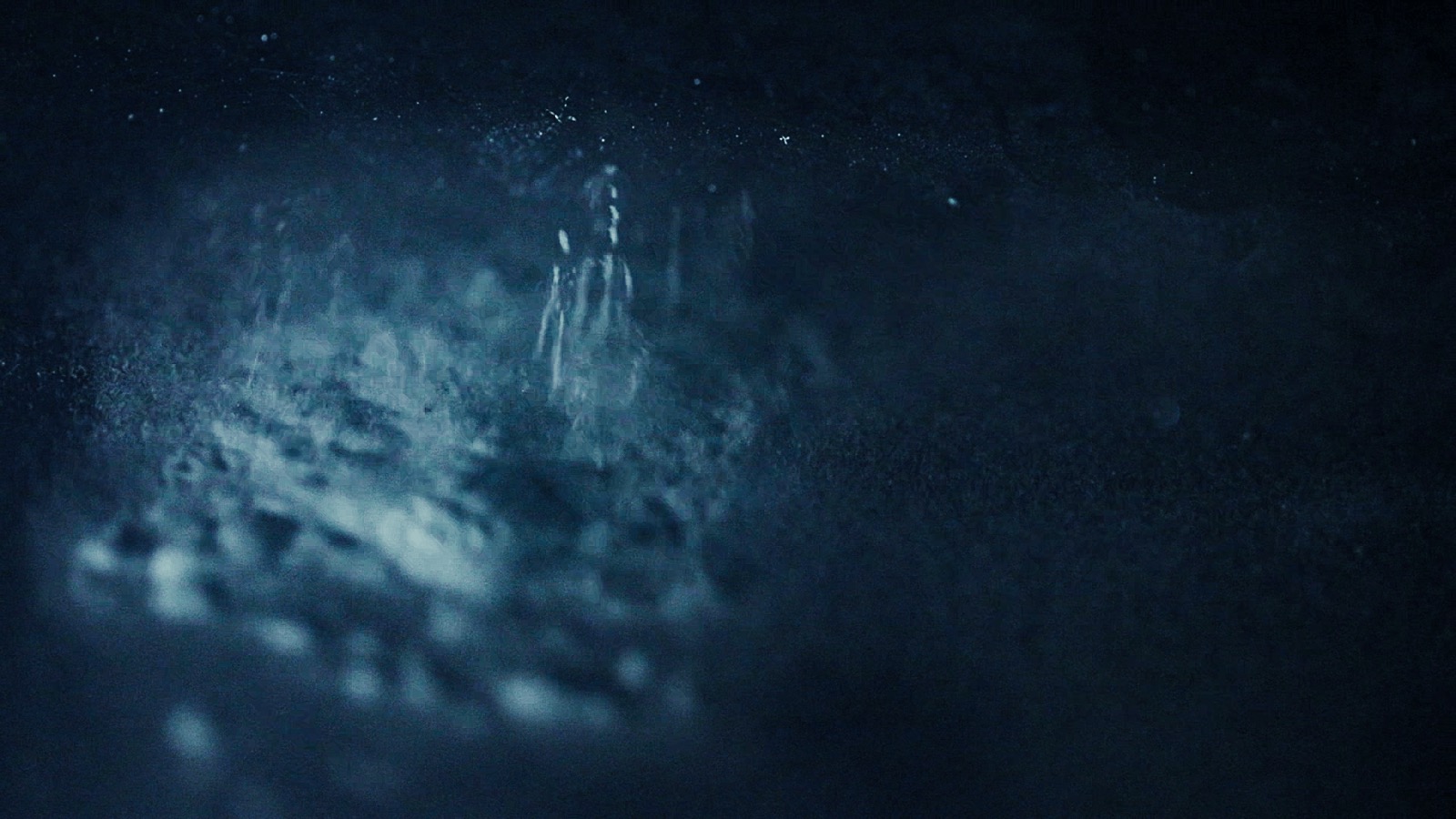
Impermanence compels us to face the unknown and the sense of mystery: the fear and wonder we experience when encountering something beyond our full comprehension. To represent this, the visual narrative of Sál focuses on observing what happens to light and matter in the vicinity of black holes through a series of simulations developed in collaboration with the University of KU Leuven and Toronto University. Black holes, with their extreme gravitational fields, challenge both quantum mechanics and general relativity, leading to profound questions about the nature of time itself. Approaching the event horizon means approaching a boundary beyond which nothing can escape – not even light. This boundary separates the known from the unknown, the tangible from the mysterious.
Ultimately, Sál invites us to embrace the instability of our lives and the vertigo we feel when faced with the inevitable dissolution of familiar forms. These moments of uncertainty and disorientation often become opportunities to rediscover kindness and compassion, reconnecting deeply with our human nature, with our soul. Sál.
Both Ljós and Dökk are deeply characterized by aesthetic elements inspired by the study of the physical properties of celestial matter. In Sál, our research has been guided by the exploration of General Relativity, focusing on one of the most fascinating cosmic entities that embody its fundamental principles: black holes.
Black holes are at the heart of many contemporary scientific investigations because they represent extreme environments where the laws of physics, particularly general relativity and quantum mechanics, intersect in complex and often unresolved ways. In Sál, the visual development of the performance is centered around an exploration of what happens to light and matter near black holes – regions where nature reveals itself in its most extreme form. In these areas, gravity is so intense that it bends space and time, seemingly distorting the path of light itself.


By observing the phenomena surrounding black holes, we come to grasp the relativity of time, and it is this very relationship that links to the concept of impermanence. Approaching the edge of the event horizon and witnessing the distortions of space and time in these regions serves as a powerful metaphor – one that evokes both awe and a sense of profound uncertainty. At the very boundary of human understanding, we encounter something that both terrifies and inspires us.
Sál unfolds across five chapters, each defined by visual elements and scientific simulations exploring phenomena related to the behavior of light and matter around a black hole. The progression of scenes is inspired by the process of elemental dissolution, drawing from diverse traditions – from ancient Greece to major Eastern philosophies – that conceive life as composed of four or more fundamental elements: earth, water, fire, and air. The Zohar, a 13th-century Jewish mystical text, established these four elements as the foundation of all phenomena, including the human body. Other traditions, such as Indian thought and Chinese philosophy, similarly describe five or six fundamental elements. Buddhism, in particular, emphasizes that each element is not a static entity but a continuously shifting process, describing how the elements that make up the body dissolve at the moment of death. Each element carries both physical and mental qualities: the solidity and softness of earth, the fluidity and cohesion of water, the radiance and warmth of fire, and the stillness and motion of air.
The process of dissolution, then, is not limited to the body but also extends to the mind: the fundamental elements are emotional states and mental functions, creative processes and lingering traces of the past. It is a way to understand and come to terms with the fact that, in the process of dying, we release our fixed identities – letting go of the physical elements of the body, our thoughts, perceptions, sensations, and conditioning.

The visual experience developed for Sál is based on advanced simulations, the result of two years of research conducted in collaboration with Professors Daniel R. Mayerson and Fabio Bacchini from KU Leuven University in Belgium, and Bart Ripperda, Associate Professor of Theoretical Astrophysics at the Canadian Institute for Theoretical Astrophysics, University of Toronto.

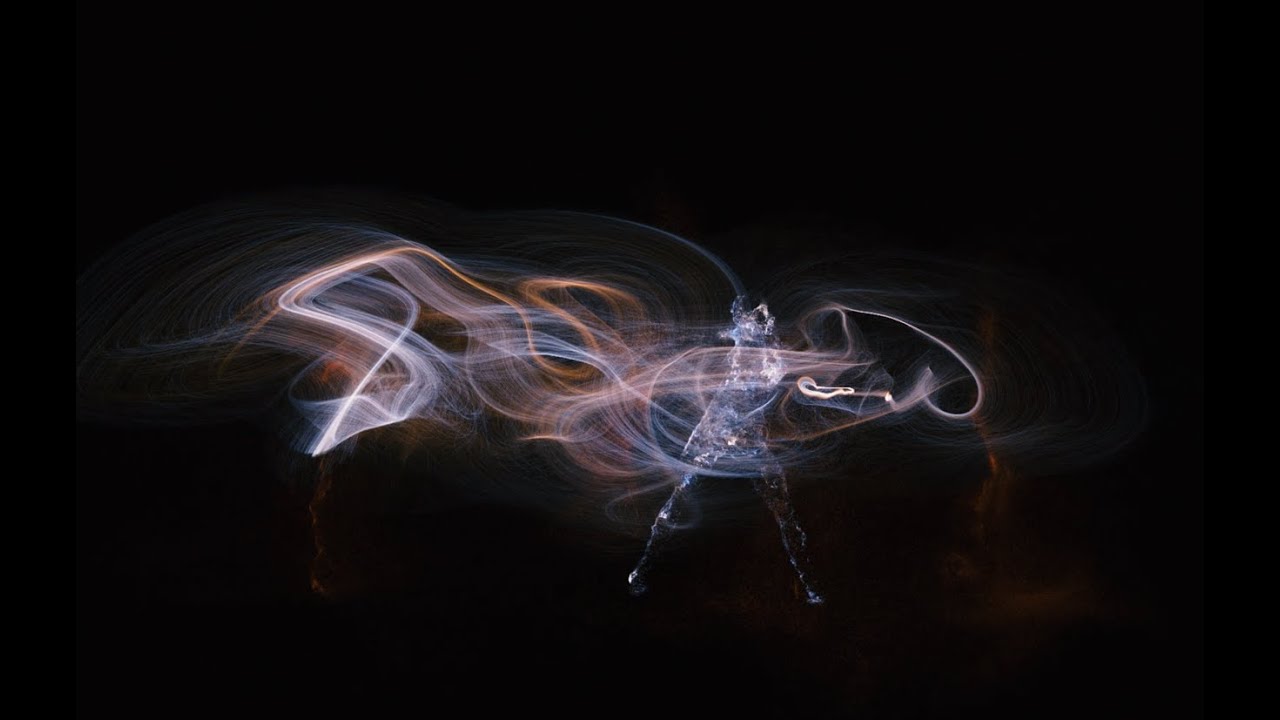
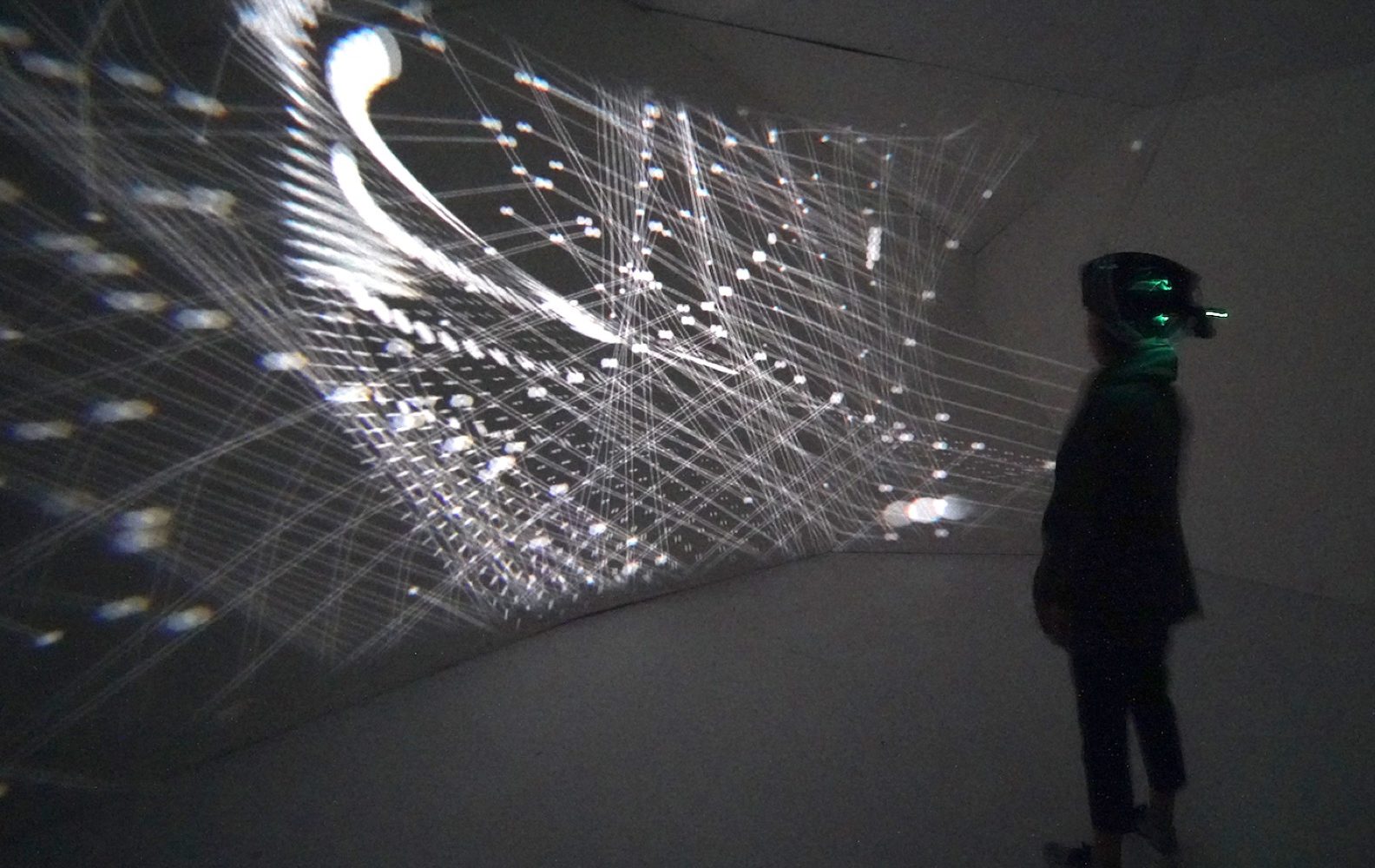
To create a strong synergy between audio, visuals and movement in Sál, all graphical elements are generated in real time, responding to both the dancers’ movements and the sound. Each performer wears 12 motion sensors, allowing for highly accurate tracking of limb positions and every movement on stage, moment by moment. These data are processed by a custom software developed by fuse* using openFrameworks. The system controls the behavior of millions of particles projected on stage, shaping their motion in real time based on the dancers’ physical actions. The 3D visual environment is created by projecting the particle systems onto two layers: a rear projection screen and a semi-transparent holographic tulle placed in front of the stage. This setup allows the dancers to be visually immersed within the projected landscape, creating a deep and enveloping spatial experience. In addition to visuals, the motion data are also used to control the lighting and sound design in real time, transforming the stage into an interconnected system where every element continuously responds to and affects the others.
Project Page | fuse* | Instagram | Facebook | LinkedIn