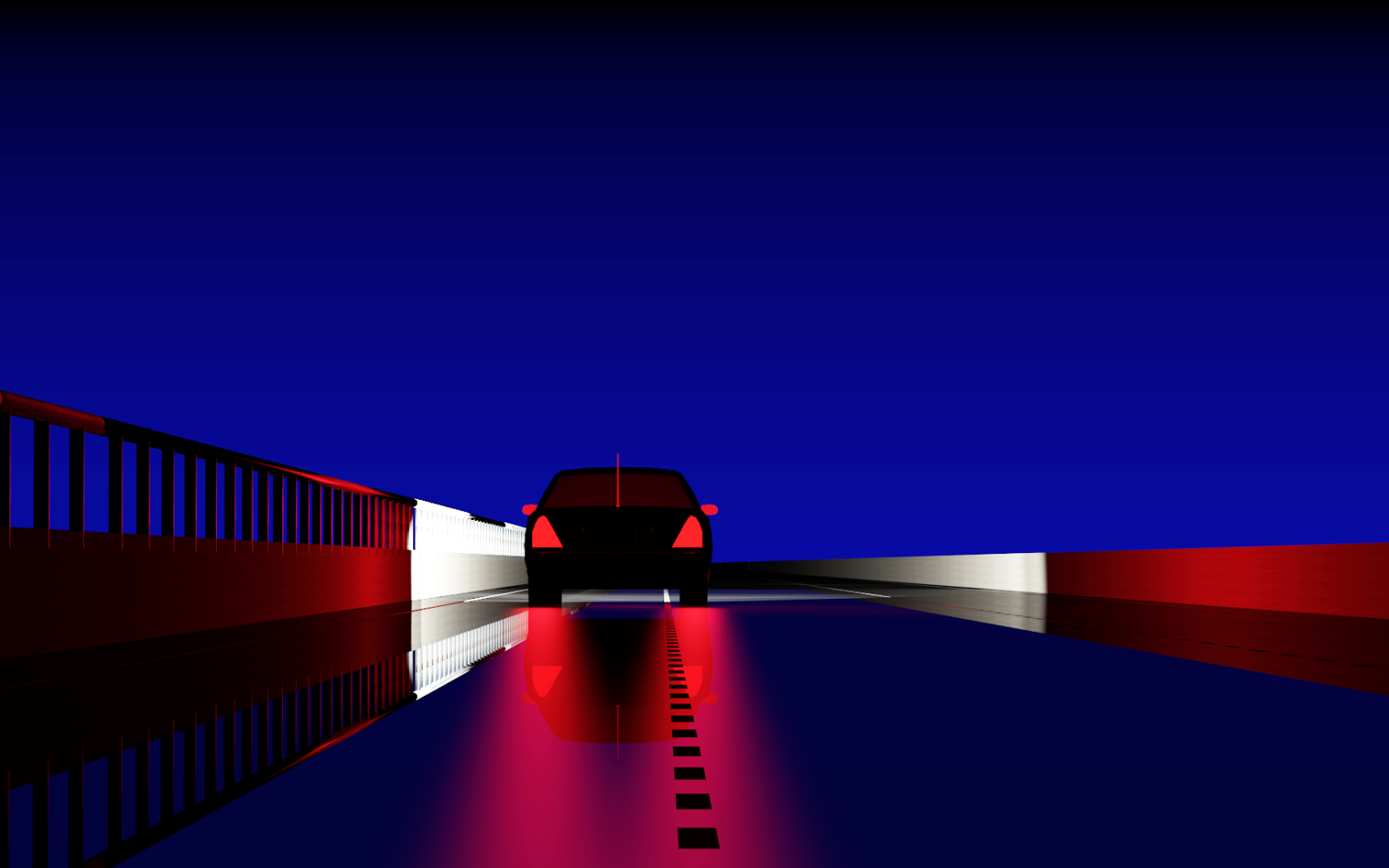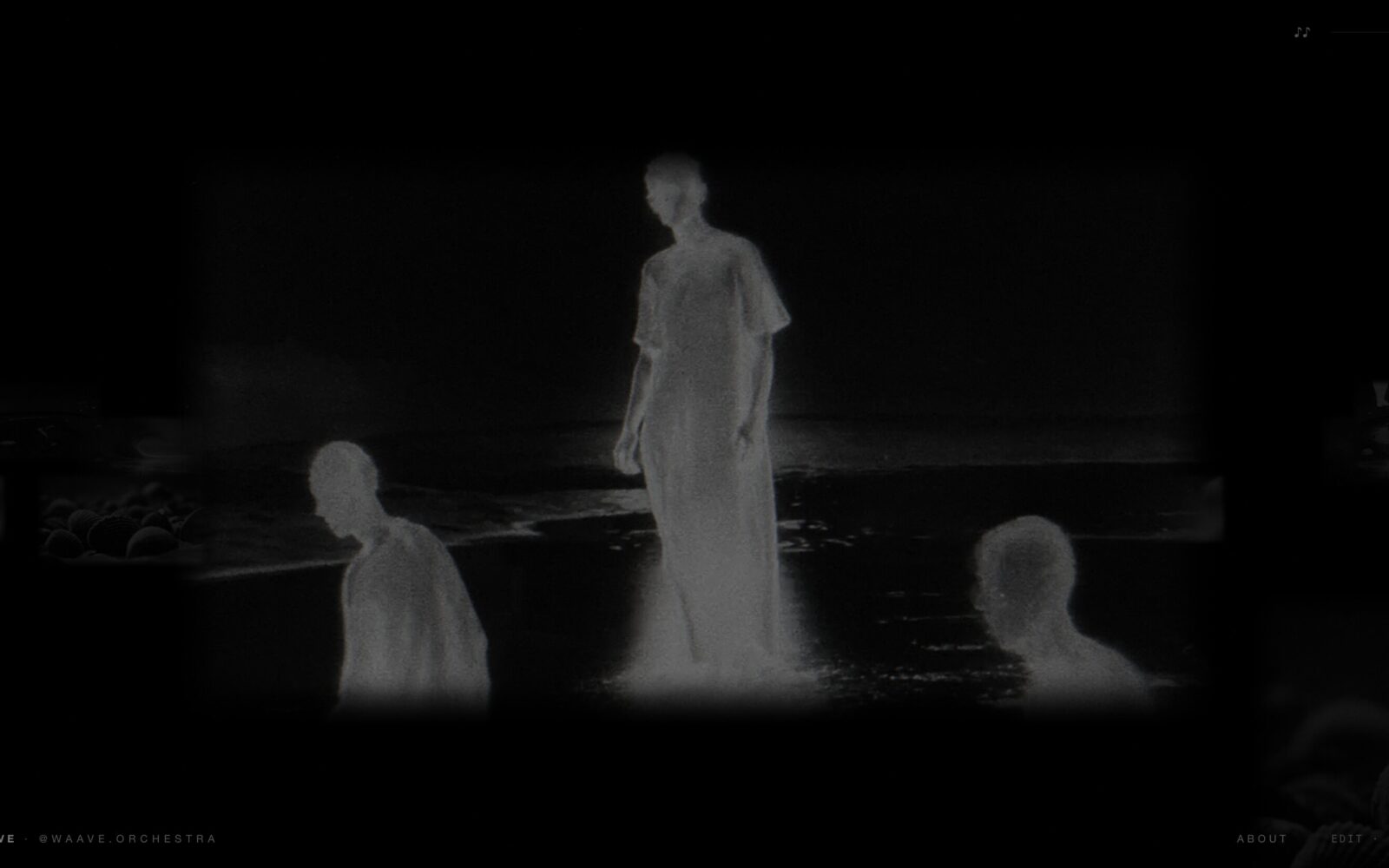
Listening to the radio cooped up in my flat near Holloway Road in 2003, I found myself momentarily under a spell cast by one of the guests. Her descriptions lit vivid images that transported me from the cold London grey into memories of warm summer days surrounded by greenery and the buzz of insect life.
A shockwave piece from 2003 (08/04/2003), ported here to run natively in any browser using DirPlayer, That Light Breeze features a looped sample I recorded from that BBC Radio4 show. In it we hear a women’s voice and the faint rustle and rumble of an urban garden as she describes her personal experience of tranquility.
The loop plays through once normally; every sound contributing a visible trace in an undulating synaesthetic image. Thereafter, four different versions are layered on top of one another, each with a playhead reconfigured on every pass to skim at varying speeds and sample lengths across the surface of the sound loop. The resulting piece is sufficiently non-repeating that every run shows a previously unseen version.
The relationship between the sound and the image began with a simple spectral analysis. The resulting images were then subject to a lengthy and painstaking frame-by-frame hand editing. Further code was then written that added and composited each layer and how its visual contributions fade over time.


Growing up I read all six books in Frank Herbert’s original Dune series at least three times over. The idea of the Voice, as practiced by Herbert’s Bene Gesserit, held a particular fascination. I enjoyed David Lynch’s attempt to turn book one into a movie, but it was not until watching part one of Denis Villeneuve’s more recent three part telling of the first two books, that I suddenly made the connection between the Bene Gesserit Voice and this old piece of mine from 2003.
Philosophy is a battle against the bewitchment of our intelligence by means of language.
Ludwig Wittgenstein, Philosophical Investigations (1953) pt. 1, sect. 109
The aim of this piece is not to battle the spell being cast by language but instead to magnify it; not in terms of power, but rather, to bring it into view. Beyond the words she chooses, the sound of her voice has colour and warmth that seems to deepen immersion into the mood and scene she describes. Unfortunately I neglected to make note of the identity of the speaker at the time, so I cannot credit her by name, but it is the virtuosity with which she uses the Voice, that is everything here.
Words were originally magic, and the word retains much of its old magical power even to-day. With words one man can make another blessed, or drive him to despair; by words the teacher transfers his knowledge to the pupil; by words the speaker sweeps his audience with him and determines its judgments and decisions. Words call forth effects and are the universal means of influencing human beings.
Sigmund Freud, A General Introduction to Psychoanalysis, (1920)