What if climate resilience began by accepting that damage will happen?
NOTUN combines water-flow simulation, wind-responsive bamboo housing, bio-based embankment blocks and mixed-reality assembly into a repairable settlement strategy for coastal Bangladesh. Developed at the Architectural Association, the project uses computation to coordinate landscape, material behaviour and reconstruction rather than simply generate form.
Coastal communities in Bangladesh face two recurring forms of damage: monsoon flooding that overwhelms low-lying land and cyclonic winds that repeatedly destroy lightweight homes. NOTUN — meaning “new” in Bengali — begins with a different premise. Instead of proposing a disaster-proof object, it develops a system capable of absorbing change, limiting damage and supporting reconstruction.
The project was developed by Chuyu Zhang, Darya Holub and Hankai Ye as an MSc dissertation within the Emergent Technologies and Design programme at the Architectural Association School of Architecture, under the direction of Dr. Elif Erdine and Dr. Milad Showkatbakhsh.
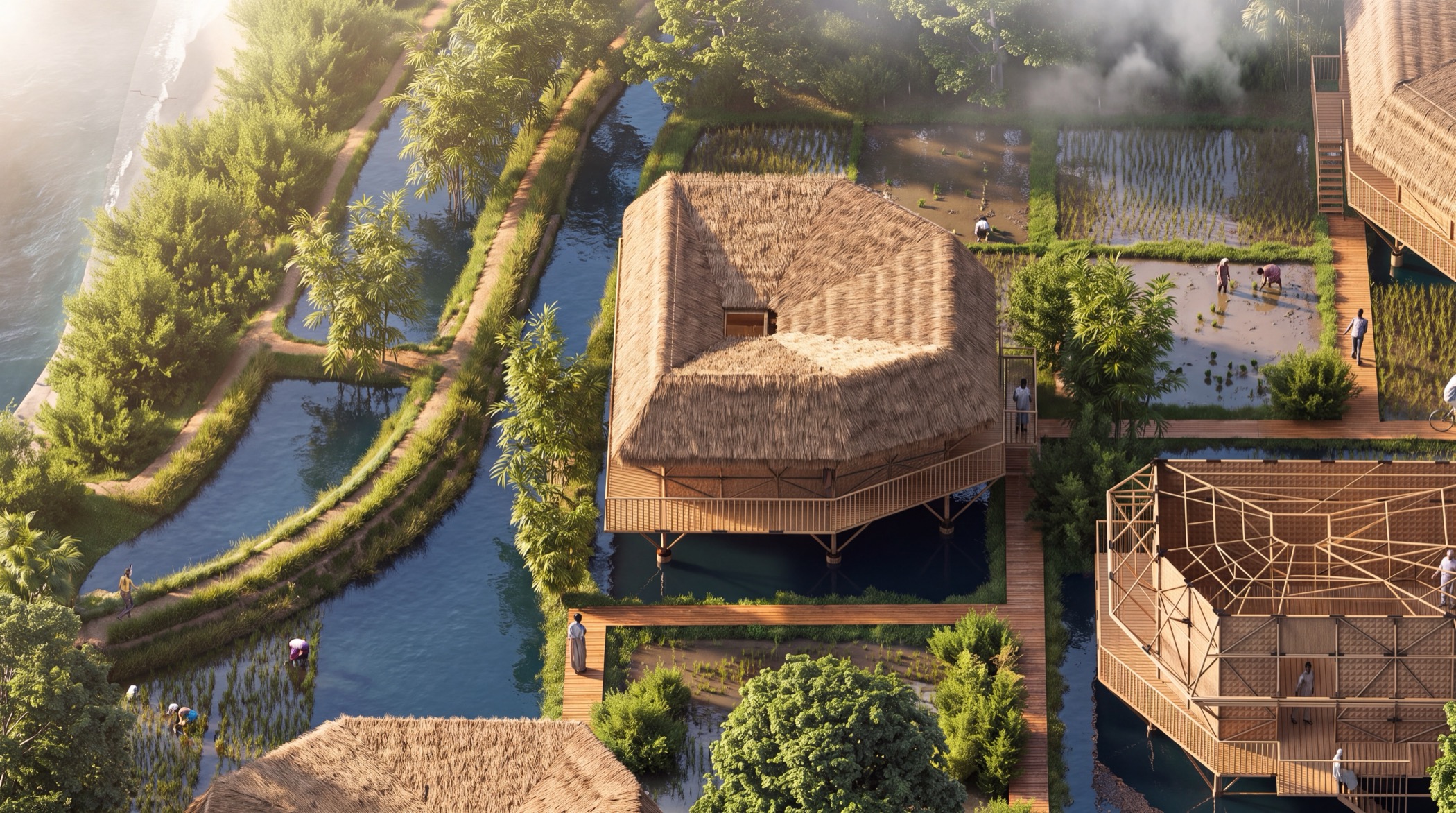
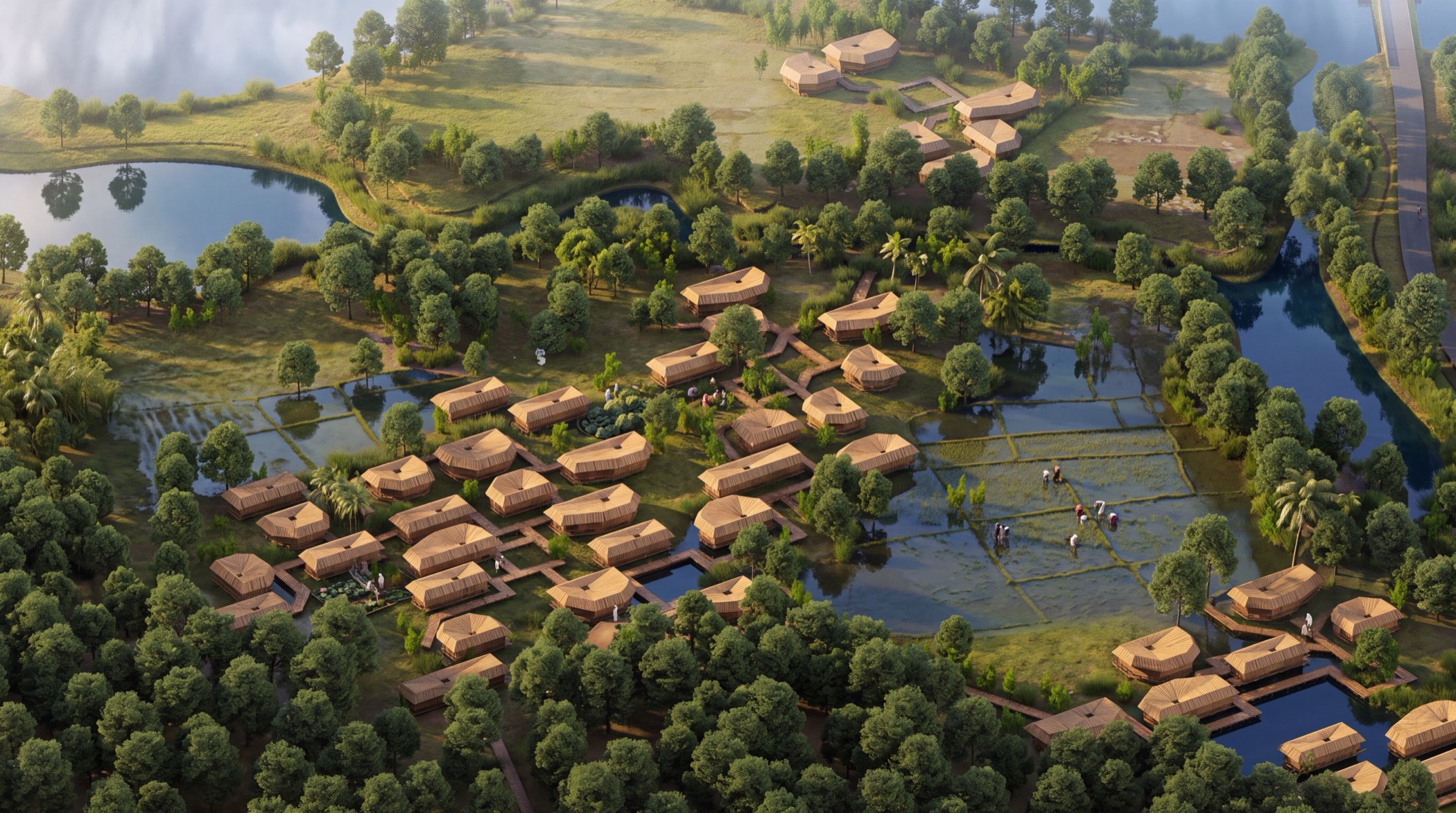
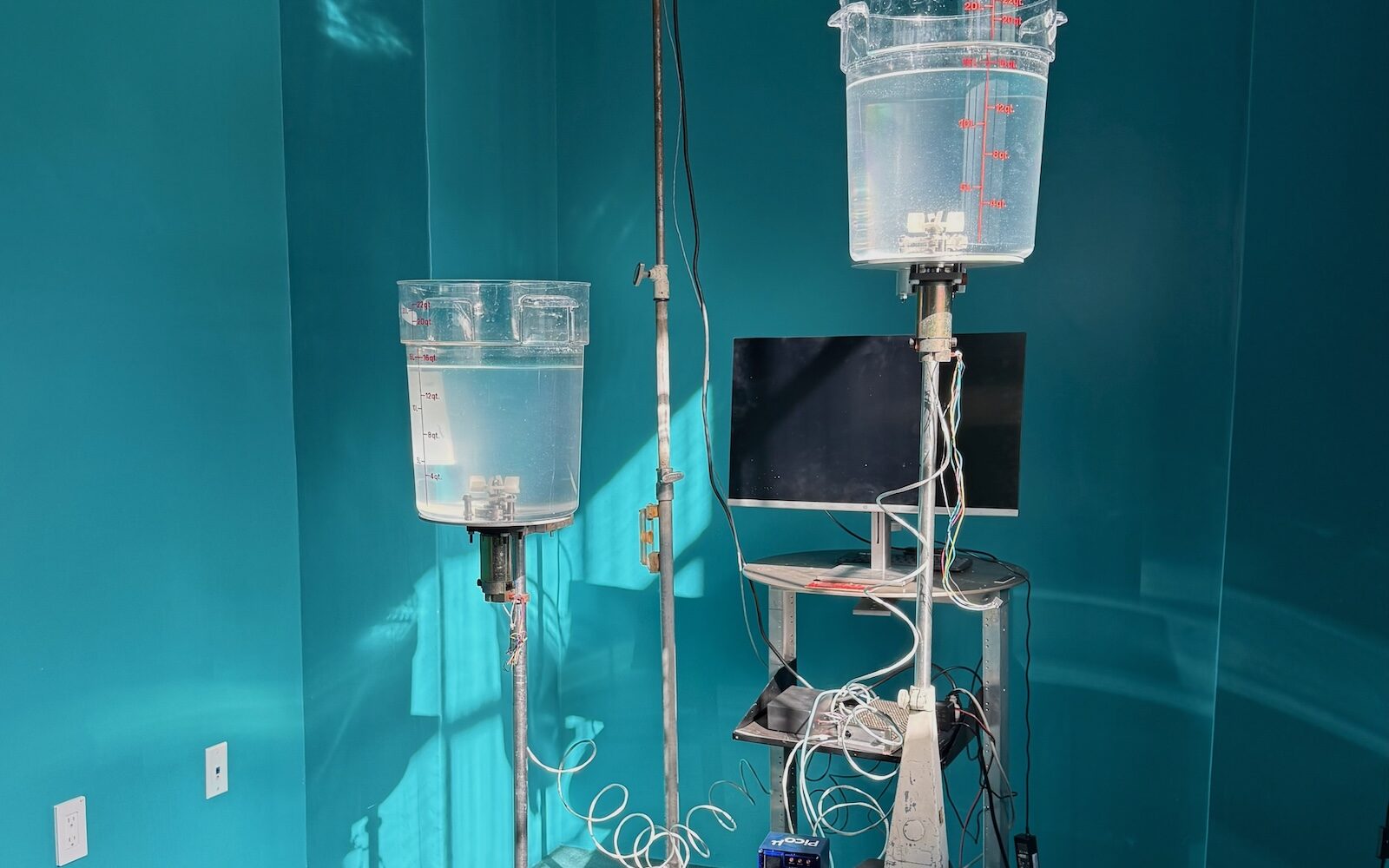
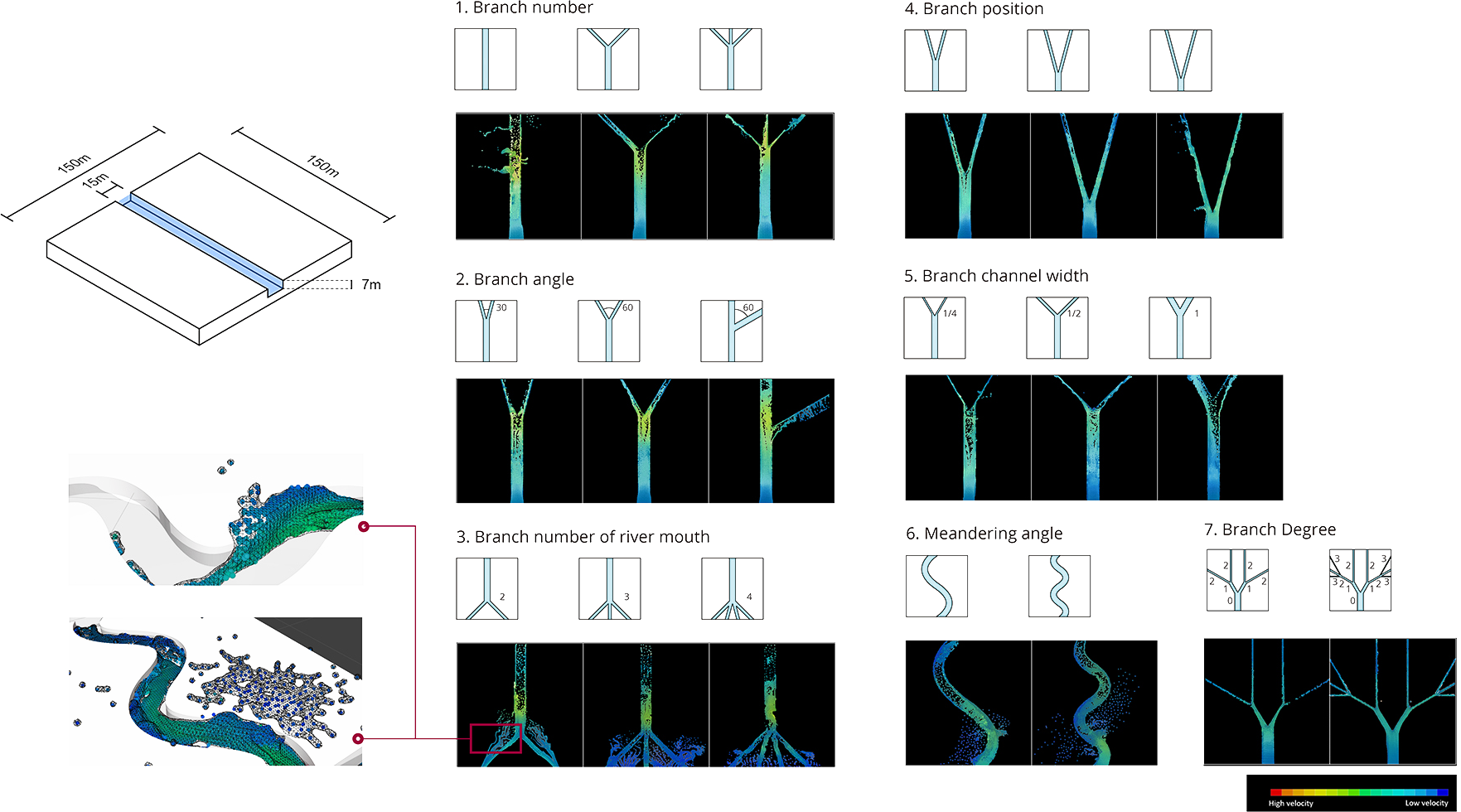
NOTUN operates across landscape, settlement, building and fabrication scales. At the landscape scale, rainfall simulations identify areas for water-storage ponds, while agent-based modelling and multi-objective optimisation generate a network of distribution channels. Terraced banks slow runoff and direct excess water, allowing higher areas to accommodate housing while lower zones remain available for agriculture and water storage.
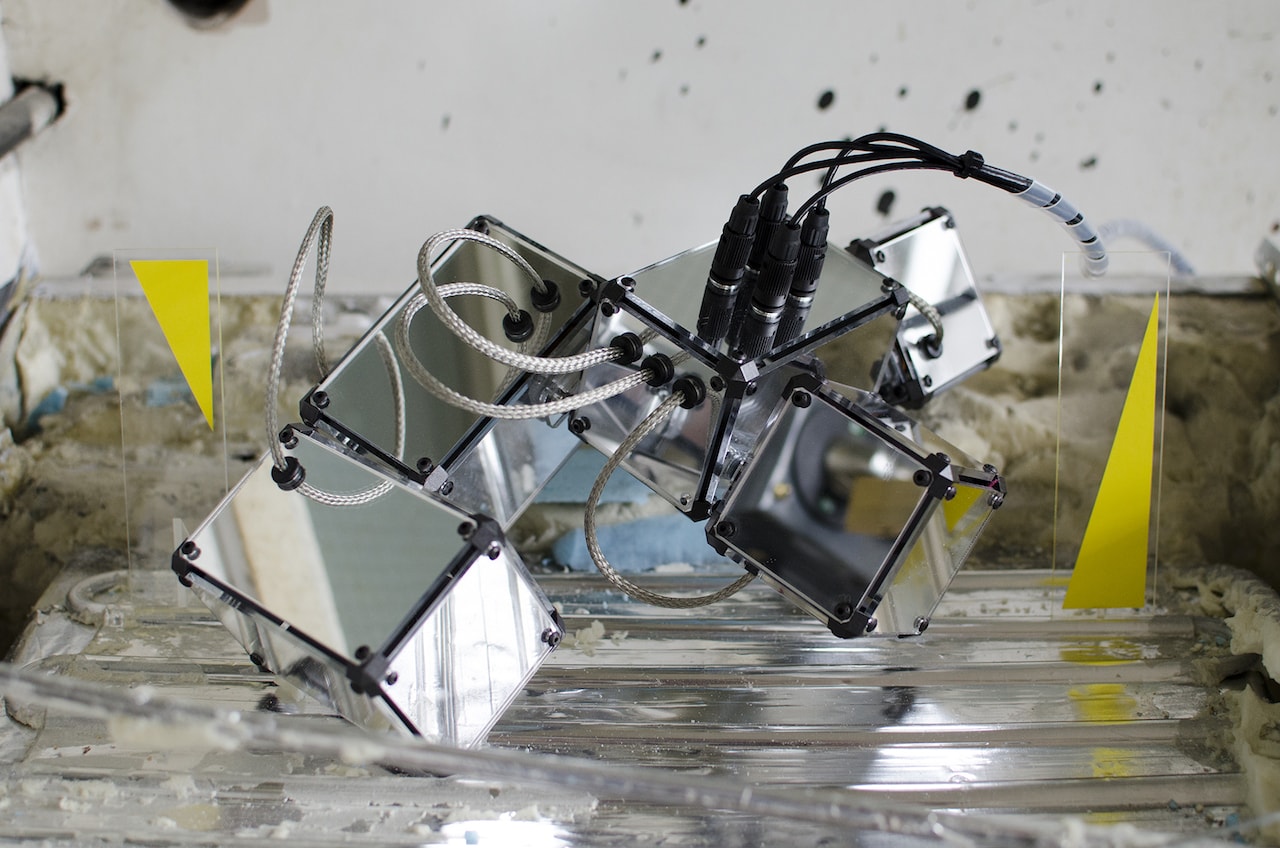
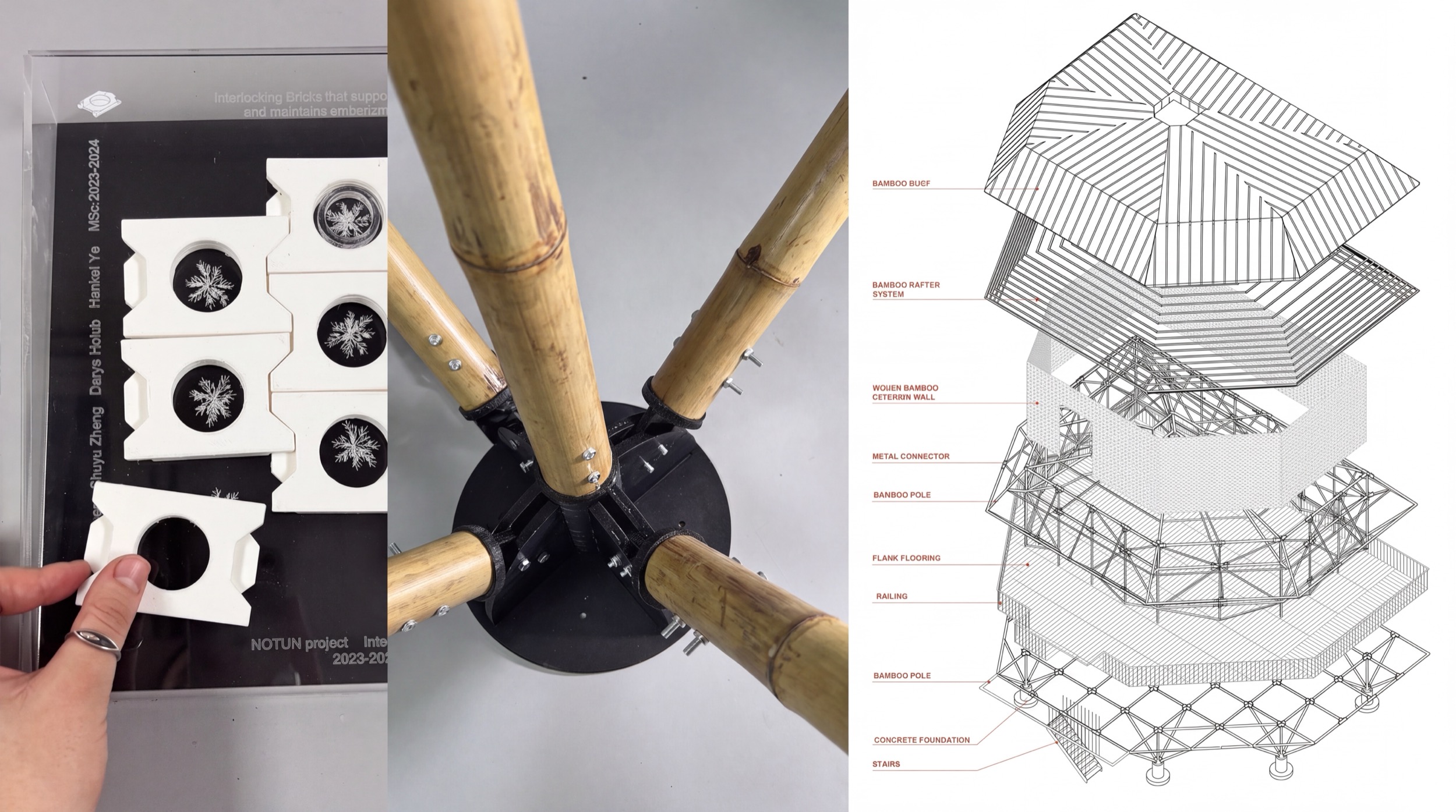
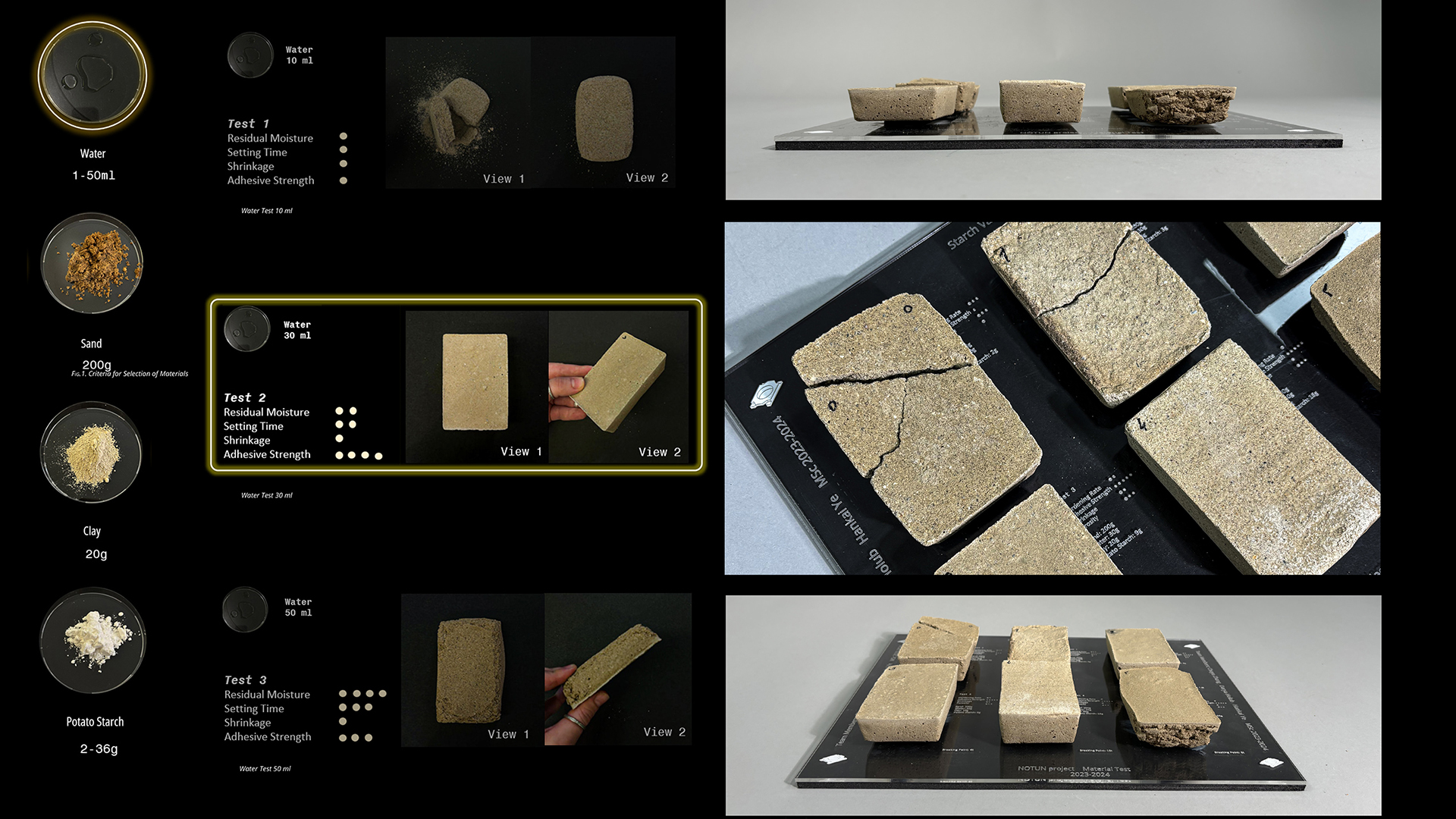
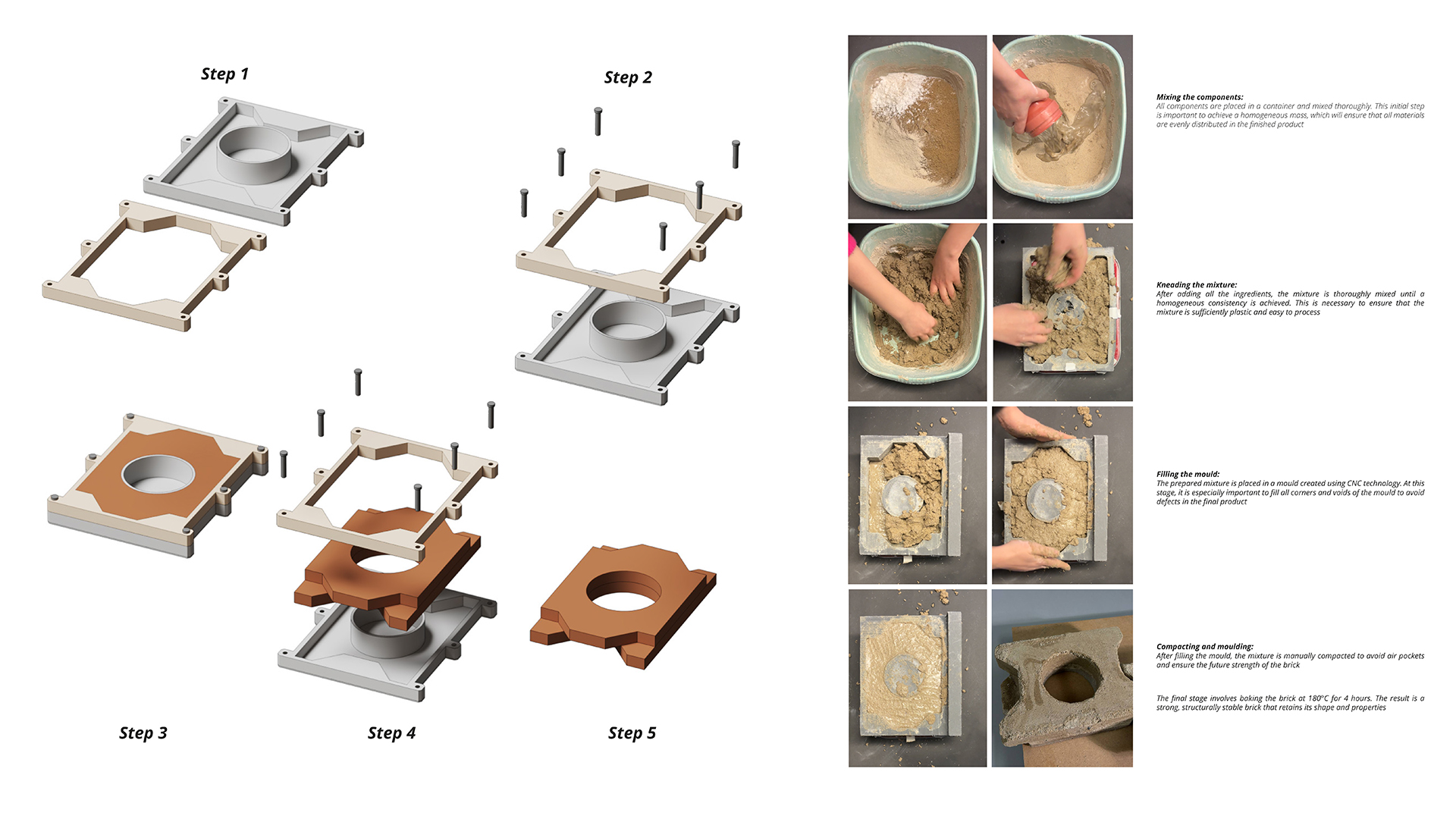
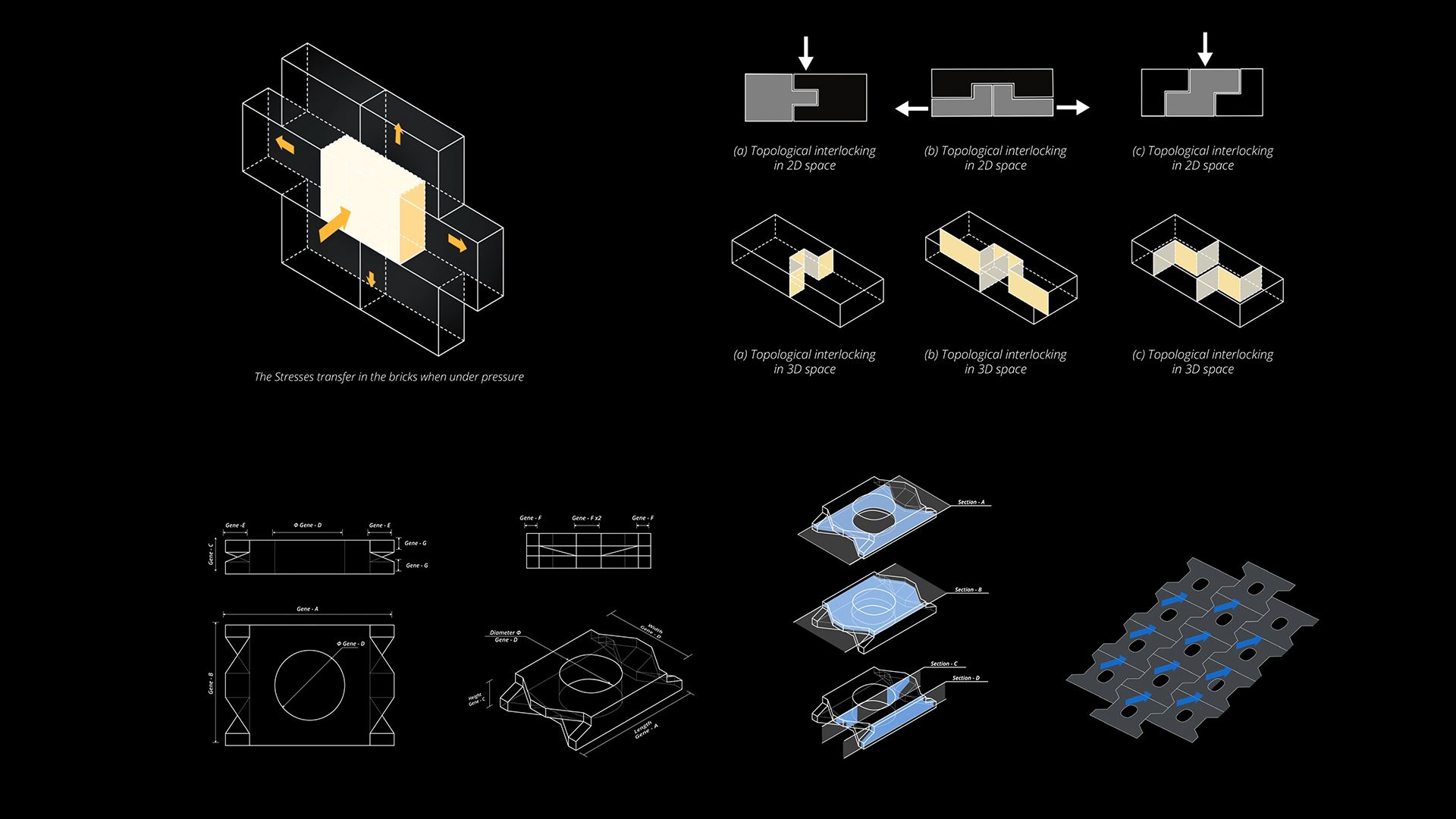
The embankments are supported by interlocking blocks made from sand, clay and potato starch. Rather than permanently sealing the landscape with concrete, the blocks are conceived as temporary scaffolding for vetiver grass. Their openings allow roots to pass through and gradually stabilise the soil as the bio-based binder breaks down. Material samples were tested in water and under compression, while a full-scale block was produced using a CNC-fabricated mould.
At the settlement scale, computational fluid dynamics simulations tested building arrangements, spacing and wind-facing geometries under cyclone-like wind conditions. In the selected digital model, the arrangement reduced wind speed inside the housing clusters by approximately 30 percent. Cellular automata and evolutionary optimisation were then used to distribute different housing types across safer parts of the site.
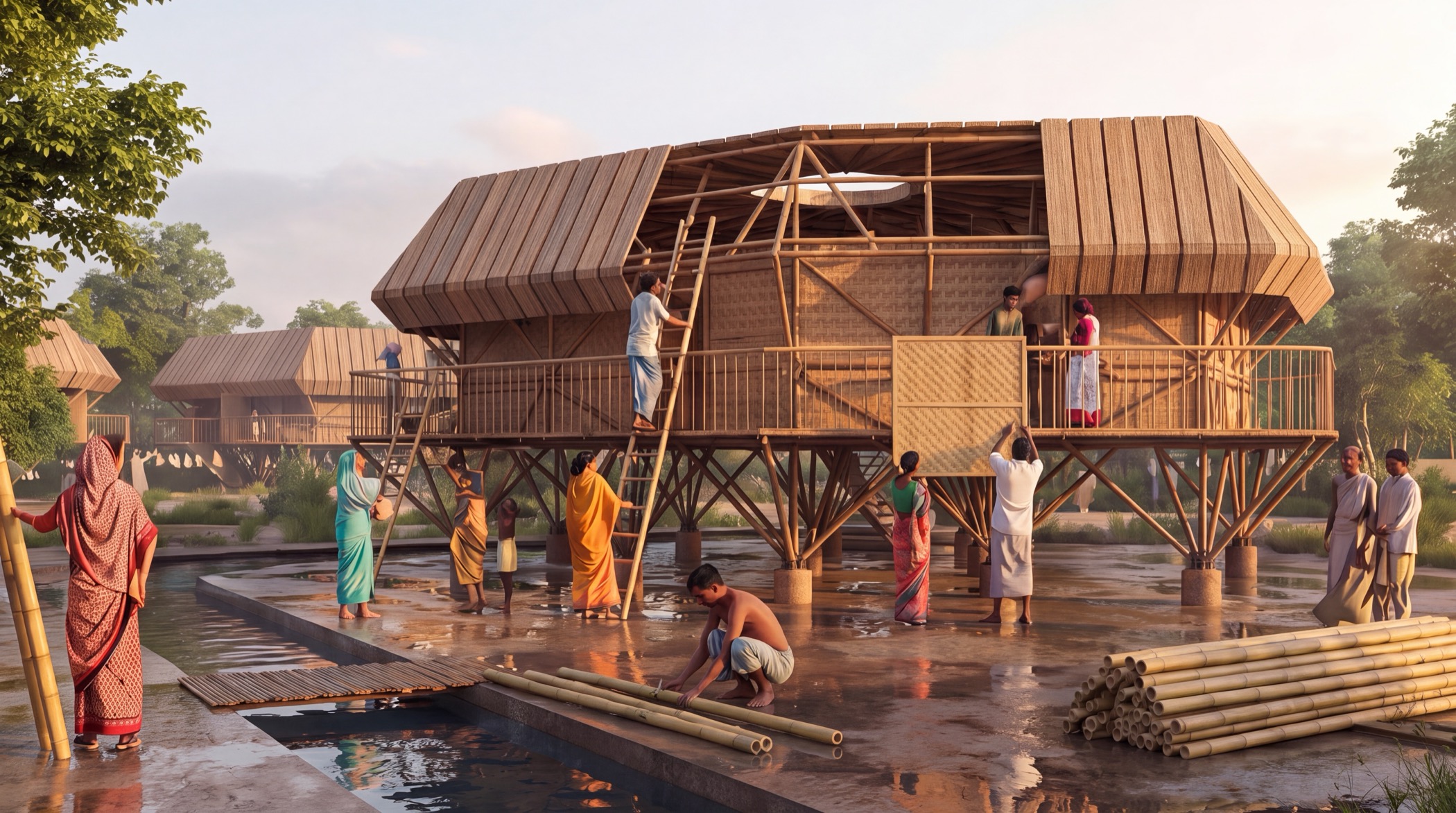
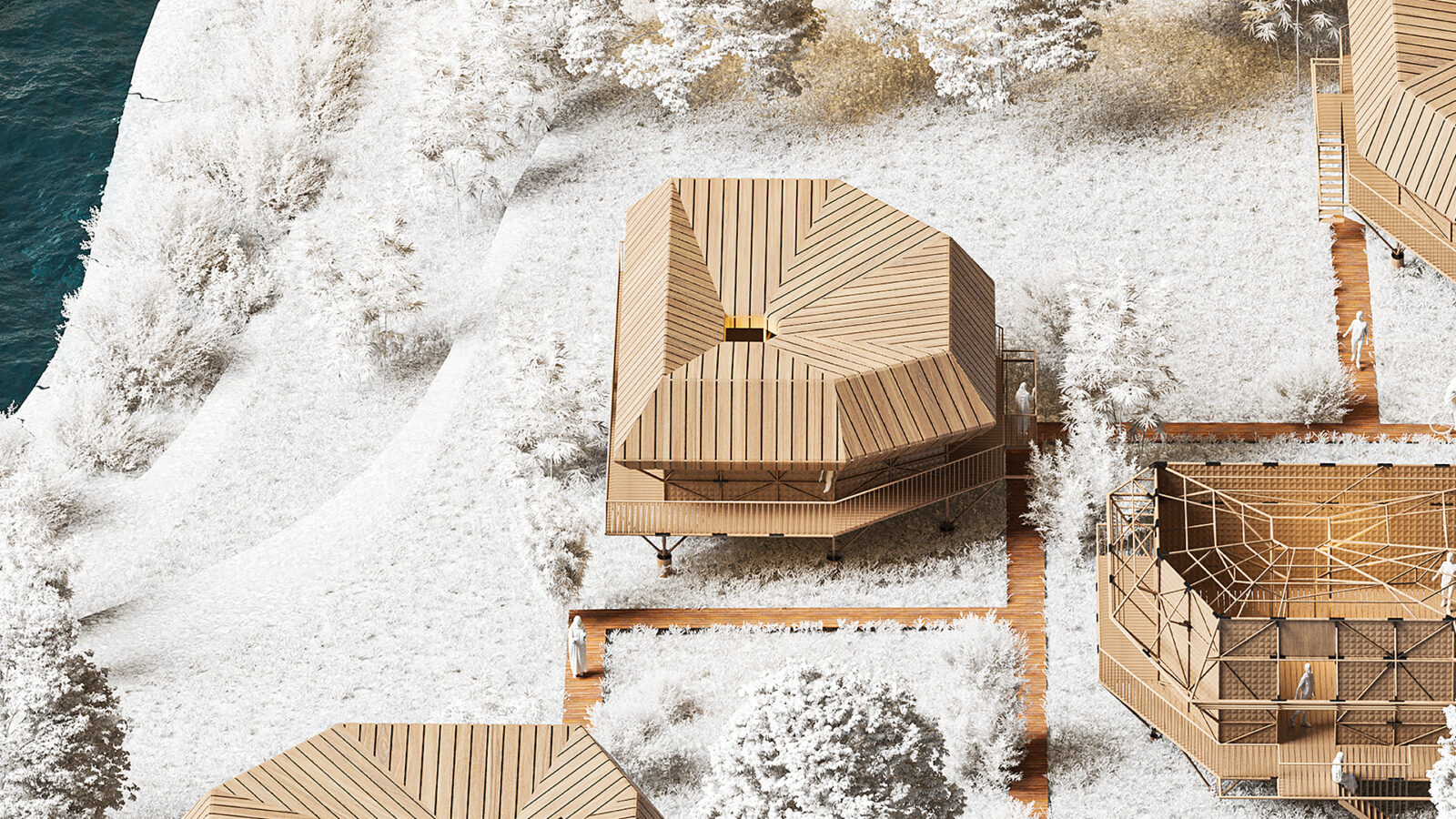
The elevated houses combine locally available bamboo with prefabricated metal connectors and replaceable woven panels. A central roof opening supports natural ventilation during ordinary conditions while helping to balance pressure during strong winds. Rather than treating every component as permanent, the structural system allows damaged bamboo elements or wall panels to be replaced without rebuilding the entire house.
| Computational Methods | Rainfall and water-flow simulation, agent-based modelling, cellular automata, multi-objective evolutionary optimisation, computational fluid dynamics and finite element analysis. |
| Software | Rhinoceros 3D, Grasshopper, Wallacei, Karamba3D, Autodesk CFD and Blender. |
| Fabrication and Interaction | CNC-fabricated mould, physical material testing, 3D-printed study models and a Meta Quest 3 mixed-reality workflow. |
| Materials | Locally available bamboo, woven bamboo mats, prefabricated metal connectors, sand, clay, potato starch and vetiver grass. |
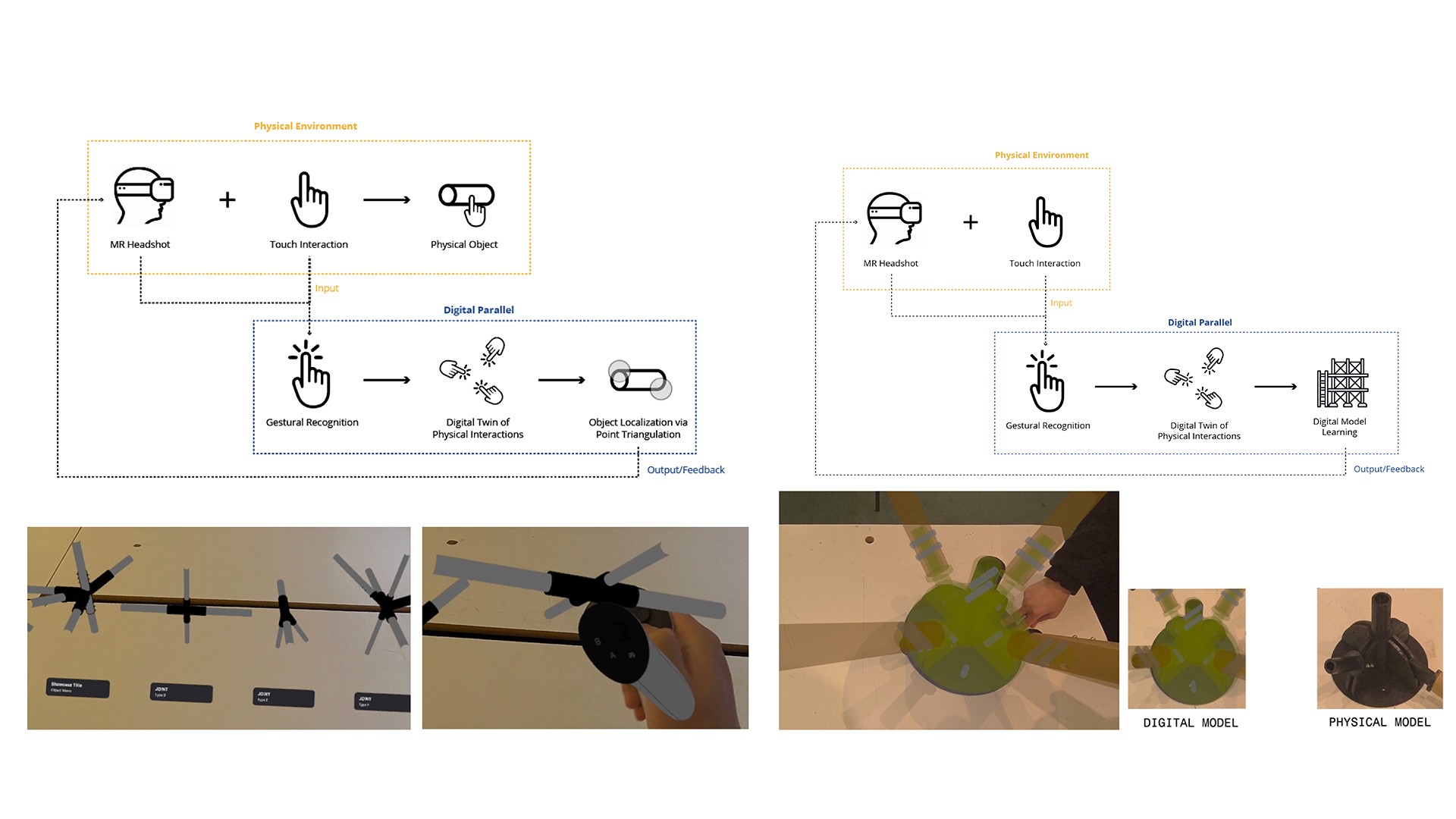
A mixed-reality workflow was also explored as an assembly and training tool. Full-scale digital overlays can guide users through the positioning of foundations and structural connections while providing visual quality-control feedback. The system is intended to make construction and post-disaster repair more accessible to local communities.
By connecting hydrological modelling, wind simulation, biomaterial testing, digital fabrication and mixed reality, NOTUN reframes resilience as an evolving relationship between people, architecture and natural systems. It designs not for the absence of damage, but for the ability to recover from it.
Project Page | Instagram | Emergent Technologies and Design AA
Project authors: Chuyu Zhang, Darya Holub, Hankai Ye
Project type: MSc Dissertation and Speculative Design Research (2024)
Location: Kalapara, Patuakhali District, Bangladesh
Course directors: Dr. Elif Erdine and Dr. Milad Showkatbakhsh
Studio tutors: Dr. Alvaro Velasco Perez, Felipe Oeyen, Paris Nikitidis, Lorenzo Santelli and Fun Yuen
Institution: Architectural Association School of Architecture, Emergent Technologies and Design
Reviewed and edited by Filip Visnjic, CreativeApplications.Net