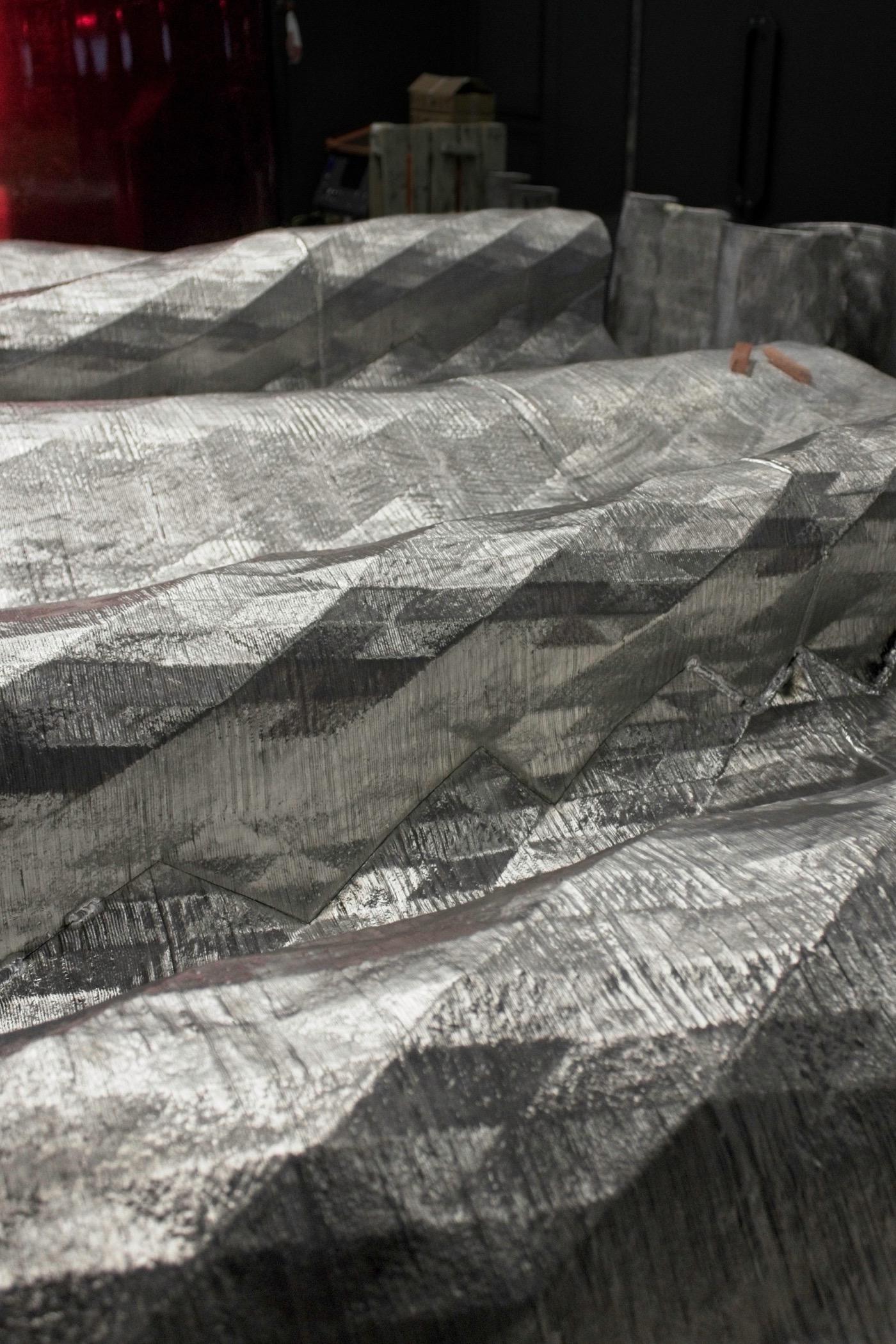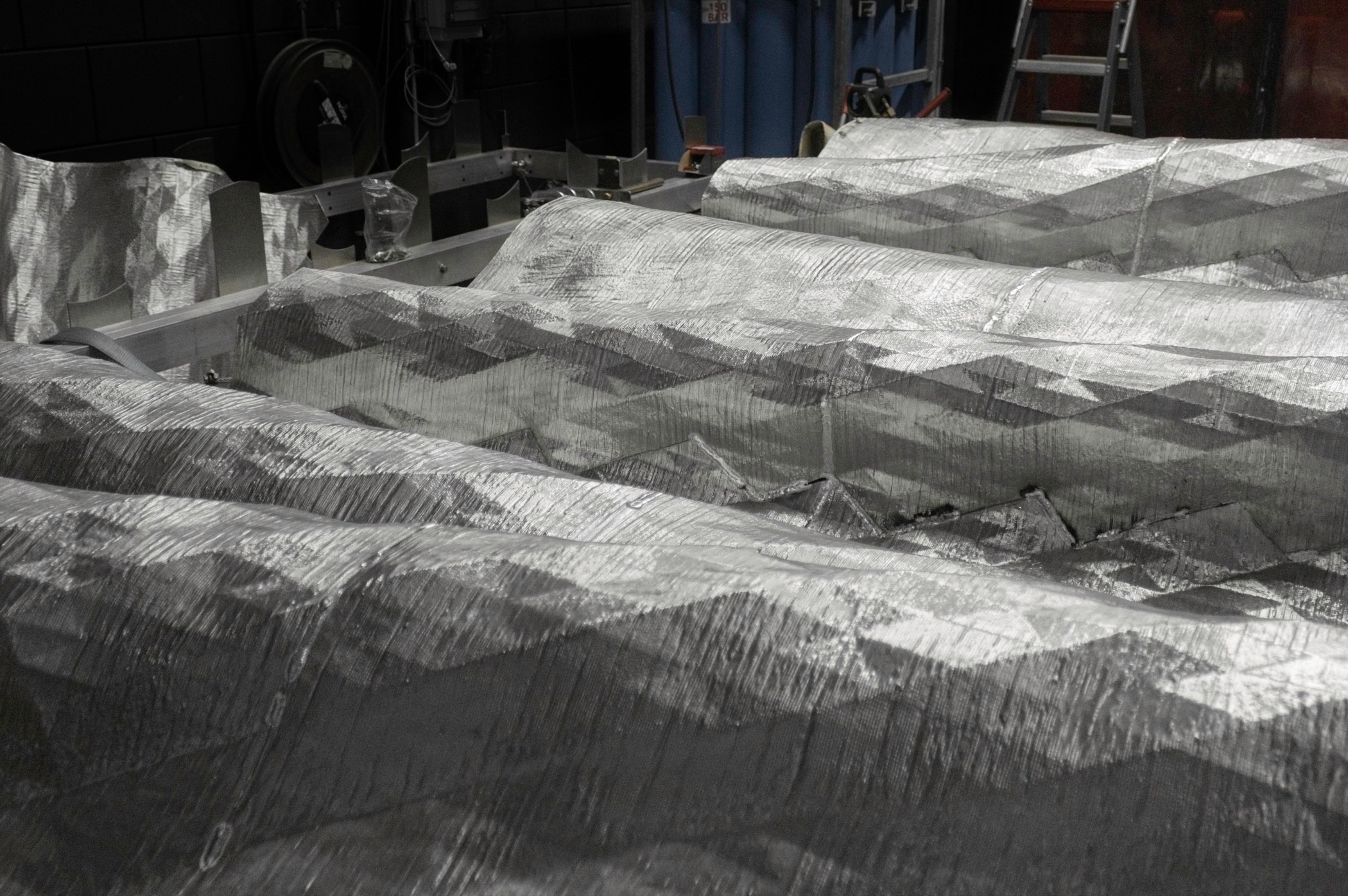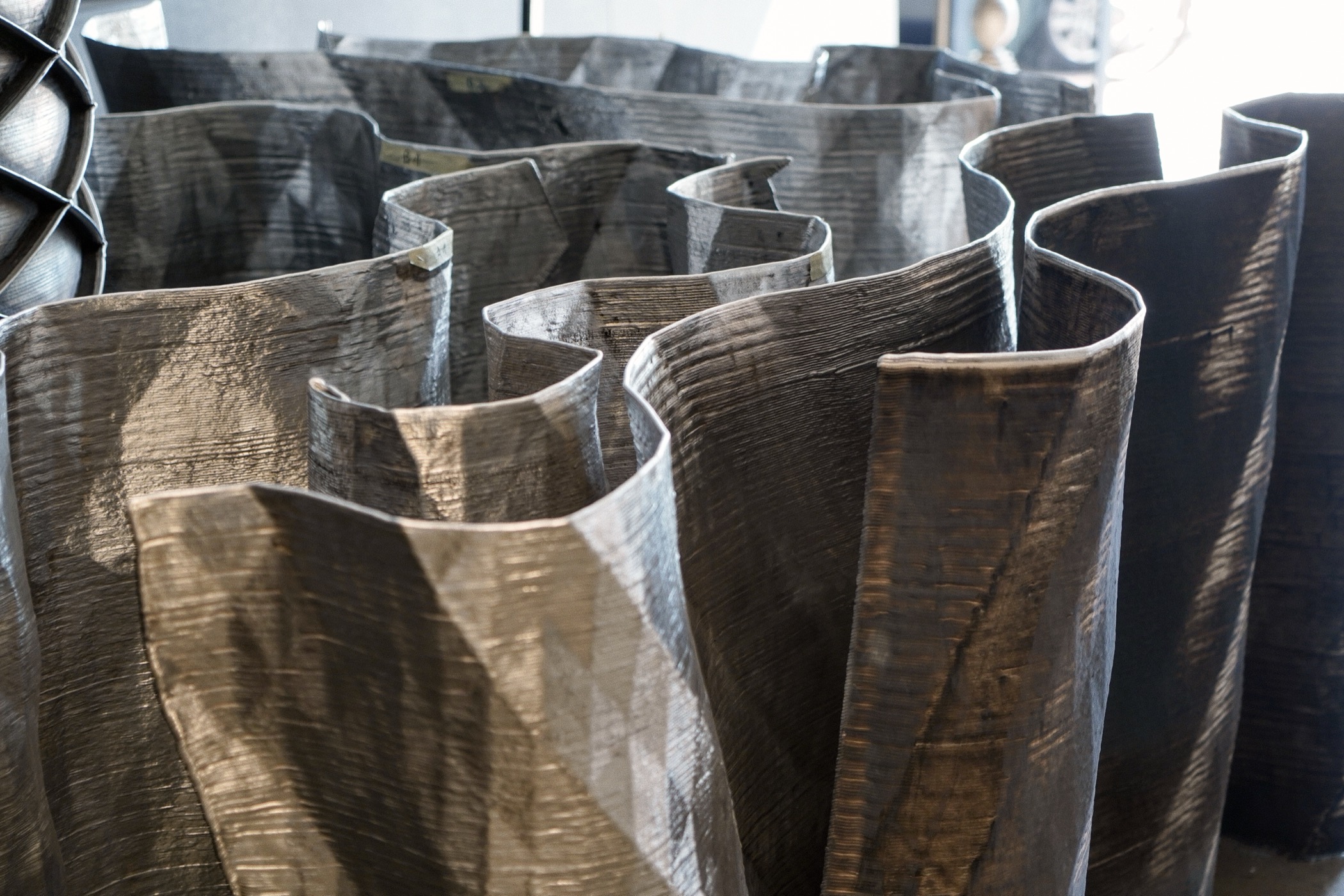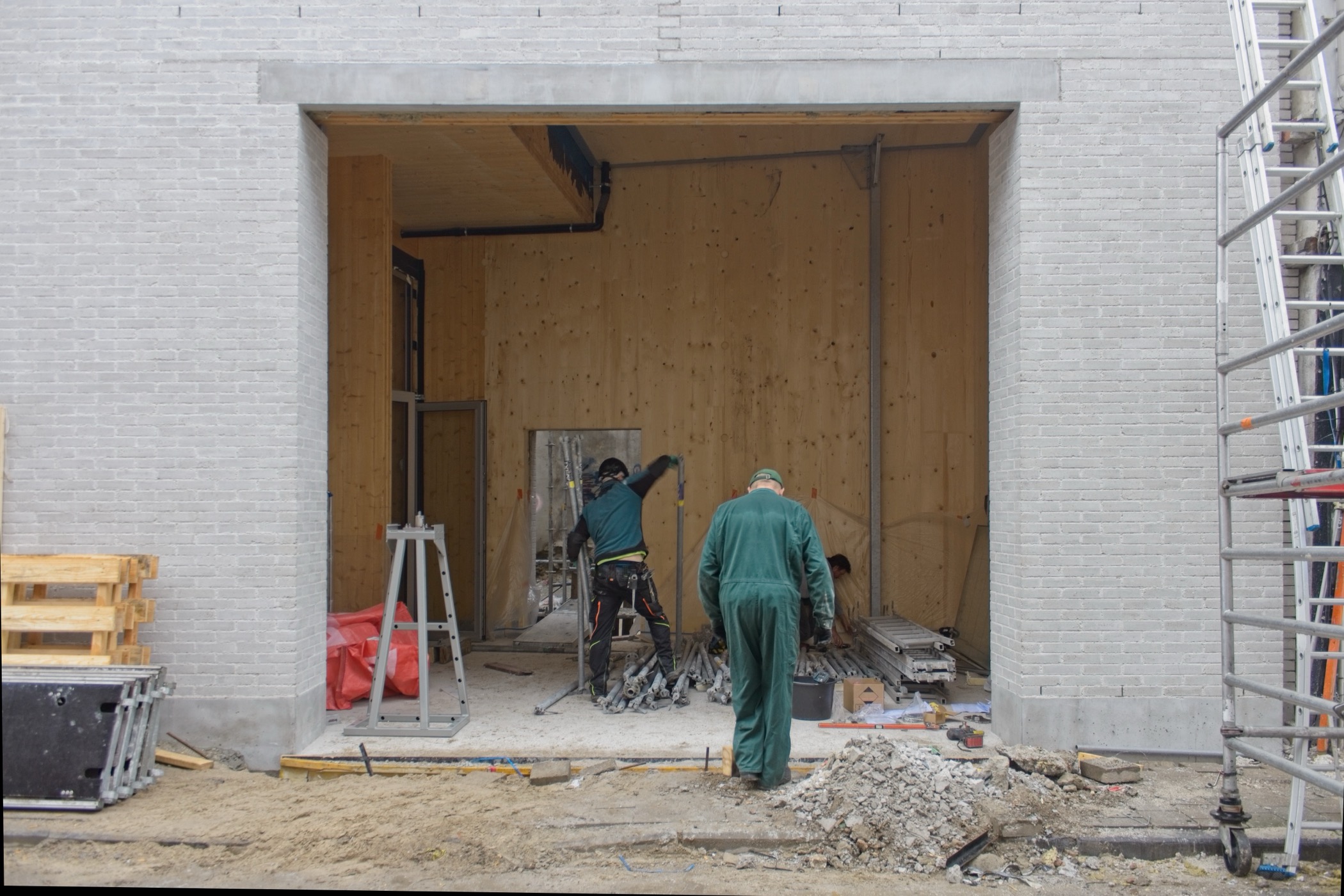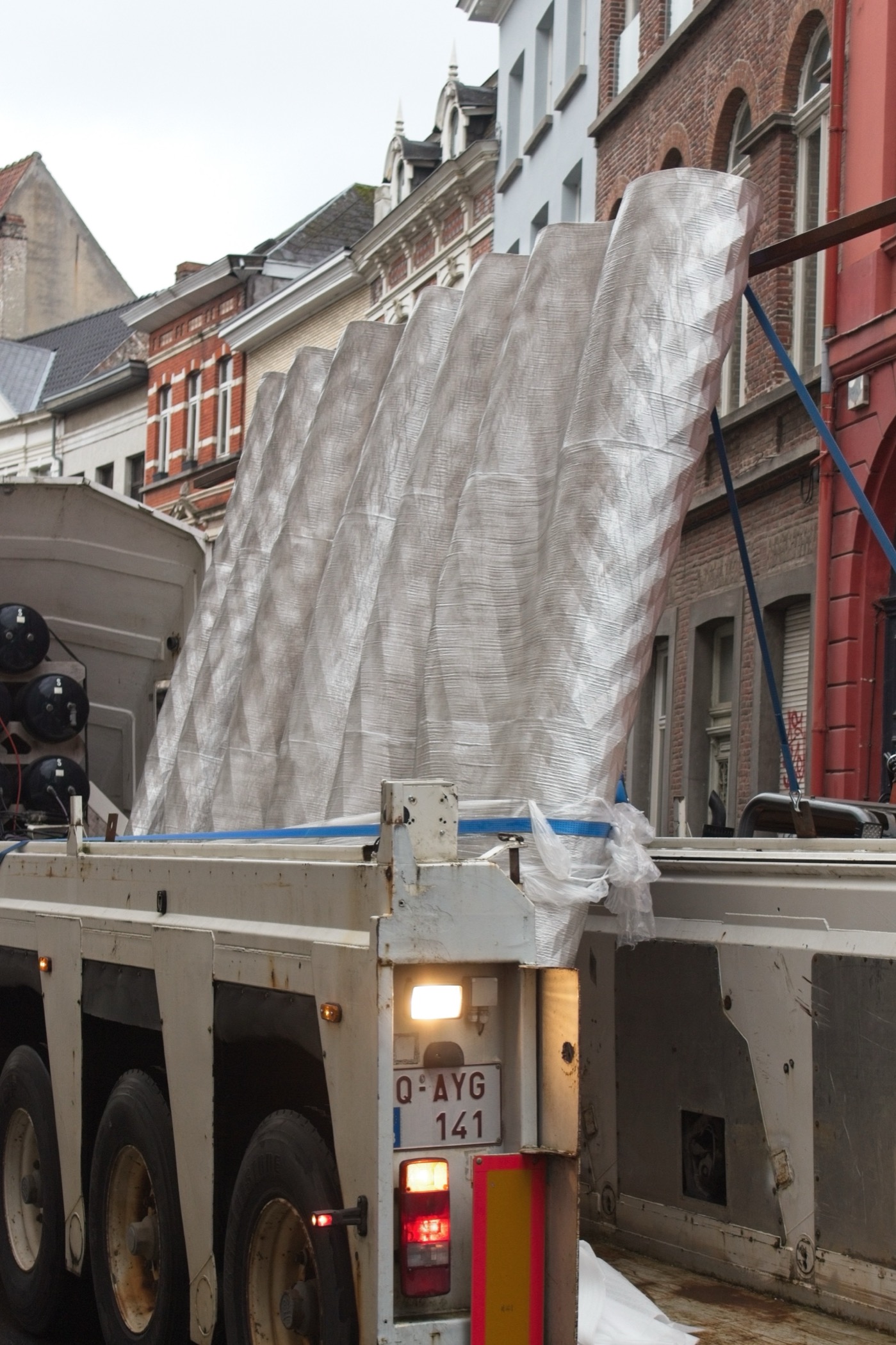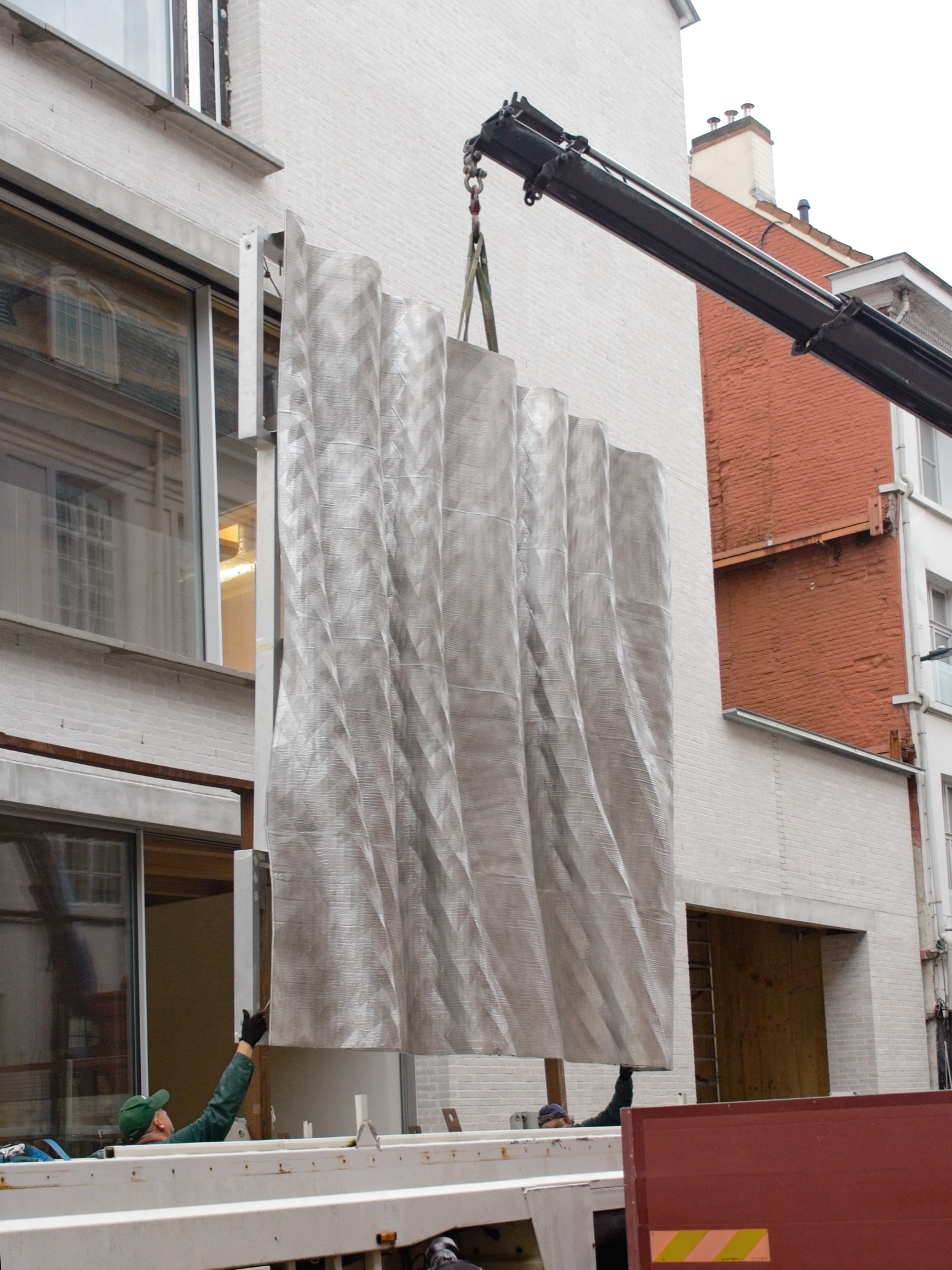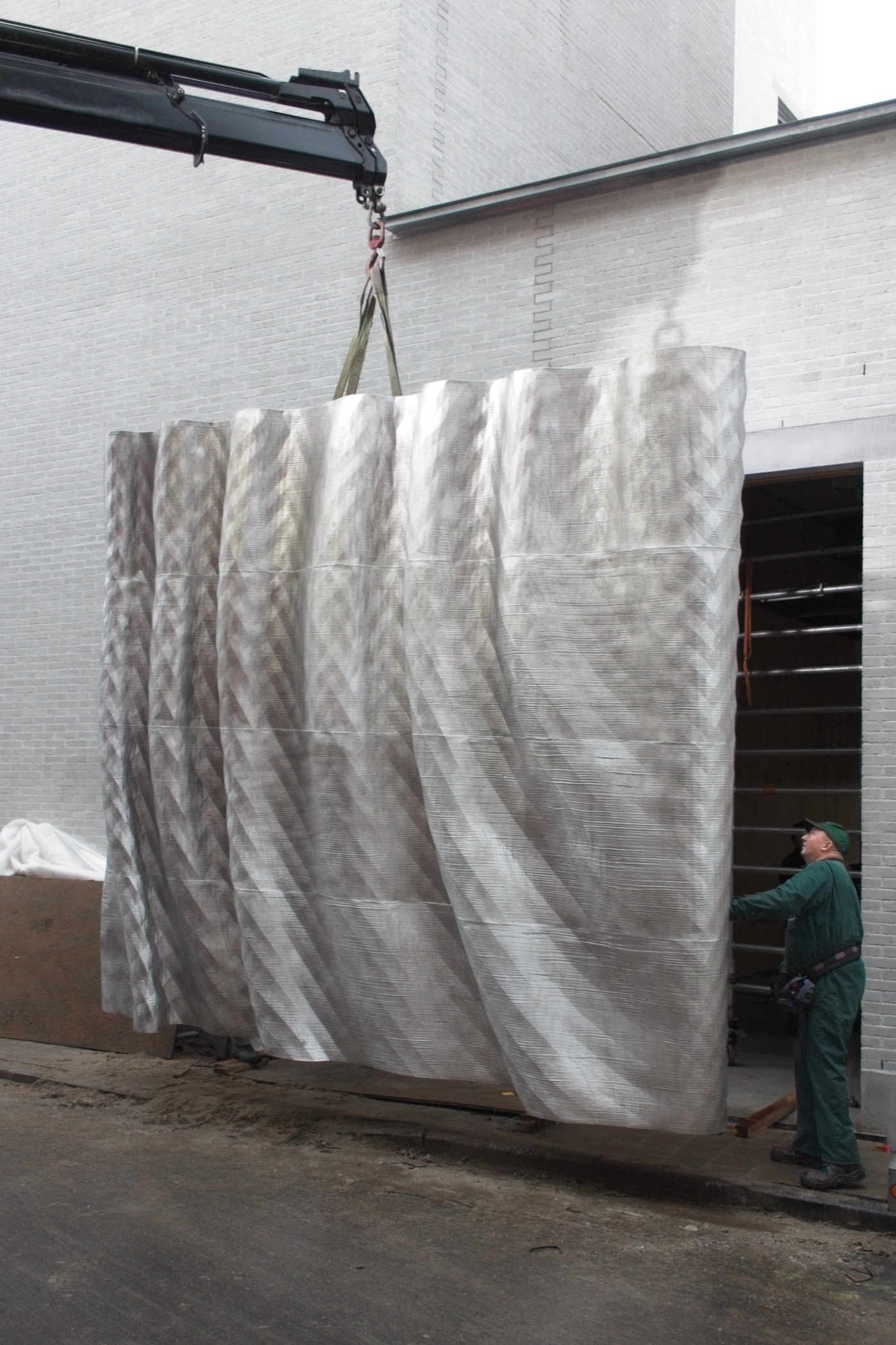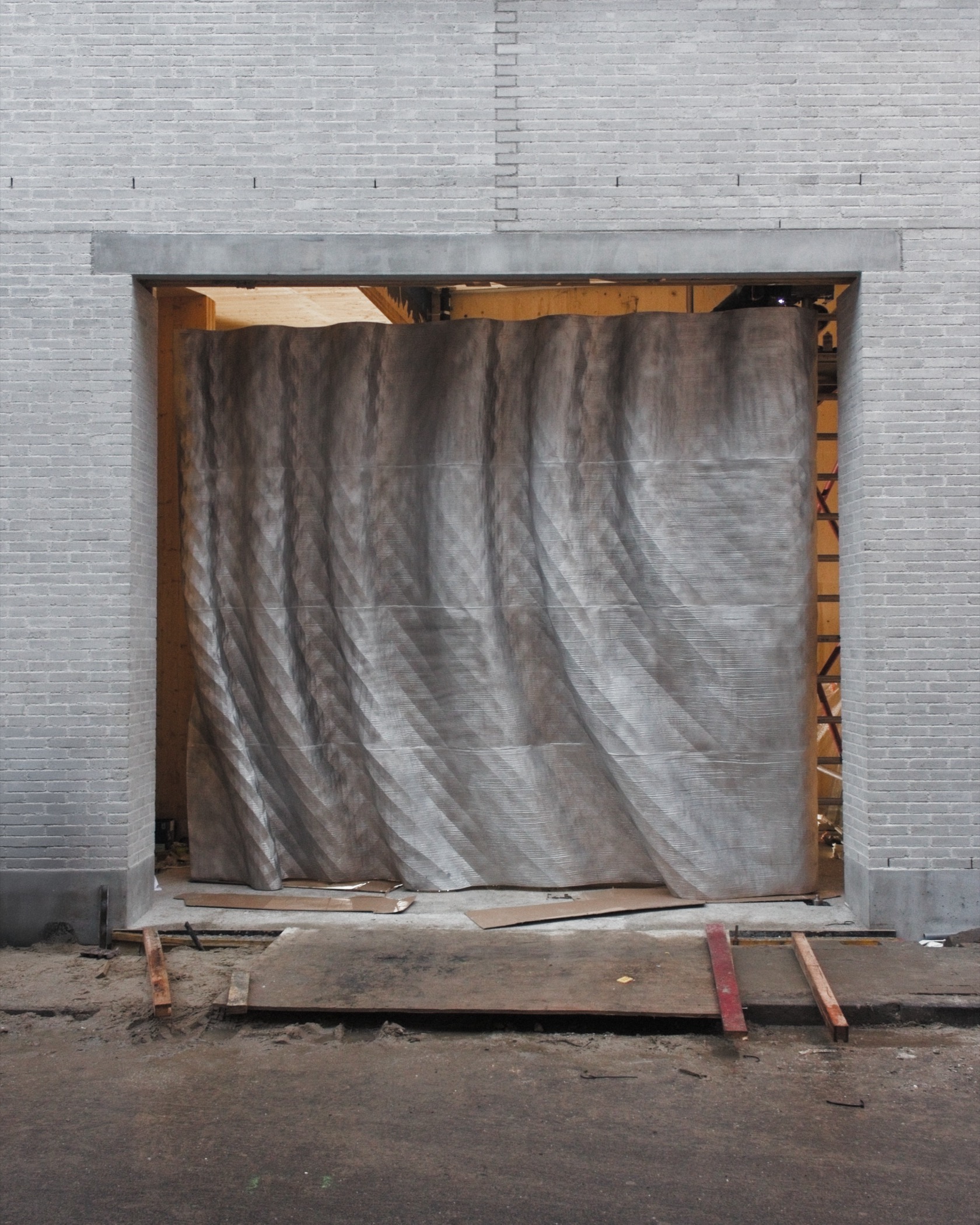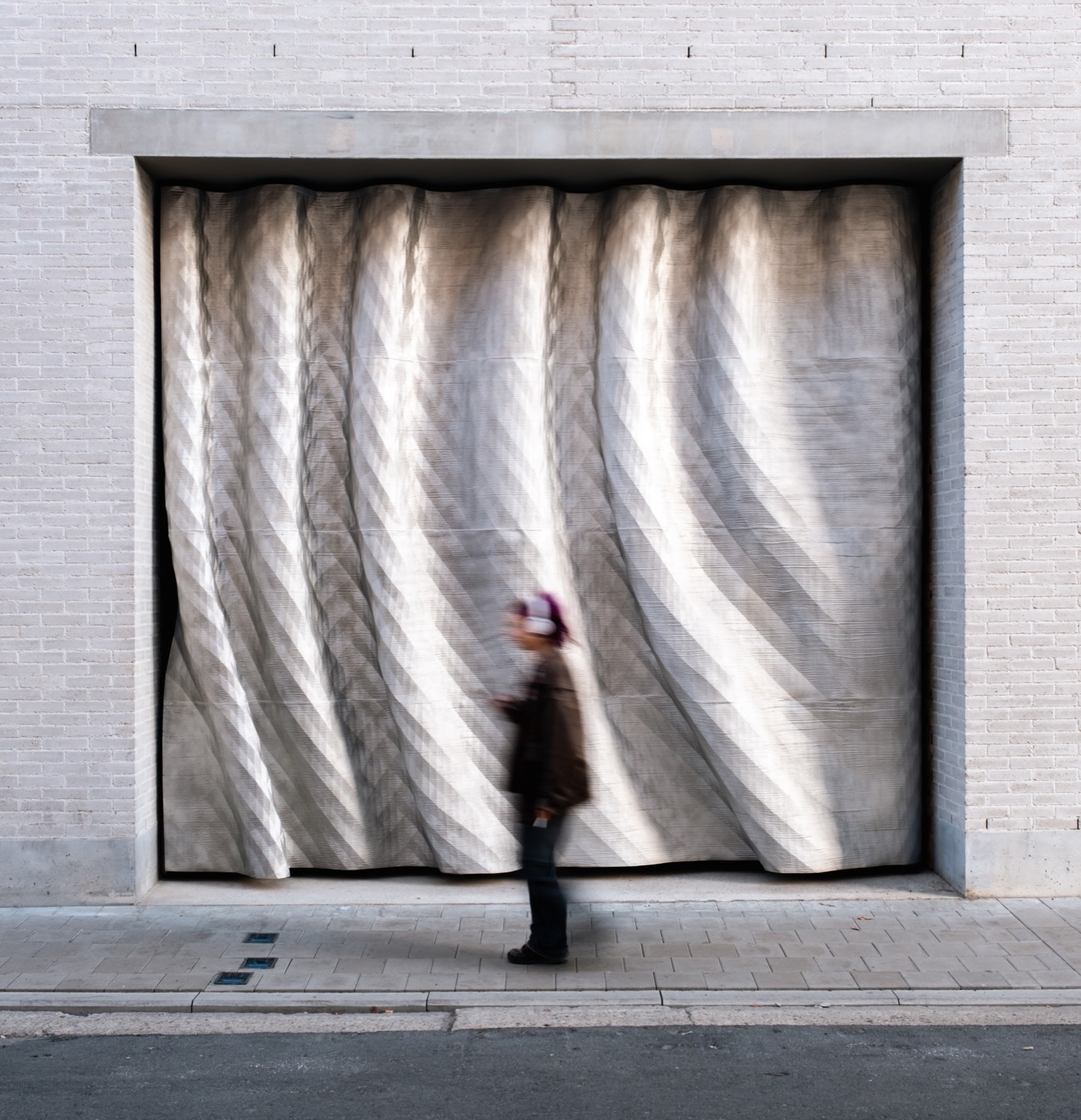
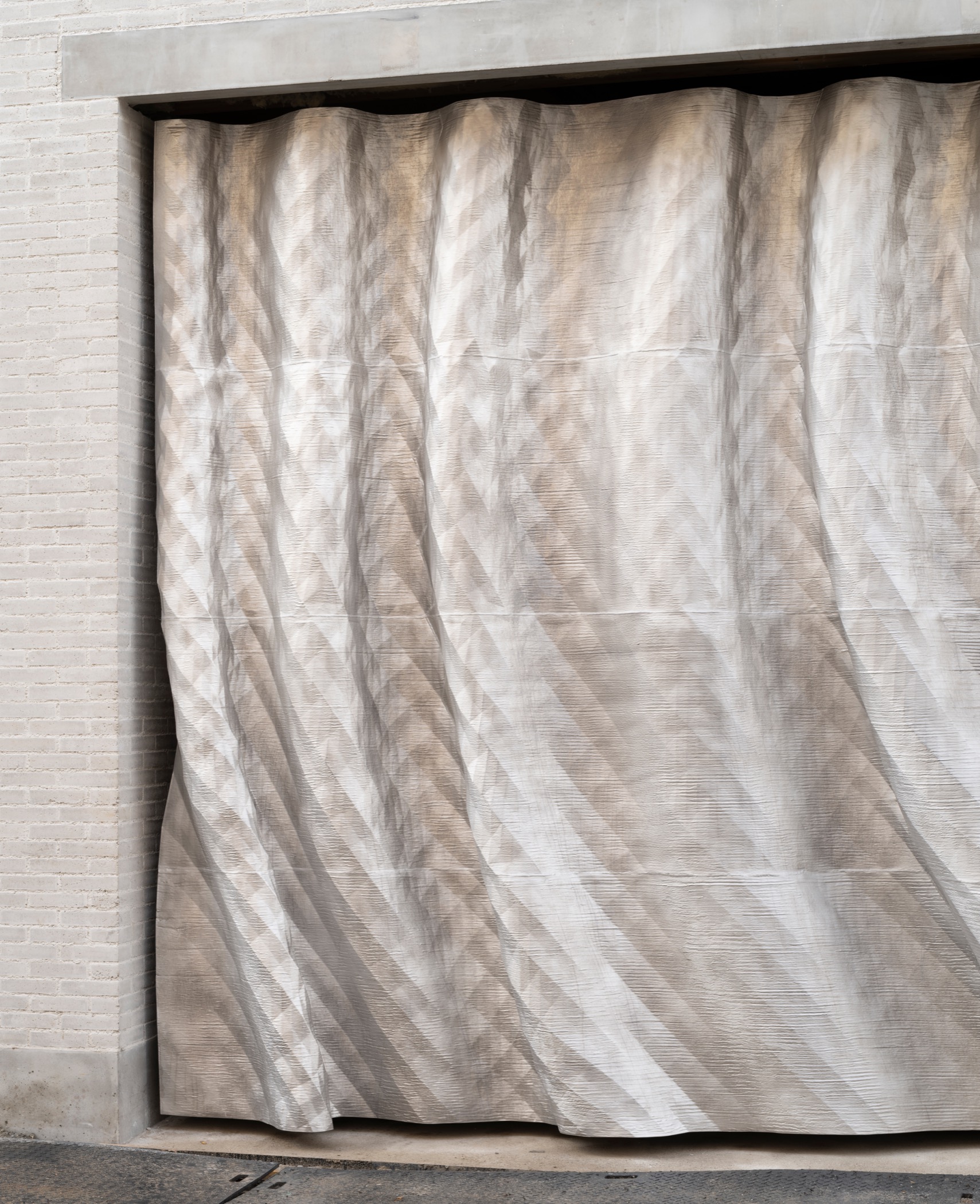
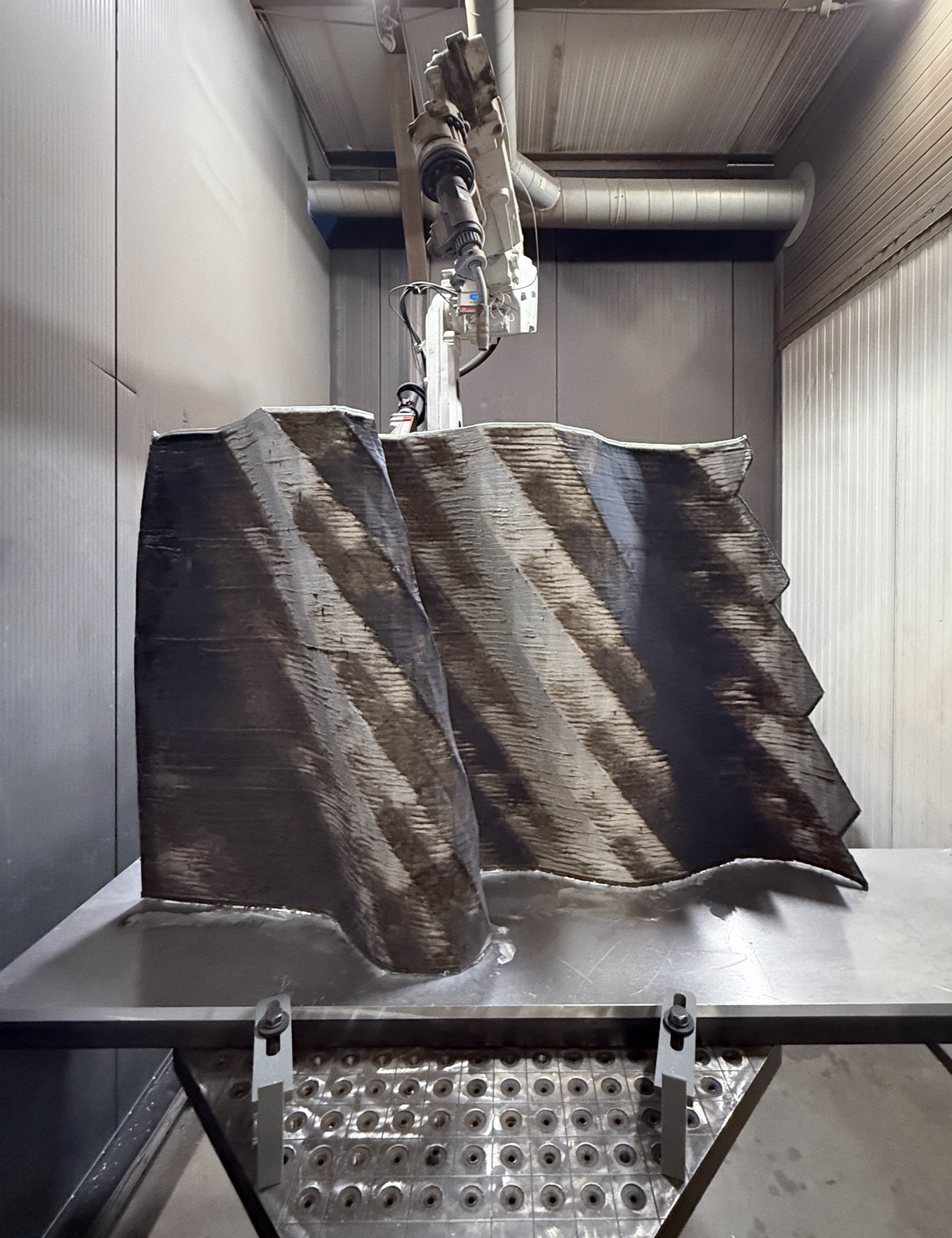
Freeze Frame 82.2 is a 3D-printed aluminium curtain, seemingly in motion, yet stilled at one precise moment – frame 82.2 – the charged instant just before opening. Positioned on the museum’s threshold, it forms a soft, almost permeable boundary that doubles as a gateway: revealing by day, concealing by night.
Freeze Frame 82.2 mirrors the moment we inhabit, a time of movement and transition, in which design is called upon not only to question but also to help shape what is yet to come
We stand at the threshold of a new era, where the old ways of living, working, and manufacturing make way for more sustainable and equitable alternatives, informed by a more-than-human perspective.
DING, the new extension of Design Museum Gent, was not conceived as a space for “more museum” but as “more-than-museum”: a place for debate, talks, workshops, and small exhibitions that explore a world in transition. Not an archive of past design solutions, but a place where design happens live, a platform for searching out the right questions and for formulating imaginative answers to our world’s most pressing needs.
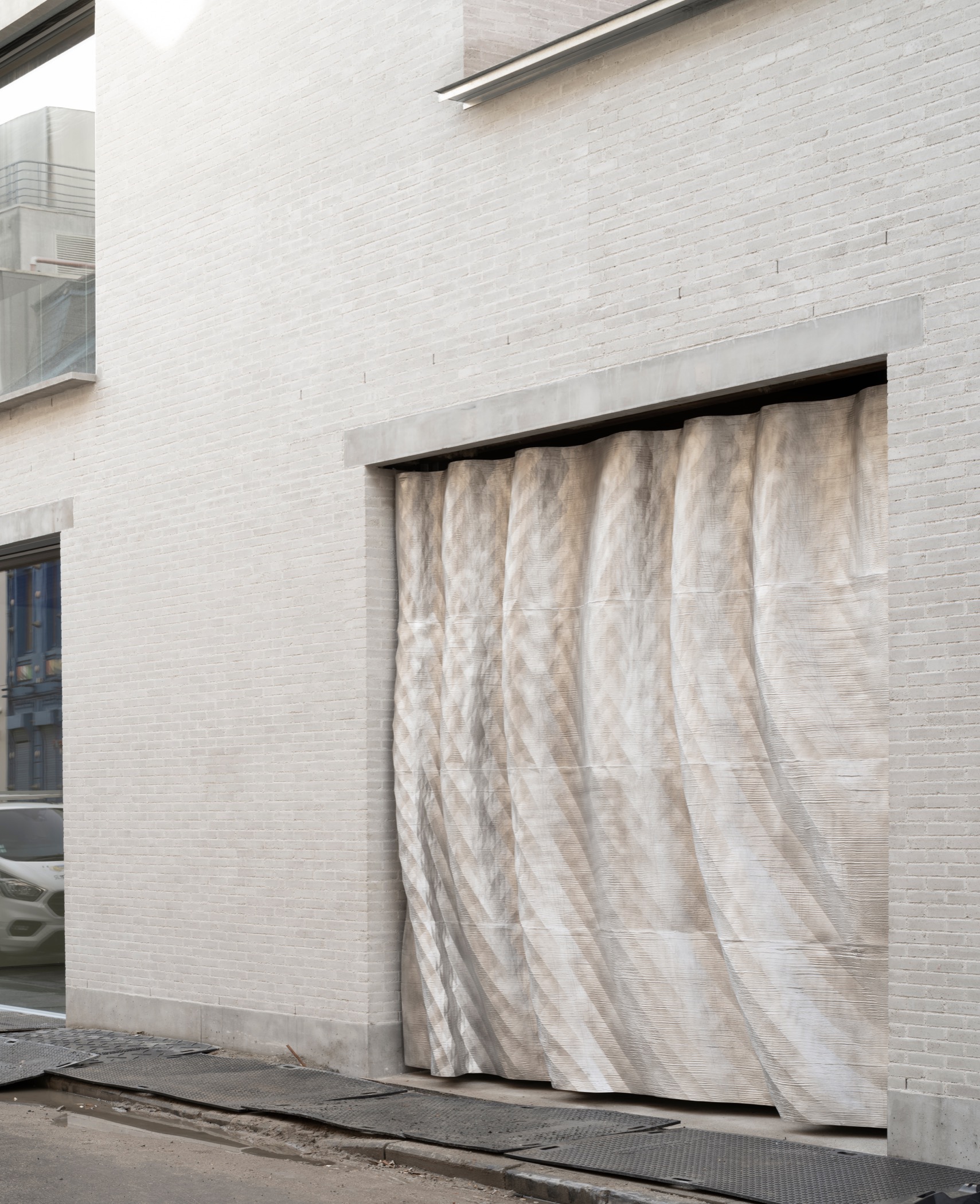
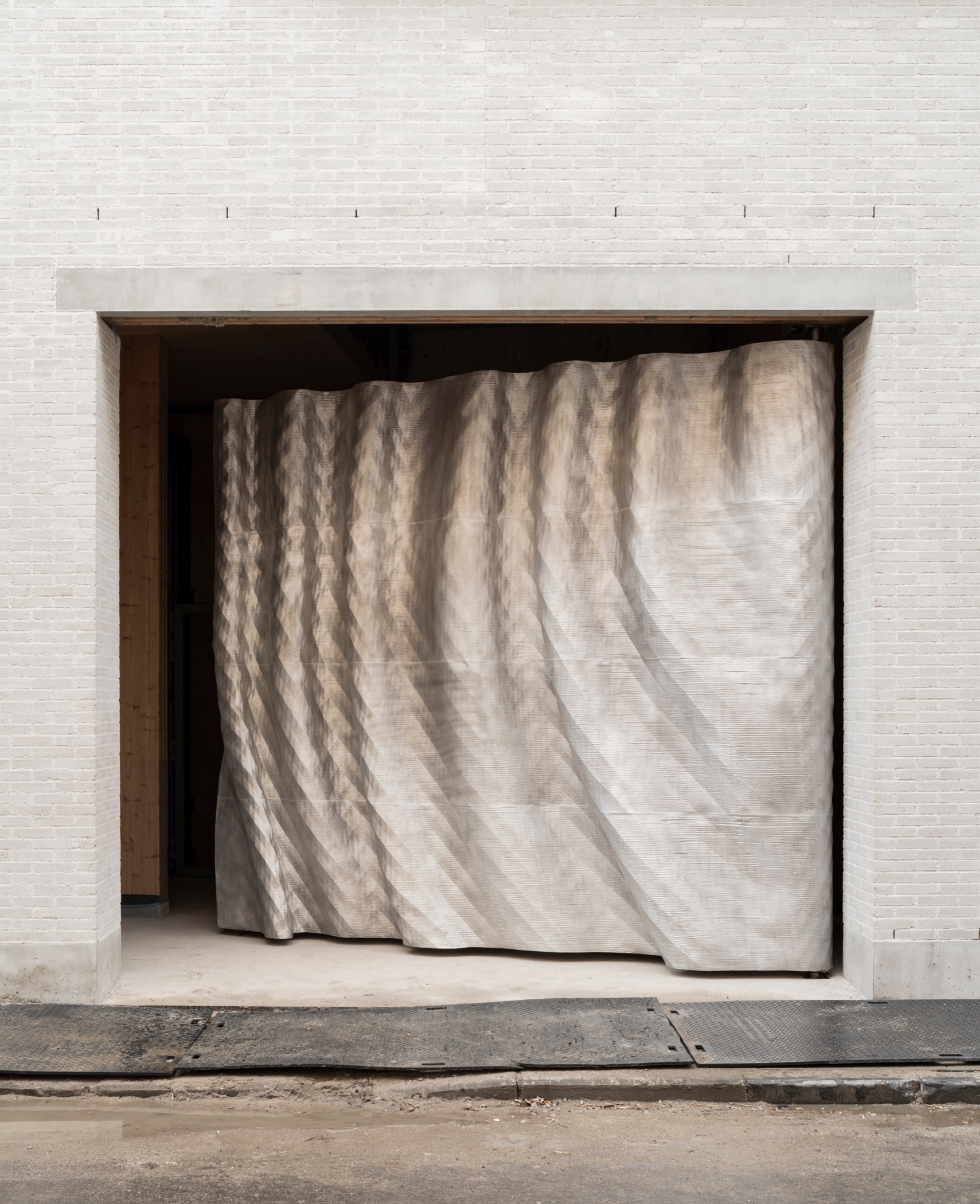
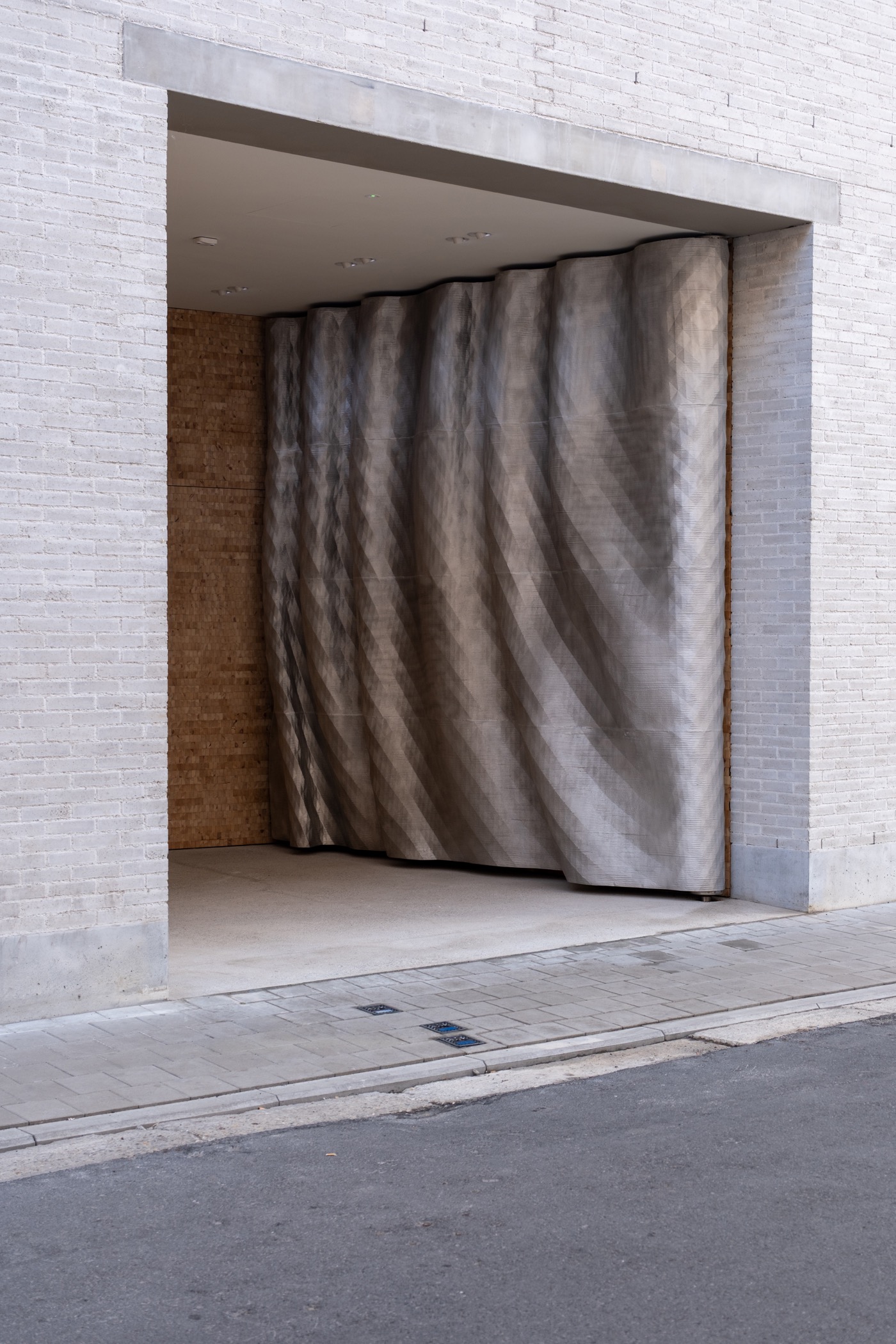
How does one approach a commission to create an artwork that sits at the threshold of this new extension and serves as the main gate to the entire museum? How can it symbolise this dynamic period of transition, in which design is challenged to keep questioning and to help shape what is yet to come?
In his 1967 essay “Betwixt and Between: The Liminal Period in Rites of Passage,” ethnographer Victor Turner examined the structure of rites of passage, ritualised processes through which individuals or communities move from one defined state to another. Central to these rites is the liminal phase, a concept derived from folklorist Arnold van Gennep’s work and rooted in the Latin limen, meaning ‘threshold’. It is the interval in which old positions have been relinquished, but new ones have not yet been assumed: a space “in between,” where the usual order loosens and multiple futures briefly coexist. Turner describes liminality as a suspension of certainty that allows for transformation, and he identifies within it the possibility of communitas: a momentary sense of collective openness that emerges when people inhabit this threshold together.
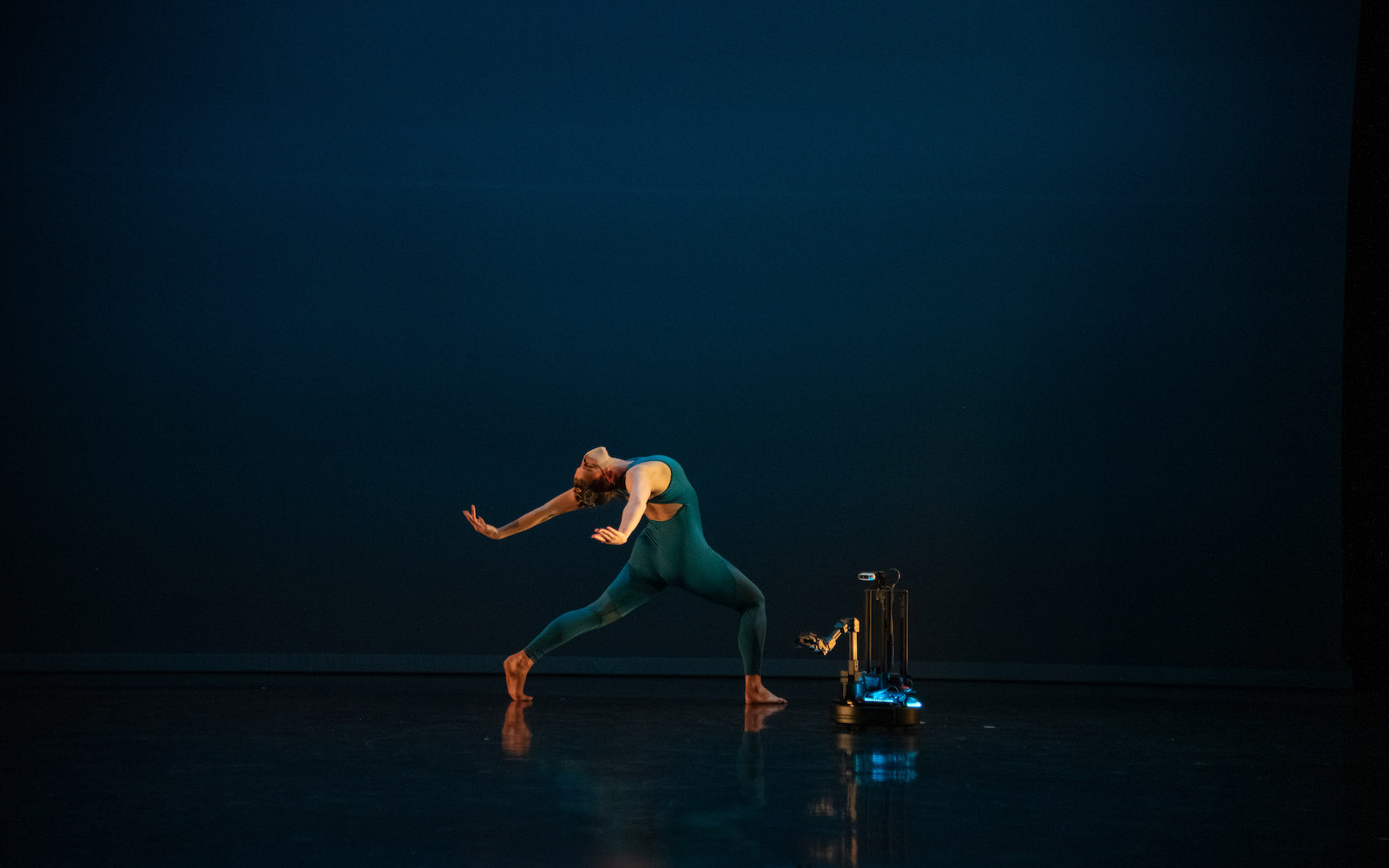
This understanding of liminality resonates with the very transition in which we now find ourselves. We stand at the threshold of new times — in limine — not here, not there, betwixt and between, no longer anchored to what was, not yet claimed by what will be. Theatre, perhaps more than any other art form, dwells in this ambiguous state. The theatre curtain embodies this condition: it hides or reveals, acting not as a barrier but as a permeable membrane that leaks light, whispers, and expectancy.
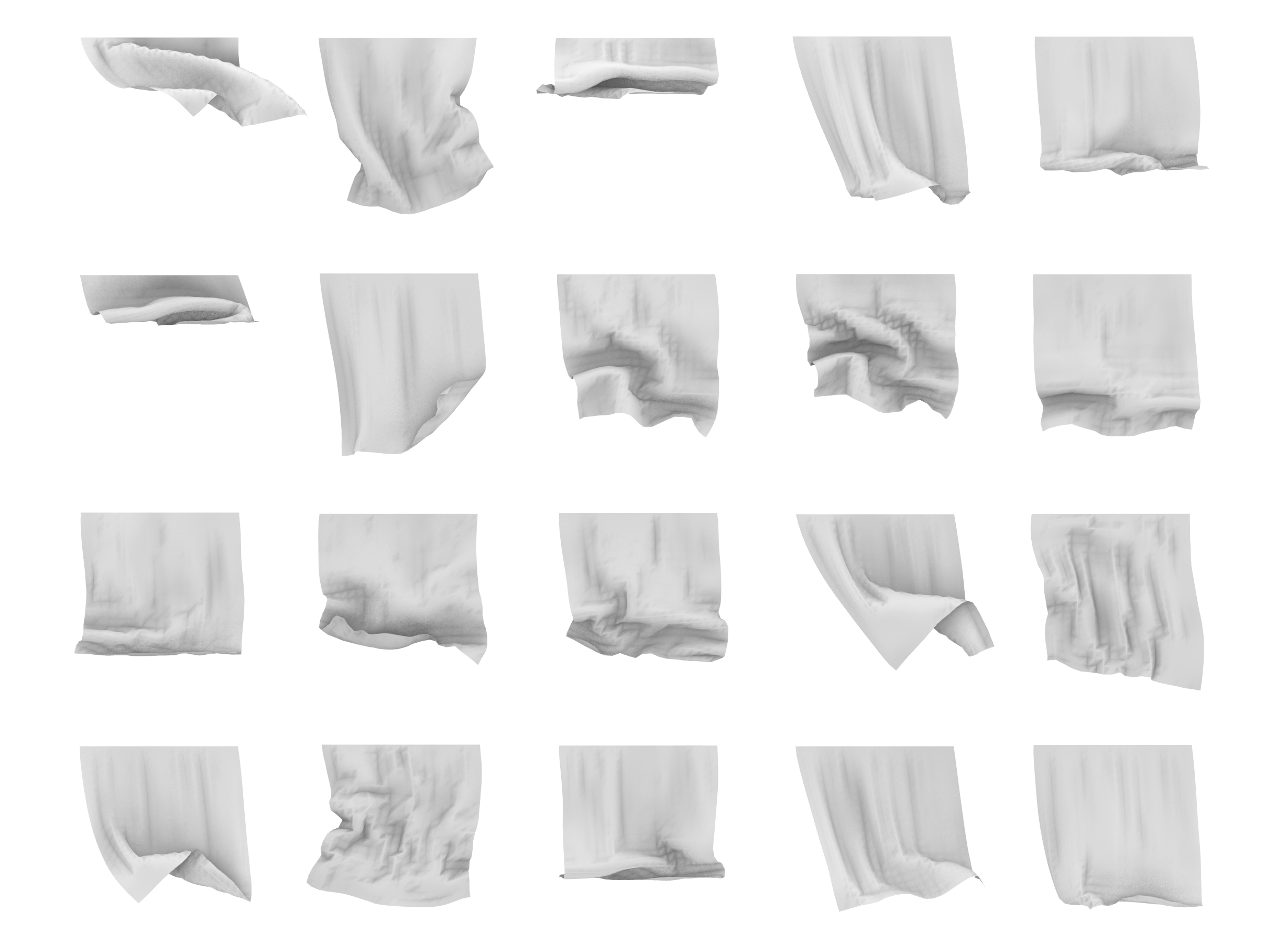
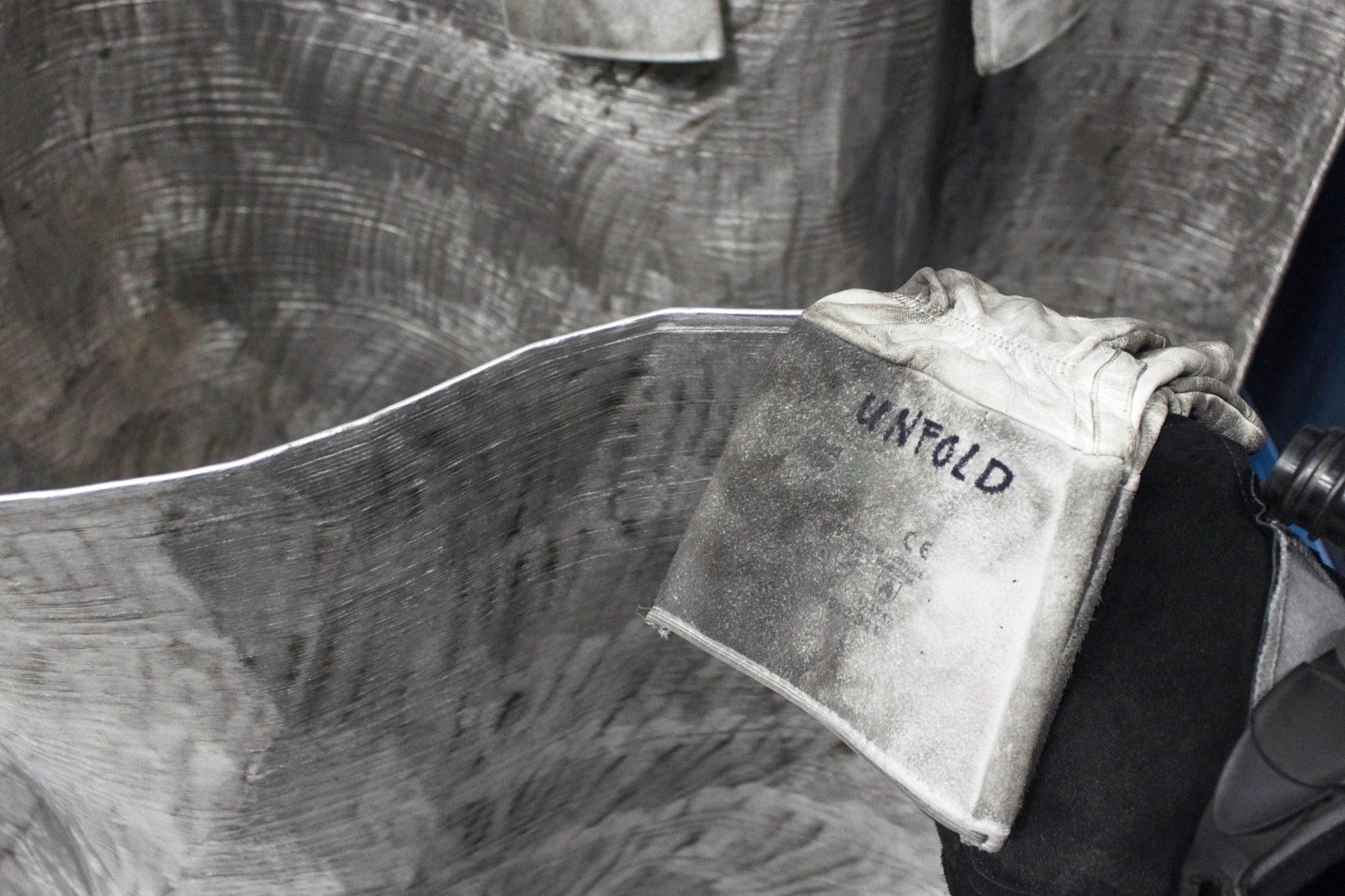
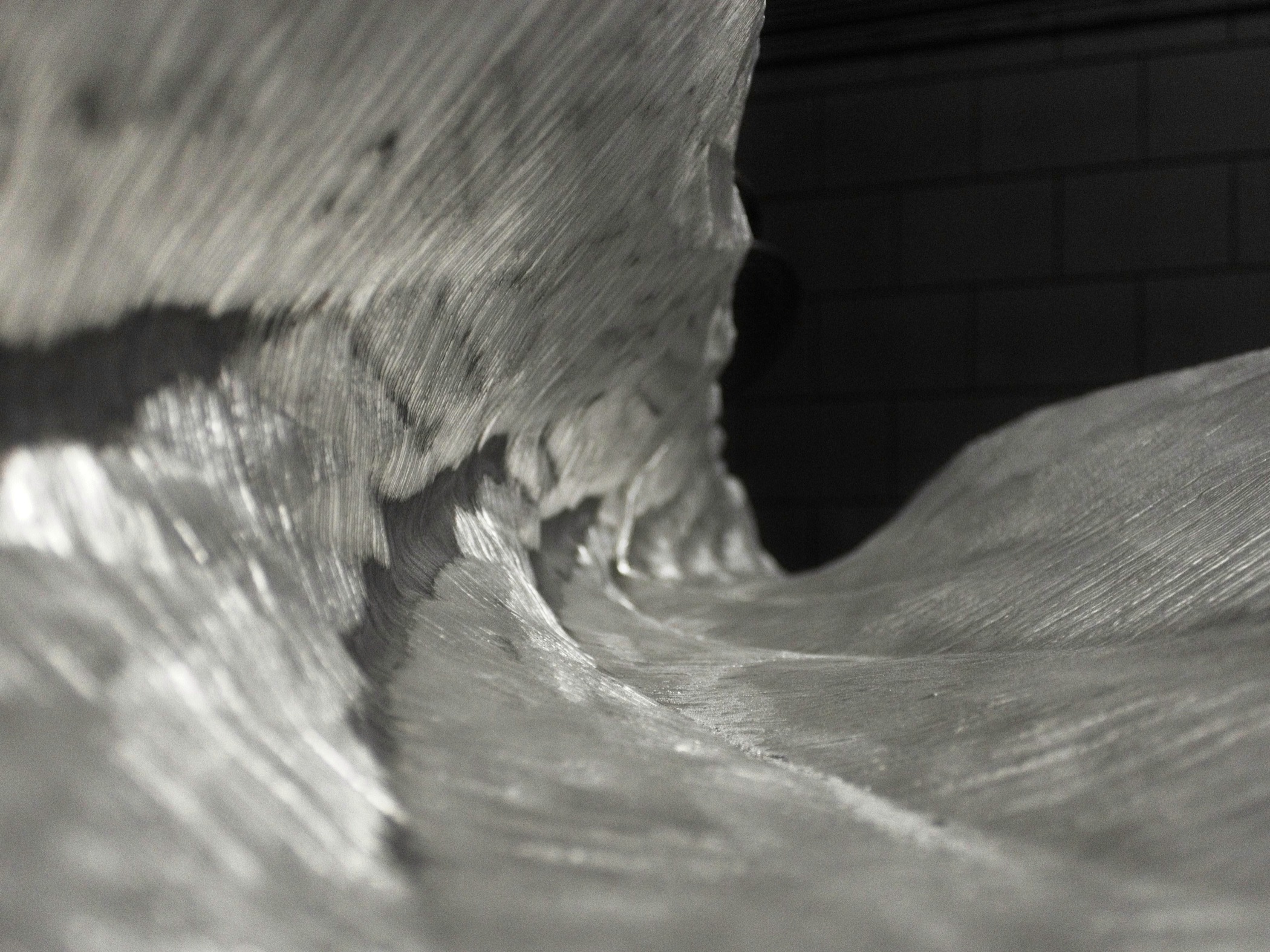
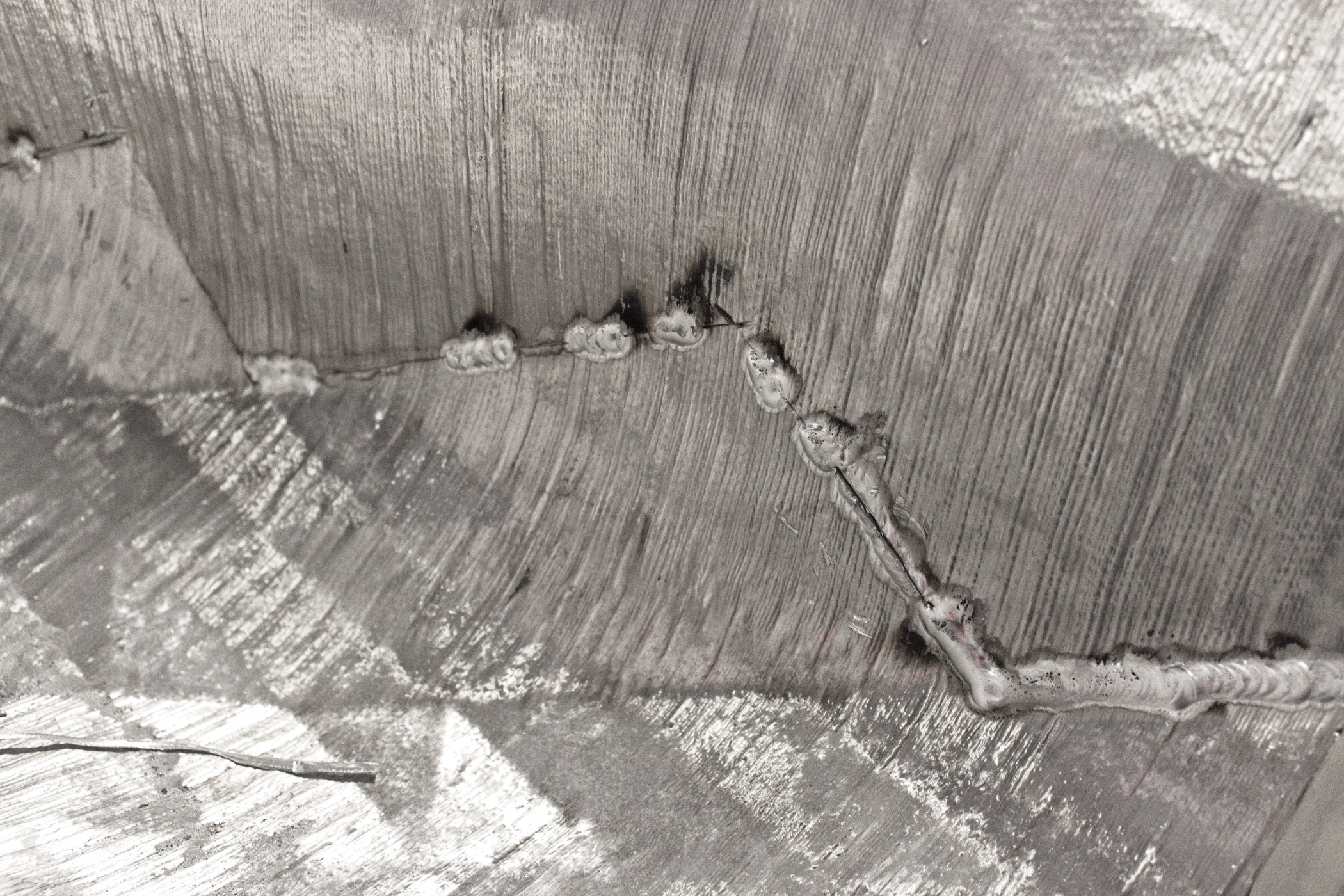
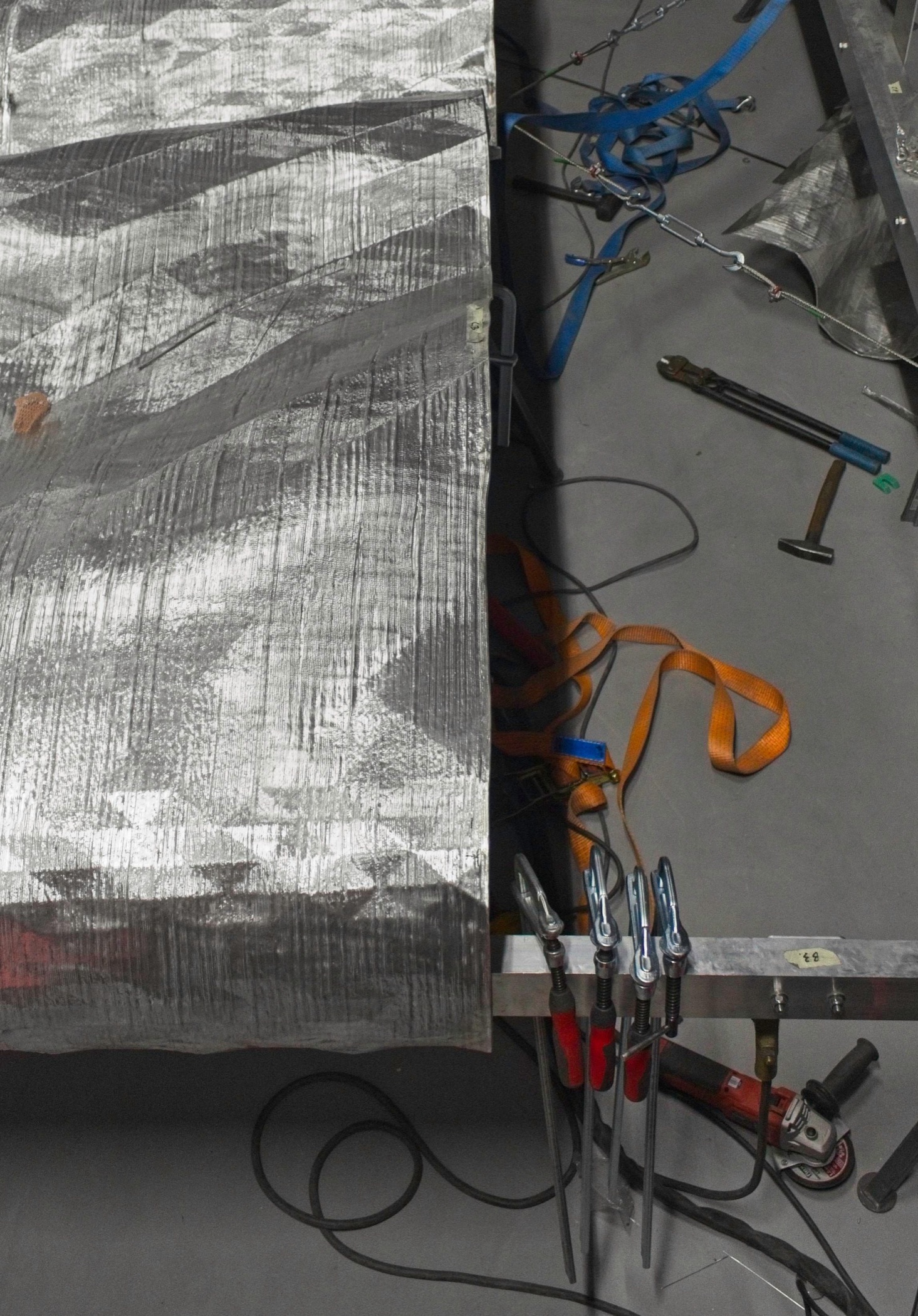
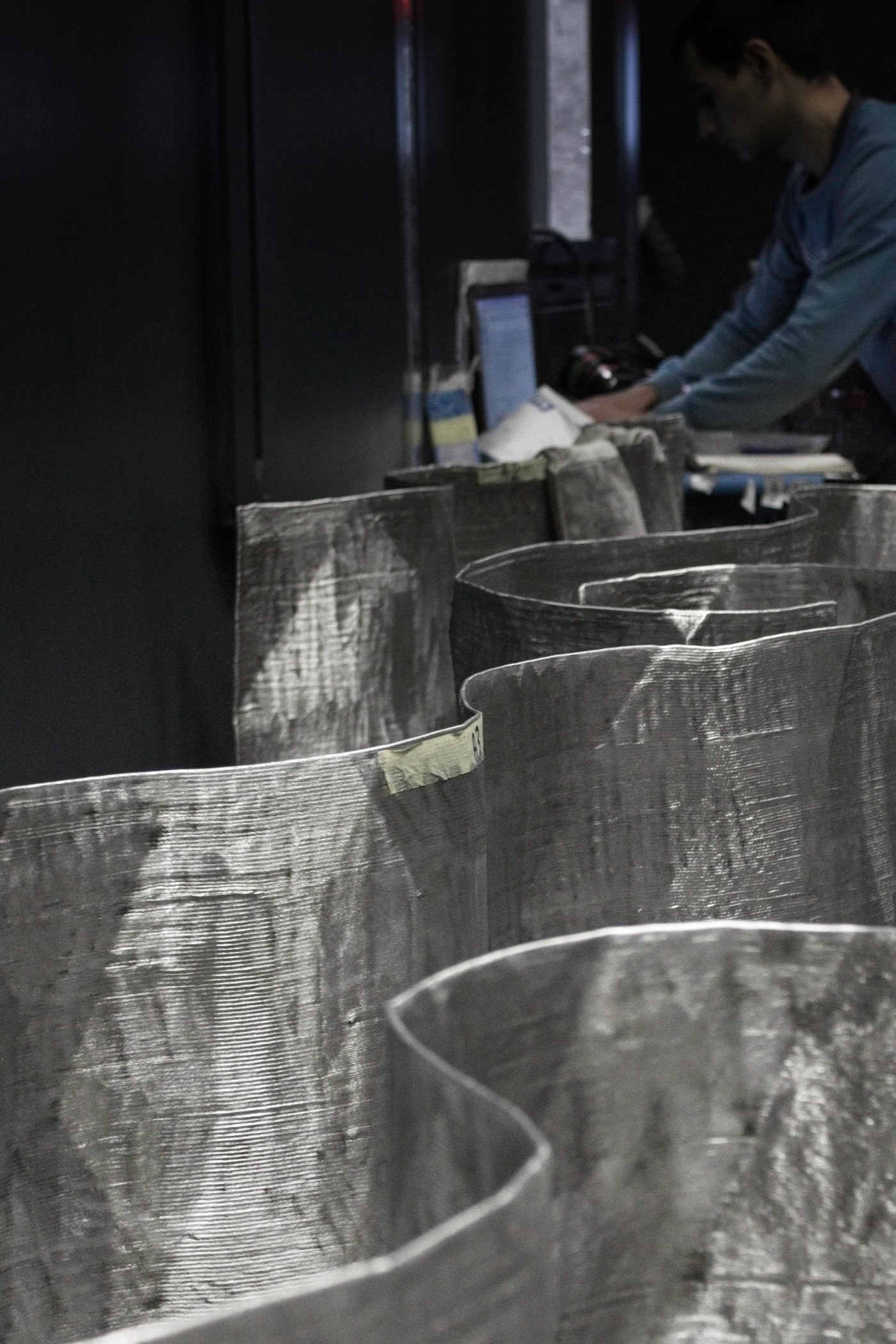
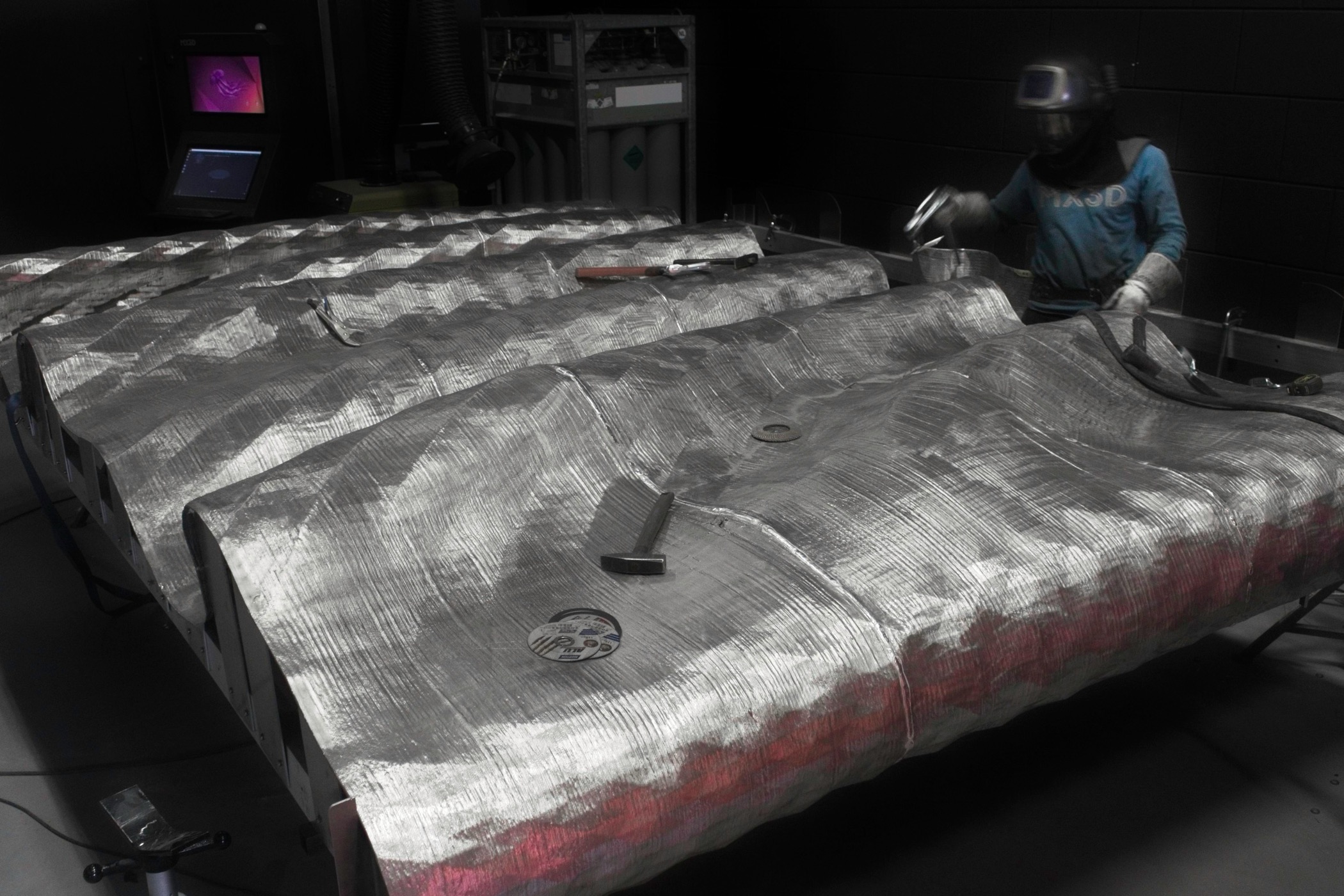
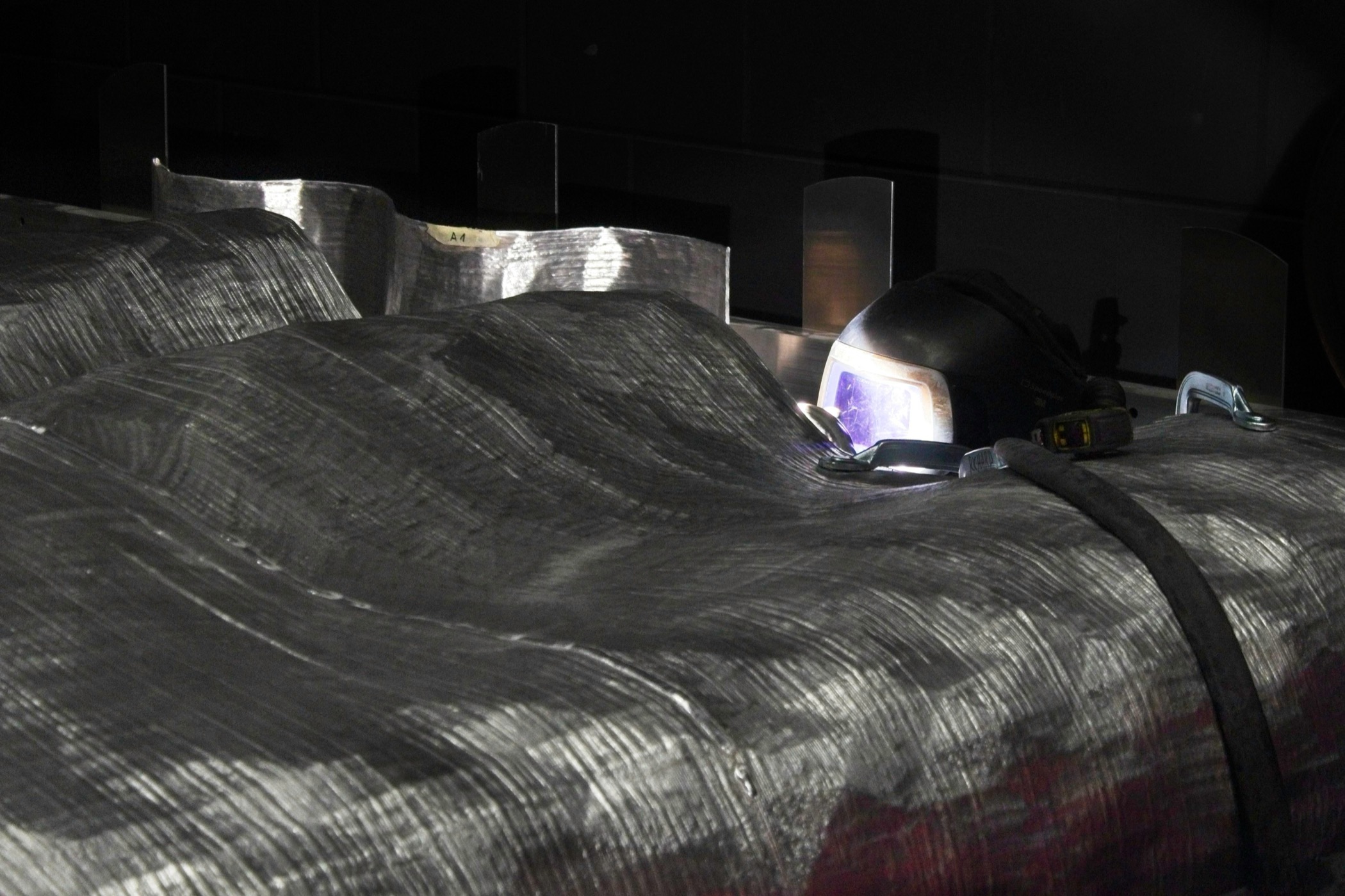
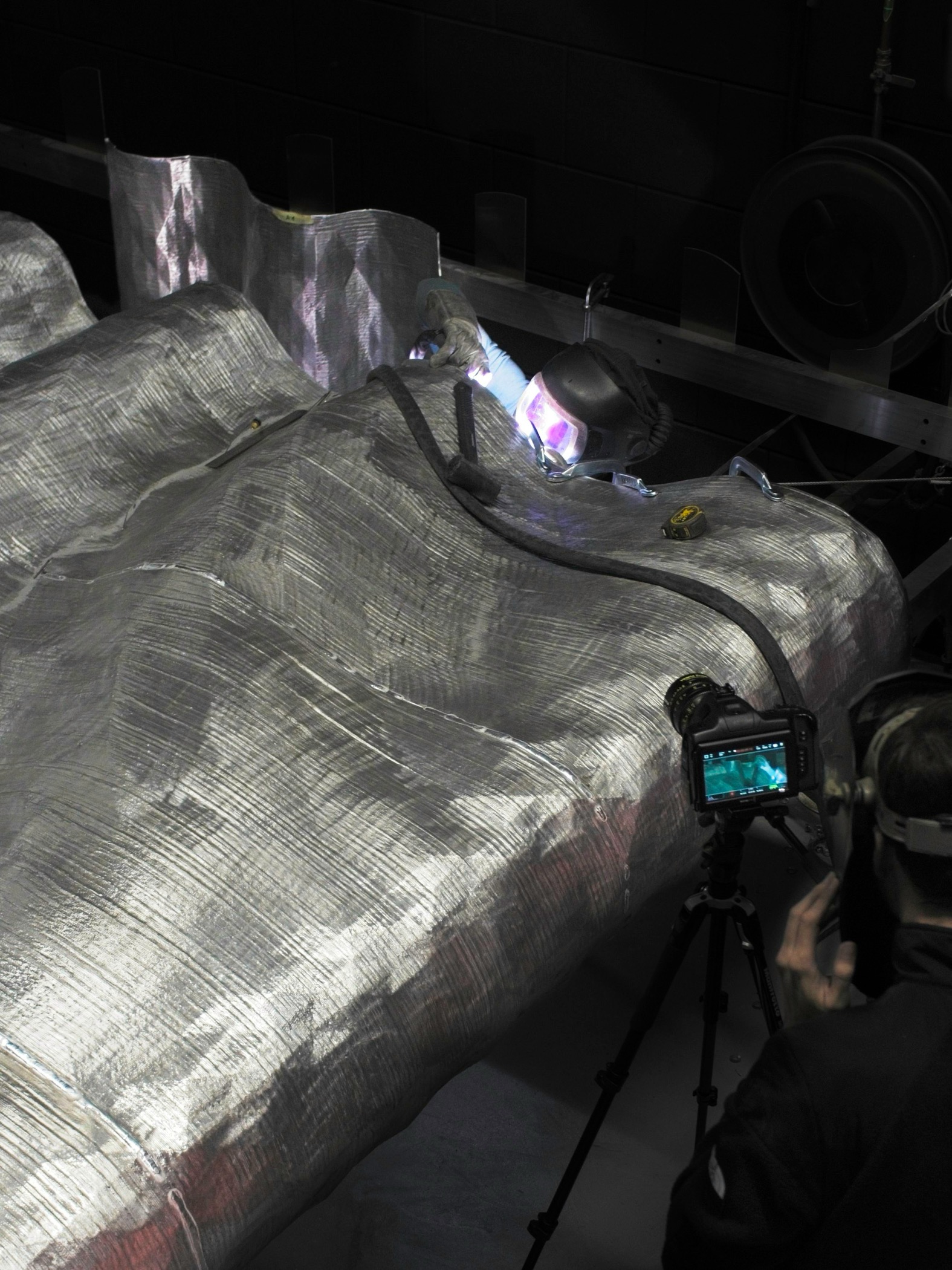
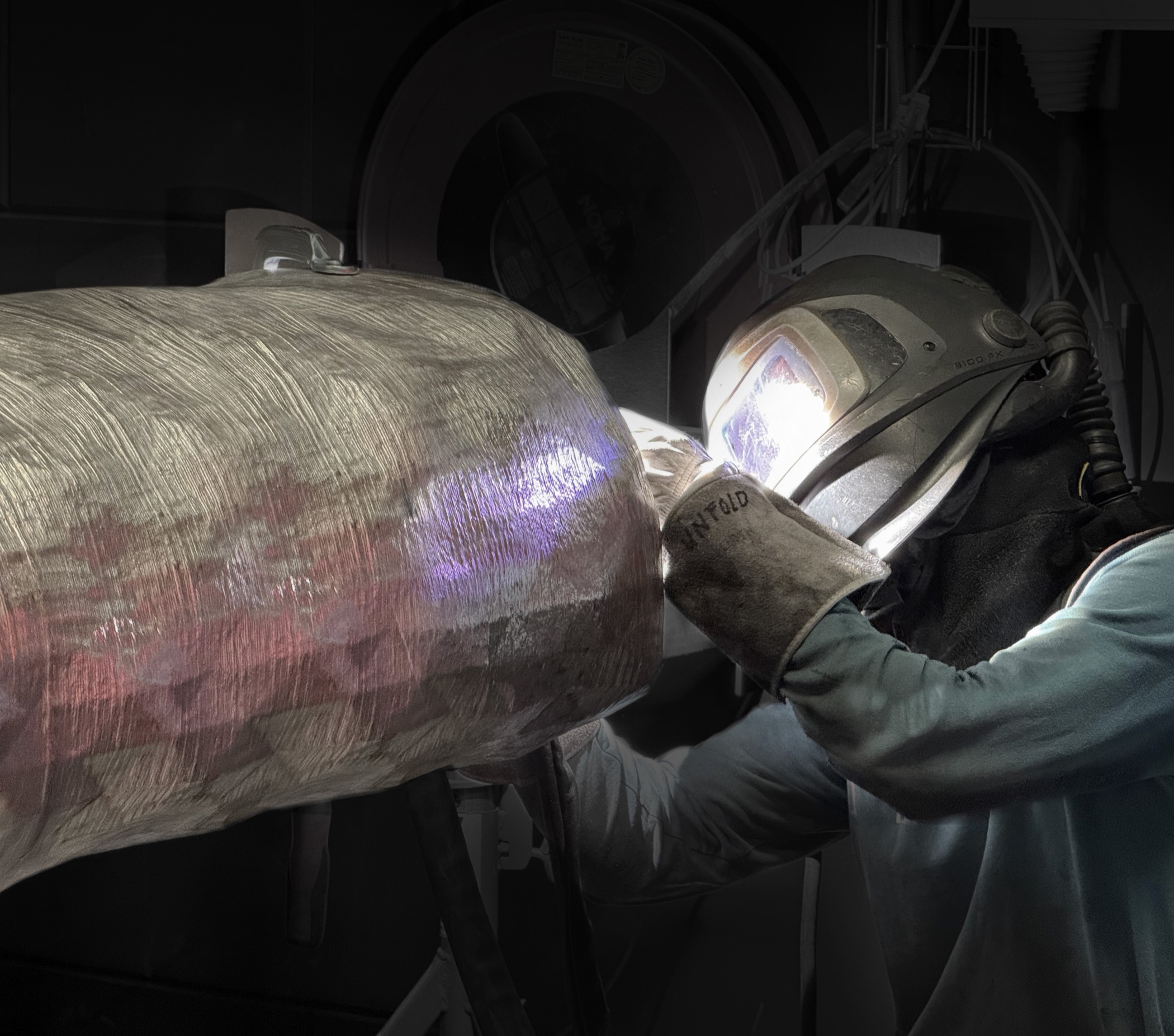
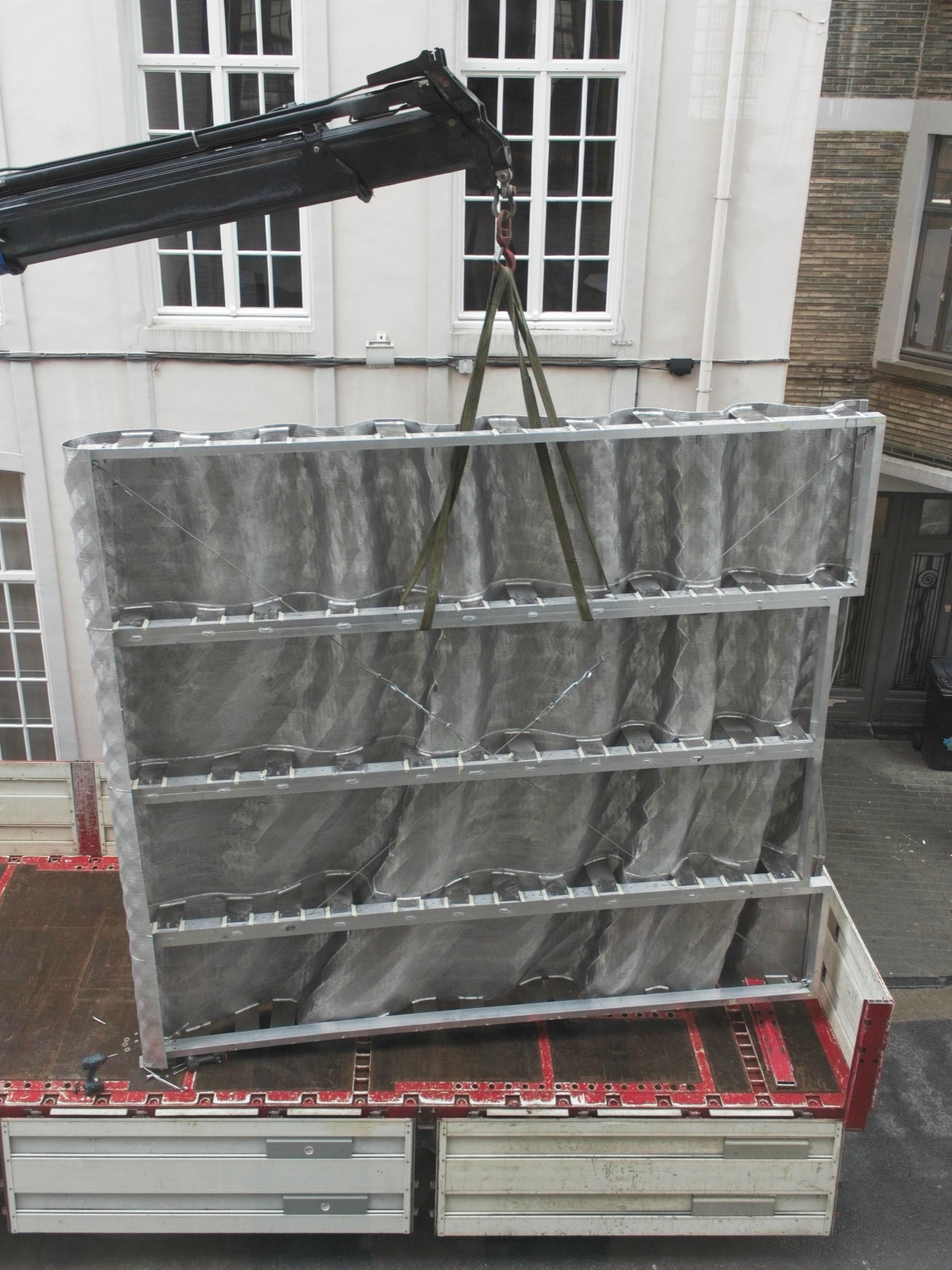
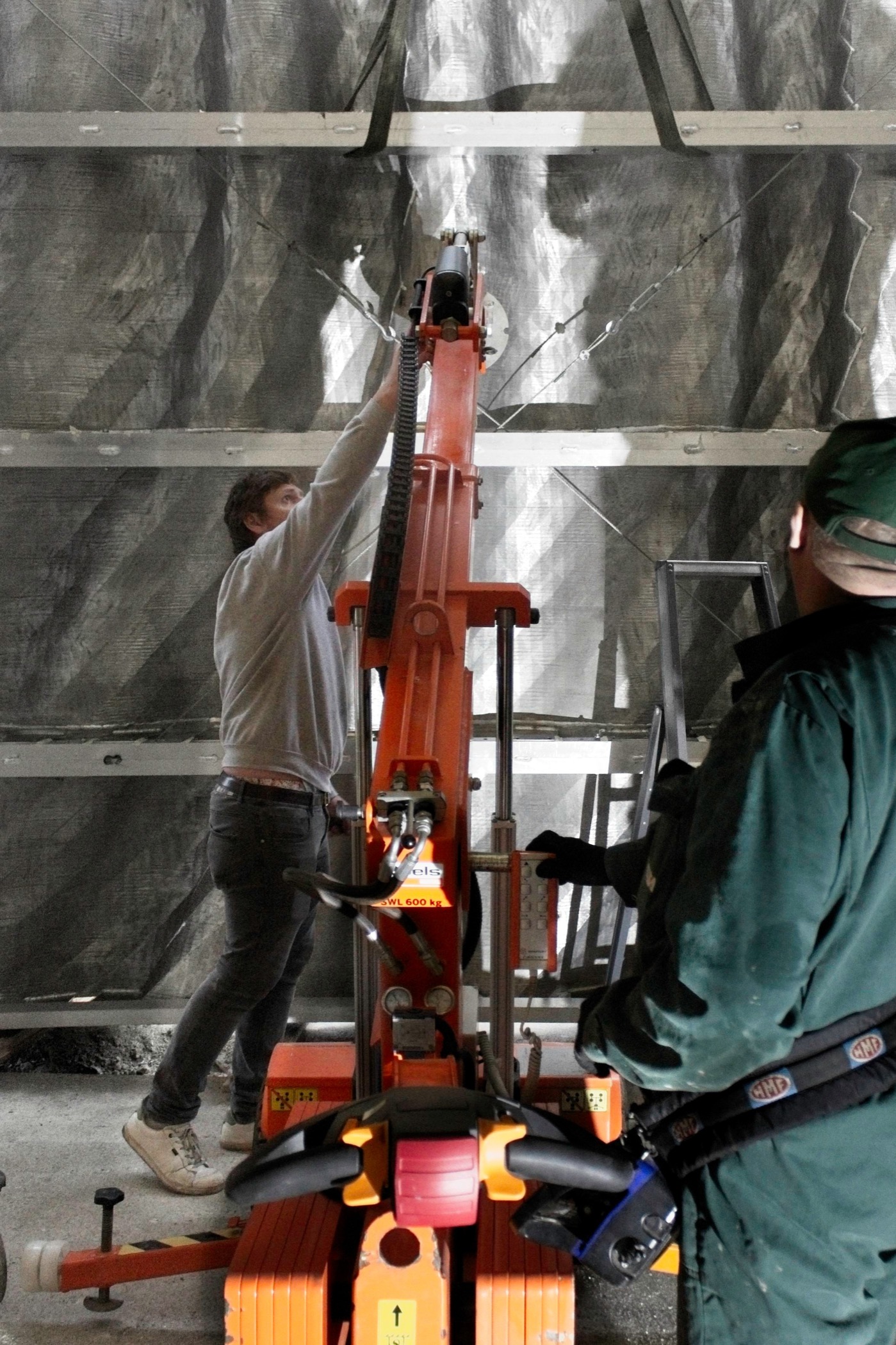
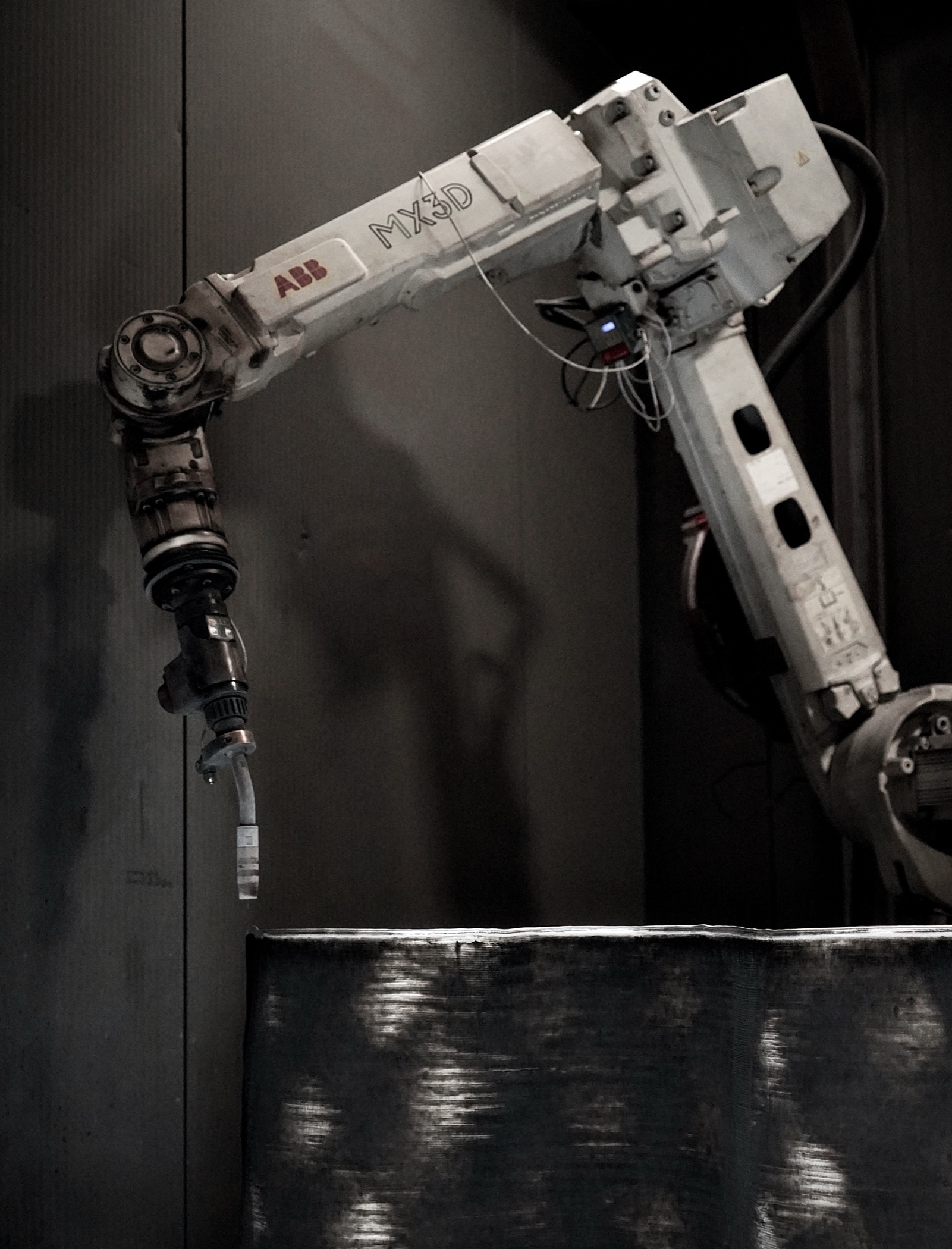
The work Freeze Frame 82.2 was born as a computer simulation. Using virtual physics, a digital wireframe cloth made of tensioned springs was brought into motion, simulating the various behaviours of a curtain. One specific moment in this animation caught our attention, rewind, play, freeze frame. There it is: frame 82.2 frozen in motion, rendering the curtain as if someone were to pull it slightly aside to take a quick peek at the audience — a coup d’œil — moments before the curtain rises. In a carefully coordinated choreography, a robotic arm equipped with a welding gun translated this specific moment, frame 82.2, layer by layer into an aluminium sculpture. The ephemeral physics of the simulation are here transformed into a tangible, load-bearing gate of more than four by four metres, each welded bead of MX3D’s high-power WAAM 3D printing process preserving the energy and turbulence of the action that shaped it.
In its suspended gesture, Freeze Frame 82.2 offers neither a beginning nor an end, but a moment held open, embracing its ambiguity. It invites us to linger in this shared in-between, to acknowledge uncertainty not as paralysis but as possibility. As Design Museum Gent opens its doors, the work stands as a reminder that design’s future will not be found in fixed answers, but in our willingness to pause, to look again, and to collaboratively step over the threshold into what has not yet been fully imagined…
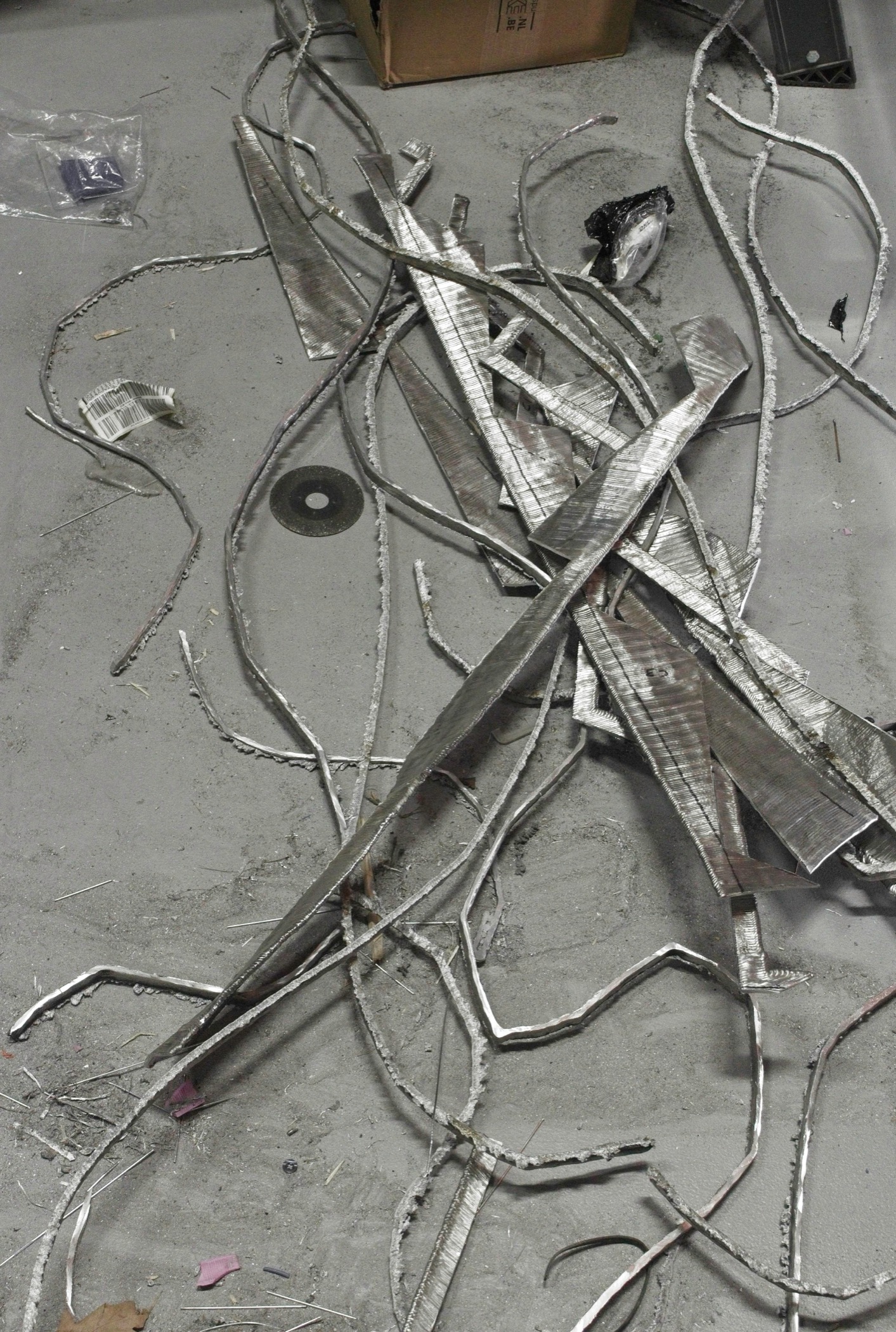
Simulation a digital wireframe cloth of tensioned springs, animated with virtual physics.Material Aluminium 3D print mounted on a load-bearing aluminium structure3D printing technique Wire Arc Additive Manufacturing (WAAM) is a metal 3D printing process in which a metal wire is melted by an electric welding arc and deposited layer by layer by a robotic arm. This technique enables the production of large components at high speed and with significantly reduced material waste compared to traditional manufacturing methods. Freeze Frame 82.2 was produced using WAAM in twelve individual segments, which were subsequently assembled by hand.
Weight of 3D print: 250 kg / Total weight of the gate: 360 kg
Unfold | Instagram | Bluesky | Linkedin
| CREDITS | |
| Concept and execution | Unfold |
| Client | Design Museum Gent & sogent |
| Curator Special Design Projects | Siegrid Demyttenaere |
| Architecture | Carmody Groarke, ATAMA and RE-ST Architectuur |
| Robotic 3D metal printing & assembly | MX3D Art Lab |
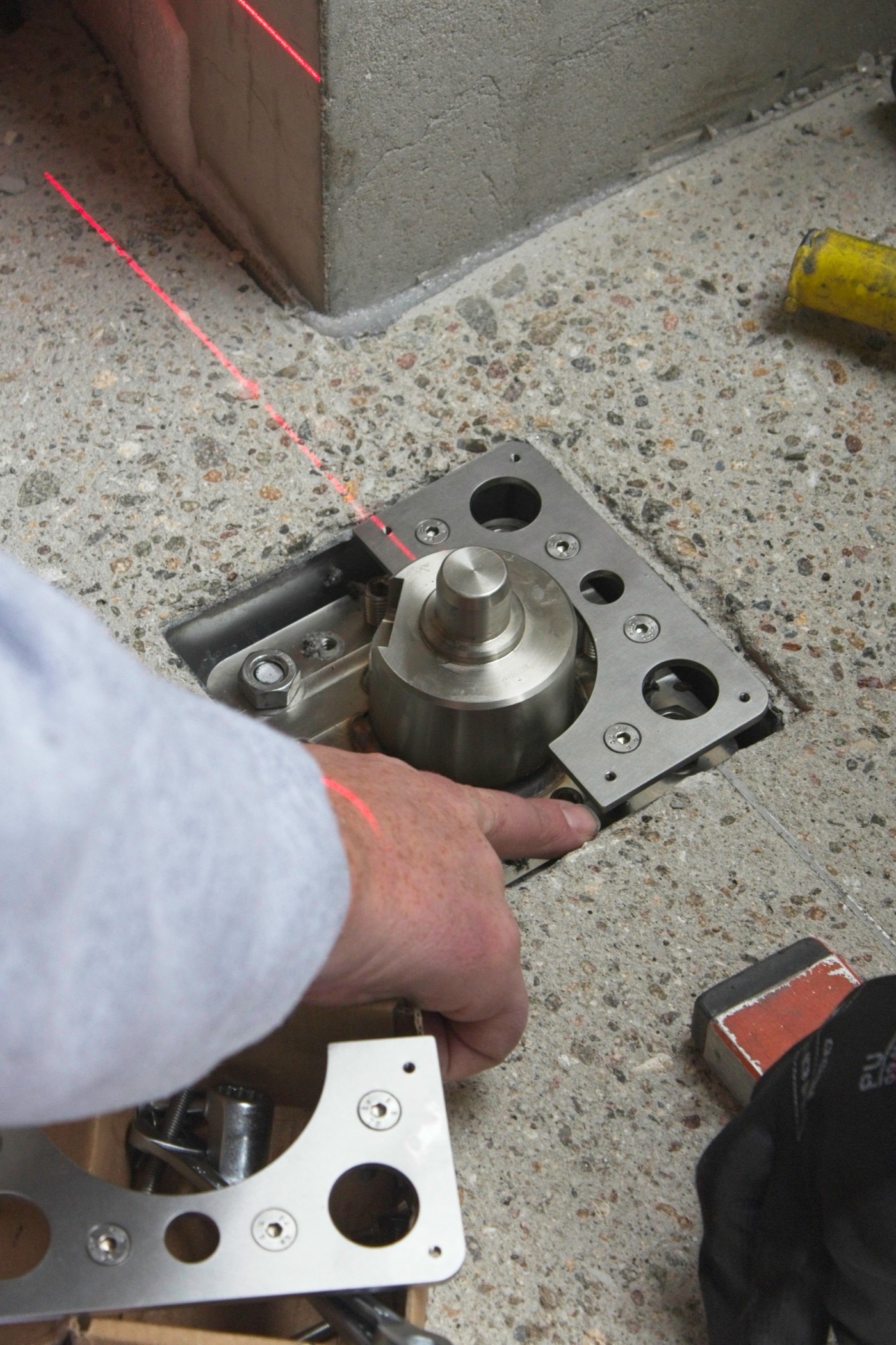
| Functional integration and installation | Wuyts |
| Production consultancy and technical detailing | Alton |
| Stability | Denkbar |
| Transport | Dick Frères |
| Film | Studio Alexandre Humbert |
| Unfold project team | Claire Warnier, Dries Verbruggen and Jibbe van Schie |
| With the support of Platform Kunst in Opdracht of the Flemish Government |