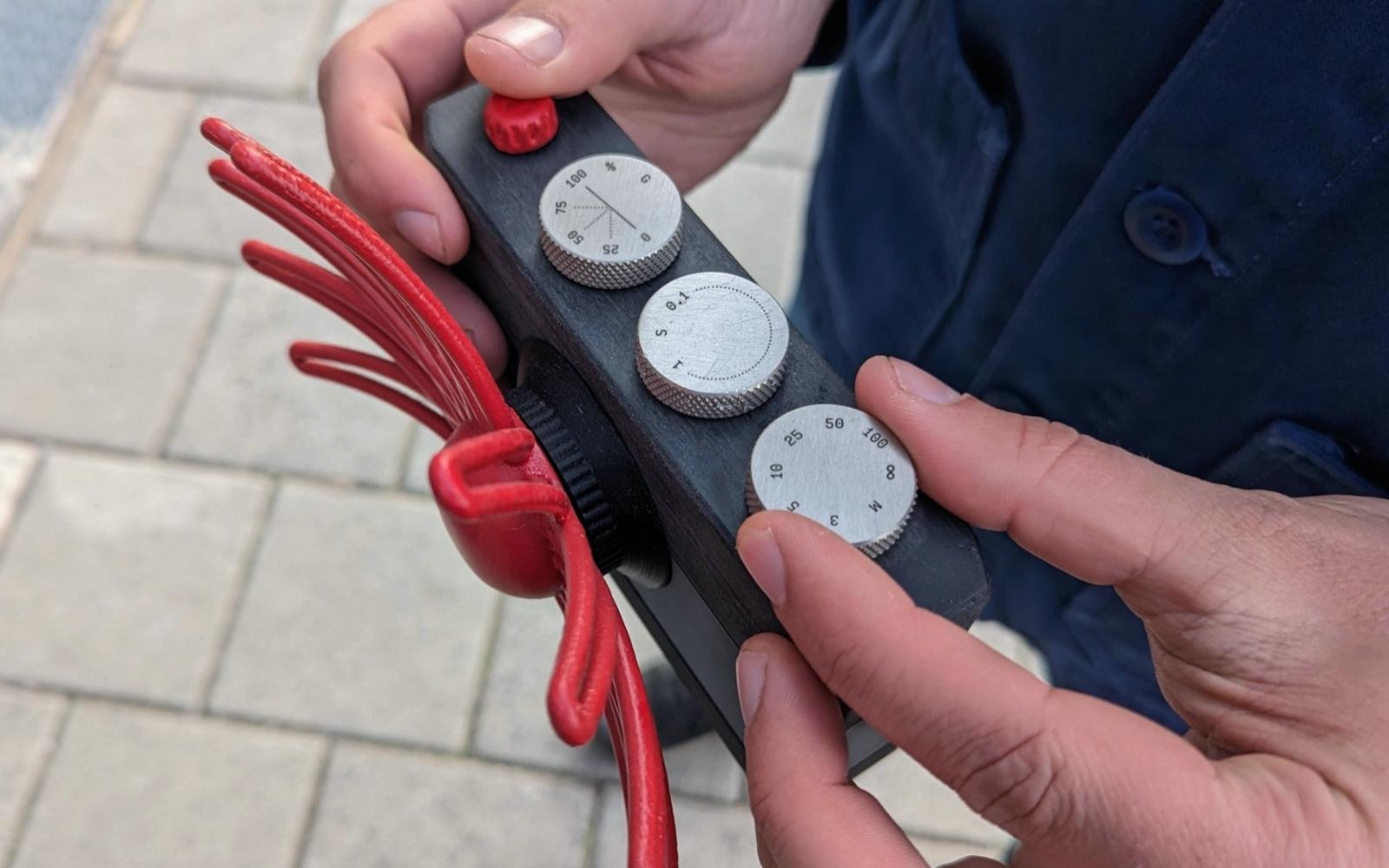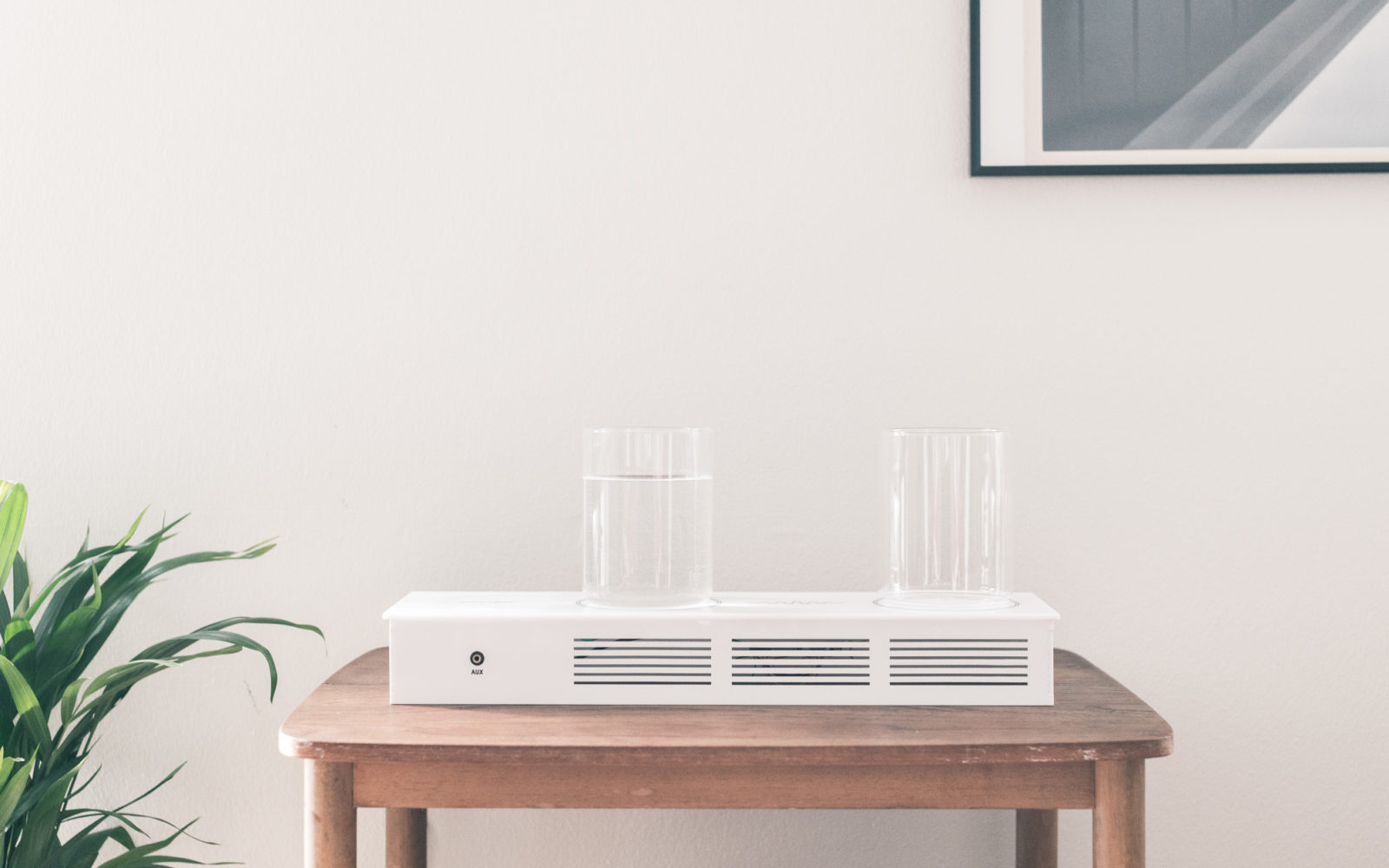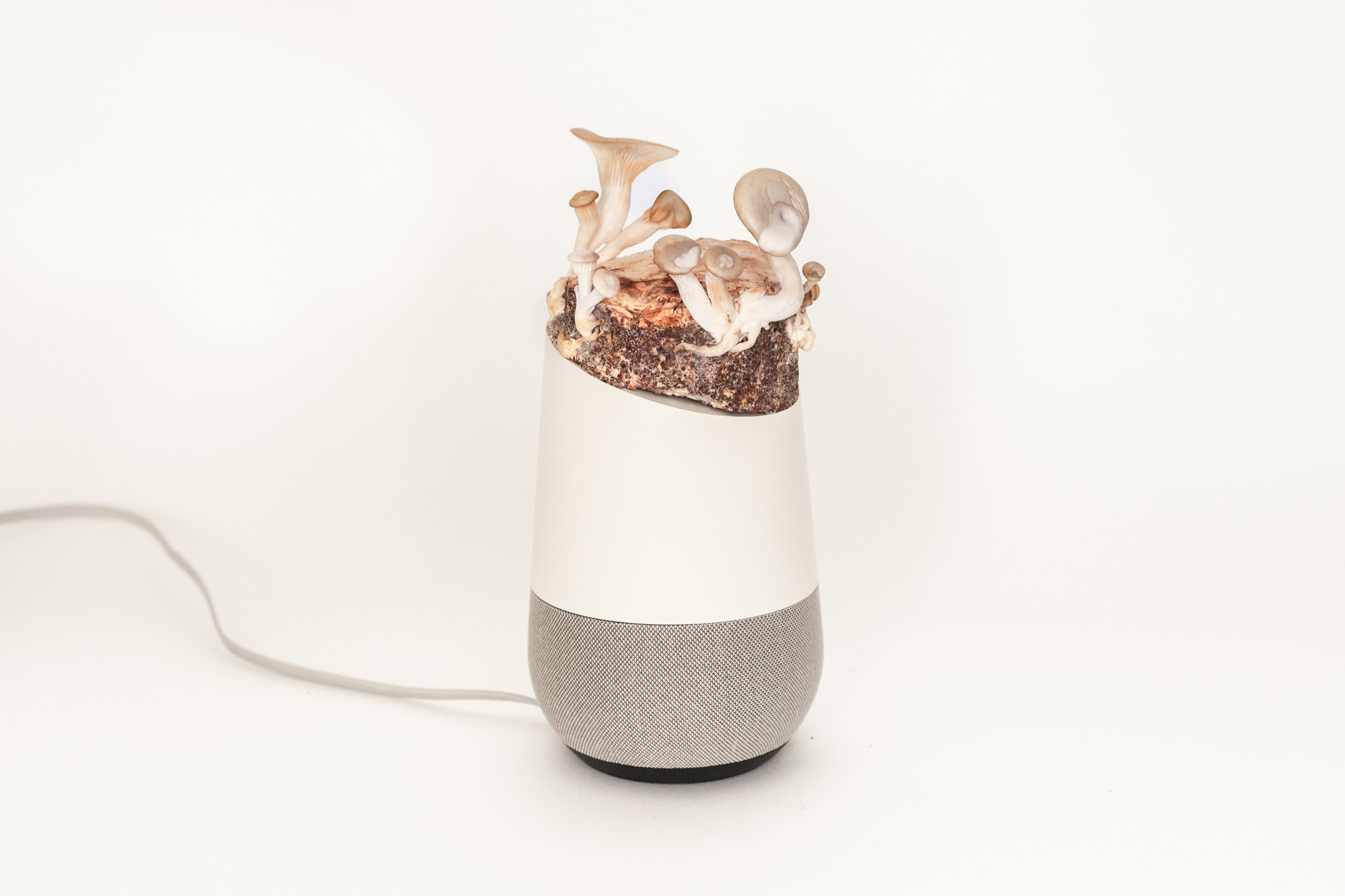
Created by Bjørn Karmann and Tore Knudsen, Alias is a teachable “parasite” that is designed to give users more control over their smart assistants, both when it comes to customisation and privacy. Through a simple app the user can train Alias to react on a custom wake-word/sound, and once trained, Alias can take control over your home assistant by activating it for you. When you don’t use it, Alias will make sure the assistant is paralysed and unable to listen by interrupting its microphones.
Our relationship with technology is formed from how we interact with it. However, commercial smart products for the home tends to treat the user as passive consumers. Especially smart-home assistance has shown design patterns that limits the possibilities of interaction and agency from the user perspective, even in the most private and personal sphere; the home. Our interaction patterns are highly determined by the designers of these products, and with Alias we are interested in how this power relation can be redefined, especially when it comes to privacy. The exciting future that “smart” technologies can give us often comes with conditions that diminish our privacy. With Alias we want to challenge this condition and ask what kind of “smart” we actually want in the future.


Bjørn and Tore looked at how cordyceps fungus and viruses can appropriate and control insects to fulfil their own agendas and were inspired to create their own parasite for smart home systems. They created Project Alias to demonstrate how maker-culture can be used to redefine our relationship with smart home technologies, by delegating more power from the designers to the end users of the products.
Alias acts as a middle-man device that is designed to appropriate any voice activated device. Equipped with speakers and a microphone, Alias is able to communicate and manipulate the home assistant when placed on top of it. The speakers of Alias are used to interrupt the assistance with a constant low noise/sound that feeds directly into the microphone of the assistant. First, when Alias recognises the user created wake-word, it stops the noise and quietly activates the assistant with a sound recording of the original wake-word. From here the assistant can be used as normal.


The wake word detection is made with a small neural network that runs locally on Alias, which can be trained and modified through live examples. The app acts as a controller to reset, train and turn on/off Alias.
The way Alias manipulates the home assistance allow to to create new custom functionalities and commands that the products were not originally intended for. Alias can be programmed to send any speech commands to the assistant’s speakers, which leaves us with a lot of new possibilities.
To learn more about Alias, how it works and how to create you own, see GitHub.
Created with Raspberry Pi A+, Respeaker Hat, 3D Printing and uses Python, Tensorflow, Keras, Socket I/O, Javscript, HTML and CSS.
Project Page | Bjørn Karmann | Tore Knudsen