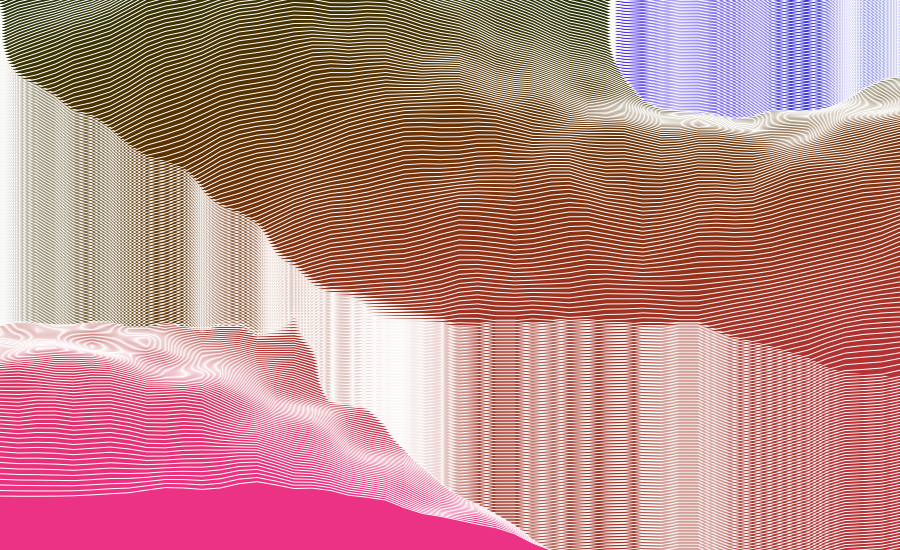
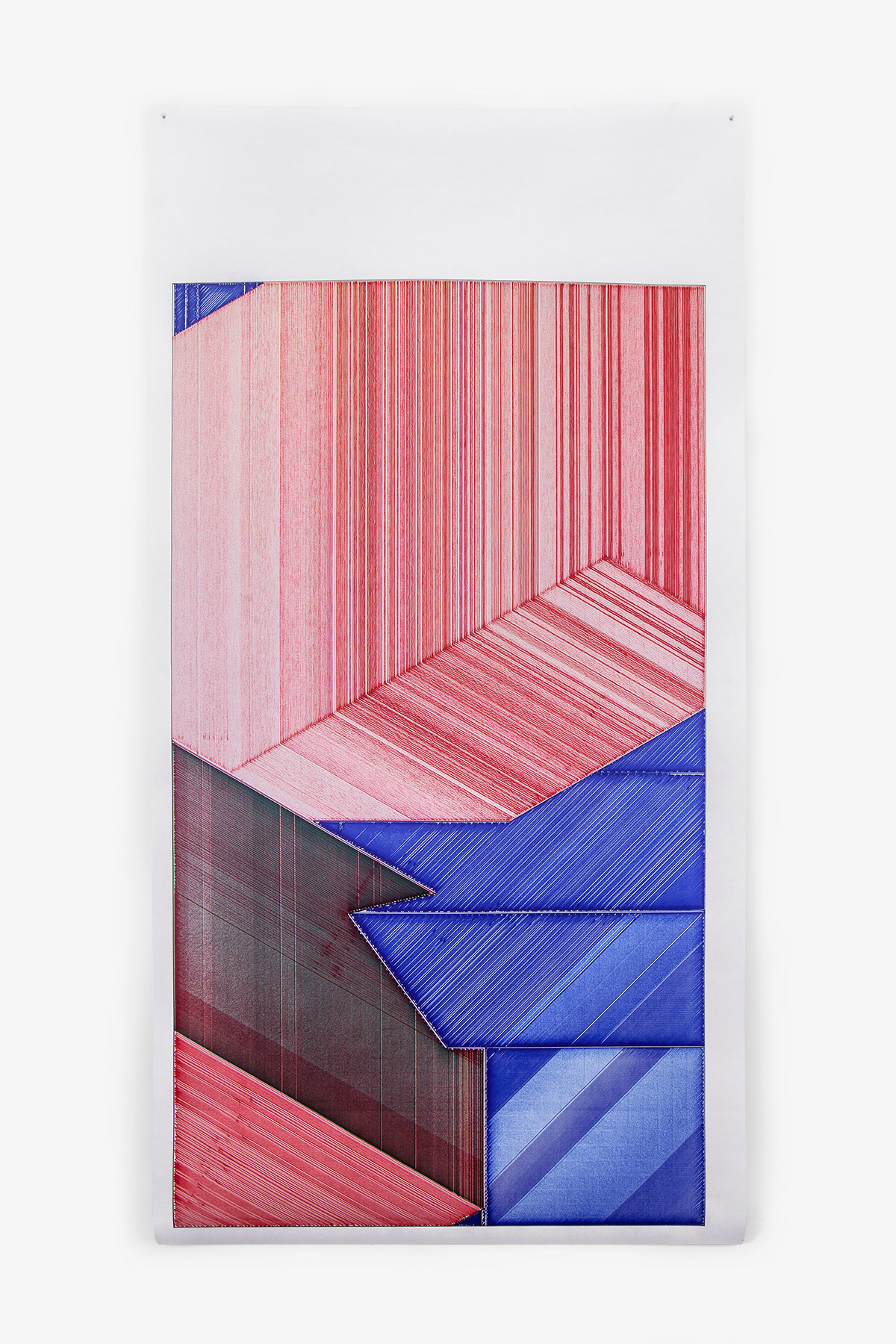
Created by Miguel Nóbrega, Possible, Plausible, Potential is a set of three series of isometric drawings generated by code and printed with colored markers on a plotter machine. In these drawings, Miguel explores a bridge between the iterative aspect of algorithms and the utopian aspect of modern architecture. Each drawing is a unique variation of the same set of rules and carefully placed random decisions.
The images generated by Miguel read as architectural structures, however they are not realizable in the architectural sense. The drawings he produces fail in creating feasible blueprints but succeed in expressing the possibilities we commonly find in the representations of utopian modern architecture.


Nóbrega uses randomness as a way to partially abdicate control over the process. Randomness balances the authorship of the work between the artist and the code itself, or more specifically, the executable quality of code. Whatever emerges from executing the code cannot be entirely predicted from just reading it. Nóbrega understands his process as one of defining the boundaries in which experiments will take place. The outcomes of these experiments are sometimes unpredictable, which will most likely add up to the process in a feedback loop. The role of the artist ends up being to interpret the results and based on them to redefine the boundaries of the program.
The drawings were created using Processing and printed vinyl cutter machine or a CNC milling machine, depending on their size. In his code, Miguel defines the objects as graphic representations of simple architectural elements such as walls, floor, columns, stairs etc. Every time the code runs, the elements instantiate with new randomly generated properties and are arranged in a unique composed structure. Because the drawings are actually made by markers on paper, this brings tactile quality to the work. In addition to generative software, Miguel has also created specific patterns for each architectural element. The drawings use a maximum of seven different colors, but the overlapping and combination of them creates nuances of color from a distant view, and a complexity of textures from a closer look.