Created by Dietmar Offenhuber and Orkan Telhan, Reservoirs of Venice is an installation that explores the city as a medium for information processing, using its physical systems to model and predict environmental changes. Inspired by the field of physical reservoir computing, which leverages dynamic physical processes for self-learning systems, the project envisions Venice as a data source and computational agent that predicts its future.
We present a “water computer” that learns from human activity, gleaned from the spatio-temporal patterns of Venice’s water surfaces. During the exhibition, the installation will learn to interpret its activity resulting from human movement and environmental conditions, and to predict the time of day. Unlike energy-intensive digital AI systems, this computer is composed of the very elements it computes with, and requires only a fraction of the energy to operate.
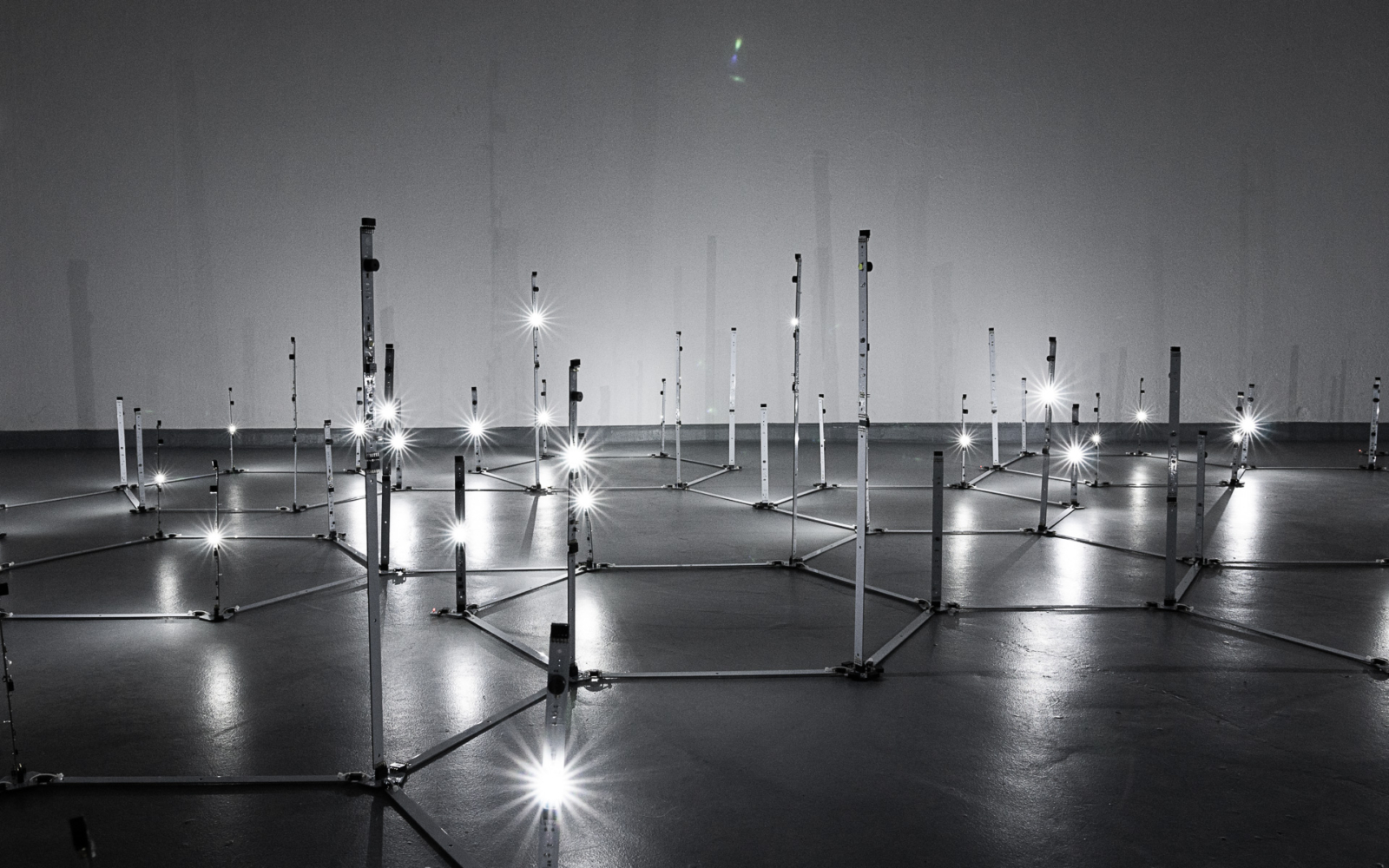
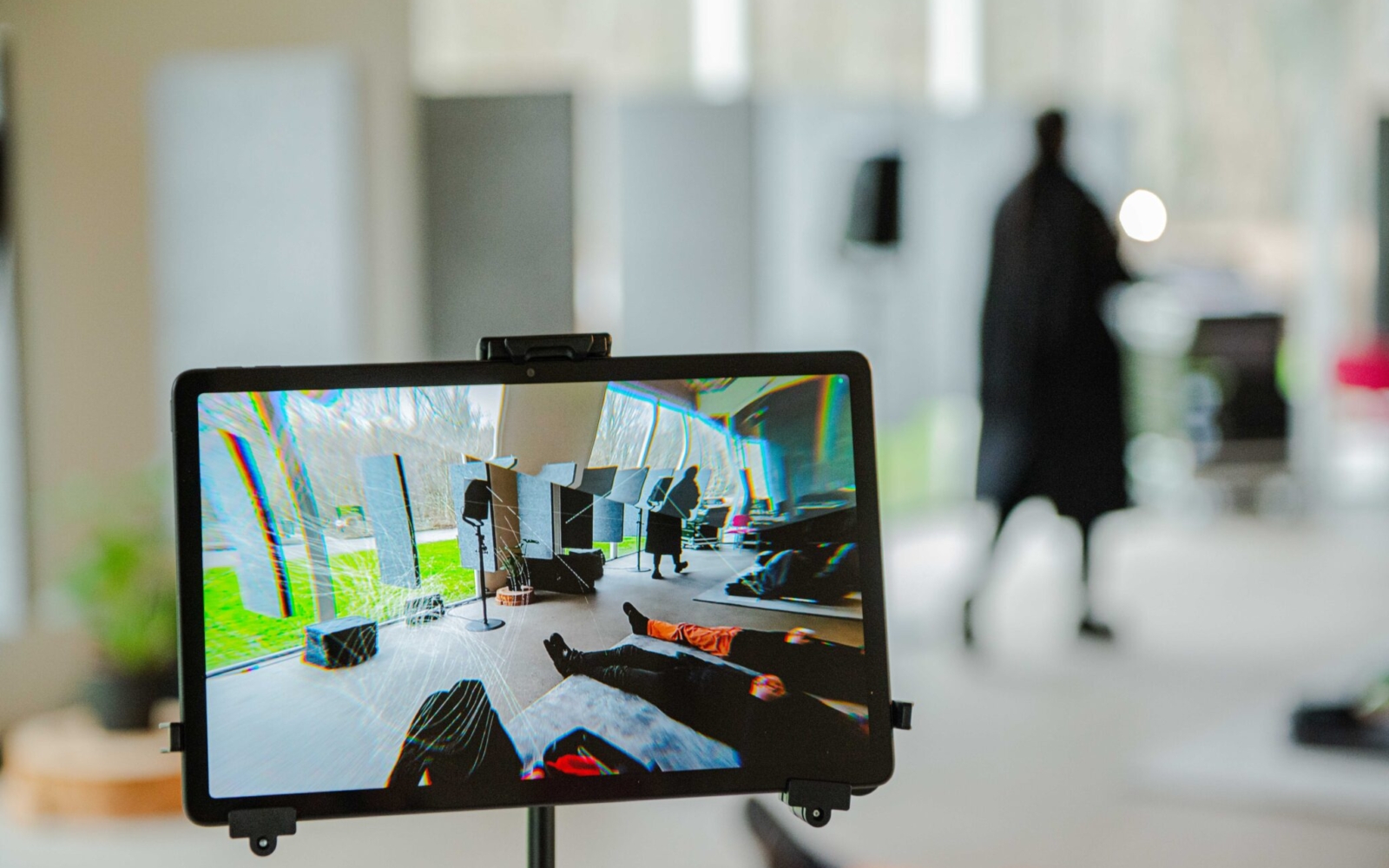
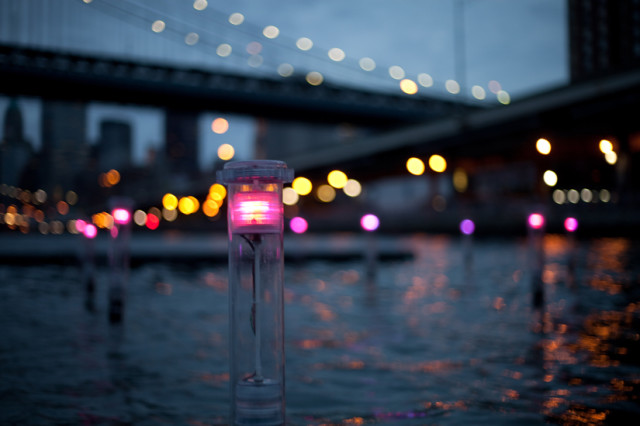
This physical neural network installation consists of six columns that serve different functions. The screens column collects information about human activity on the bridges and canals of Venice from a network of webcams around the city. This information is passed into the four water reservoir columns, which act as a neural network. Each column uses water disturbances to transform the input data and feed it to the next column. Finally, the time column uses a single-layer digital neural network to interpret the recursively transformed data and learns to infer the corresponding time of day.


Reservoir computing is a new area of computer science that aims to reduce the energy required to train deep neural networks by keeping most layers static, forming a “reservoir” of digital neurons, and training only the final output layer that interprets its transformations. Physical reservoir computing replaces this reservoir with physical processes to achieve equivalent nonlinear transformations. The temporal dynamics of the physical medium acts as a short-term memory for the computation: while the waves are chaotic and unpredictable, the time it takes for them to build up and settle is invariant.
Over time, the installation learns what a typical morning, afternoon, or evening in Venice looks like: the flow of pedestrians and dogs, the vaporettos, water taxis, and boats. In this sense, the installation is a model for an urban reservoir computer: the water surfaces of the canals can be compared to how information moves in the neural network of a reservoir. If we learn to process its patterns, we can use the activity of the city to reflect and interpret its own state.
Project Page | Dietmar Offenhuber | Orkan Telhan
Additional Credits: Jesus Ocampo Aguilar, Paula Martin Rivero, Sebastian Gonzalez Quintero (Design & Creative Team), Sebastian Gonzalez Quintero (Video/Photography) and Joel Murphy (Technical support). Supported by: Österreichisches Bundesministerium für Kunst, Kultur, öffentlicher Dienst und Sport; College of Arts Media and Design, Northeastern University; MAI International GmbH