Inspired by Charles Dickens’ aphorism, ‘We forge the chains we wear in life,’ Yuichiro Katsumoto created a device that forms letters with chains. For Yuichiro, the chain is a metaphor for heavy and unbreakable things that bind our ideas and emotions, and words that tend to possess our minds and souls.
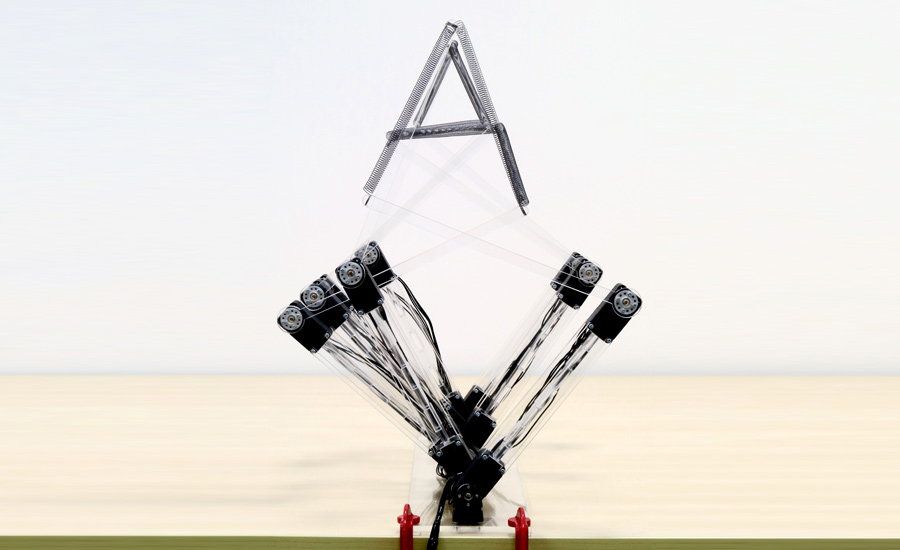
Over the past decade, Yuichiro has explored the possibility of displaying text and pictures using computer-controlled linear objects. Pixels, or dots, enable a wide variety of computer-generated images to be displayed. By contrast, humans use lines to write letters and draw pictures. Yuichiro believes that linear objects, such as strings and springs, can also be a medium for conveying people’s ideas and emotions. This exploration has been materialized in projects such as Robotype 3 and Hinemosu 30.
In this study, the focus is on the chains. The device for lettering with chains is named Renment, in Japanese, meaning to “continue endlessly without breaking”. In addition, Japanese script typefaces are also called Renmen. Renment automatically writes the abovementioned aphorism as the work title. When the device finishes writing, the words are deconstructed, the letters return to the chains, and blanks remain, except scratches from a lead weight attached to the end of the chain remaining on the base. Then, the automatic writing begins again.
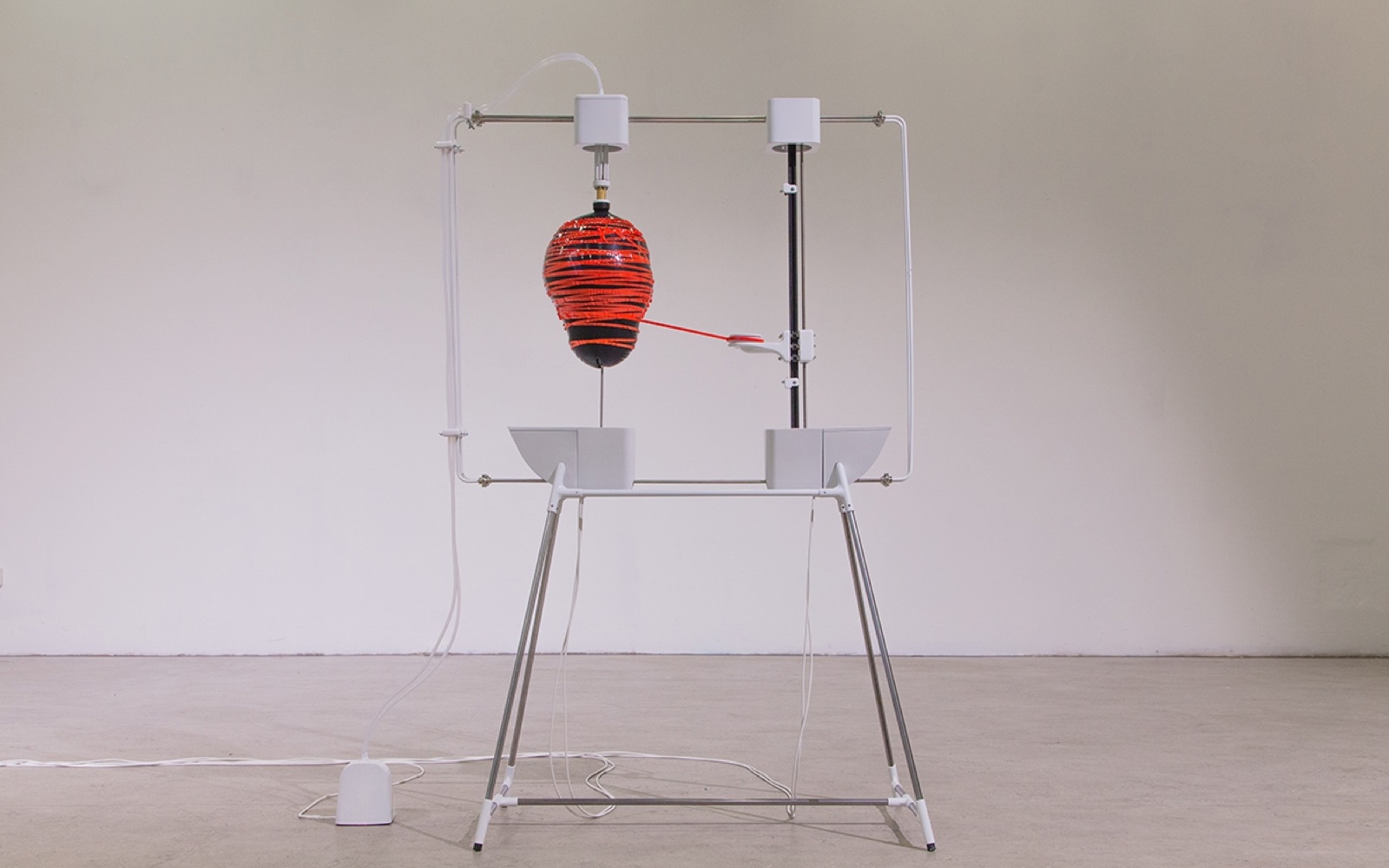
The basic design of Renment involves a computer numerical control (CNC) milling machine and pen plotter. Two stepping motors installed on the frame move the XY position of the header, and another stepping motor mounted on the header feeds the chain from the reel. The characters’ thickness, tangling of lines, and blurring can be changed by controlling the speed at which the header moves and the amount of chains fed. Because letters are formed by chains, their shapes always fluctuate.


The control circuit uses Grbl, which were developed by volunteers and distributed under the GPLv3 license and Arduino CNC Shield V3.51. The mechanical design was initially based on an example from DIY Machines Ltd. Subsequently, all parts were recreated for this piece by adding a chain feed mechanism, timing belt tensioner, etc. The font was designed based on the alphabet of the Korean font Pilgi after studying several existing legible script fonts, and it was G-coded for Grbl.