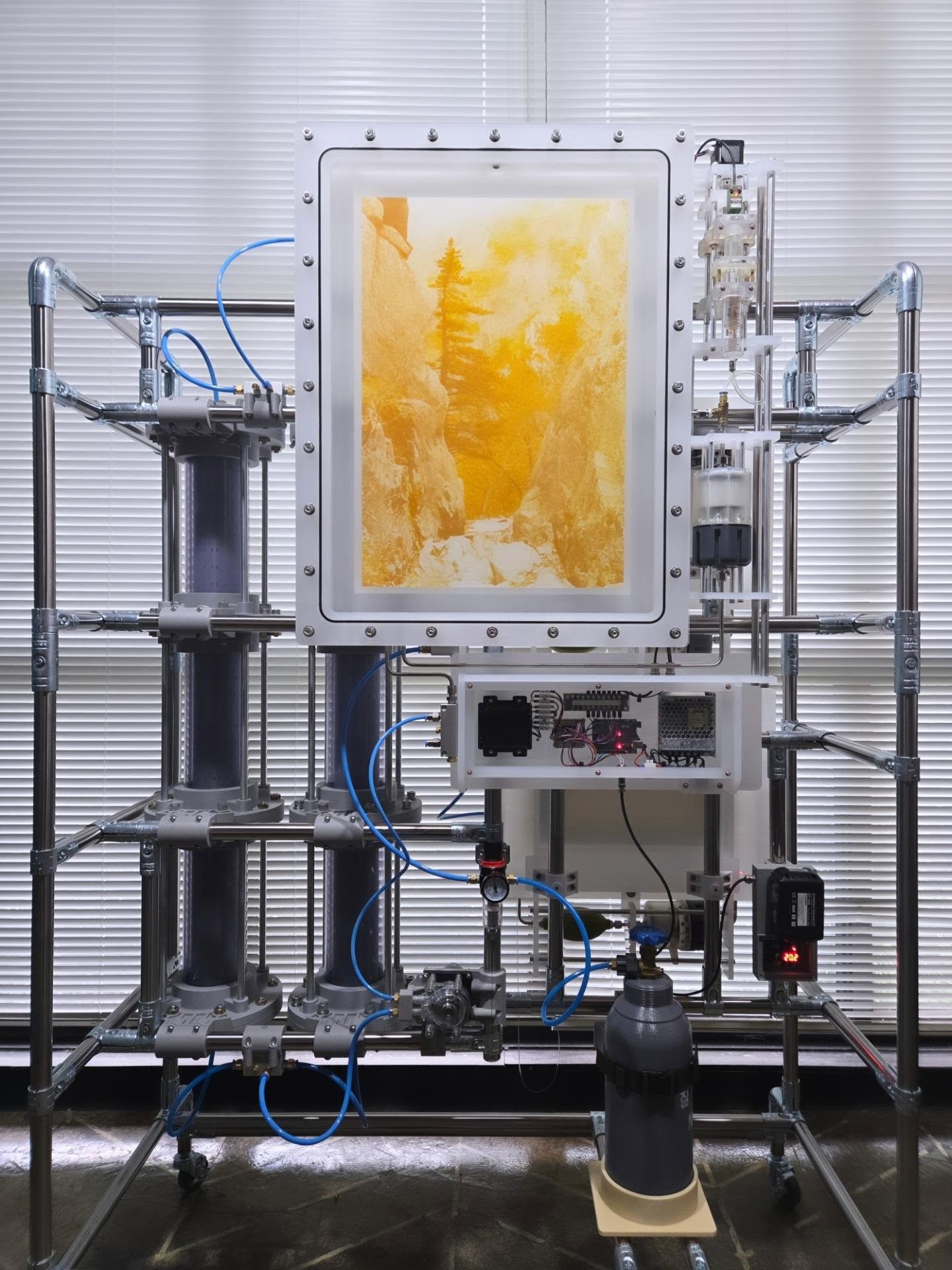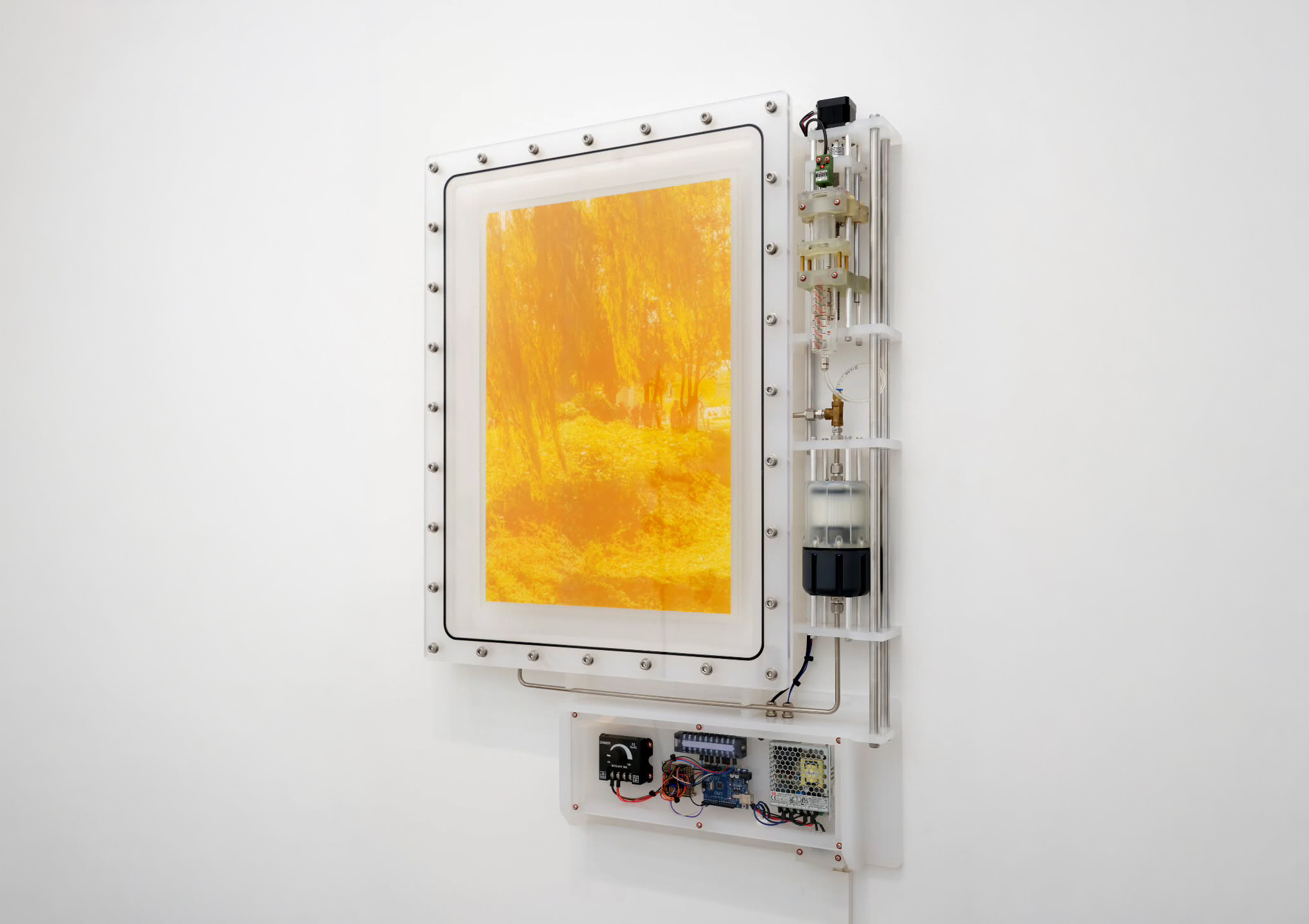
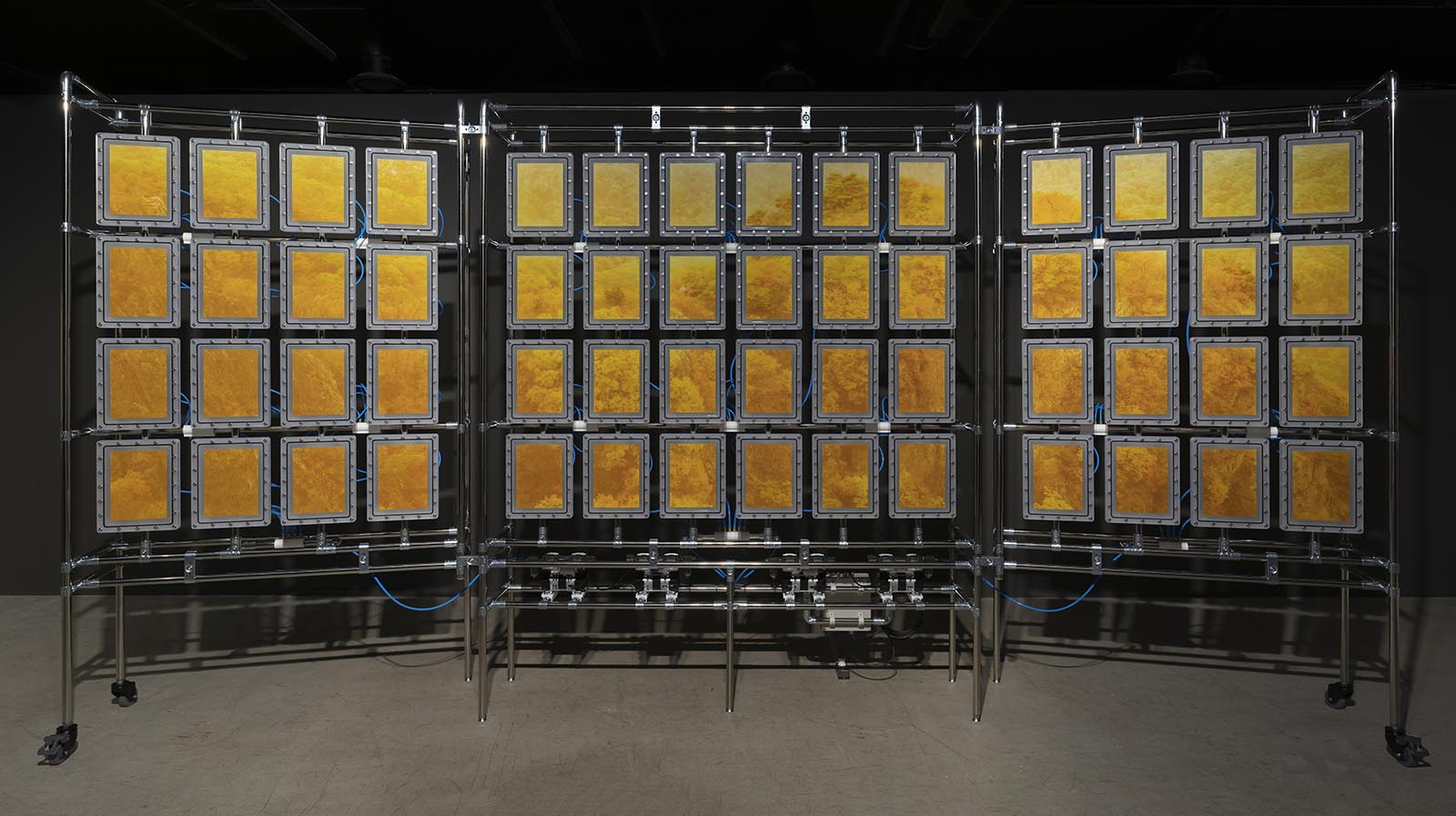
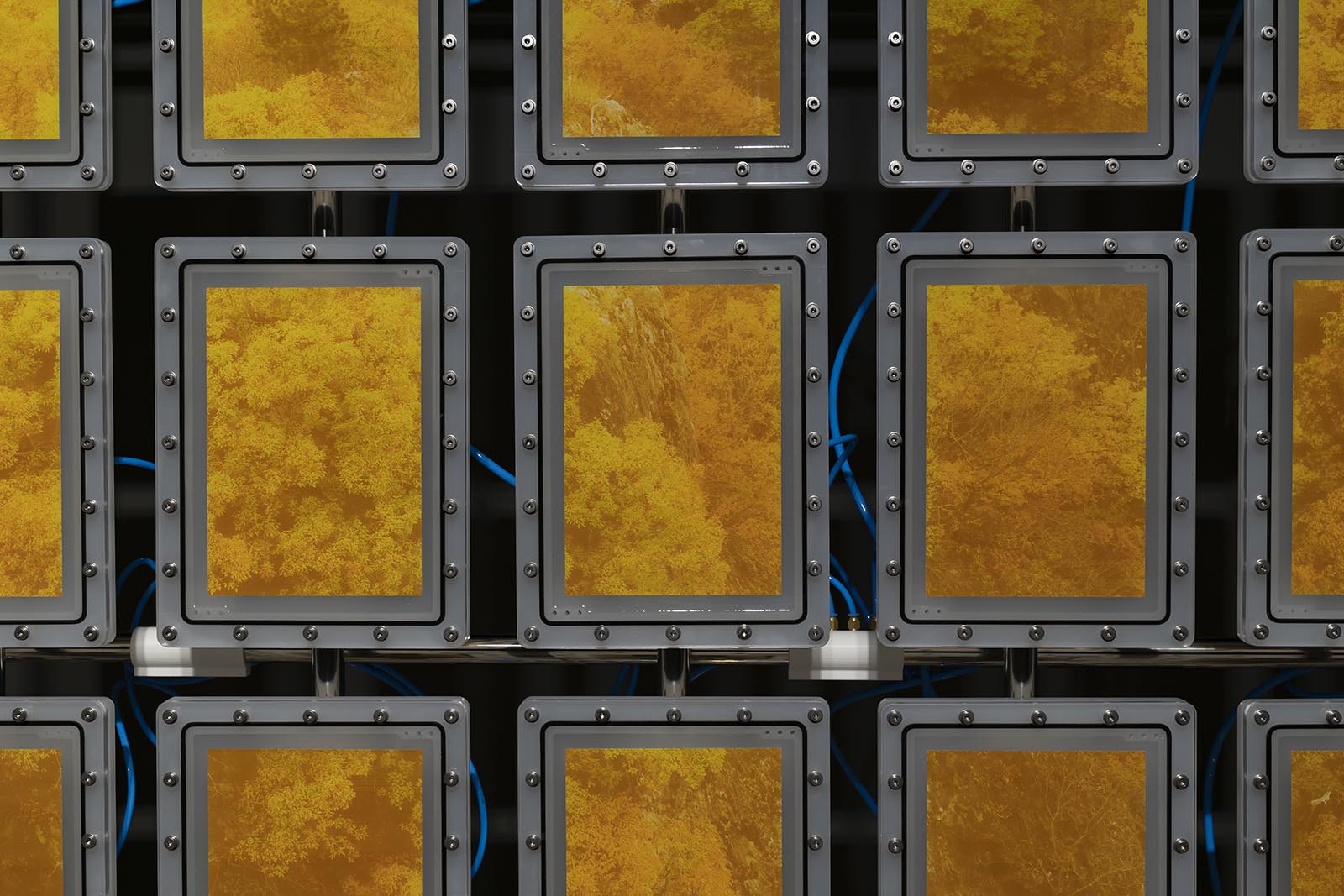
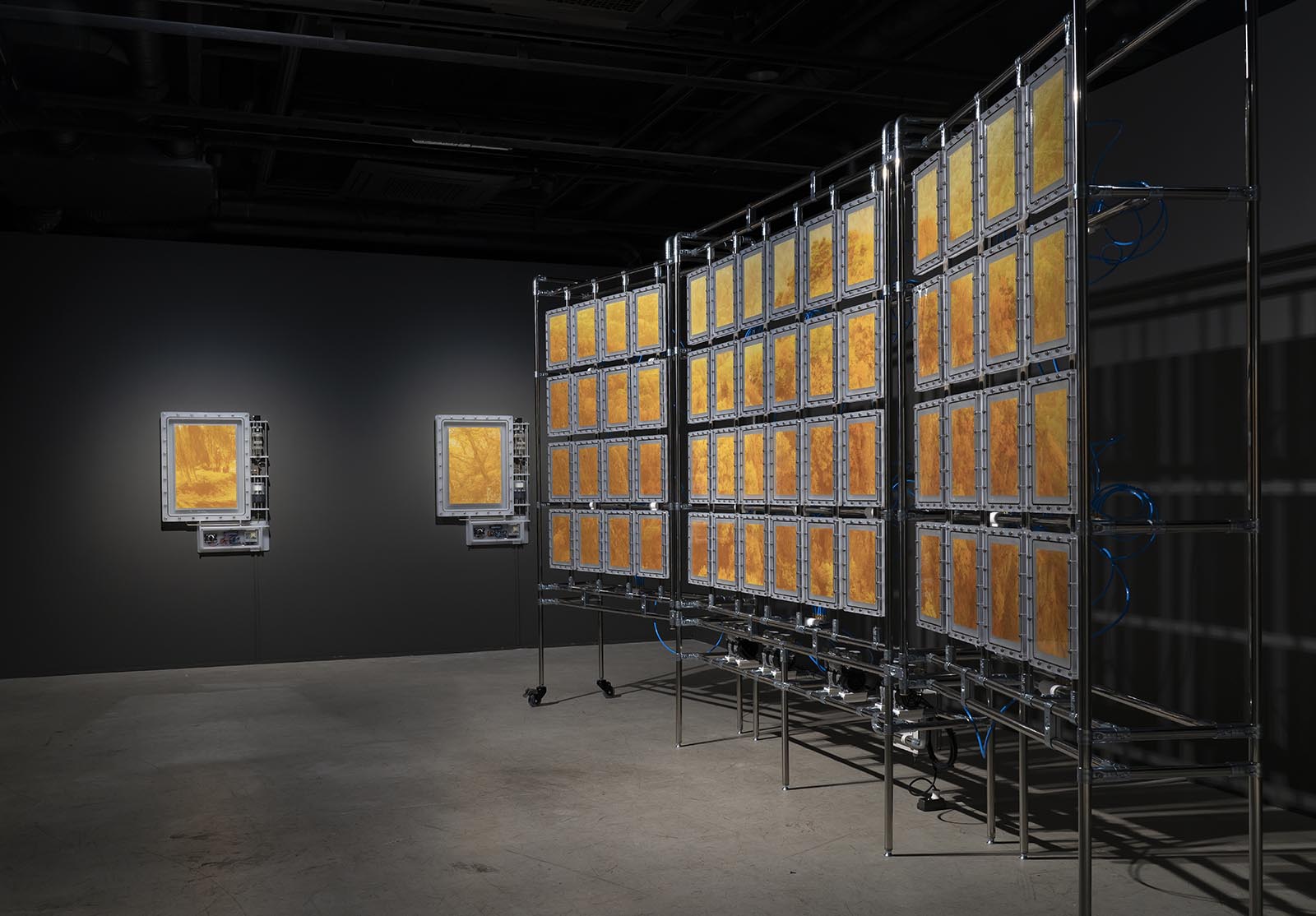
Created by Jungki Beak, the photographs is of are a series of landscape photographs printed using pigments extracted from various natural elements collected from the location where the photo was taken, alongside a custom built system (enclosure) to preserve them.
Since nature is inherently cyclical and constantly changing, just as a fully bloomed flower withers over time, the photographs of this series gradually fade and ultimately leave only faint traces. This concept stands in contrast to the belief that photographs, as records, can be preserved indefinitely. However, as Jungki points out, it is precisely because these photographs disappear that they can embody the essence of nature.
The fact that the photograph disappears means that each time we view it, it is no longer the same as before. Unlike conventional photographs, which can be viewed years later and endlessly reproduced, the landscape photographs in is of retain the ever-changing nature of nature itself, presenting a different appearance at every moment.
Jungki Beak
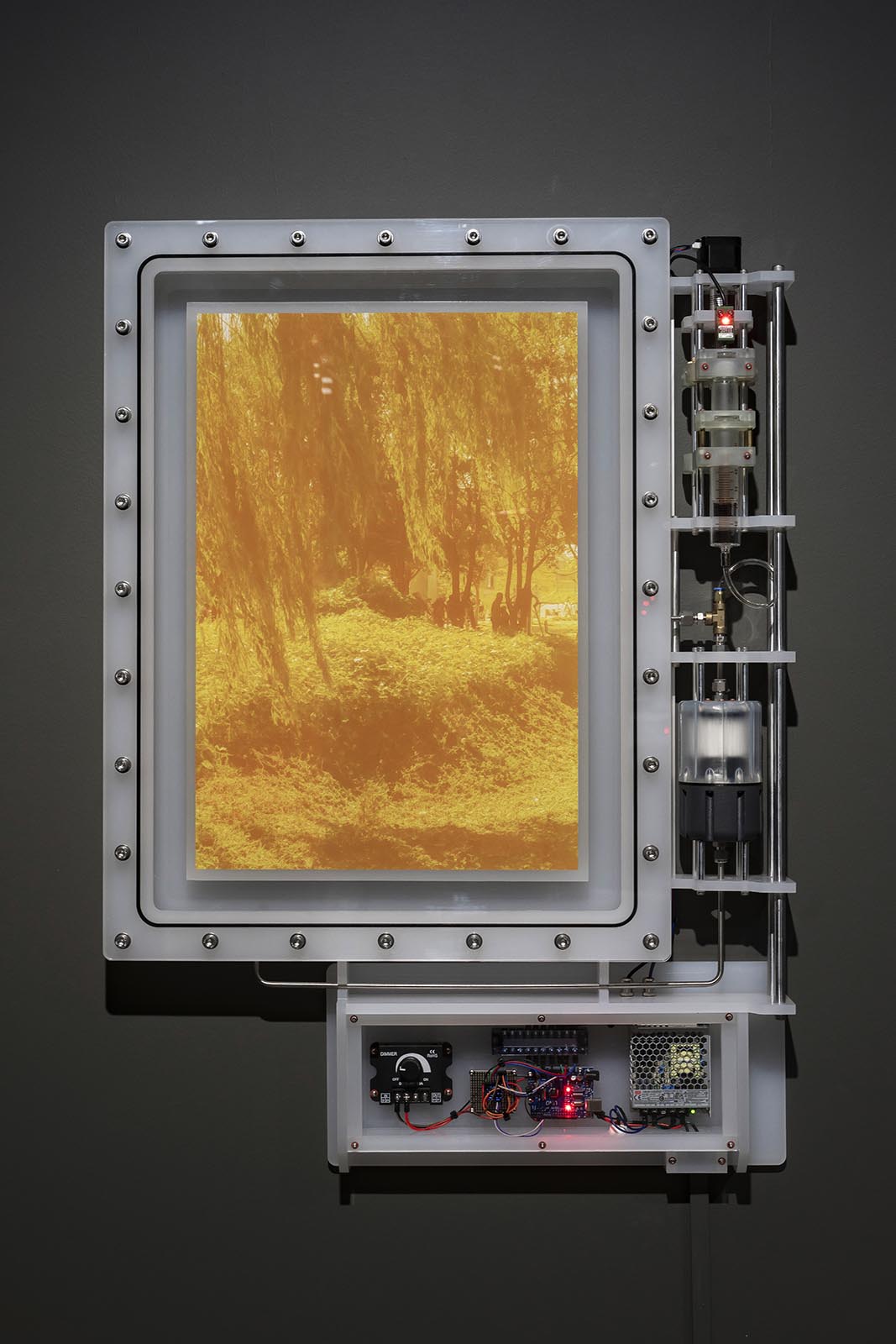
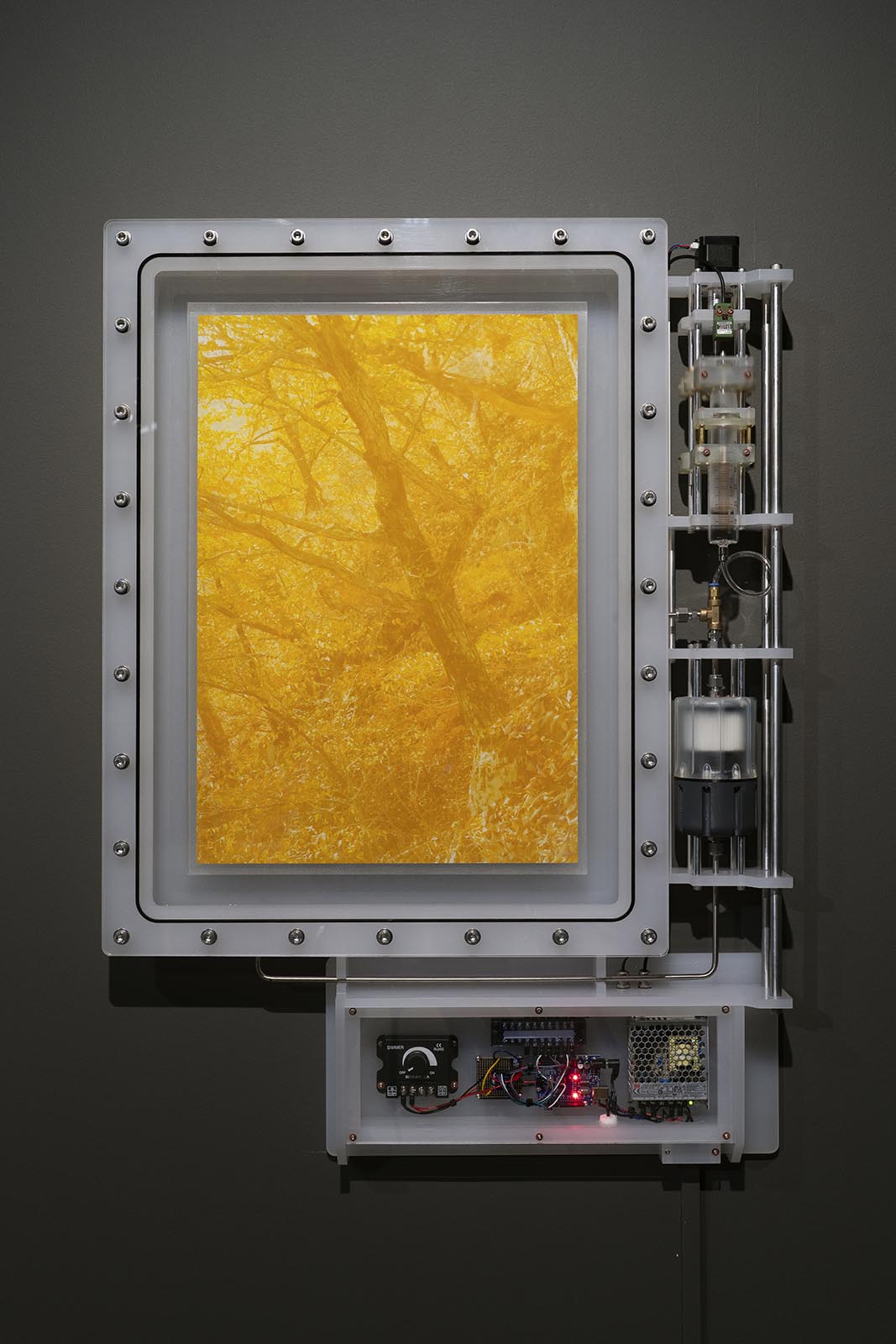
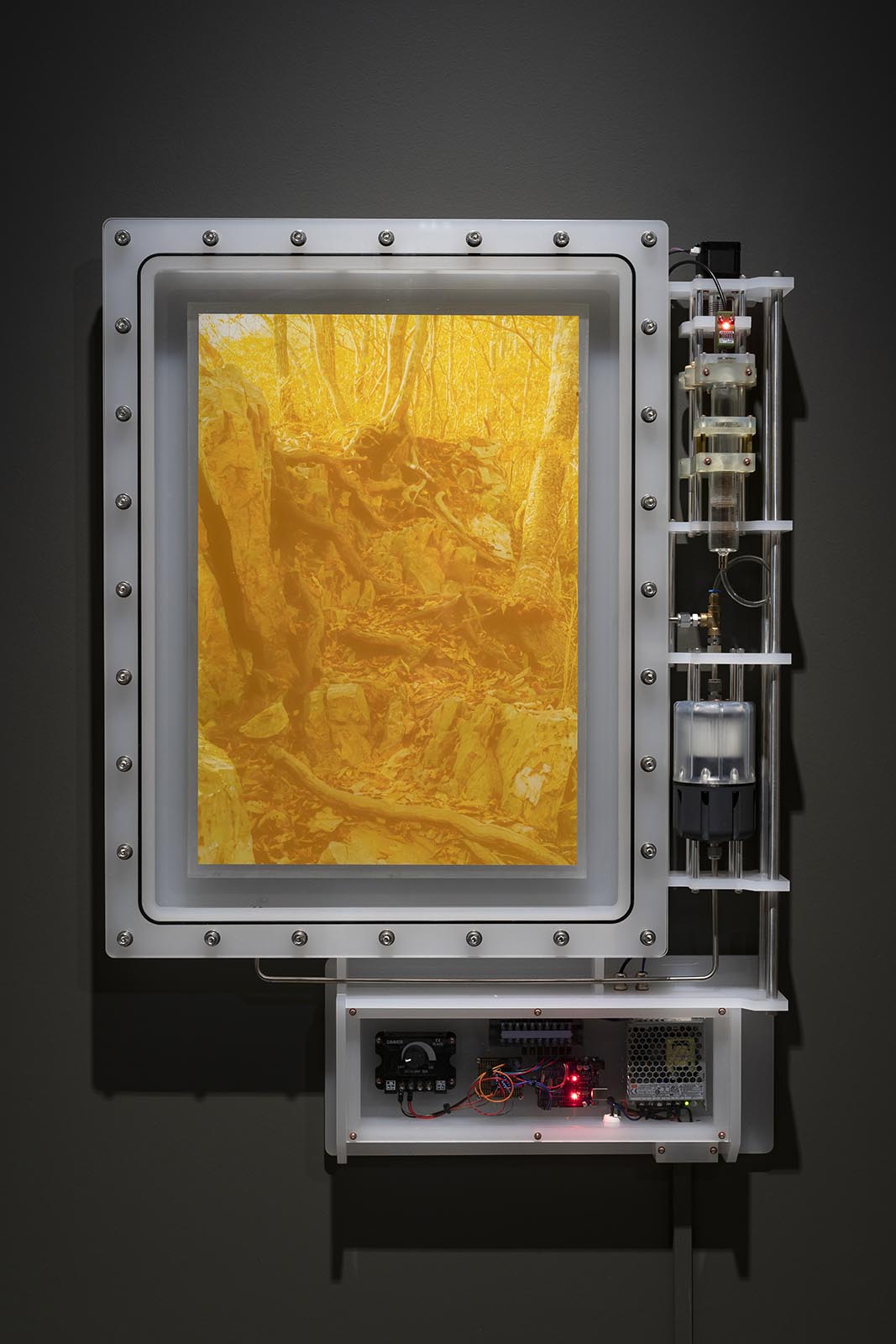
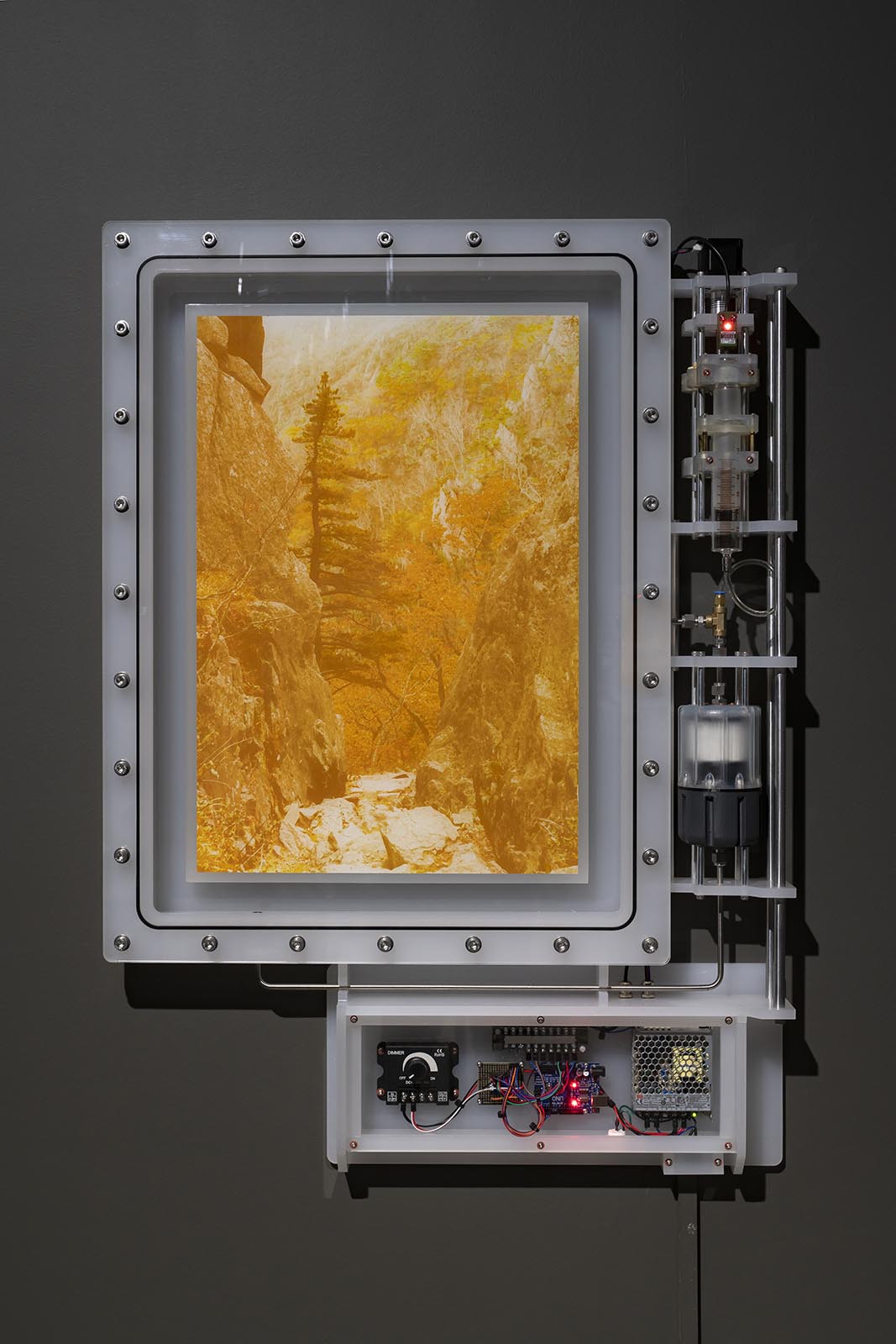
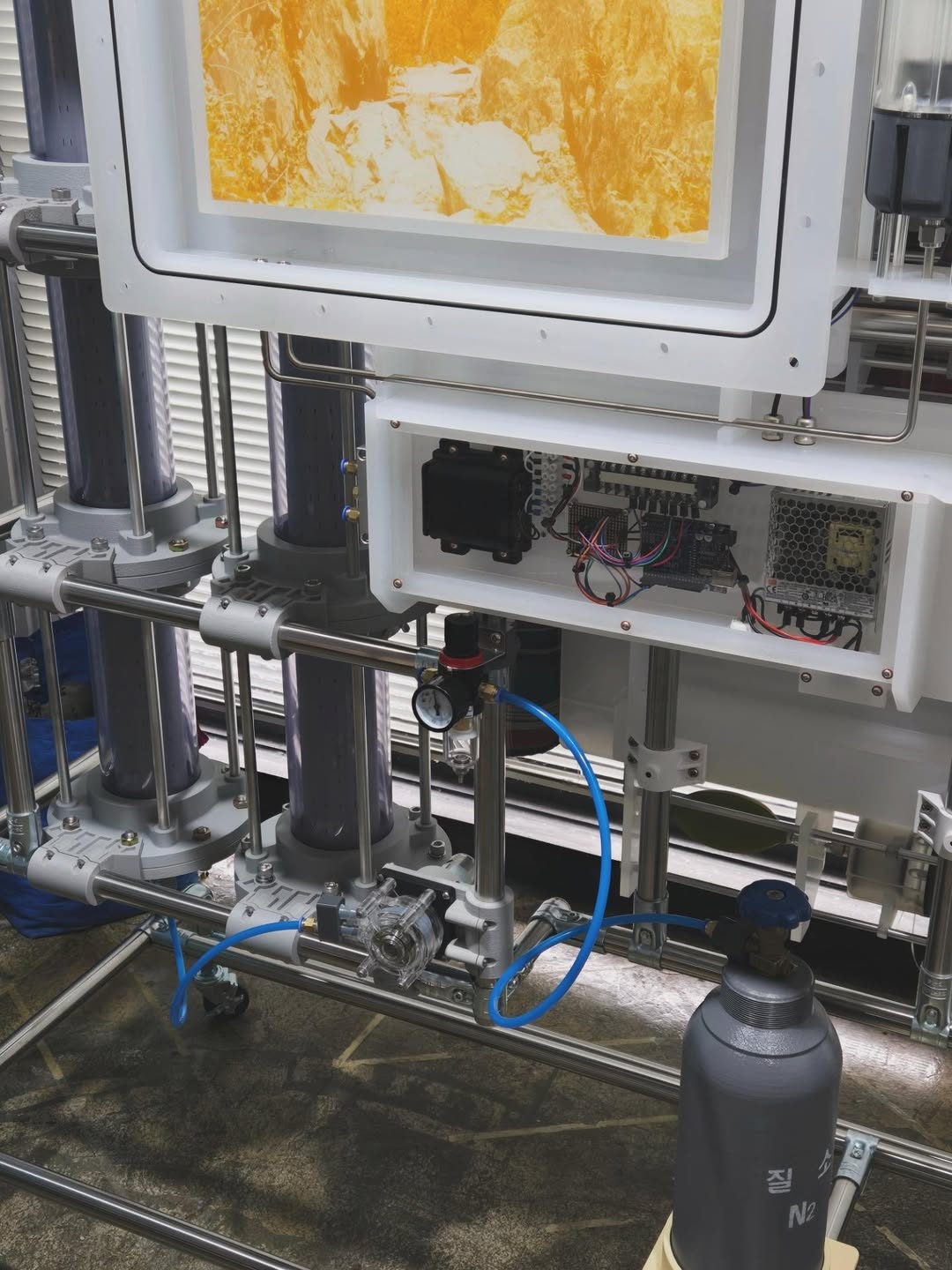
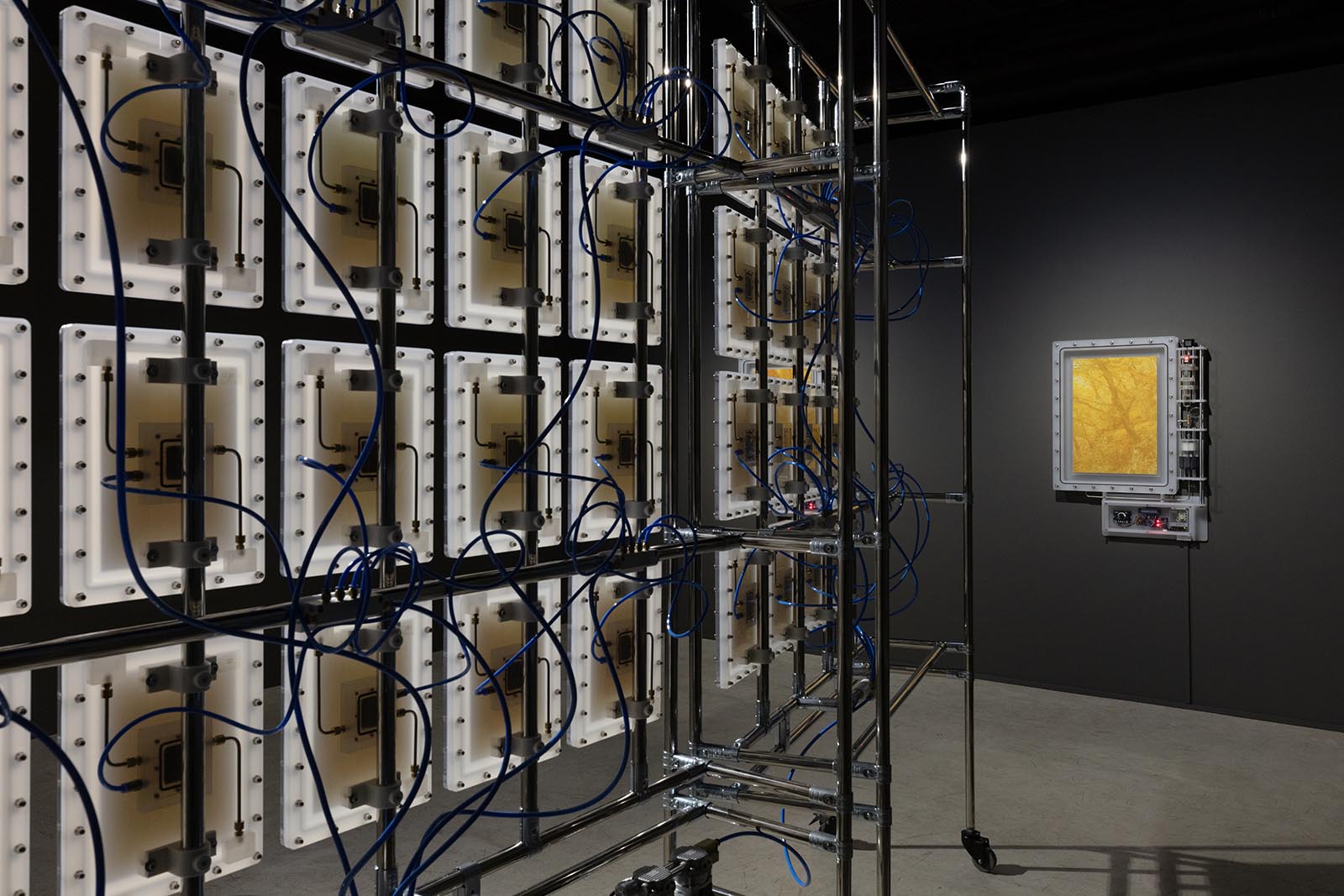
Accepting that photographs disappear has became a critical part of Jungki practice. The preservation devices surrounding the photographs are just as important as the photographs themselves. Part of this challenge was to develop various preservation methods and devices because plant-based pigments (extracted from flowers, leaves, stems, and roots) are highly vulnerable to oxygen and UV light. One approach is an oxygen-removal system using steel wool. Once the photo is printed, it is placed in an airtight acrylic chamber connected to the oxygen-absorbing unit. As steel reacts with oxygen to form iron oxide, the oxygen inside the sealed chamber is consumed through this reaction. The large surface area of steel wool allows it to react quickly, ensuring the interior is rapidly depleted of oxygen and the photograph is protected from oxidation over an extended period. Another method, used in work, is of Songnisan 2024-4, involves a vacuum pump controlled by Arduino that physically removes oxygen. In this case, the photo is placed between two transparent acrylic plates, and the minute space between them is vacuumed through a thin hose approximately every two hours.
When we look at nature photography in travel brochures, we often cannot tell when the image was taken. Beautiful yet exaggerated compositions and saturated colors seem to distance us from the natural subject. Such images, preserved on film or digitally, may hold archival value, but I believe the problem today is that only surface-level images exist in our lives. On social media, we are surrounded by endlessly replicated and generated digital photos and videos, even those made by AI. In this age, I feel we are becoming increasingly disconnected from the essence, obscured by superficial images.
Jungki Beak
Some pieces, like is of Naejangsan 2023-1., although enclosed in a sealed chamber, does not feature any preservation device. This work was originally shown in 2023 at the Daegu Art Museum, and two years later, its colors had significantly faded as it sat in a corner of his studio. Unlike other works with preservation mechanisms designed to maintain colour as long as possible, with this piece Jungki wanted at least one piece to be shown without any intervention.
Project Page | Jungki Beak | Instagram