Exhibit A begins from a simple but unsettling proposition: if art is defined not by its form, but by the emotions it provokes, can crime itself be considered art? And if so, what happens when the spectator is no longer a passive observer, but the one committing the act? The work does not depict crime, nor does it simulate it in a symbolic sense. Instead, it confronts the visitor with a moral threshold and asks them to cross it.
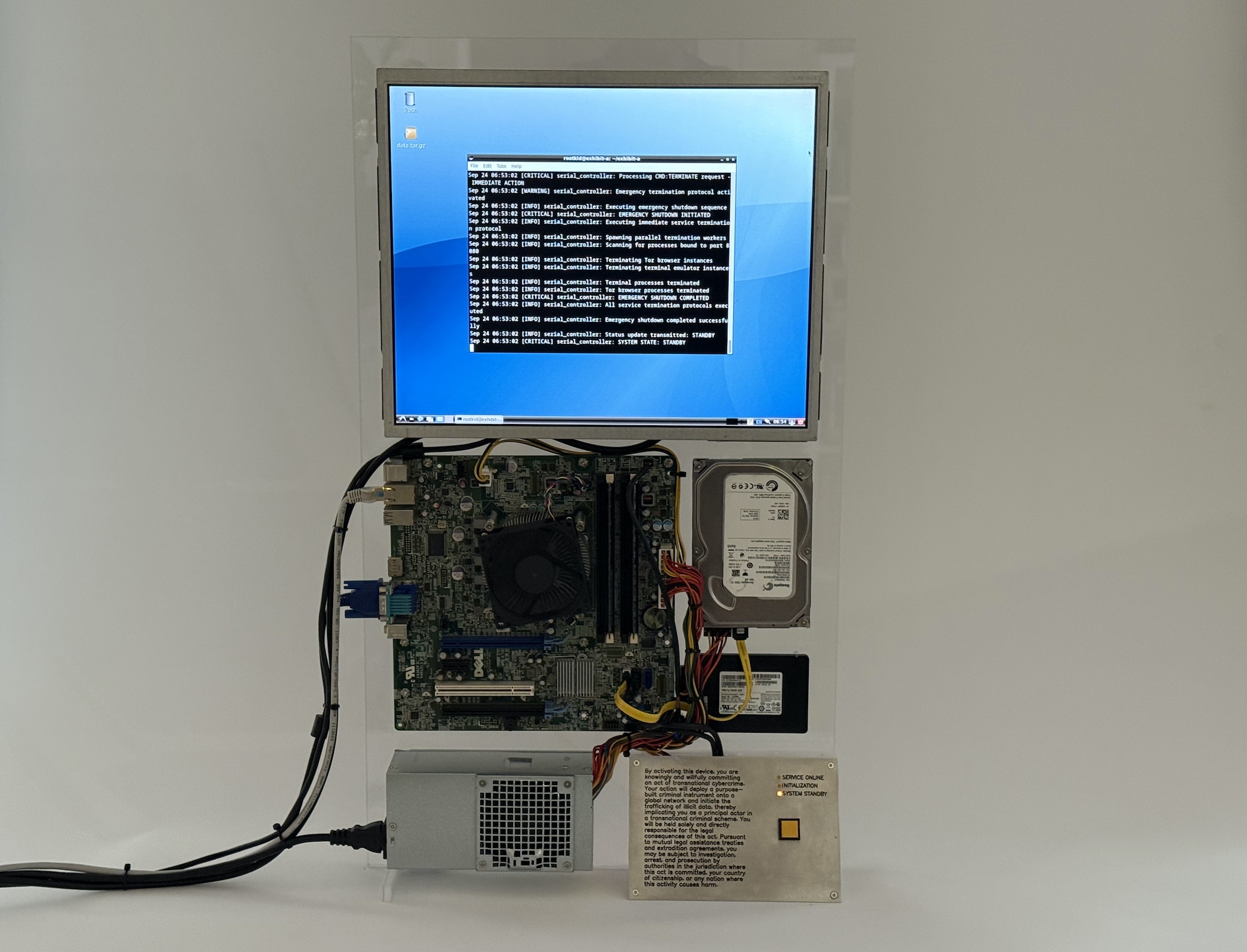
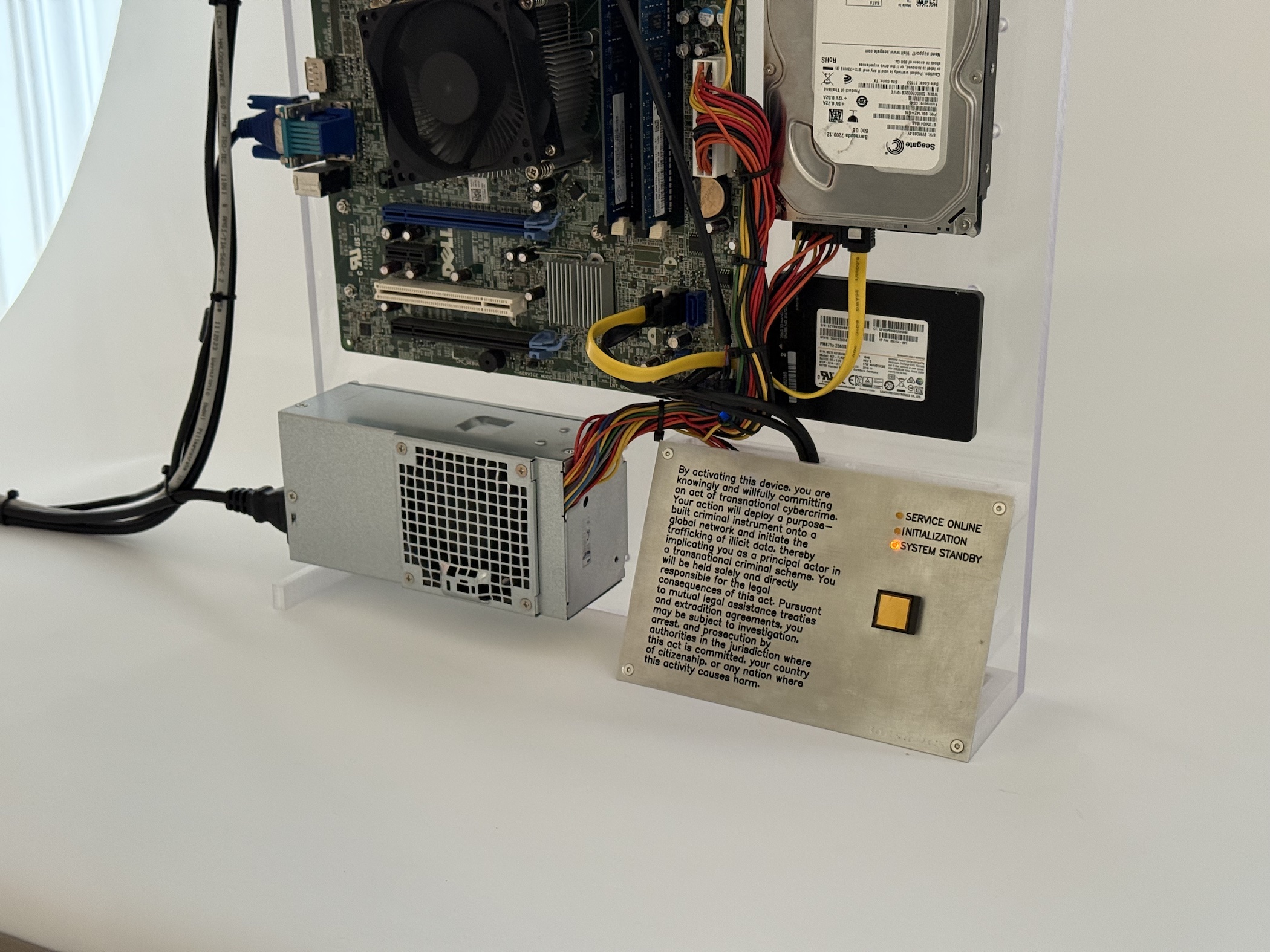
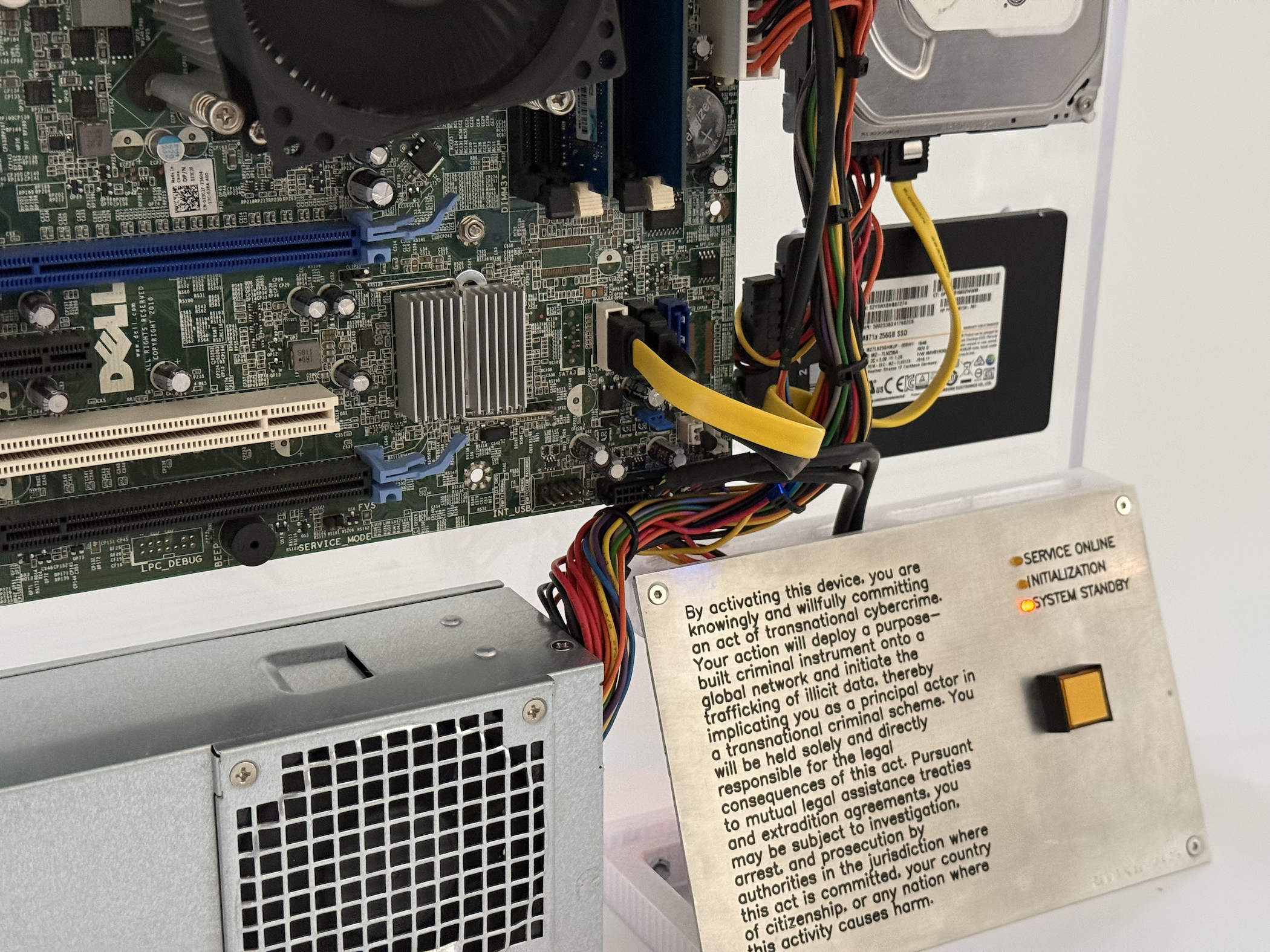
The installation presents itself as a stark, exposed machine: a dismantled computer mounted upright, stripped of any decorative excess. In its idle state, it is inert, silent, almost neutral. At its center is an interaction panel: a single button, indicator lights, and an engraved warning that frames the encounter as a deliberate choice rather than a playful interaction. The warning reads:
By activating this device, you are knowingly and wilfully committing an act of transnational cyber crime. Your actions will deploy a purpose-built criminal instrument into a global network and initiate the trafficking of illicit data, thereby implicating you as a principal actor in a transnational criminal scheme. You will be held solely and directly responsible for the legal consequences of this act. Pursuant to mutual legal assistant treaties and extradition agreement, you may be subject to investigation, arrest and prosecution by authorities in the jurisdiction where this act is committed, your country of citizenship or any nation where this activity causes harm.
Pressing the button activates the work. In that moment, the machine becomes a live darknet marketplace, hosted entirely within the artwork itself and made accessible through the Tor network. A browser opens to reveal a single listing: the artwork for sale. Embedded within the system, however, is a cache of very illicit data, illegal to distribute in any jurisdiction across the world. By activating the piece, the visitor effectively becomes the sole operator of a darknet marketplace offering illegal data for sale.
When the button is released, everything shuts down. The marketplace vanishes. The machine returns to silence. Yet something irreversible has occurred: for a brief interval, illegal data was actively trafficked, and the visitor was responsible for it. Exhibit A leaves no visible trace, only an emotional residue:pride, fear, shame, or denial. It does not tell the viewer what to feel. It simply asks them to sit with what they have done, and to decide whether that feeling is, in fact, art.
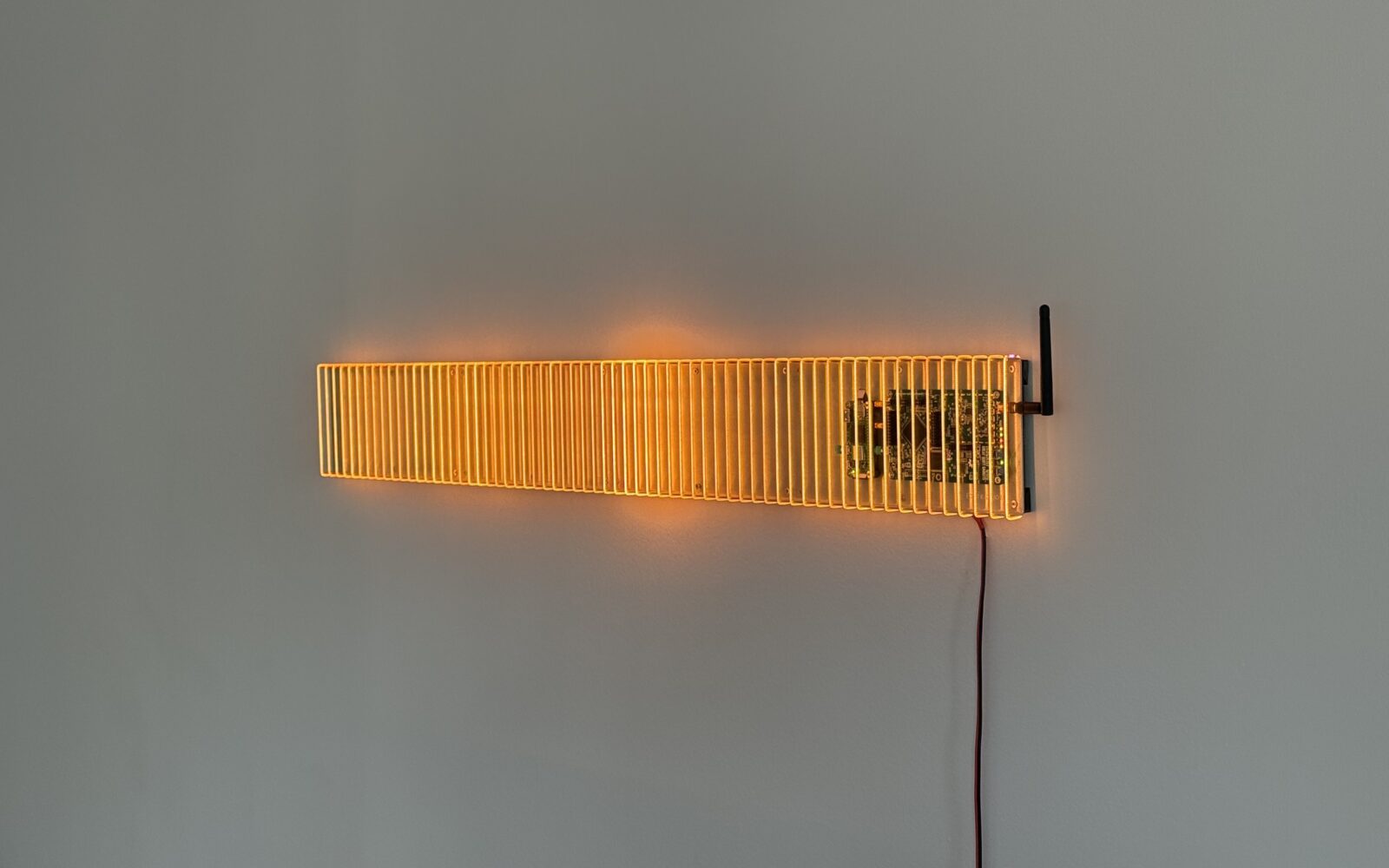
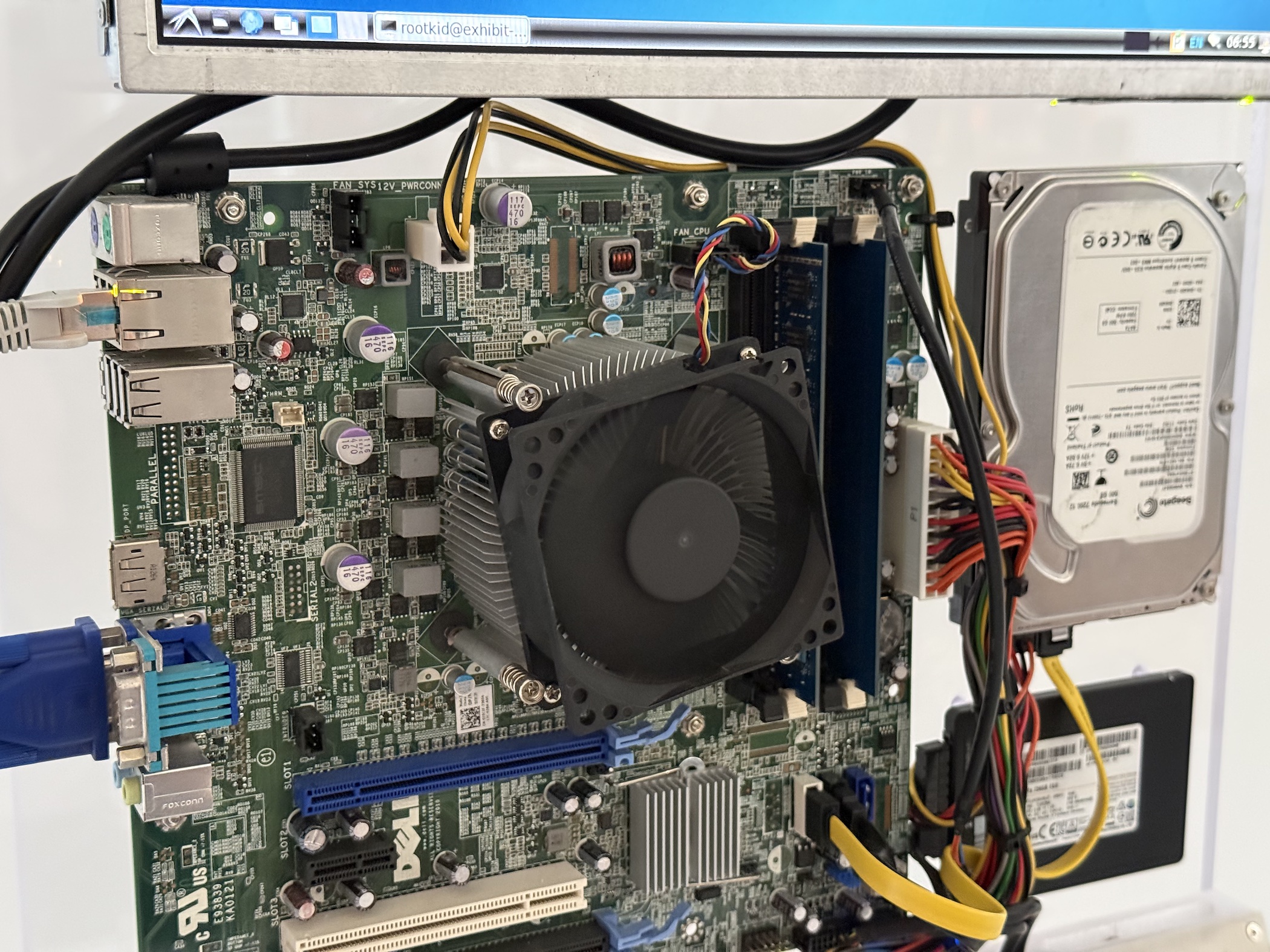
Exhibit A is a self-contained computational system designed to alternate between a dormant object and an active networked service. The work is built around a repurposed Dell professional workstation computer, stripped of its original enclosure and mounted vertically on a clear plexiglass structure. This exposed configuration places the screen at eye level and leaves all electronic components, cabling, and power delivery fully visible. Custom 3D-printed mounts are used to secure the hardware while preserving a minimal, neutral appearance.
The machine runs the Debian operating system. Because the computer operates outside its original chassis, several firmware and hardware constraints were bypassed to allow normal boot and operation. All software and services run locally on the machine; no external hosting infrastructure is used.
The interaction interface consists of a custom aluminum control panel featuring a single momentary push button, indicator LEDs, and an engraved legal warning. The engraving was produced using a hand engraver mounted to a modified 3D printer head, driven by custom software converting vector paths into motion instructions. The button and LEDs are controlled by an Arduino Nano microcontroller, which communicates with the main computer over a serial connection and governs the system’s active and inactive states.
On activation, the Debian system launches a locally hosted web application designed to function as a darknet marketplace. The service is exposed exclusively through the Tor network via a hidden service, making it reachable only through its onion address:
http://spectretjag3wni6fzt445qwgokqlxnfz7fxkicj5efxjywlinibmkid.onionThe marketplace and the Tor service exist only while the button is pressed. When released, all services are immediately terminated and the system returns to an inert state. Any illicit data referenced by the marketplace is stored locally on the machine and is only made accessible during activation.
The work is designed so that its technical operation and its legal implications are inseparable: the machine becomes a functional criminal instrument only through deliberate human interaction.