Hello Visitor!

Creativeapplications.Net (CAN) is a community of creative practitioners working at the intersection of art, media and technology.
Login
Status
Register | Forgot Password
Online for 6,325 days (17 years, 3 months, 24 days), published 4,074 articles about 2,838 people, featuring 187 tools, supported by 1,695 members, and providing access to 40 educational groups (≈400 students).
Categories
CAN (94) Education (32) Event (255) Member (280) News (866) NFT (255) Project (2533) Review (46) Theory (54) Tutorial (39)
Log
Links

  • STextCopy to Clipboard (Text)
    Title + (Year) + People + URL
    /ImageGenerate Image
    PNG File Download (1080x1920)
    Copy URL to Clipboard
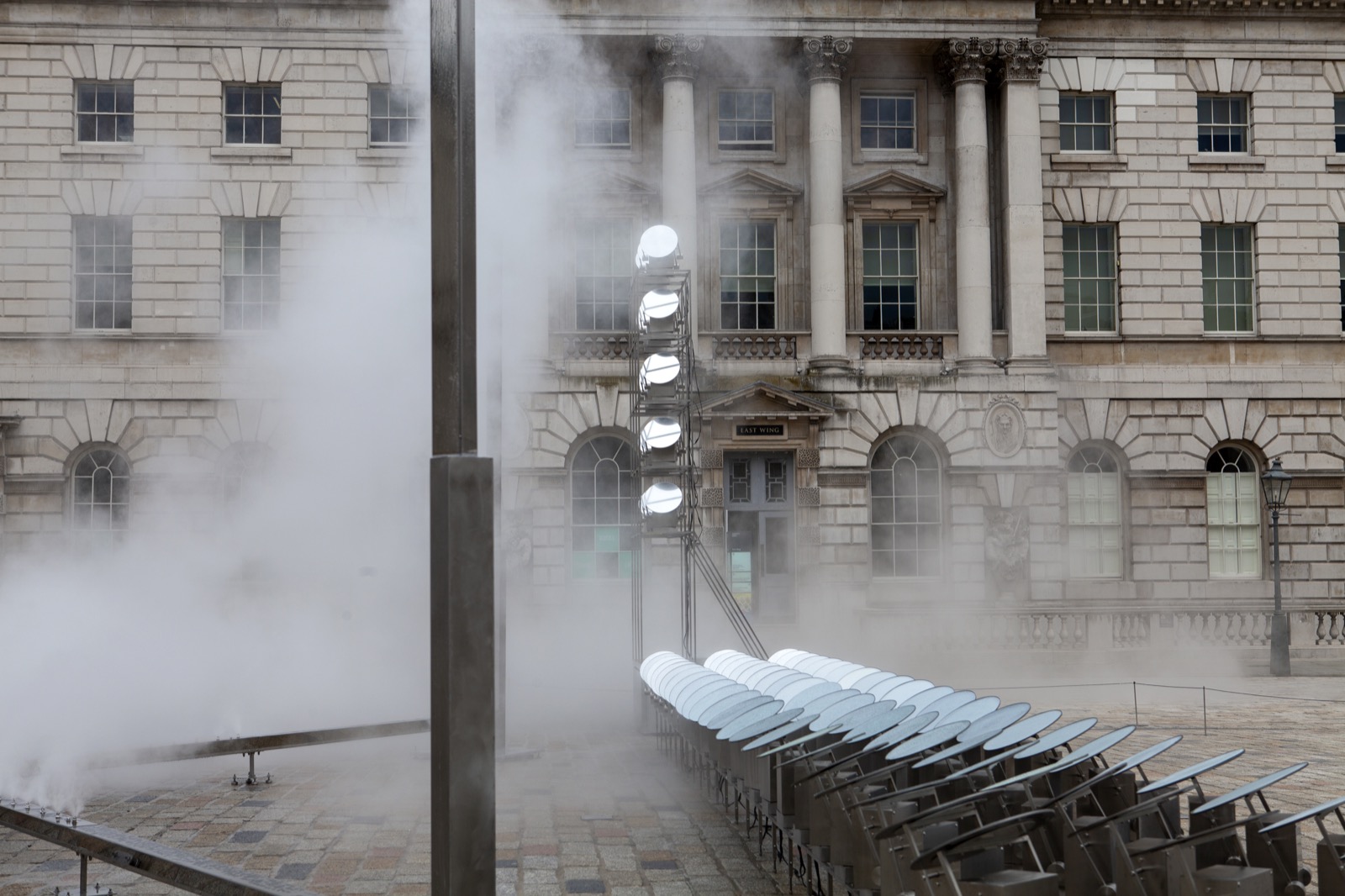
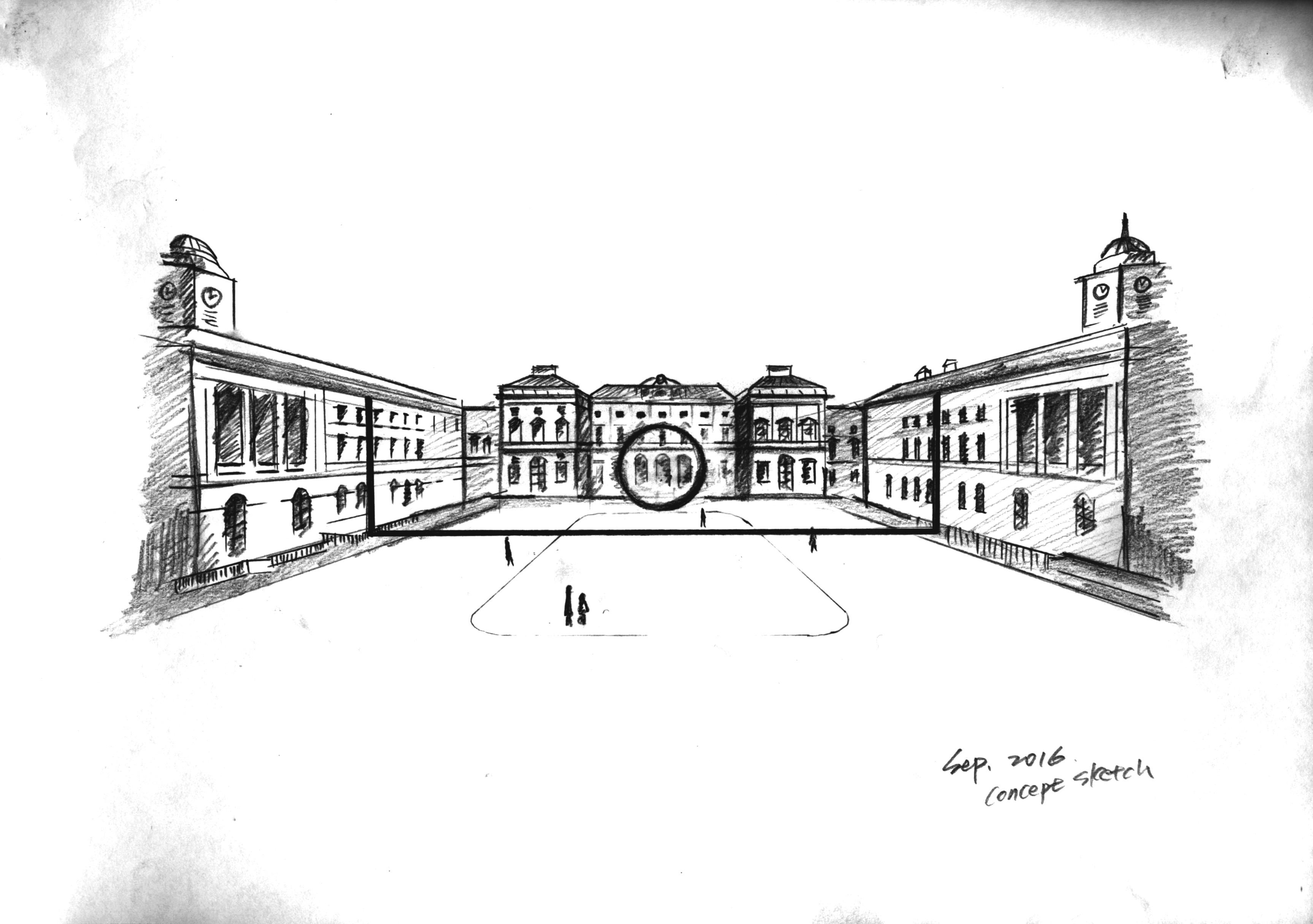
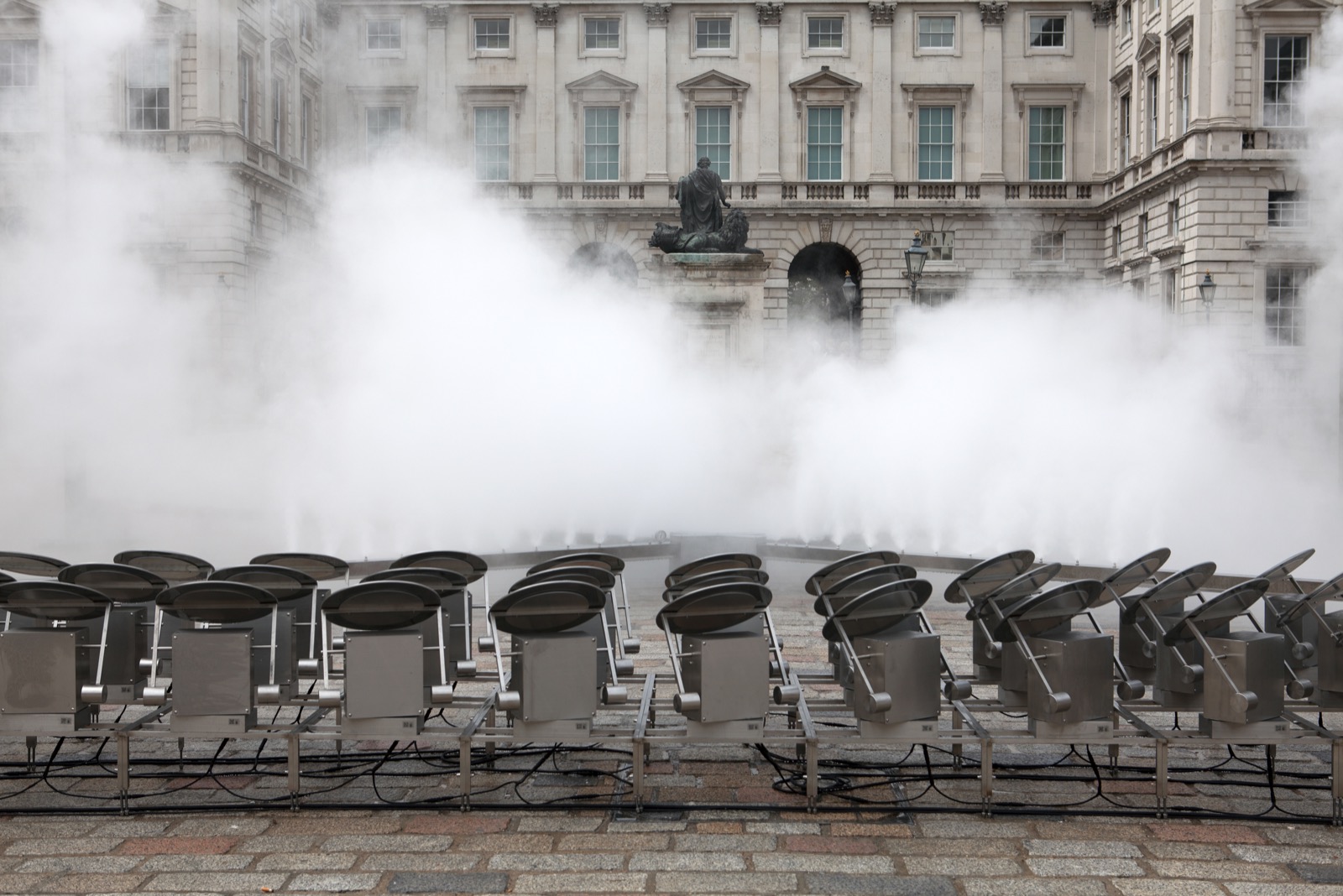
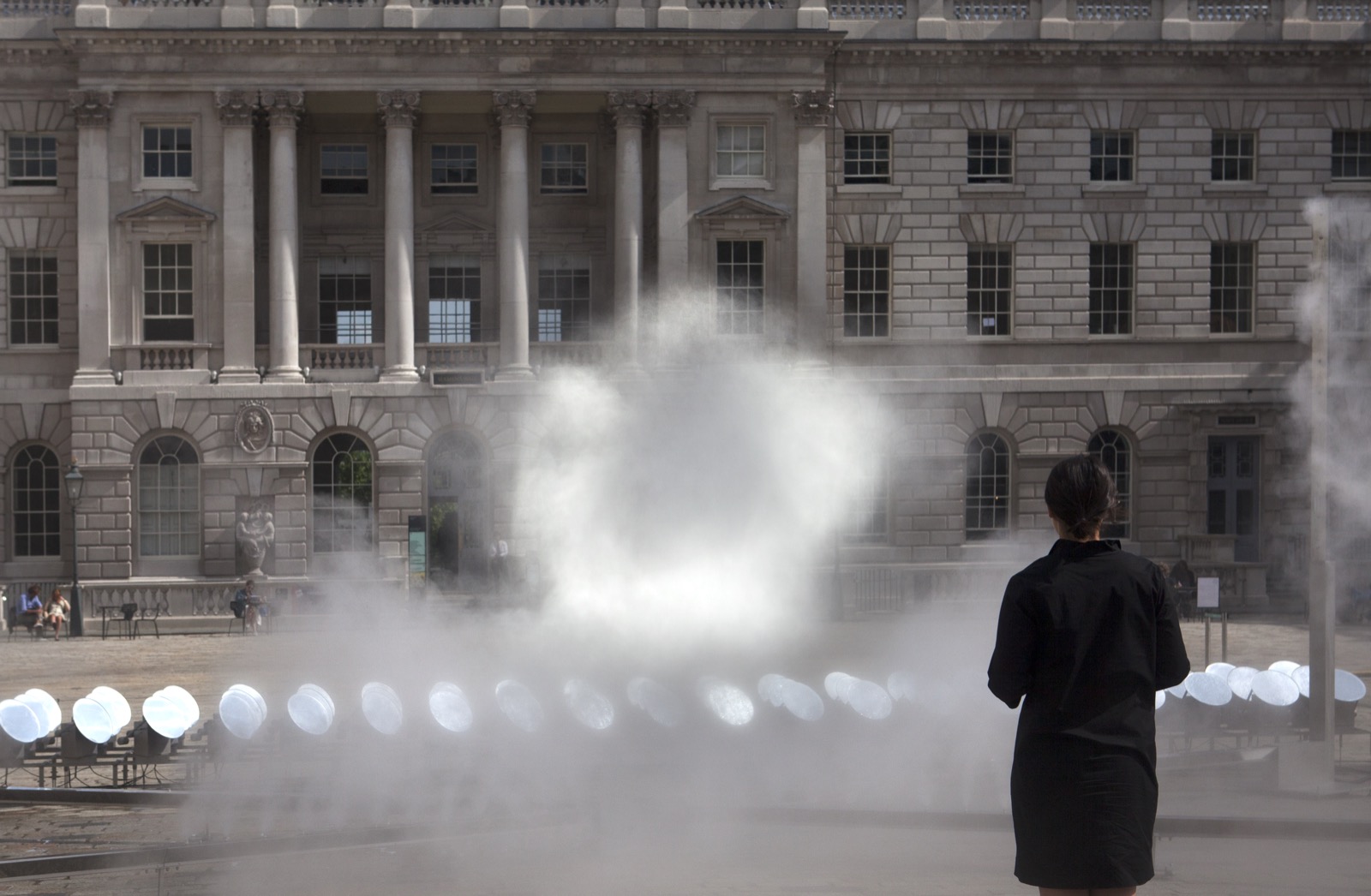
  • Created by Kimchi and Chips and currently on view at the Somerset House in London, HALO is a new installation in the series of works by the Seoul based Mimi Son and Elliot Woods where light is sculpted to create form that exists between material and immaterial.

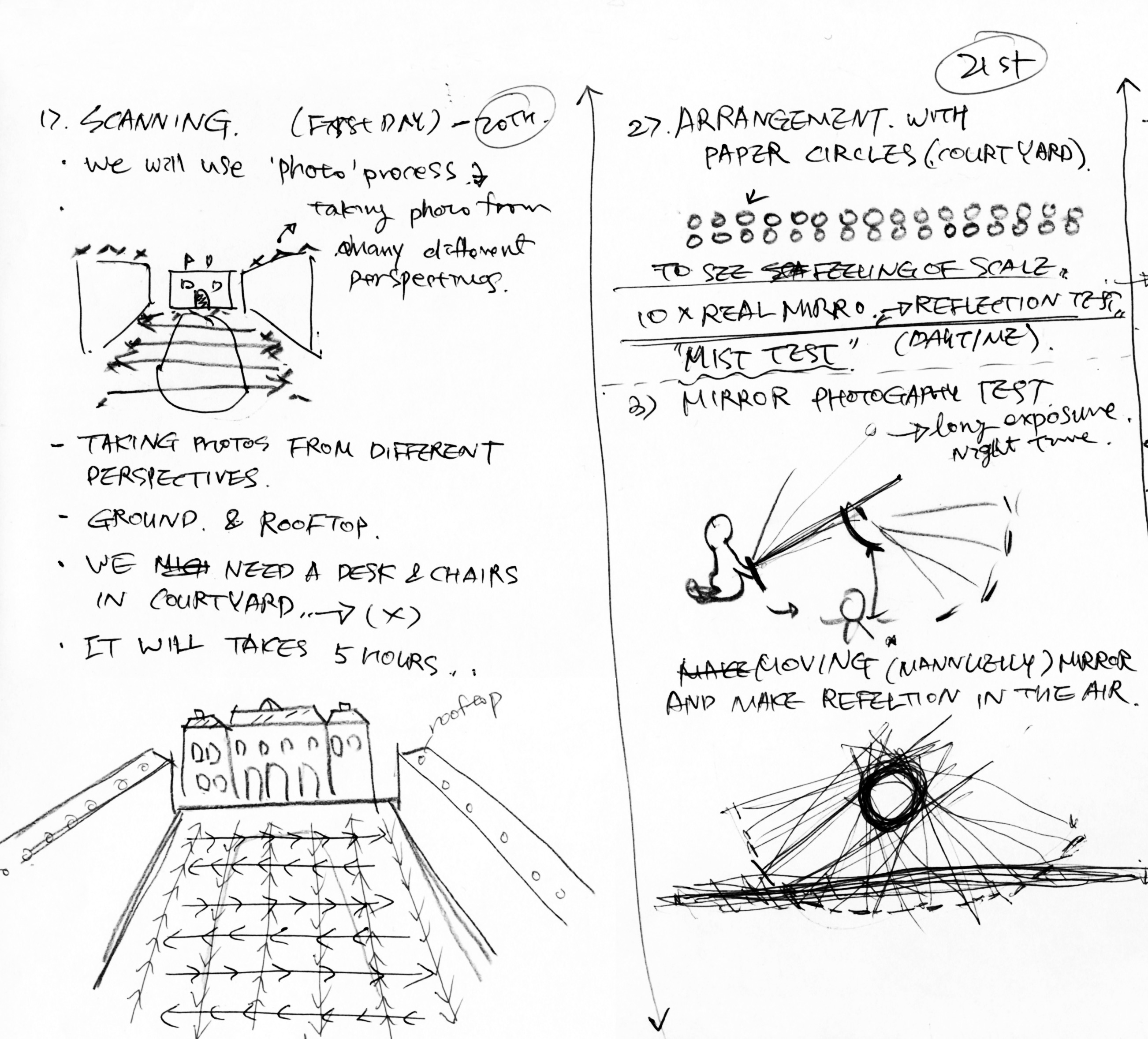
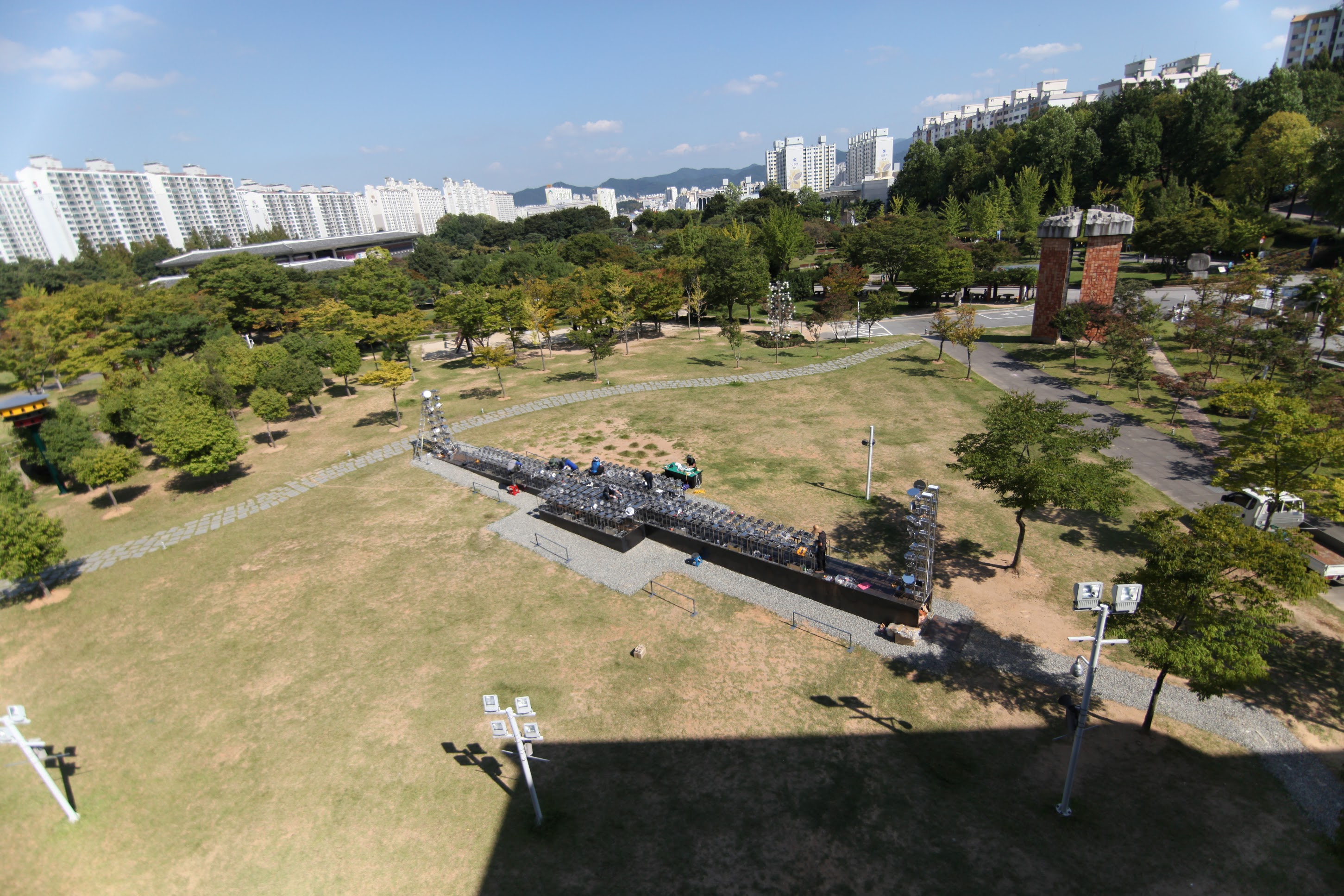
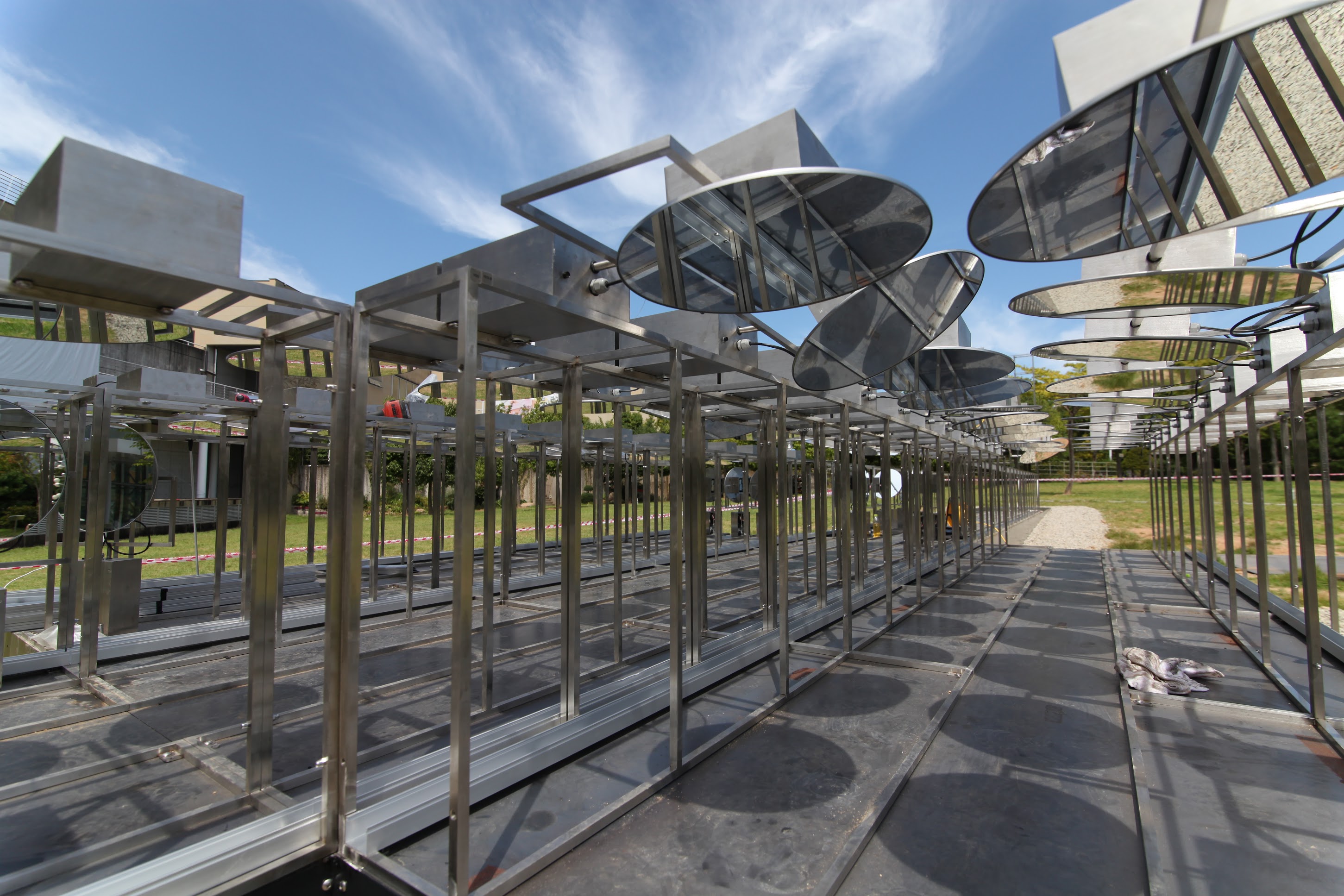
    The installation is comprised of over 100 motorised mirrors spread across two 4-metre-high towers and one 15-metre-long track that move in line with the sun throughout the day and redirect the sun rays to draw a halo, formed entirely of natural light and floating in mid-air made visible by fine water jets in the cloud of mist. It is for the first time that Kimchi and Chips focus fully on natural, rather than artificial light, bringing the sun down to earth wholly depending upon the strength of the sun, creating an experience which constantly evolves and to which the artists have to respond daily.

    Next to the courtyard, an open studio reveals the inner workings and ideas of the ingenious installation, with the opportunity to meet the team behind it on special occasions. This space also showcases various prototypes and sketches as well as previous works of Kimchi and Chips including some works already familiar to CAN audience.
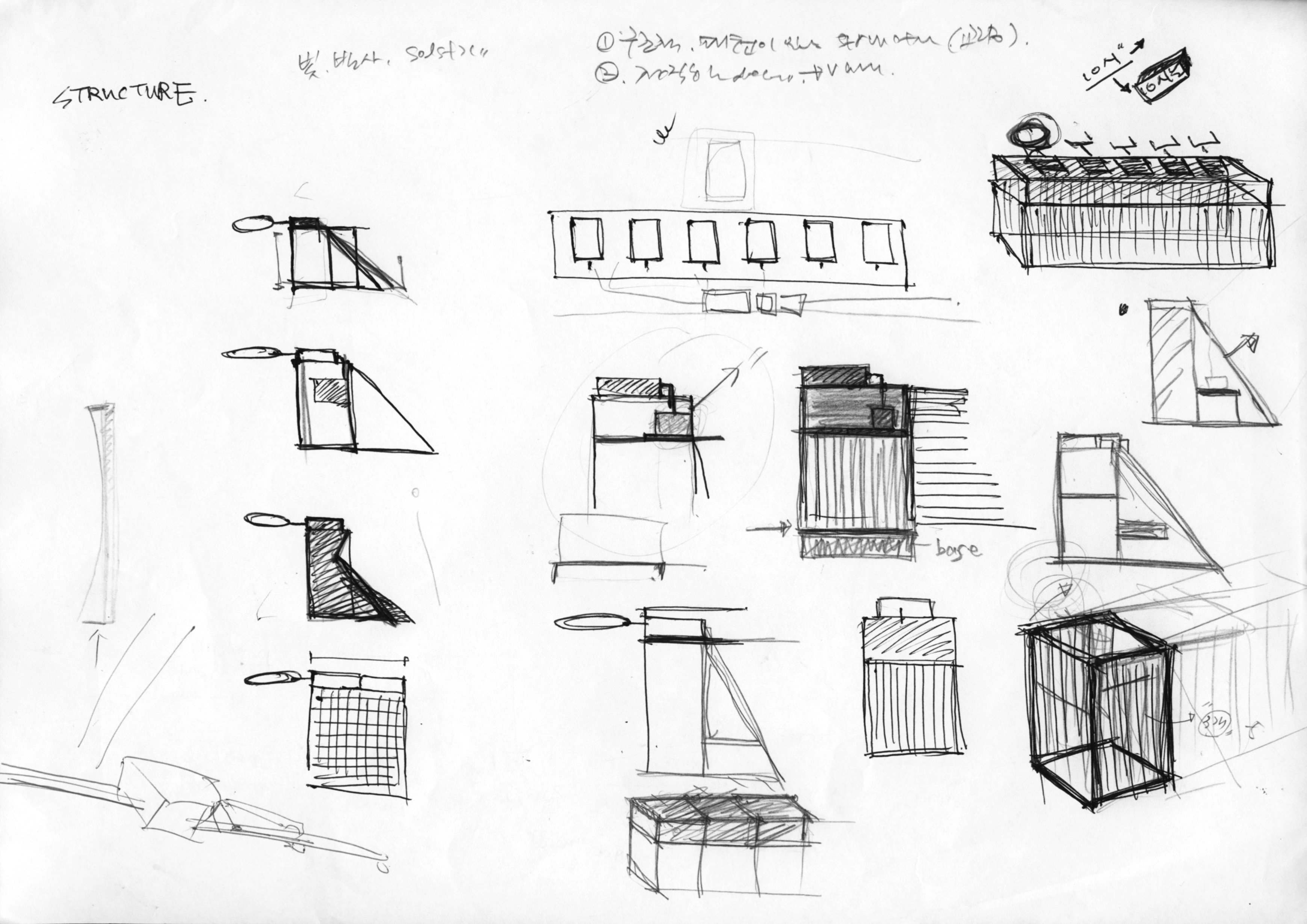
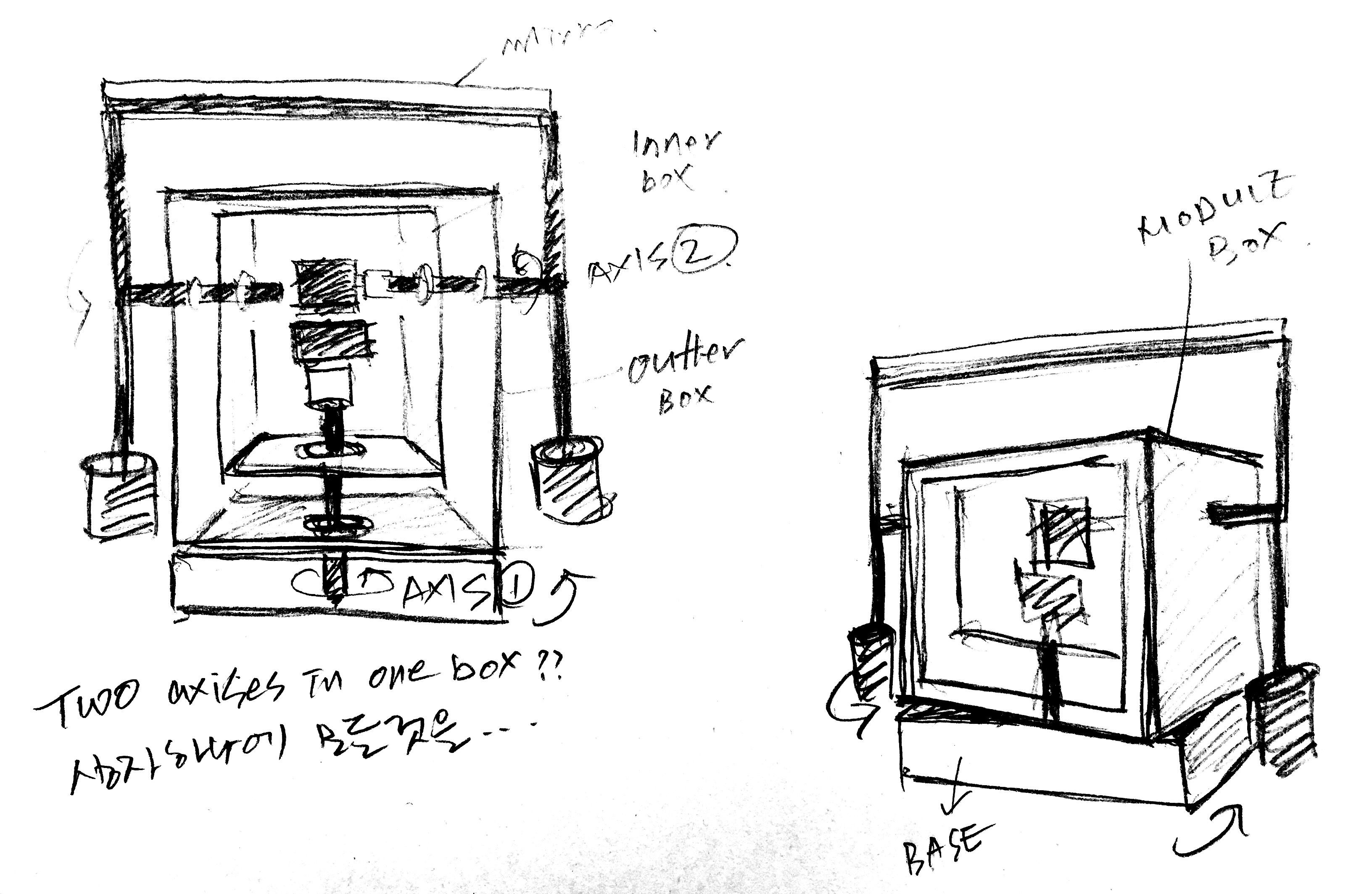
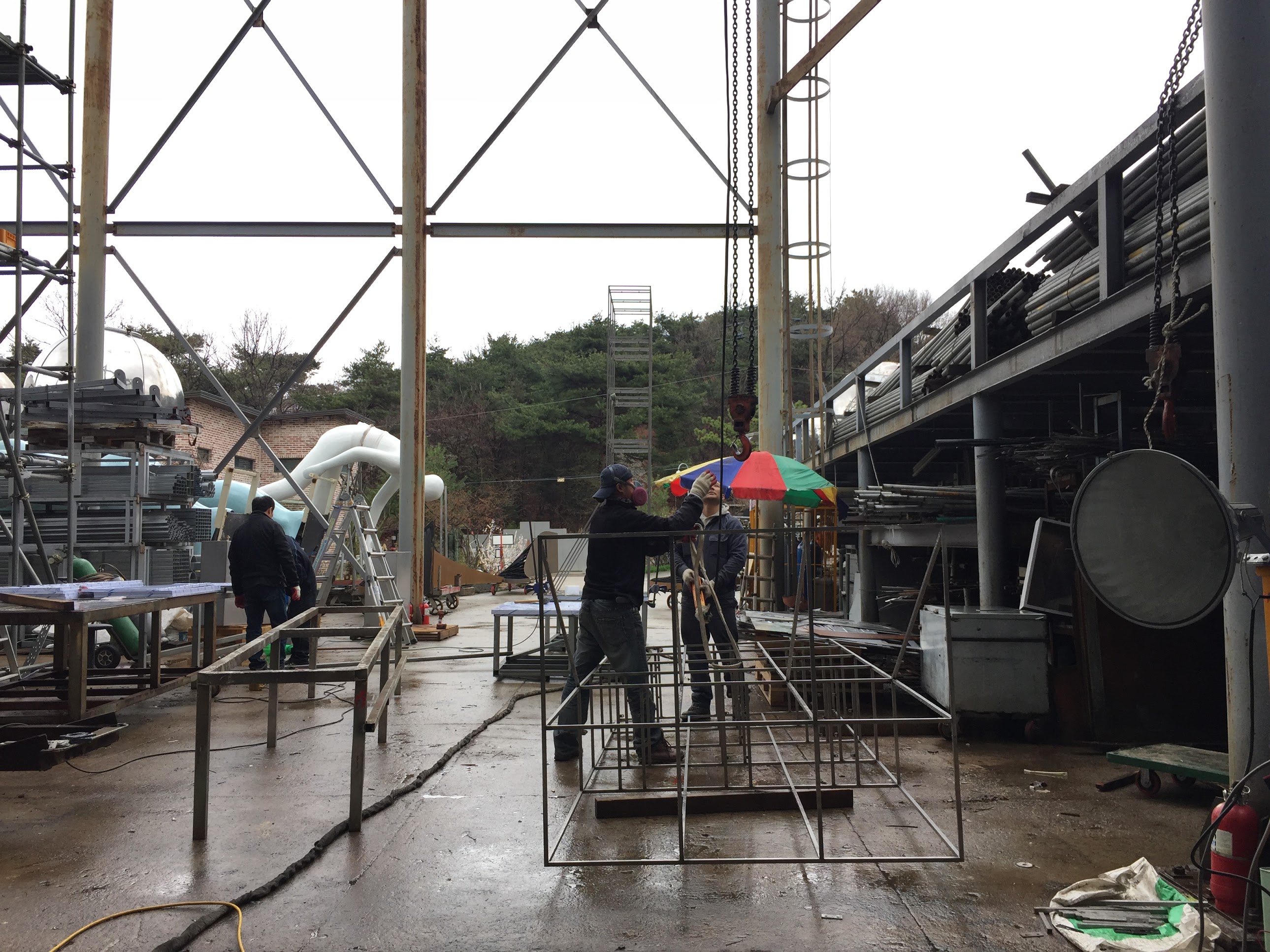
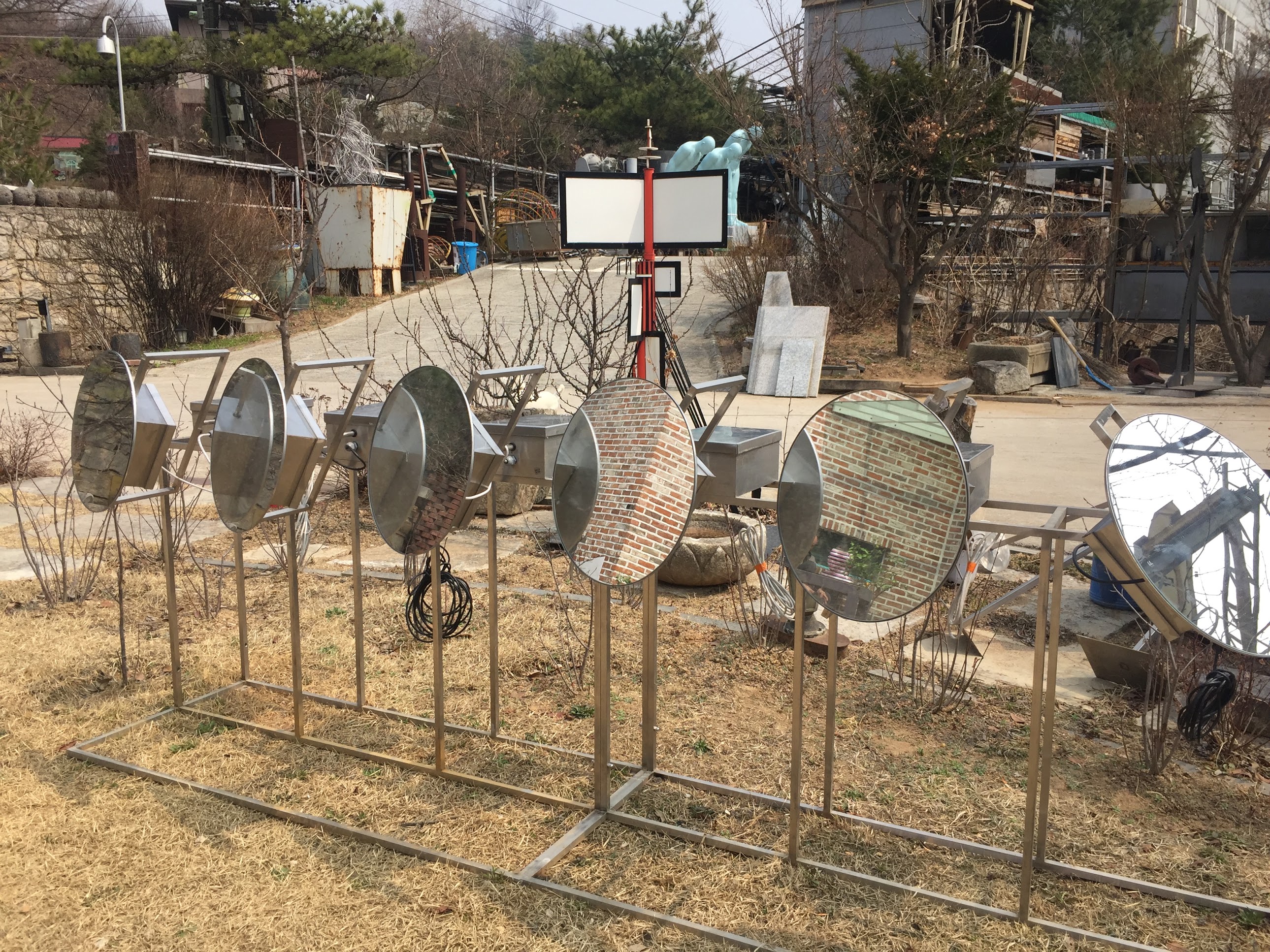
    The project went through a number of different stages of development, starting with leftover projector brackets and welded laser cut parts to the final version we see today at Somerset House. At the Gwangju Biennale the team built over 200 twin axis units using laser cut s/s that relied on Orange Pi 4-Core Linux MCU, custom PCBs, accelerometers, arduino nanos, temperature and humidity sensors, encoders and timing belts. Sadly there were just way too many parts to fail and the waterproofing did not work particularly well. This led to a smart servo version that included custom PCB with ARM SAMD21, similar motor and additional parts but there were concerns about having enough time to iterate. Finally the team settled on the Dynamixel MX-64AR with flexible shaft coupler for both axes which are combined into single stainless box with improved water resistance design and double walls and internal pathways for drainage. 

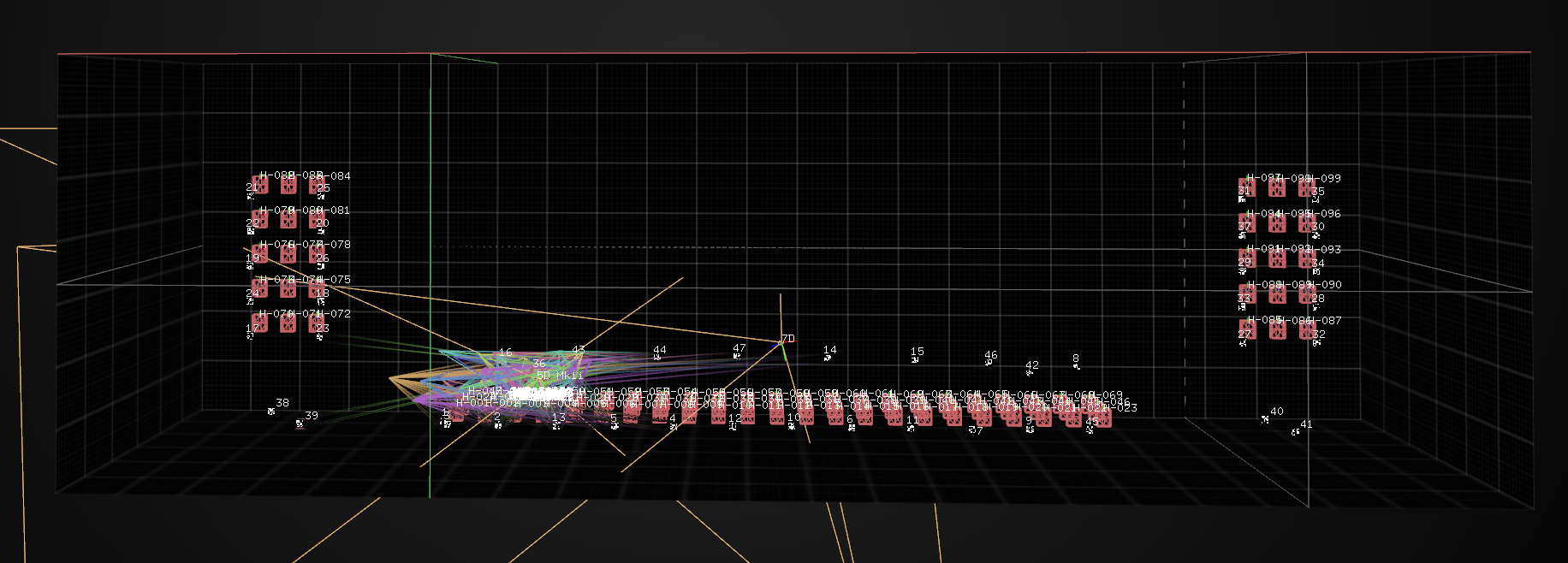
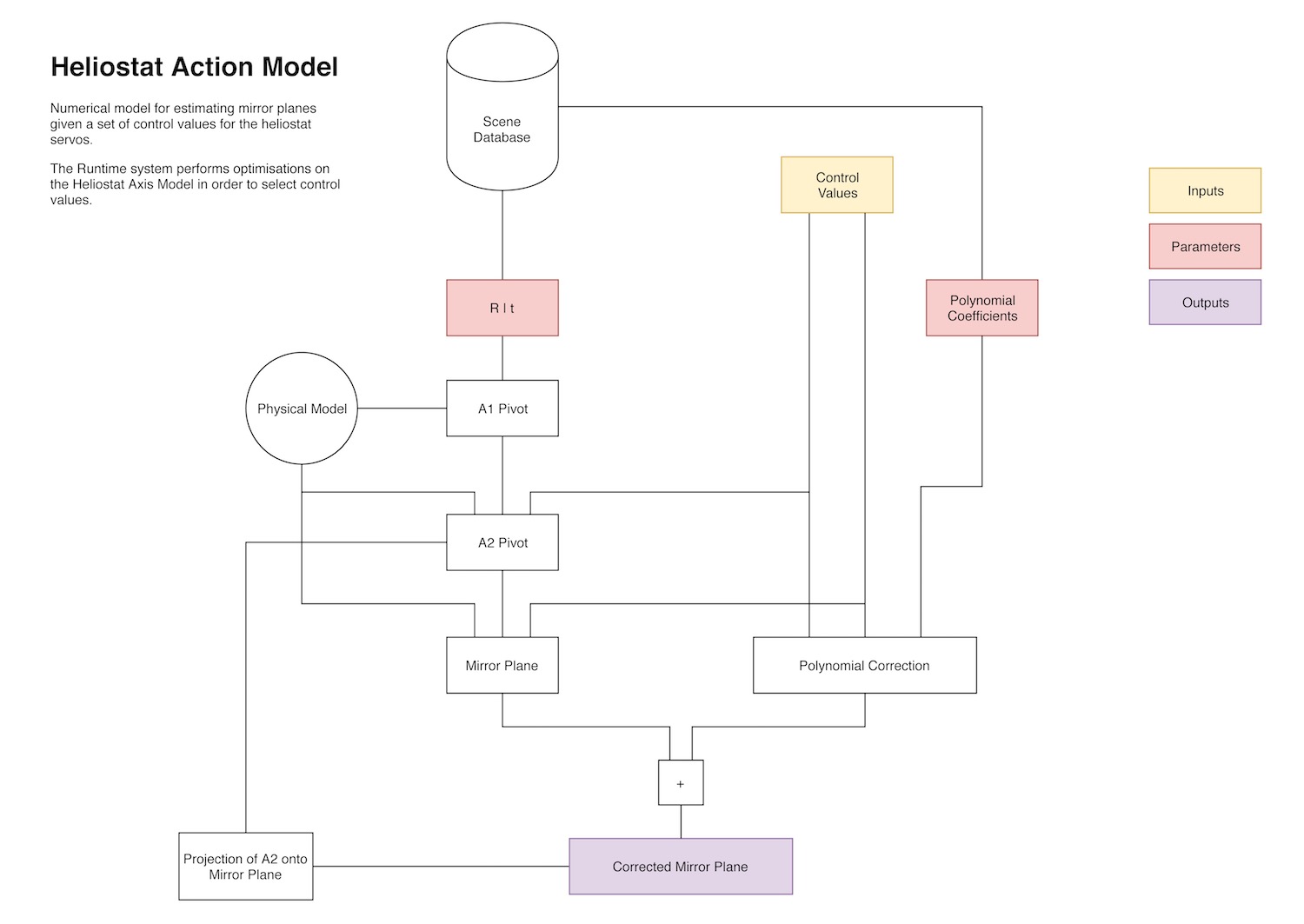
    In order to achieve a clear halo, the duo needed to train a mathematical model of each heliostat which accommodates for its known physical attributes, and an allowance for unknown distortions. This mathematical model (titled Heliostat Action Model – HAM) has a set of parameters which are unique for each heliostat such as position, rotation, axis offsets and polynomial correction parameters. In order to learn the parameters for each Heliostat they capture data from the physical system using their own custom developed Rulr framework.
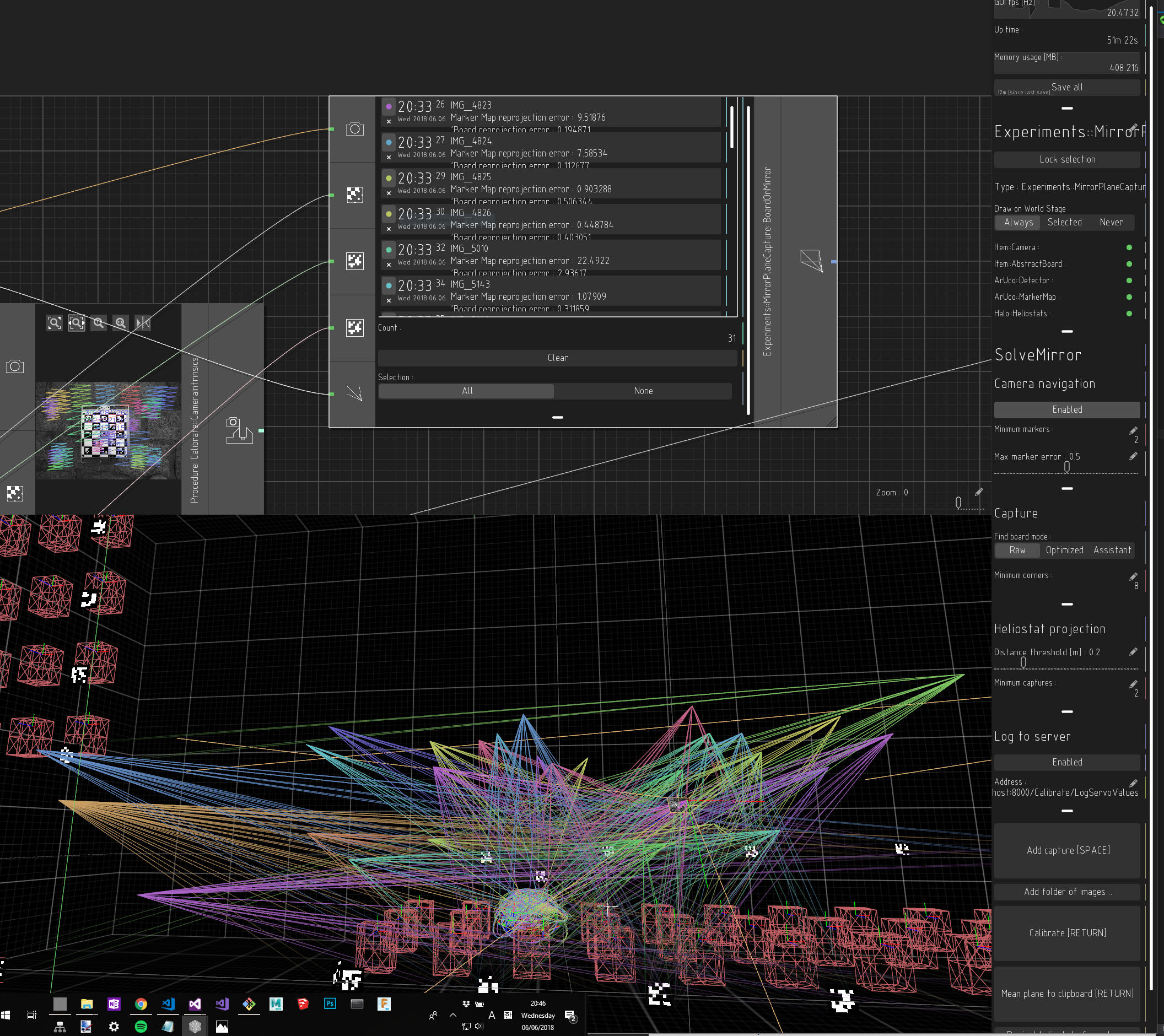
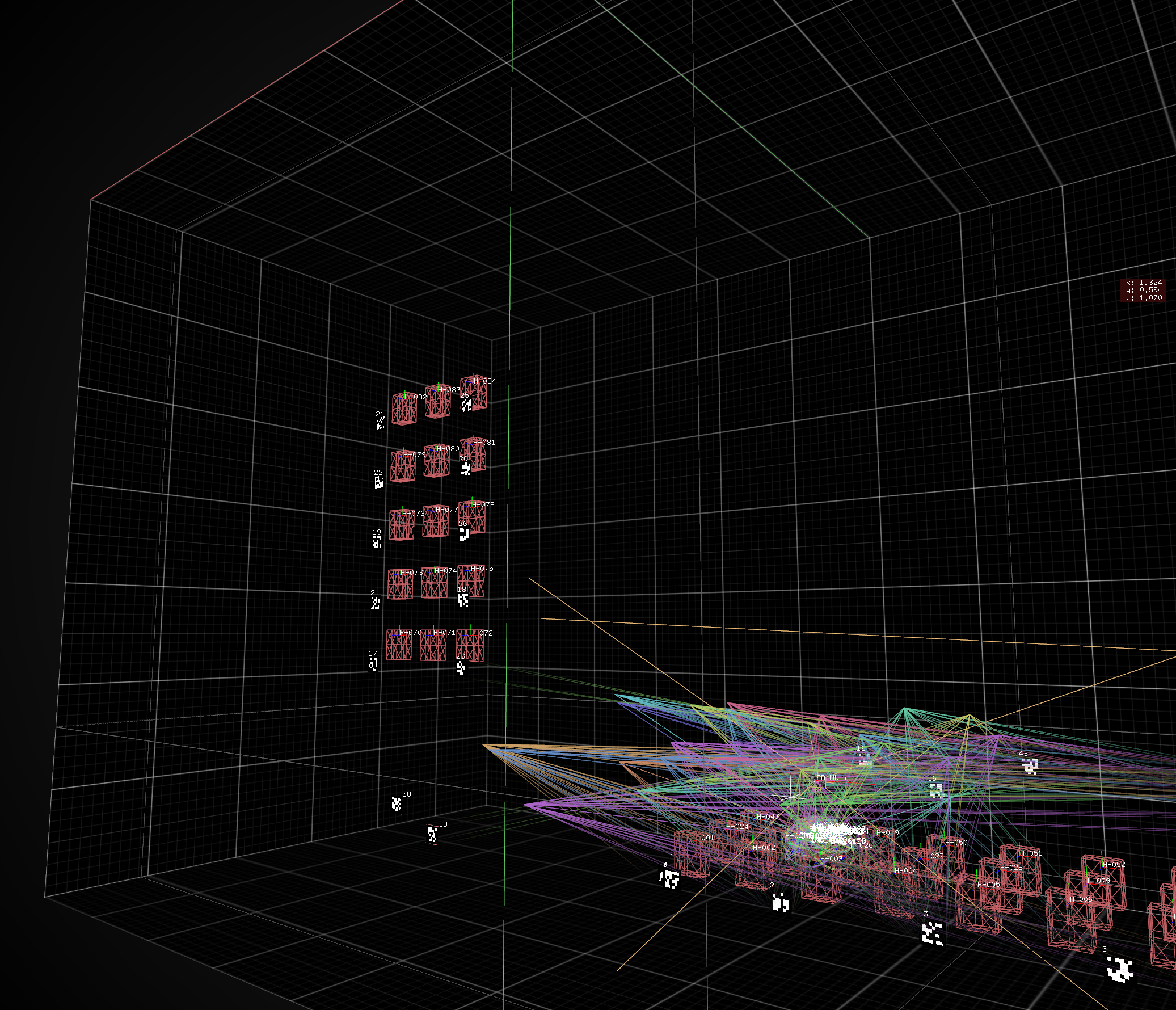
    Kimchi and Chips collaborated with the scientific research division of London based Improbable Worlds Limited to develop and train the HAM. Improbable specialise in virtual simulations and are one of the UK’s largest startups. Halo utilises Improbable’s recently released Bayesian Inference based machine learning engine titled ‘Keanu’ (a play on the name of the popular deep learning library ‘Theano’).

    Software tools used includes Rulr (Calibration), Keanu (Mathematical modeling), .NET/C# (Systems software), Three.JS (Prototype control system), ArUco Marker Mapper – custom fork (Calibration) and VVVV (Visualisation). Hardware tools include Dynamixel (Smart Servos), Orange Pi (Prototyping) and Arduino / Platform IO (Prototyping).

    The duo have also made open a number of code repositories created for this project including DynamixelSDKSharphalomsgpack-arduino, KC.jsofxCanon and GrubStep.

    Project PageKimchi and Chips

    8 – 27 June 2018, Free, Edmond J. Safra Fountain Court, Somerset House, Strand, London WC2R 1LA, UK

    Halo is co-commissioned by Arts Council Korea and Arts Council England Joint Fund and 2017 Gwangju Design Biennale. Presented by Somerset House with the Korean Cultural Centre UK.
  • C
  • P Elliot WoodsElliot Woods is an artist at Kimchi and Chips where he tests alternative relationships between images and reality. Here he participates in conceptual and technical design of projects, and develops techniques in computer vision, machine learning and robotics. https://www.kimchiandchips.com, Kimchi and ChipsArtist collective Mimi Son (KR) and Elliot Woods (UK) based in Seoul. Known for their technically sublime installations. https://www.kimchiandchips.com, Mimi SonMimi Son is an artist at Kimchi and Chips creating installation that aims to depict an intersection of art and technology, material and immaterial, real and virtual, presence and absence. https://www.kimchiandchips.com
  • T Air, ArduinoArduino is an open-source electronics prototyping platform based on flexible, easy-to-use hardware and software. It’s intended for artists, designers, hobbyists, and anyone interested in creating interactive objects or environments. http://www.arduino.cc/, Javascript, LinuxLinux is a family of open-source Unix-like operating systems based on the Linux kernel, an operating system kernel first released on September 17, 1991., openFrameworksopenFrameworks is a c++ library designed to assist the creative process by providing a simple and intuitive framework for experimentation.The code is written to be massively cross-compatible currently supporting five operating systems (Windows, OSX, Linux, iOS, Android) and four IDEs (XCode, Code::Blocks, and Visual Studio and Eclipse). https://openframeworks.cc, PCBA printed circuit board (PCB), also called printed wiring board (PWB), is a laminated sandwich structure of conductive and insulating layers., ProjectorA projector or image projector is an optical device that projects an image (or moving images) onto a surface, commonly a projection screen. https://www.creativeapplications.net/tutorial/guide-to-projectors-for-interactive-installations/, ThreeJsThree.js is a cross-browser JavaScript library and Application Programming Interface used to create and display animated 3D computer graphics in a web browser. Three.js uses WebGL. https://threejs.org, vvvvvvvv is a graphical programming environment for easy prototyping and development. It is designed to facilitate the handling of large media environments with physical interfaces, real-time motion graphics, audio and video that can interact with many users simultaneously. vvvv is currently windows only but there are plans to release a mac version in near future. http://vvvv.org/
  • Activity Log
    Join our Community to View/Add Comments.
    Title Excerpt Metadata Color