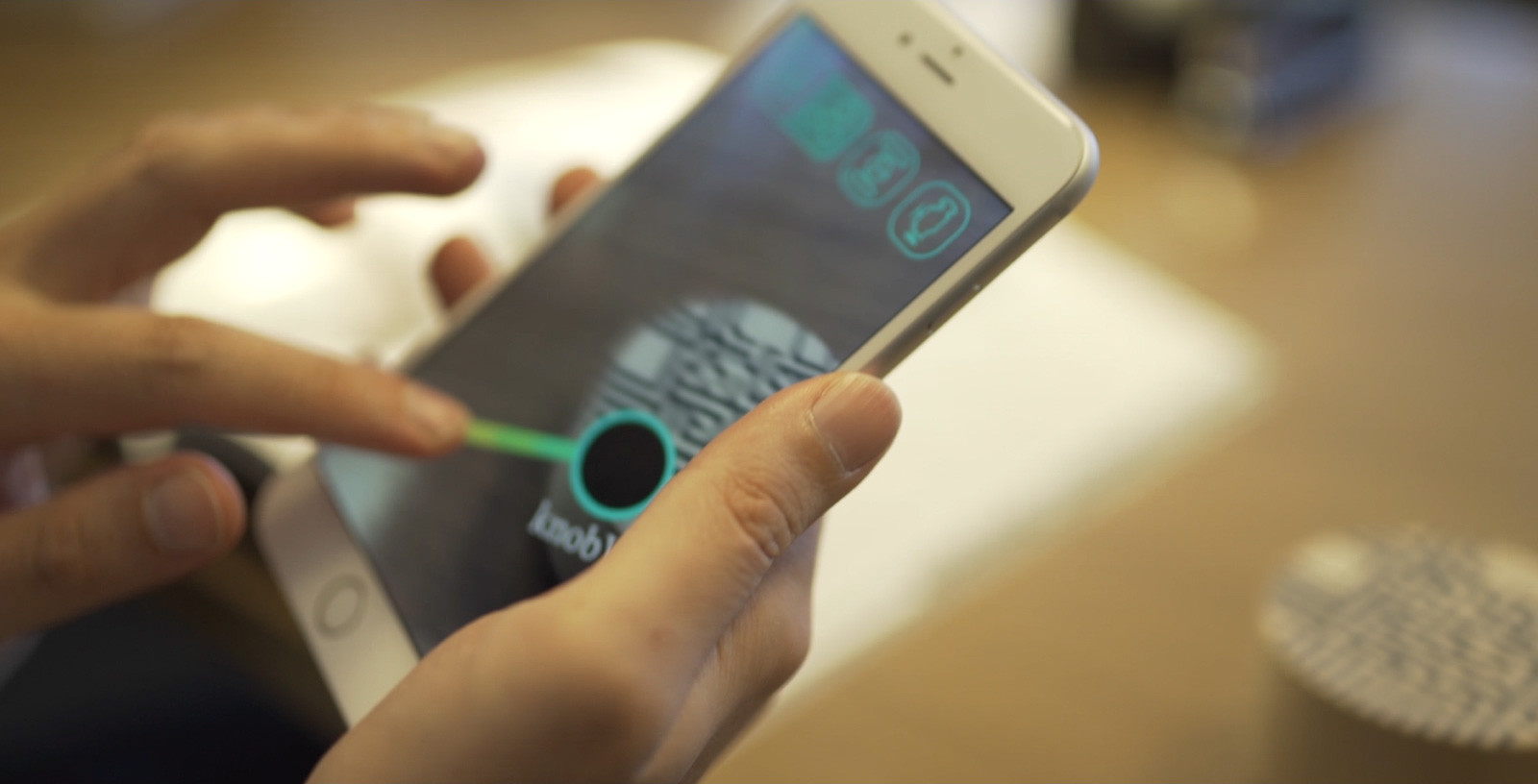
Created by Christopher Pietsch, Transferscope is a working prototype that merges a handheld aparatus with artificial intelligence, allowing the user to view our physical world through an AI interpreter.
My vision for Transferscope is to capture the essence of today’s generative image AI, utilizing open-source tools and models, marking the current state of the technology. It showcases the shift from genuine photography to synthetic image creation. Situating the project at the boundary between reality and AI generated content that is infiltrating our daily lives.
Christopher Pietsch

With a single-button interface and screen feedback, users can capture and transform captured images and interact with the world as imagined by an AI. The device is powered by a Raspberry Pi Zero 2, encased in a custom 3D-printed housing. It features a 720×720 pixels resolution screen (HyperPixel) and integrated Li-Ion batteries (2x 18650). The device runs on Debian with a custom Python script for image capture and processing (PyGame, OpenCV, Asyncio, libcamera). It handles canny edge detection and basic animations directly on the device, while more complex processing is managed by a dedicated self build server (RTX 4080, Intel i7-12700K).
The server utilizes a optimized Diffusion Pipeline with Stable Diffusion and ControlNet through ComfyUI for image transformation. Microsoft’s Kosmos 2 is used for object detection, linked to an IPAdapter from Tencent. This setup allows Transferscope to transform captured images into new textures and patterns and apply them to a second scene almost instantly (<1s).
Transferscope is an AI+D Lab project by Christopher Pietsch
Extended Team: Aeneas Stankowski, Alexa Steinbrück, Rahel Flechtner, Felix Sewing, Benedikt Groß
Illustration: Stamatia Galanis
Project Page | Christopher Pietsch