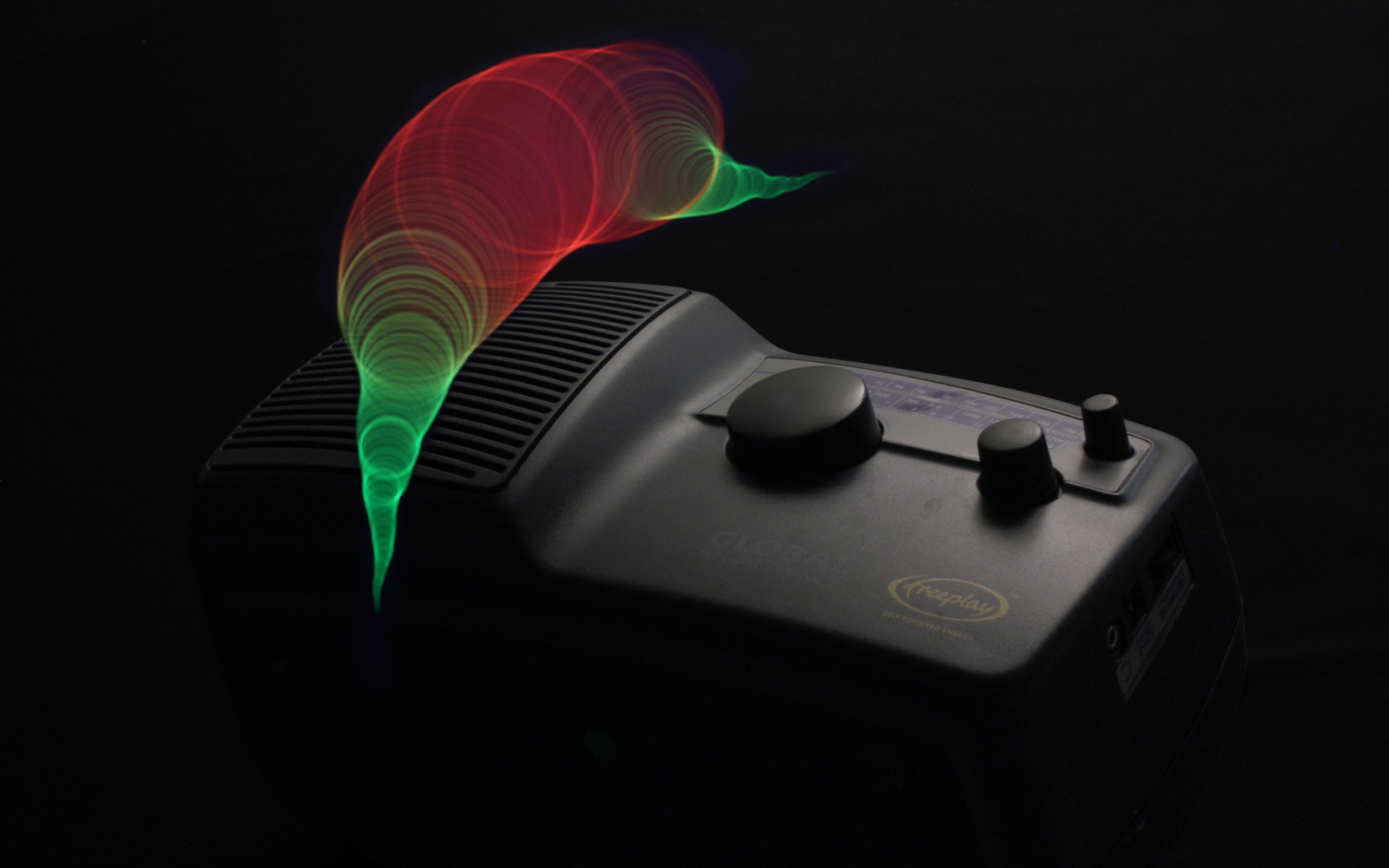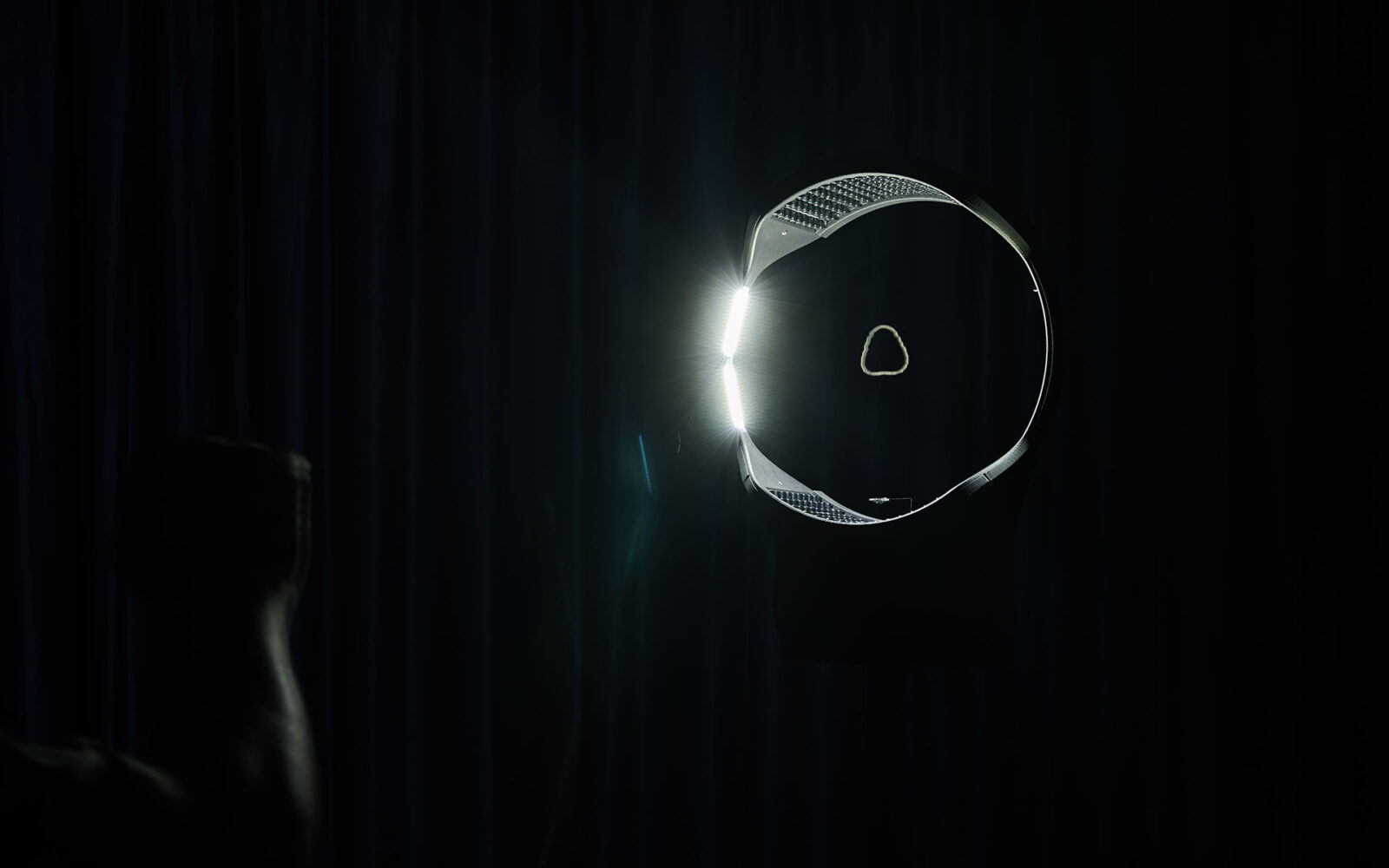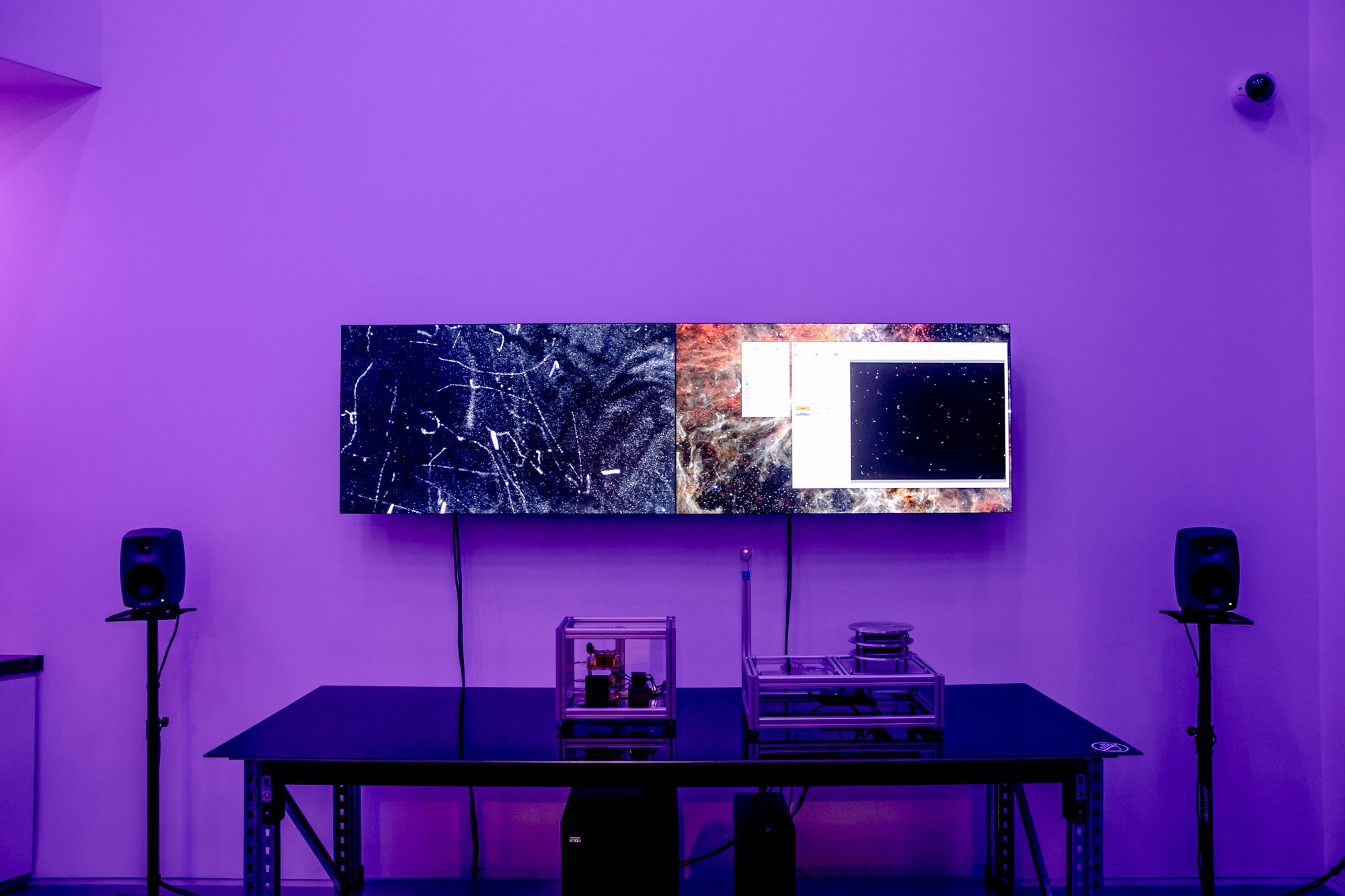
Created by Jon Butt the µ Muography device is an experimental DIY particle detector, built in his studio during Melbourne’s lockdown over 2020/2021. Engineered using freely available open-source tools, modified electronics and hand-built circuitry, the device detects high speed cosmic particles (muons) as they rain down to earth.
Every second, a muon particle shoots through your body at incredible speeds. An invisible cosmic messenger at 299,726 km/second. A muon forms when a proton flying through space, hits the earth’s atmosphere at 99.9% the speed of light and breaks down into its subatomic components. The source of these protons is largely unknown due to the fact they bounce around the universe, in erratic flightpaths, affected by magnetism and gravity, but most likely come from supernovae explosions, millions, or even billions of light years away. Some thinkers have even suggested you can’t rule out alien signalling!
Muons are part of the ancient, native language of matter that makes up everything in existence yet are invisible to human perception. They are atomic objects that might have travelled millions of years, across billions of kilometres.


The µ Muography device is designed to be modular in nature, allowing Jon to add to, and adapt for a range of creative projects. The first iteration was an experimental image making process developed for Castlemaine Art Museum (CAM) where the device became a “cosmic camera”, detecting muons and recording each strike on a modified sensor, accumulating over the lifespan of the exhibition, creating the resulting images. The iteration for DARK MATTER exhibition develops the device’s potential as an experimental performance tool.


The project utilises Jerry Petry’s Muon Detector project on Hackster IO, and opensource software DIY Webcam Particle Detector developed by Lodovico Lappetito for therimino.com. To make your own µMuography project and adapt, see link here.
µ Muography is currently exhibited as a part of DARK MATTERS, an exhibition produced in collaboration with Arts at CERN and the ARC Centre of Excellence for Dark Matter Particle Physics, and curated by Mónica Bello, Head of Arts at CERN and Tilly Boleyn, Head of Curatorial at Science Gallery Melbourne in collaboration with a curatorial panel of young people (05.08.23 – 02.12.23).
Project Page | Jon Butt | Dark Matters @ Science Gallery Melbourne