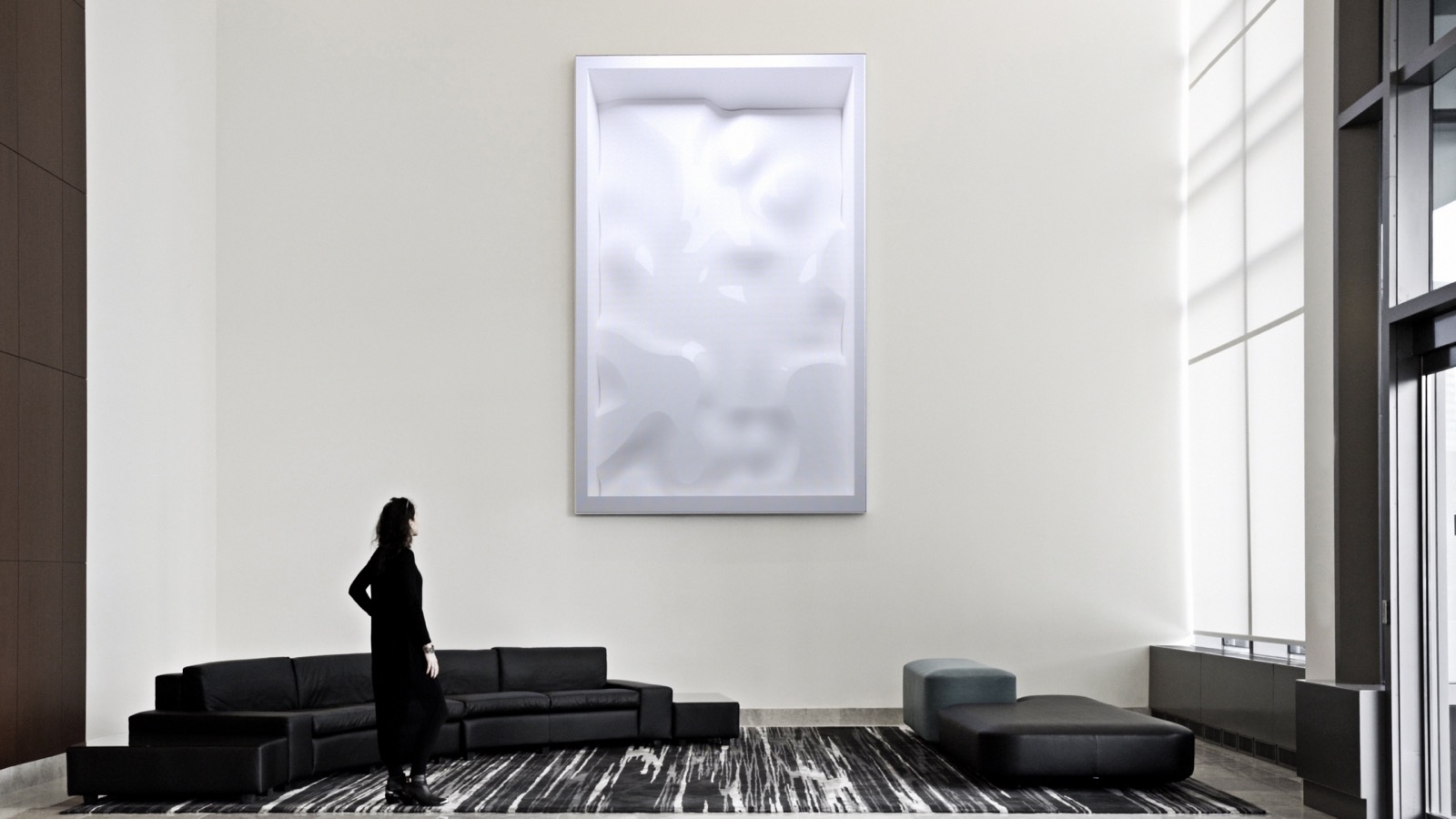
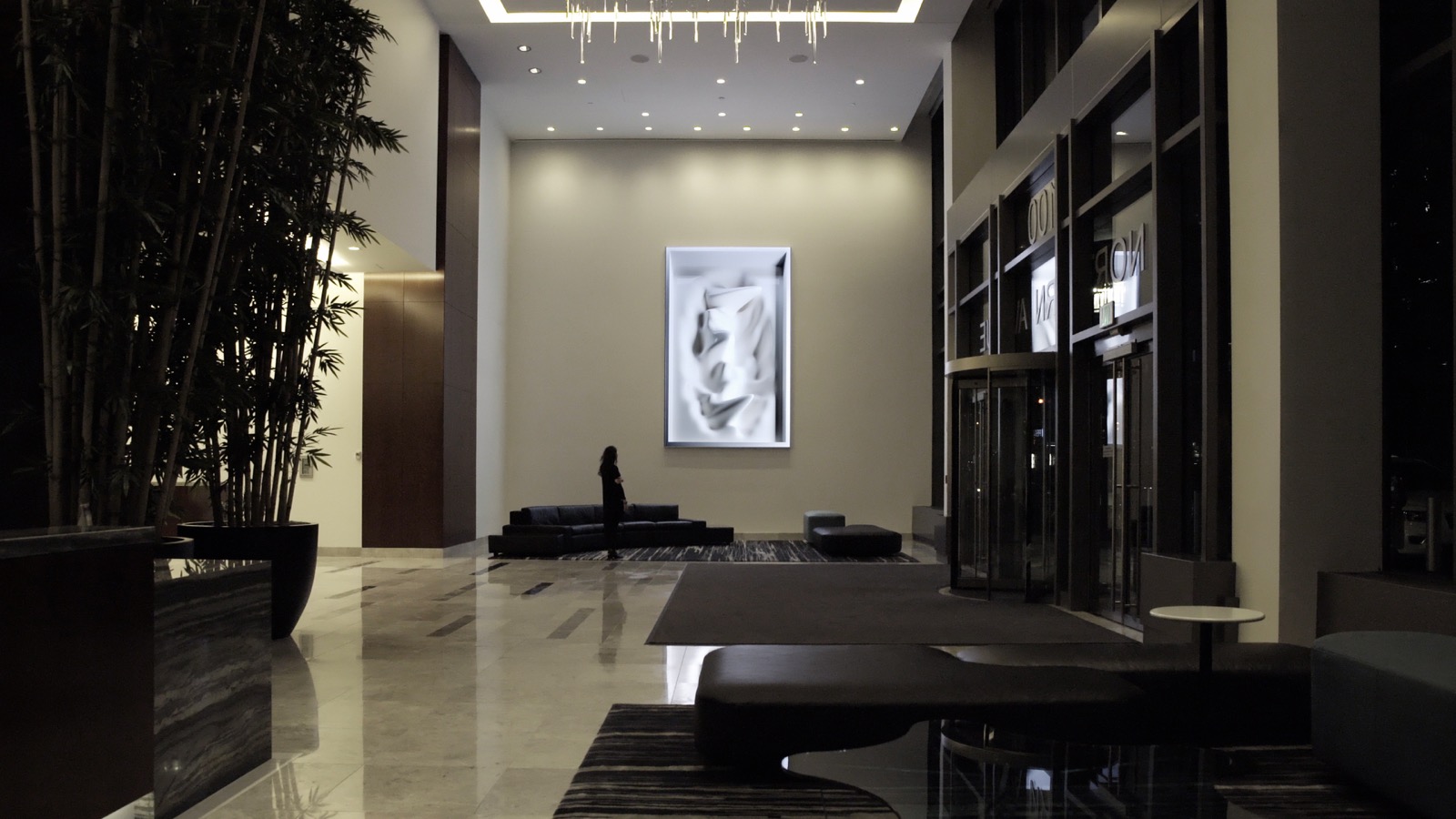
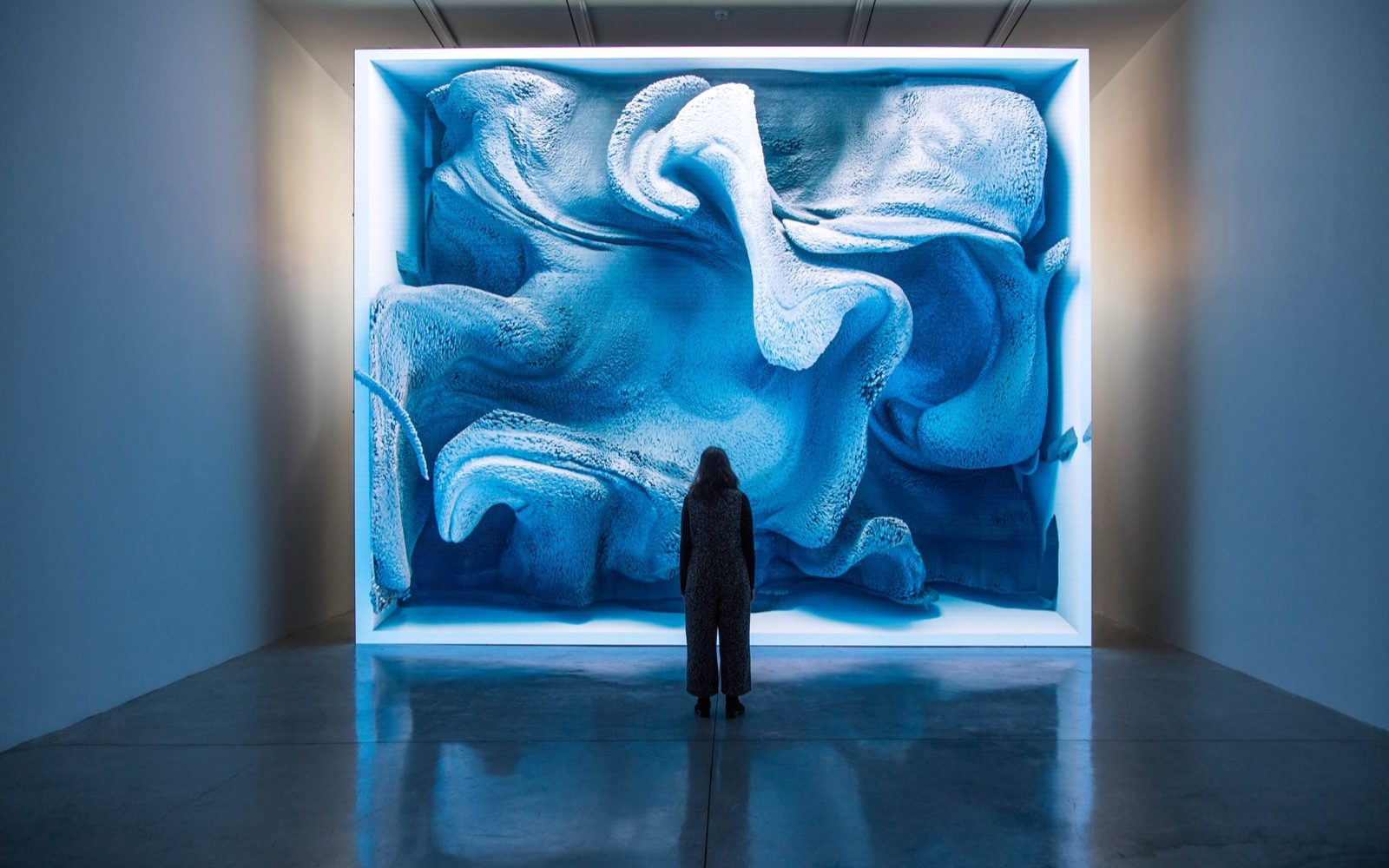
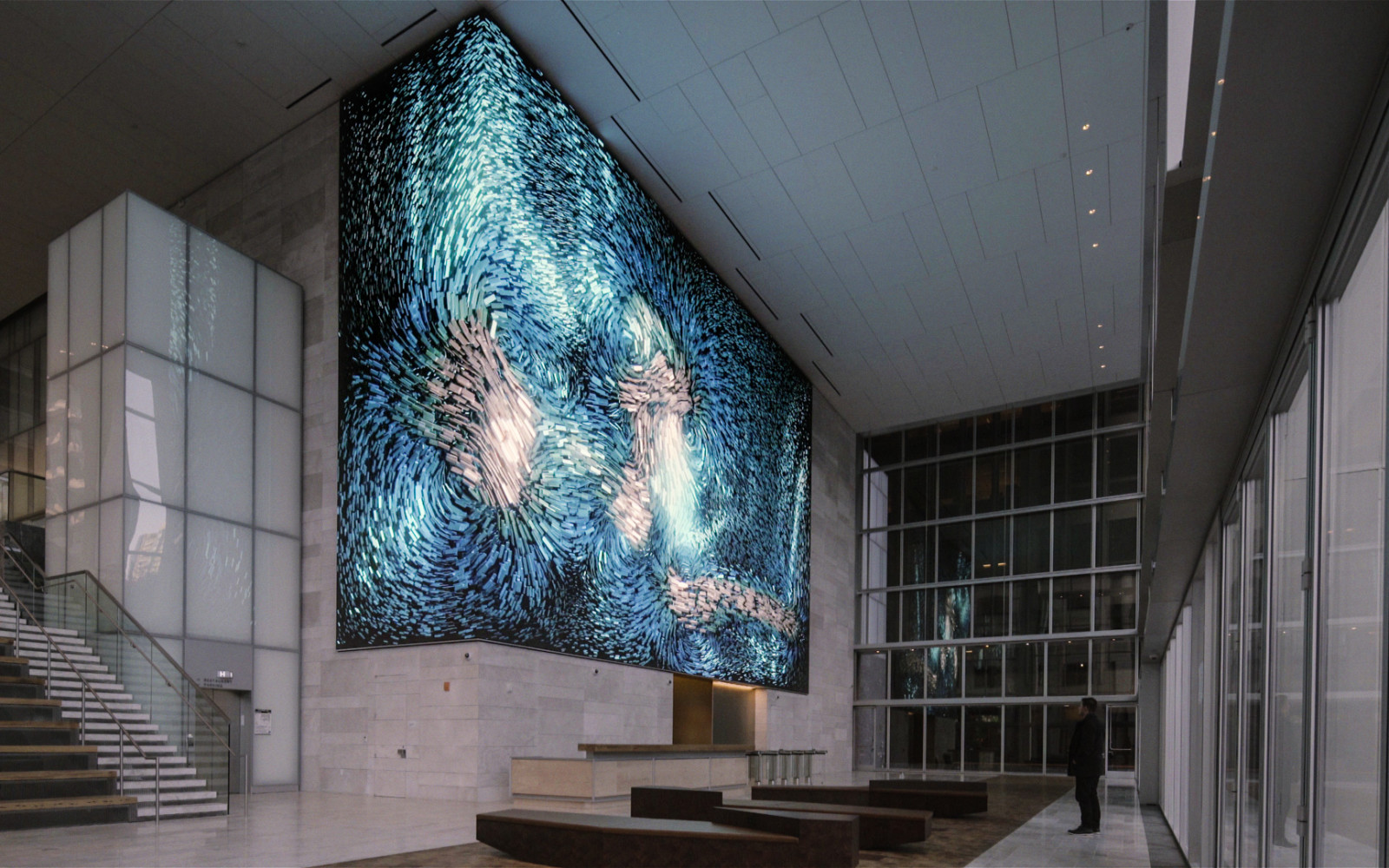
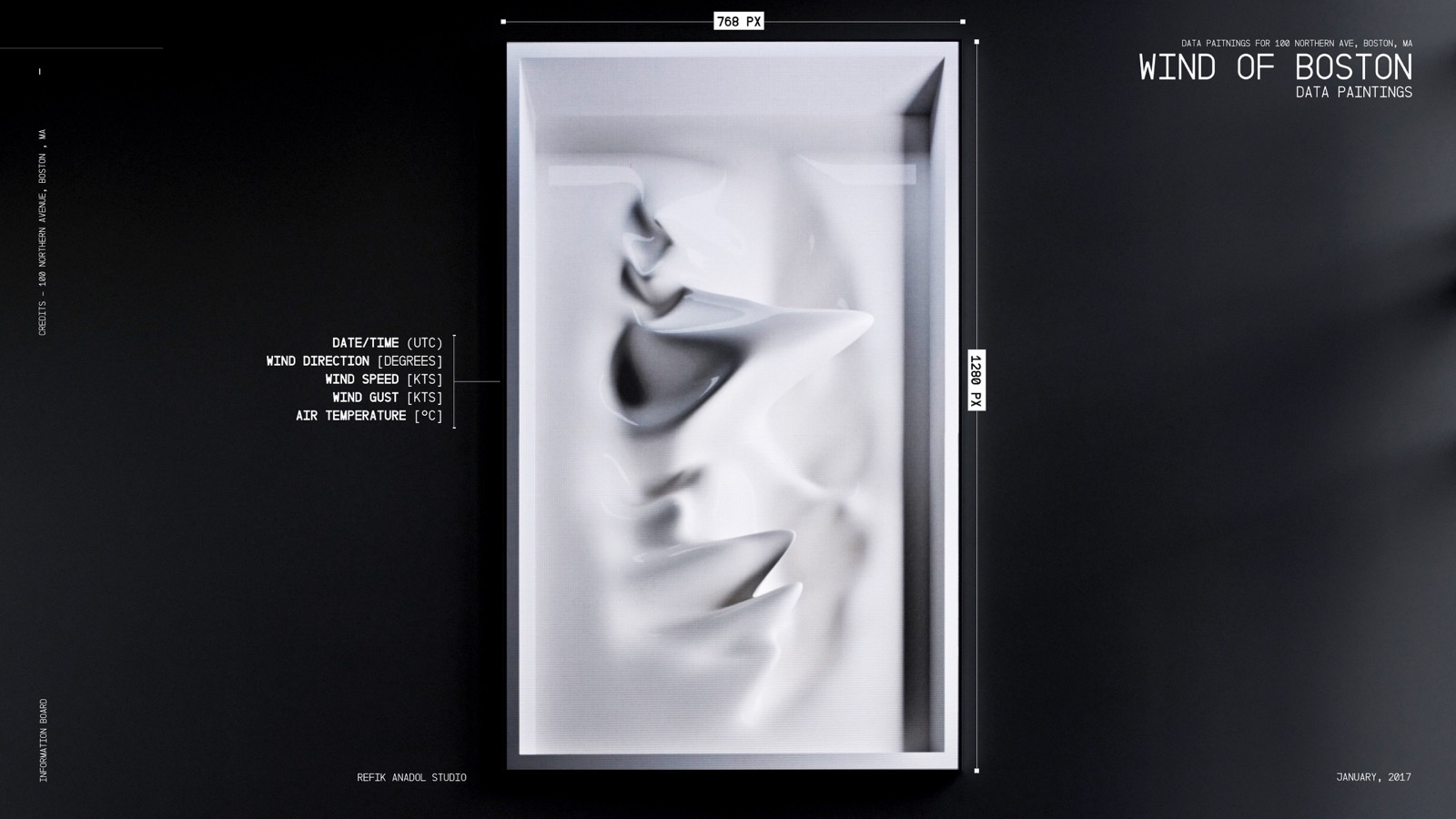
Wind of Boston: Data Paintings is a site-specific installation that turns the invisible patterns of wind in and around Boston into a series of data paintings on a 1.8m x 4m digital canvas. By using a one-year data set collected from Boston Logan Airport, Refik Anadol Studios developed a series of custom software to read, analyze and visualize wind speed, direction, and gust patterns along with time and temperature at 20-second intervals throughout the year.
The resulting artwork is a series of four dynamic “chapters”, each using data as a material to create a visual interpretation of the interaction between the environment and the city. Each chapter brings different aspects of the data sets to life making visible the invisible beauty of wind as a natural phenomenon.
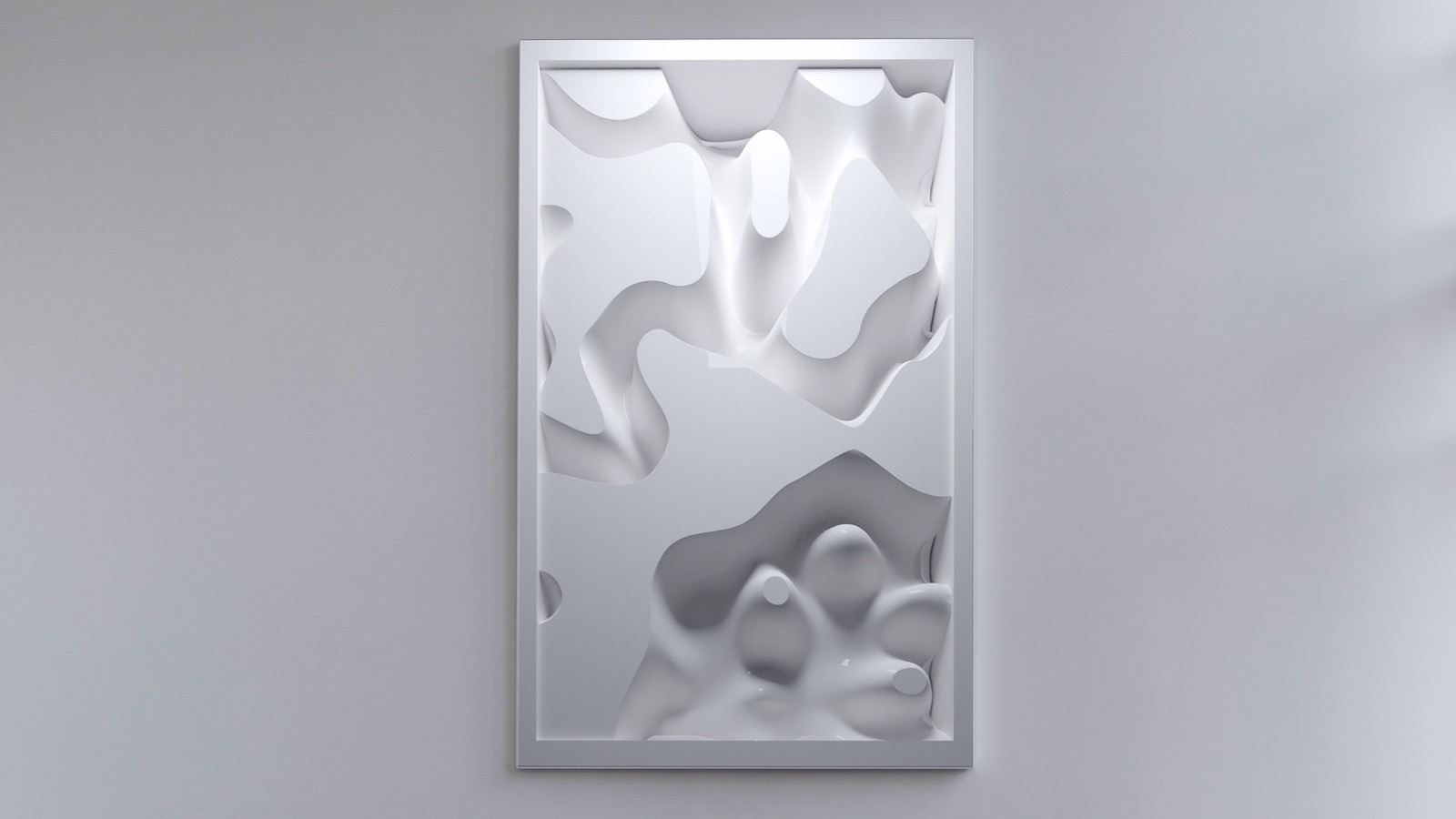

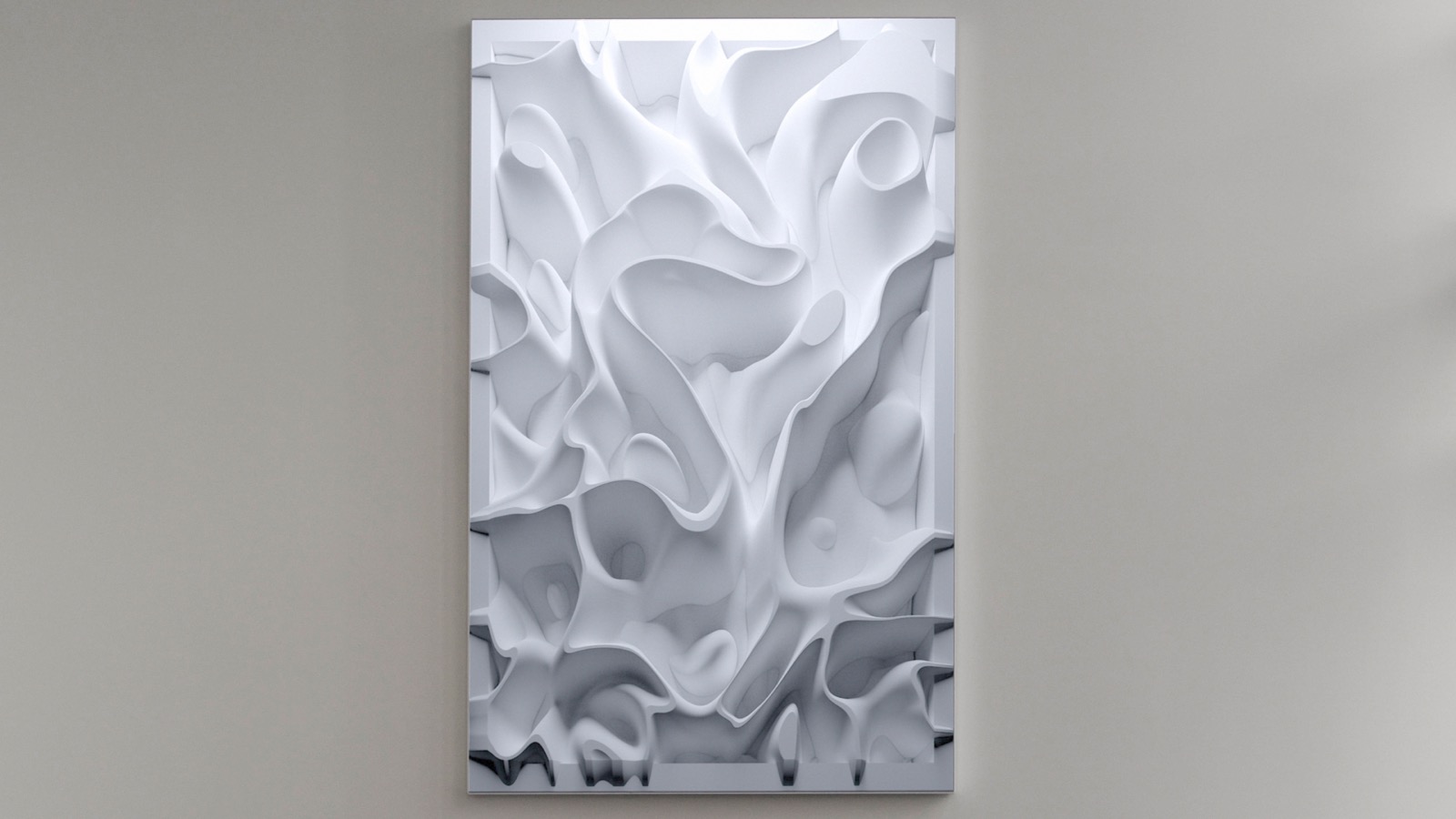
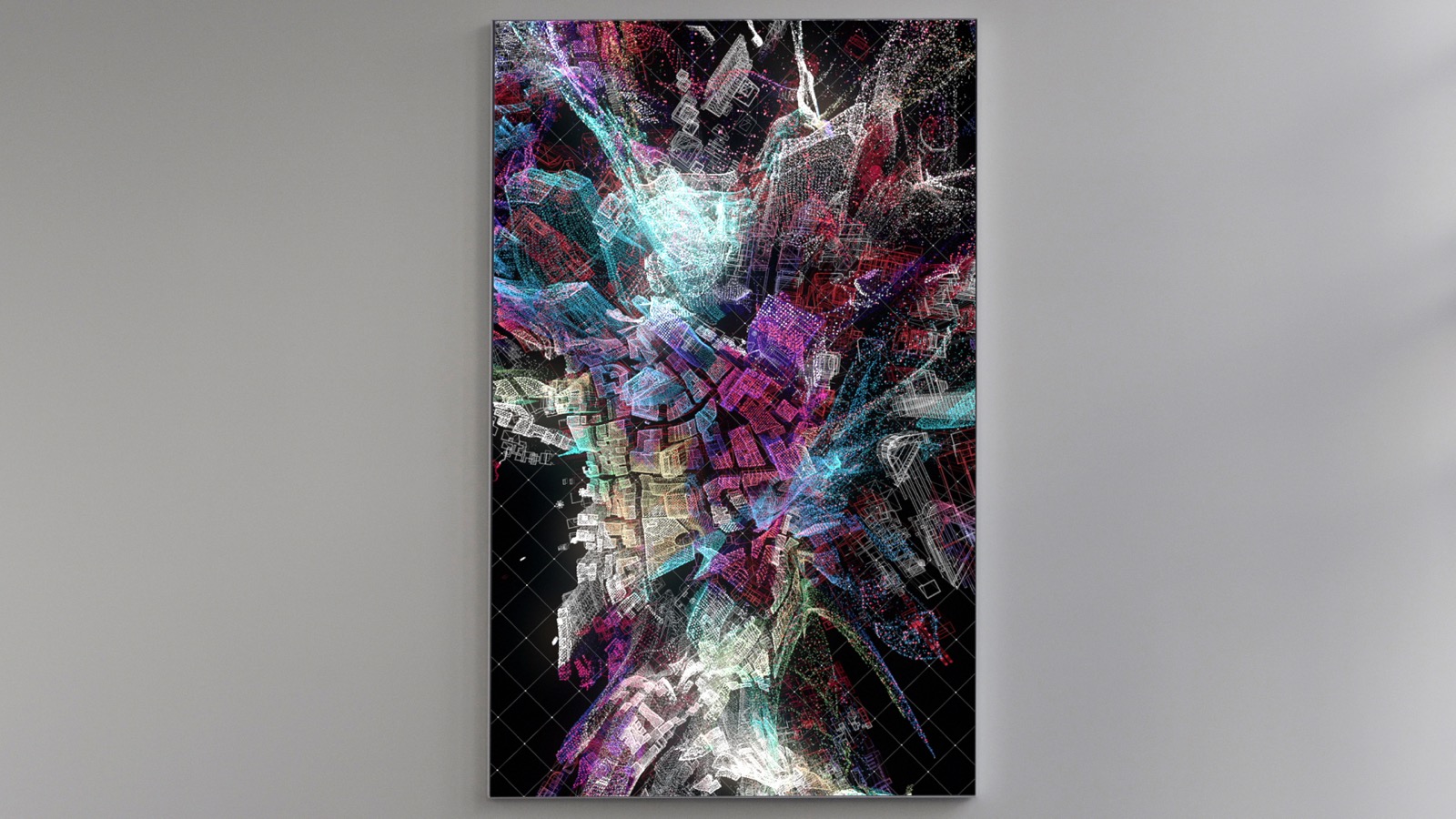
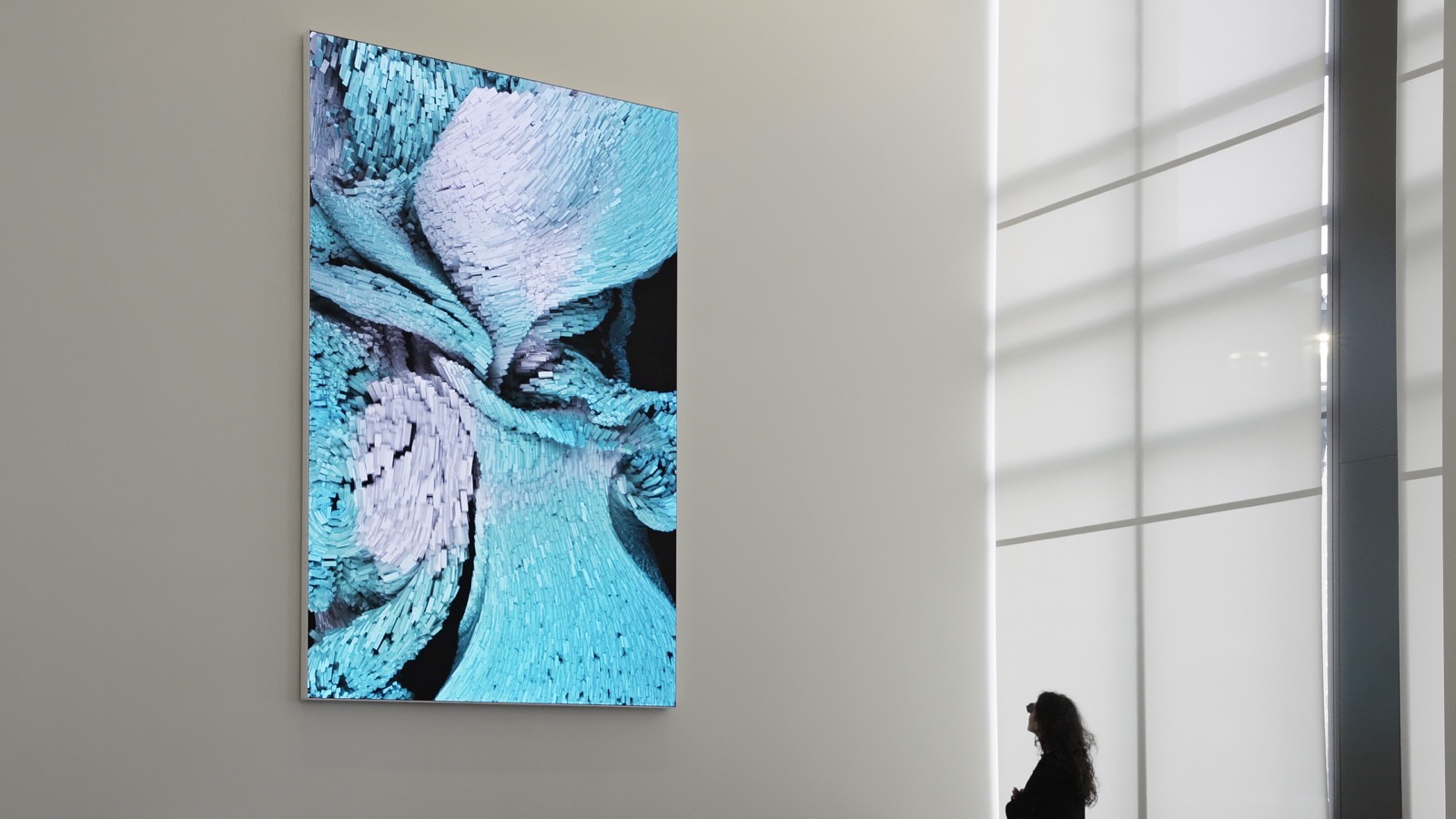
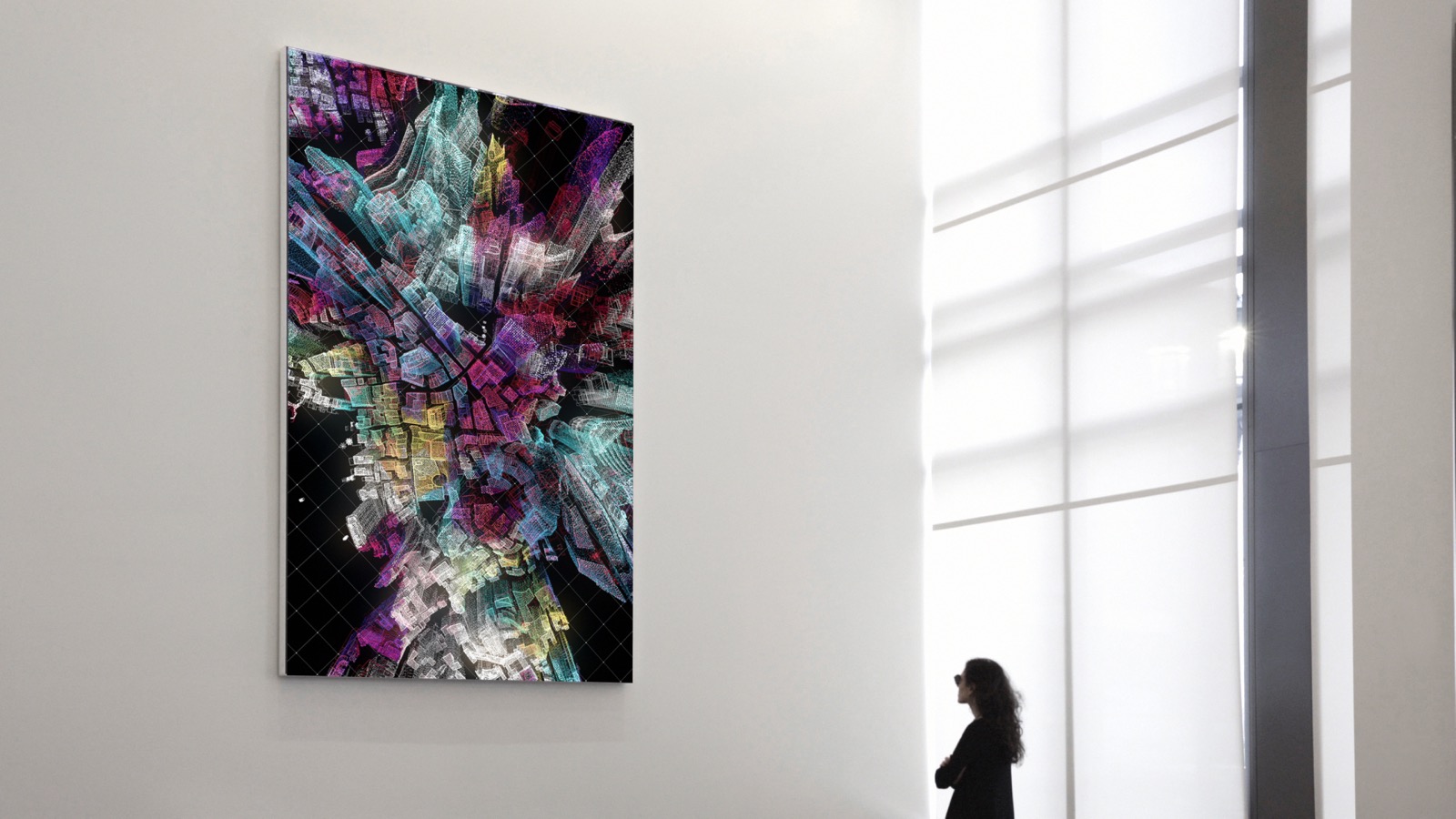
Each of the four chapters focuses on one distinct characteristic of the Wind of Boston. The first chapter, Hidden Landscapes highlights the anemometer’s most radical readings to create immaterial, spatial experiences. Porcelain Memories recalls the intangible power of a gale when reimagined outside of the traditional constraints of time. Sea Breeze explores the paradox of soft gentle wind blowing from the sea to the site in the harsh cold of winter. Gust in the City is a top-view visualization that explores the phenomenon of high speed winds in short bursts and the constant unseen poetic dance between the forces of nature and the built environment.
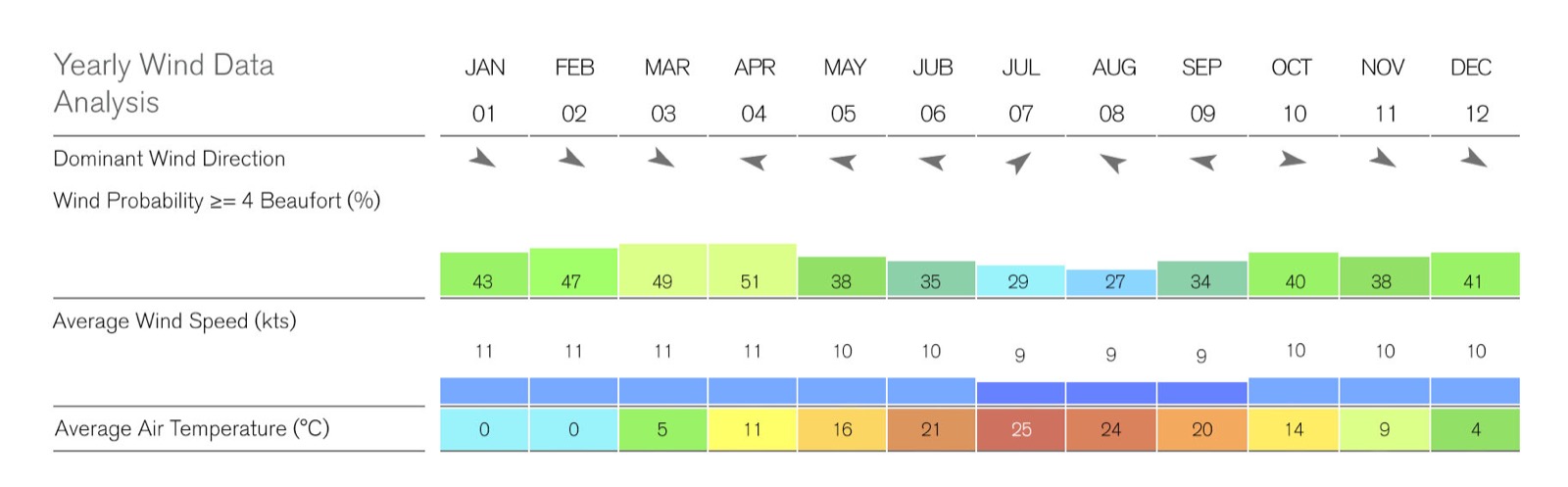
As an example, the opening scene – data paintings that visualize the history of Boston’s wind, was produced by a custom application built in Processing. Particle movement is a simple physics simulation, using three major forces: a network of attractors, an evolving Perlin noise field, and a global “wind force vector” that affects all particles equally. The strength and directionality of all of the forces are influenced by the dataset – a listing of wind speed and direction, as measured from a single point at Boston’s Logan Airport. Extreme local variance within the data is smoothed with a moving average algorithm, with different sampling rates for different parameters and different parts of the simulation. Each particle is also subjected to drag, but is otherwise allowed to maintain its inertia. There is no collision among particles in the current system; although the program does support this behavior, it produced visual results that were less fluid and dynamic.
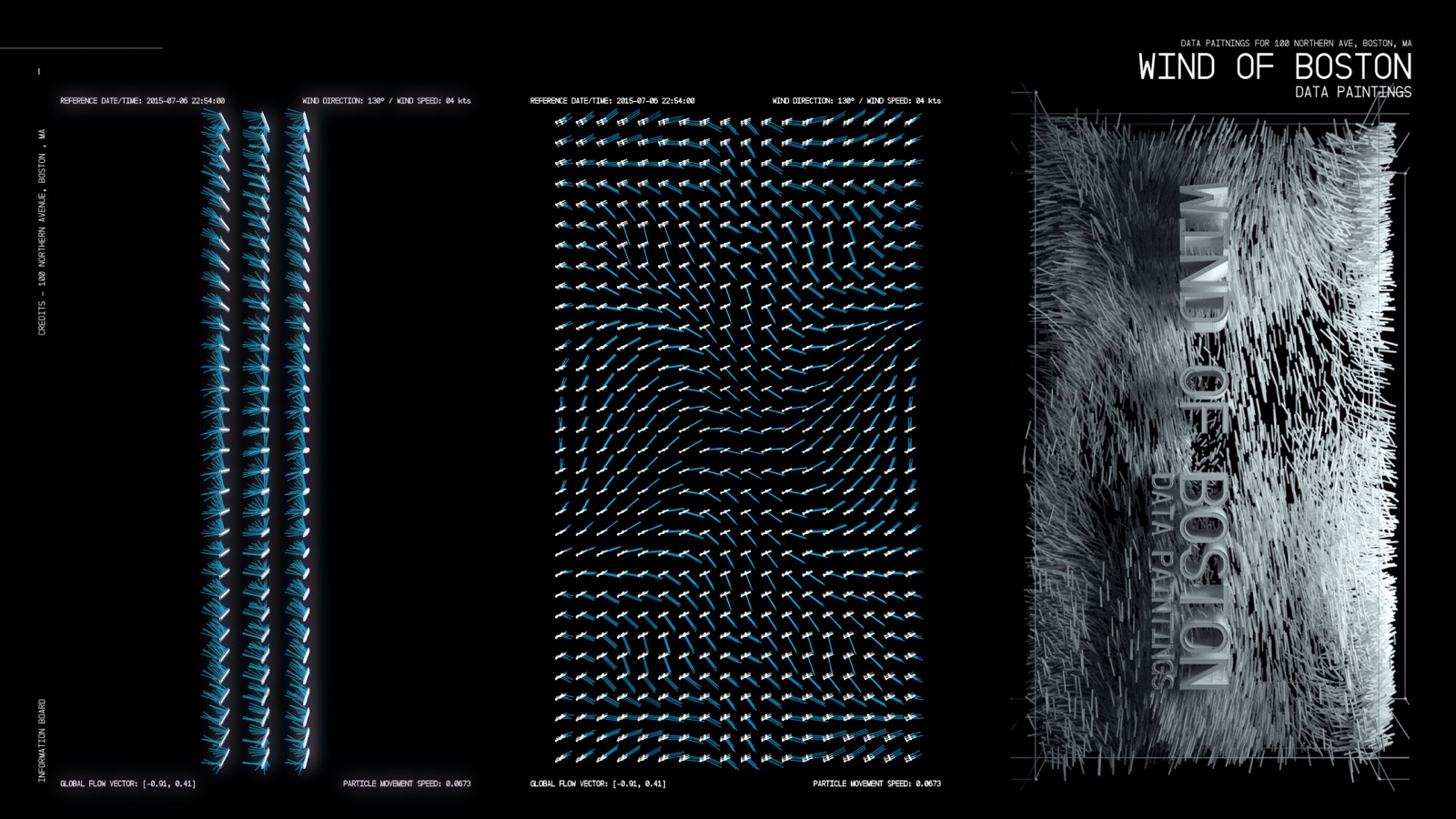
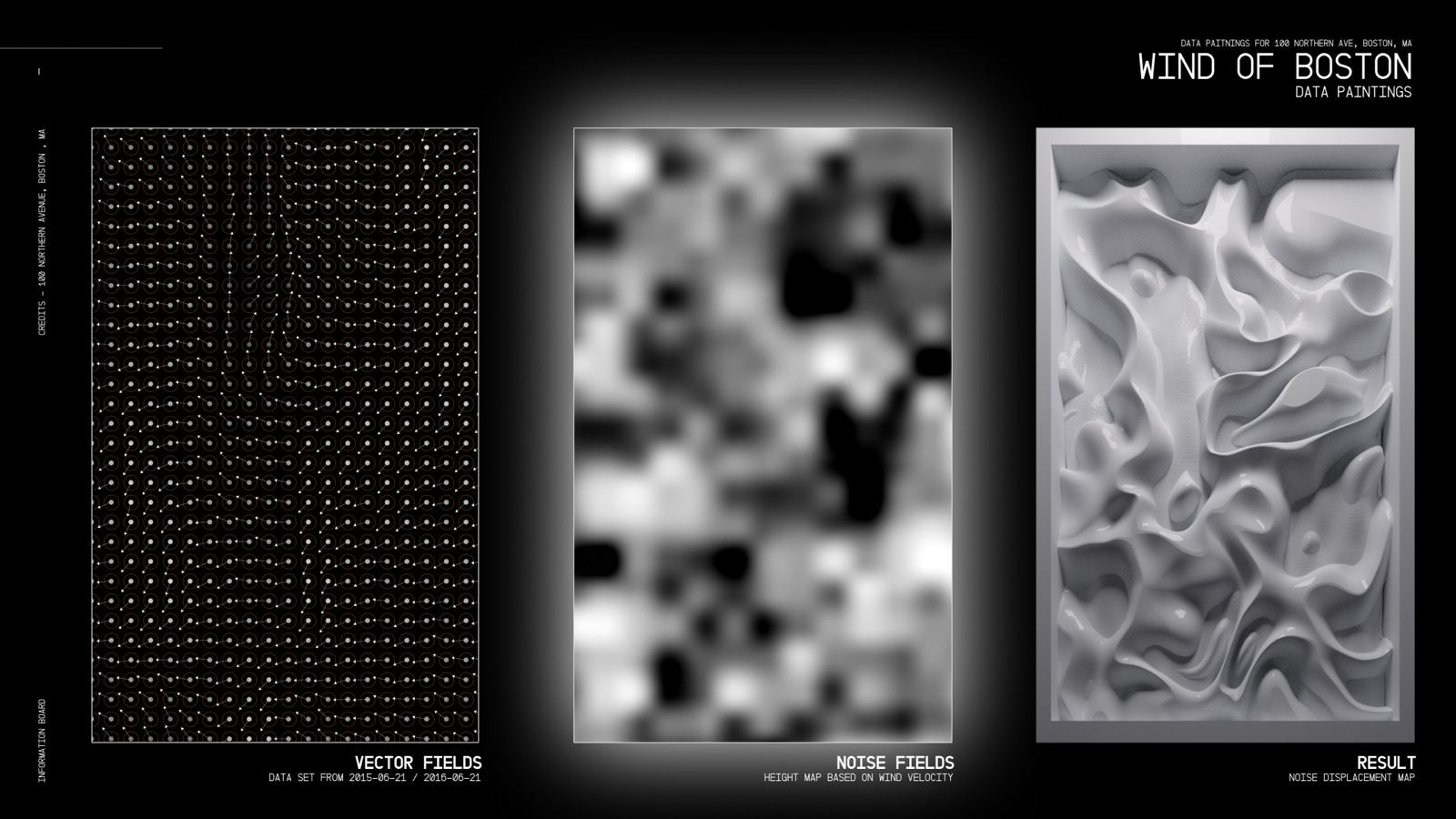

In the current implementation, each particle is drawn as a stretched cube and oriented along its local direction of travel. The length of each particle is proportionate to its velocity. The program uses Processing’s 3D rendering pipeline, which is GPU-accelerated, but for performance it uses a simplified lighting model that lacks sophisticated shadows and ambient occlusion. For more sophisticated rendering, the program is also capable of exporting a frame sequence of OBJ models, containing meshes that we can import into production 3D software. Their current workflow uses this Processing program to create meshes and animation, then Cinema4D for lighting and scene setup, and OctaneRender for GPU-based unbiased rendering.
Project Page | Refik Anadol Studios