Cover Marc Vilanova – Phonos, 2020-2022, image courtesy Anna Benet.
While the creative tech community is inherently international, it truly evolves and breathes through local connections, especially when in-person events bring people into one room to listen to creators’ stories, struggles, and explorations in an open, horizontal, free context. Creative Coding Barcelona is one of these projects that tries to do just that: a series of presentations, talks, and workshops where artists, researchers, and studios present projects with creative coding at their core. These events are vibrant and well-attended, drawing a diverse mix of local artists, friends, and students who are exploring media art forms that, while not entirely new, continue to inspire fresh experimentation. The organization is fueled by enthusiastic people and led by Xavier Hernández, who founded TGAM in 2020, and the artist Monica Rikić.
The last event of 2025 featured a presentation by Marc Vilanova, a Barcelona-based sound and visual artist who recently exhibited at Ars Electronica 2025 and selected for the S+T+ARTS AQUA MOTION program, a 14 months residency promoting collaboration with scientists, technologists, local communities, and water experts for addressing the challenges related to water in Europe.
In his talk Marc offered a journey through his body of work that crosses the domains of art and science while pushing the experimentation on the materiality of sound, human perception, and environmental impact of sound. After the talk, there was the chance to have a chat and go deeper into the details of his artistic research.
SC: Hello Marc, thank you for taking the time for this interview. From saxophone to large-scale sound sculptures and transdisciplinary works with ocean scientists, your artistic practice is evolving while maintaining a coherent inquiry into sound experiences and embodiment to explore sensory augmentation and rediscovery. Where does your artistic research stem from, from encounters with which materials or ideas?
MV: I started as a musician, studying saxophone. During my studies, I became increasingly interested not only in sound, but in the visual aspects of the performance. I paid close attention to the space, the light, way the audience enters, and my own presence on stage.
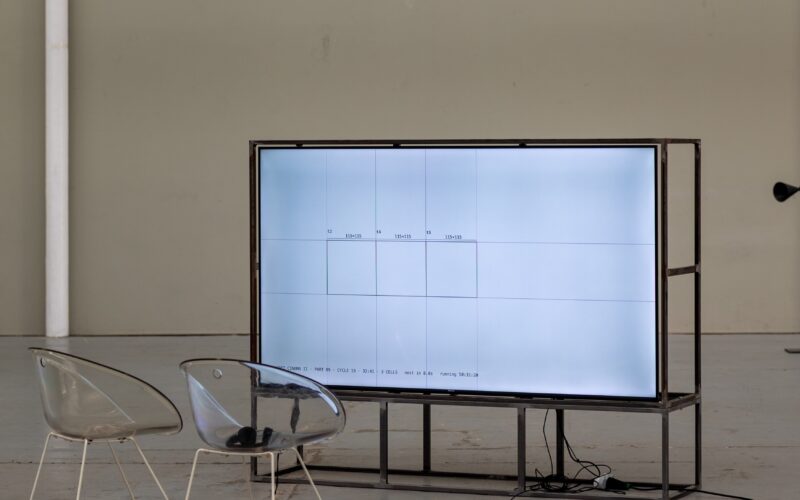
This led me to experiment directly with the instrument, exploring new sounds but also new ways of making those sounds visible. I was interested in how sound could be explained visually to the audience. One example is my video work Saxophone Miniatures, where light emerges from the instrument as I play, turning the saxophone itself into a visual interface. The instrument produces sound, but also gives visual feedback about what is happening inside it.
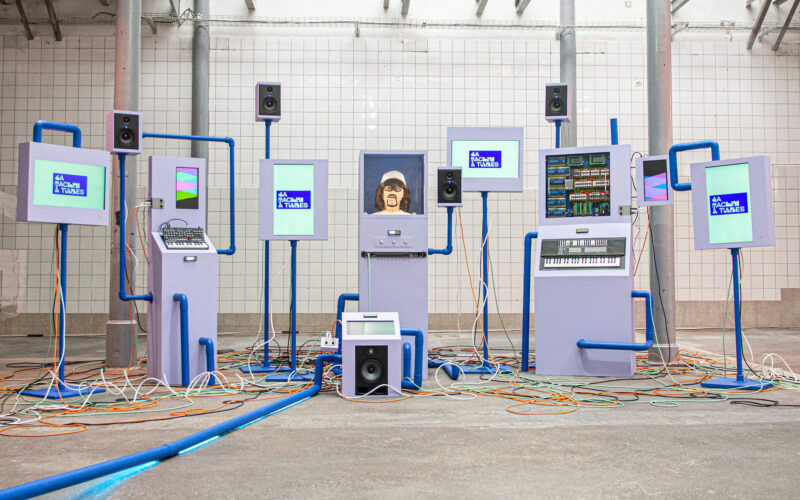
To develop this further, I began integrating electronics into the instrument and collaborating with other creatives, including dancers and technologists. The intention was always the same: to make the sound I was producing more perceptible, more tangible, and more accessible through visual means.
SC: The CAN community is made up of artists, researchers, and students from digital and creative tech programs. Before digging into your artistic outputs and processes, I am curious about the first steps and your personal discoveries when you were still studying.
MV: I began my studies in Barcelona at the Liceu, a very traditional music academy. The training was highly demanding and technically rigorous, with a strong focus on classical music. That foundation was very important for me, as it gave me a strong sense of rigor and a disciplined way of working
A major turning point came when I went on Erasmus to Helsinki. There, I studied at the music technology department, which was equipped with studios full of synthesizers and a wide range of tools for experimentation. At the Sibelius Academy, we would start early in the morning and often stay until late at night. The building itself almost became our entire world: it had studios, a kitchen, a gym, even a sauna. Because of the cold and darkness outside, we spent most of our time inside, fully absorbed in working, experimenting, and learning. I was essentially living in the music technology department, and that environment deeply shaped my way of thinking about sound and creation.
Later, I completed a master’s degree in music improvisation in Basel. Through improvisation, I began to develop a more personal artistic language with the instrument, increasingly focused on its visual and performative dimensions. Improvisation allowed me to explore the instrument beyond fixed structures and to continue investigating how sound and visual language can evolve together.
Improvisation allowed me to explore the instrument beyond fixed structures and to continue investigating how sound and visual language can evolve together.
Marc Vilanova
At a certain point, playing only one instrument also became frustrating. I kept asking myself: what else can I do with the same brass tube? I felt that I was no longer really learning, but rather repeating and refining what I already knew. It became more about continuous practice than about discovery.
That was one of the motivations for moving towards installation where each project feels like starting a new master’s degree. I find myself continuously learning something new whether it’s working with metal, wood, electronics or programming.
SC: Learning and visualization were the beginning. Now let’s jump to the present, from this first embodiment of your research to the most recent one, Phonos, the work that was presented at Ars Electronica. I saw that it has an embodiment, a kind of sculpture, but I assume it’s still a way for you to visualize sound. Can you dig into the design of that artwork and explain how the embodiment works, as well as the details of the specific sound design that we can experience?


MV: When I was performing, my focus was on how sound is produced and how it reaches the audience, how it is shared and experienced. With installations, this focus shifted towards supporting listening itself, shaping the conditions through which sound can be perceived.
I have been especially interested in working with frequencies that lie beyond our sensory limits. Technology allows us to access realities that we cannot perceive directly, and this implies a humble position. It acknowledges that we are not the measure of everything, and that much of reality remains outside our perception.
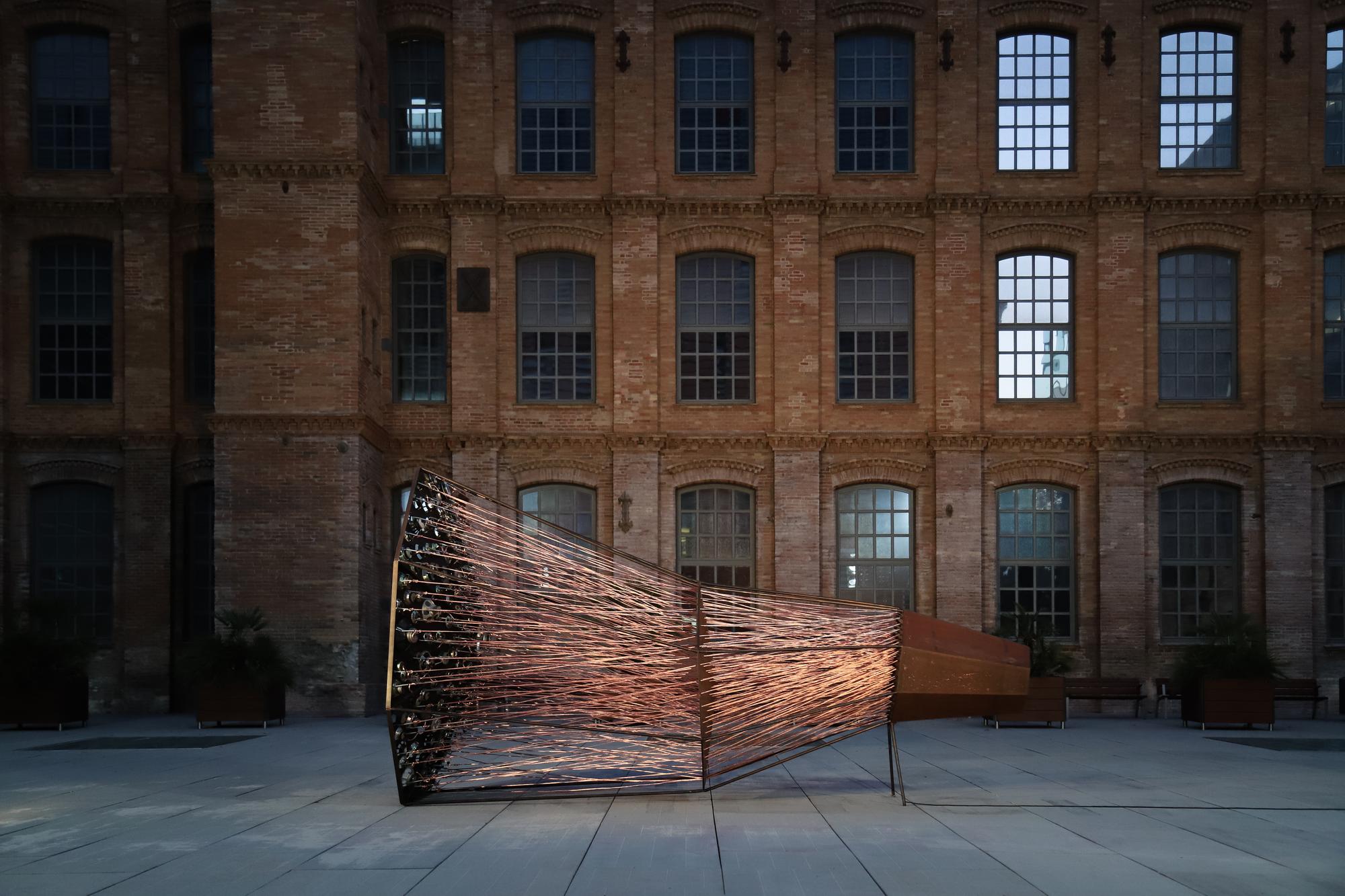
The installation Phonos is based on infrasound, very low frequencies constantly present in our cities, generated by infrastructures such as public transport or turbines. Our bodies can feel them, but we do not fully understand how, nor what effects they may have on us.
Technology allows us to access realities that we cannot perceive directly, and this implies a humble position. It acknowledges that we are not the measure of everything, and that much of reality remains outside our perception.
Marc Vilanova
In this work, I explored a simple way of rendering infrasound perceptible. When an infrasound is sent to one of the old speakers, the speaker cannot reproduce it because its membrane is too small, but it still attempts to. Normally, a speaker converts electricity into movement and then into sound. In Phonos, only the first transduction takes place. Electricity becomes movement, producing a subtle, almost organic motion that makes the effort of the speaker visible.


All the speakers used were recycled. We worked with 208 discarded units, repairing and cleaning them to give them a second life. When the installation was first activated, we were surprised to hear the mechanical noises of the old speakers. Even without producing sound in the conventional sense, the piece reveals the effort of vibration itself, allowing the audience to sense the presence of these imperceptible frequencies.
SC: I am curious about the trajectory of your artistic research. I’m interested in understanding the connections within your practice, how one investigation leads to another. With Phonos, you were exploring infrasounds in urban environments and their effects on human bodies. How did this evolve into your work with waterfalls and natural soundscapes? What prompted this shift from examining human-made infrasounds to investigating those produced in nature?
MV: With Phonos, I was interested in how low frequencies that exist beyond our hearing might still affect our bodies and our well being. Even when we do not hear anything, we can sometimes feel discomfort, pressure, or a strange energy when entering a space. These sensations suggest that there are phenomena we cannot perceive directly, yet that still interact with us physically.
Even when we do not hear anything, we can sometimes feel discomfort, pressure, or a strange energy when entering a space. These sensations suggest that there are phenomena we cannot perceive directly, yet that still interact with us physically.
Marc Vilanova
This interest initially focused on the human body, but later expanded to the natural world. I learned that infrasound is produced by large scale natural events such as earthquakes, volcanic eruptions, or thunderstorms. Waterfalls are a special case, as their continuous movement generates infrasound constantly. This raised the question of what kind of relationships these sounds create with their surrounding environment.
Research shows that large waterfalls emit low frequencies that travel very long distances. While humans cannot hear them, other species can. Some birds use these infrasounds for navigation during long migrations, alongside other orientation systems such as magnetic fields or atmospheric pressure.
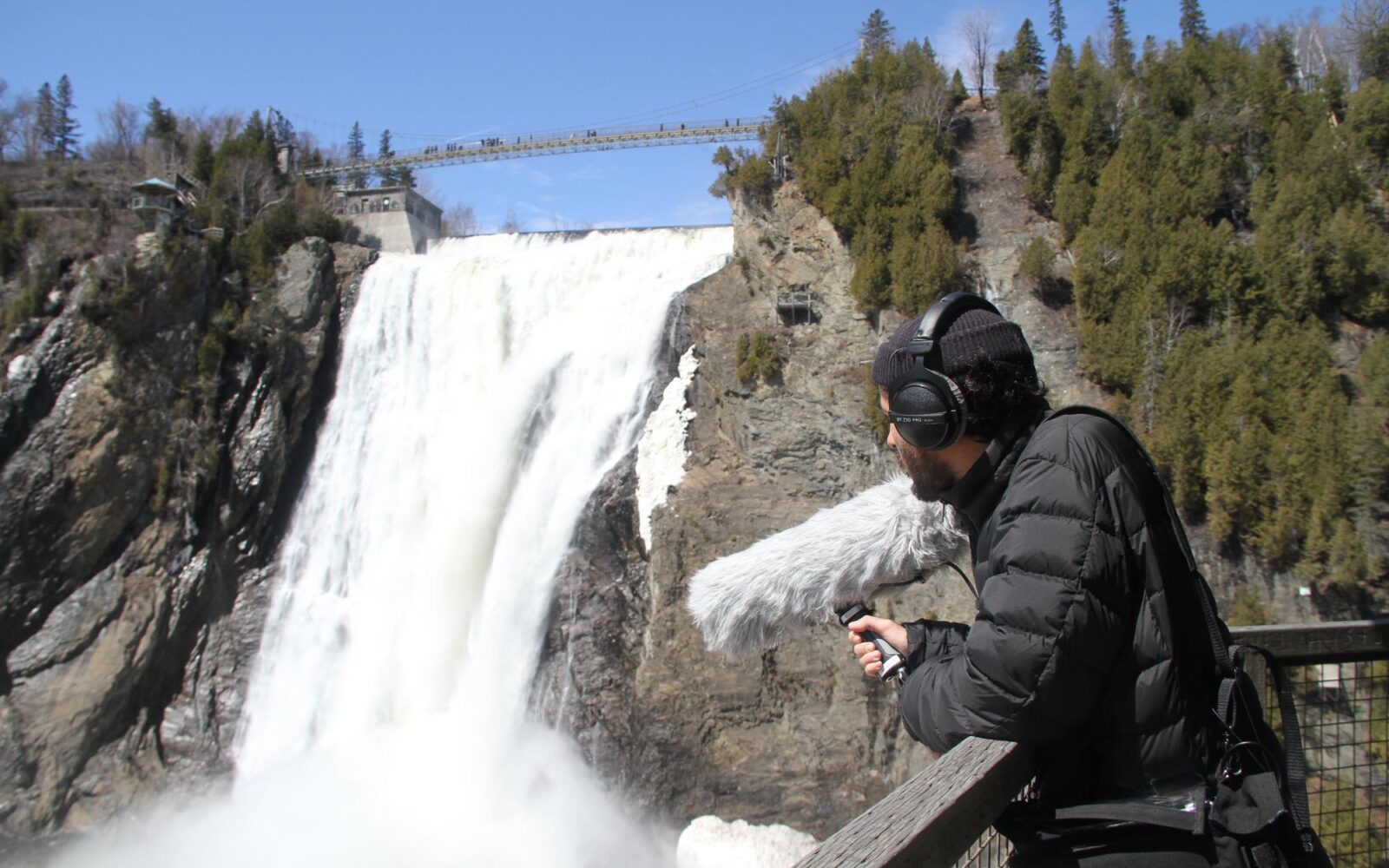
At the same time, scientific studies indicate that artificial sources of infrasound, such as airplanes or wind turbines, interfere with these natural signals, contributing to a form of invisible sound pollution. This context led to the development of Cascade. For this work, I made infrasonic recordings at large waterfalls, including Montmorency, Niagara, and Iguazu, using specialized equipment.
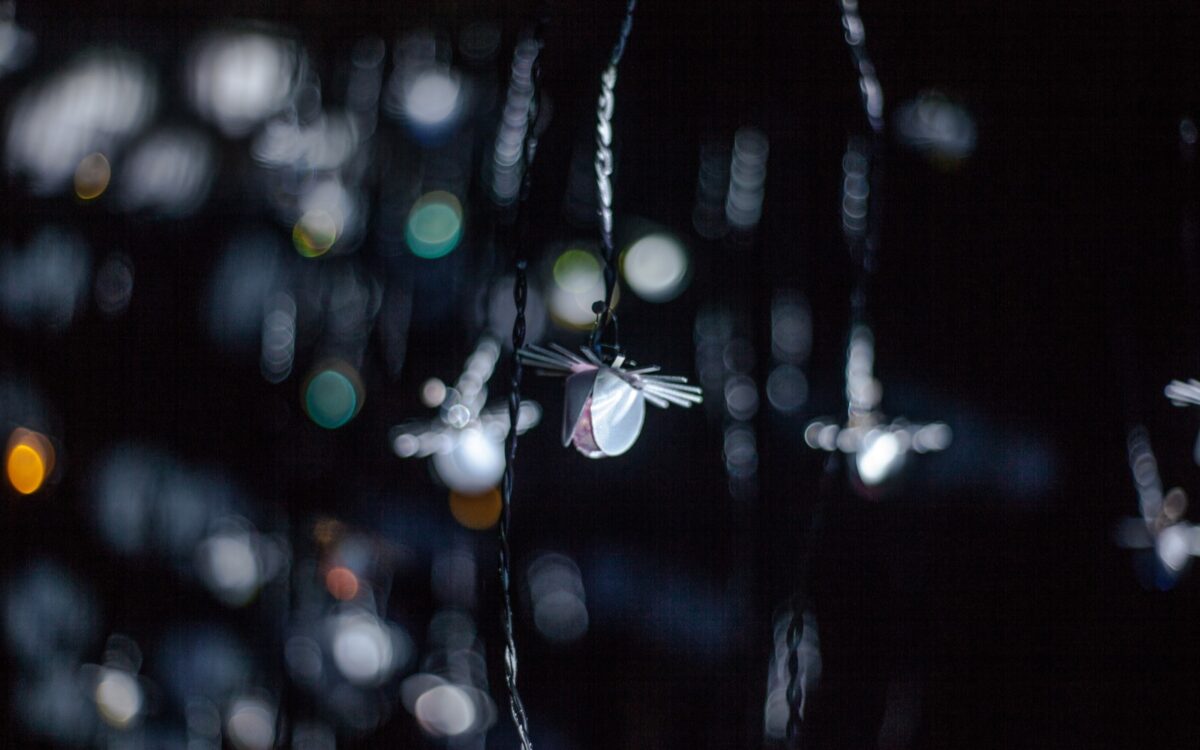
In the installation, these frequencies are translated into subtle movement and light. Small speakers respond physically to the infrasound, activating a luminescent fiber optic element suspended from each speaker, which makes the sound visible through vibration. Visitors are invited to walk through the piece and experience it through their bodies, sensing sound not only through hearing, but through presence and touch.
During the recording process, I often worked without knowing exactly what I was capturing until I returned to the studio. In one location, far from the waterfall, I suddenly felt a strong pressure in my stomach and decided to record at that exact spot. Later, when analyzing the material, that recording showed a noticeably stronger presence of infrasound. This experience made me aware that these frequencies can be sensed physically, even if we lack the training and language to describe them. We are not used to listening with the body in this way, and many of these sensations remain unnamed or we describe them as something esoteric.


SC: I mean, we don’t want to rationalize everything otherwise we would lose something essential about being human. I appreciate the rational side, but I’m intrigued by why these bodily experiences of infrasound are so often dismissed as esoteric. Is it simply because we lack the vocabulary and scientific frameworks to describe these sensations?
MV: For me, embodiment is central. Phonos is a monumental installation, but it asks for an intimate experience. The work requires proximity. You need to come close to the speakers to feel their vibration and presence. Listening happens through the body. In Cascade, moving through the installation, touching it, and feeling the vibrations on the skin becomes part of how the sound is experienced. In this sense, the work proposes a form of embodied listening, where sound is not only heard, but physically sensed.
SC: Our body is a sensor.
MV: Exactly. In nature, we experience these frequencies through the body, since we cannot hear them. So it feels natural for me that the artwork invites the same kind of bodily listening.
SC: It’s interesting because it’s not actually about vibration even though these phenomena are always explored as vibration, which is still a physical output that you can sense. But what’s interesting is that you’re also educating (re-training) the audience, right?
MV: More than educating, I would describe it as a process of expanding sensitivity. In Spanish we use the word sensibilidad, which is closer to sensitivity than to sensibility in English. If there is a goal, it is to invite people to open their sensitivity, even towards unfamiliar or unknown areas of perception. Perhaps a more sensitive world would allow us to relate to one another in a more empathetic way.
In Spanish we use the word sensibilidad, which is closer to sensitivity than to sensibility in English. If there is a goal, it is to invite people to open their sensitivity, even towards unfamiliar or unknown areas of perception.
Marc Vilanova
SC: For the next project, you mentioned that you will interact with scientists. How does this collaboration work?
MV: I am currently developing a new project within the framework of S+T+ARTS AQUA MOTION, an international residency program that connects artists with scientists working on specific environmental challenges.
Within this program, I am working on a challenge focused on the Zeeland Delta in the Netherlands. This challenge is curated by Waag Futurelab in Amsterdam and developed in collaboration with universities and environmental research organizations in the Netherlands.
The residency is structured as a fourteen month process. At the moment, I am in the research phase, which is centered on exchange, learning, and dialogue with scientists through regular meetings and shared research activities.
Soon, the project will move into a production phase, which is closer to my usual way of working, leading to the creation of a new artwork to be presented in early summer. The collaboration is not about translating science into art, but about thinking together. It creates a space where artistic intuition and scientific research can meet, particularly when engaging with complex and fragile environments such as deltas, where natural systems and human infrastructures are deeply interconnected.
| Marc Vilanova | Serena Cangiano |
| Marc Vilanova (Capellades, 1991) is a sound and visual artist whose work explores the convergence of art, science, nature, and technology. Grounded in expanded sculpture, he aims to foster active listening to voices often ignored or silenced by the anthropocentric paradigm. His creative approach embraces an openness to the world, creating spaces for listening and reflection that challenge the boundaries of sensory knowledge. He lives and works in Barcelona. | Dr. Serena Cangiano is Senior Researcher at the Design Institute, founder and Head of FabLab SUPSI, faculty and board member of the MA in Interaction Design, focusing on multimodal experience design and experimental practices for transformative processes in education, research, and innovation. Her research explores digital literacy and co-creation for complex social issues. She contributed to books like Reprogrammed Art, Rebelling with Care, and Digital Transformation in Design (2024). |
| https://marcvilanova.com | http://www.serenacangiano.space |