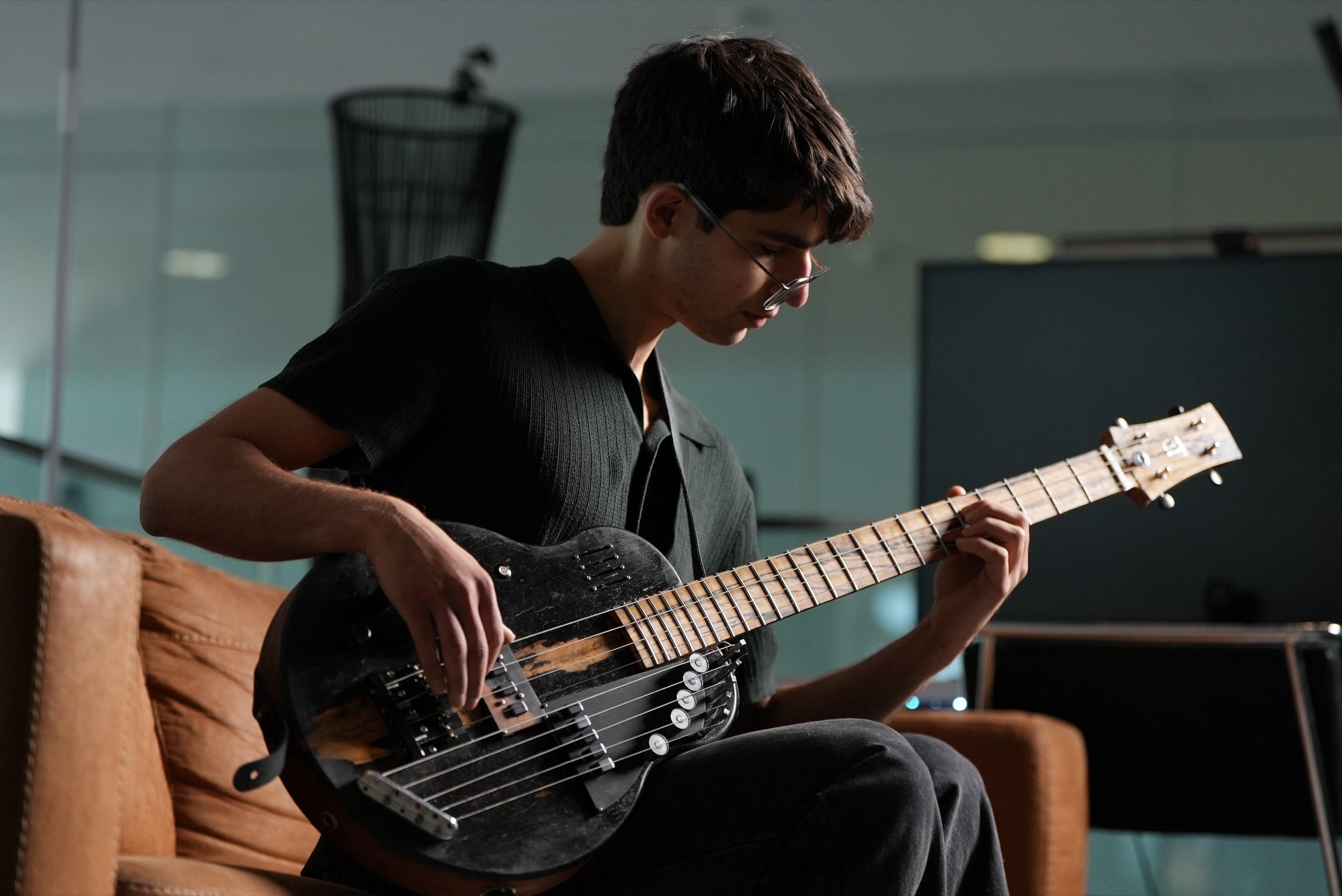
The Automatar is an intelligent AI-powered bass guitar born to bridge the gap between the digital and physical worlds.
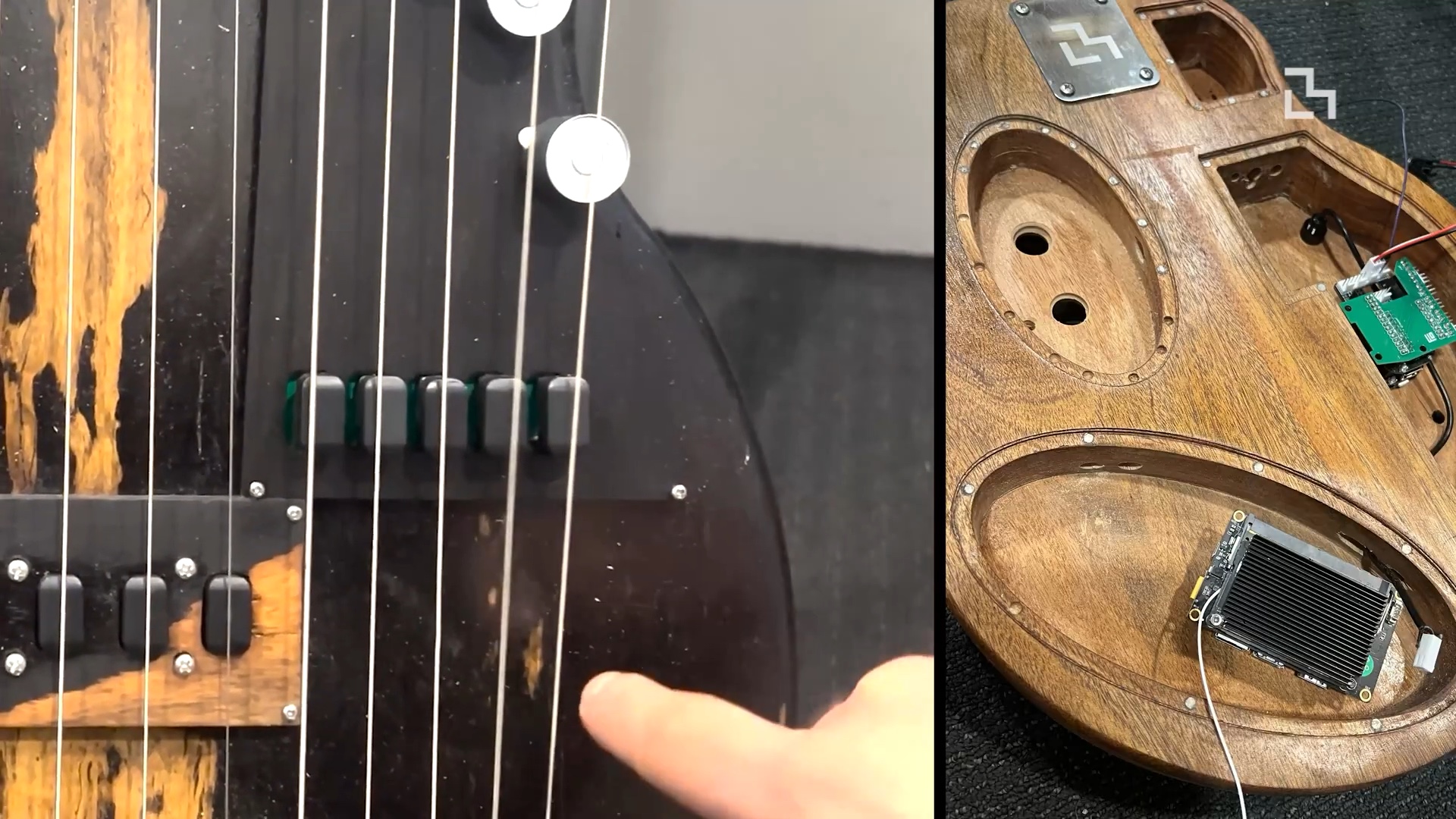
While the instrument functions on some level similarly to any fretted string instrument like a guitar or bass, it innovatively and unprecedentedly is built around an NVIDIA GPU physically embedded within it that imbues the instrument itself with a form of intelligence, enabling it to understand how it’s being played and vibrate its own strings in response via an onboard AI model. As a human musician plays the main set of four strings, the instrument electromagnetically actuates itself to harmonize and react in turn.
What comes next when so much of human creativity can be replicated instantly by machines? How can we shape technology to preserve our relationship with the past and with the old ways of making music that humans have used for thousands of years?
Crafted painstakingly entirely from scratch, the Automatar is an intelligent machine built to challenge the ideology of automation through artificial intelligence.
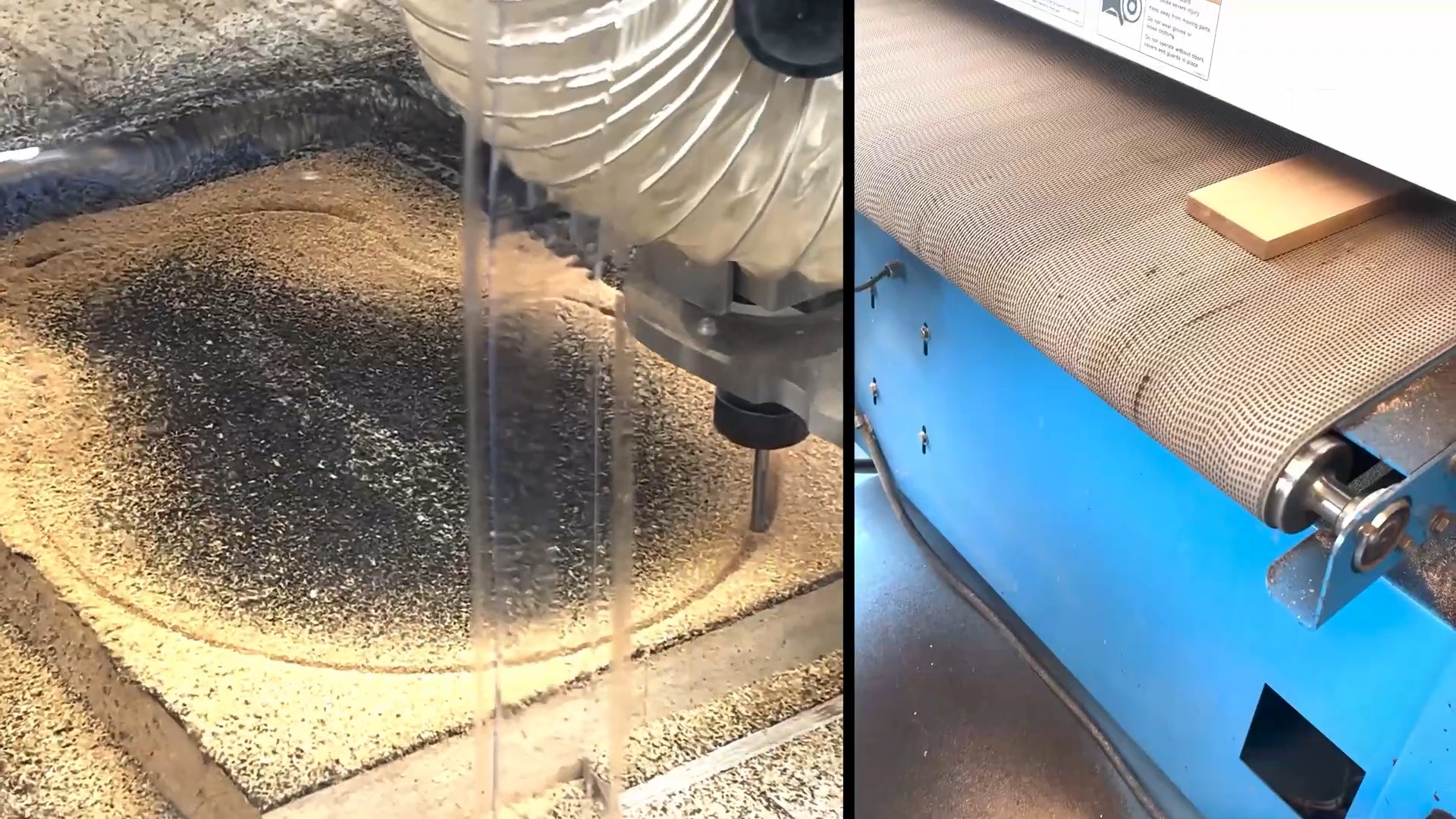
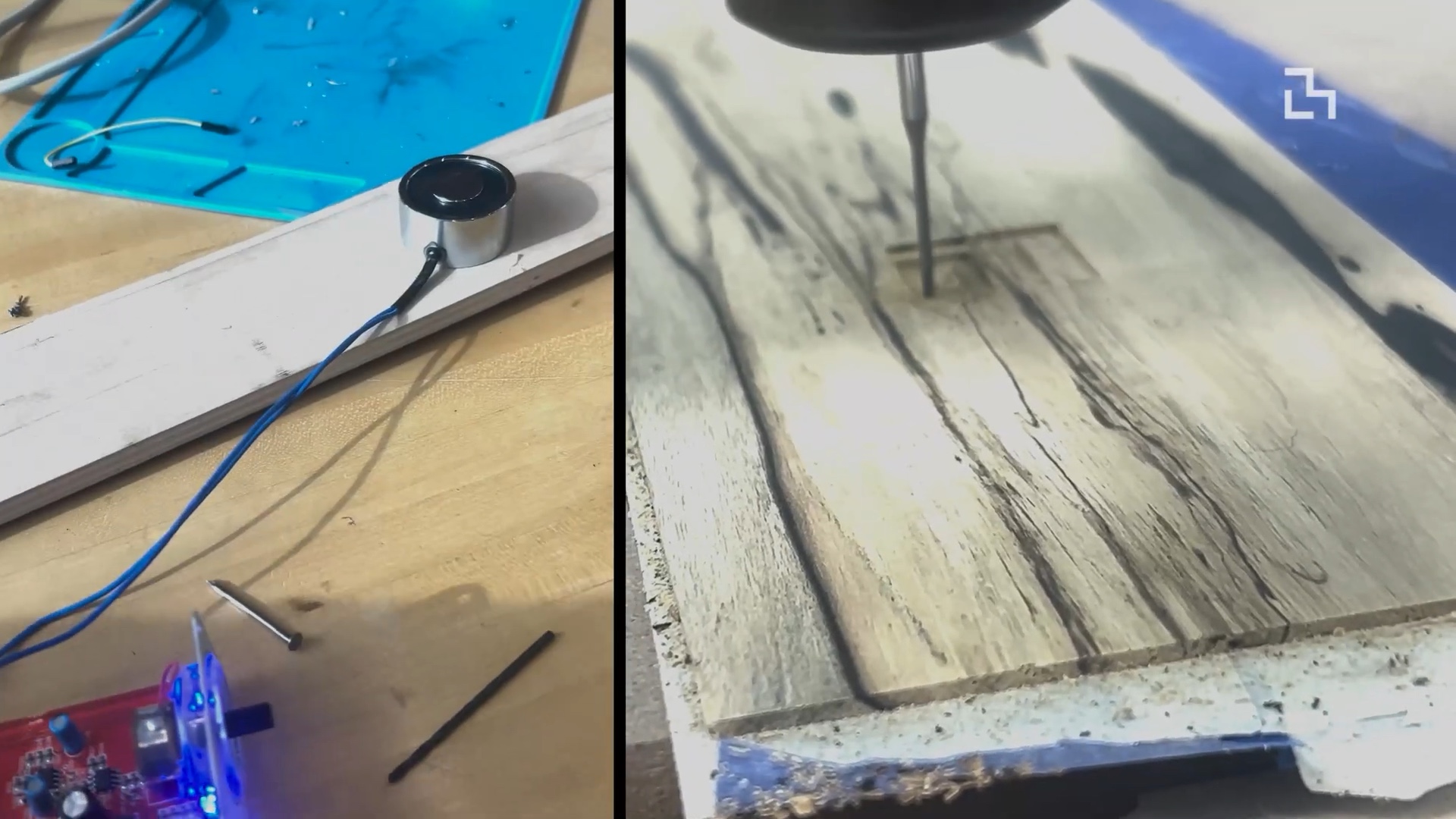
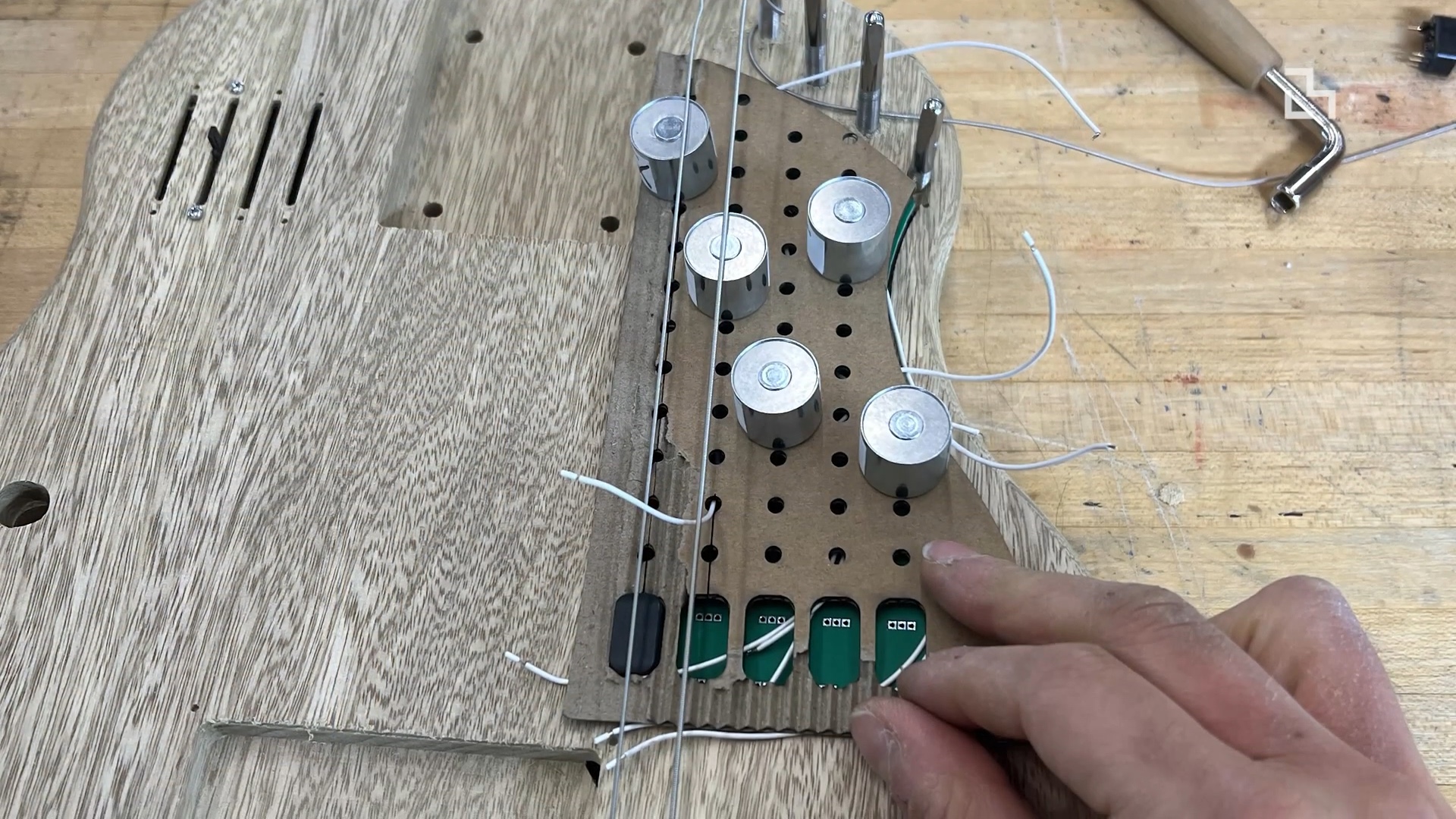
The Automatar was constructed using a mixture of traditional luthiery techniques combined with modern industrial machining: CNC routers, 3D printer, mills, and beyond were used alongside handsaws and chisels. The body and neck are made from the exotic hardwood Pale Moon Ebony, while the back is solid mahogany. The headstock inlay featuring the Opera of the Future group’s logo is solid mother-of-pearl. The instrument is controlled using an NVIDIA Jetson Orin NX for hosting small MIDI-based AI models locally “on instrument”, while the audio processing comes from an embedded Bela Mini running Supercollider. The four main strings of the instrument are played by the human, while the five sympathetic strings are controlled and vibrated by the on-board GPU. All notes played by both the human and AI are processed and converted internally to MIDI with accurate, single-string pitch detection before being fed into the AI model. The strings are actuated electromagnetically, with the Bela generating sine waves at the command of the AI model which are then amplified using high current op-amps that induce physical vibration.
Project Page | Antonis Christou | MIT MediaLab Opera of the Future Group
The Opera of the Future Group develops new technologies for music, from Hyperinstruments that enhance performance expressivity for virtuosi and amateurs, to Hyperscore that uses simple lines and colors to open musical creativity for young people, to numerous sonic strategies for promoting wellbeing and combatting disease, to radical and rewarding applications of musical AI, to “City Symphonies” that build community on a massive scale through collaborative sonic creation.