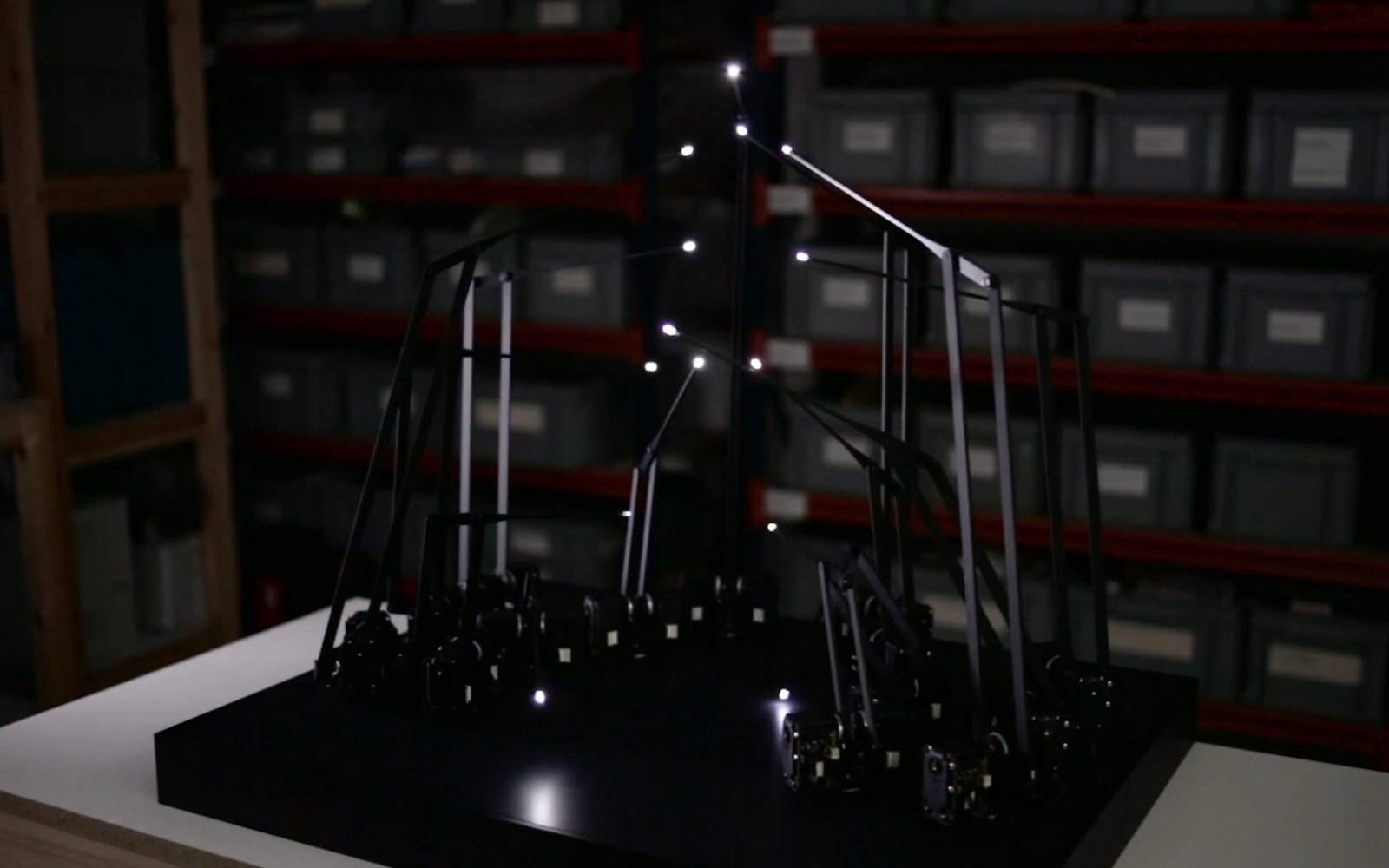
Created bu Jonghong Park at the University of the Arts Bremen (Digital Media Program), the installation ‘bit’ represents a natural random process based on the principle of a Markov chain. Each machine consists of “information” engraved on the read head and an “event” caused by the operation of the motor. Linked together using a Markov chain algorithm, one can predict which of the four machines will move in the next turn.
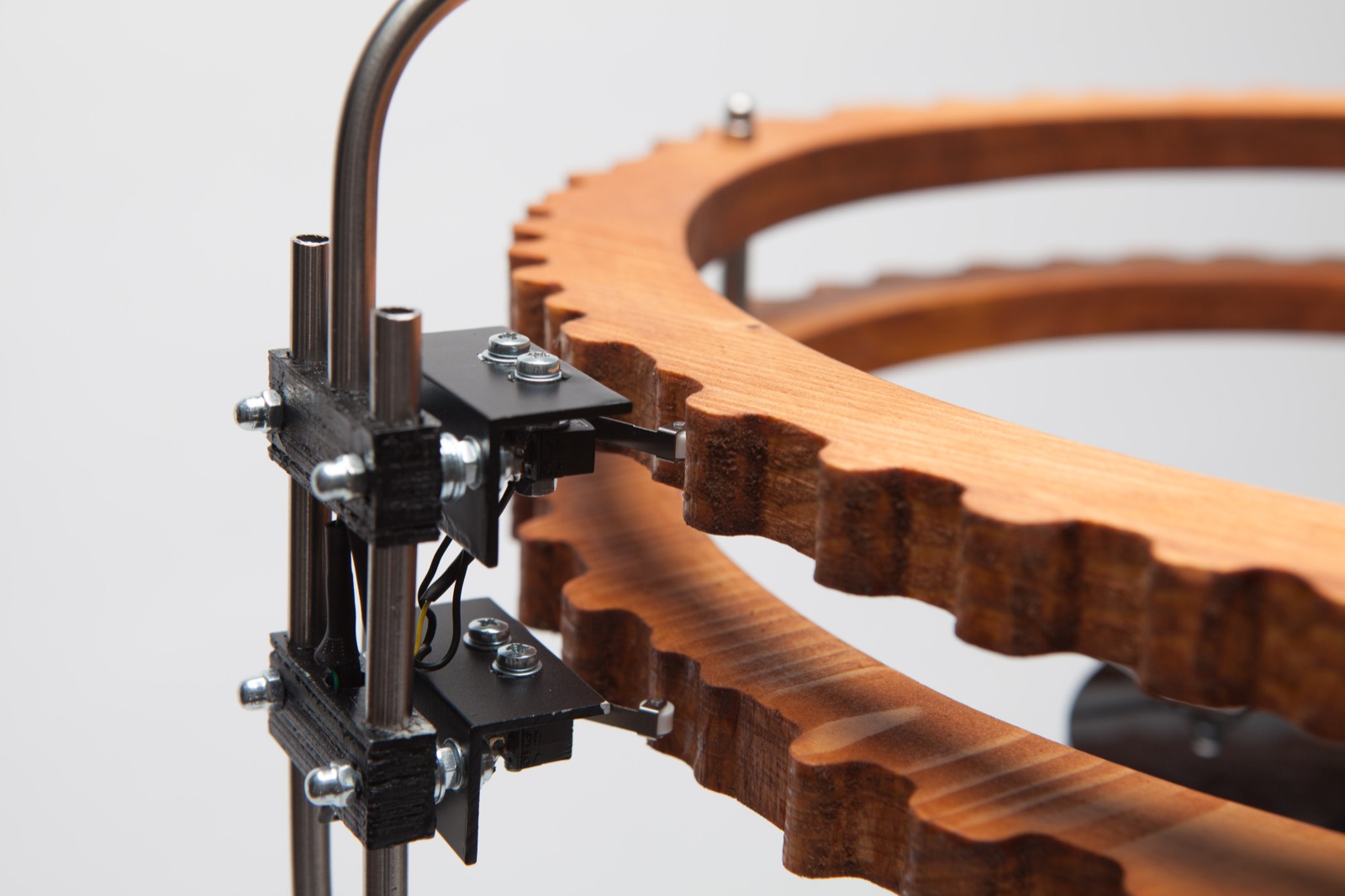
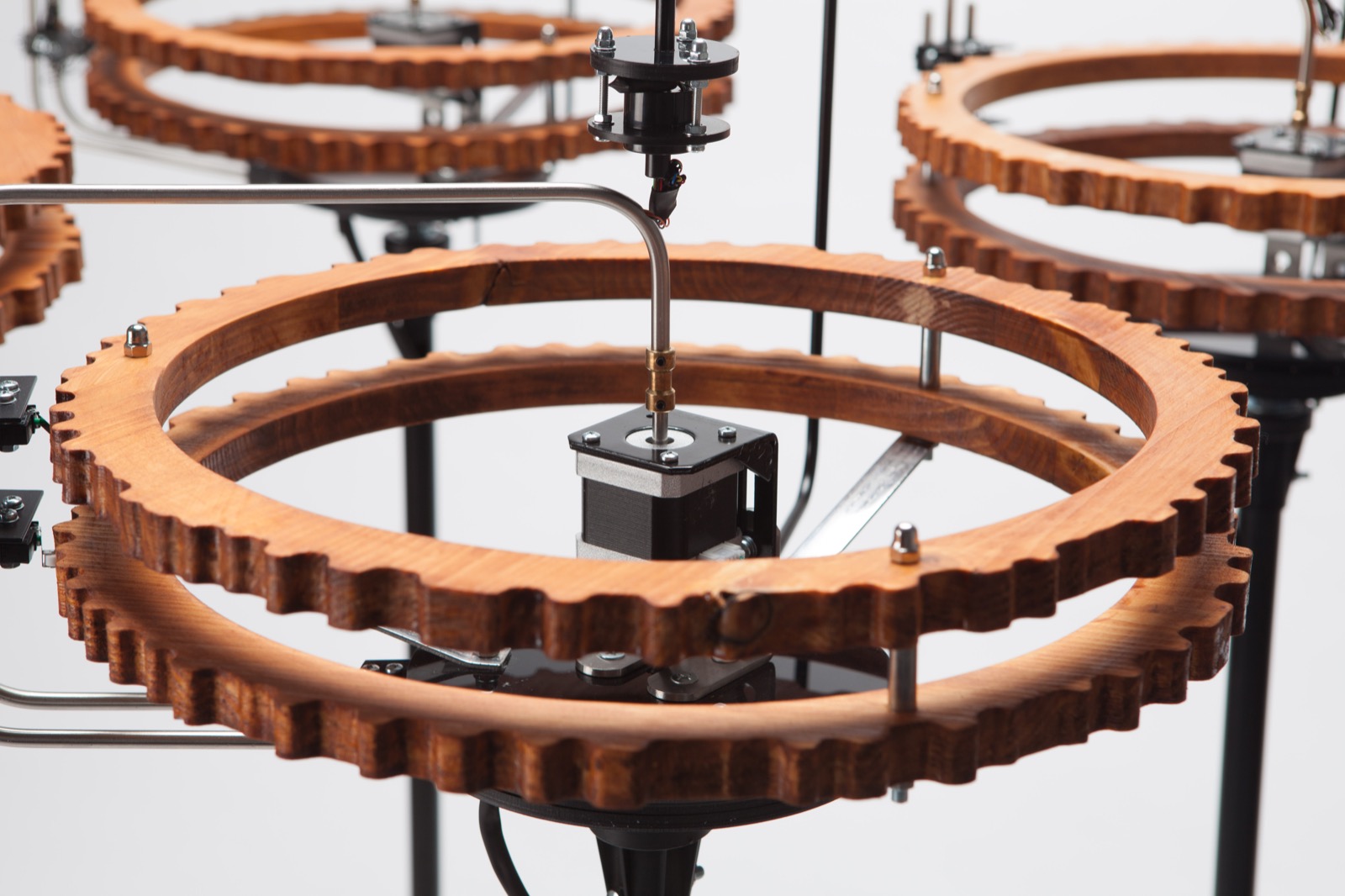
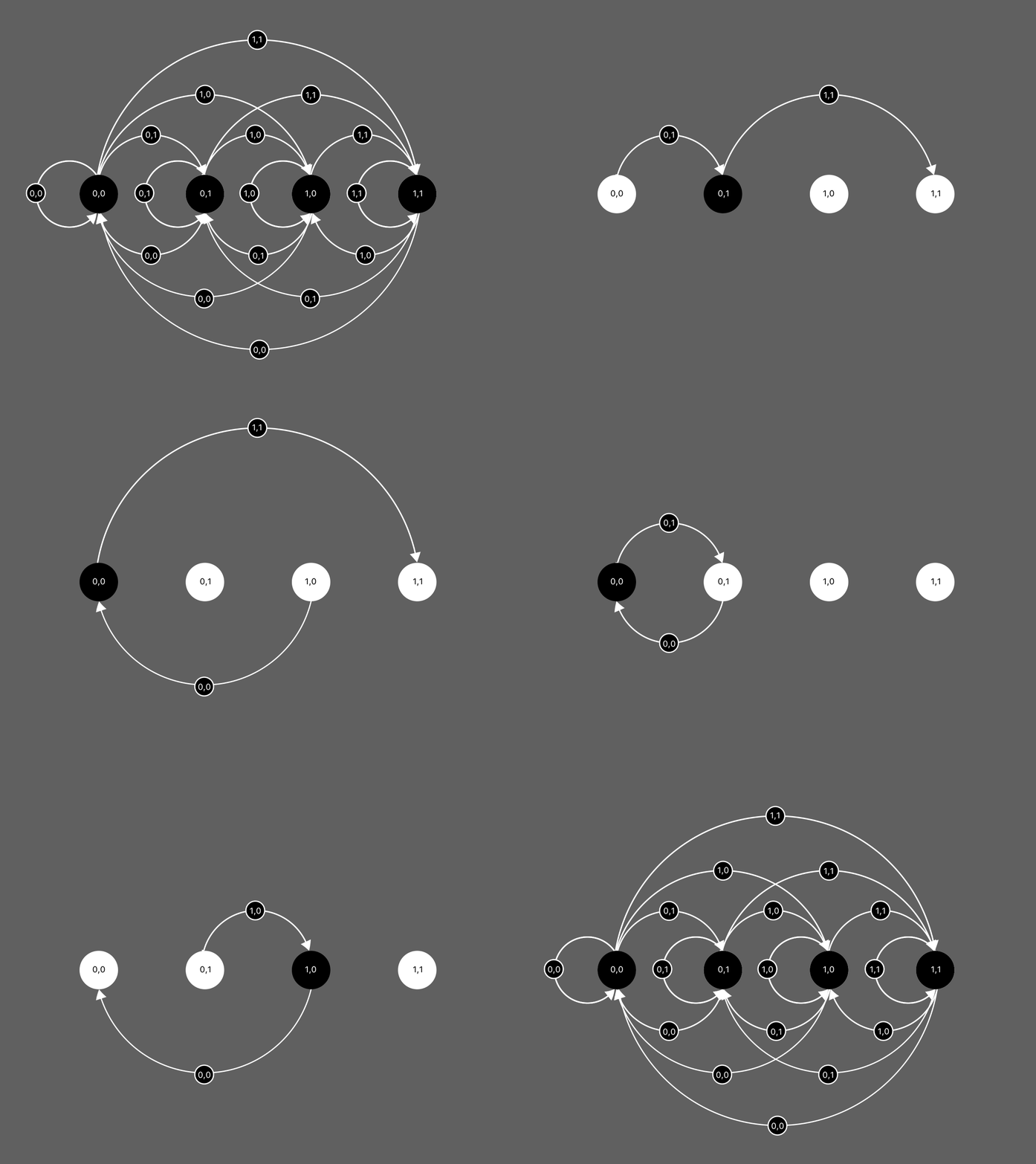 The movements of these four machines are shown as a random process, but in fact they are sequence of events. Each of the four machines has its own state, which have been named ( 0,0 / 0,1 / 1,0 / 1,1 ), respectively. Each machine is equipped with a wooden read head with binary information on the surface and a microswitch to read the current state of the read head. The microswitch is connected to the stepper motors located in the center of the machine. A machine whose state is called moves the stepper motors by 1/240 of a degree. The microswitch turns on / off (1/0) along the surface of the read head each time the motor moves and calls the next machine corresponding to the state (2-Bit) of the current position of the read head. At this time, the machine corresponding to the measured state goes through the same process and calls another machine or itself.
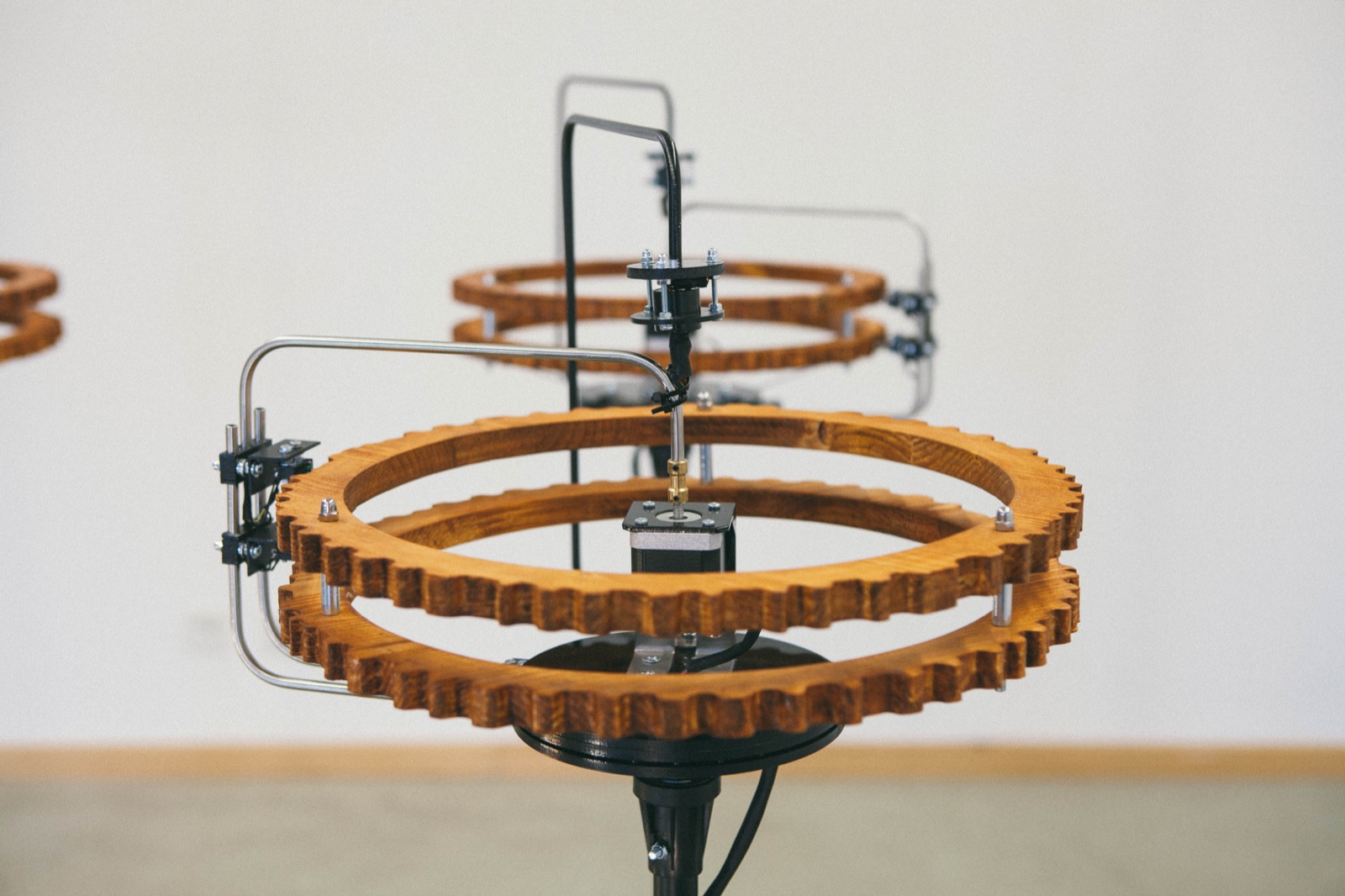
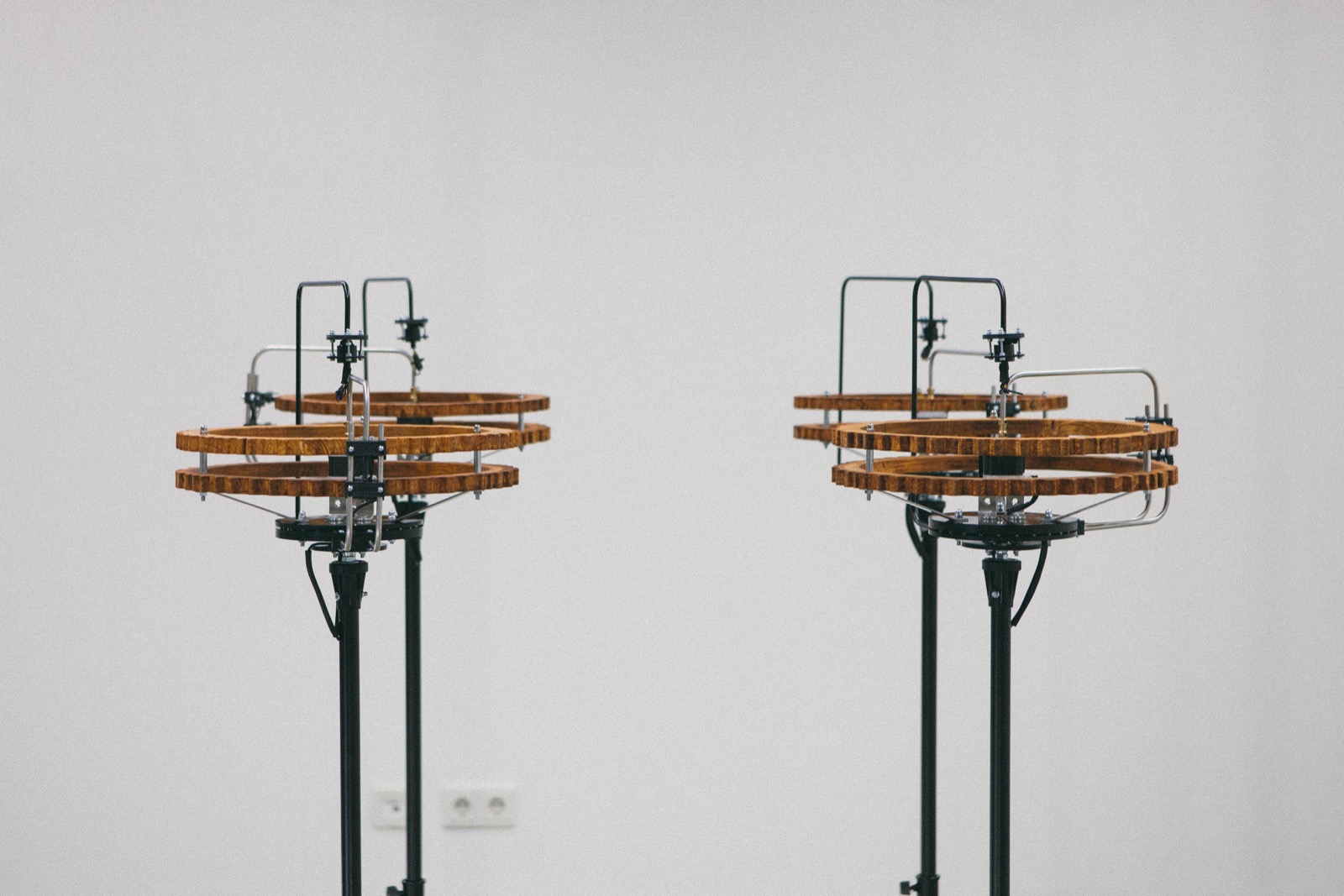
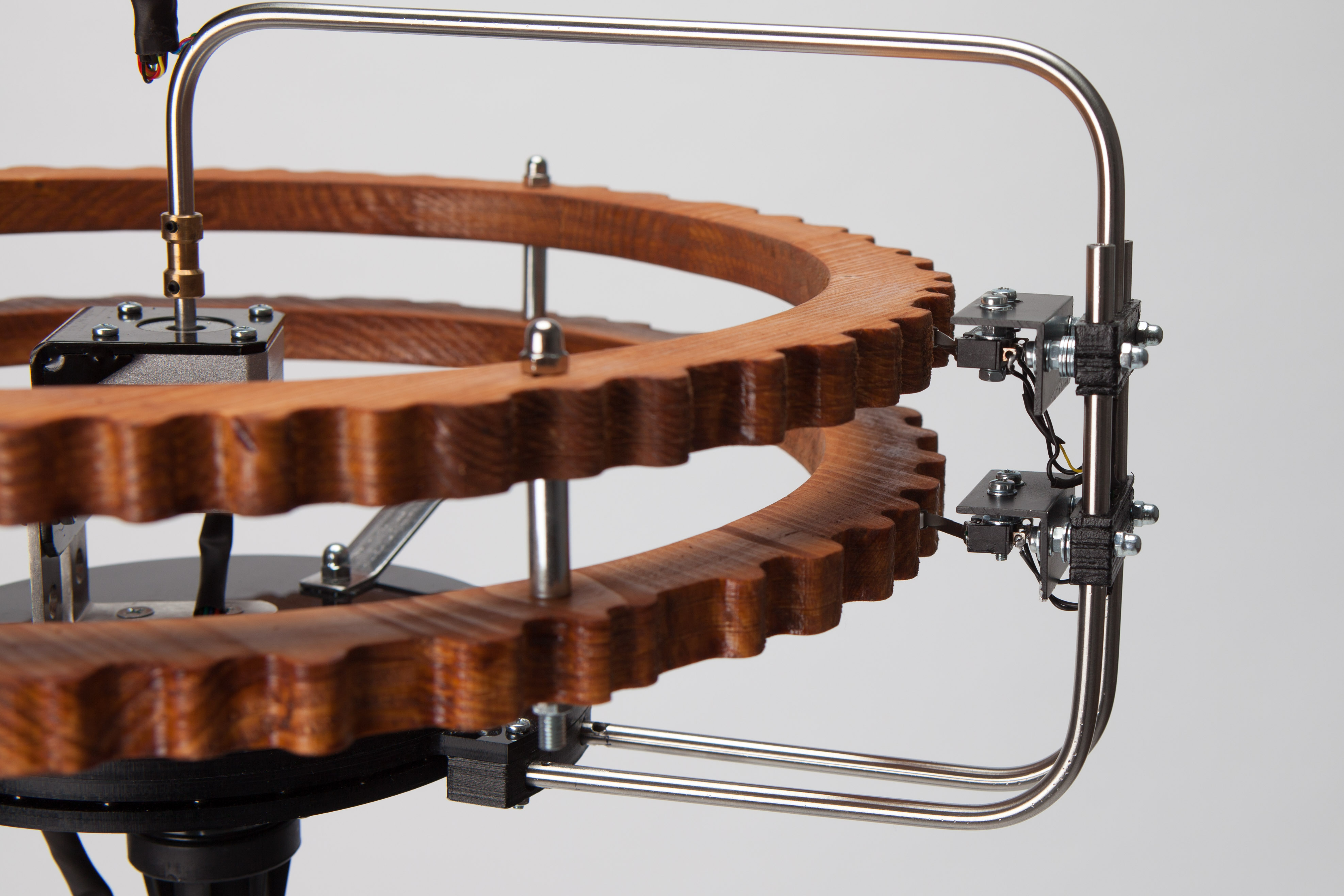
“These four machines symbolize another system separate from ours. We observe machines separate from the world as if we were watching computer simulations. The binary digits recorded in the read head are the smallest units of unspecified information possible, called bits. The bit, as the smallest particle that can make up the world and not simply as a digital recording unit, symbolizes the basis of this world. The things that we call noise, the information that we think of as meaningless, the information from which we cannot find the pattern, and the information that we cannot decode are called “chance”. When this information can be observed from outside our own world, we have proven through the Markov chain that all events are linked together.”
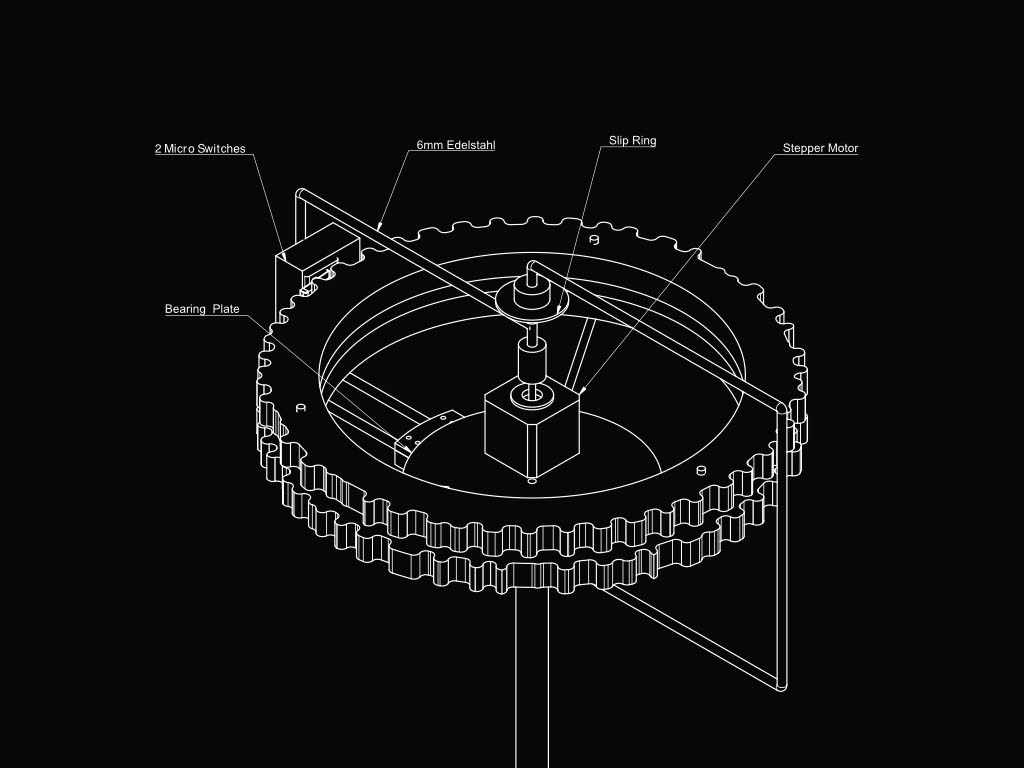 Using Laplace’s demon hypothesis as a starting point, that has already been proven false by Heisenberg’s “uncertainty principle”, Jonghong explains that one condition could make this theory possible is that if information were to be observed outside the system, everything could be predicted. For example, in a computer simulation everything functions as an algorithm and we can observe the simulation world outside of the system. Therefore, Jonghong explains that we can predict which events will come next and there is no longer a concept of chance in this simulation, only inductive events based on algorithms.
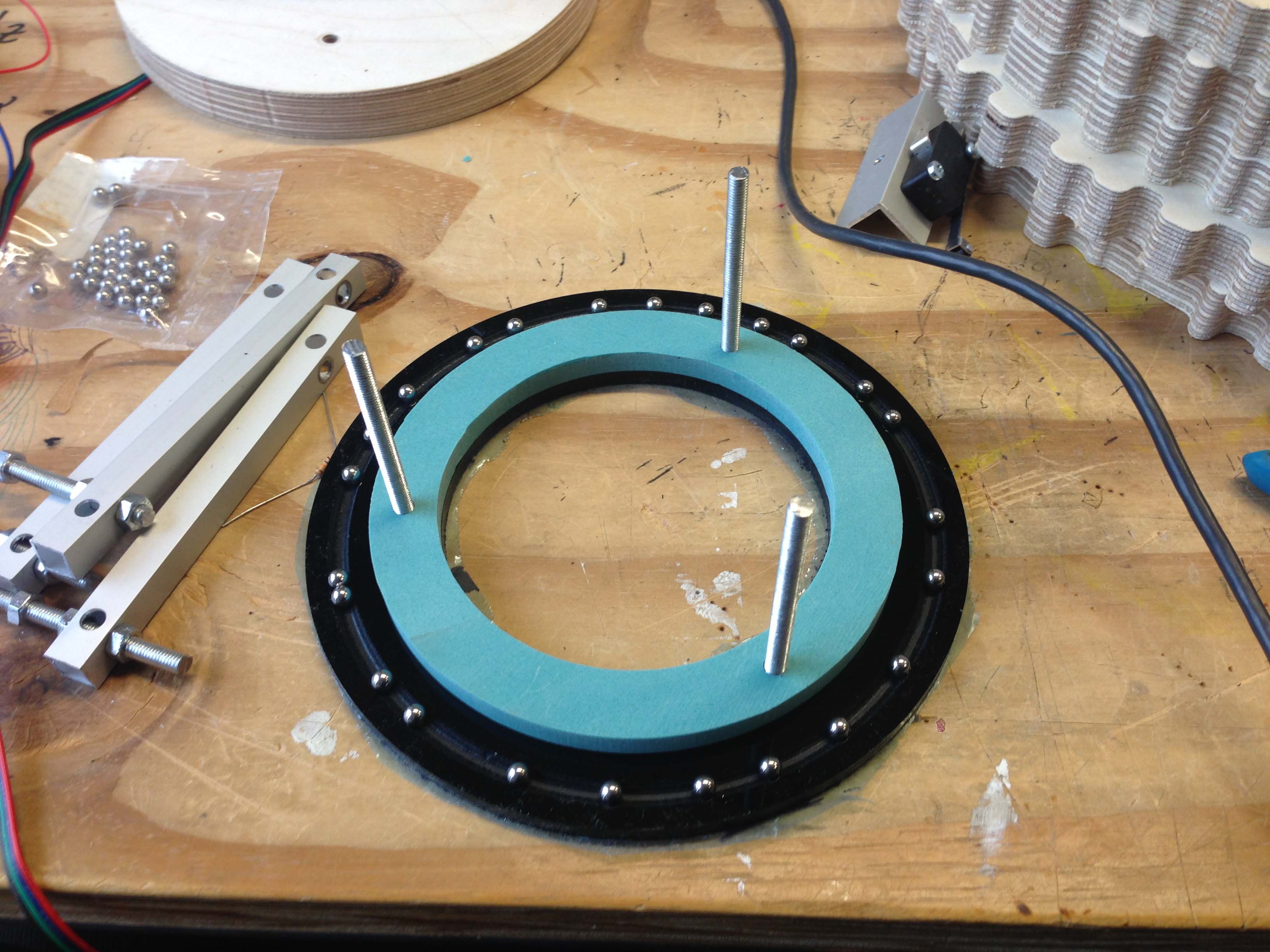
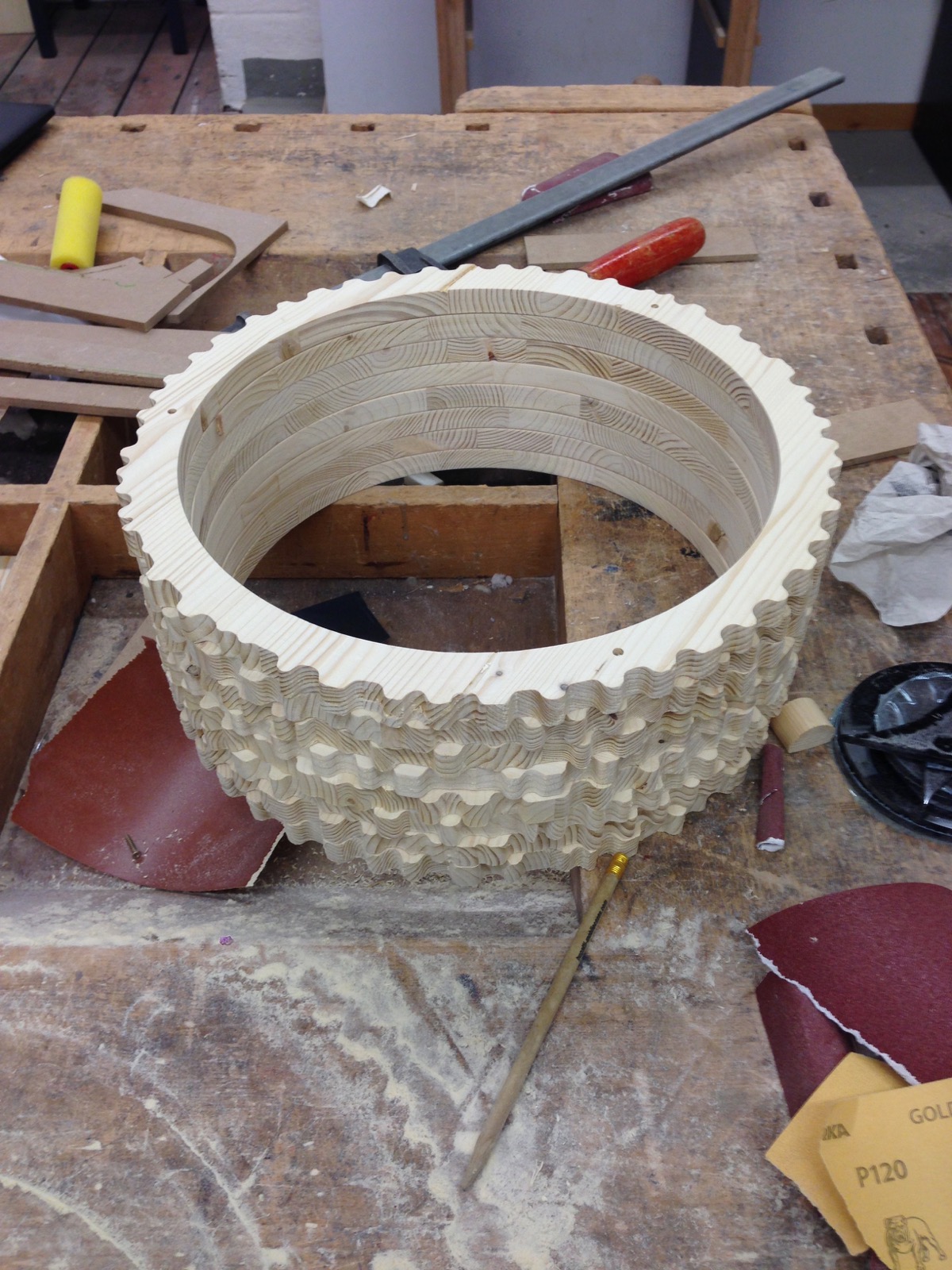
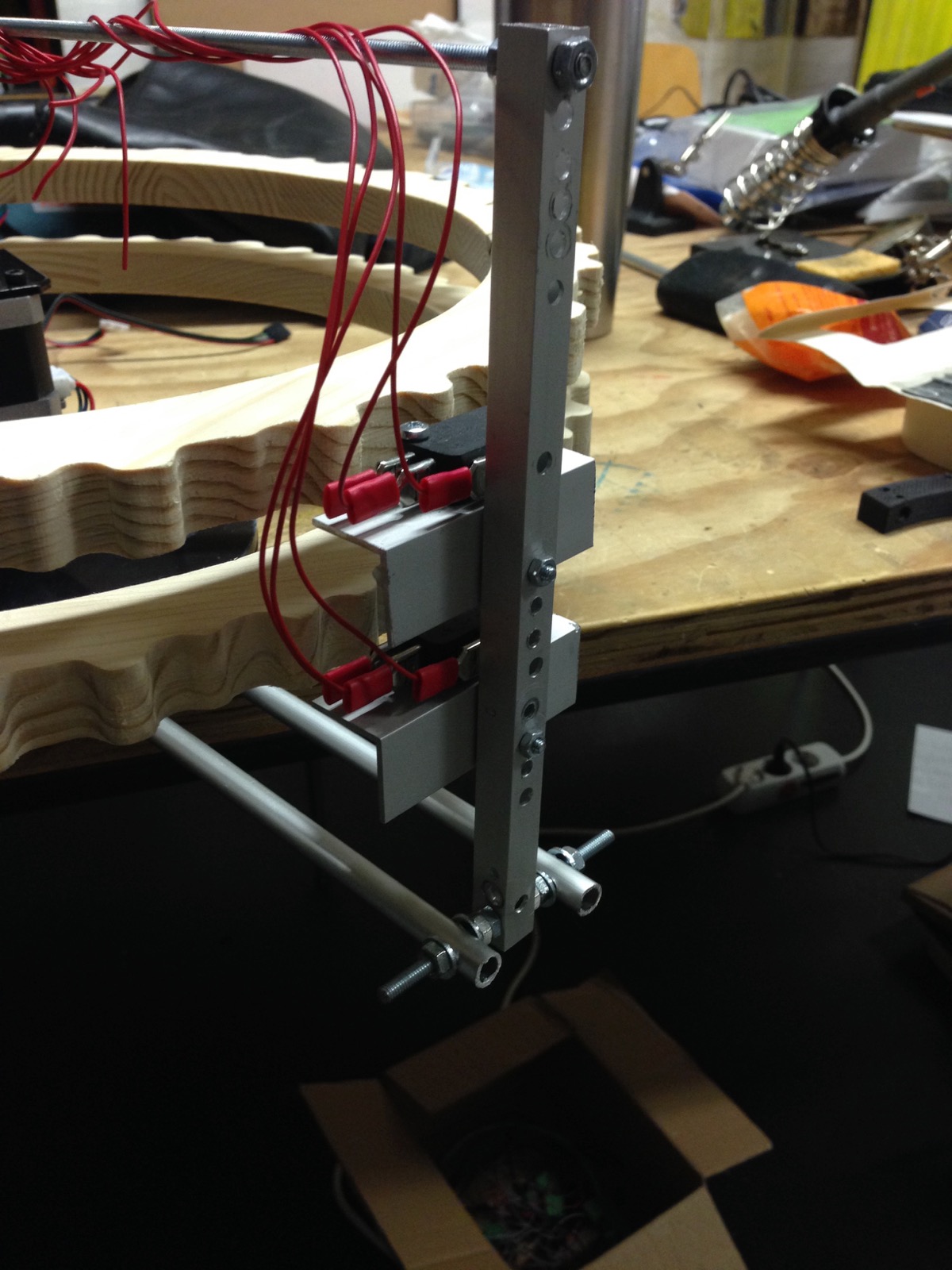
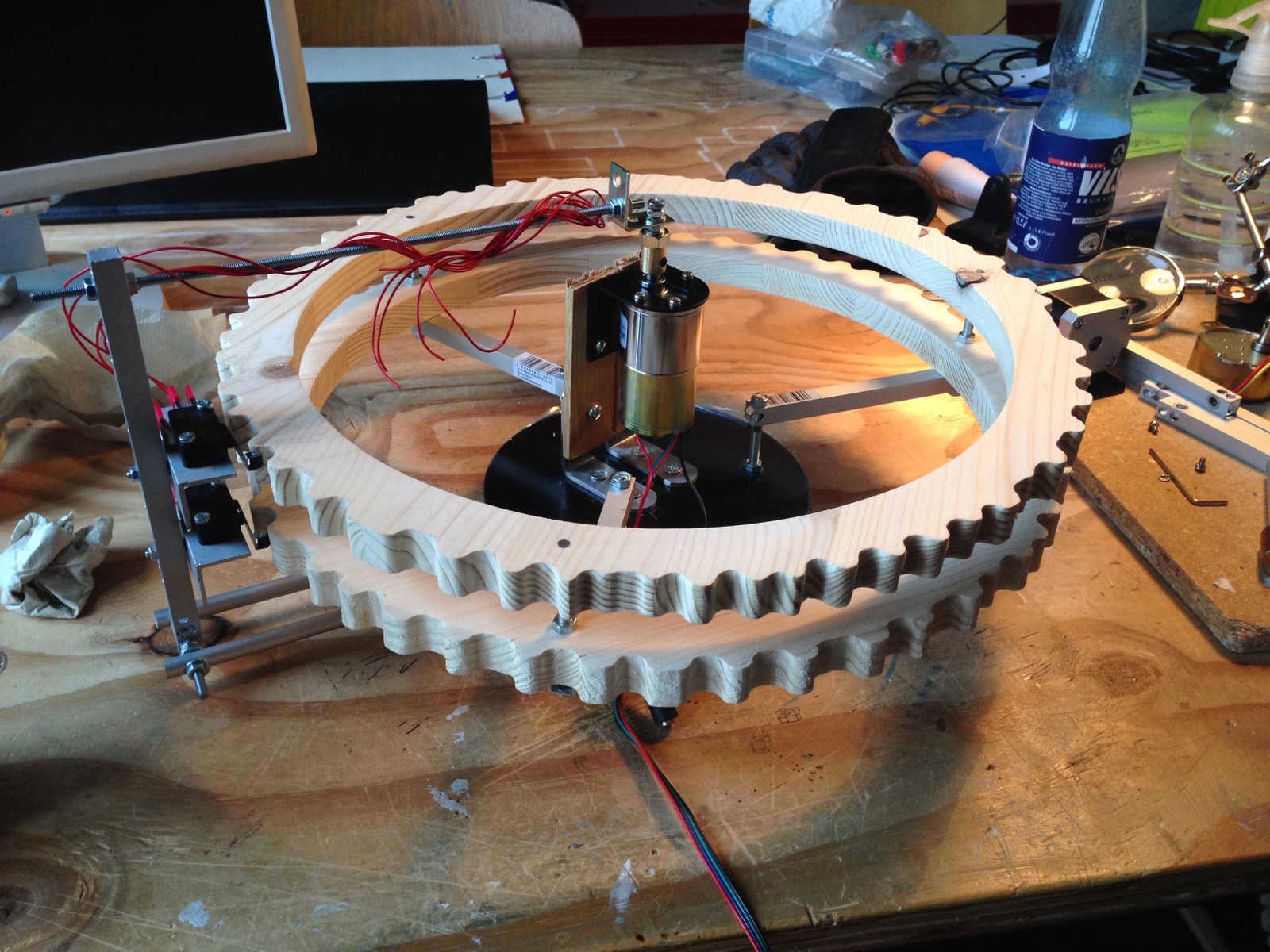
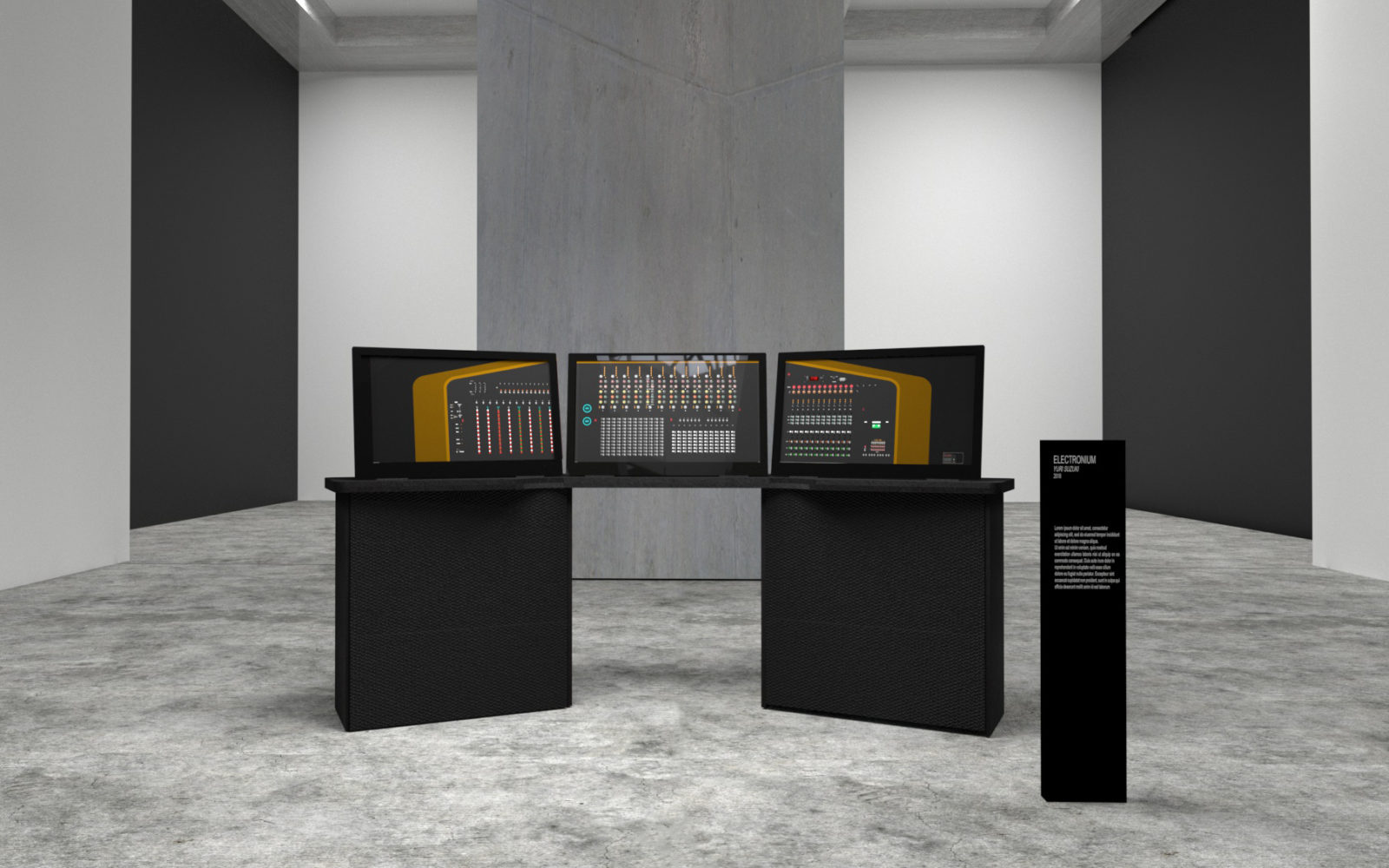
The project used the Arduino Mega 2560, 4x NEMA 17 step motors, 4x DRV8825 drivers for step motors, and 8x microswitches. The values of each read head were specified as a random function of the processing and were produced by a CNC milling machine. A bearing system was built to steadily rotate the switch, using plexiglass and 48 6mm bearing balls. Arduino Frameworks was used to implement the Markov chain algorithm, and Processing visualized it.