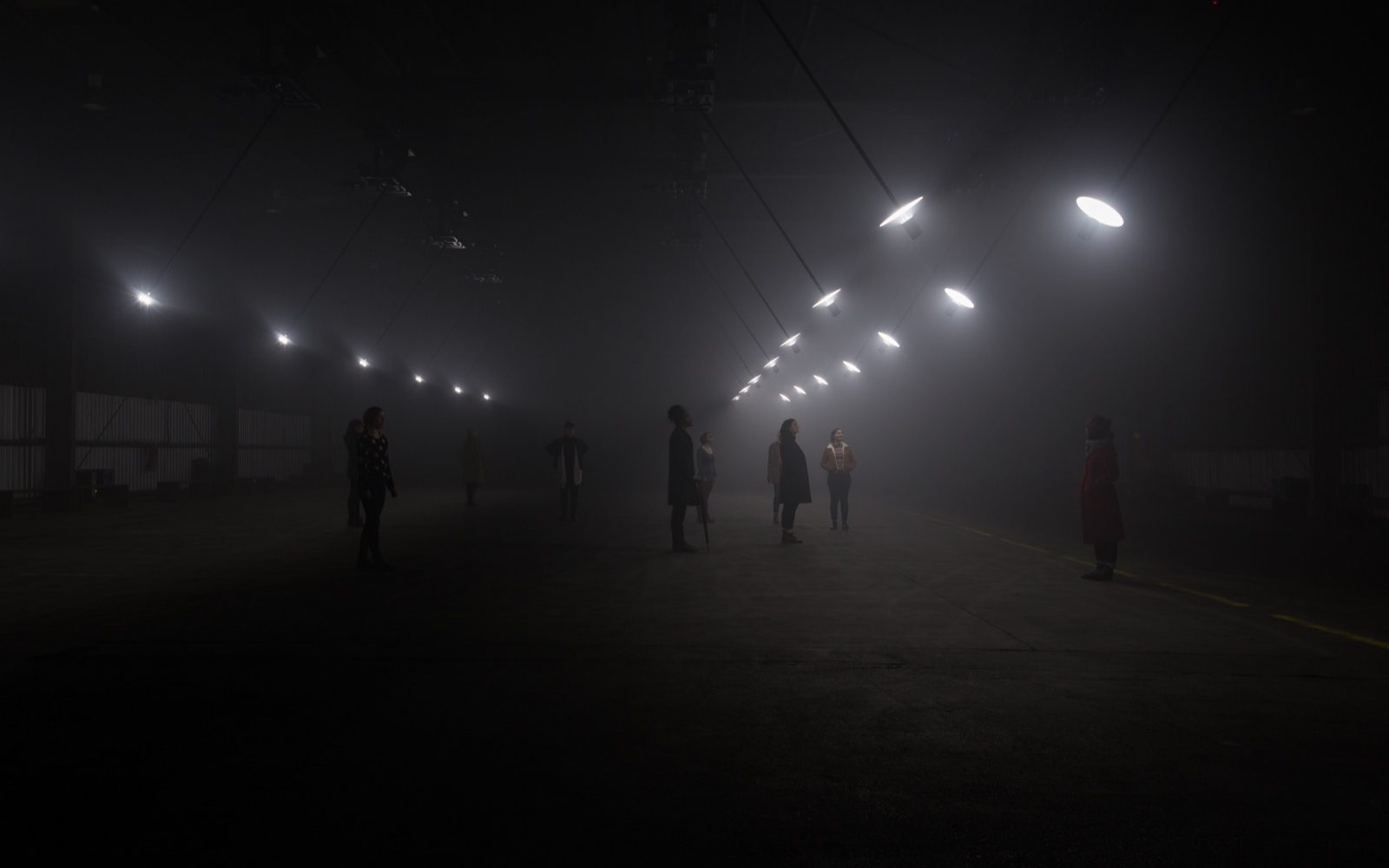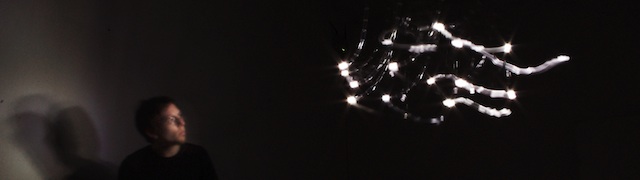

Silke is the final project of Sebastian Neitsch at the University of Art and Design in Halle. The installation includes a robotic chandelier that has its own way of creating a constantly changing light-atmosphere. It reacts to people and the general light condition surrounding it.
The structure consists out of twelve arms that can individually move and direct a light-beam from their tip to any point at the room. The single arms move a bit like the tail of a cat and together with the sounds of 24 servo-motors it immediately creates the feeling a living creature might be present.
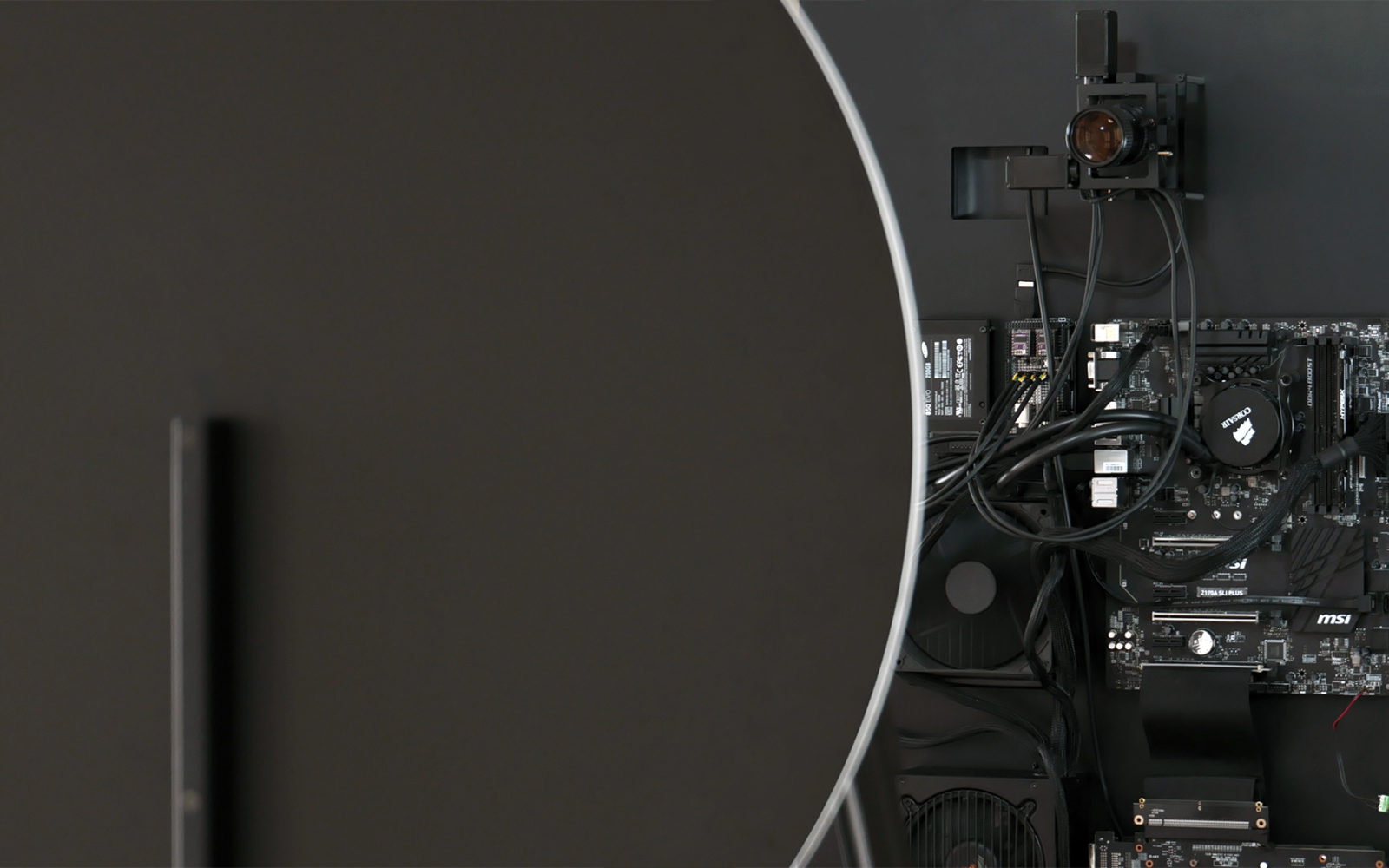
The installation includes 12 large Servo-motors (sailing-servos) which are able to turn 360 degrees, 12 strong Robot-servos, 12 power-leds (warm-white), 3 Arduino Megas, 3 USB Cables, 2 Firewire Cameras, 1 Macbook-pro, 1 power supply with 2A and 6-12V and 50 meter of wires. There are two values being sent as a string from vvvv to the Atmega processor on the Arduino. The first one defines the position the Motor should go to (or the tensity of the LED-light), the second one defines how fast it should go there (filter like a damper). This way there is no need to filter the values in vvvv which saves a lot of space on the serial connection and no data-traffic-jams. The same principle is applied to all three Arduinos. The behavior of the lamp is programmed in vvvv. Read the full documentation here.
Until now Silke is simply following the movement of any spectator. At the beginning only single arms react but if the person gets louder or moves faster more arms start to look at you. If you get really loud and get really close at the same time, she gets scared and moves up every single arm. After a while she calms down but remembered who scared her and reacts nervous, trying to move the arms away from the “scary” person….
(Thanks Emilio)