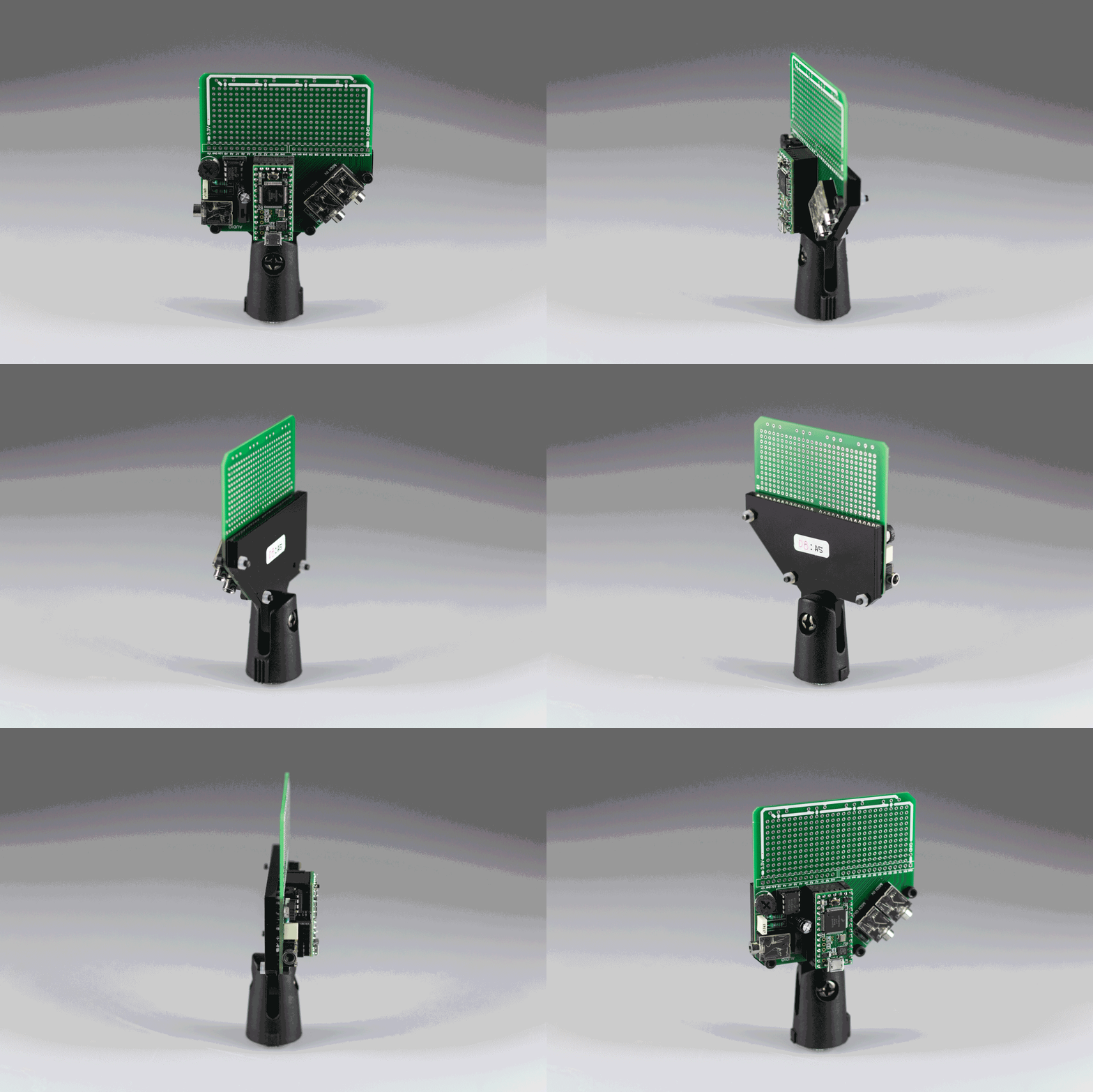
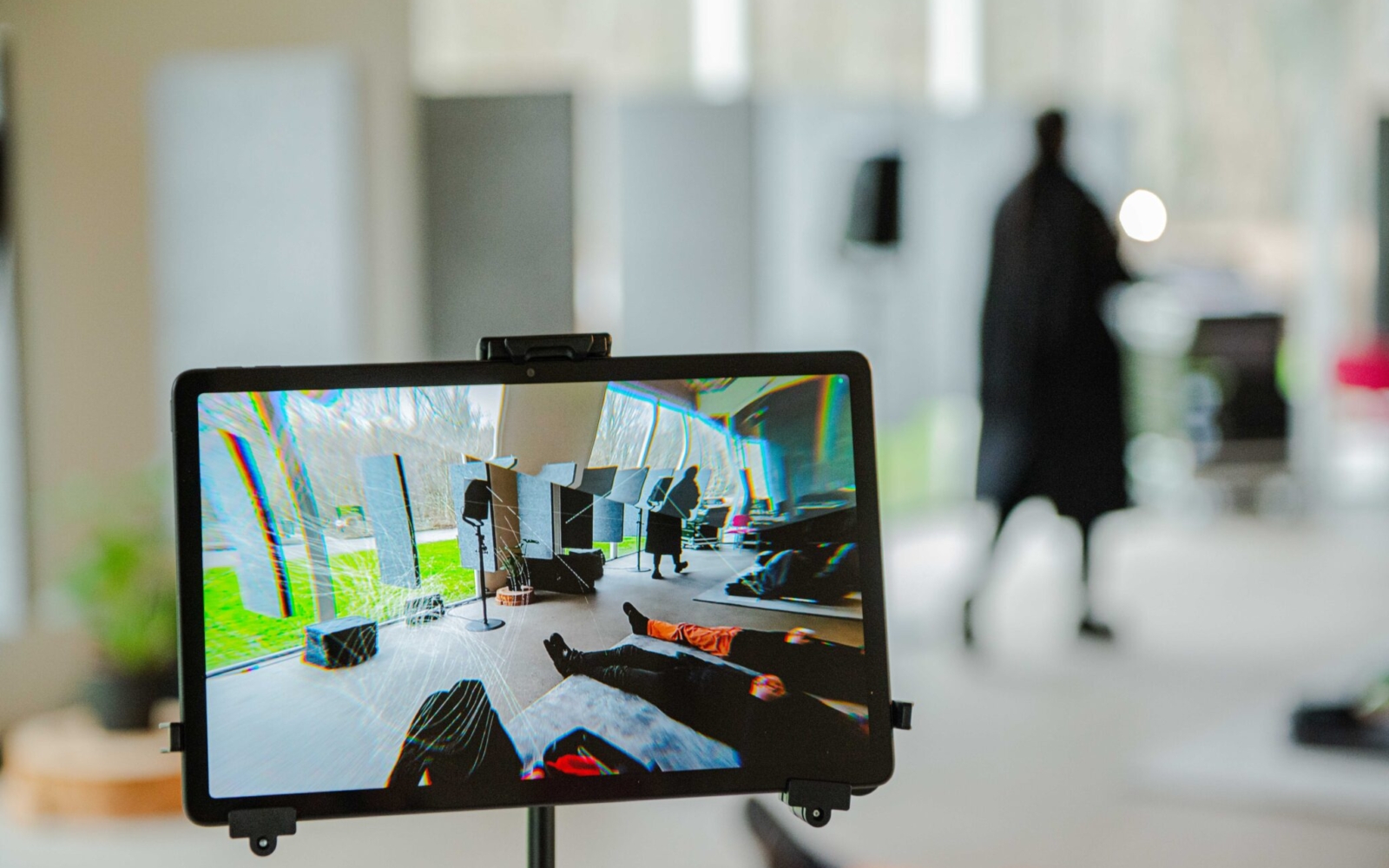
Created by Timm Albers, Strategies for an Auction is a composition and a sound installation consisting of six sound objects featuring speakers, displays and microcontrollers. The installation attempts to reenact a real time bidding system normally found in online advertisement platforms, which is responsible for determining what personalized ad is shown to a specific user in a given moment.
This algorithm is unknown to the public both in ad platforms as well as in the installation therefore it is up to each individual to try and understand it’s workings and underlying intentions. The work combines a generative algorithmic system with a compositional approach in an attempt to both understand the hidden nature of the algorithm as well as emphasizing how we come up with our own interpretations of it. Using sound as a medium for encoded data in an algorithm underlines the opaque nature of the algorithmic system, as sound is itself an abstract representation.
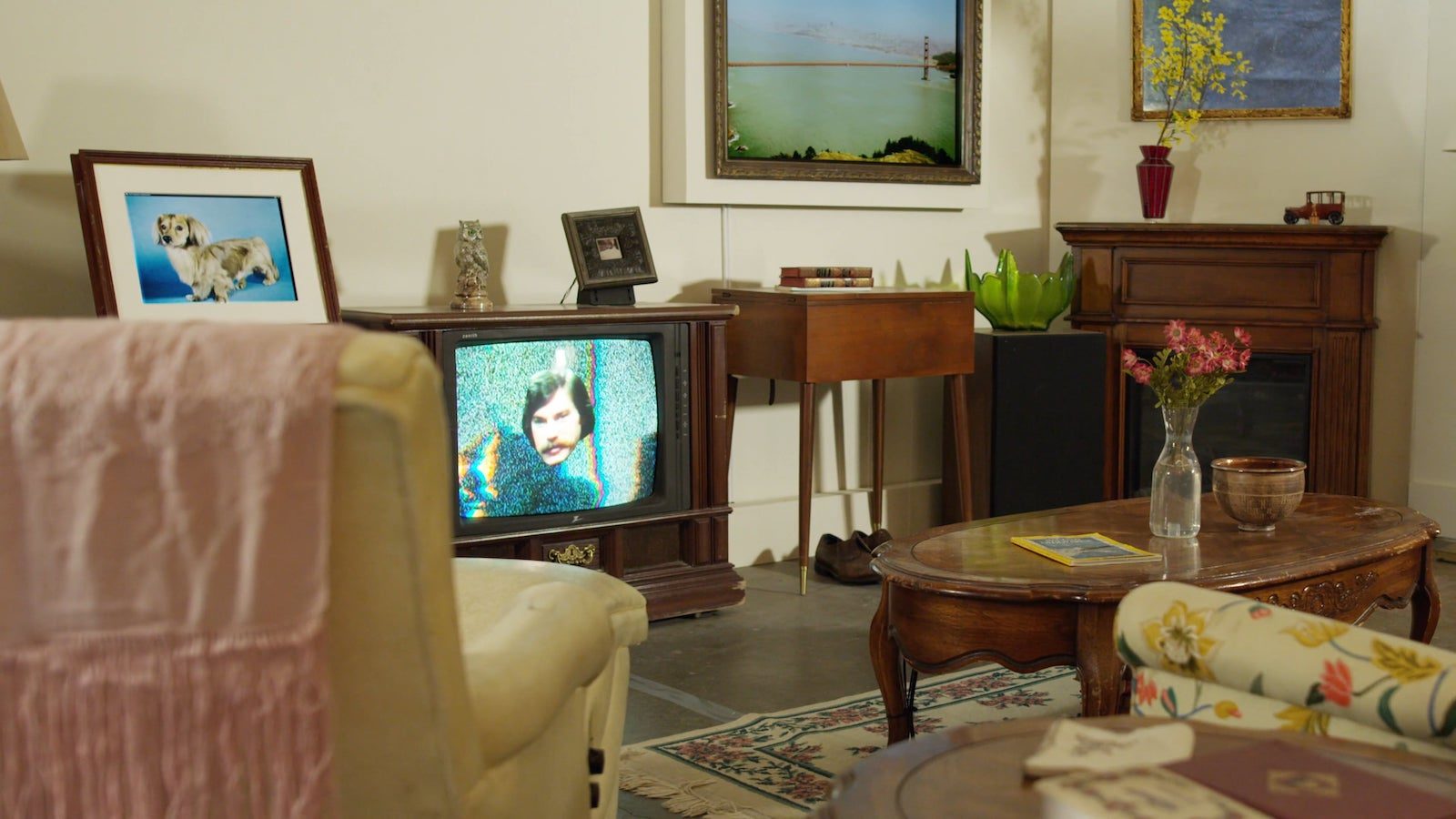
Black box systems control some key aspects of the digital spheres we spent our time in. Whether it is what search results we see, what videos we watch or which products are shown to us in advertisement: The decisions involved are not comprehensible to us. Yet, we think we understand. We believe we know why we are presented with that specific search result, we know why a video is suggested or an ad for a product shown, which we bought two days ago. But we don’t understand how these decisions came to be and, as a consequence, can’t tell what we missed or don’t know who had an interest to interact with us by showing their content.
The six custom made devices behave as autonomous agents in the system, each attempting to win bids in a virtual auction. Every agent tries to win some of the auctions and adapts their bids accordingly. The agents are accompanied by loudspeakers playing additional sounds, which represent both the different ad contents each agent might provide, aswell as the subjective nature of the interpretations and reactions to being confronted to such a system.


The chaotic factor being increased also underlines the hectic nature of online advertisement, but still allows to comprehend that its made up of individual parties each following their own strategy and agenda.
The ten minute sequence starts with just the sound of one agent and slowly adds more voices. After the agents had some time to perform on their own, the soundtrack starts to add more layers. The events of the algorithm (virtual auction starts, how fast a bidder is responding to it, how long it takes to announce the winner and when the soundtrack reacts to it) are partly randomized. This underlines the event-like character instead of it being a uniform rhythmic system. Since the random factor is increased during the sequence and agents are increasingly affected by it, they start to get out of sync of eachother, which pictures their different reactions to changes in the system. The chaotic factor being increased also underlines the hectic nature of online advertisement, but still allows to comprehend that its made up of individual parties each following their own strategy and agenda.
The work combines a generative with a compositional approach. The algorithm involved is fully implemented using code, including how the nodes transform numeric values into clicking sounds. On the other hand, the work is a sound composition with linear time. The outcomes of the software are used as compositional material and both processes inform and influence each other.
Project Page | Timm Albers | Digital Media Bremen
The project was created during the studies on the Program for Technology, Theory, and Design (Digital Media) at the University of Bremen supervised by Prof. Dennis P Paul and Prof. Ralf Baecker.