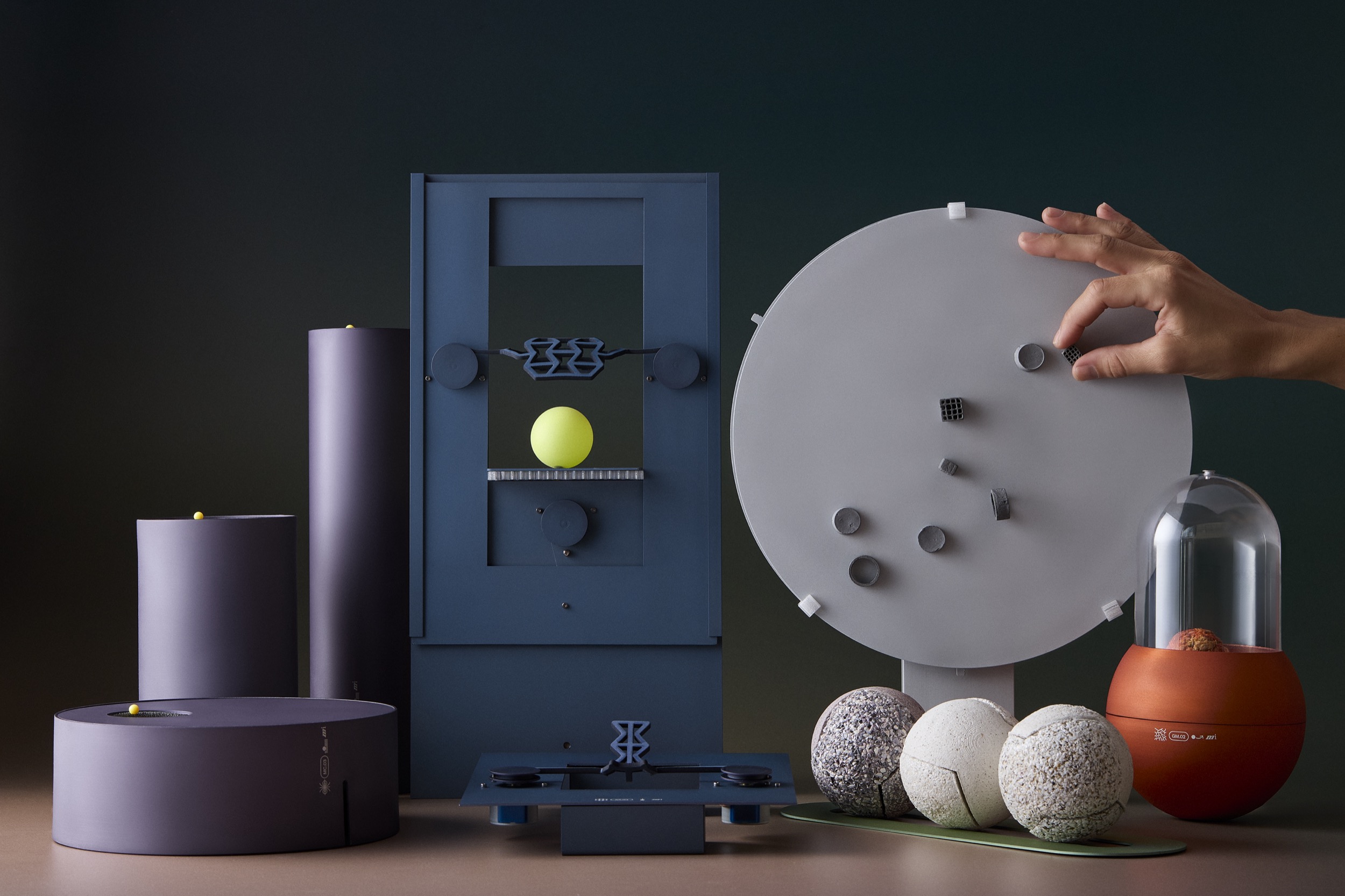
In a debut collaboration, a series of five material-driven kinetic sculptures by designers Nadya Suvorova and Heidi Jalkh don’t just move: they respond, proving that “passive matter” is anything but.
For most of history, we have treated the materials around us as inert. Wood is carved, steel is forged, and plastic is molded. We act, and the material obeys. They are tools for our intent. But what happens when matter stops taking orders and starts showing signs of life?
Material Interactions is a collaborative project by Nadya Suvorova (CH) and Heidi Jalkh (AR). A mesmerising exploration of material agency 一 the idea that matter isn’t just a building block, but an active participant in the design process.
Each of the five kinetic sculptures integrates innovative materials from Swiss and Argentine laboratories, given shape and behavioural agency. This transdisciplinary approach moves beyond traditional mechanical automatons to explore a new species of design: one where the soul of the object is found in the material itself.
As characters with their own logic and voice, these little creatures exist in a state of potential, activated only by the presence of a visitor. Through proximity-triggered interaction, they respond to humans in a non-linear dialogue of motion and space. Matter is no longer a silent witness, but an active participant in a shared environment.
At its core, the project asks what new objects and relationships become possible once we acknowledge that matter can sense and respond. Working at the intersection of materials science, biology, engineering, design, and art, Nadya Suvorova and Heidi Jalkh challenge a human-centric perspective, reframing the threshold of what it means to be “alive”. Material systems have officially left the petri dishes and lab benches behind. No longer silent witnesses, they co-exist with us. And they have plenty to say.
BM.01 / Bind, 2026
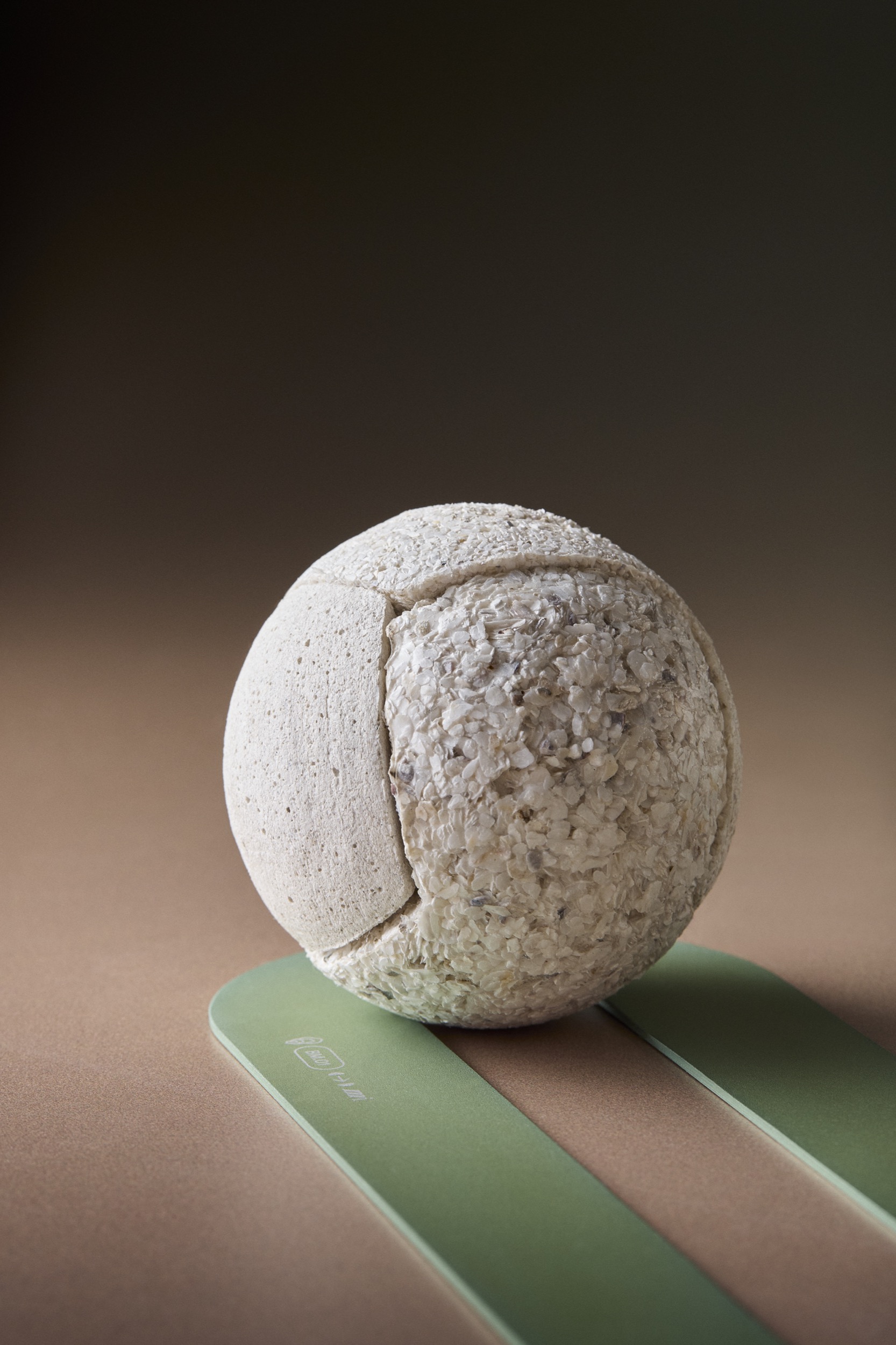
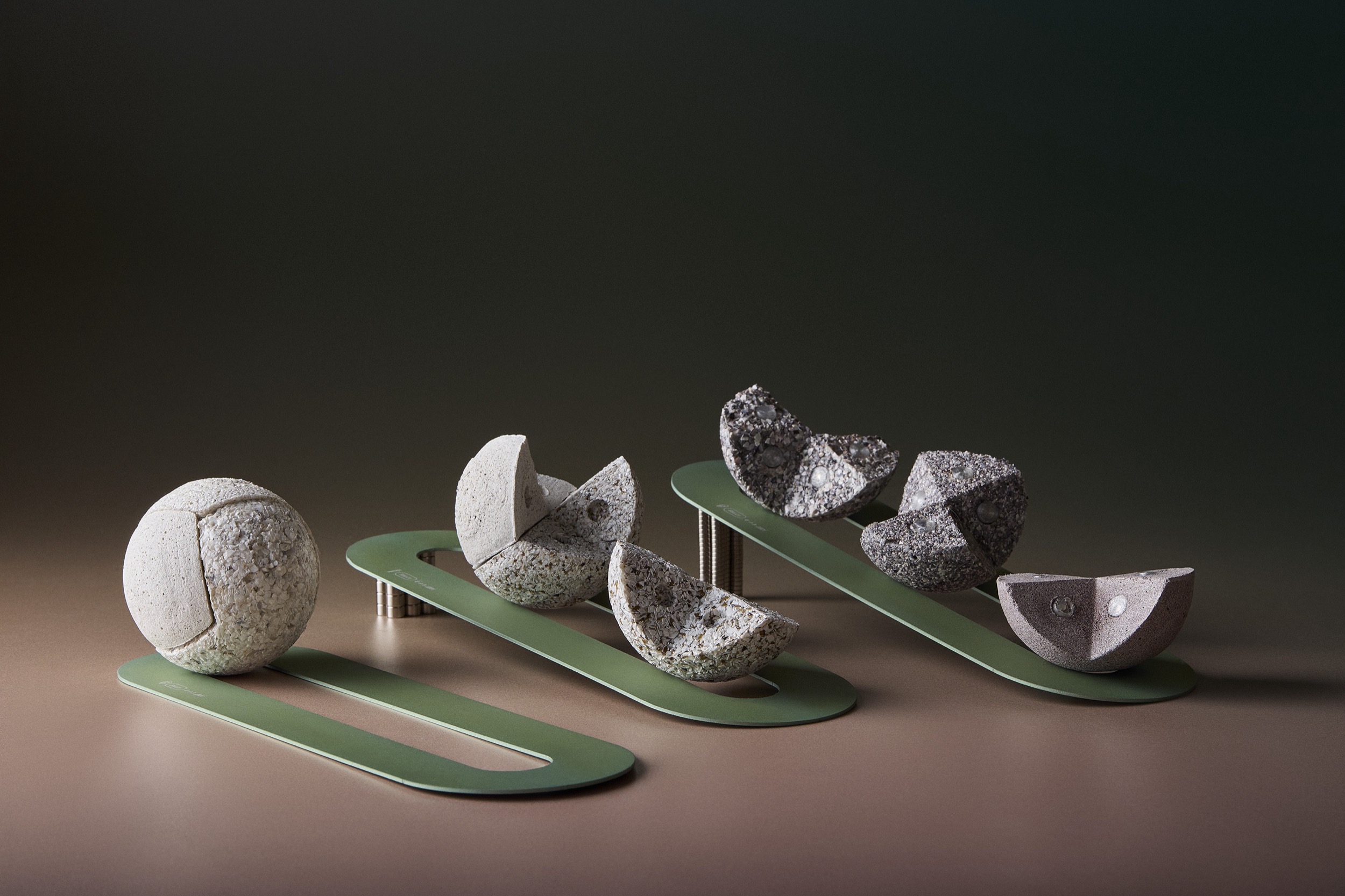
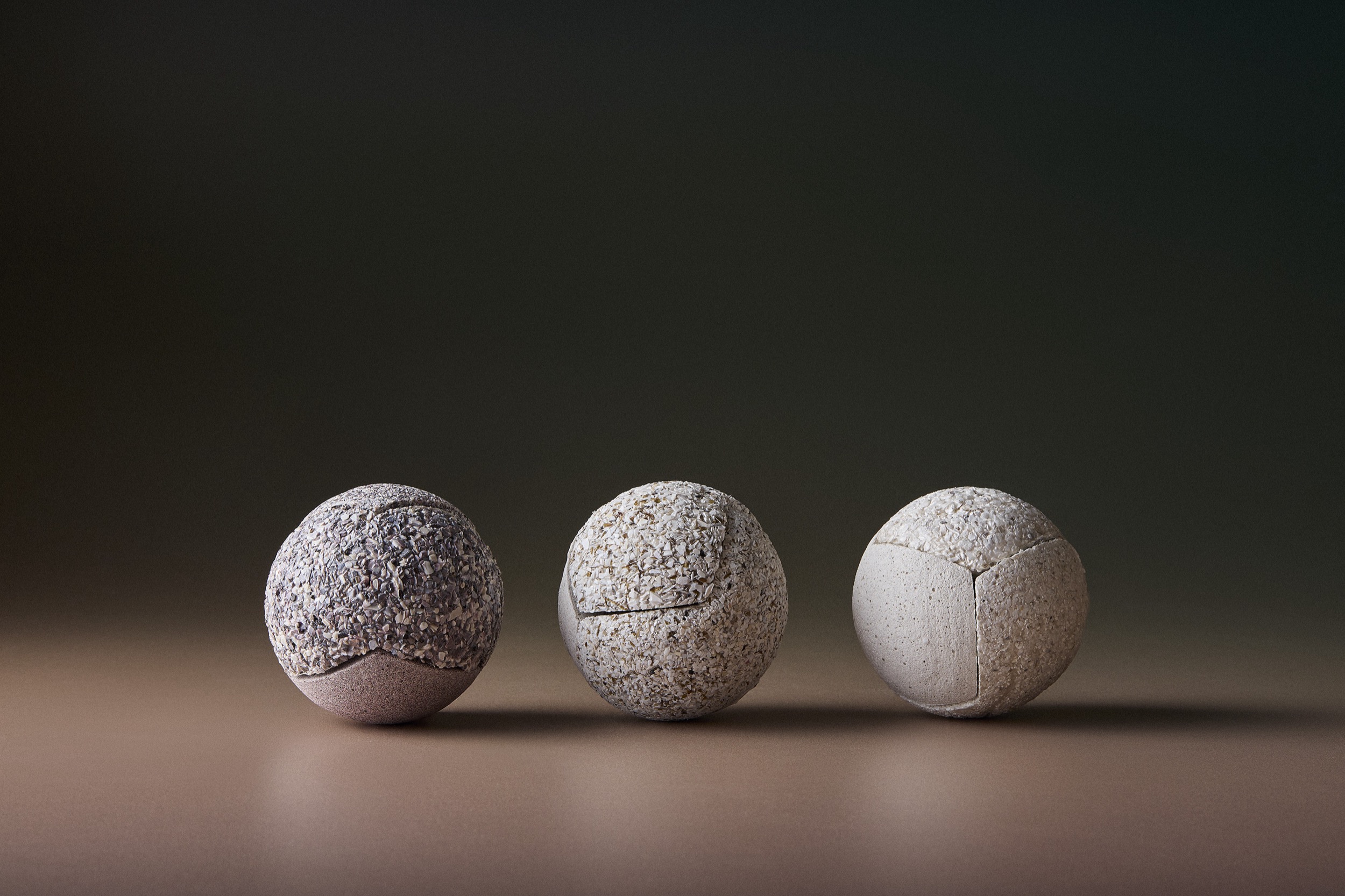
Piece by piece, this puzzle-sphere comes into being. Crafted from seashell bioceramic and shaped at room temperature, fragments of the old are unified by an algae binder into three interlocking modules. Once joined, they form a perfect geometry: a reimagined orb capable of tumbling, pausing, and recovering its balance.
Nadya Suvorova and Heidi Jalkh
Materials: Ground seashells* (magellan mussels, oysters, razors) and algae biopolymer
*Raw material source: Ultramarinos (AR)
Photography: Laura Macias and Vicky Rey
MG.02 / Grow, 2026
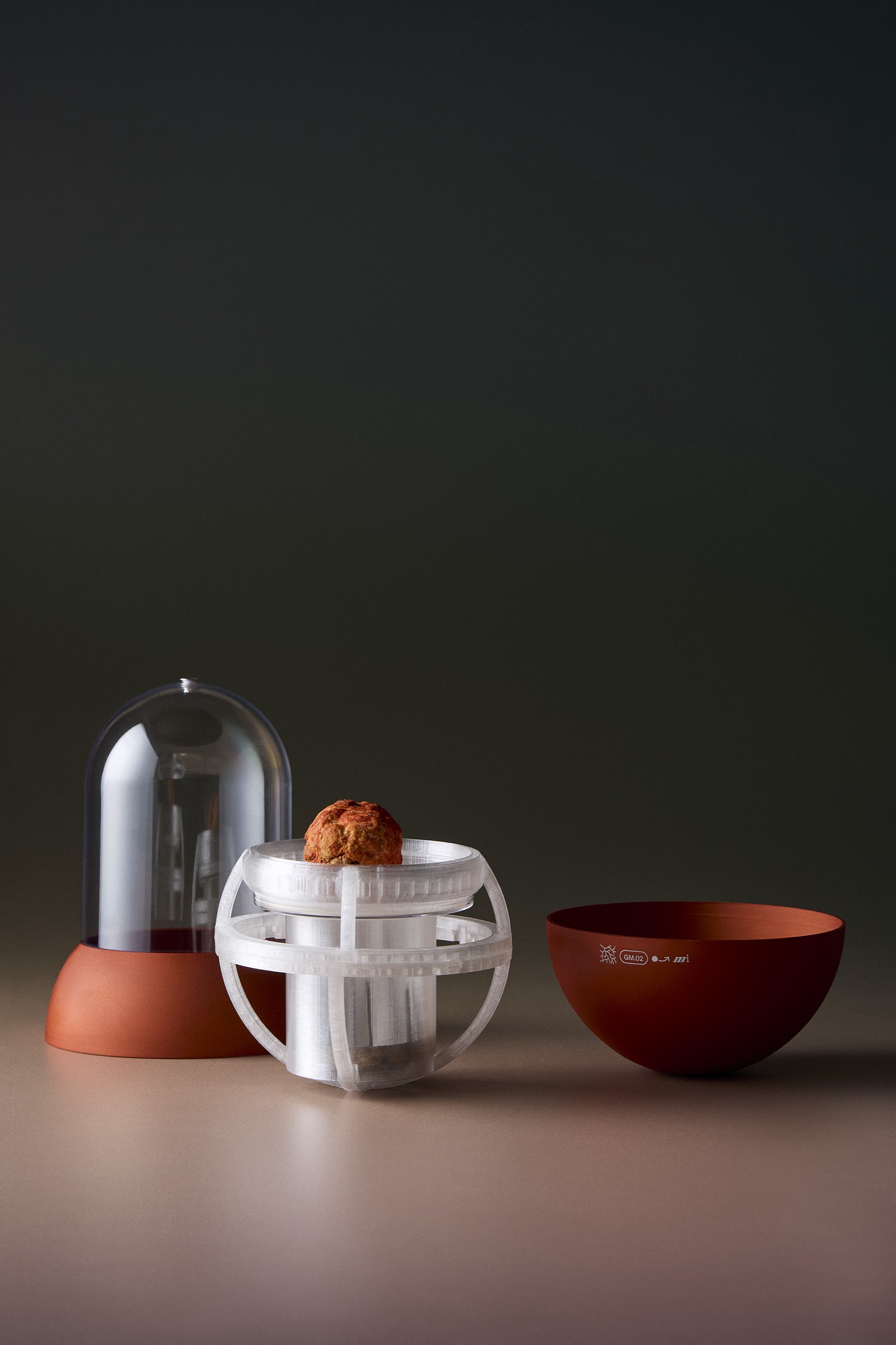
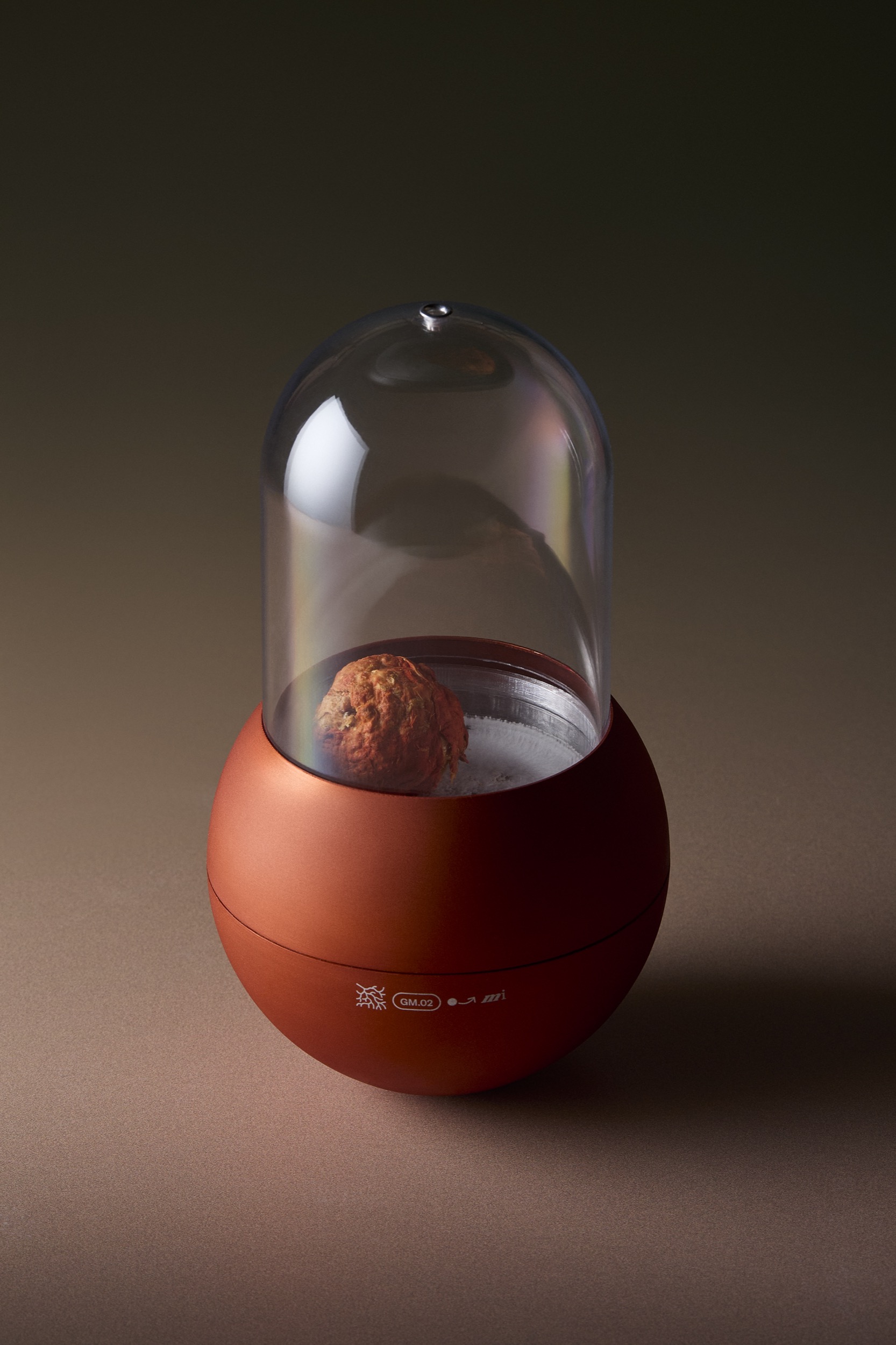
In soft motion, this wobbling habitat cradles a living world within its core. Inside this kinetic womb, fungi slowly spread and weave together, nurturing an expanding, shared body. What begins as a simple vessel becomes a quiet sanctuary where life gathers and grows through the rhythm of a shifting form.
Nadya Suvorova and Heidi Jalkh
Materials: Mycelium agglomerate of Pycnoporus sanguineus and Ganoderma lucidum*, anodised aluminium, PLA, plexiglas, motor, electronic components, proximity sensor.
*Fungi inoculation: Dr. Leonardo M. Majul, Lab. de Micología Experimental y Liquenología (INMIBO-UBA)
Photography: Laura Macias and Vicky Rey
MC.03 / Magnetize, 2026
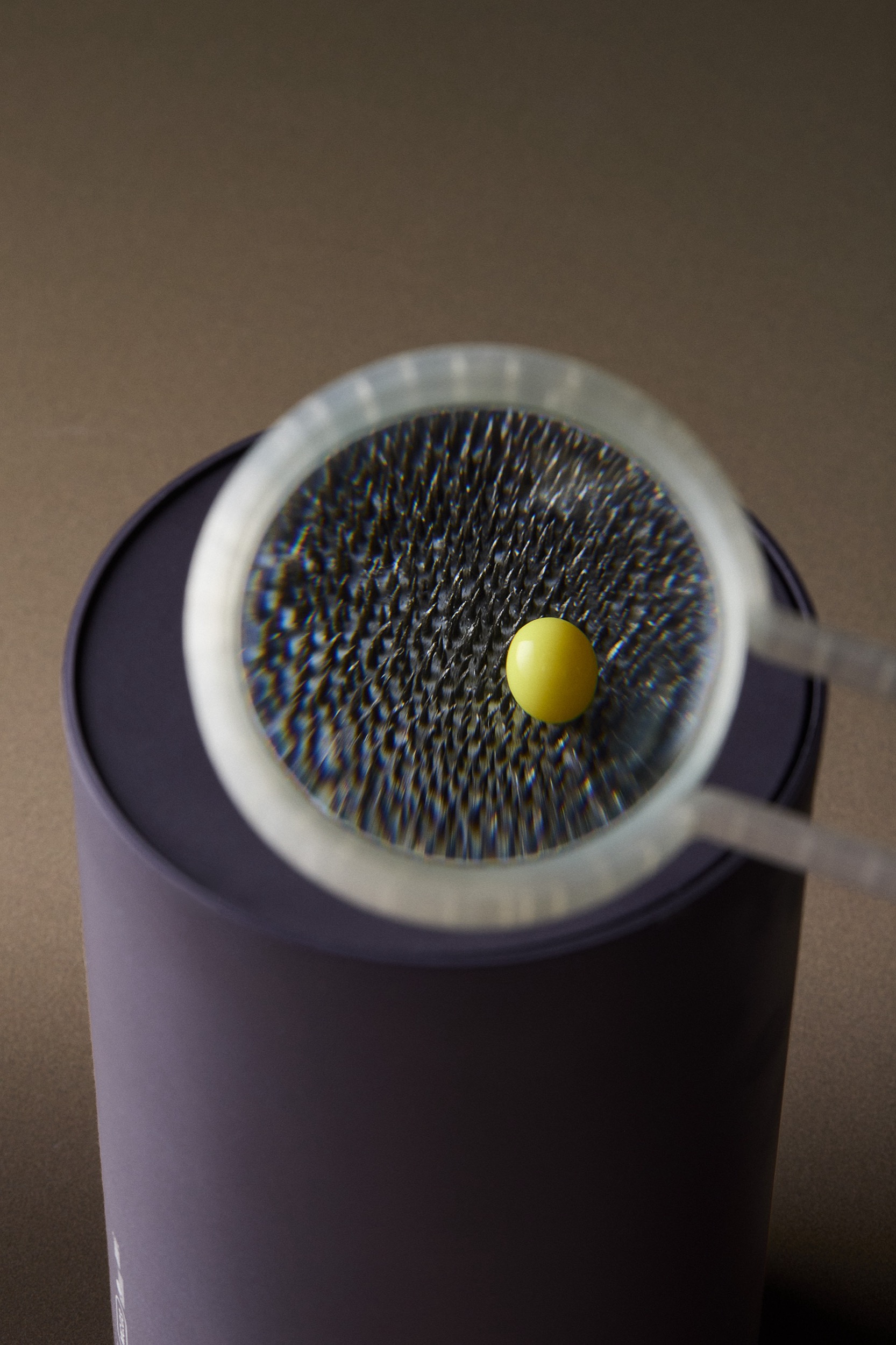
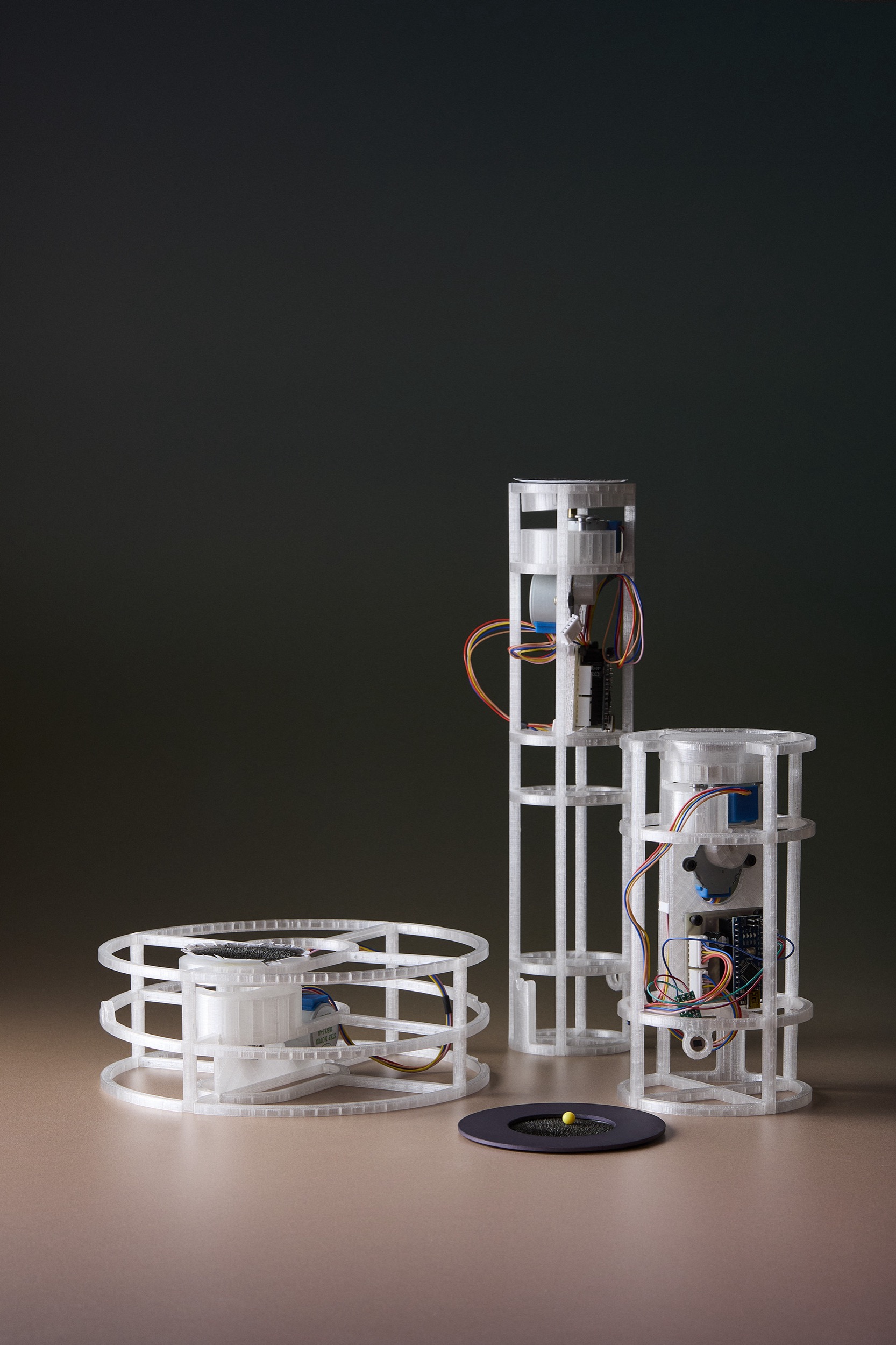
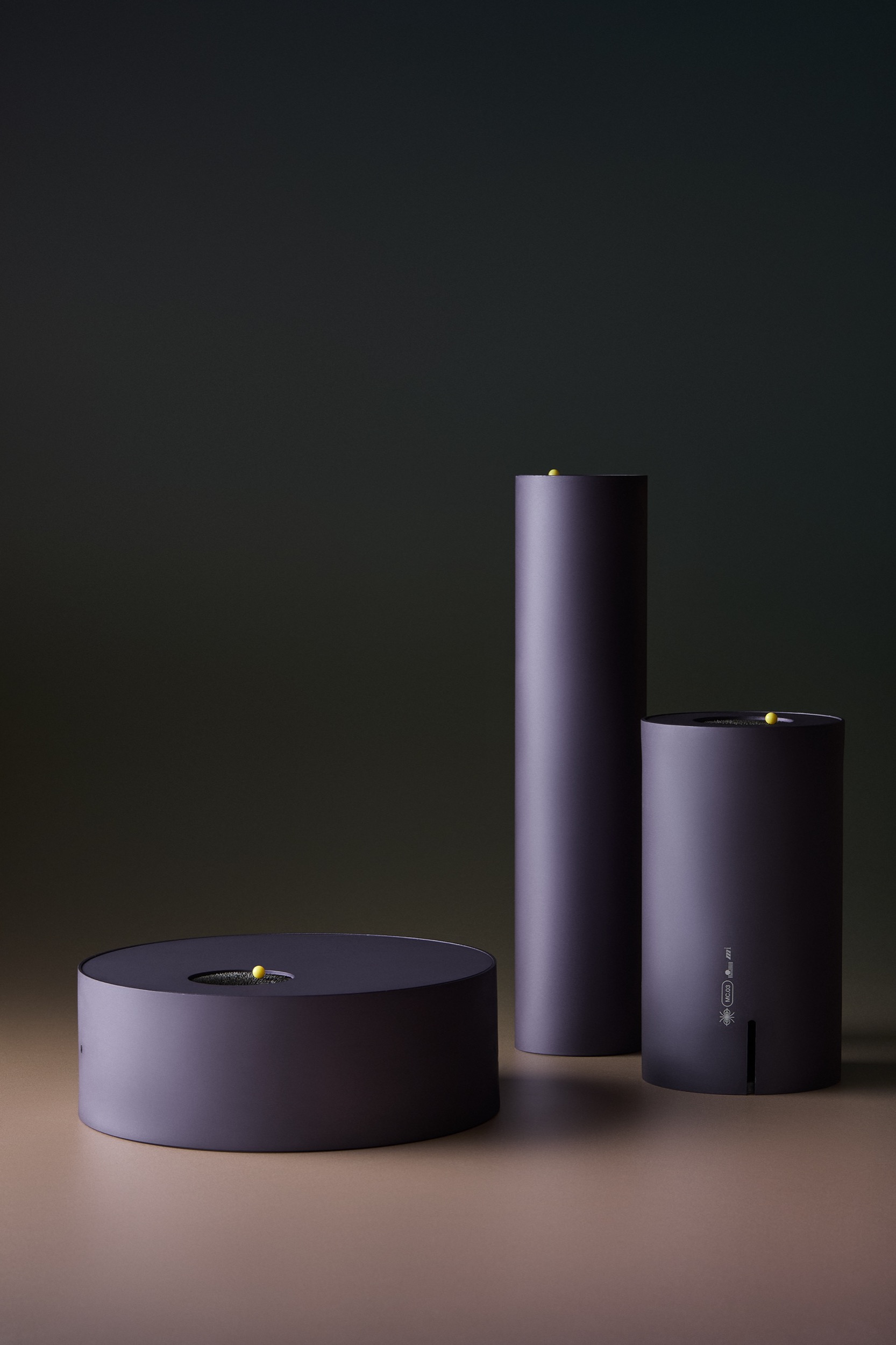
Across a still surface, magnetised silicone hairs sway in collective alignment. Guided by a magnetic flow, these artificial cilia shuttle small objects from one strand to another in an undulating, crowd-surfing motion. A sophisticated transport system, where waves of energy ferry matter through a synchronised, soft-touch relay.
Nadya Suvorova and Heidi Jalkh
Materials: Silicone rubber compound with neodymium iron boron particles*, anodised aluminium, magnets, PLA, motors, electronic components, proximity sensors.
*Material source: Dr Ahmet Demirörs (CH), Material Science Department, Complex Materials Group, ETH Zurich
Photography: Laura Macias and Vicky Rey
AS.04 / Strain, 2026
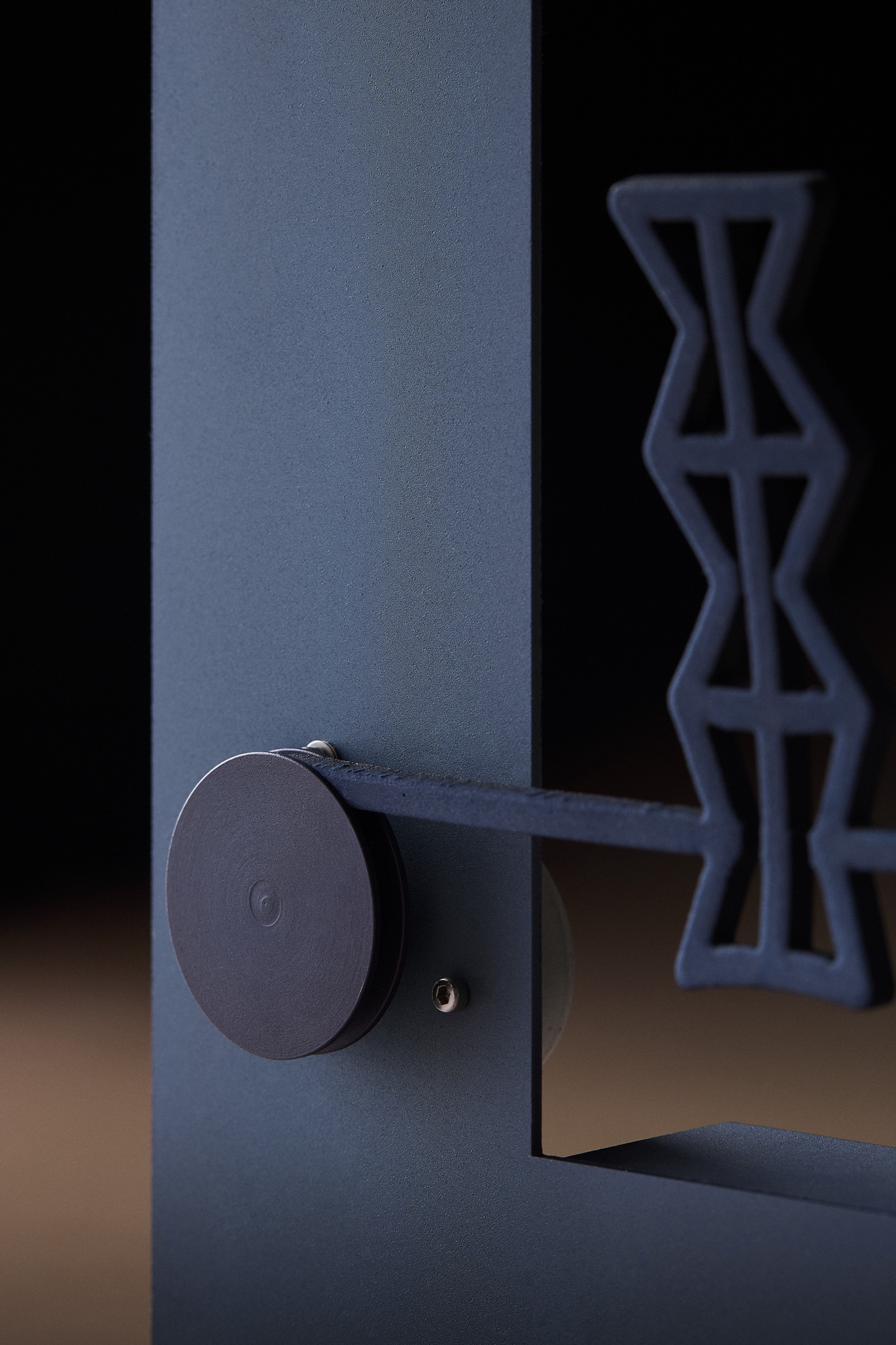
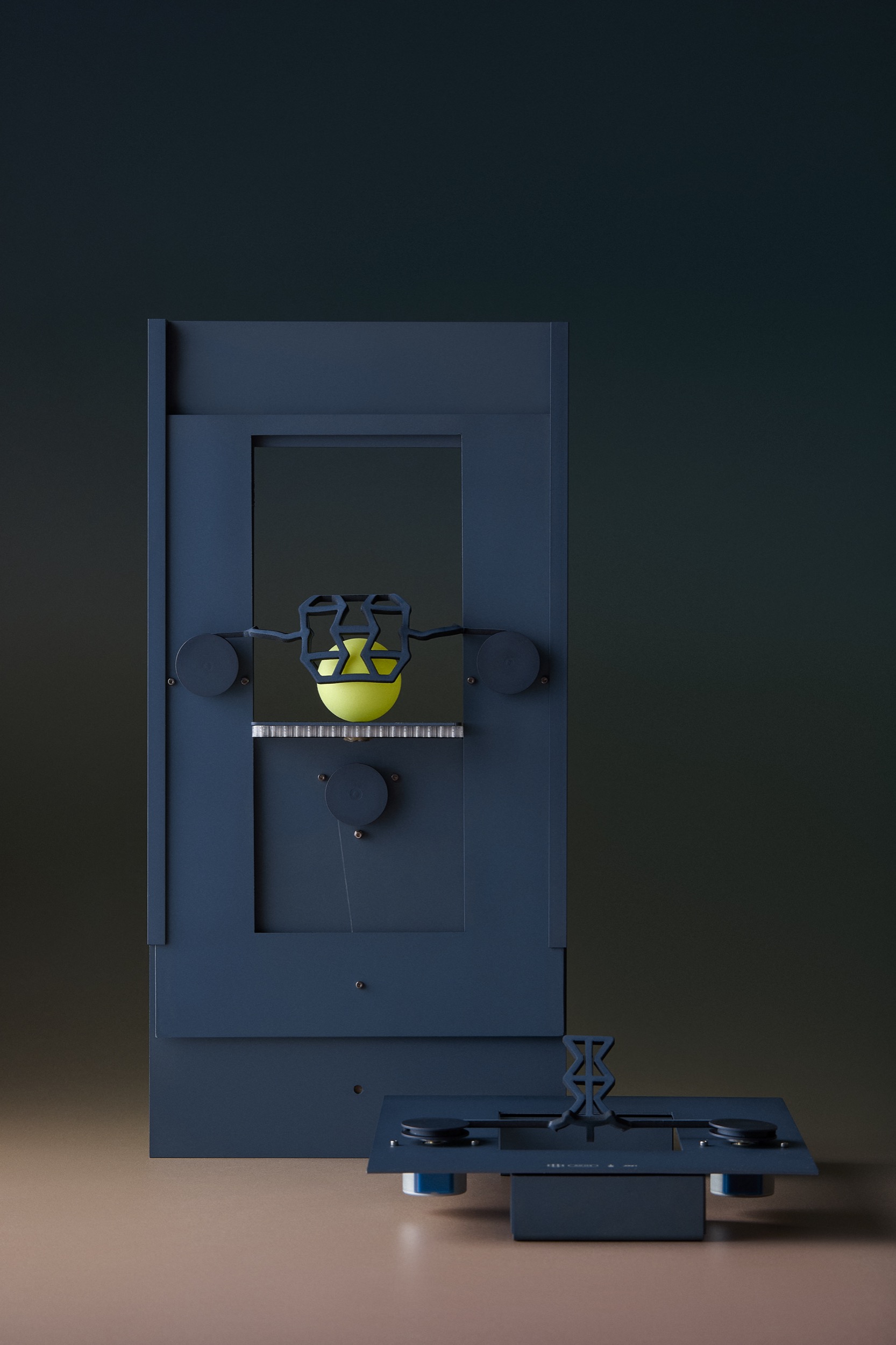
A bow-like pattern cut into an elastic sheet conceals a complex transformation. Under tension, the auxetic geometries expand, either bending upwards or curling, gathering inwards like an armadillo to lift a sphere through form alone. Rather than seizing its target, the material gently envelops it, securing and releasing through an intelligent deformation that mimics a living instinct.
Nadya Suvorova and Heidi Jalkh
Materials: Thin-sheet EVA foam auxetic structures*, anodised aluminium, PLA, motors, electronic components, proximity sensor.
*Collaborators: Dr Lorenzo Guiducci, Matters of Activity (DE) – Link
Photography: Laura Macias and Vicky Rey
MF.05 / Attract, 2026
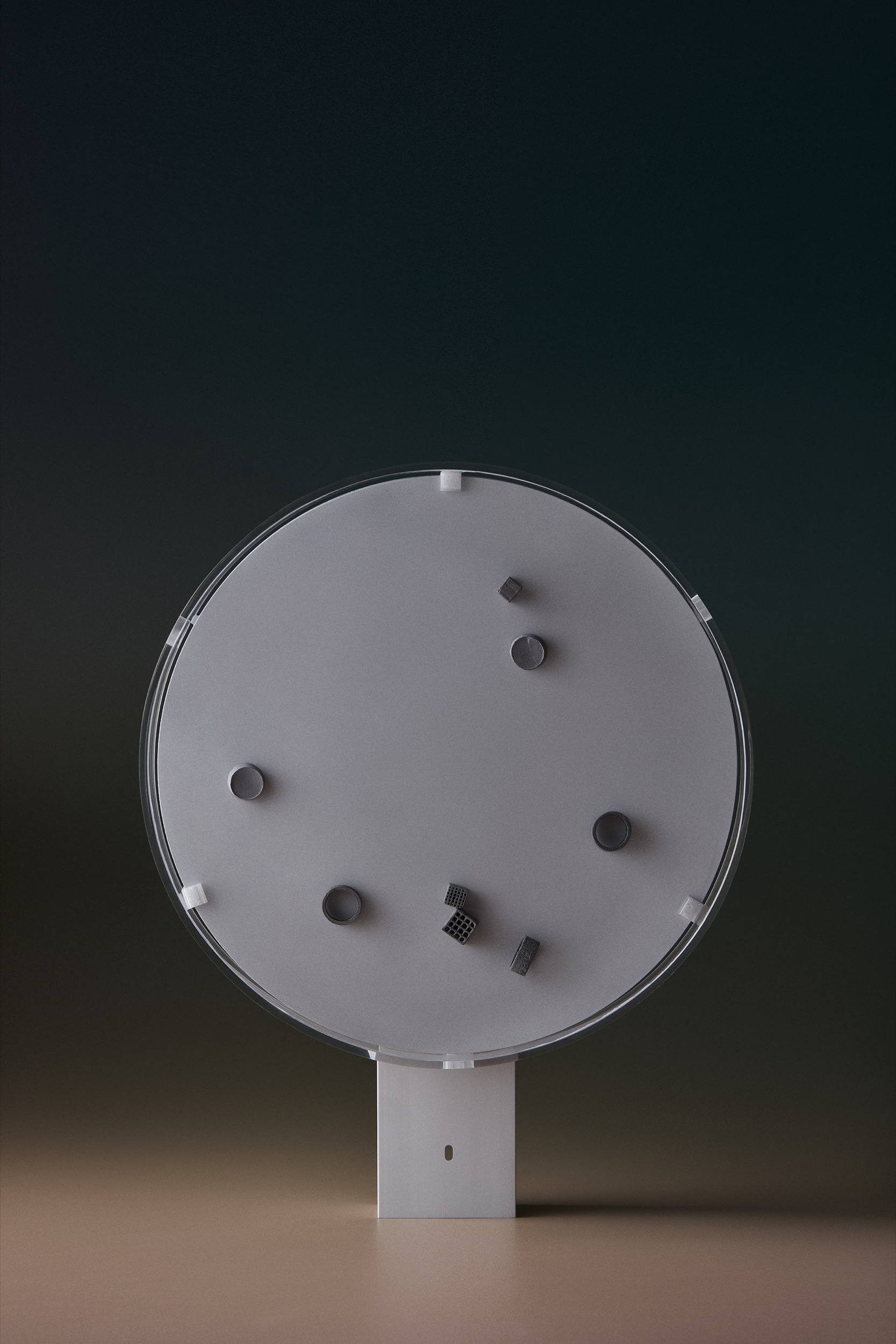
Across a magnetic stage, metallic sponges tread and glide in a perpetual moonwalk. Steered by a rotating magnetic field, they cling, climb, and drift in ways that seem to undo gravity, scaling vertical planes with effortless grace. It is a pulsating choreography: a seamless sequence of pull, yield, and lift.
Materials: Steel powder*, anodised aluminium, magnets, PLA, plexiglas, motor, electronic components, proximity sensor.
*Material source: Apheros AG (CH), Material Science Department, Complex Materials Group, ETH Zurich
Photography: Laura Macias and Vicky Rey
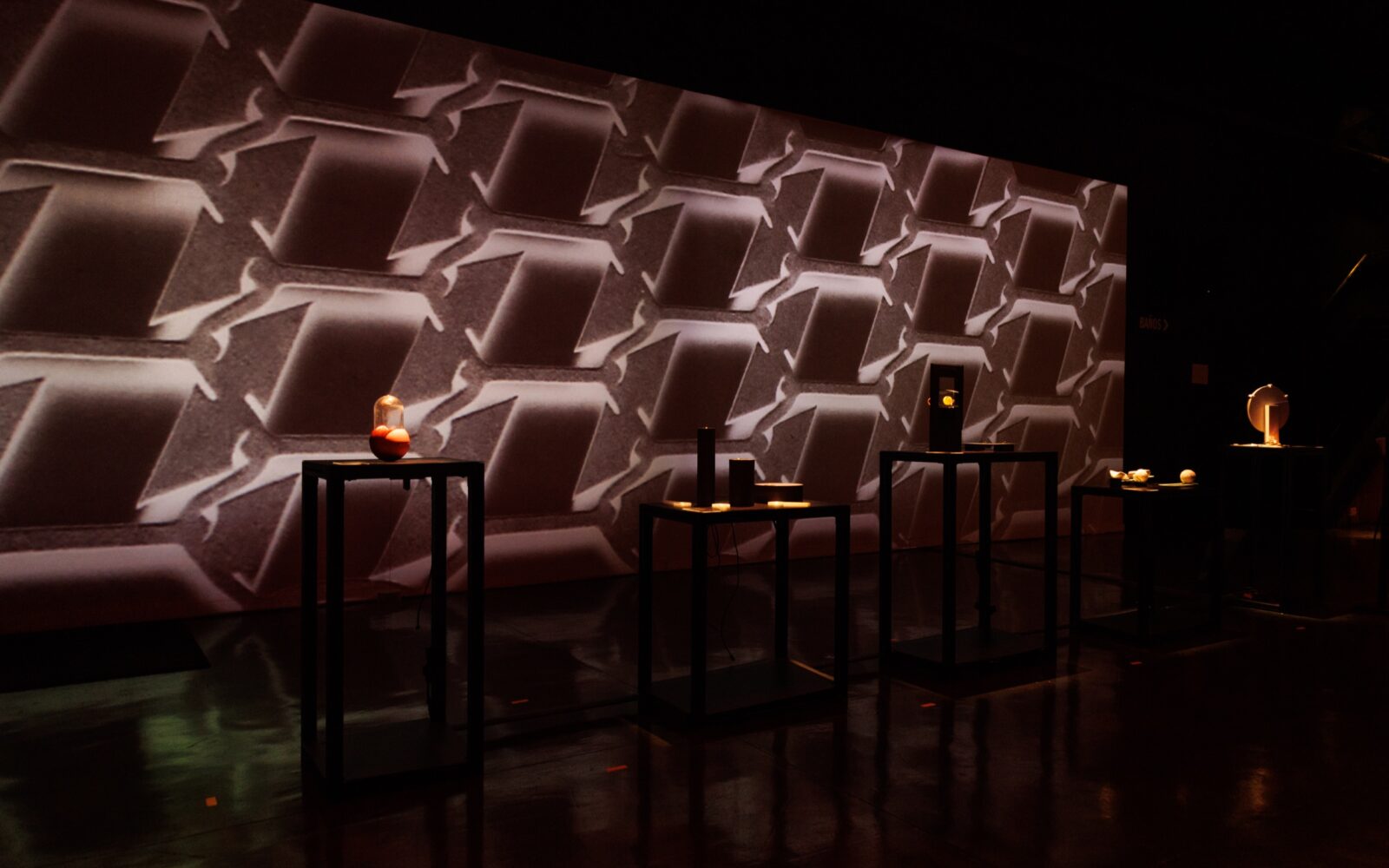
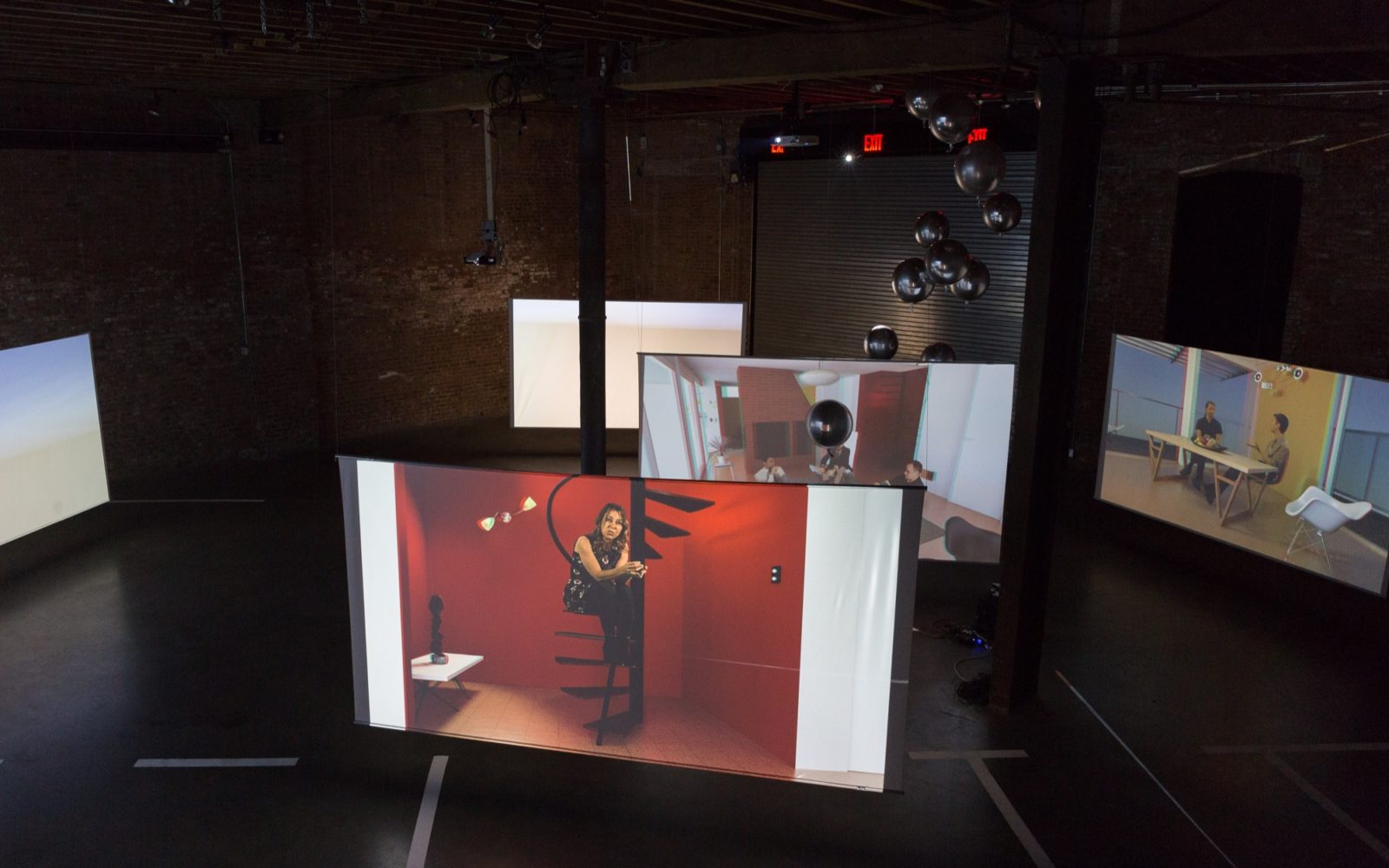
Giving their individual stories, structures, and origins a shared emotional voice, a visual and audio narrative traces the transition from raw materials to autonomous, living entities through a sequence of macro and micro-studies. Projected as an immersive backdrop to the physical collection, the scale-shifting journey is fueled by an original score of embodied material resonances, where raw, matter-based audio is sculpted into a musical framework.
Material Interactions 一 A New Species of Design is currently on show at Artlab in Buenos Aires, Argentina.
Project Page (Instagram) | Nadya Suvorova (Instagram) | Heidi Jalkh (Instagram)
| Team | |
| Design development: Lorenzo Rossi Programming: Mario von Rickenbach Electronics: Santiago Clancy Score and soundscapes: Ailin Grad Video editing: Andres Aguiló | Photography: Laura Macias and Vicky Rey Science communication: Dr Exequiel Rodriguez Identity typography: Synt by Dinamo Typefaces Curatorial text: Caroline Hirt |
| Tools | Arduino, Rhino, Illustrator, Cinema 4d, Photoshop, Premiere Pro, Touch Designer |