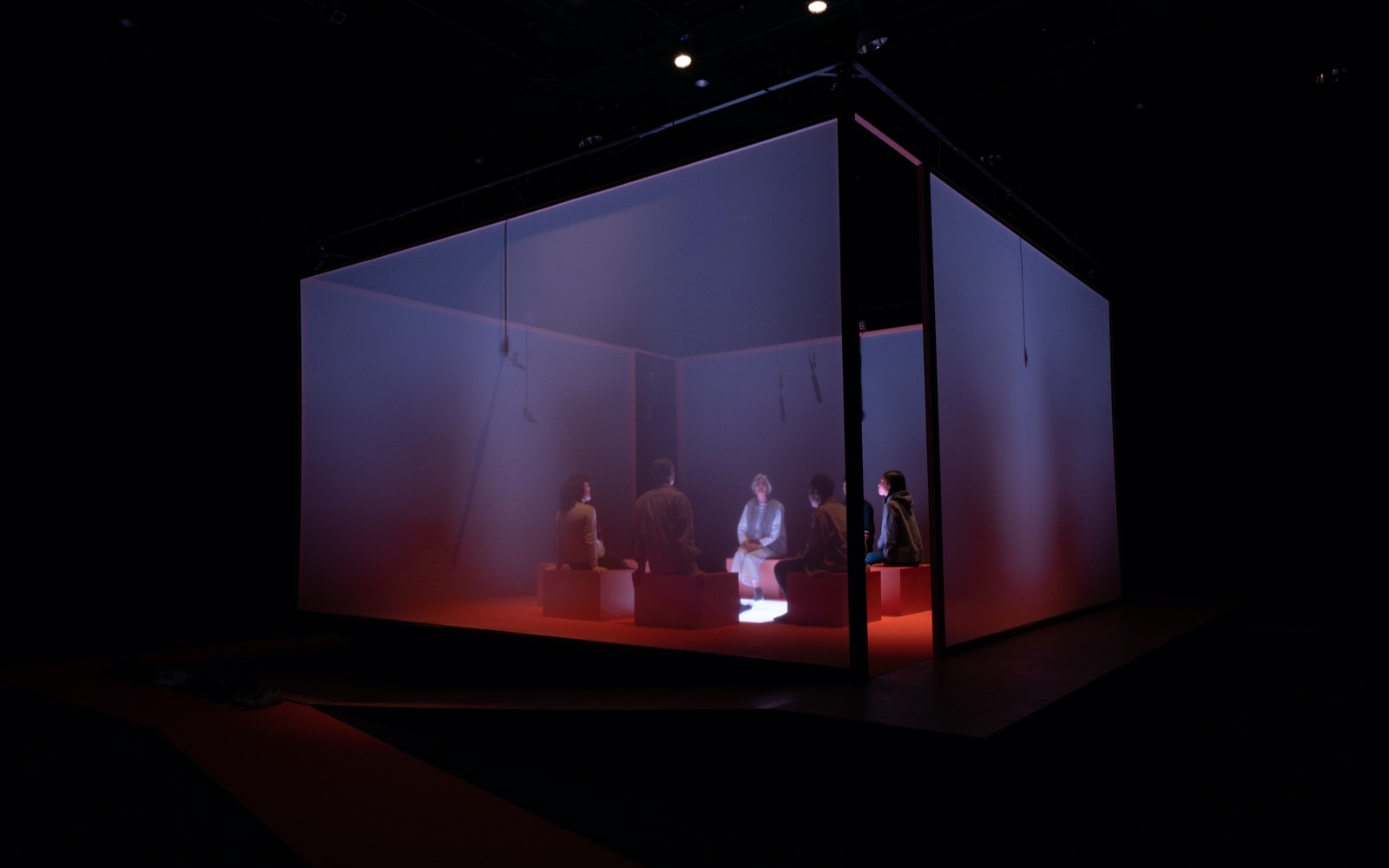
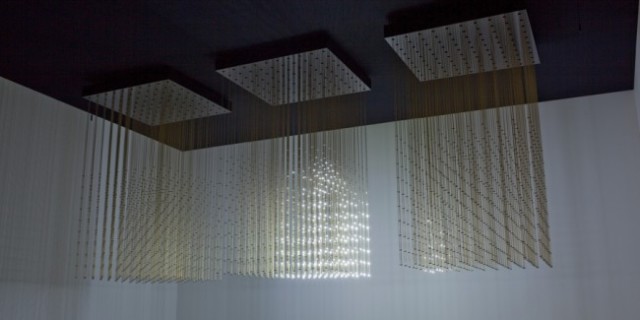
Created by Rotor Studio (Román Torre & Ángeles Angulo) and exhibited at the Villa Elisa, in Benicàssim, Castelló, Mechanisms of Fascination is comprised of several luminous elements emiting clearly readable messages. These elements, converse in silence, speculate, and invent stories about what they’re observing in the room, based on their own mechanical and limited ability to analyze reality. Their dialogue feels unsettling—yet strangely familiar.
Using a camera pointed at the space, the system can read what’s happening, who is present, what they’re looking at, and what their characteristics are. From there, a language model trained to converse about the visual input begins its dialogue. The impressions of these machines might be utterly absurd—or surprisingly accurate. But that’s not the point. Their purpose is to carry out this process again and again, mimicking human behavior.


The installation plays with the idea of granting humanity to the artificial—transforming an automated analytical process into an act of subjective observation.
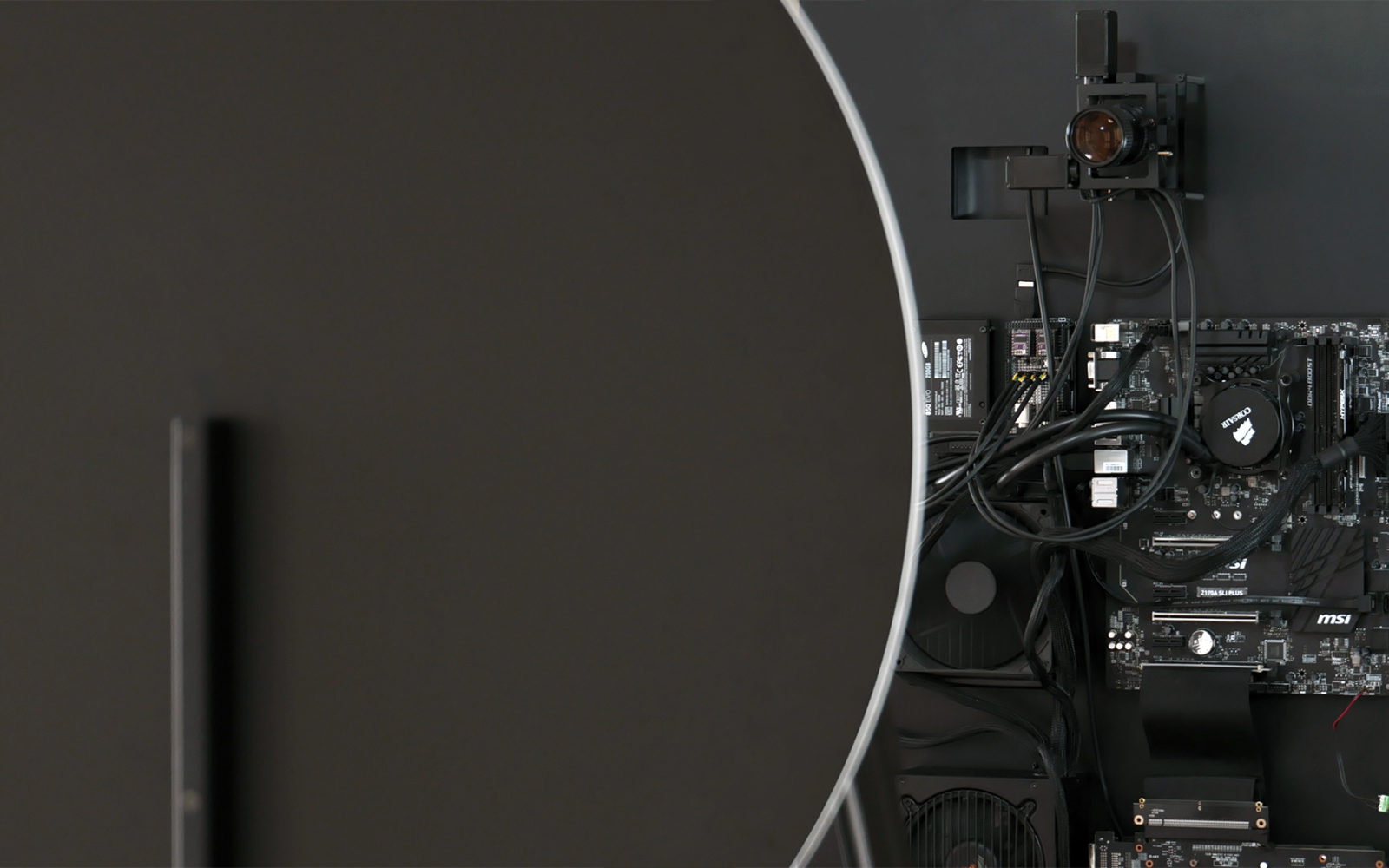
The space is observed by a camera connected to the main computer that analyses the room, looking for people. Once the system detects someone, it generates a description of the image. This is done using YOLOv8 (for person detection) and the image-captioning library BLIP.

Once BLIP generates a description—for example, “a man dressed in black looking at sculptures in a museum”—this description is sent as a prompt to a language model (Mistral) via Ollama. The prompt is modified to include the instruction that the response should be ironic and playful, and that the system should judge the scene as if it were a machine criticising human behaviour.
From there, each response is used as the basis for the next prompt, and each of them is sequentially sent to the LED signs via the network to which they are connected. The signs receive the messages through ESP8266 modules using Adafruit’s NeoPixel library.