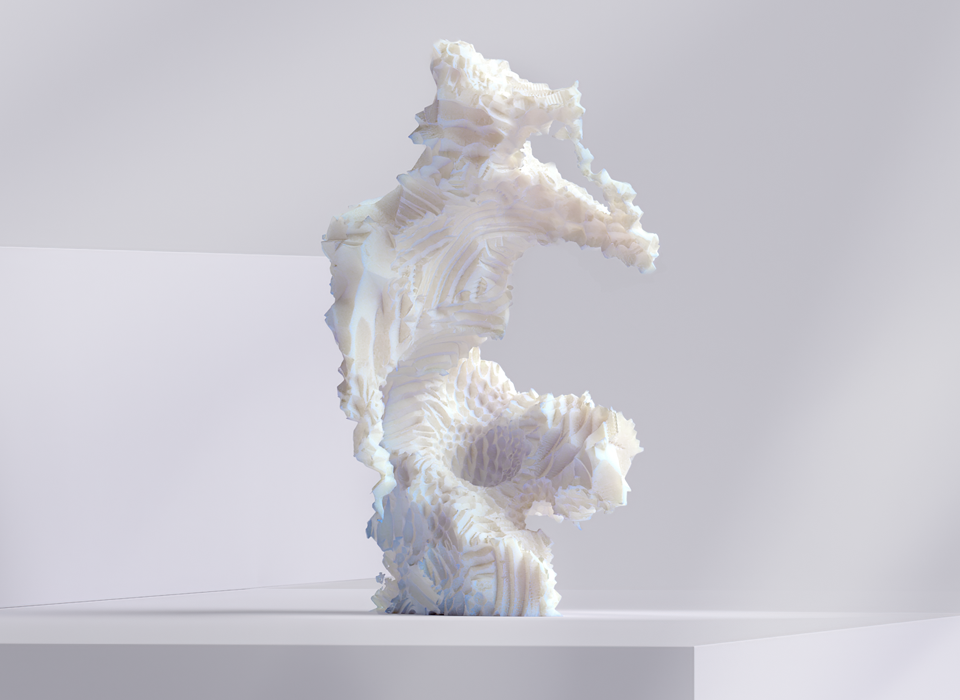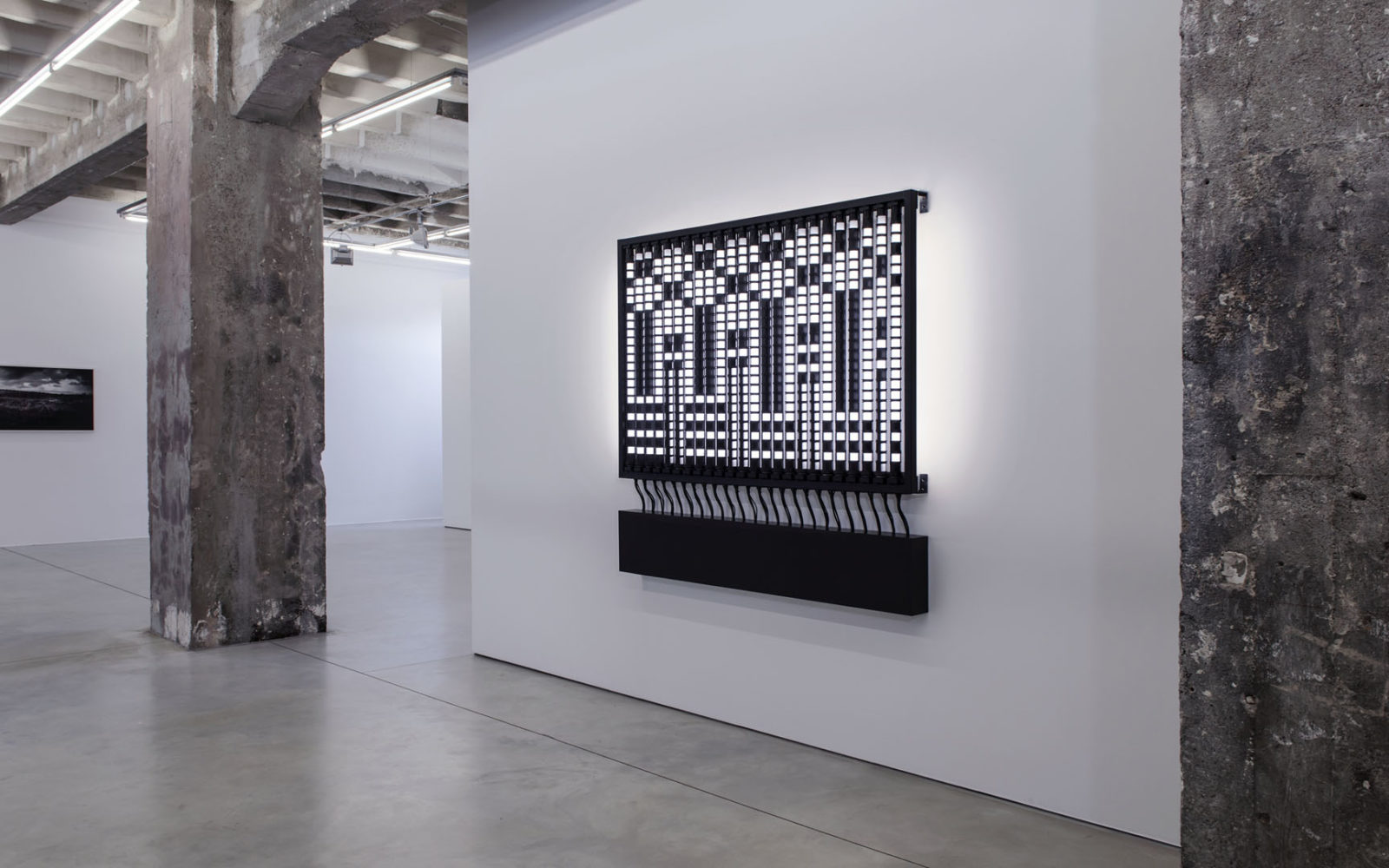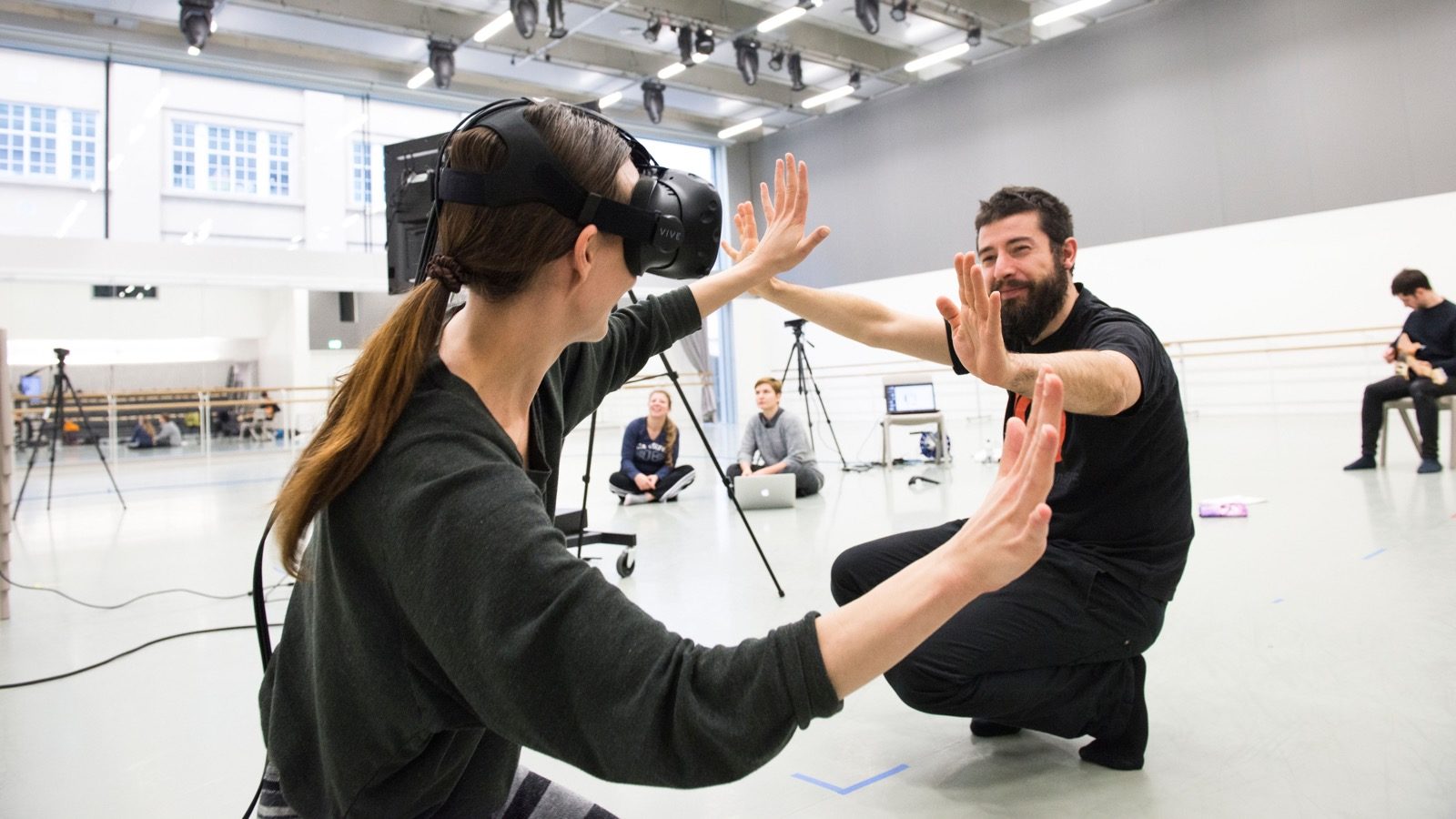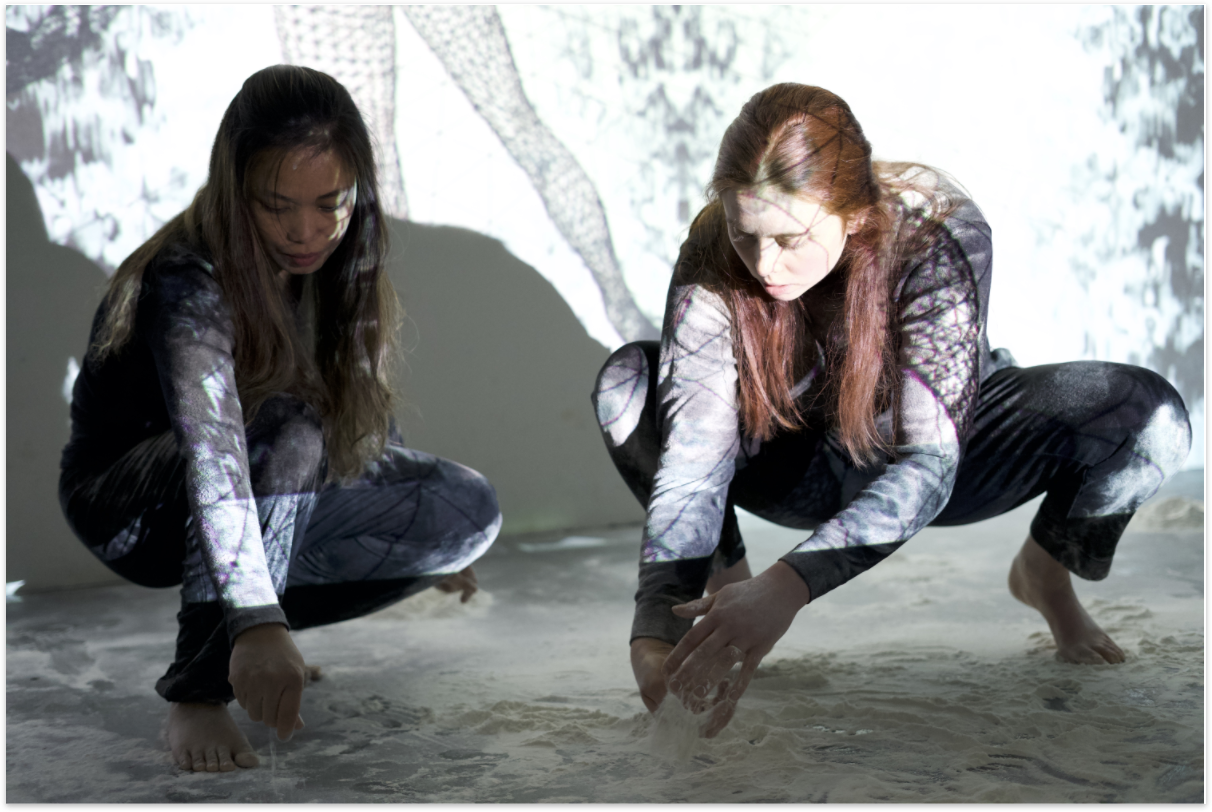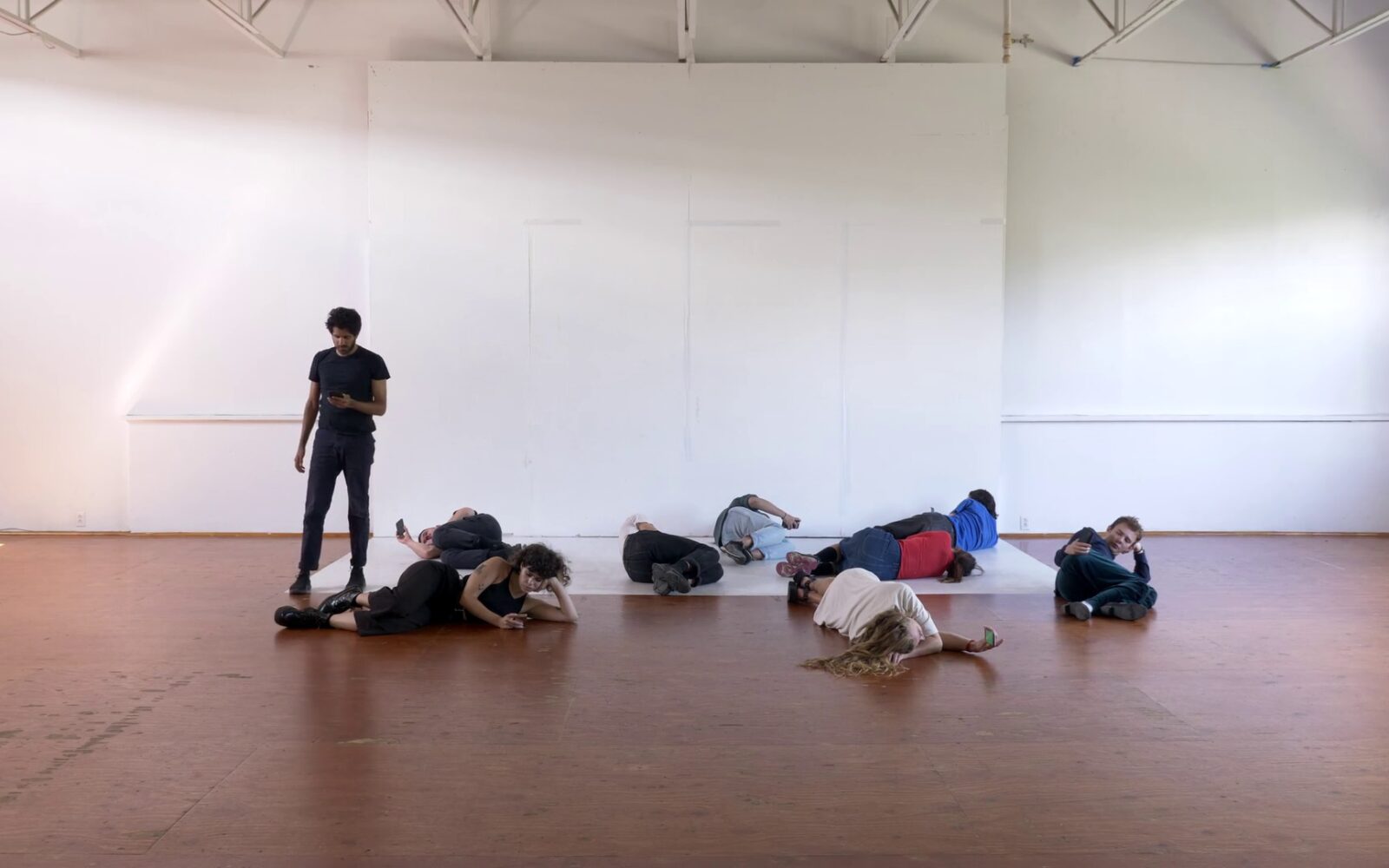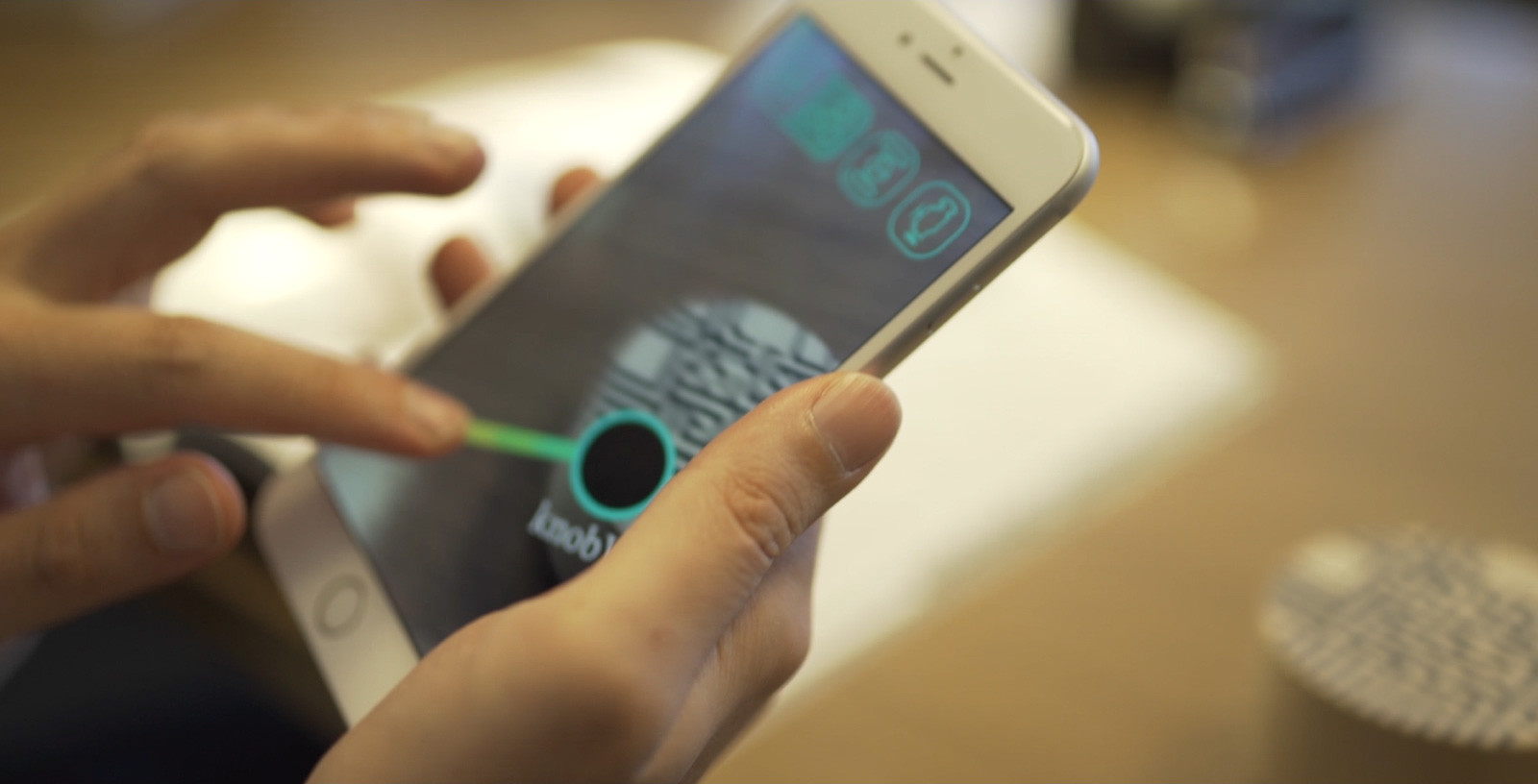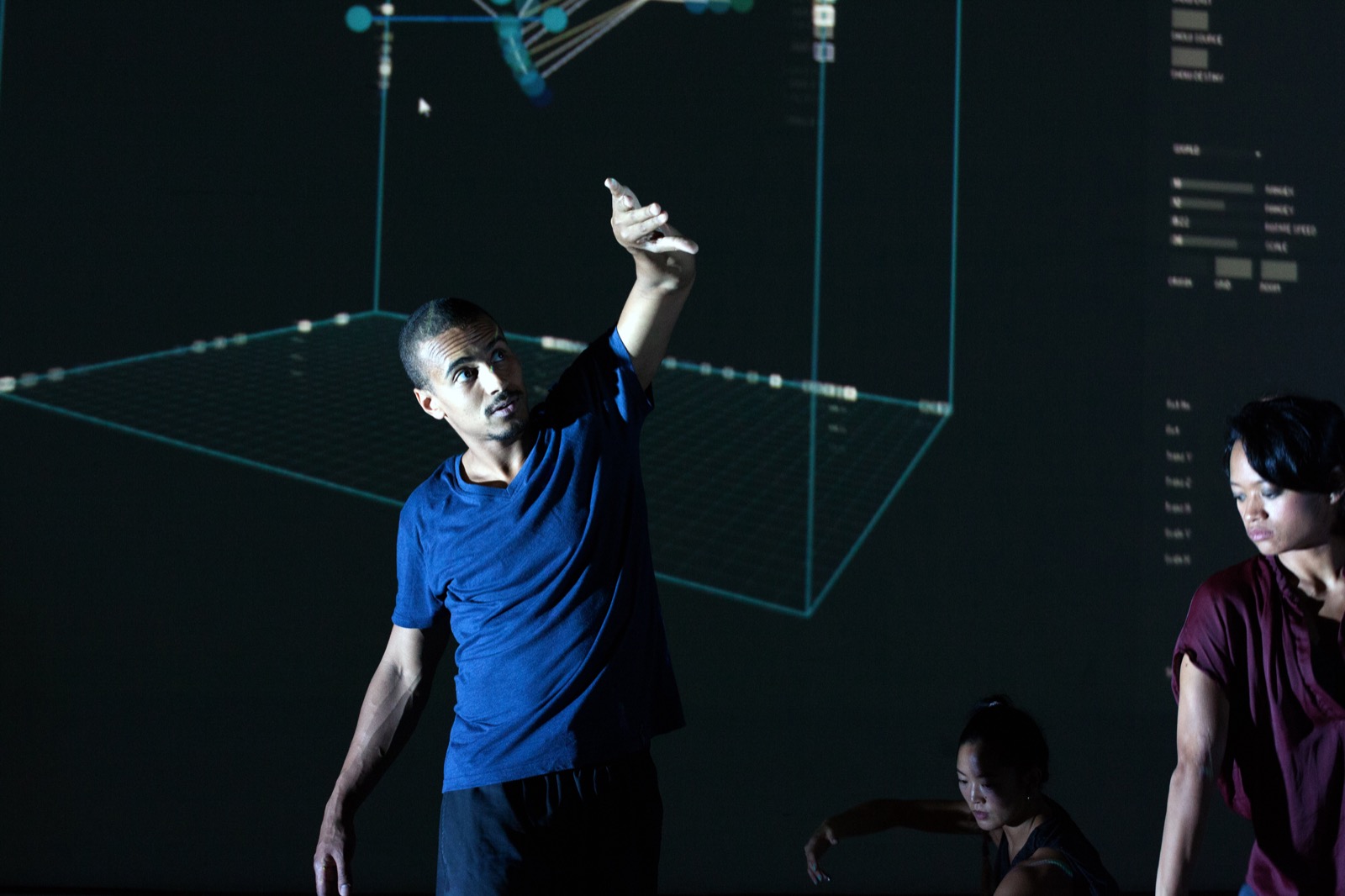
Created by Princemio in collaboration with onformative and presented at Choreographic Coding laboratory in Frankfurt 2013, the Pathfinder project was created with aim to contribute to the creative processes of choreographic development. To achieve this algorithms have been developed to stimulate the dancers and to create visual inspirations. By doing this, the software becomes its own creative building block, questioning the classical master slave paradigm.
The dancers imagines lines, patterns or abstract processes in order to improvise a physical interpretation of those. Pathfinder becomes part of this process, by continuously generating geometric shapes in order to inspire the dancer. The specifically developed visual language consists of a set of reduced graphical primitives which are progressively transforming, generating a vast number of geometric inspirations.


Pathfinder is a tool which can be utilized in different scenarios. In order to define a desired type of animation, the choreograph is able to adjust certain parameters of the algorithm, such as speed, complexity, or geometric objects. However, he is not able to define the precise visual output. We implemented this limitation to ensure the algorithms own contribution to the process. Based upon this adjustments, Pathfinder generates different shapes morphing into each other in a logically and sequential manner. The dancer is able to see this output and react in a preferably spontaneous way in order to provoke uncertain results and surprises. Based upon his observations, the choreographer is able to adjust the parameters of Pathfinder to approximate the desired results. Constituted by this process Pathfinder becomes a medium, replacing common communication processes such as speaking or showing. Of course this system can also be applied to just one dancer continuously researching body movements, while reflecting his progress and making adjustments on his own.
The project explores new possibilities and mechanisms to use generated graphical content as a creative impulse. Whereas some artists were interested in this type of interaction with the system, one artist for example refused to participate after trying for a couple of minutes, arguing he felt forced instead of inspired. While trained concepts, repeating loops or simply habits may be to blame, the system calls for improvisation along the new paths and permutations of their physical language.


This system was developed in collaboration with onformative, using primarily Processing incl. toxiclibs, he_mesh library, controlp5 and oscP5. For choreographic consultancy and scientific insight into the field of contemporary dance, the team collaborated with Raphael Hillebrand. The project was finalised and presented at choreographic coding. Together with partners like the NODE Forum for Digital Arts, the project offers unique opportunities of exchange and collaboration – for digital artists who apply choreographic thinking to their own practice.
Choreographic Coding is a laboratory invented in 2013, as part of the Motionbank research project of the Forsythe Company.
Project Page | Choreographic Coding | Motionbank | onformative