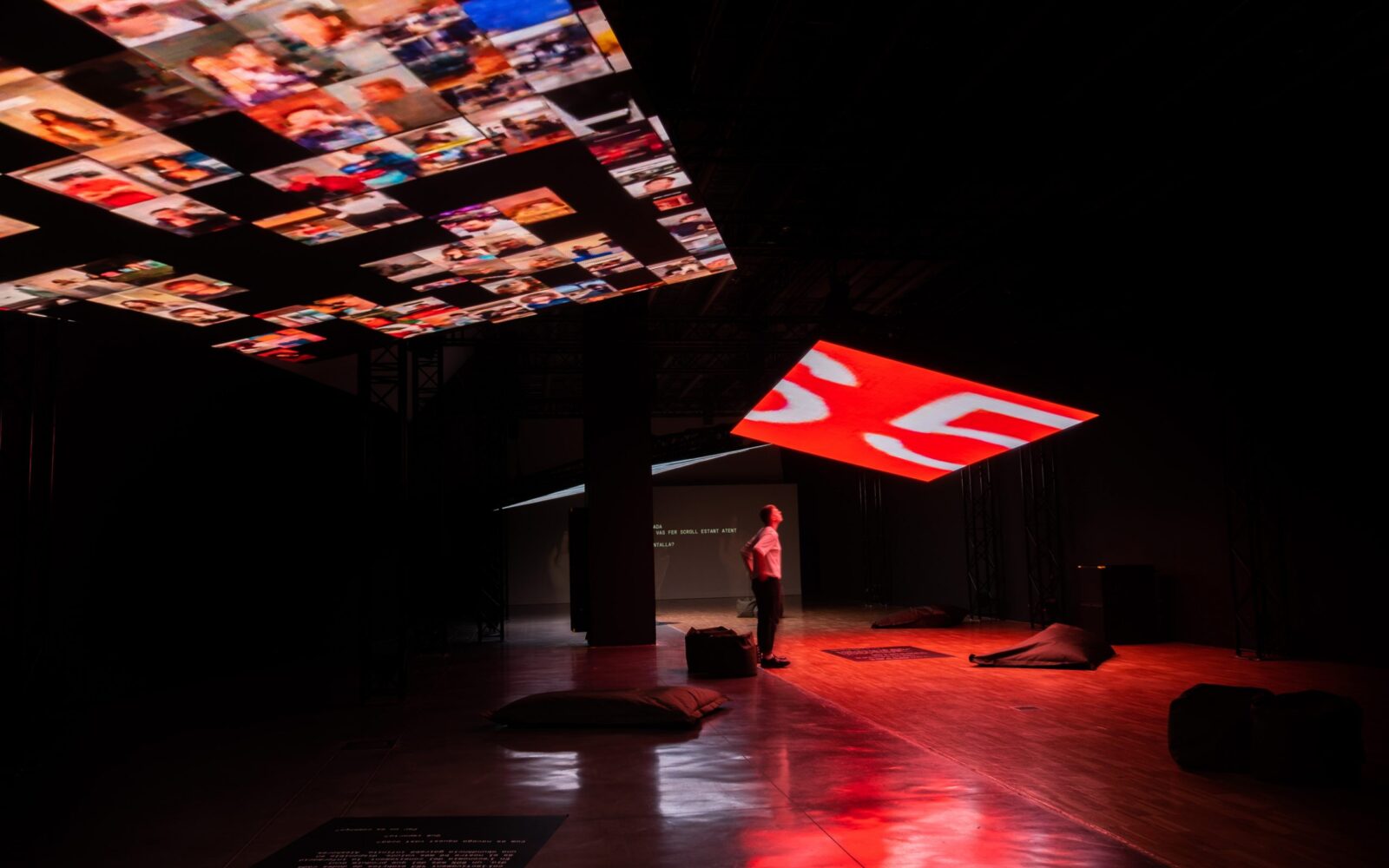
Created by Thomas Gaudin at ECAL, Unbubble is an interactive installation where a robot explores a user’s smartphone to analyze their Instagram activity. This strange and intrusive act reveals the paradox that while we rarely hand our phones to machines, yet we let algorithms scan our lives every day. Unbubble reflects on how these digital traces build fragmented versions of ourselves, and invites people to imagine other ways to navigate beyond algorithmic paths.
Our online habits shape a tailor-made reality that defines what we see, desire, and believe.
Thomas Gaudin
The project comes from Thomas’s bachelor thesis about social and digital bubbles. At first, he wanted to build a machine that could “break” them, but soon realized it made more sense to let people do it themselves and become aware and take action rather than having a machine do it for them. The machine browses the Instagram for the user and provides a report/analysis of the content it observes.
The installation utilises Machine Learning with OpenCV, to recognize logos by training it with many example images of the pictograms under different lighting conditions, scales, and both dark and light modes. OpenCV decomposes these logos into key points, and the distances between these points are what allows it to distinguish one logo from another. Then a local AI running with LM Studio and the Gemma AI model is used to handle several tasks: recognizing the user’s username, analyzing the images captured by the webcam, summarizing the filter bubble, writing the message sent to the user, and performing security checks. For example, verifying whether the robot’s clicks went through correctly, if the phone is still in the box, and if it’s unlocked of if there is some unexpected popups (low battery, phone call).


On the hardware side, an ESP32 is used to detect whether the drawer was opened or closed, which starts or stops the experience. Thomas also used it to customize the Axidraw (pen plotter), since it doesn’t natively support limit switches. Three switches were added to prevent the AxiDraw from going out of bounds in case OpenCV made an incorrect detection.
Lenses with a low focal length tend to distort the image on Cameras, which was a challenge for precise detections that needed to be accurate. To fix this, a checkerboard pattern was printed and multiple photos taken from different perspectives with the webcam. Using a calibration library found on GitHub, correct distortion was calculated.
The physical components of the install were made using a combination of 3D printing and laser cutting.
Thomas Gaudin | ECAL Media & Interaction Design