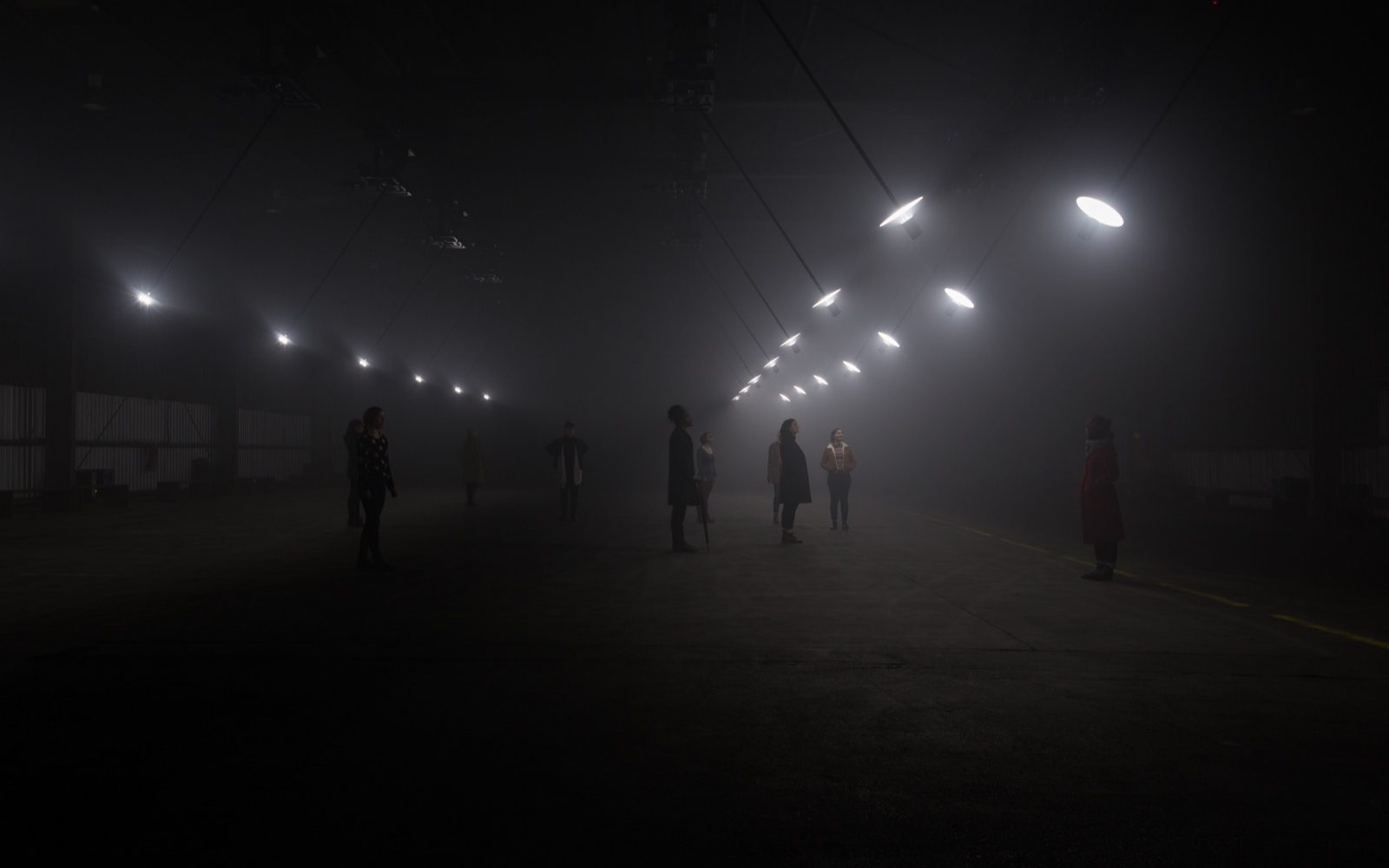
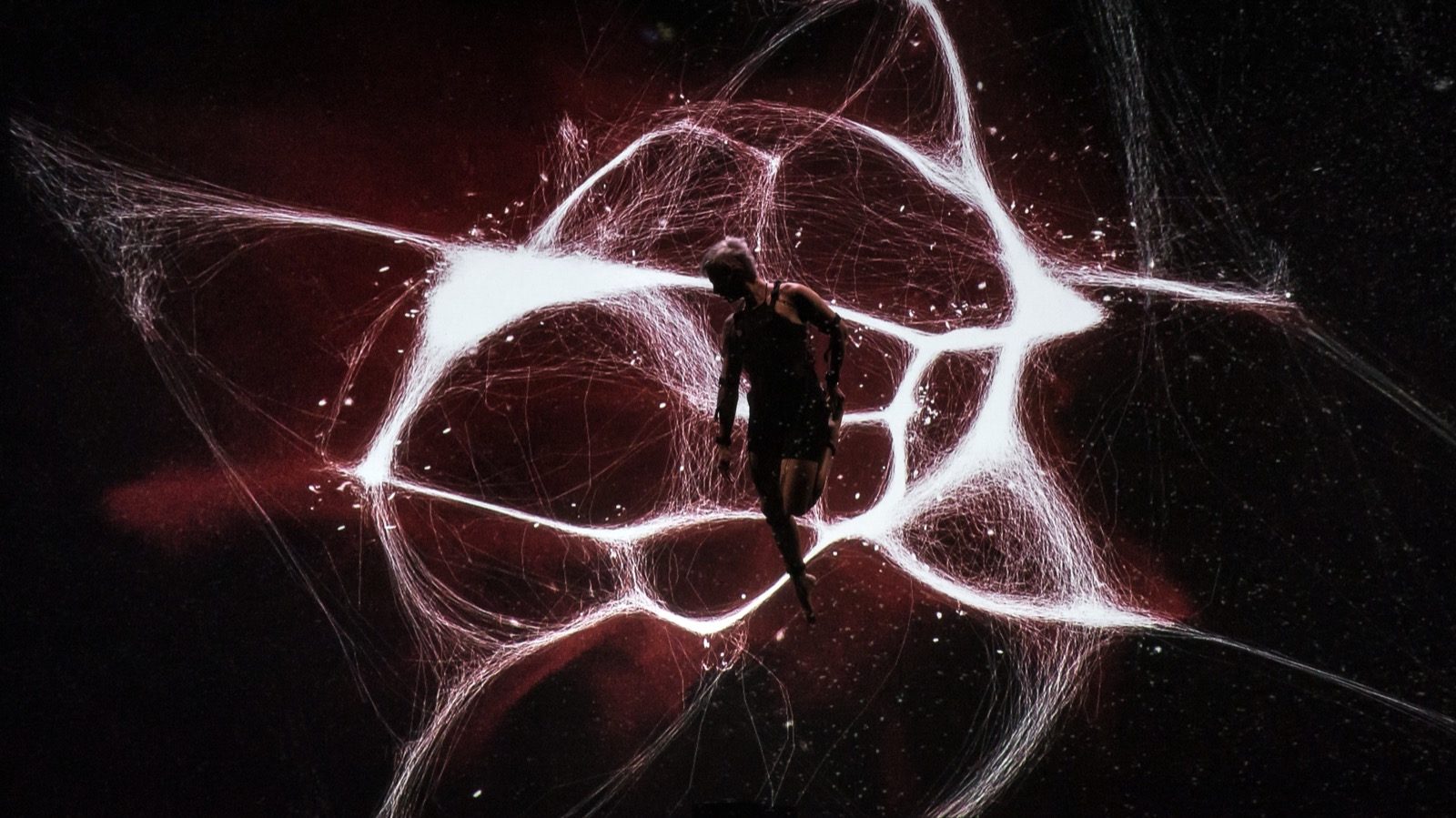
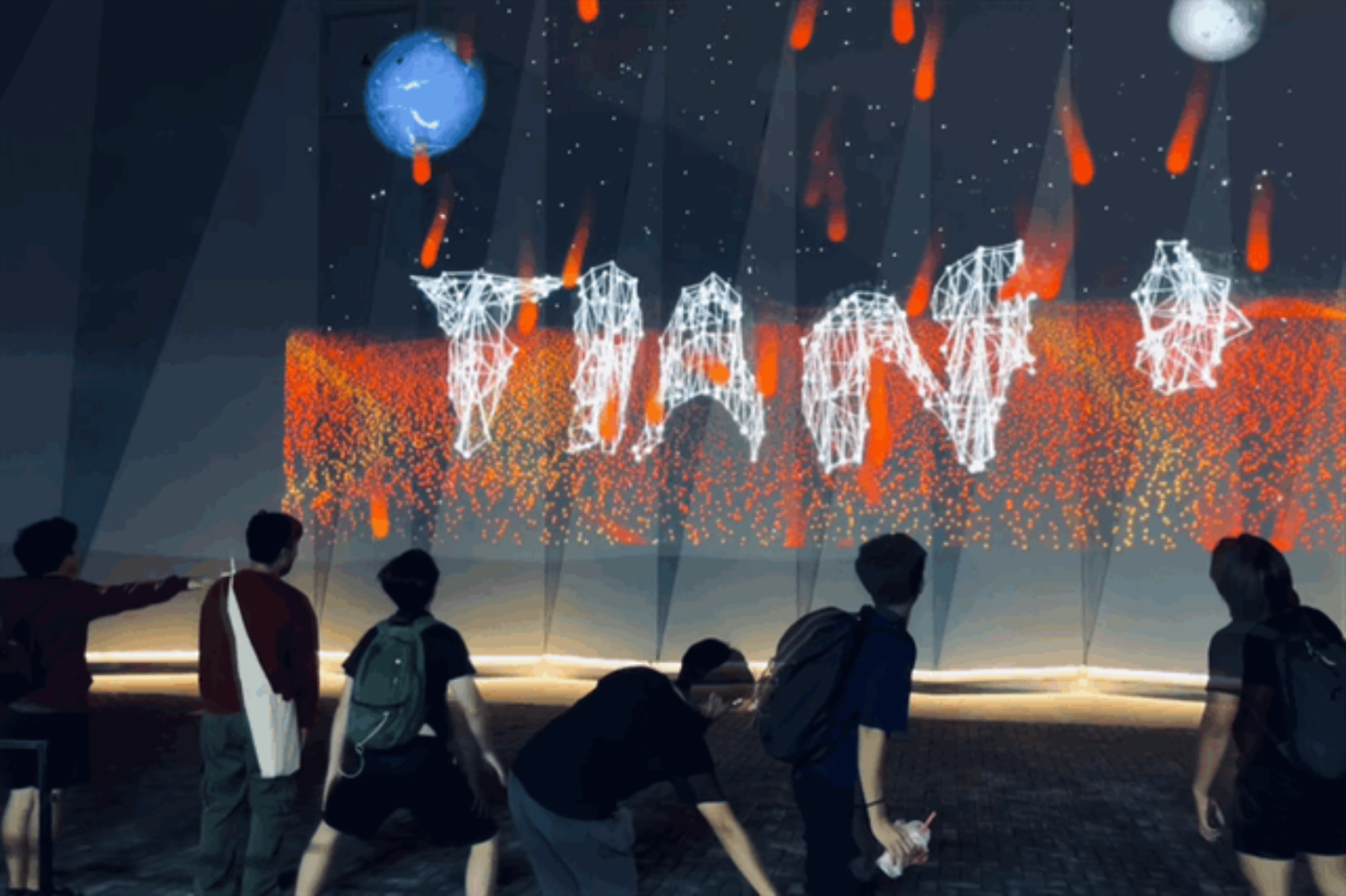
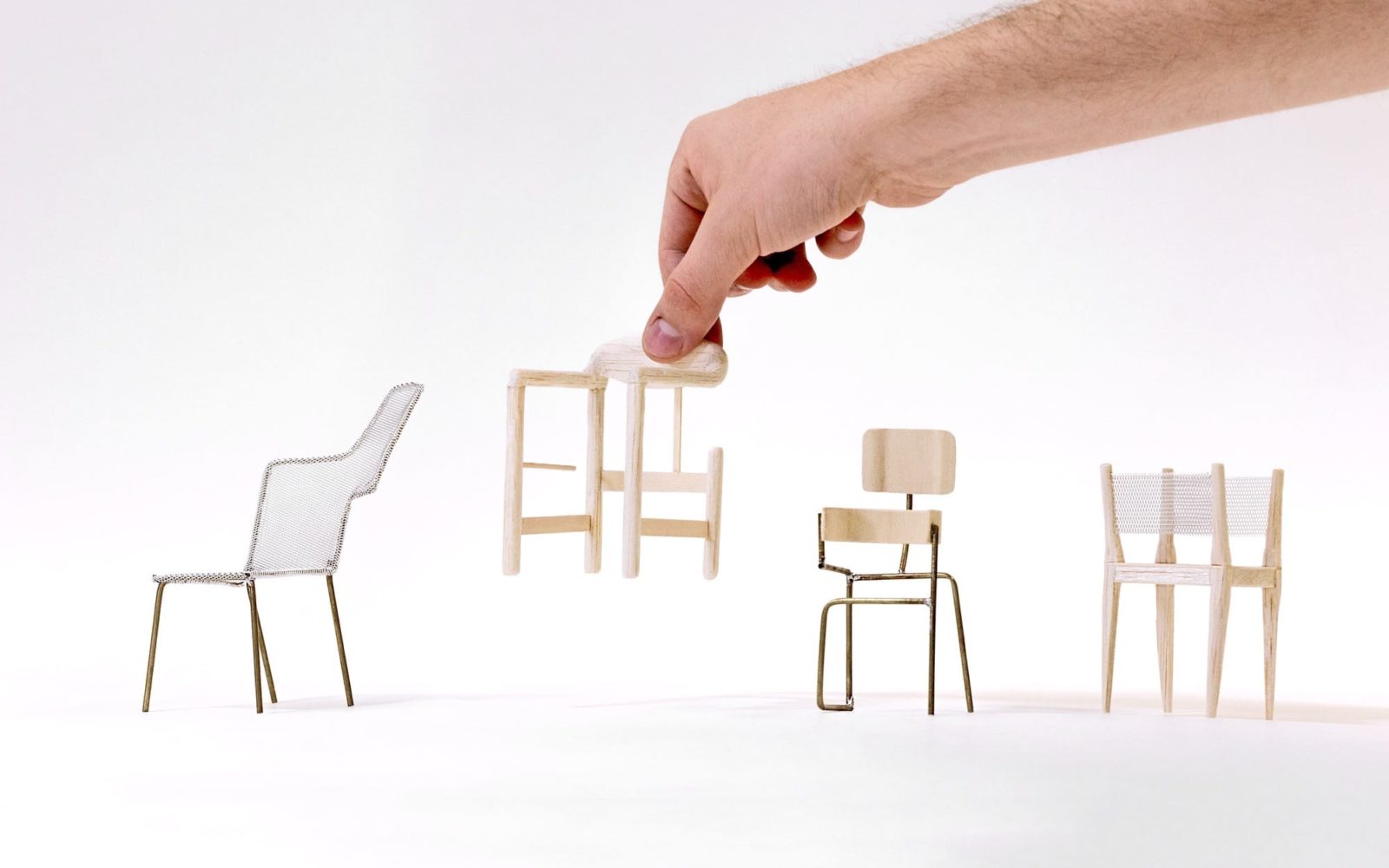
Design Art Technology is a four year Bachelor of Arts (BA) course at ArtEZ University of the Arts in Arnhem, The Netherlands. It is a small department that helps students to develop their own voice in a complex and technological world and find their place in (or in-between) the fields of Experimental Design, Media Arts and Creative Technology.
Technology is at the core of our modern world. It can be a useful tool, and the source of global concern and criticism. At the same time it can be beyond fascinating and even downright magical—it’s a language that we are in constant dialogue with.
Our programme builds on this idea, preparing students to become critical thinkers and visual creators with a distinctive digital media practice in a rapidly evolving field. We offer a unique curriculum where technology becomes both the material and the subject for thinking and creating. With a strong foundation in experimental design, media art and creative technology the programme guides students in establishing a professional practice that is not only sustainable, but also future-proof.
Studying at Design Art Technology is organized around a collective learning experience, covering a diversity of subjects relevant to the field such as Media Theory, Creative Technology, Coding Studio, Sound Design, Projections and Designing Programmes as well as Solidarity, Transition and Field Research.
Five students graduated at the Design Art Technology department in the summer of 2024. Their final semester (between January and July) was very focused between an essay and their research project. Each of these research projects turned out to be an installation with performative elements.
Flore Wormskamp – Opsin
In Opsin, one can explore the wonders of the octopus skin. By immersing yourself among the cells and folds of the animal’s organ, you can gain a glimpse into how octopuses perceive the world. This work not only shows how the octopus skin works but also highlights the contrasting ways in which we experience life. You will find yourself in the place where the outside world and an organism come together. While humans perceive light with their eyes, octopuses sense light with their entire skin surface, transforming their whole body in response.
Using spheres filled with ink and surrounded by mirrors, Flore recreated the basic mechanics of an octopus’ ability to camouflage. By incorporating an analog circuit that mimics the light-sensitive cells called opsins, viewers can immerse themselves in the cellular experience of octopus skin.
Through this work, Flore aims to address one of the most pressing questions of our time: Why do humans see themselves as superior beings when there is so much other beauty, intelligence and agency in the natural world?
Flore Hanna Wormskamp | Instagram


Hugo Remmen – #FFFFFF
In #FFFFFF, the tiny moment of unpredictability of fluorescent lighting turning on and off is extracted and amplified into an audiovisual performance. The flashing lights and electronically amplified noises of the fixtures evoke the feeling of a post-apocalyptic rave, a scavenged sound- and light system.
Fluorescent lights are not designed to be dimmed and react erratically to insufficient voltages, creating a semi-controlled randomness when coupled with DMX dimmers. The performer of the instrument is never in charge, but always in collaboration with the installation, making for a newly improvised performance with every iteration. The viewer is bombarded with a constantly evolving arrangement of chaotic on/off sequences, invited to look for patterns or repetitions and continuously thrown off this trail by the unpredictable nature of the instrument.
The sound is generated by piezo-acoustic and magnetic pickups which amplify the physical vibrations and electrical interference of the magnetic field of the fluorescent lights, respectively. No additional samples or auxiliary sound sources are being used.


Jonas Westendorp – Cabinet of Zombie Media
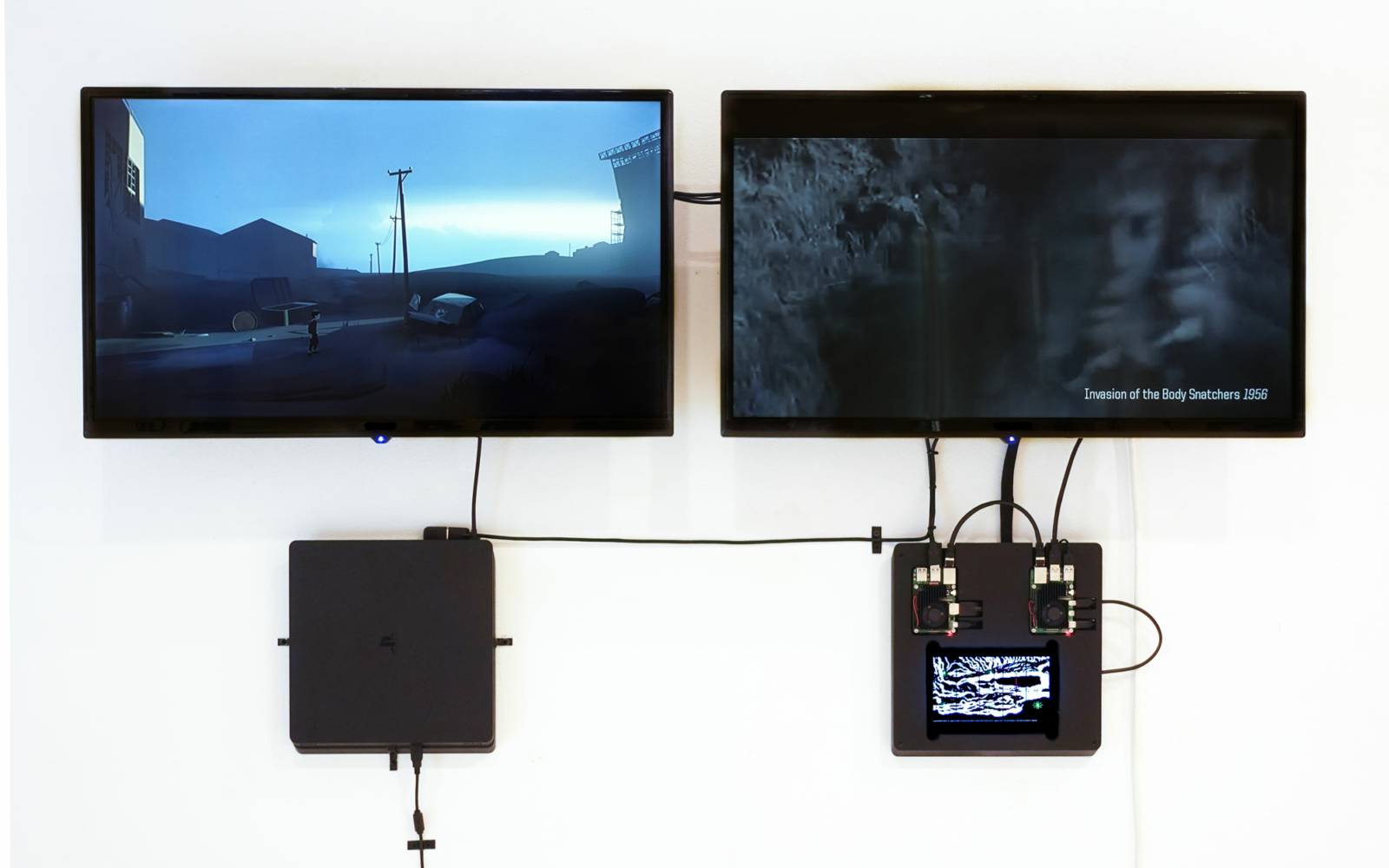
The Cabinet of Zombie Media showcases a collection of “undead” media: electronics that have taken on new forms of life after their intended use. This cabinet is an ongoing research project that explores the fragile relationships we form with electronics. For a short period, we use or even carry around these devices daily, trusting them with our intimate memories and experiences only to discard them once a new version comes out. This lifecycle creates a highly complex stream of electronic waste (e-waste), a consequence of planned obsolescence: we humans create these artificial life forms, and so their eventual death is also planned. However, reaching the end of their intended lifecycle does not mean these electronics are “dead”. While the traces of their human owners fade away, these media remain in a state of suspense, awaiting a new purpose independent of human interaction.


Puck Wacki – Silent Passage
A composition of four works that explore the metaphysical implications of a timekeeping device. By deconstructing and recontextualizing these instruments, each piece challenges viewers to explore alternative perceptions and measurements of the time passing, beyond the Western utilitarian concept of the 24-hour clock. We often perceive time as clock time, a construct created by humans as a tool to control and perfect. This understanding of time has made us servants to the clock, shaping our entire way of thinking into a linear pattern. As result, everything around us has been constructed in this linear manner, yet linear time is merely a construct designed to serve a capitalistic world. Time has become a boundary, and art should act as its liberation.
Ticking Shadows – In Ticking Shadows, a self-playing instrument translates binary data into graphical notation, played by candles. This work invites you to listen to time slowing down and presents a case against the Western concept of clock-time, which is a driver of utilitarian modes of being where everything you do must be useful and has to matter. The viewer always enters the piece at an unknown interval, making it impossible to fully witness the completion of the score.
Fugit irreparabile tempus – fugit irreparabile tempus is a sound installation which consists of kitchen timers that are reprogrammed into new individual time sequences. These sequences represent elements in human life that have their own course of time like breathing, which happens approximately every four seconds. Therefore, the familiar numbers that indicate minutes and seconds here no longer have the same meaning. Listening to the individual timers going off, the viewer is able to hear their new individual time flow. Together they create chaos and composition through less perceivable rhythms that are still fundamentally present in human life.
Transient [ ] – If nothing happens time still passes. It just seems to go slower. Transient [ ] is an installation that visualizes the absence of time. A stack of sand is flowing on a platform creating a pile that indicates how much time has passed. This is a representation of when nothing has happened. When events do happen (such as movement) the platform on which the sand is falling vibrates and the material representing the absence of time dissolves. The work represents the feeling of being connected to oneself and taking time to listen to the passing time. If you’re able to be in the moment long enough, the pile of sand is again being recreated and you have entered the transient absence of time.
temporal whispers – Temporal whispers is a sound performance where the viewer listens to the synchronisation and desynchronisation of e timers. This gives the viewer the possibility to listen and sync with the sound or desynchronise by leaving and not knowing how much time still has to pass.


Rosalinde Vermeulen – Visiola
Visiola is a research into recovering the obscure mirror screw mechanical television, a technique developed in the 1920s-30s that was forgotten with the advent of CRT television. Rosalinde’s aim is to breathe new life into this forgotten technology. Discovering that not even a Wikipedia article exists on the mirror screw television, Rosalinde continued the search through old websites, magazines, and articles to uncover its history.
In this work, Rosalinde wants to draw attention to the evolution of screens and technology and the level of imagination, almost resembling witchcraft, and creativity that transcends through their design. She wants to highlight how innovations have changed over time and what might have been. Through experimentation with mirrors, light and a motor, she has revived this technique in an abstract form, hoping to evoke the same sense of awe people would have felt when first seeing this machine a hundred years ago.
Rosalinde Vermeulen | Instagram


All projects we produced with the help of (staff) Daan van Dijk, Natalia Dominguez Rangel, Marijke Goeting, Annija Muižule, Soyun Park and Richard Vijgen. External committee included Matteo Marangoni.
Design Art Technology – ArtEZ | Instagram
Notes: Remaining application rounds for 25/26 –– We still have some seats left for the upcoming first year, the final application round for non-EU students is on April 16th. For Dutch and EU students we have two more moments; April 23rd and May 19th. We also organize a DATSWAP admission round where you can apply when you are currently in a different course and want to apply to our department.