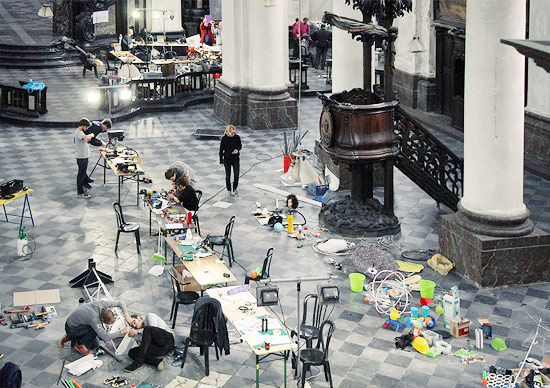
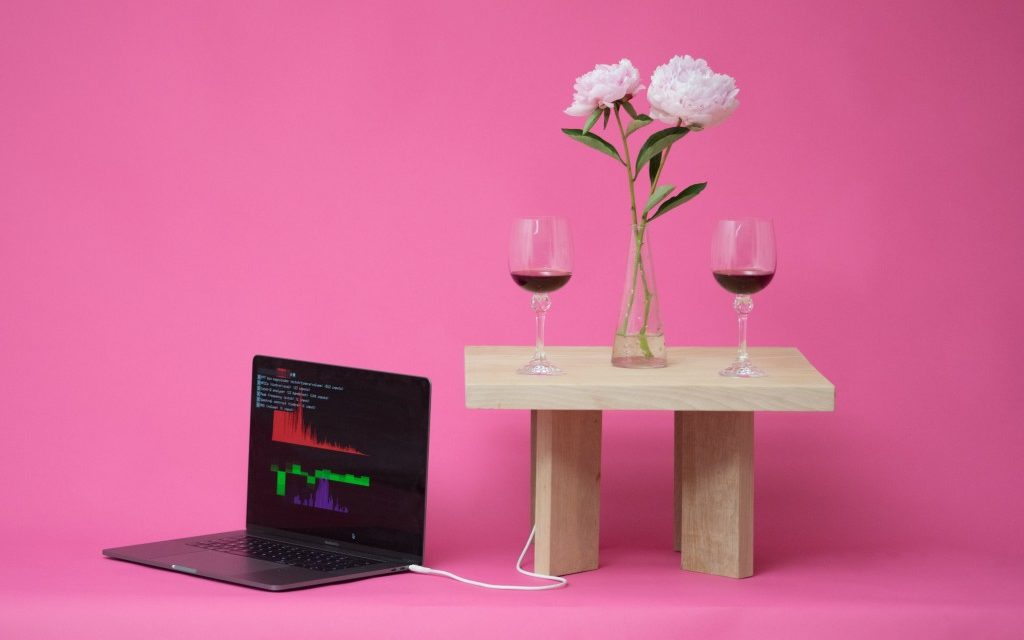
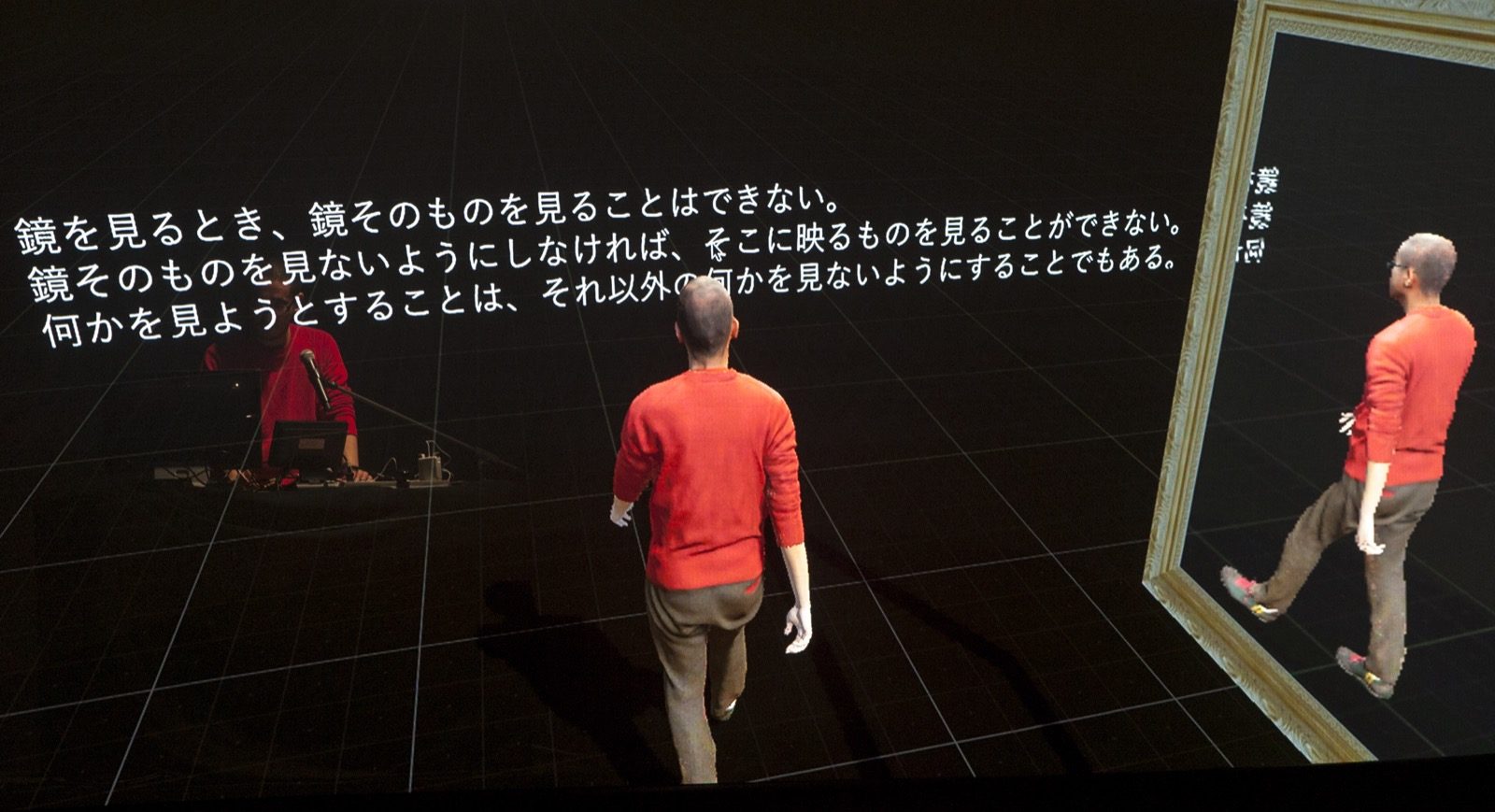
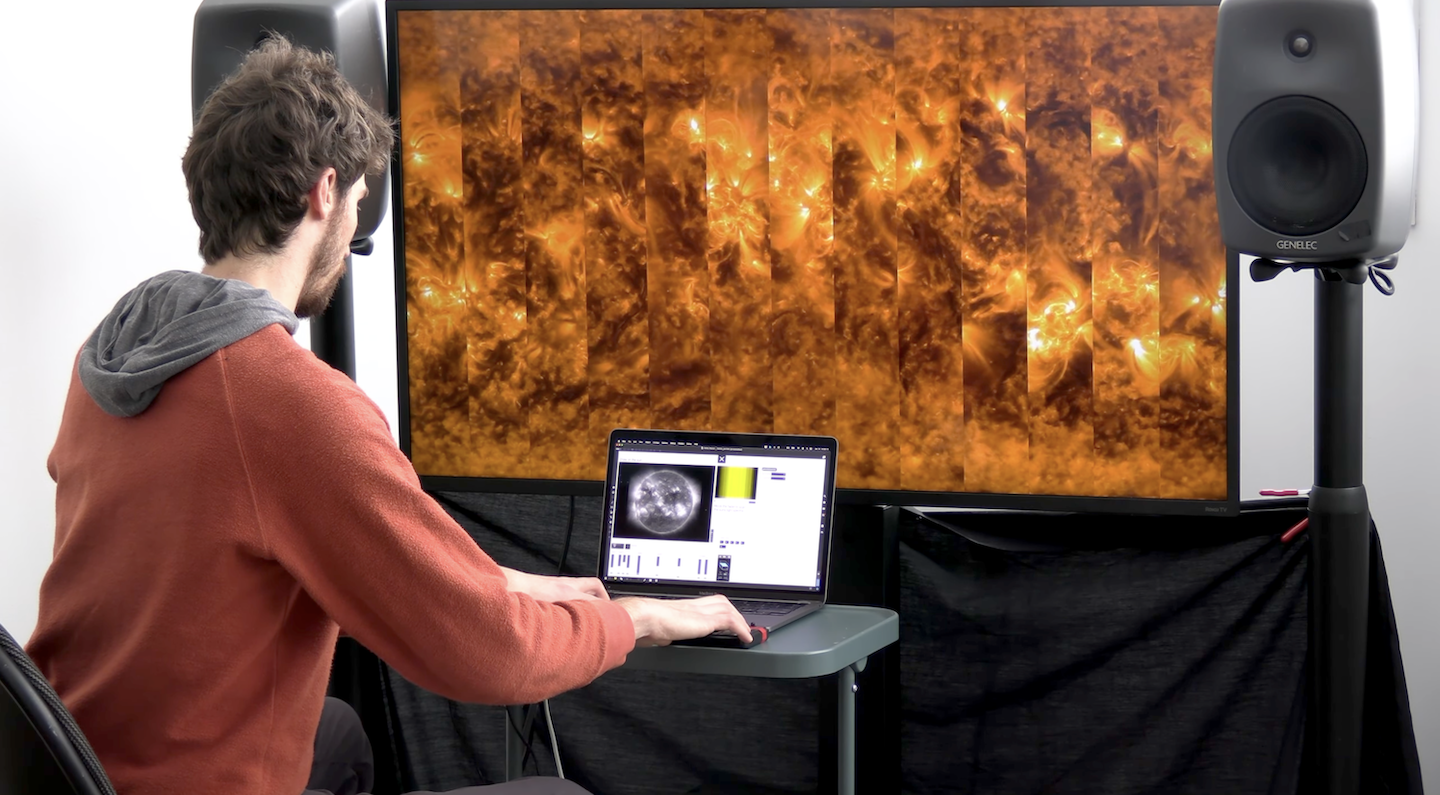
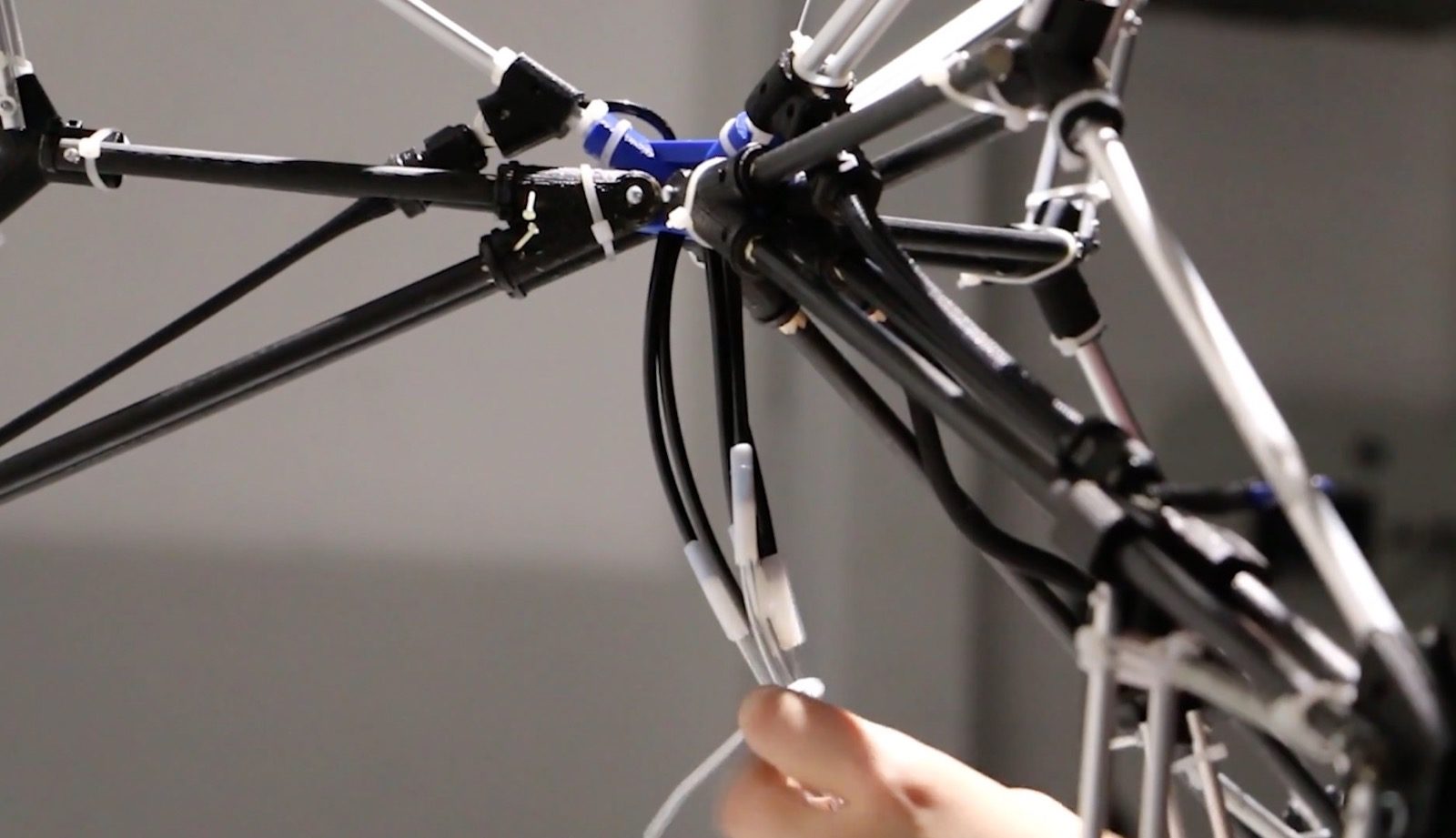
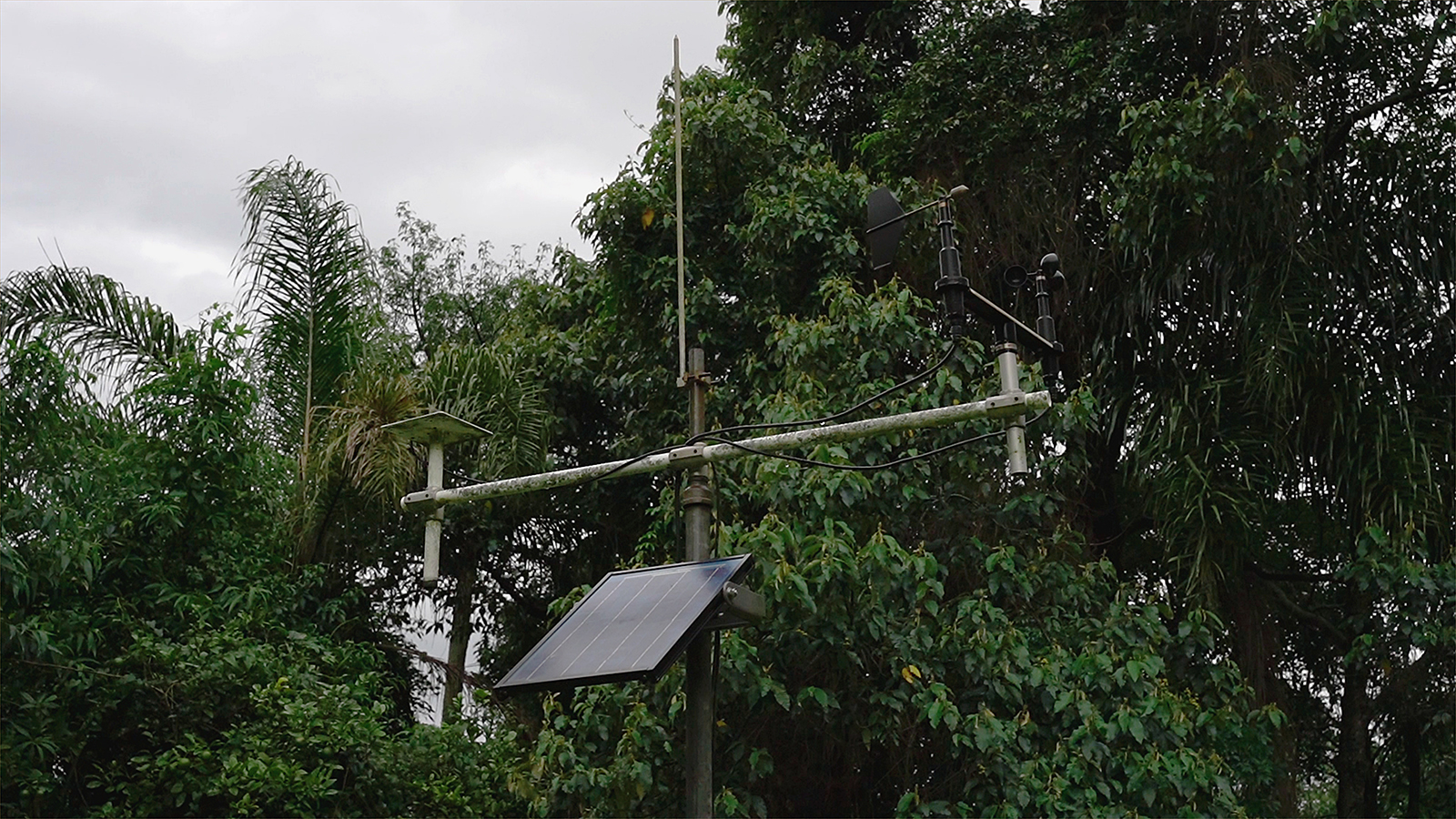
In an era when every creative and critical use of technology sounds like a dark reflection on artificial intelligence‘s existential threat, a speculative doctoral research or a cryptic visual for Instagram, going to KIKK Festival in Namur feels like stepping into the room of a nostalgic age when there was just a community of people who make great stuff with tech.
Moreover, as we all know, scrolling short videos of interactive installations or conference talks will never give the best shot of dopamine as the one of hanging out in the theatre or square of a cute village in Wallonia sharing in-person conversations on art, design and digital culture.
The playful and human interactions at KIKK’s 14th edition worked as a sort of reminder: critical making is not a separate activity demanding constant discussion, but rather something inherently embedded in the creative use of technology itself. The festival proposed an intense program, rich in contribution by people that every time they pick up a tool and bend it toward unexpected purposes, they were already engaging in critique providing questions, probes, and reimagining what technology can be useful for. And besides the great structure in three days of talks and exhibitions and parties, it is interesting to navigate the program through three possible vectors. These vectors could offer multiple entry points into understanding what makes festivals like KIKK an great format in the dark age of AI generated void.
Vector 1: Beyond Categories
One of KIKK’s most refreshing qualities is its refusal to segregate speakers into neat categories of “artist” versus “commercial practitioner”. This is the reason why you get in the same program the talk by Tim Hunkin, a 74-year-old engineer-cartoonist-artist who spent his career making coin-operated satirical machines and Nelly-Ève Rajotte, professor at the School of Design of UQAM who brought this conversation into the realm of academic research-creation or Mick Champayne, visual designer on Google’s Doodles & Delight team.

The first, Tim, started drawing trains as a child and he ended up creating “The Disgusting Spectacle” (a figure that picks its nose) and then building installations for London’s Science Museum in a practice that he never worried about whether it was art or engineering. Nelly-Ève Rajotte brought her research that exists simultaneously as art installation, technological investigation, and philosophical inquiry: her project “Matter: In the Depths of Flesh, the Delicacy of Invasive Machines” employs technology designed for measurement and controlled to instead create empathic, immersive experiences.

Lastly, Mick Champayne’s presentation completed this vector by bringing the perspective of someone that recovered from creative burnout through “quick daily doodles, manic learn-a-new-skill sprints, weird side quests, and frankly, drawing a lot of butts” illustrated how personal creative practice feeds professional innovation.

Vector 2: A Human System of References
The second vector to navigate KIKK is a human system of references. Think about the last two years and how much time people spent referencing language models instead of real creative coders: “hey Sonnet 4.5 is better than ChatGPT 3.5, etc”. We kept doing this benchmarking by forgetting that the creative outputs those LLMs were providing just came from brilliant minds. At KIKK, it was possible to rediscover a human system of references without a hierarchical top-down direction, and, as a member of an actual community, you could spend time pointing the finger towards a real someone’s works or process.
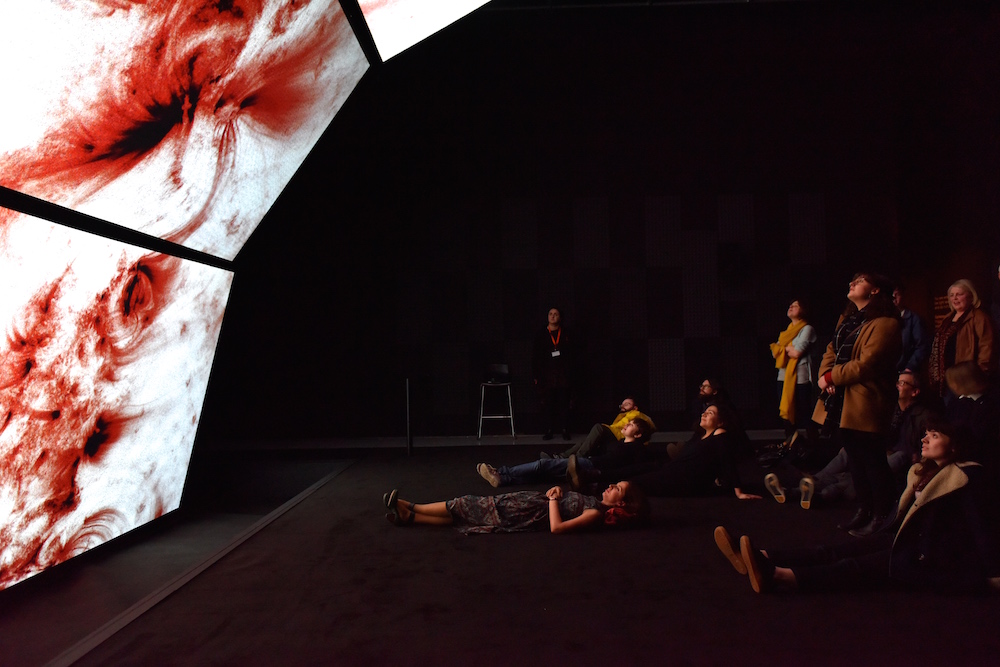
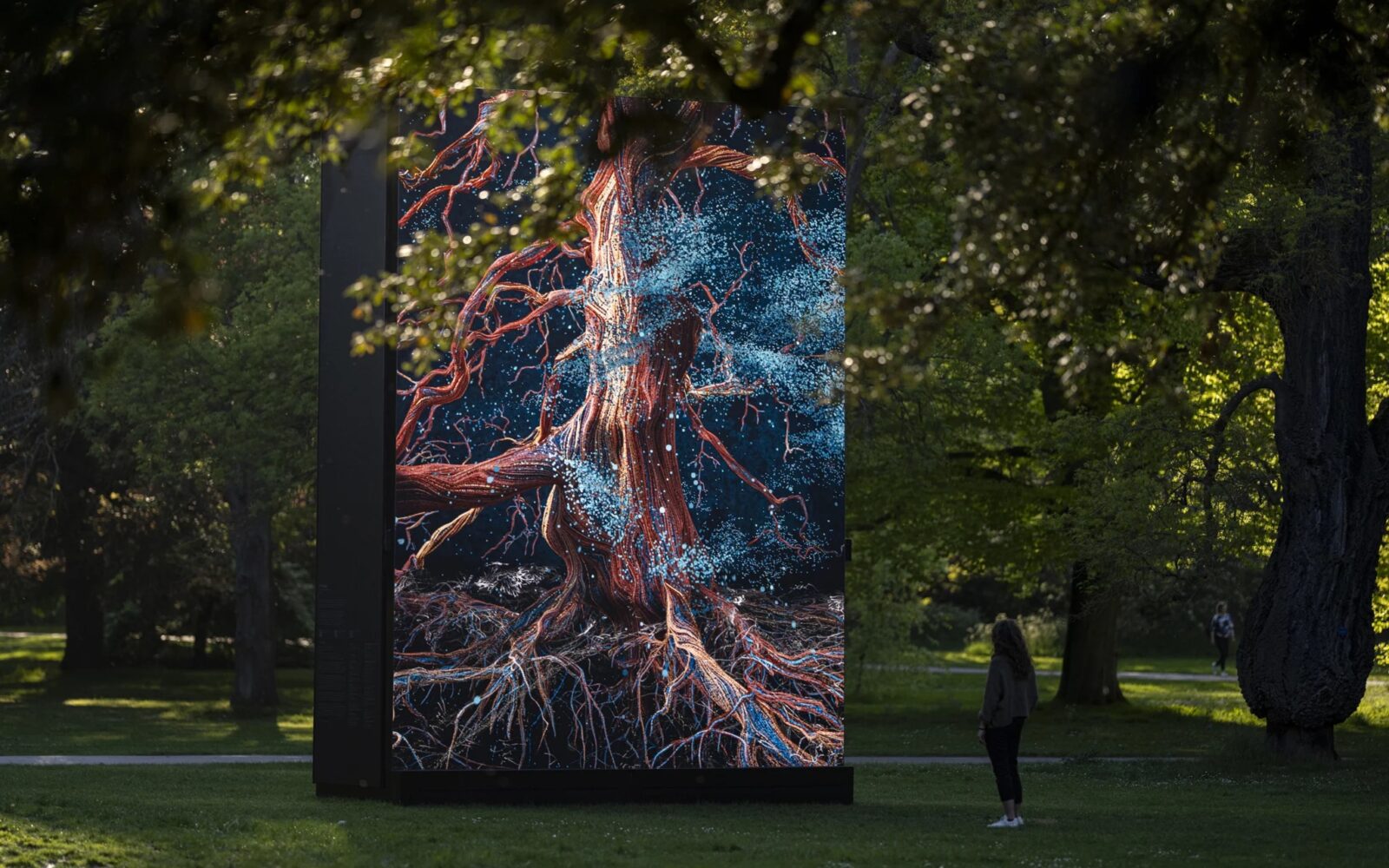
At KIKK, emerging practitioners could share rooms with their influences like Barnaby Steel of Marshmallow Laser Feast. In his talk, “Where Do I End And Begin When Sunlight Is Under My Skin,” he presented the experiments by a young collective of pioneers, including Memo Akten 1, and told the story of how those technological explorations led the collective to establish a creative practice that today operates beyond technological questions and within transdisciplinary endeavours. In the project Of the Oak a large-scale site-specific video installation with multichannel audio, meditation exercises, and an online field guide document the life of an oak tree and oak-associated species at Kew Garden in London. The work pushes the boundaries of traditional science communication and the idea that digital technologies are only a tool for making accessible scientific output: on the contrary, the beautiful real time visualization engages the public in a living experience of the natural life without a distinction between the digital (artificially computed stuff) and the nature.
Emerging tech creatives could attend the talk by Rebecca Fiebrink who offered another kind of reference point since her contribution on ML for creative uses is around since 2008. Her perspective on how small personal datasets can be powerful creative tools, that “bias” can become intentional steering toward desired behaviors offers an alternative to the dominant narratives about machine learning.
While talking with my temporary human system of references after her talk, I found myself trapped in a long conversation exploring how this idea of data and ML as humanized interfaces for talking to computers is true, however with the arrival of modern tools for graphical programming of algorithms, we can assist at a complete different perspective in which artists can have more ownership and control, going back to write the actual algorithm and to play again with what was used to be only an opaque black boxes.
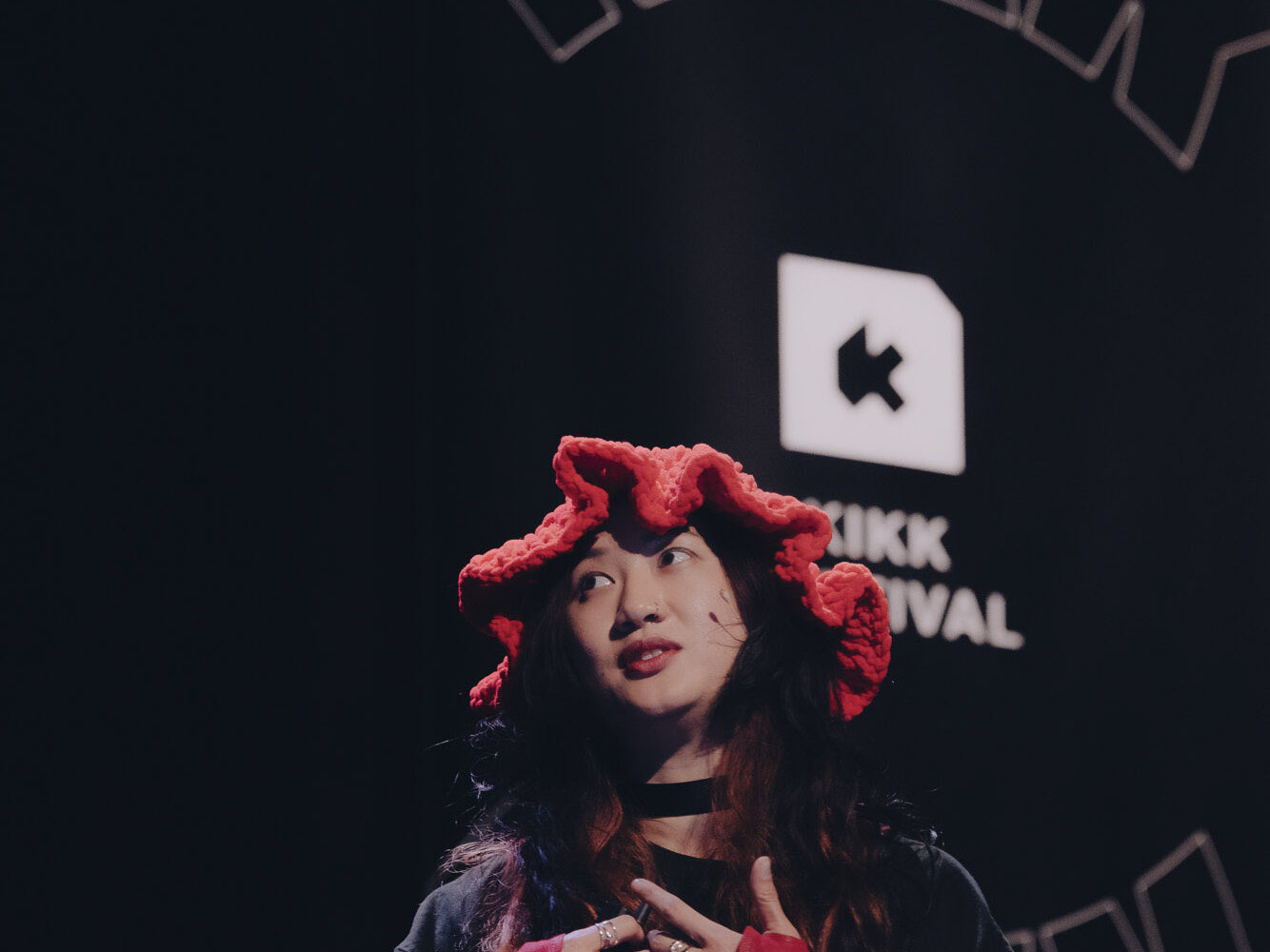
While chatting on this topic, it was the time of the talk by Portrait XO, representing maybe a generation of practitioners who have grown up in a post Kinect hacking age. A transdisciplinary artist, musician, and data activist, Portrait XO works with AI audio and data sonification to talk about complex datasets, from UN Sustainable Development Goals to temperature anomalies. Portrait XO presented a brilliant sound experience, demonstrating how computer music has always worked with ML and AI blackboxes. The work surfaced an unavoidable tension in contemporary practice: how do we address sustainability through media that themselves require significant computational resources?
Vector 3: Feelings and Rediscovery of Play
Before landing in Namur, I managed to finish reading atomless‘s article “Predictive Capital” on CAN. The piece helped me better understand the current period of disillusionment of creative technology while simultaneously stirring up feelings of nostalgia. While I am aware that nostalgia can block our ability to imagine different futures, I also recognized that over the past two years, I had avoided any enthusiasm for the field, exhausted by the relentless AI narrative that seemed determined to erase decades of careful work building awareness about creative technology’s principles and possibilities.
In a discourse that had become very critical, I explored the festival with a genuine feeling of nostalgia asking myself “would it be possible at one point to go back to a positive technofuturism, or to return to playful experimentation without feeling guilty or being dismissed as uncritical?
KIKK could be navigated through different feelings, nostalgia, enthusiasm, seriousness, and in the end it sparked joy precisely because it ensured all participants maintained a healthy distance from exhausting narratives. The program opened the festival with a talk by “On Hype” by Amelie Dinh and Iris Cuppen who examined how the phenomenon of tech hype cycles (metaverse, web3, generative AI) booms faster than ever. By analyzing the formats of tech hype looking at videos, tweets, memes, headlines, they reflect on what it means to create within these rapidly shifting narrative landscapes and how practitioners tackle these constant waves of technological excitement and disillusionment. This talk confirmed again this idea that making creative things with technology is always critical since it is embedded in the act itself and it is a good practice to take distance without feeling guilty yet operating with awareness and enjoying the wonder.
The technological wonder returned featured the talk by Miguel V. Espada’s of SpecialGuestX: the collaboration with OKGo on the “Love” video, featuring 29 robots in an elaborate choreographed performance, recalled when robotic arms projects felt like miraculous achievements rather than content to scroll past. In the age of generative AI, the studio received one only fundamental brief by OKGo: “no AI, only real physical stuff”. From this brief, Miguel showed the making process and the prototyping of the videoclip in which they experimented with all possible ways to automatize with imperfection the movement of robotic arms.
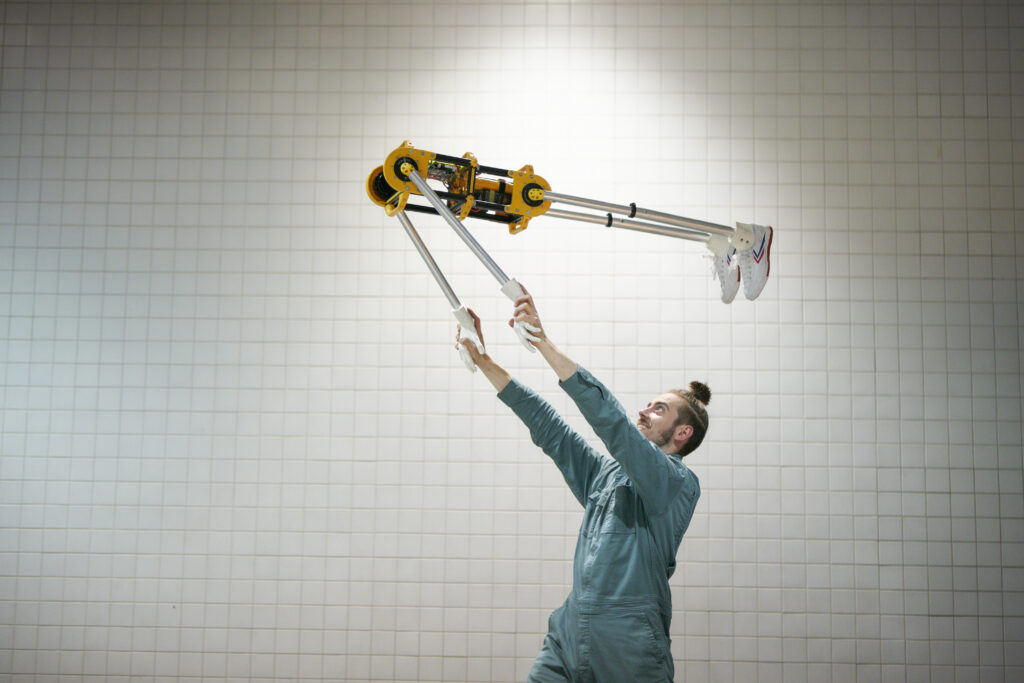
This spirit of playful (re)discovery appeared at the closing talk of the festival. Daniel Simu, a Dutch circus artist who taught himself robotics through a trial-and-error approach inspired by juggling and clowning. He learned 3D printing, electronics, and mechanical engineering from scratch. Now on his third robot, Acrobot, Simu’s work makes the case for building robots simply for fun, treating them as characters with identity rather than problem-solving machines.
Last but not least, nostalgia and excitement have been sparked by the creative enquiry of Mónica Rikić: in her talk “My Nanny Was a Computer” she presented an artistic journey exploring assistive robotics through cyberfeminism, hacker ethics, and maker philosophy. Her recent work “Somoure II” frames technology development itself as a caregiving process, recognizing that caregiving labor, traditionally falling disproportionately on women, could be reimagined through how we design and deploy technological systems.

From kinetics to AI Playful Music: KIKK Art Trail
KIKK Festival featured a parcours of exhibitions throughout the city of Namur, with an impressive curatorial selection of installations. Biased by my eternal passion for kinetic art, I found myself drawn mostly to the wonder offered by the kinetic pieces, and there were many to spend hours and hours in a contemplative experience.
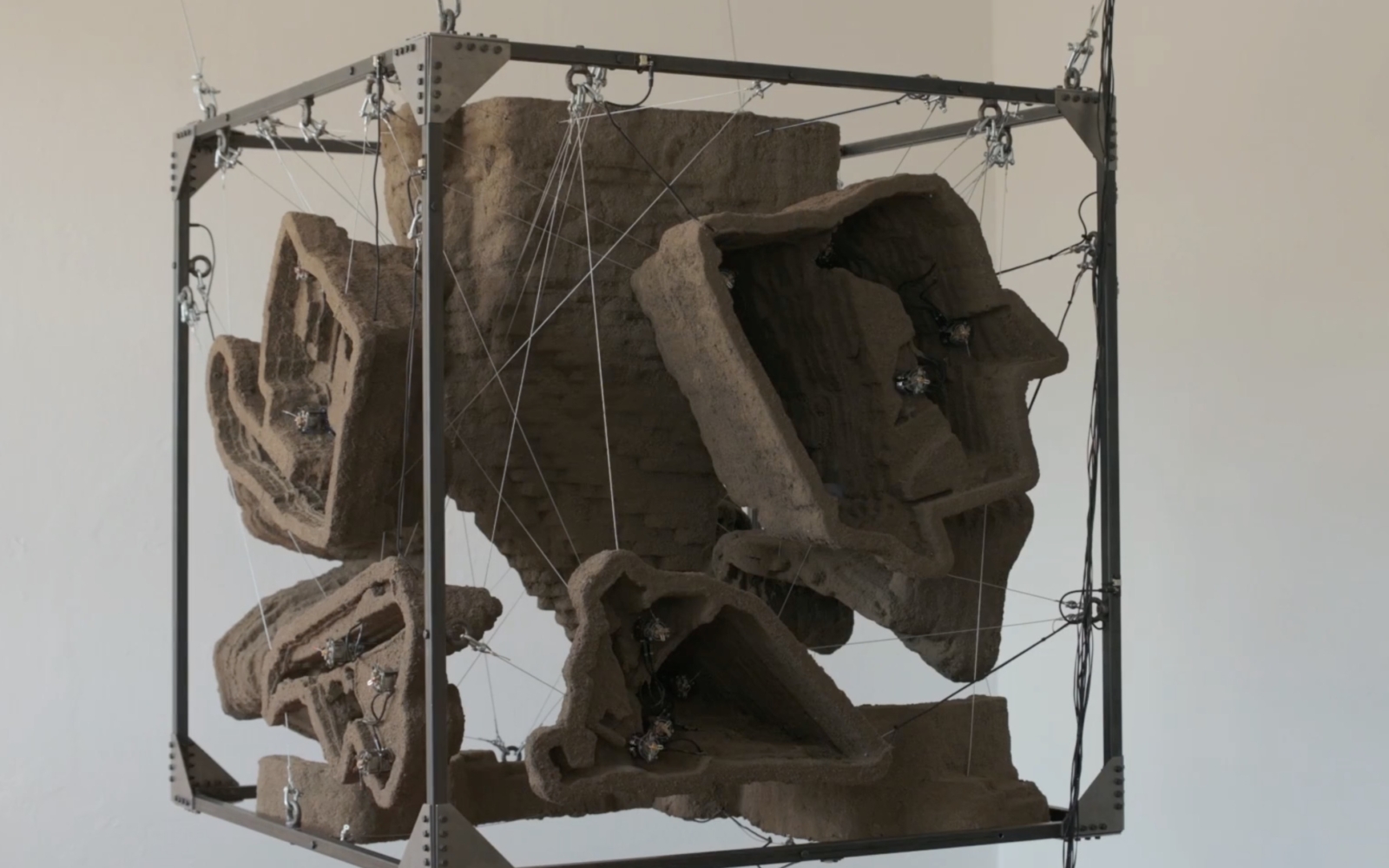
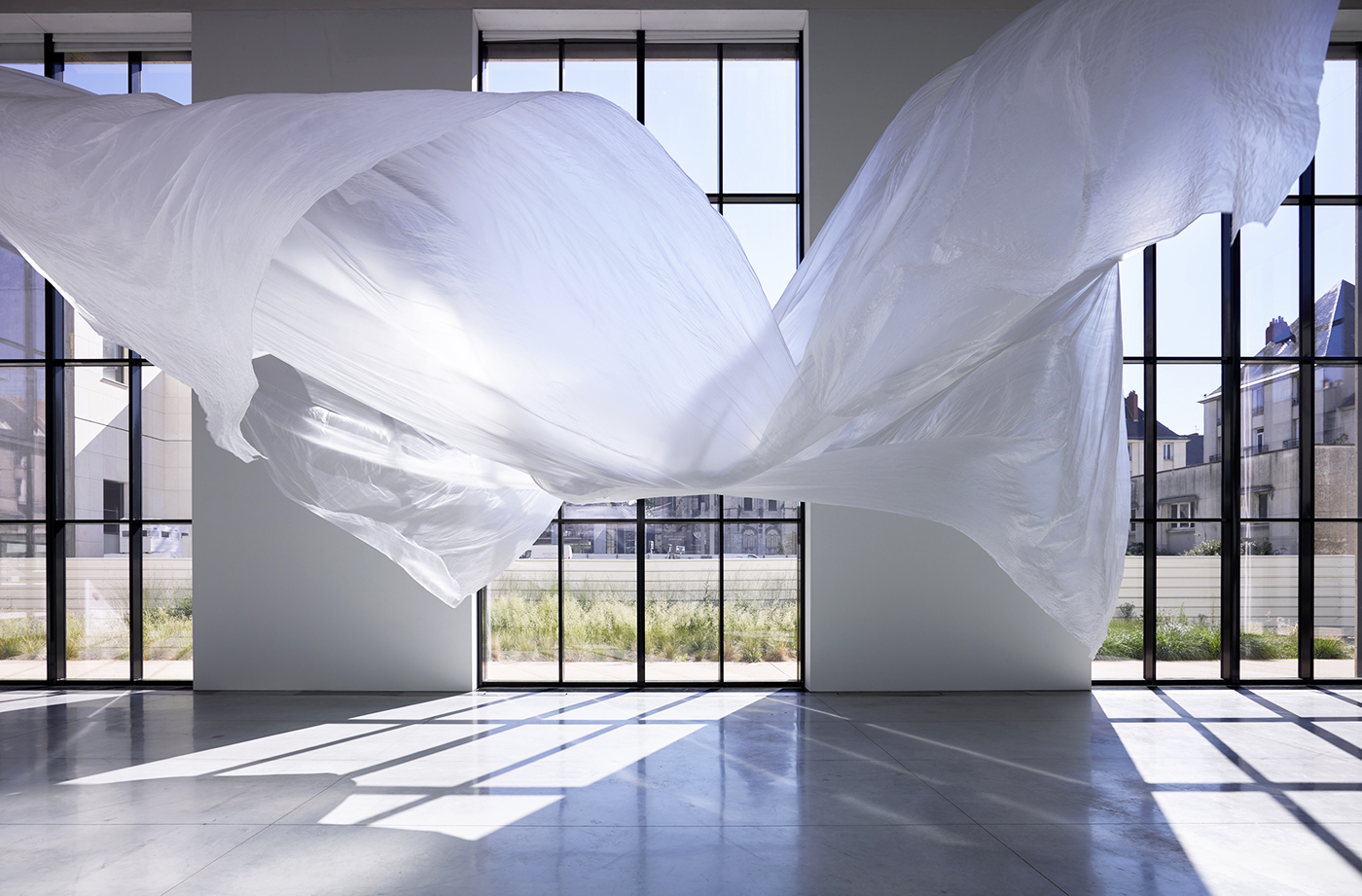
The solo exhibition Temps Suspendu by Vivien Roubaud presented more than kinetism an aesthetic of dysfunction: with a research on repurposed objects and technical materials using survival blankets, motorized cables with freewheels, he created moving sculptures where micron-thin membranes evolve continuously in space, accompanied by the unsynchronized clicking of motors that adds a mechanical yet unpredictable sound dimension.
Similarly exploring the intersection of natural phenomena and technical systems, Alexis Choplain, in his installation Hydroscope, represents the culmination of long-term research exploring the association of two antagonistic materials, water and electricity, through autonomous trial-and-error learning in electronics and hydraulics, with pressurized water transiting through space while memorizing signals sculpted by synthesis engines.

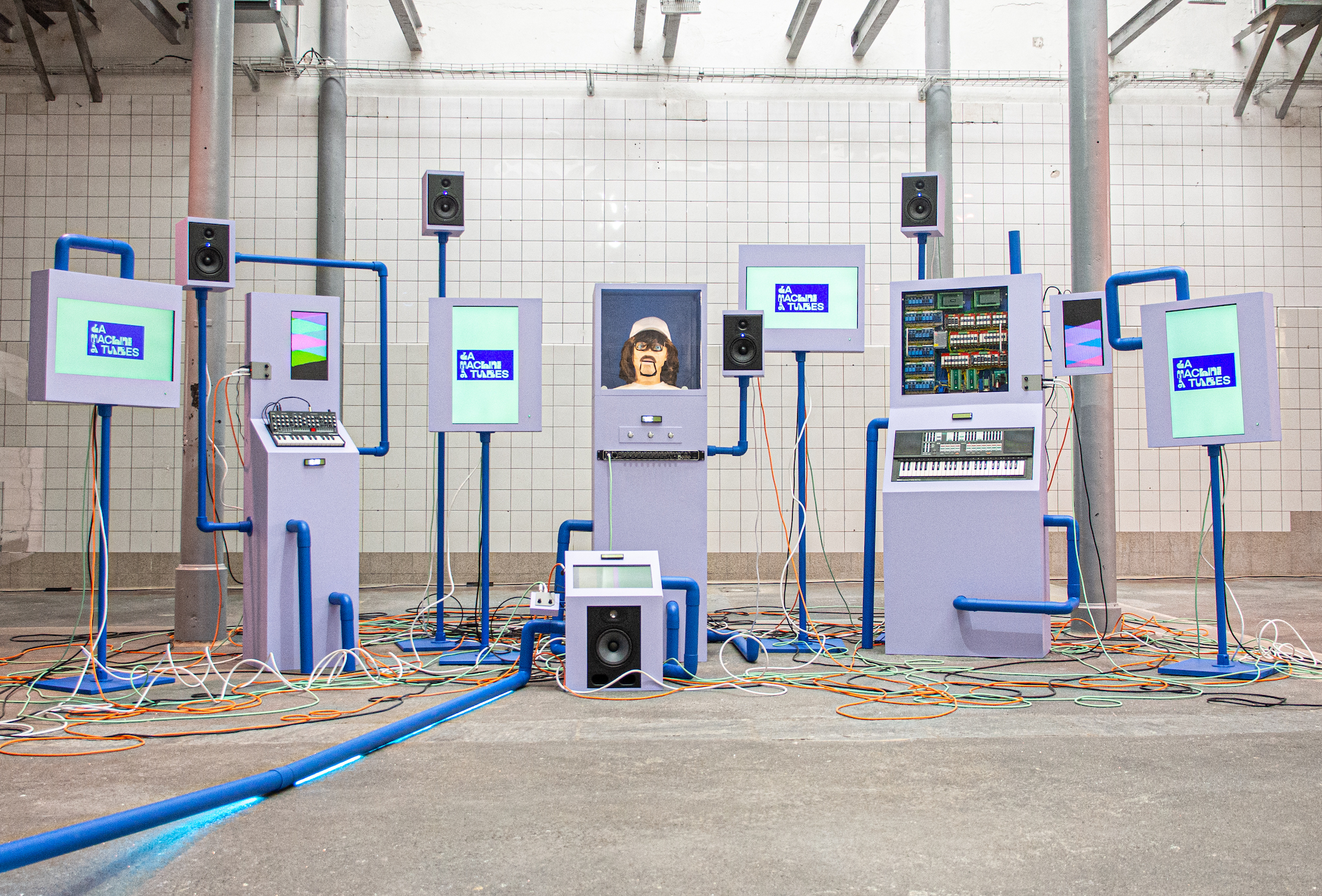
To conclude, the real discovery of the festival: Bastien Bron and La Machine à Tubes [The Hit Machine]. Perfectly aligned with the festival’s spirit of playful experimentation, My Name is Fuzzy (Bastien Bron), a Swiss self-taught artist exploring new ways to present pop music outside traditional platforms, uses AI to create endless combinations of notes and lyrics, inviting audiences to interact and generate new songs while offering an ironic look at the algorithms shaping our tastes and desires. Rather than asking whether AI will save or destroy humanity, Bron tests its ability to entertain us, combining contemporary technology with retro-futuristic craftsmanship in work that is simultaneously danceable and playful. Vintage interfaces for parameter selection, tubes, and a reconfigured synthesizer form part of this delightfully installation that reminded me why we fell in love with interactive pieces in the first place.
There is no disruption only continuity
KIKK Festival 2025 demonstrated that there is a vibrant community that makes things with tech. By refusing to segregate practitioners into rigid categories, by rebuilding human systems of reference, and by creating space for playful experimentation without obsessive speculation, the festival offered a vital counternarrative to the exhausting discourse of AI doomerism. The talks, installations, and informal conversations throughout Namur proved that it is still possible to discover while embracing nostalgic feelings. In an era of “Predictive Capital” that flattens human expression into statistical correlation, KIKK reminded us that festivals matter for the experience of learning from actual humans rather than language models, and that playing with curiosity is still the way to create a culture around digital tools and technologies. In the end, there is no disruption, but only continuity between past wonders and present possibilities.


- From my personal hand written notes: Memo Akten, artist and computer scientist working with code, data, and AI, was mentioned in two talks during the festival even though he was not participating, as his presence became the consciousness of a generation of artists :-) ↩︎